
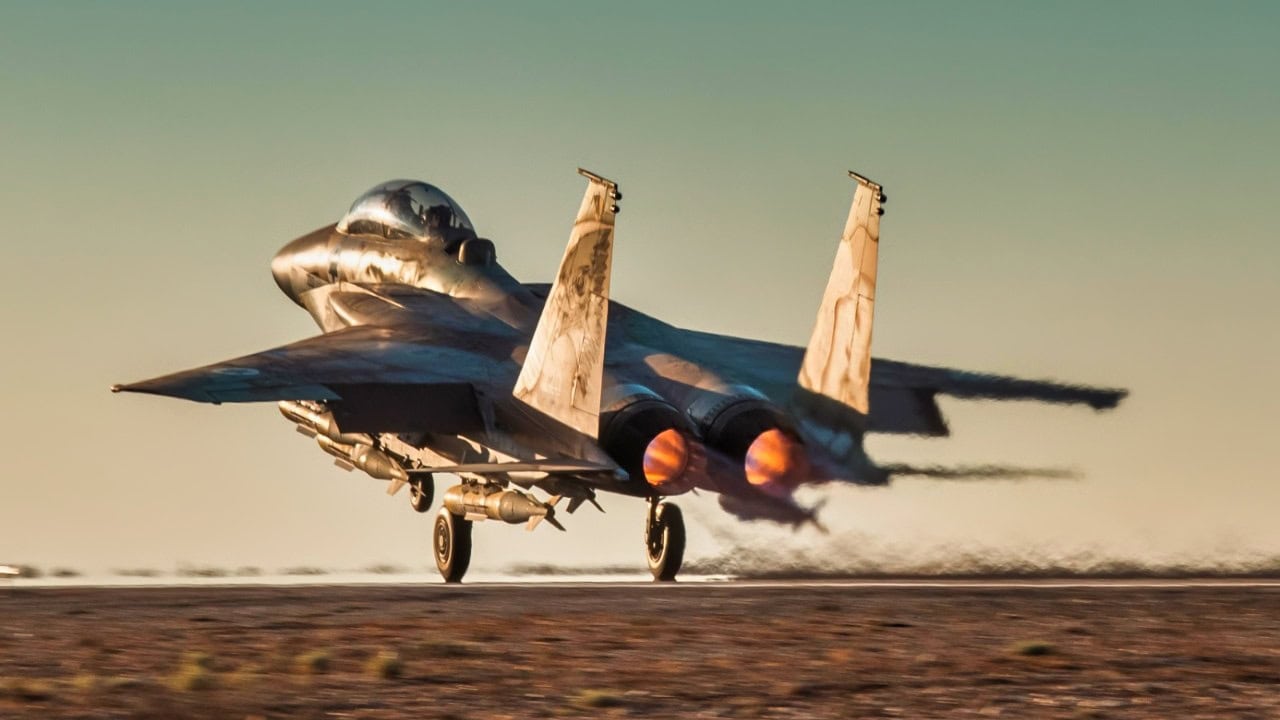
Key Points and Summary – Israel’s airpower advantage isn’t just about the stealthy F-35I Adir. The Israeli Air Force’s F-15I Ra’am remains a centerpiece because it combines long reach with heavy payload—traits that matter in any renewed Iran contingency.
-Derived from the F-15E but built around Israeli customization, the Ra’am integrates advanced avionics, communications, and electronic warfare, plus a mixed U.S.-Israeli weapons suite.
-The article argues the platform’s unrefueled range and ordnance capacity make it Israel’s most practical long-range strike option, with real combat use across Lebanon, Syria, and Gaza.
Why Israel Keeps Betting on the F-15I in the Iran Era
When it comes to air superiority in the Middle East, Israel is truly unmatched. Thanks to the Jewish state’s close defense relationship with the United States, its domestic innovations and top-tier pilot training, the nation retains a qualitative technological edge over its hostile neighbors.
Israel’s fleet of specialized F-35I “Adir” fifth-generation fighter jets often gains the most attention for its advanced features. However, the Israeli Air Force’s older contingent of F-15I “Ra’am” jets should not be dismissed as second-rate. In fact, these tried and trusted fighters provide the Jewish state with even greater unrefueled range and payload capacity than their Adir successors.
The F-15I Ra’am’s origin story:
Israel first determined that an F-15 iteration would meet its defense requirements in the 1990s. In the aftermath of the Gulf War, the IAF better understood the necessity of fielding an aerial platform capable of carrying out long-range strike operations to be able to contend with threats like Iraq’s Scud missiles.
While the F-15I is heavily derived from the American-made F-15E Strike Eagle, the Israeli variant hosts a range of customizations that make the Ra’am (Thunder in English) a powerhouse in the skies. Specifically, the IAF iteration is equipped with more advanced weapons, avionics, communication capabilities, and electronic warfare systems than the original Eagle, which was conceptualized to function as a pure air-to-air fighter.
Range and Payload: Where the F-15I Ra’am Really Excels:
As mentioned previously, where the F-15I really shines is its range. Specifically, the Israeli jet can fly for nearly 2,800 miles without needing to refuel mid-air. On top of this great distance, the jet can lug as much as 23,000 pounds of ordinance, making the Israeli fighter hard to beat.
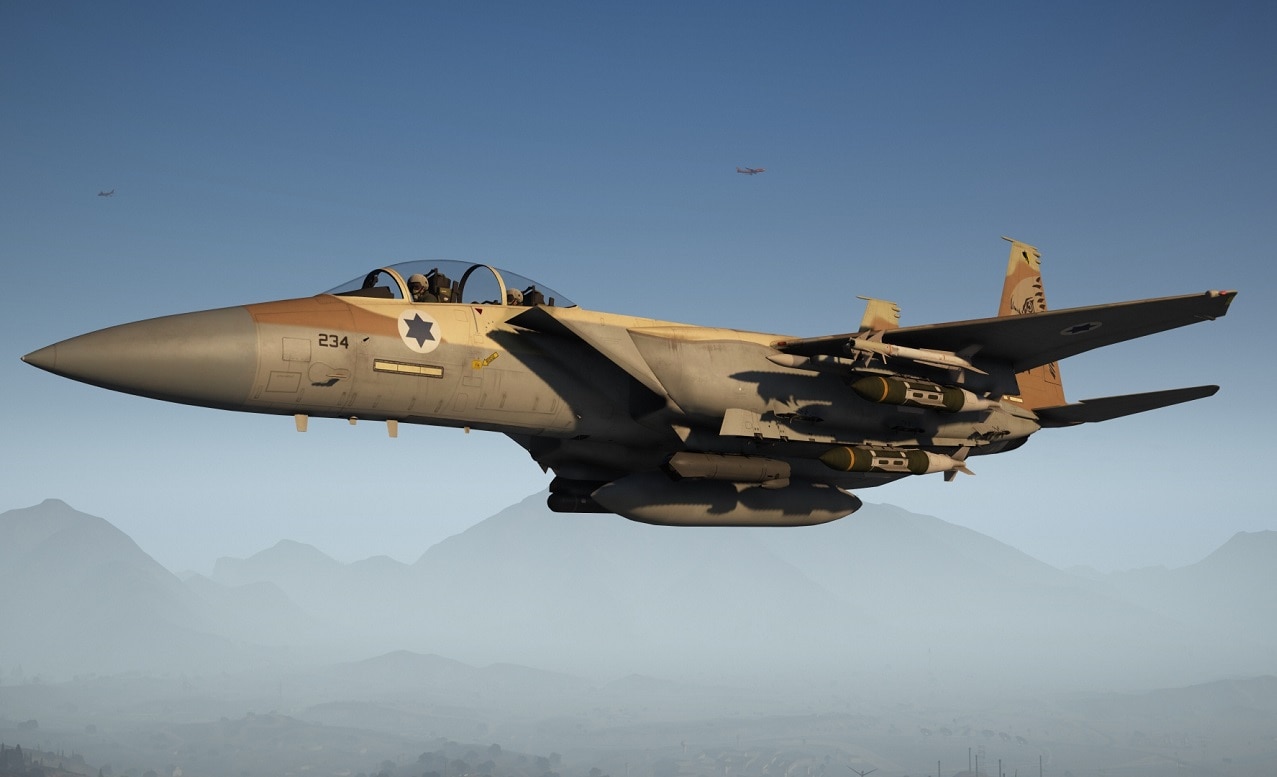
F-15I Ra’am. Image Credit: Creative Commons.
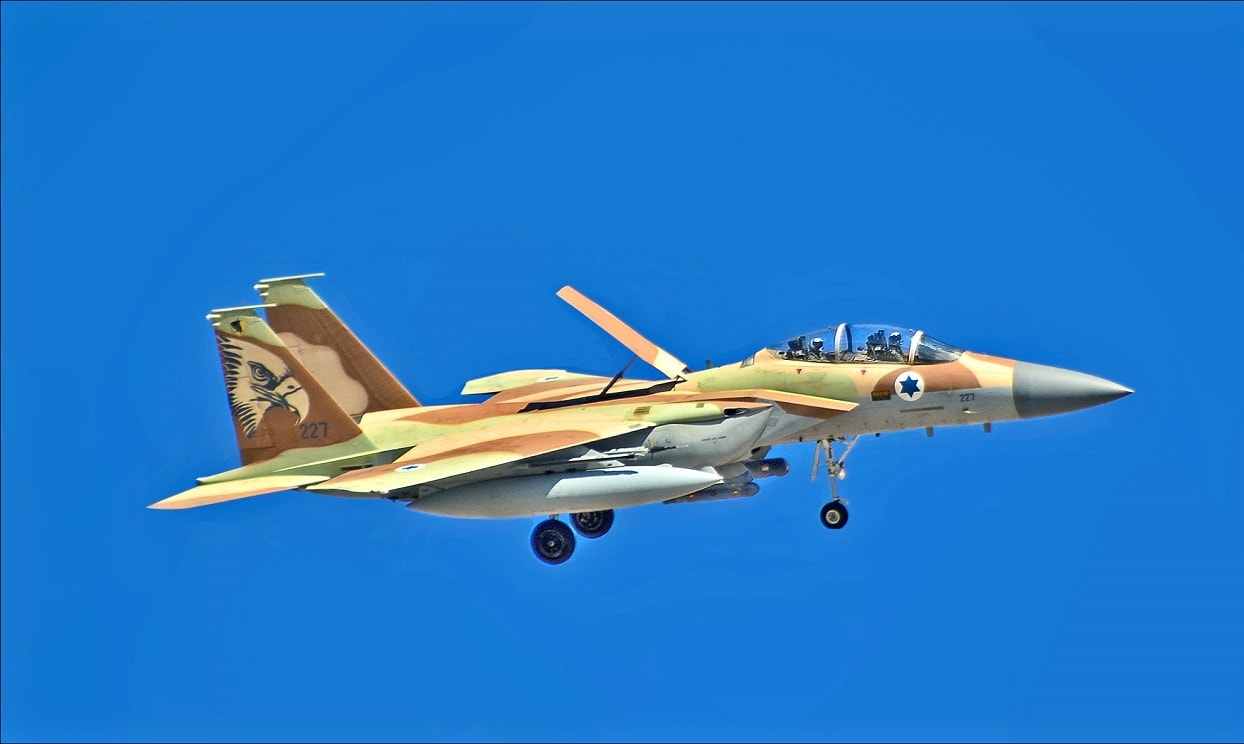
Image: Creative Commons. Image is of a F-15I.
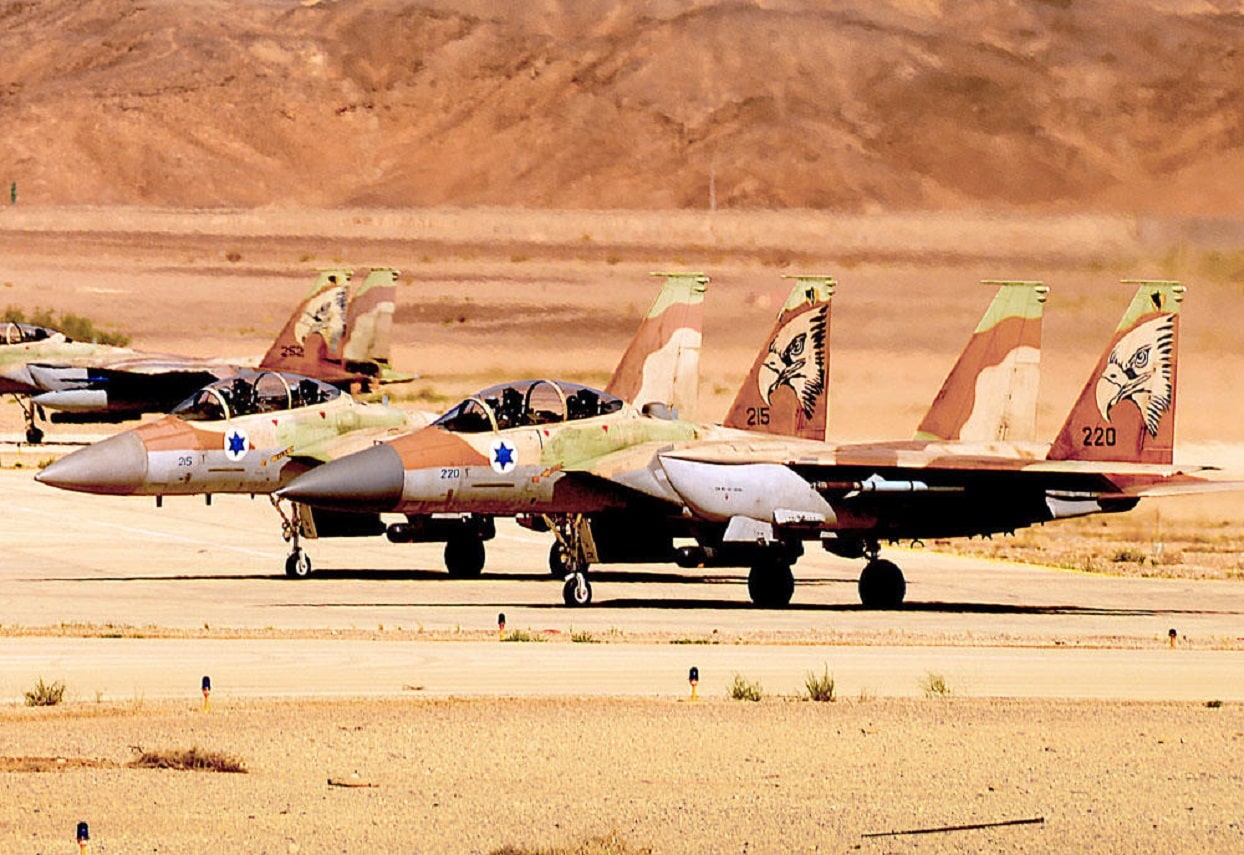
F-15I. Image: Creative Commons.
Israel has notably modified the armament loadout for their F-15 fleet, combining both US-made weapons and Israeli-made weapons, including the Delilah cruise missile, the Python 4/5 air-to-air missiles, and Spice precision-guided bombs.
Considering Israel’s proximity to its adversaries, namely the Islamic Republic of Iran, these two features alone make the Ra’am arguably the Jewish state’s most critical aerial asset.
What About Domestically-produced Add-ons?
In addition to range and payload, the F-15I features Israel’s LANTIRN system, which enables the aircraft to sense and laser-designate adversarial targets.
As explained by Israeliweapos.com, the LANTIRN assists in subpar weather conditions where line-of-sight may be obscured.
“The FLIR sensor makes it possible to follow targets at long range, and the laser marker is used with laser-guided munitions,” the essay explains.
“The Ra’am’s advanced systems include an APG-70 radar with terrain mapping capability. The sharp picture that the APG-70 provides, regardless of weather conditions and light, makes it possible to locate targets that are otherwise very hard to find – i.e., missile batteries, tanks, and structures – even under such adverse conditions as complete fog cover, heavy rain or moonless nights,” the report continues.
In terms of speed and power, the F-15I is powered by a pair of Pratt & Whitney F100-PW series afterburning turbofan engines. The Israeli jet is capable of flying at a top speed of Mach 2.0 (times the speed of sound).
Combined, all the F-15I’s stellar features and capabilities make it one of Israel’s most used fighter platforms in combat. During the Ra’am’s decades in service with the IAF, the platform has seen frequent deployments in conflicts along Israel’s border.
Specifically, the F-15I has flown missions over Lebanon, Syria, and Gaza. Although a ceasefire between Israel and Iran is currently in place, Israel’s F-15Is would indeed be deployed to carry out missions over its top adversary if a flare-up in violence emerges.
The Fighter Bottom Line for Israel
Earlier this year, the IAF deployed its Ra’am contingent with its F-35I Adir jets alongside US B-52H strategic bombers in a series of exercises.
Referring to this notable dispatch, the IDF issued a statement: “Israeli F-35I and F-15I aircraft flew alongside a U.S. B-52 strategic bomber. During the flight, forces practiced operational coordination between the two militaries to enhance their ability to counter various regional threats. The cooperation between the IDF and CENTCOM reflects the strategic alliance that continues to develop and strengthen over time.”
While the US may no longer rely as heavily on its older F-15 fighters to project power in light of newer platforms, the IAF’s maintenance and continued improvements to its Ra’am jets have signaled they will remain critical players in the nation’s aerial defense for years to come.
About the Author: Maya Carlin, Middle East Defense Expert
Maya Carlin, national security writer with 19FortyFive, is an analyst with the Center for Security Policy and a former Anna Sobol Levy Fellow at IDC Herzliya in Israel. She has published over 1,000 articles on various defense issues over the last several years. Carlin has bylines in many publications, including The National Interest, Jerusalem Post, and Times of Israel. You can follow her on Twitter: @MayaCarlin.