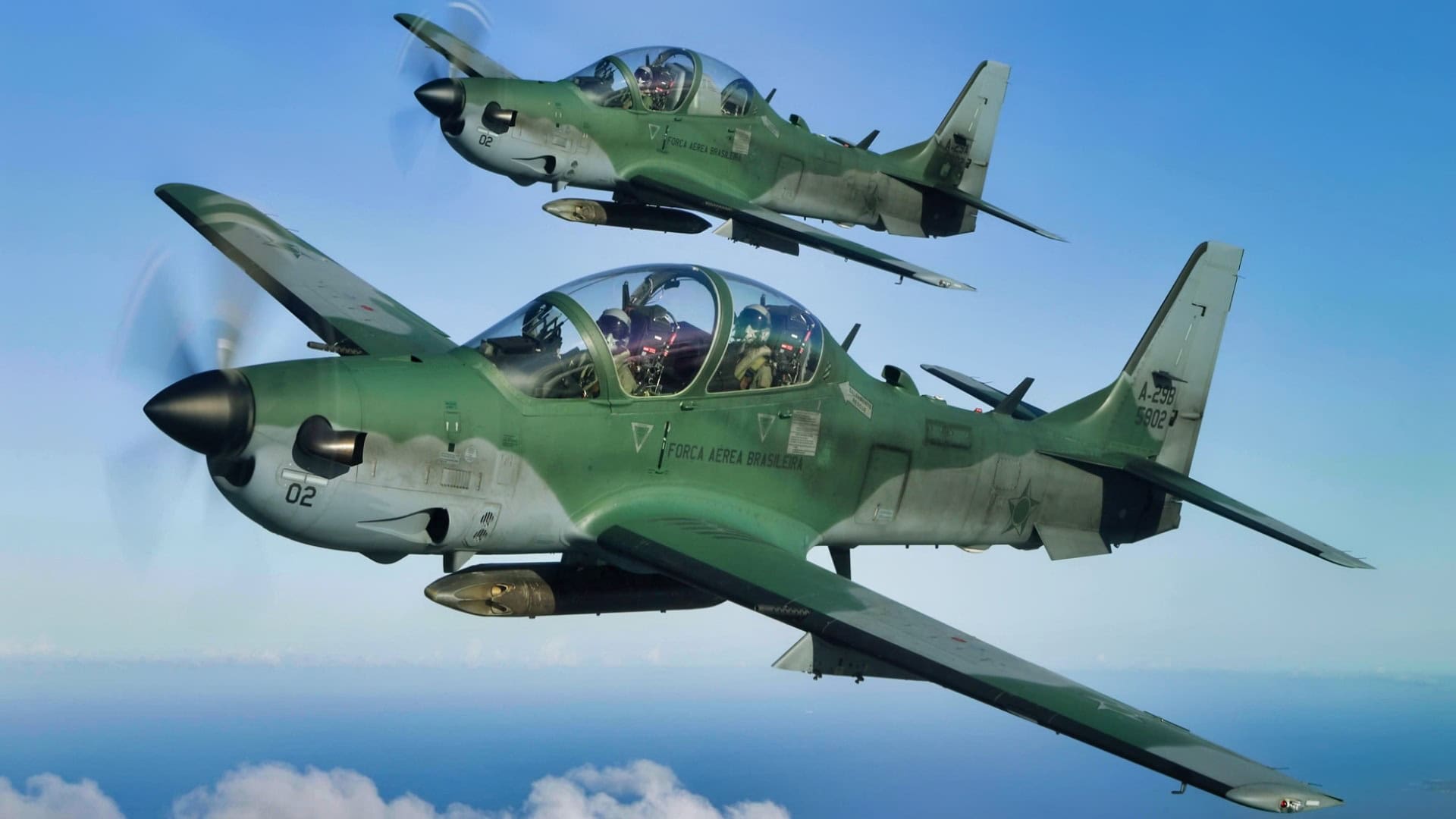
Key Points and Summary – As the legendary A-10 Warthog retires, the A-29 Super Tucano has emerged as a cost-effective alternative for light attack and counterinsurgency missions.
-Armed with machine guns, rockets, and precision-guided munitions like the AGM-65 Maverick, the Brazilian-designed turboprop excels in rugged terrain and permissive environments where advanced air defenses are absent.
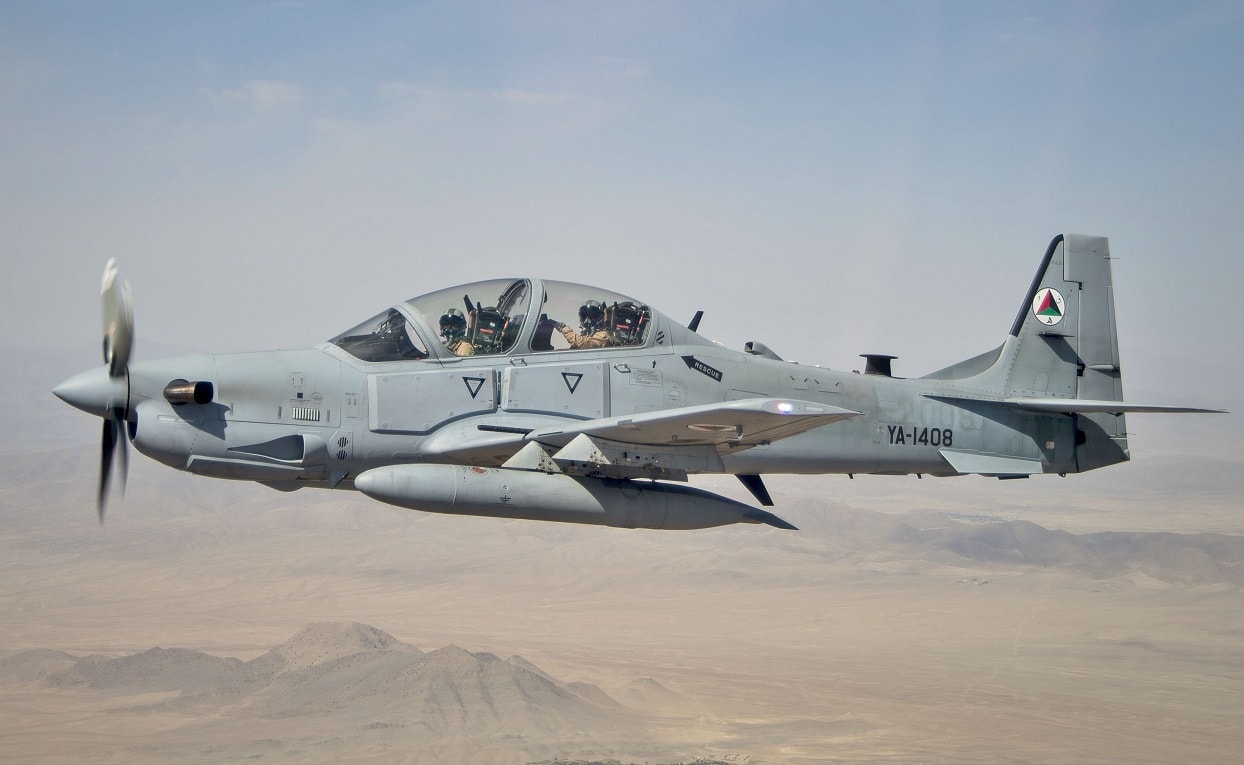
An Afghan Air Force A-29 Super Tucano soars over Kabul, Afghanistan, Aug. 14, 2015. The A-29 is the Afghan Air Force’s latest attack airframe in their inventory. (U.S. Air Force photo/Staff Sgt. Larry E. Reid Jr., Released)
-While not a direct replacement for high-tech fighters, the A-29 offers critical close air support for ground troops, freeing up expensive assets like the F-22 for air superiority missions.
How the A-29 Super Tucano Could Fill the Void Left by the A-10’s Retirement
As the classic and historically revered A-10 flies into the sunset of its long tenure as a ground-troop saving “flying tank,” some are inclined to wonder if the A-29 Super Tucano might fill an operational void.
The A-29 is a Brazilian aircraft built by Embraer and also manufactured in the U.S. through a partnership with Sierra Nevada Corporation.
The planes have been in service since 2003 as counterinsurgency, light-attack, armed aircraft not intended to be a major air-superiority platform or to operate against advanced air defenses.
The aircraft has been in service in many countries, including Chile, Colombia, Indonesia, and the Philippines.
In terms of Concepts of Operation, the aircraft is regarded as a low-cost, commercially built, combat-capable plane capable of performing a wide range of missions in less challenging or more permissive environments.
The idea is to save mission time for more expensive and capable fighter jets, such as an F-15 or F-22.
Most recently, Embraer states its Super Tucano can be configured with sensors and weapons to expand its mission scope into the realm of “counter drone” warfare.
Well-Armed A-29s
A-29s are turboprop planes armed with one 20mm cannon below the fuselage, able to shoot 650 rounds per minute, one 12.7mm machine gun (FN Herstal) under each wing, and up to four 7.62mm Dillion Aero M134 Miniguns able to shoot up to 3,000 rounds per minute.
Super Tucanos are also equipped with 70mm rockets, air-to-air missiles such as the AIM-9L Sidewinder, air-to-ground weapons such as the AGM-65 Maverick, and precision-guided bombs. It can also use a laser rangefinder and laser-guided weapons.

A U.S. Air Force A-10 Warthog from the Air National Guard Air Force Reserve Test Center flies during exercise Sentry Aloha 24-2 June 6, 2024, above the island of Hawaii. This iteration of the exercise involves approximately 1,060 participants and more than 40 aircraft from nine states, which operated out of Joint Base Pearl Harbor-Hickam, Marine Corps Base Hawaii, and Onizuka Kona International Airport, Keāhole. The Hawaii Air National Guard’s 154th Wing has hosted the exercise for more than 20 years to provide tailored, cost-effective and realistic combat training for total-force Airmen and other Department of Defense services. (U.S. Air National Guard photo by Tech. Sgt. John Linzmeier)

A-10 Warthog. Image Credit: Creative Commons.
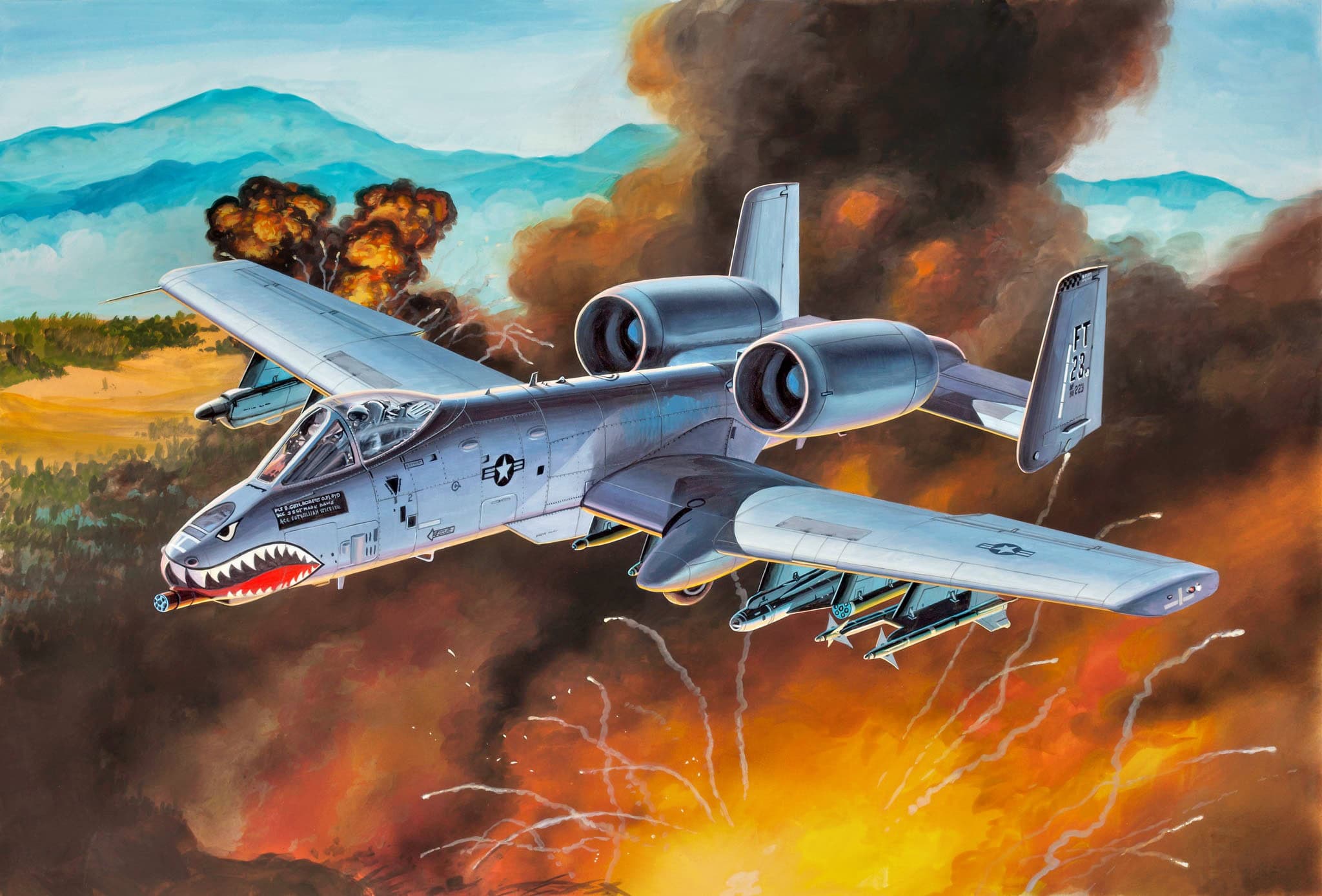
A-10 Warthog. Image Credit: Creative Commons.
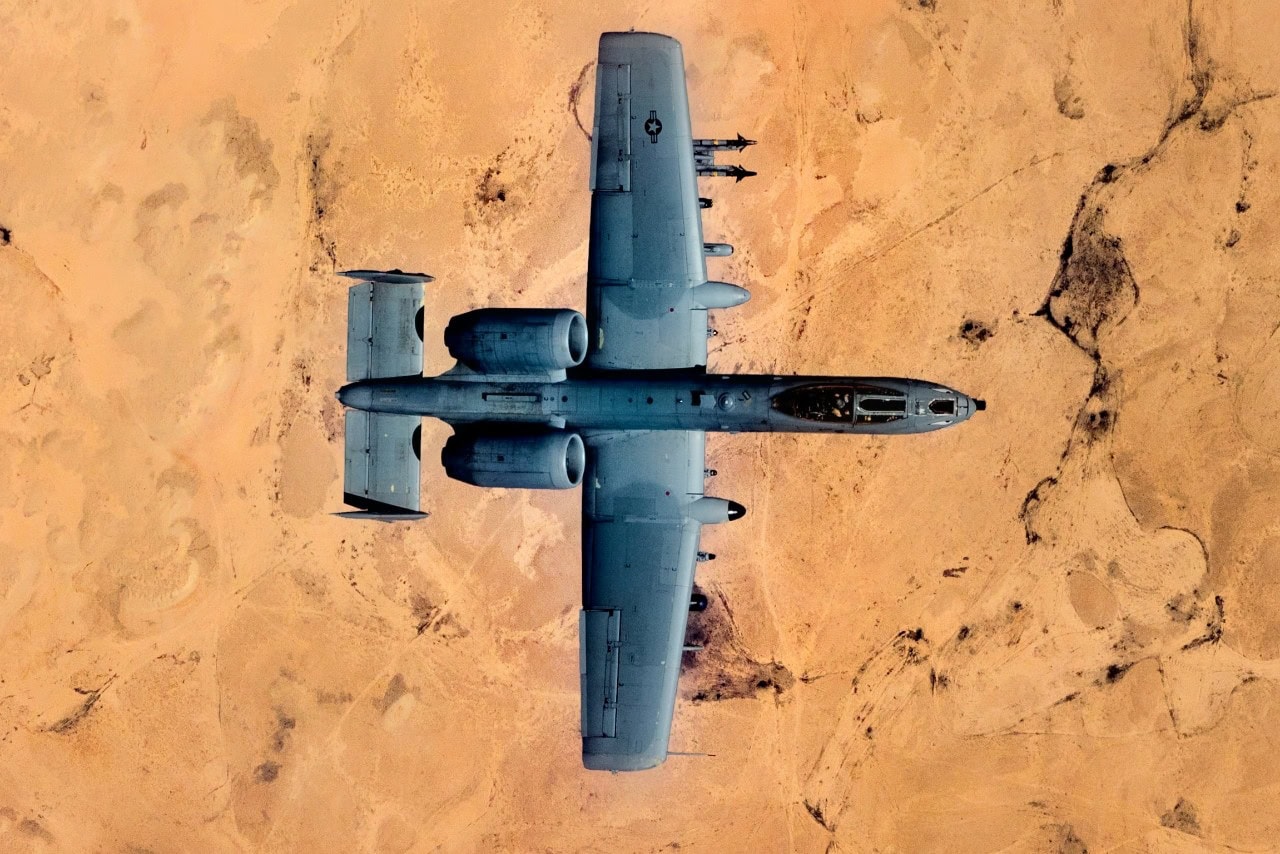
A U.S. Air Force A-10 Thunderbolt II flies a presence patrol over the U.S. Central Command area of responsibility, Feb. 26, 2025. The A-10 aircraft is employed throughout the region to bolster regional security and counter the growing threats of adversarial unmanned aircraft systems and other emerging threats. (U.S. Air Force photo by Staff Sgt. Jackson Manske)
These kinds of weapons can prove extremely critical when it comes to supporting ground troops on the move faced with incoming enemy fire, perhaps in a manner not altogether different than the famous A-10.
Its integrated weapons and laser-firing technology enable the platform to both lay down suppressive fire in support of advancing infantry and pinpoint targets for precision strikes.
This mission envelope seems to enable a broad range of operational possibilities, including counterinsurgency and great-power challenges.
Counterinsurgency & Major War
The Super Tucano is a highly maneuverable light attack aircraft able to operate in high temperatures and rugged terrain. It is 11.38 meters long and has a wingspan of 11.14 meters; its maximum take-off weight is 5,400 kilograms.
The aircraft has a combat radius of 300 nautical miles, can reach speeds up to 367 mph, and hit a range of up to 720 nautical miles. Its range of 300 nautical miles positions the aircraft for effective attacks within urban environments or other more condensed combat circumstances.
The Air Force’s Sierra Nevada-Embraer A-29 Super Tucano seeks aircraft optimized for counterinsurgency and other types of warfare, in which the US Air Force largely holds aerial dominance.
Given this mission scope, the planes are not intended to mirror the speed, weaponry, or stealth attributes of a 5th-generation fighter – but rather offer the service an effective attack option against ground enemies such as insurgents who do not present an air threat.
A-29 Support 5th-Gen
The combat concept here, should the Air Force engage in a substantial conflict with a major, technically-advanced adversary, would be to utilize stealth attack and advanced 5th-gen fighters to establish air superiority – before sending light aircraft into a hostile area to support ground maneuvers and potentially fire precision weapons at ground targets from close range.
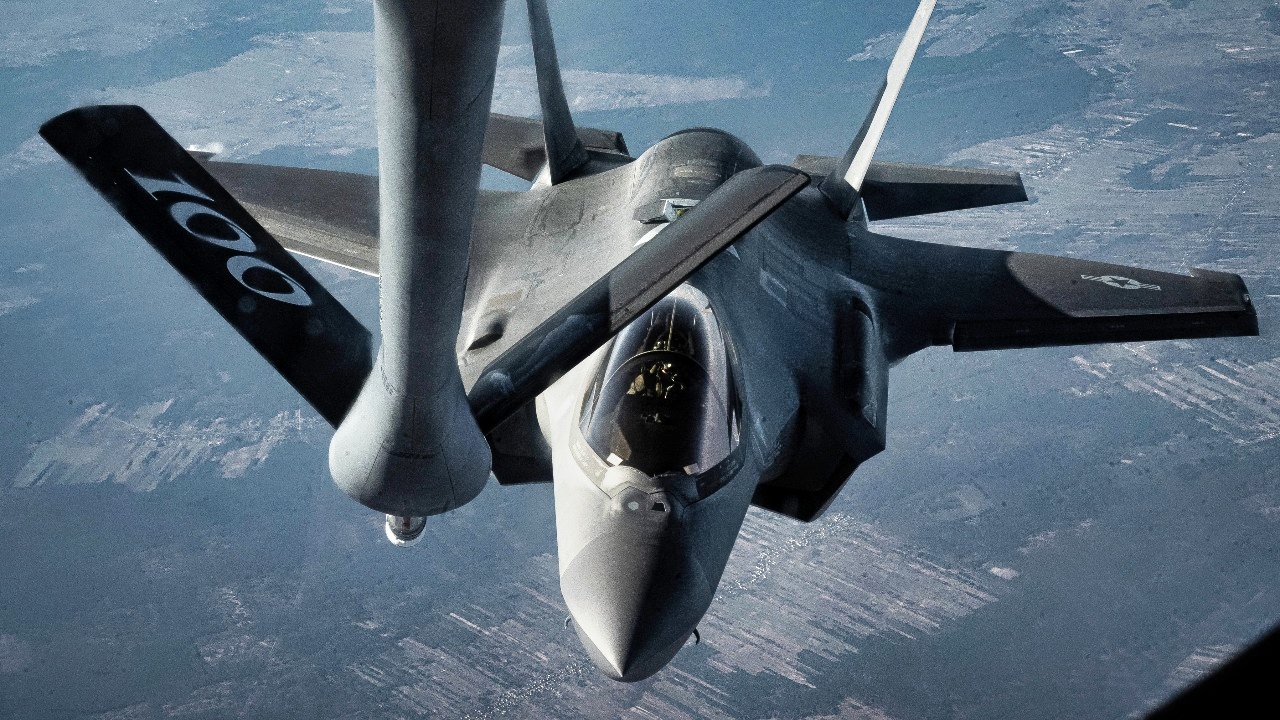
The 388th Fighter Wing’s F-35 Lightning II fifth-generation fighter prepares to receive fuel from a U.S. Air Force Boeing KC-135 Stratotanker attached to the 100th Air Refueling Wing in Eastern European airspace, Feb. 28, 2022. The KC-135 platform is key to enabling U.S. Air Forces in Europe – Air Forces Africa to project credible air power and air operations in concert with NATO allies and partners. (U.S. Air Force photo by Airman 1st Class Edgar Grimaldo)
Throughout history, there have certainly been instances in which mechanized forces advanced into heavy combat while still maintaining air superiority.
Fast-advancing infantry needing to maneuver through a complex battlespace in a great power war, wherein they will not only need ground-based supportive fire but also close air support similar to that which the Light Attack aircraft can provide.
About the Author: Kris Osborn
Kris Osborn is President of Warrior Maven – Center for Military Modernization. Osborn previously served at the Pentagon as a highly qualified expert in the Office of the Assistant Secretary of the Army—Acquisition, Logistics & Technology. Osborn has also worked as an anchor and on-air military specialist at national TV networks. He has appeared as a guest military expert on Fox News, MSNBC, The Military Channel, and The History Channel. He also has a Masters Degree in Comparative Literature from Columbia University.