
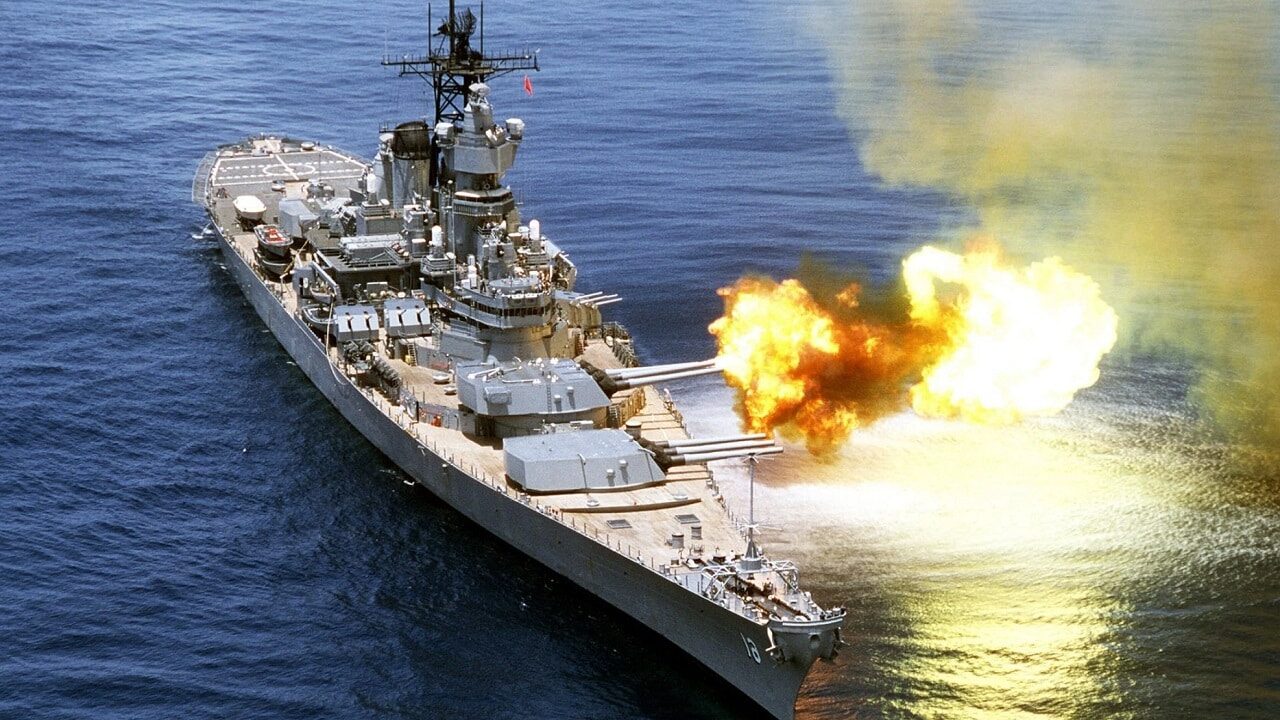
Key Points and Summary – The battleship era may be over, but a handful of ships still define what naval power looked like at its peak.
-Japan’s Yamato stands out for sheer scale, armor, and gun caliber—an extreme answer to a Pacific war that ultimately proved airpower’s dominance.
-America’s Iowa-class pairs speed with heavy guns and later missile upgrades, extending relevance into the Cold War.
-Germany’s Bismarck became a symbol of high-risk surface warfare. Britain’s HMS Dreadnought rewrote battleship design overnight and triggered an arms race.
-France’s Richelieu-class rounds out the list as a fast, modern European heavyweight with a complex wartime journey.
The 5 Battleships That Still Define Naval Power
Today, the age of the battleship is long gone. And, of course, we are omitting the Trump-class battleship, at least for the moment.
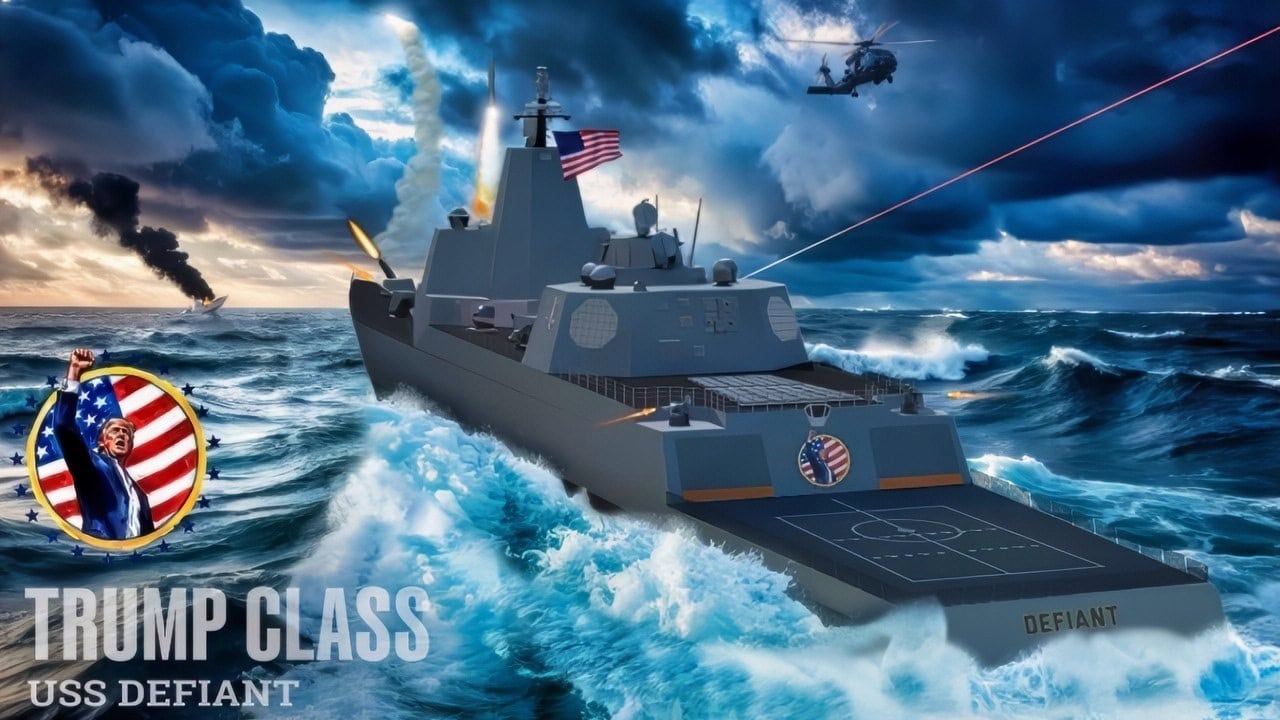
Trump-Class Battleship. Image Credit: Creative Commons/White House Photo.
However, the ironclad leviathans still capture the hearts and minds of many naval enthusiasts worldwide.
Today, I would like to reflect on some of the best and most influential battleships throughout history. This list will primarily focus on true battleships, not large missile-carrying battlecruisers (sorry, Kirov-class).
Battleship Yamato (Imperial Japan)
The Japanese battleship Yamato deserves its spot as one of the greatest battleships ever built.
Measuring 862 ft in length and displacing over 65,000 tons, Yamato was larger and heavier than France’s Charles de Gaulle nuclear-powered aircraft carrier. Powered by four steam turbine engines, she could travel at a speed of 27 knots.
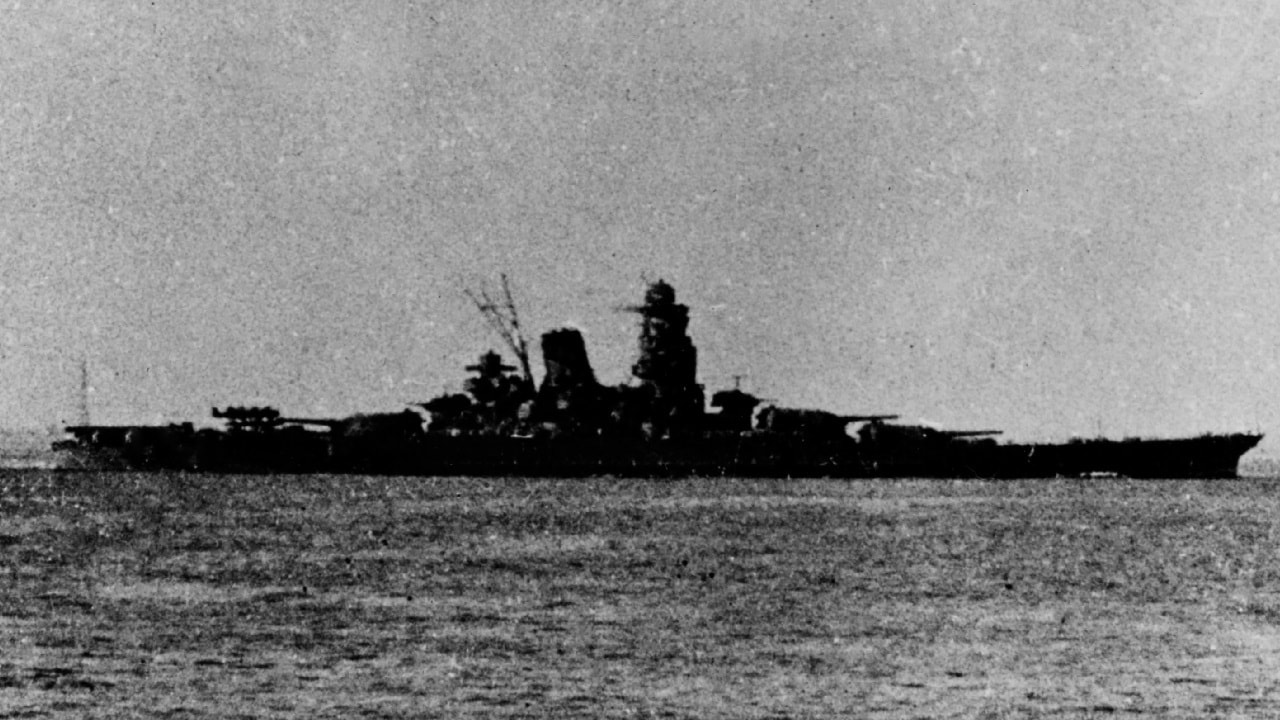
Yamato-class battleship Yamato. Image Credit: Creative Commons
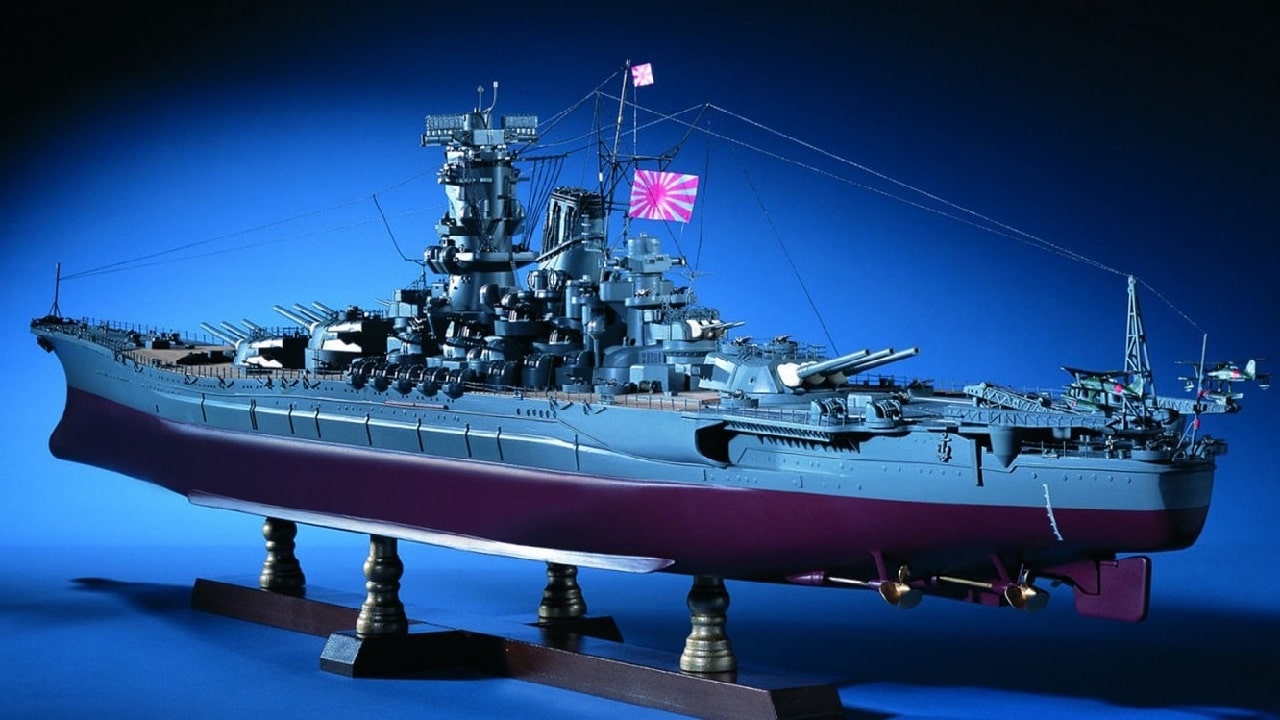
Yamato-class battleship model. Image Credit: Creative Commons.
In terms of armor and armament, Yamato was in a league of her own. Her waterline belt was reinforced with 410 mm (16.1 inches) of steel, and her deck possessed around 200 mm (7.9 inches) of armor. Her main armament consisted of three turrets, each with three 18.1-inch guns, along with several 6.1-inch, 5-inch, and 1-inch guns.
When WWII rolled around, Yamato was the most well-armed and armored warship ever created. Yamato participated in multiple battles in the Pacific theater before she was finally sunk by American aircraft during Operation Ten-Go. Her large profile made her an easy target for attack aircraft, which relentlessly assaulted her. By the time Yamato sank, she had been hit by at least 11 torpedoes and six bombs.
The Iowa-class (USA)
The Iowa-class battleships are perhaps some of the most iconic warships ever created. They would be first on this list if they were not categorically outclassed by Yamato.
The Iowa class was built in 1940 to counter Japan’s fast battleships.
They measured 860 ft in length and displaced 48,110 tons. Their primary armament consisted of nine 16-inch guns, along with 20 5-inch guns and multiple AA guns.
During the Cold War, the Iowa-class was retrofitted with 32 VLS cells, which could launch Tomahawk cruise missiles, along with 16 AGM Harpoon launchers.
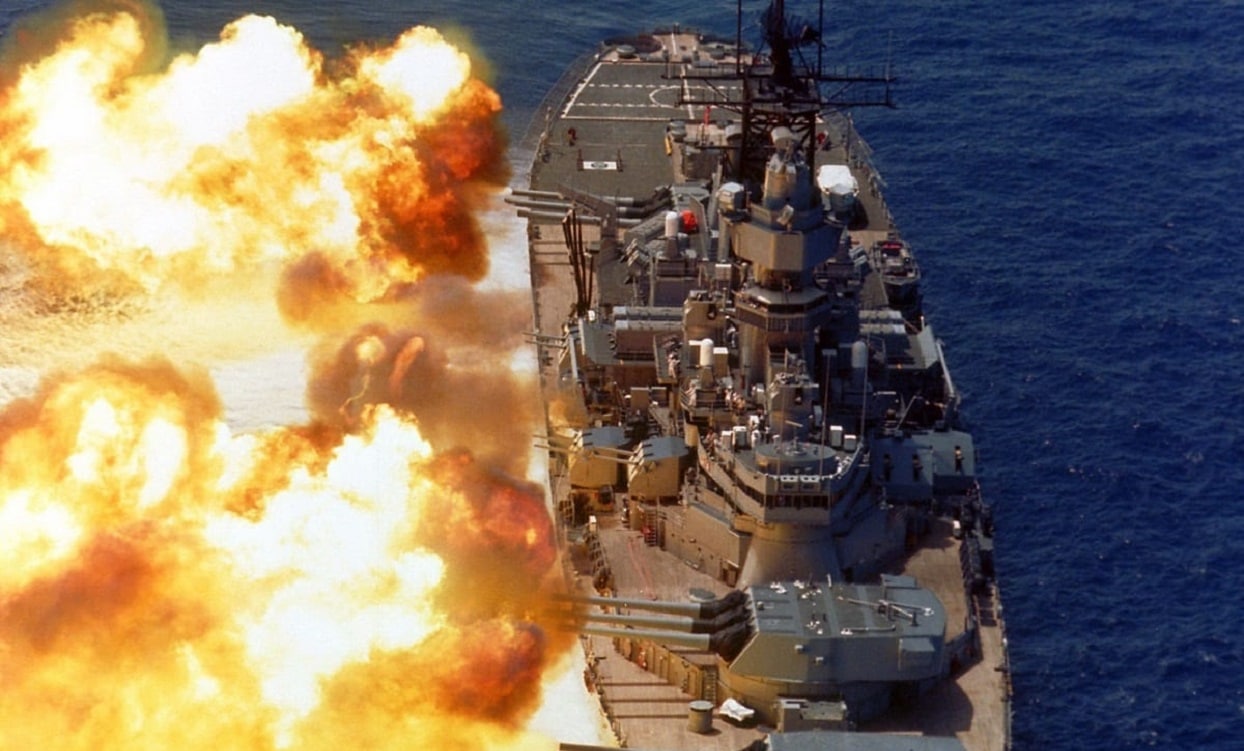
Iowa-Class Battleship.
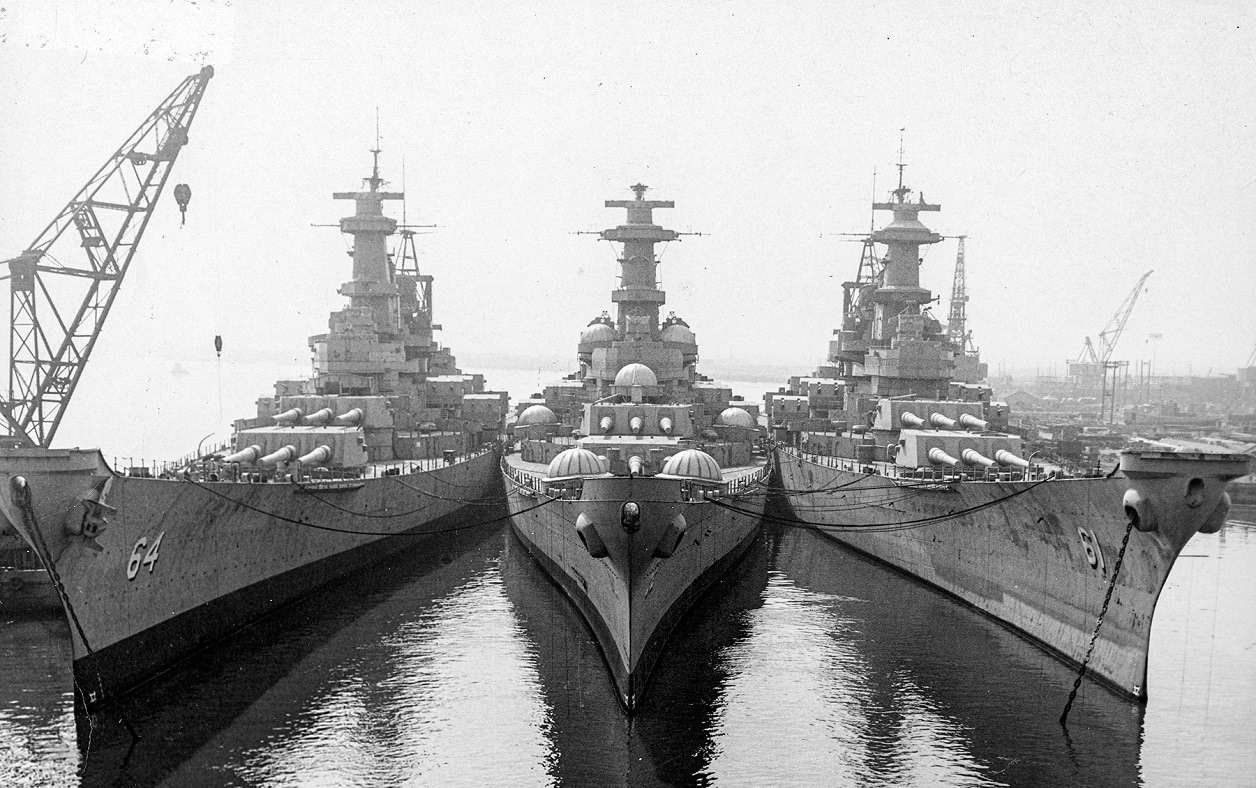
Image of Iowa-class Battleships. Image Credit: Creative Commons.
Each Iowa-class battleship has a long and storied history. All four ships served in the Pacific theater during WWII, acting as escorts for the Essex-class aircraft carriers. Afterward, they served in both Korea and Vietnam, where they provided coastal fire support.
They were temporarily deactivated before being reactivated one last time in the ’80s, when they served during the Gulf War. After the dissolution of the Soviet Union, the Iowa-class was deactivated for the final time, their hulls being converted into museums to preserve their legacy.
The Bismarck-class (Nazi Germany)
Up next are the German Bismarck-class battleships. These battleships were built for the Kriegsmarine during Adolf Hitler’s reign in Nazi Germany. They measured 792 ft in length and displaced around 41,700 tons. In terms of armament, they featured eight 15-inch guns, along with 12 5.9-inch guns, 16 4.1-inch guns, and many more.
In terms of armor, they had a waterline belt of around 320 mm of steel and 100 mm on deck, much more modest than Yamato’s armor. They were designed as fast battleships with a top speed of around 30 knots, enabled by three steam turbines.
Only two ships of this class were ever completed: Bismarck and her sister Tirpitz. Both ships had relatively short careers. Bismarck successfully sank the British battlecruiser HMS Hood and damaged the battleship Prince of Wales before eventually being sunk, the exact cause still unknown. Tirpitz’s short career was much less dramatic. She was stationed in the Baltic Sea to threaten convoys traveling from Britain to the USSR. She was struck by an X-craft in 1943, where she was neutralized and eventually bombed in 1944, leading to her ultimate demise.
The HMS Dreadnought (UK)
The HMS Dreadnought deserves a special mention for its contributions to naval history.
At the time of her introduction, she was the most advanced battleship in the world. She measured around 527 ft in length and displaced around 18,410 tons, modest by today’s standards.
She was the first battleship to feature a uniform main armament with five turrets, each sporting two 12-inch guns, along with 27 3-inch guns.
Her armor at the waterline belt varied from 102–279 mm of steel, while her deck only featured 19–76 mm of armor. She had a modest speed of around 21 knots, enabled by two steam turbine engines.
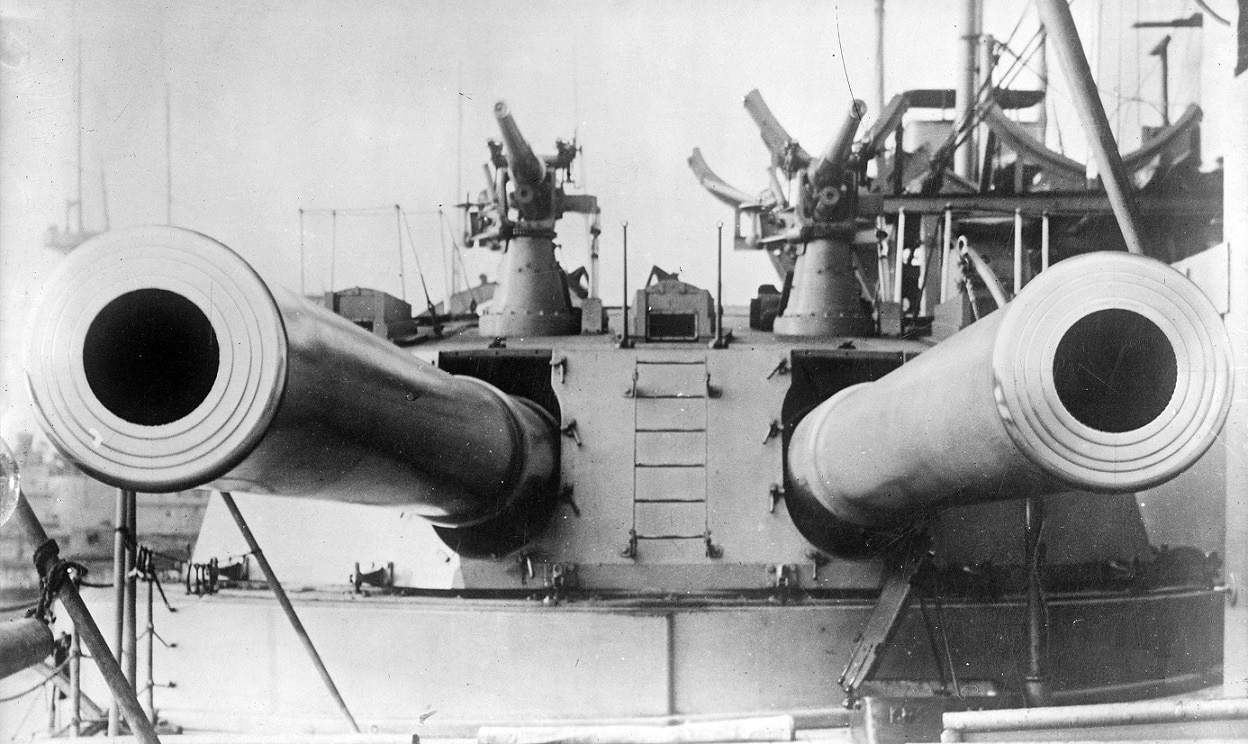
HMS Dreadnought battleship. Image: Creative Commons.
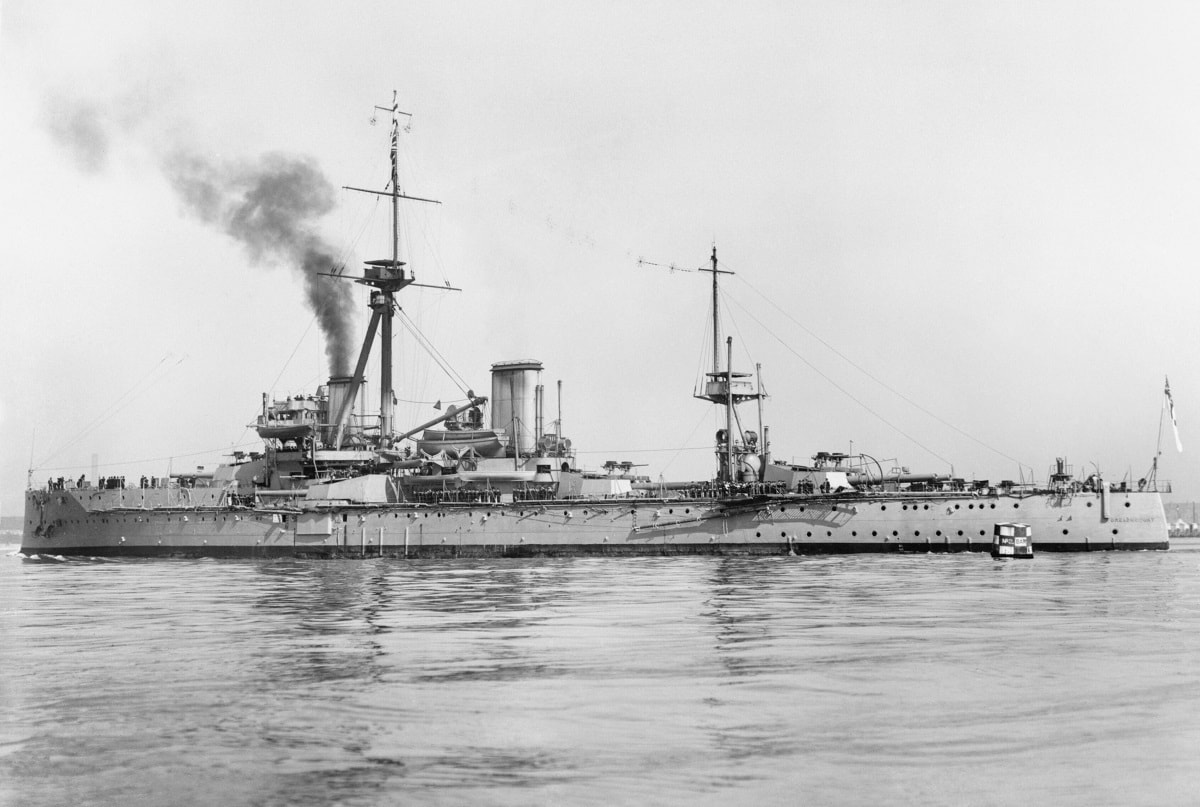
HMS Dreadnought battleship.
While HMS Dreadnought may not seem very impressive compared to the armored behemoths that succeeded her, she transformed naval warfare for a period of time. She so thoroughly outclassed her competition at the time that future battleships were classified as dreadnoughts for a time.
She was built in 1905 and commissioned in 1906, which sparked an arms race between Britain and Germany to see who could build the largest battleship. Despite being the pride of the British fleet, she saw very little combat, missing some of the most significant battles of WWI before being sold for scrap in 1920.
The Richelieu-class (France)
Last but not least is the French Richelieu-class battleship. These ships were built in the 1930s as a response to Italy’s Littorio-class battleships. They measured around 813 ft in length and displaced around 37,850 tons. Their main armament consisted of eight 15-inch guns, with a secondary armament of nine 6-inch guns.
Their armor measured around 327 mm at the waterline belt and 170 mm on deck. They could travel at around 32 knots thanks to their four geared turbines.
We don’t have time to delve into the history of the two completed Richelieu-class ships today, although both have pretty interesting stories.
They were hastily completed just before France surrendered at the Battle of Paris and were eventually transferred to the Free French Fleet.
Richelieu was sent to patrol the Indian Ocean, where she oversaw the Japanese surrender of Singapore. After the war, both ships were used as training and barracks ships before ultimately being sold for scrap.
About the Author: Isaac Seitz
Isaac Seitz, a Defense Columnist, graduated from Patrick Henry College’s Strategic Intelligence and National Security program. He has also studied Russian at Middlebury Language Schools and has worked as an intelligence Analyst in the private sector.