
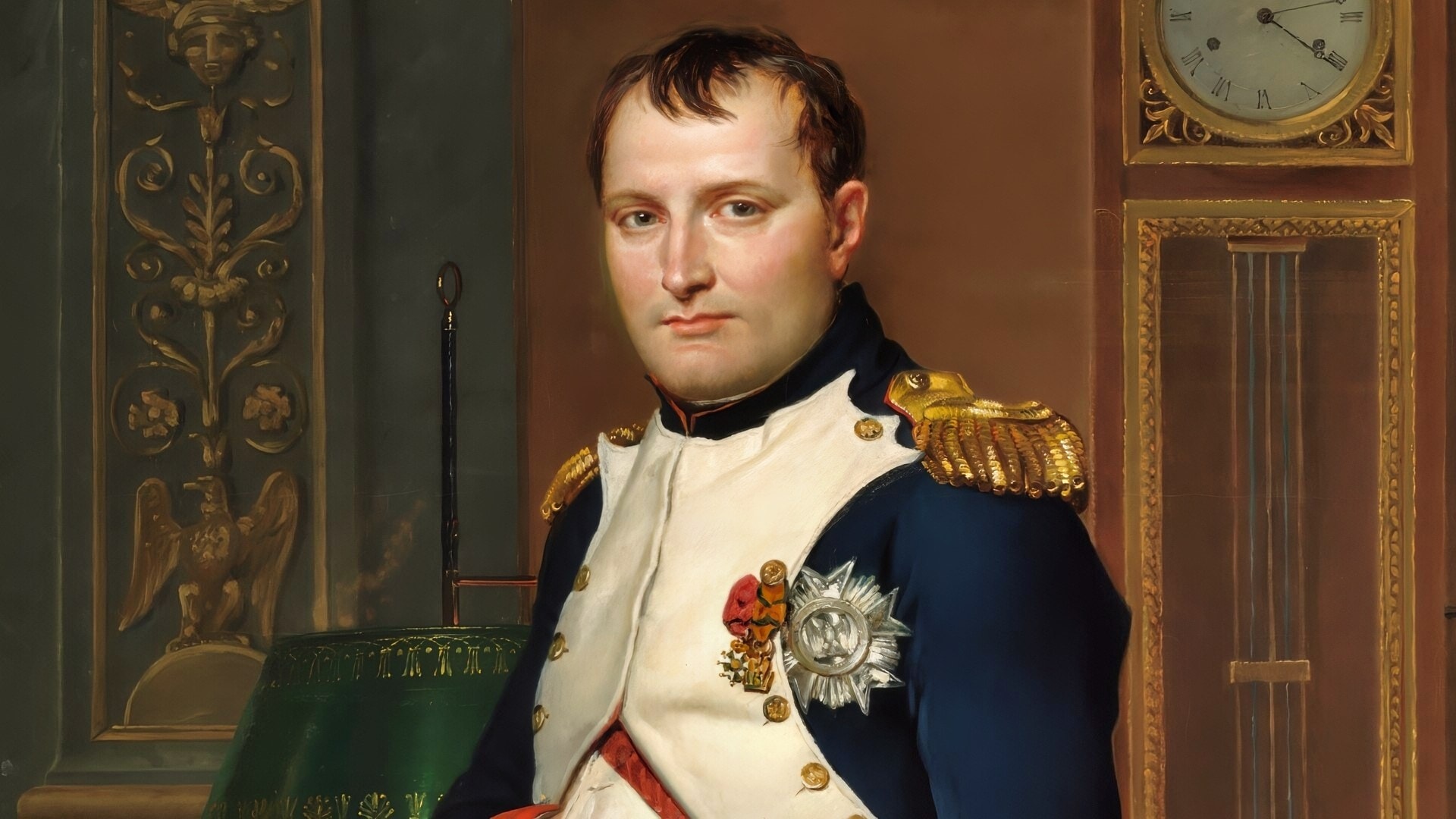
Summary and Key Points: Napoleon’s line about strength through defeat lands because his career delivered both brilliance and calamity.
-Trafalgar shattered any realistic path to invading Britain by denying sea control, turning a naval loss into a strategic dead end.
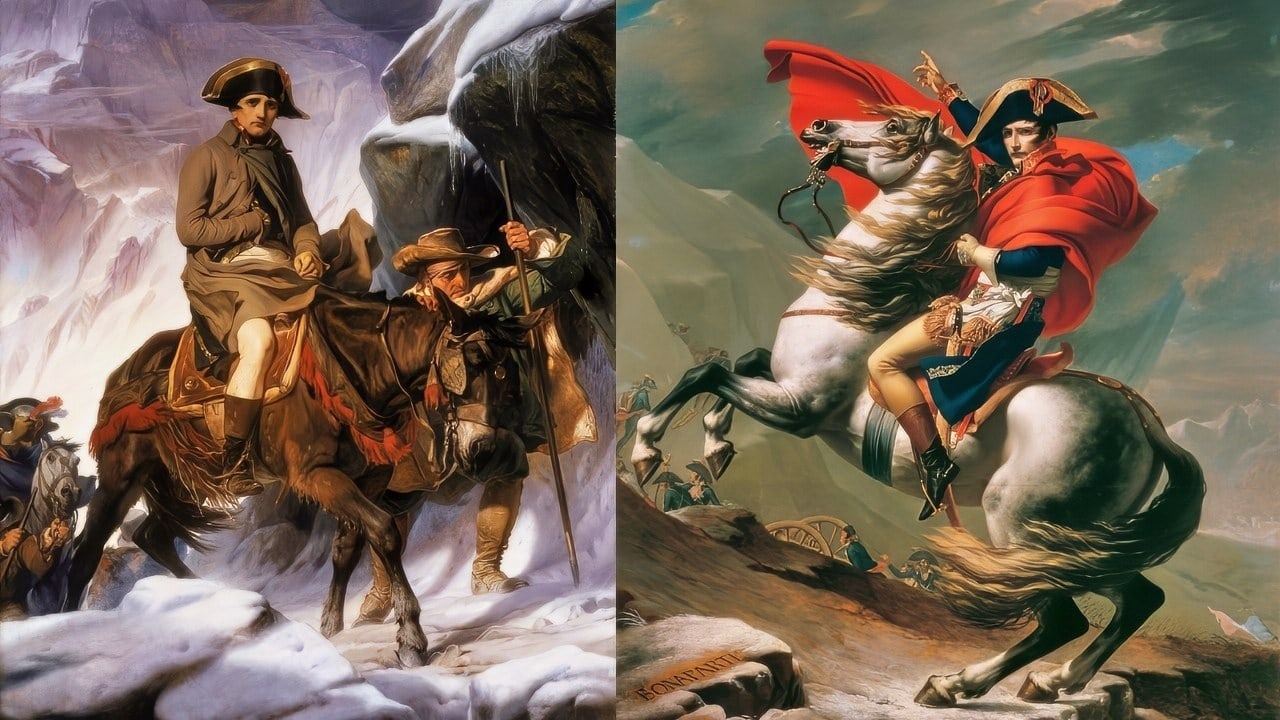
Napoleon Quote of The Day Two Looks. Image Credit: Creative Commons.
-Wagram brought victory, but at a cost that bled experience from the ranks and signaled a slow erosion in force quality.
-Then came Russia: a brutal campaign defined by Borodino’s carnage, a largely empty Moscow set ablaze, and a retreat where hunger, frost, and constant attacks destroyed most of the Grande Armée—proof that resilience has limits when strategy, logistics, and nature converge.
Quote Of The Day: Napoleon’s “Defy Defeat” Rule—And The 3 Setbacks That Tested It
“You become strong by defying defeat and by turning loss and failure into success.” – Napoleon
The above is another memorable quote attributed to Napoleon Bonaparte, France’s greatest military mastermind.
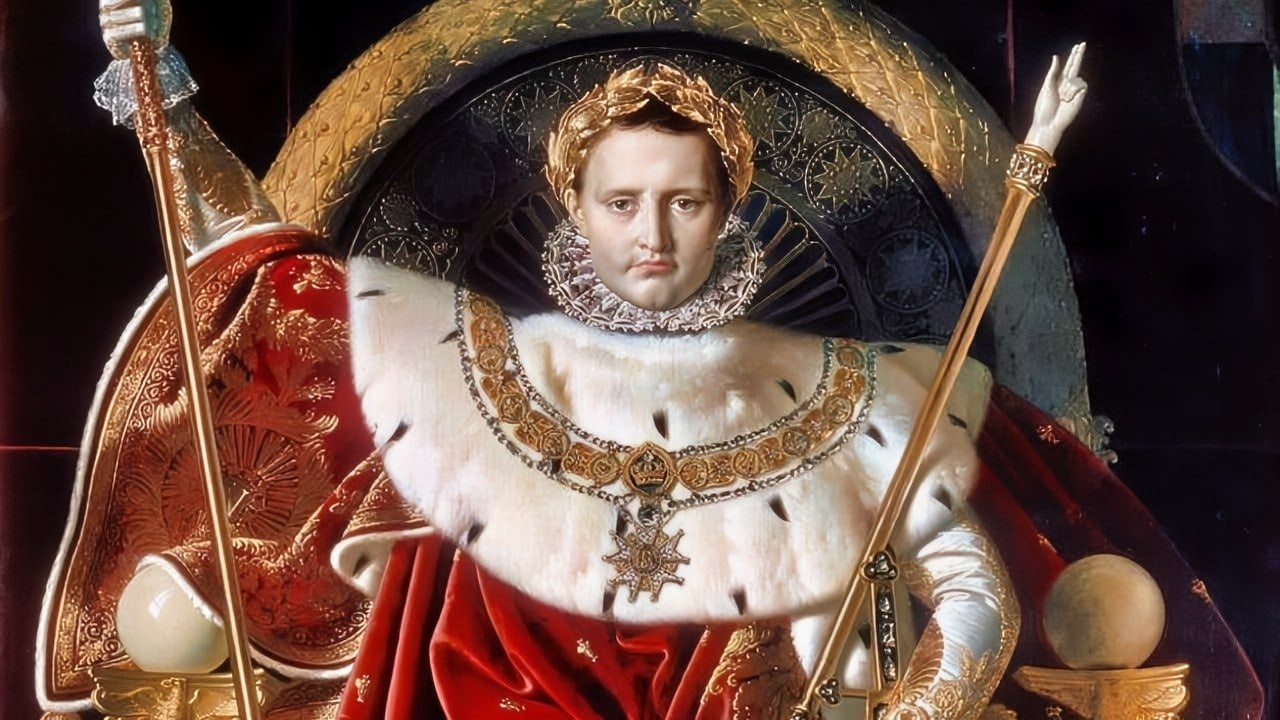
Napoleon the Emperor. Image Credit: Creative Commons.
“L’Empereur” certainly had the experience to make the statement credible. For all of his brilliant victories, Monsieur Bonaparte also suffered his fair share of spectacular defeats and setbacks. Before his most famous defeat, at Waterloo—which led to his final exile and mysterious death at St. Helena—he had always managed to bounce back from those losses.
Setback #1: Battle of Trafalgar, October 21, 1805
It may seem odd at first glance to see this defeat tied to Napoleon. After all, though Trafalgar was one of the most decisive naval battles in history, Napoleon was an army general—he commanded ground forces, not maritime forces.
Yet Kevin Eberle, writing for History Chronicler in 2023, saw fit to include Trafalgar on the list, and he gives a solid rationale:
“It was a monumental turning point in the Napoleonic Wars and a significant blow to Napoleon Bonaparte’s plans for European domination. …
“Napoleon planned to invade Britain after gaining naval superiority in the English Channel. The French and Spanish fleet, commanded by Admiral [Pierre-Charles] Villeneuve, was to break the British naval blockade to allow the French army to cross. The British Royal Navy, under Admiral Horatio Nelson, was determined to prevent Napoleon from achieving his aim and to maintain its own mastery of the seas.”
To use a 20th-century analogy, Hideki Tojo was an Imperial Japanese Army general, but as Prime Minister of Imperial Japan during World War II, every defeat that his nation’s forces suffered counted against him, whether by land, sea, or air.
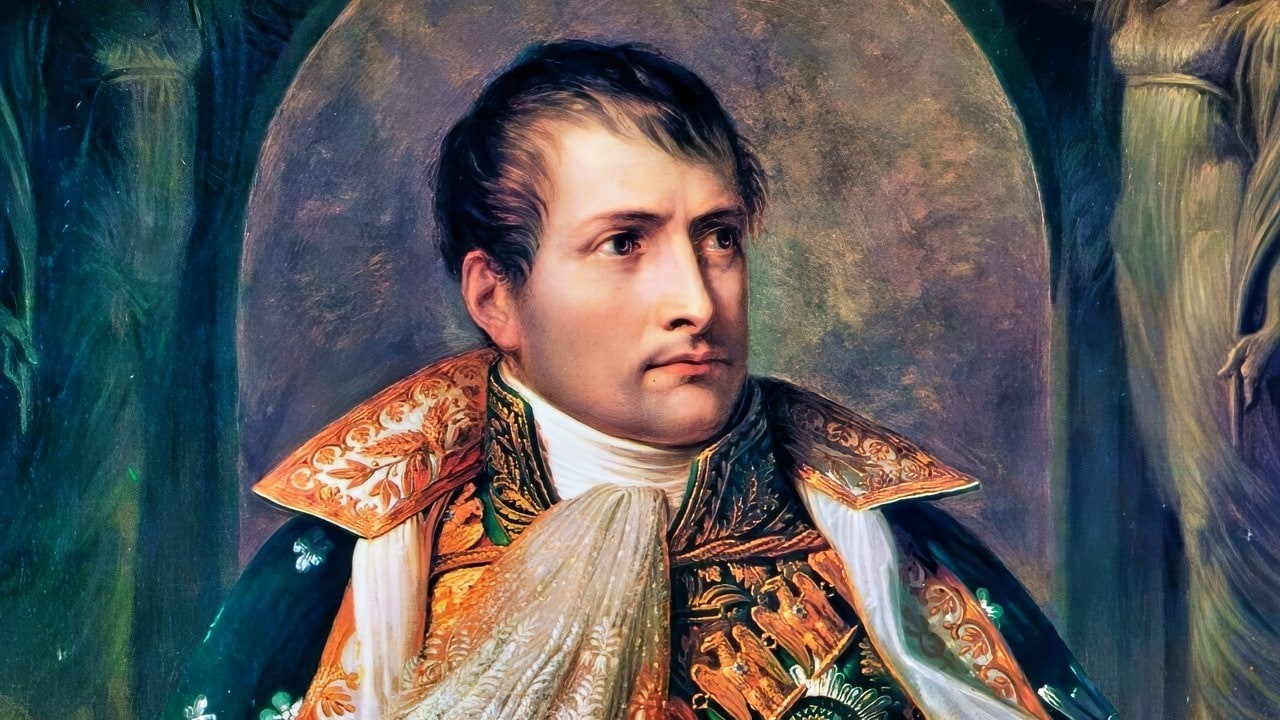
Napoleon Painting. Image Credit: Creative Commons.
At the outset of the battle, Lord Nelson sent his famous signal, “England expects that every man will do his duty.” And do their duty the English seamen did. Napoleon’s plans for invading Britain after dethroning the British on the waves were thwarted. The French and Spaniards lost 4,395 killed, 2,541 wounded, 7–8,000 captured, 21 ships of the line captured, and 1 ship of the line destroyed (the Redoutable). However, the Royal Navy paid a terrible price for its victory of 458 killed and 1,208 wounded, with Admiral Nelson himself among the dead.
As a personal side note, I have twice toured Lord Nelson’s flagship, HMS Victory, at the Portsmouth Historic Dockyard, and I highly recommend the experience. The tour includes a plaque marking the spot where Nelson was fatally shot by a French sharpshooter.
Setback #2: Battle of Wagram, July 5–6, 1809)
Instead of discussing the obvious example of Napoleon’s defeat at the Battle of Leipzig—which led to his first exile, at Elba—let us reach once more outside the box. The Battle of Wagram was in fact a victory for Napoleon, but it was a pyrrhic victory, hence its inclusion here. Located in the present-day Austrian village of Deutsch-Wagram (roughly 15 kilometers northeast of the Vienna city center), it pitted Napoleon’s 170,000 troops against the 136,000 Austrian soldiers of Field Marshal Archduke Charles Louis John Joseph Laurentius of Austria, Duke of Teschen.
As explained by History Skills, “Victory at Wagram forced Austria to accept the Treaty of Schönbrunn, which stripped it of territory and weakened its influence in Europe, due to the Austrians losing over 40,000 men and began to pull back in disorder. …
“However, the size of the losses raised concern in Paris. Many veterans had fallen, and replacements generally lacked experience. …
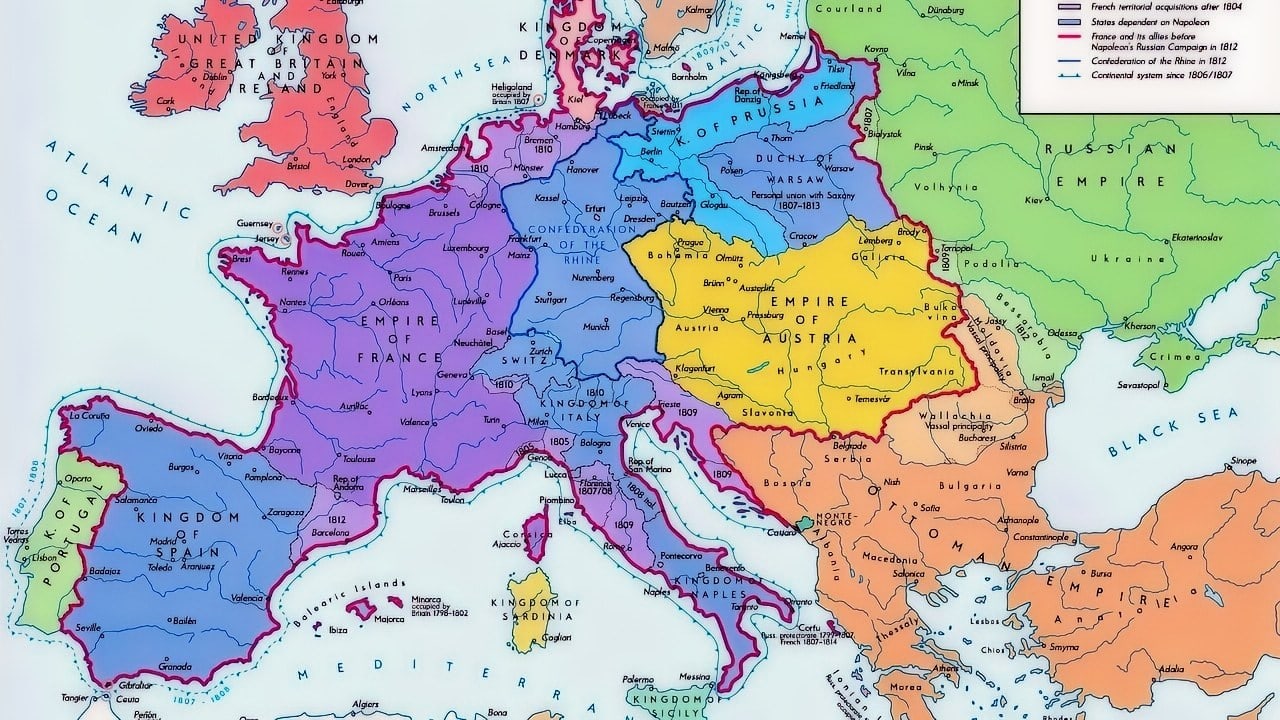
Map of Napoleon’s Empire. Image Credit: Creative Commons.
“From that point, the quality of French forces gradually fell, and future victories came at greater cost.”
Setback #3: The Russian Campaign (June 24 – December 14, 1812)
This disastrous defeat was two parts manmade and one part the work of Mother Nature.
The Battle of Borodino (September 7, 1812):
Napoleon aimed to catch and decisively defeat the Russians in a major battle. However, Russian commanders General Mikhail Kutuzov and Field Marshal Mikhail Andreas Barclay de Tolly. Had their own plans.
They played a cat-and-mouse game with Napoleon, avoiding major battles and retreating eastward, thus drawing the French deeper into Russia.
At the village of Borodino (in the present day Mozhaysky District of Moscow Oblast), Kutuzov finally did engage the French in large-scale direct combat, inflicting heavy casualties in the process.
Moscow Ablaze:
Later that same month, Napoleon’s bedraggled troops finally did arrive in Moscow. However, there was no glorious prize for Napoleon. The city was almost empty, and it was on fire. Napoleon was forced to order a humiliating retreat. T
his is in sharp contrast to, say, the capture and burning of Atlanta during the American Civil War, which was simply the starting point of General William Tecumseh Sherman’s triumphal March to the Sea.
-The Ruthless Russian Winter:
Mother Nature proved to be the deadliest killer of Napoleon’s troops. Starting their retreat in October, the Grande Armée was decimated by frostbite, hunger, and Russian attacks, which cumulatively eradicated 90 percent of Napoleon’s original troop strength of 600,000.
About the Author: Christian D. Orr, Defense Expert
Christian D. Orr is a Senior Defense Editor. He is a former Air Force Security Forces officer, Federal law enforcement officer, and private military contractor (with assignments worked in Iraq, the United Arab Emirates, Kosovo, Japan, Germany, and the Pentagon). Chris holds a B.A. in International Relations from the University of Southern California (USC) and an M.A. in Intelligence Studies (concentration in Terrorism Studies) from American Military University (AMU). He is also the author of the newly published book “Five Decades of a Fabulous Firearm: Celebrating the 50th Anniversary of the Beretta 92 Pistol Series.”