
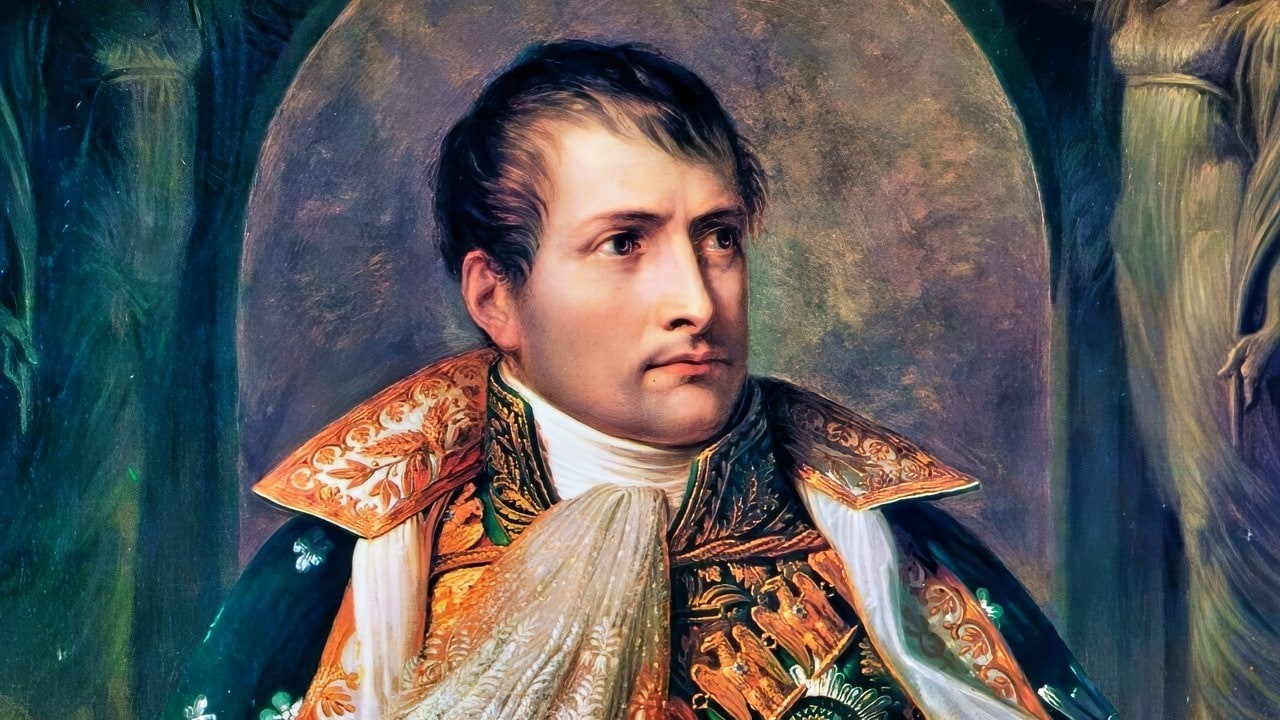
Key Points and Synopsis: Despite Napoleon Bonaparte’s famous maxim that “God fights on the side with a better artillery,” his superior firepower failed to save him at the Battle of Waterloo.
-Although the French fielded 252 guns against the Coalition’s 156, the Duke of Wellington successfully neutralized this “Grand Battery” by deploying his troops behind a “reverse slope” ridge.
-The article explores how this tactical masterstroke, combined with British “secret weapons” like the newly invented Shrapnel shell, led to Napoleon’s final defeat despite his reputation as history’s artillery genius.
Quote of the Day by General Napoleon: Artillery and Warfare Explained
“God fights on the side with a better artillery.”—That quote is typically attributed to Napoleon Bonaparte (AKA Napoleon I, Emperor of France), France’s all-time greatest military mastermind (with all due respect to St. Joan of Arc, Charles de Gaulle and Marshal Philippe Leclerc de Hauteclocque).
Tying in that concept with the notion of “Divine Right of Kings, “to this day, artillery is known as the King of Battle, whilst the infantry is the Queen.
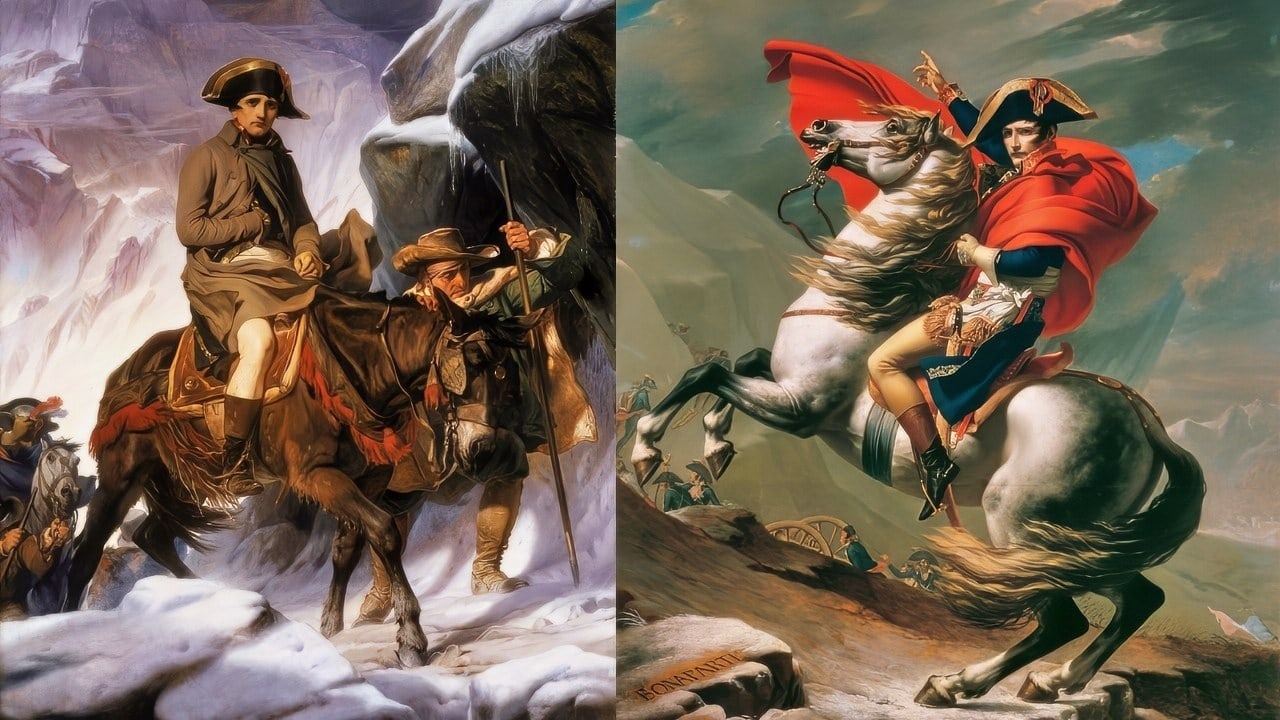
Napoleon Quote of The Day Two Looks. Image Credit: Creative Commons.
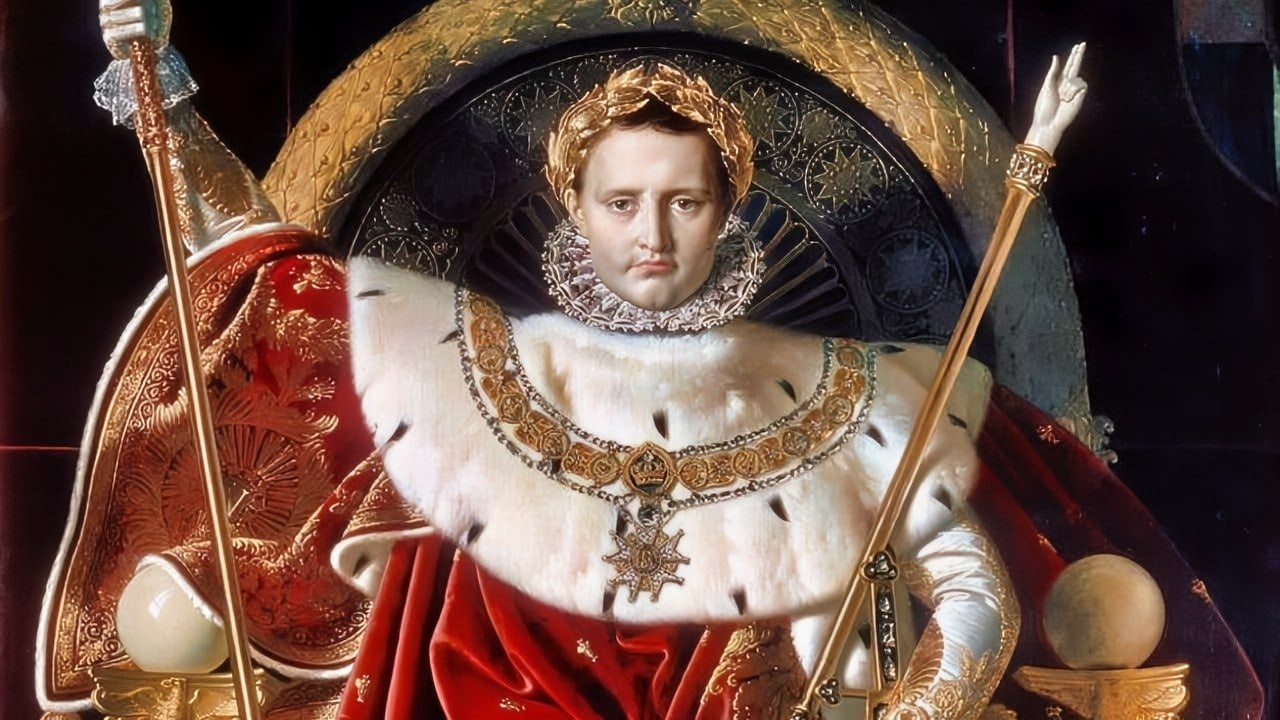
Napoleon the Emperor. Image Credit: Creative Commons.
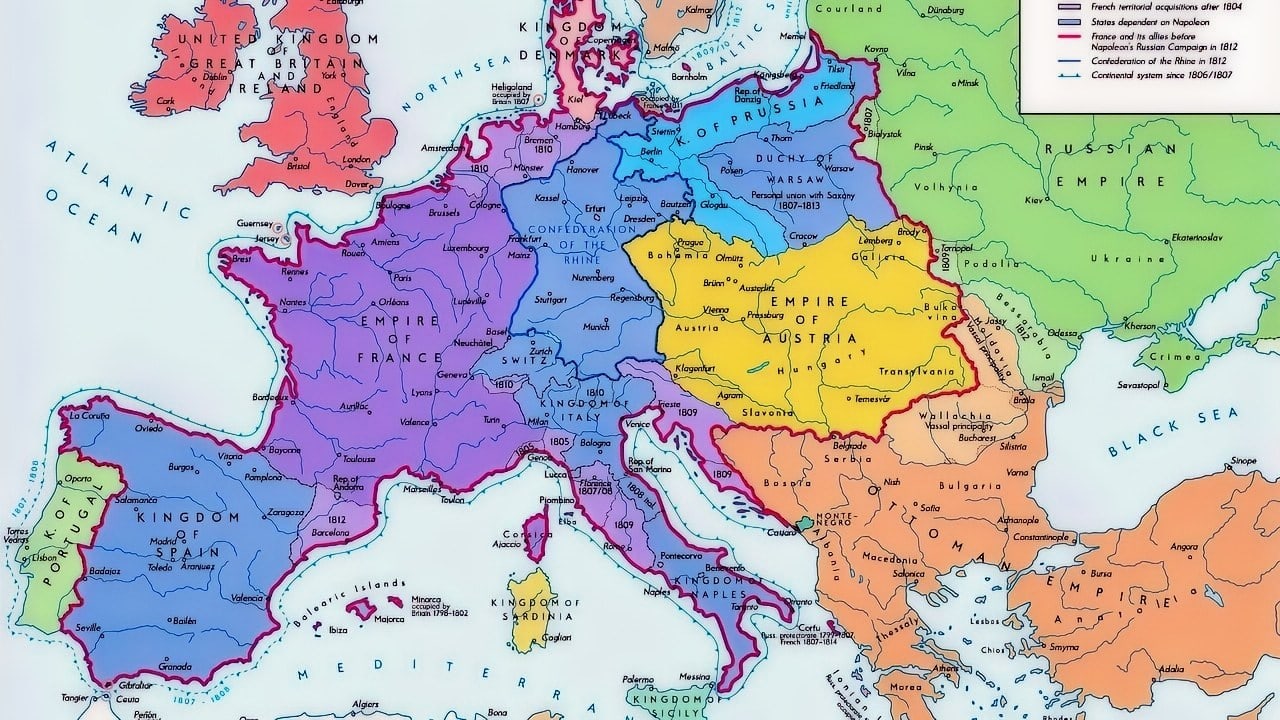
Map of Napoleon’s Empire. Image Credit: Creative Commons.
Moreover, the so-called “artillery charge” is ofttimes attributed to Napoleon.
However, proper credit actually belongs to one of his senior officers, General Alexandre-Antoine Hureau de Sénarmont, who first used it at the Battle of Friedland in 1807, whereupon the general pushed his guns up to within 60 yards of the Russian line, blasting their infantry and actually leading his own. Yet Napoleon’s brilliance in the employment of artillery was insufficient to save him from his final undoing at the Battle of Waterloo (in the United Kingdom of the Netherlands [present-day Belgium]) on June 18, 1815.
Bottom Line Up Front: How and Why Napoleon’s Artillery Let Him Down at Waterloo
In fairness and nuance, the artillery didn’t let him down initially. Indeed, the French artillery started the battle with a distinct numerical advantage over the Seventh Coalition forces of Britain (commanded by Arthur Wellesley, 1st Duke of Wellington), Prussia (commanded by Gebhard Leberecht von Blücher), and the Netherlands (commanded by William II, the Prince of Orange), with 252 large guns versus 156.
As noted by the Age of Revolution website, “80 of the French cannons were assembled into a Grand Battery at the centre of their line, while others were deployed to bombard the Allied strongpoints of Hougoumont and La Haye Sainte. These caused terrible damage wherever they could fire. A British cavalry officer, Major [Edward Nevil] Macready of the 30th [(Cambridgeshire) Regiment of Foot], described charging against the French gun emplacements: ‘400 cannon were belching forth fire and death on every side; the roaring and shouting were indistinguishably commixed—together they gave me an idea of a labouring volcano.’”
NOTE: At the time of the battle, Macready was a mere 17-year-old ensign, commanding his regiment’s light company towards the close of the battle. At the battle’s conclusion, he was the only surviving officer, along with 16 men, of the original three officers and 51 men. For his gallantry, he was promoted to lieutenant on July 20, 1815, and remained with the Army of Occupation at the end of the Waterloo Campaign.
However, Lord Wellington figured out a way to mitigate the effects of the fearsome French artillery: he positioned most of his troops slightly behind the ridge of Mont St. Jean. He had the cavalry dismount and some of the front infantry regiments actually lie down on the ground. This “reverse slope” concealed the Allied troops from the French cannon, who were on a much smaller ridge on the other side of the valley of Waterloo.
Ergo, it wasn’t until the Coalition troops had to move forward to defend against French advances, or during the final general Allied attack, that they suffered the full effect of the French cannons.
When all was said and done, roughly 25,000 of Napoleon’s troops lay dead or wounded, versus 17,000 casualties for Wellington’s men and 7,000 for Blücher. In the Duke of Wellington’s own words, “It had been a damned nice thing – the nearest run thing you ever saw in your life. “
Napoleonic Era French Artillery Tech Specs and Vital Stats
–12-pounder field guns (the heaviest caliber, requiring 15 crew members to load, aim, and fire, achieving 1–2 rounds per minute under ideal conditions)
-8-pounders
-6-inch howitzers
Napoleonic Era British Artillery Tech Specs and Vital Stats
–Blomfield 9-pounder cannon
-6-pounder guns and howitzers
The most common type of ordnance used by both sides was round shot, a solid iron ball useful for smashing through walls and other defensive structures, not to mention infantry or cavalry formations. The normal range was 700-900 yards, but if the ground was dry enough, this could be significantly increased by bouncing the round shot along the ground.
However, the Coalition made good use of two ordnance types that helped offset their artillery pieces’ numerical disadvantage vis-à-vis the French:
-Rockets: The Austrians had used missiles for a while, and the British Horse Artillery converted two troops into rocket troops; large rockets were fired lying on the ground directly facing the enemy, or from a bombarding frame which could be used to fire missiles vertically to land on areas far to the rear (i.e., as an indirect fire [IDF] weapon)
-Shrapnel: Seen as somewhat of a “secret weapon” exclusive to the Brits during this war, the ‘Spherical Case Shot’ or more commonly the ‘Shrapnel shell’ was invented by the eponymous Captain (later General) Henry Shrapnel. It was a thin-cased shell filled with musket balls, designed to detonate at about head height over enemy formations, unleashing a lethal ring of balls that would devastate units (at a time when flak vests weren’t a thing).
About the Author: Christian D. Orr, Defense Expert
Christian D. Orr is a Senior Defense Editor. He is a former Air Force Security Forces officer, Federal law enforcement officer, and private military contractor (with assignments worked in Iraq, the United Arab Emirates, Kosovo, Japan, Germany, and the Pentagon). Chris holds a B.A. in International Relations from the University of Southern California (USC) and an M.A. in Intelligence Studies (concentration in Terrorism Studies) from American Military University (AMU). He is also the author of the newly published book “Five Decades of a Fabulous Firearm: Celebrating the 50th Anniversary of the Beretta 92 Pistol Series.”