
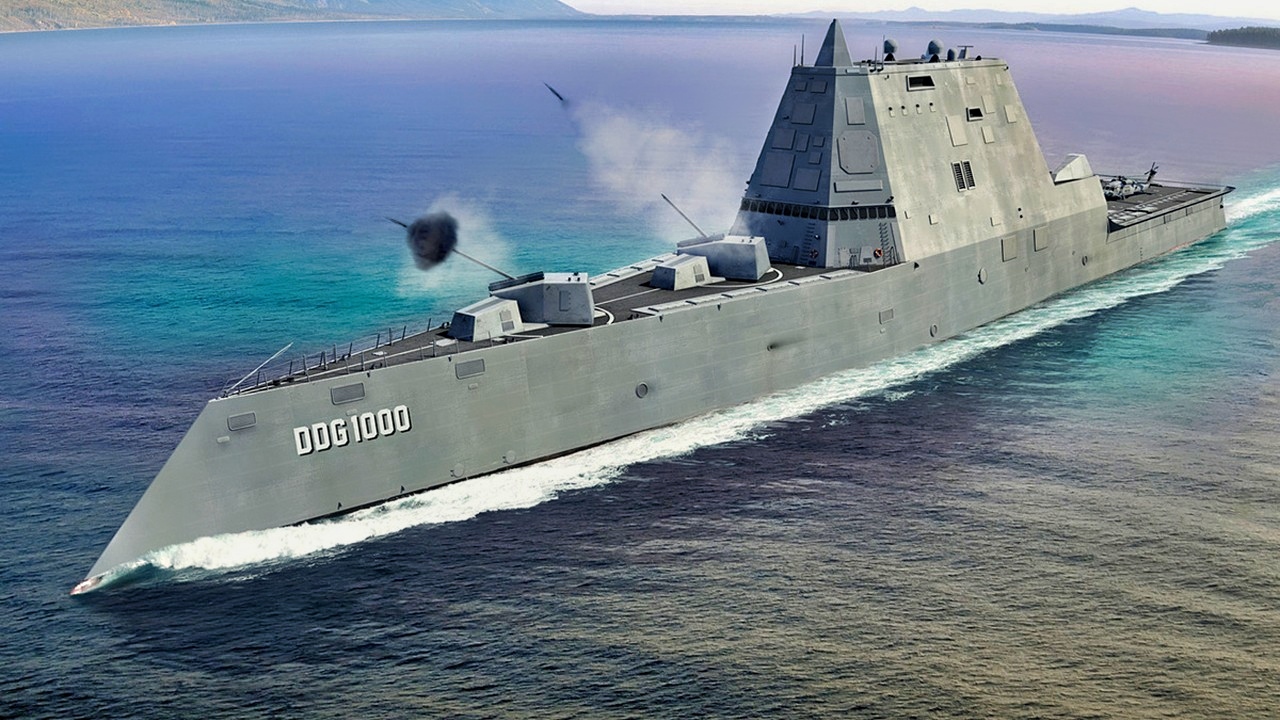
The Zumwalt Destroyers Finally Have A Mission: Hypersonic Missiles (Summary and Key Points)
-The U.S. Navy is moving to give its three Zumwalt-class destroyers a defined combat role by refitting them to carry the Conventional Prompt Strike hypersonic weapon.
-Originally envisioned as a stealthy naval gunfire-support platform, the class lost its core purpose after the Advanced Gun System’s ammunition program collapsed under soaring per-round costs.
-With only three hulls built, the Navy is now betting that up to 12 hypersonic missiles per ship can convert the Zumwalts into valuable long-range strike assets—especially for Pacific contingencies.
-The concept promises survivable, hard-to-intercept deep strike, but questions remain about missile maturity, integration timelines, cost, and whether three ships can move the strategic needle.
From Stealth Gunship To Hypersonic Shooter: The Navy’s Zumwalt Reboot
The U.S. Navy is pushing ahead with plans to arm its three Zumwalt-class destroyers with hypersonic missiles – a decision intended to give the long-troubled warships a clearer operational role following years of uncertainty.
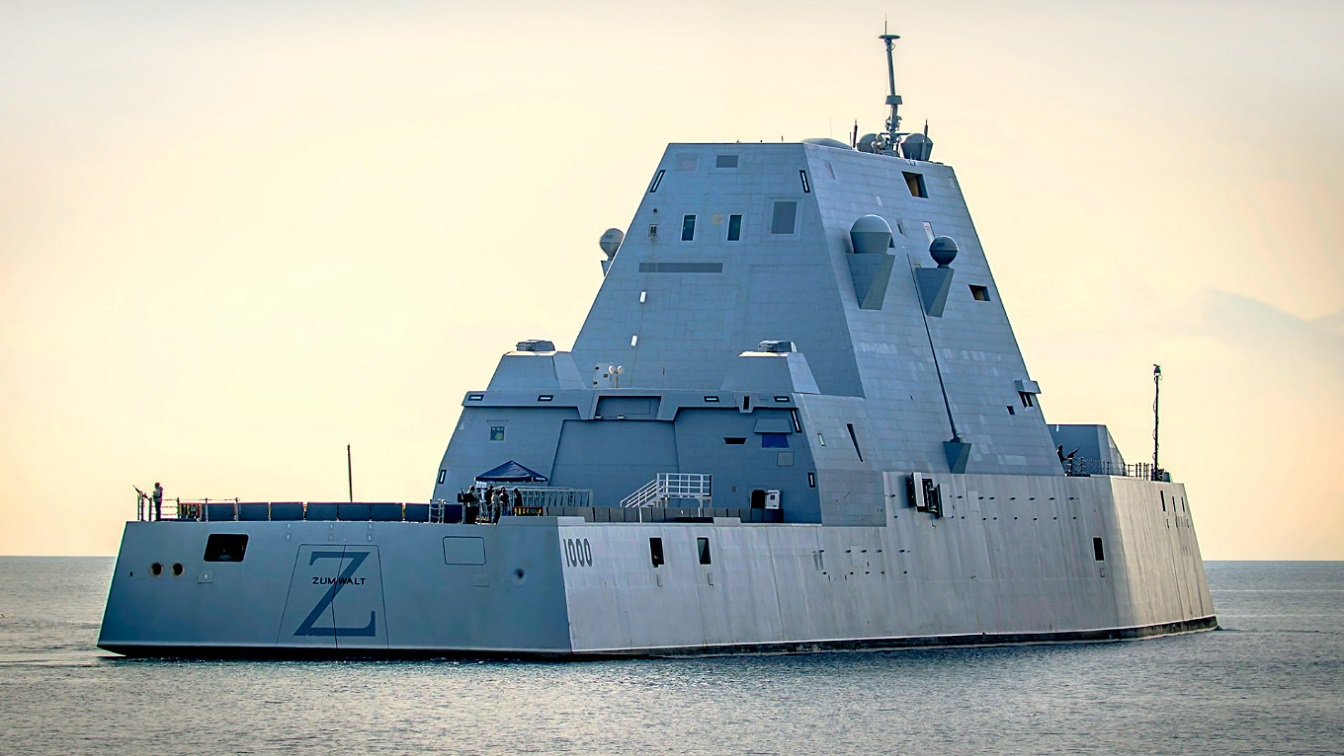
Zumwalt-Class, the largest destroyer on Earth today.
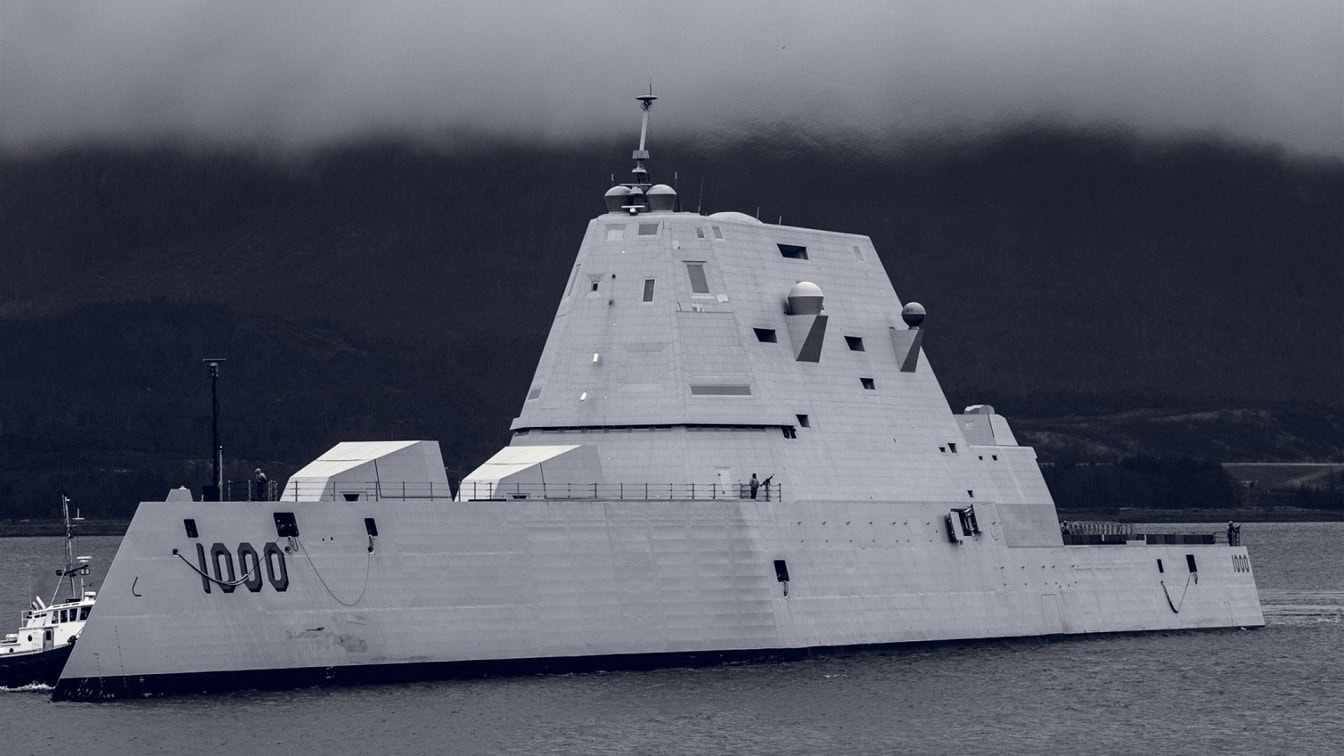
Zumwalt-Class. Image Credit: Creative Commons.
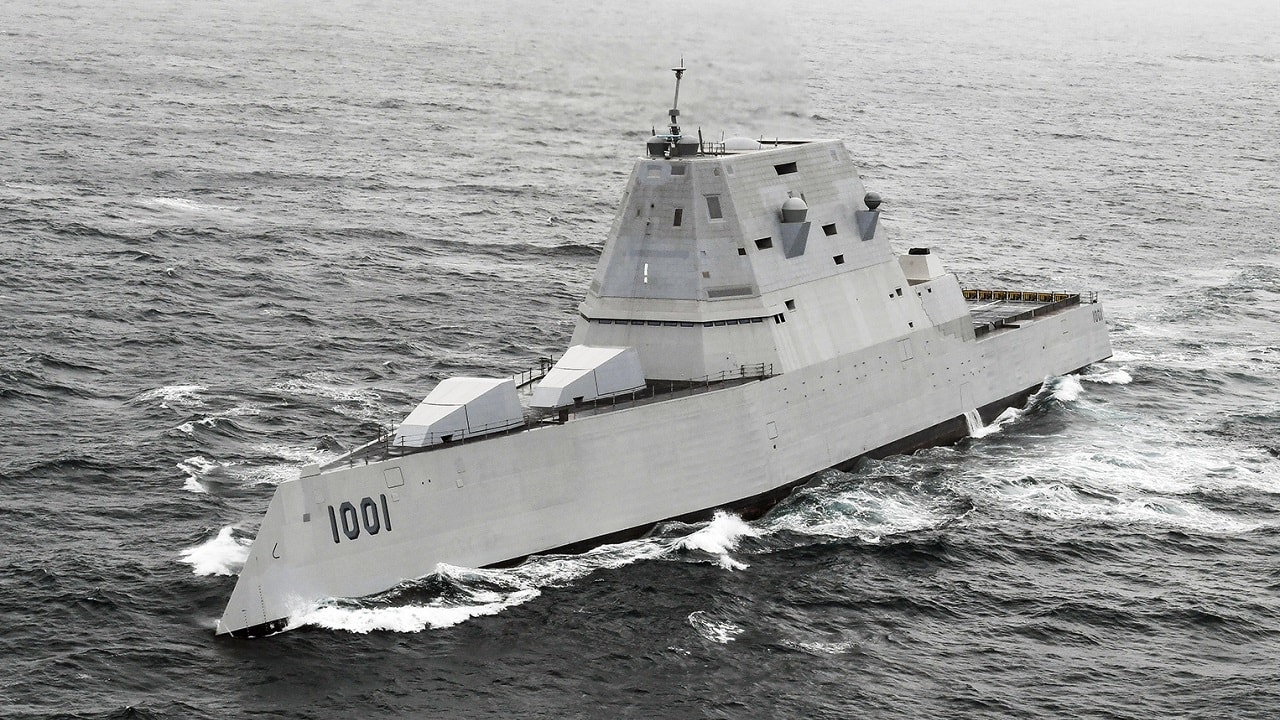
210421-N-FC670-1062 PACIFIC OCEAN (April 21, 2021) Zumwalt-class guided-missile destroyer USS Michael Monsoor (DDG 1001) participates in U.S. Pacific Fleet’s Unmanned Systems Integrated Battle Problem (UxS IBP) 21, April 21. UxS IBP 21 integrates manned and unmanned capabilities into challenging operational scenarios to generate warfighting advantages. (U.S. Navy photo by Chief Mass Communication Specialist Shannon Renfroe)
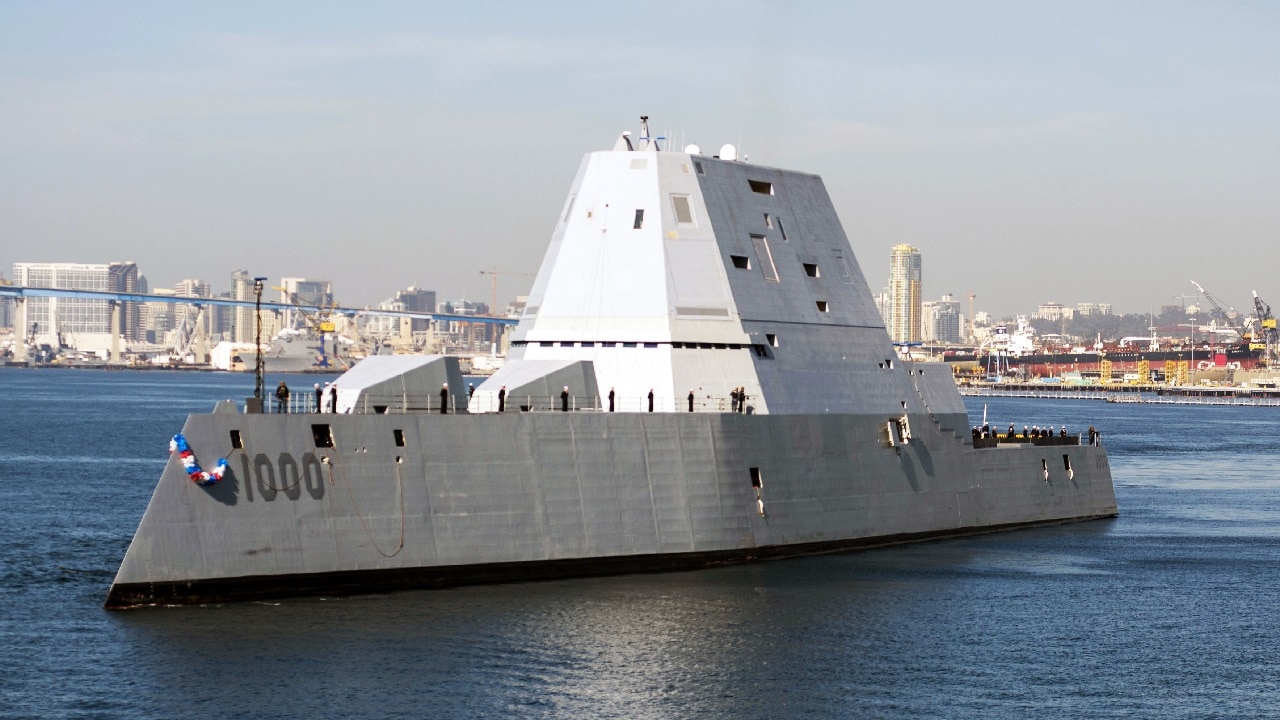
SAN DIEGO (Dec. 8, 2016) The guided-missile destroyer USS Zumwalt (DDG 1000) arrives at its new homeport in San Diego. Zumwalt, the Navy’s most technologically advanced surface ship, will now begin installation of combat systems, testing and evaluation and operation integration with the fleet. (U.S. Navy photo by Petty Officer 3rd Class Emiline L. M. Senn/Released)
The plan, which involves refitting the ships to carry the Navy’s Conventional Prompt Strike hypersonic weapon, is now underway as part of a larger effort by the U.S. military to field long-range strike capabilities for potential future conflicts – particularly in the Pacific.
And, in fact, just recently, the USS Zumwalt was seen leaving port for the first time in years, headed for sea trials with new capabilities ready for testing.
Once envisioned as the future of surface warfare, the Zumwalt class has spent much of its existence being scrutinized.
Designed with an angular stealth hull, an integrated electric propulsion system, and a high level of automation, the destroyers were originally intended to provide advanced naval gunfire support while close to shore. Instead, rapidly spiralling costs, a production run cut short, and the collapse of the program’s signature weapon – the Advanced Gun System and its expensive Long Range Land Attack Projectile – left the ships without any real purpose.
Only three hulls were ever built despite billions of dollars being invested in the program – and now, the Navy is betting that hypersonic weapons – which are capable of traveling at speeds above Mach 5 and striking targets hundreds or even thousands of miles away – can transform the Zumwalt class into a meaningful strategic asset. Whether this new role ultimately proves to be the decision that makes the Zumwalt destroyers relevant will soon be determined.
From Stealth Gunship to Hypersonic Launcher
When the Zumwalt program was first launched in the early 2000s, it aimed to produce 32 advanced destroyers capable of supporting amphibious landings and providing precise naval fire capability. However, budget overruns and changing strategic priorities shrank the order first to seven and then ultimately to three hulls: USS Zumwalt (DDG-1000), USS Michael Monsoor (DDG-1001), and USS Lyndon B. Johnson (DDG-1002).
The class’s original signature weapon, the Advanced Gun System (AGS), which fired the Long Range Land Attack Projectile – never came close to reaching its potential. Development of the shells was ultimately canceled because costs ballooned so much – into the hundreds of thousands of dollars per round – making the system operationally and fiscally impractical. With no alternative ammunition type available, the destroyers effectively sailed without their main offensive weapon.
Those failures were a central focus of criticism of the platform. Zumwalt was largely described as a misstep and an expensive experiment that failed to deliver an asset with a clear combat role. Some estimates have put the cost of the ship at around $8 billion – a figure significantly higher than many other surface combat vessels on a per-hull basis.
That’s where hypersonic weapons come in: each destroyer may carry up to 12 hypersonic missiles, providing a deep-strike capability that complements its existing vertical launch systems that already accommodate Tomahawk cruise missiles. The new weapons form part of a larger strategic shift for the U.S. Navy toward fielding long-range precision strike weapons as great-power competition with China and Russia heats up.
What Comes Next?
The decision to make the existing Zumwalts hypersonic-capable has been met with praise. The ships arguably fill a critical gap in the U.S. Navy’s long-range strike arsenal.
Hypersonic weapons like these – which can maneuver in flight at speeds faster than Mach 5 – are harder to detect and intercept than traditional ballistic or cruise missiles. That new capability will let commanders strike well beyond the range of enemy air defenses, potentially allowing the Zumwalts to deter aggression in high-stakes theaters like the Indo-Pacific.
The Zumwalts will be used as forward bases for hypersonic missiles, possibly alongside similarly capable submarines, at hubs like Hawaii.
Some significant questions remain, however. Hypersonic missiles themselves are still under development and testing is ongoing. A successful Navy CPS hypersonic test at Cape Canaveral in mid-2025 showed progress – but full integration into combat systems is still years away. The cost of procuring and maintaining hypersonic missiles is also substantial, with some estimates suggesting it will cost tens of billions of dollars over decades if eventually fielded at scale.
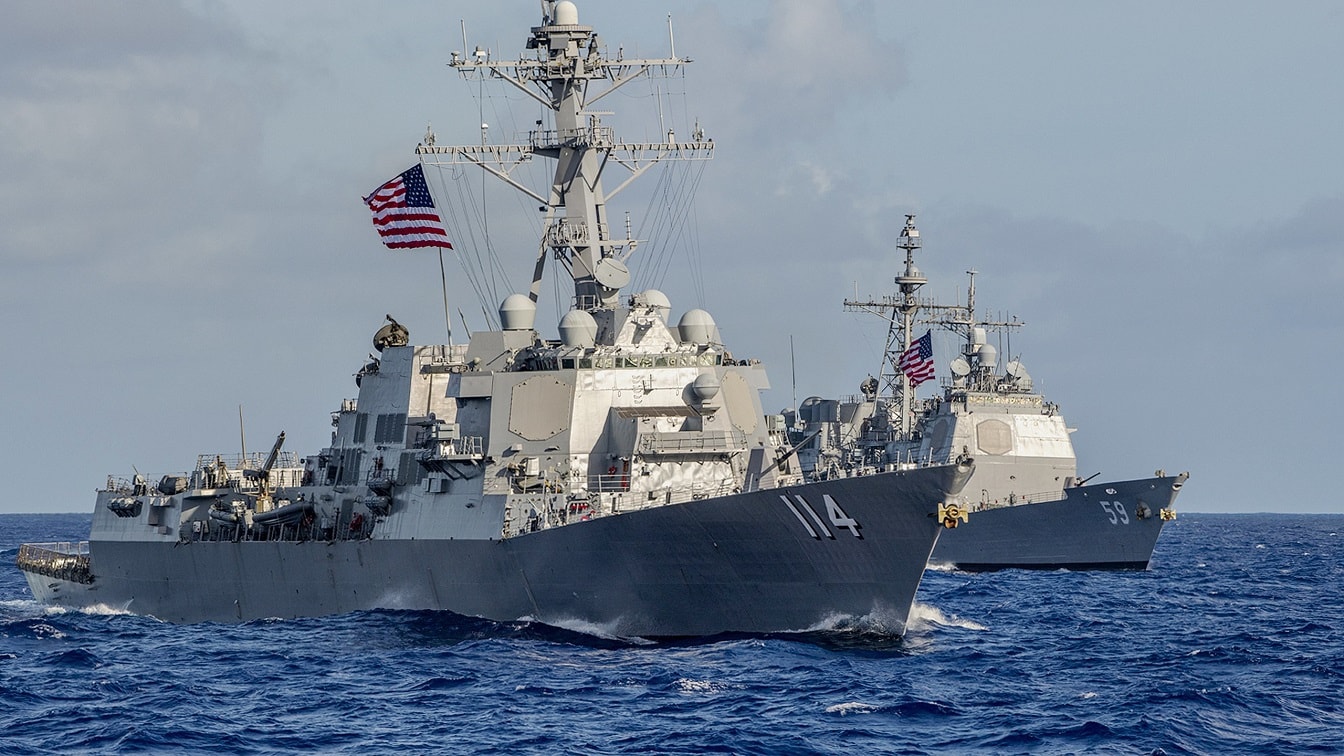
The Arleigh Burke-class guided-missile destroyer USS Ralph Johnson (DDG 114) and the Ticonderoga-class guided-missile cruiser USS Princeton (CG 59) steam in formation during dual carrier operations with the Nimitz and Theodore Roosevelt Carrier Strike Groups (CSG). Dual carrier operations unify the tactical power of two individual CSG, providing fleet commanders with an unmatched, unified credible combat force capable of operating indefinitely. The CSGs are on a scheduled deployments to the Indo-Pacific.
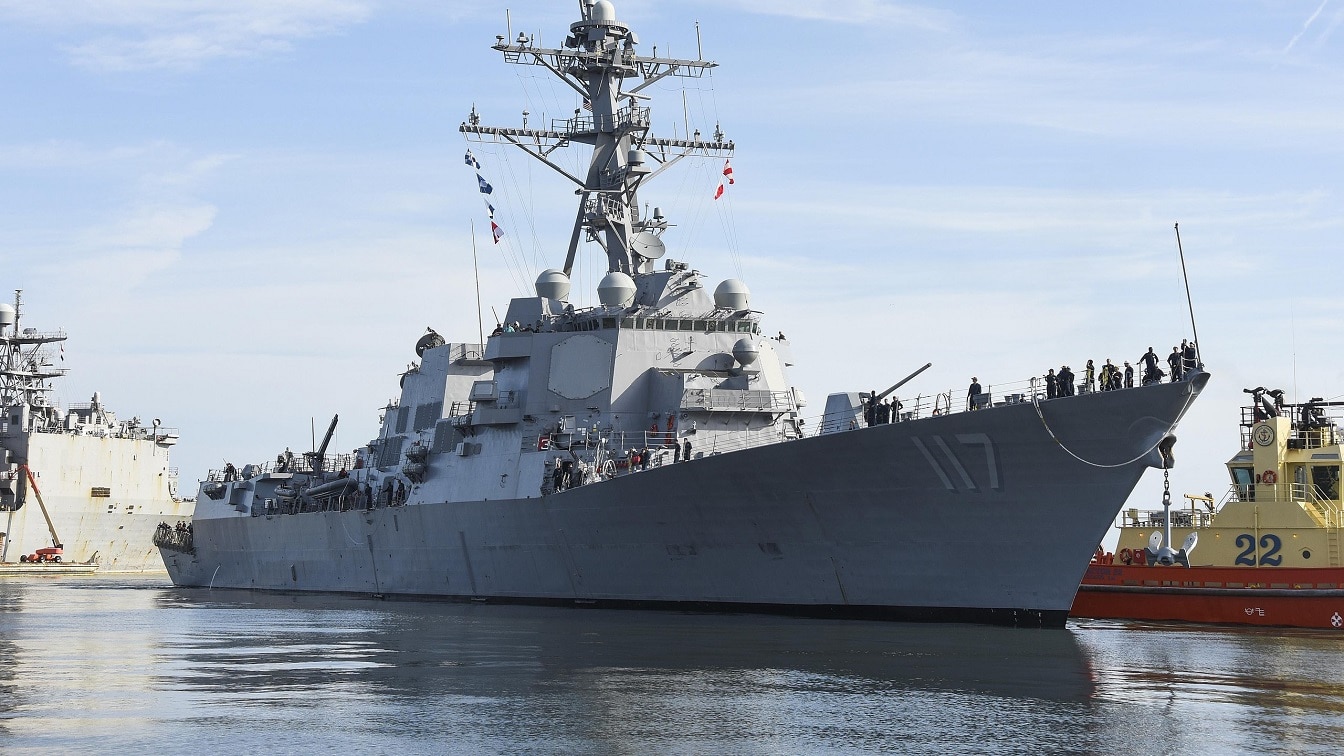
190731-N-ED185-1017 MAYPORT, Fla. (July 31, 2019) The Arliegh Burke-class guided-missile destroyer USS Paul Ignatius (DDG 117) prepares to moor at Naval Station Mayport. Paul Ignatius, the Navy’s newest Arleigh-Burke-class destroyer, was commissioned at Fort Lauderdale, Florida on July 27, 2019 and will call Naval Station Mayport its new home. (U.S. Navy photo by Mass Communication Specialist1st Class Brian G. Reynolds/Released)
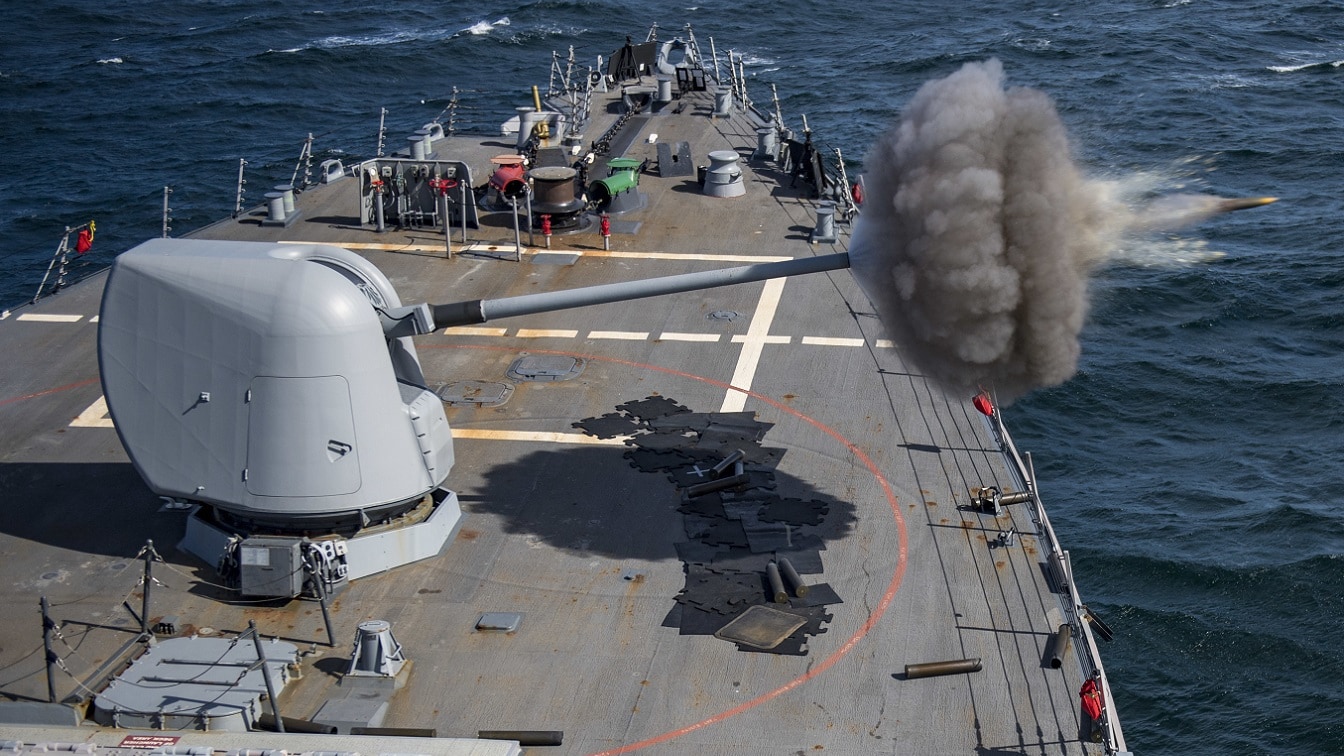
(Jan. 14, 2018) The Arleigh Burke-class guided-missile destroyer USS Ross (DDG 71) fires its 5-inch gun during a naval surface fire support exercise with the Royal Moroccan Navy as part of exercise African Sea Lion. Among African Sea Lion’s objectives is to test and evaluate US and Moroccan ability to conduct coordinated, combined naval surface fire support exercises on the Tan Tan firing range. Ross, forward-deployed to Rota, Spain, is on its sixth patrol in the U.S. 6th Fleet area of operations in support of regional allies and partners and U.S. national security interests in Europe and Africa. (U.S. Navy photo by Mass Communication Specialist 1st Class Kyle Steckler/Released)
Moreover, there aren’t many Zumwalts to work with: only three. That limited number of vessels raises questions about how significant or meaningful an impact the vessels can have on the overall force, especially when compared to the Navy’s larger Arleigh Burke-class destroyers and planned future warships.
Each Zumwalt’s stealth capability and advanced electric power system are technological achievements, but they are more useful when fielded in larger numbers – especially in the event of a combat scenario.
The new hypersonic capability may not save the Zumwalt program so much as decide the best way to utilize an expensive misstep.
With only three ships in service and no plans for new hulls, the inclusion of new hypersonic missiles may simply pave the way for hypersonic-equipped future vessels and platforms.
About the Author:
Jack Buckby is a British researcher and analyst specialising in defence and national security, based in New York. His work focuses on military capability, procurement, and strategic competition, producing and editing analysis for policy and defence audiences. He brings extensive editorial experience, with a career output spanning over 1,000 articles at 19FortyFive and National Security Journal, and has previously authored books and papers on extremism and deradicalisation.