
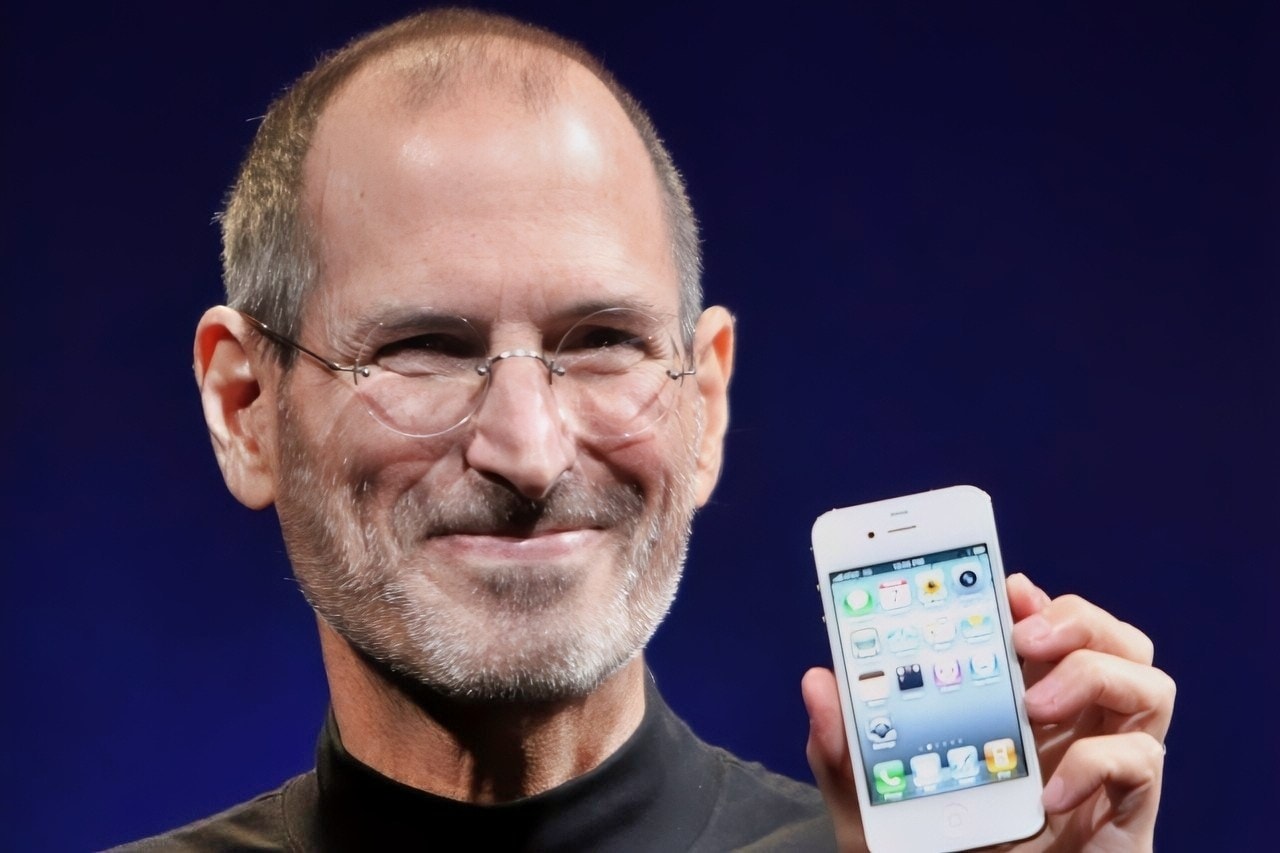
Synopsis and Key Points: A popular quote attributed to Steve Jobs—”My favorite things in life don’t cost any money. It’s really clear that the most precious resource we all have is time”—is often mistaken as wisdom from his final years fighting cancer.
-However, it actually originated from a 1985 Playboy interview when Jobs was just 30 years old.
-In that context, Jobs was discussing the sacrifice of his personal life for his work rather than impending mortality.
-The article further explores Jobs’ complex relationship with wealth, his skepticism of traditional philanthropy, and his relatively modest lifestyle despite his billionaire status.
Misunderstood Wisdom: The Surprising 1985 Origin of Steve Jobs’ ‘Time Is Precious’ Quote
There are a lot of famous quotes from Apple founder Steve Jobs that are shared regularly for inspiration or business advice. Some of them come from TV commercials, and others from his famous Stanford speech in 2005.
One of the more frequently shared Jobs quotes is “My favorite things in life don’t cost any money. It’s really clear that the most precious resource we all have is time.”
One might have assumed that the quote had come from Jobs while he was battling cancer in the last years of his life, especially during the period when it was clear that he had a finite amount of time to live, leading up to his death in 2011. The quote has even sometimes been mistakenly attributed to that Stanford speech, in which he discussed his cancer battle and stated that “you’ve got to find what you love.”
But in fact, the quote actually comes from two decades before that- it’s from a Playboy interview that Jobs gave in 1985, during his first stint with Apple, and just a year after the launch of the original Macintosh.
Jobs was just 30 years old at the time. His first daughter, Lisa, had been born by then, but he did not marry until later.
The Young Steve Jobs
In the interview, by journalist David Sheff, Jobs was asked, “Are you completely virtuous or do you admit to any extravagances?” and he gave the famous quote as part of his answer.
“Well, my favorite things in life are books, sushi and…. My favorite things in life don’t cost any money. It’s really clear that the most precious resource we all have is time.”

iPhone 12 Pro Max. Image: Apple.
So the quote was less about seeing one’s own mortality, but rather about not finding enough time to have fun or enjoy a personal life.
“As it is, I pay a price by not having much of a personal life. I don’t have the time to pursue love affairs or to tour small towns in Italy and sit in cafes and eat tomato-and-mozzarella salad. Occasionally, I spend a little money to save myself a hassle, which means time,” Jobs continued in the interview.
The interview was dated February 1, 1985; just a few months later, he would be out of Apple, after losing a power struggle to CEO John Sculley.
Jobs’ subsequent path, from his establishment of the NEXT computer company, to his return to Apple, to his ascension to CEO, to the establishment of the iMac, iPod, and iPhone, is the stuff of American business legend, as well as fodder for countless biographers and two different Hollywood biopics.
Jobs and Money
Steve Jobs, at the time of his death, had a net worth of more than $10 billion, which was considerably more than it was at the time of that interview in 1985. His wealth, it’s been reported since then, actually had more to do with the sale of Pixar, which he co-founded, to Disney than to his involvement with Apple. Jobs, at one point, was Disney’s largest shareholder.
However, despite his billionaire status, Jobs has something of a different relationship with money than most of his contemporaries, especially in the world of tech CEOs.

Apple Laptop. Image Credit: Iliescu Victor.
“Bottom line is, I didn’t return to Apple to make a fortune,” Jobs said at one point. “I’ve been fortunate in my life and already have one. When I was 25, my net worth was $100 million. I decided then that I wouldn’t let it ruin my life. There’s no way you could ever spend it all, and I don’t view wealth as something that validates my intelligence.”
“I was worth about over $1 million when I was 23, and over $10 million when I was 24, and over $100 million when I was 25, and it wasn’t that important,” Jobs said in a PBS documentary that was produced in the mid-1990s. “I never did it for the money.”
Another purported quote, about how “being the richest man in the cemetery doesn’t matter to me,” has also been attributed to Jobs, although its origin predates his career by many decades, per Quote Investigator.
Jobs also didn’t live particularly ostentatiously, at least compared to most of his tech CEO counterparts.
“His house in Palo Alto is a house on a normal street with a normal sidewalk — no big winding driveway, no big security fences,” Jobs’ biographer, Walter Isaacson, said in a “60 Minutes” interview. “You could walk into the garden in the back gate and open the back door to the kitchen, which used to not be locked. It was a normal family home.”
A Philanthropic Skeptic
Jobs, however, was somewhat skeptical of philanthropy, unlike his longtime rival and counterpart, Bill Gates.
Per The Chronicle of Philanthropy, Jobs started a foundation in the 1980s, but soon lost interest.
“He discovered that it was annoying to have to deal with the person he had hired to run it, who kept talking about ‘venture’ philanthropy and how to ‘leverage’ giving,” Isaacson’s biography said of Jobs, per the Chronicle of Philanthropy account.
Isaacson also said that Jobs was “contemptuous of people who made a display of philanthropy or thinking they could reinvent it.”
However, after Jobs died, his widow, Laurene Powell Jobs, became a major philanthropist, founding the Emerson Collective.
“By combining philanthropy with venture capital investments in entrepreneurs and innovators, Laurene believes we can dramatically increase our chances of solving some of the world’s most complex challenges,” the Emerson Collective’s website says. “And she believes that if we create lasting solutions in areas like education, economic mobility, immigration, and the environment, we can create a world of abundance for future generations.”
Jobs also, CNBC wrote upon his death, “Steve Jobs Heroically Resisted Politics.” Apple, in the Jobs era, never formed a political action committee and did little lobbying in Washington.
Whether, had he lived, Jobs might have joined the Silicon Valley rush to cozy up to Donald Trump will have to be left to speculation.
About the Author: Stephen Silver
Stephen Silver is an award-winning journalist, essayist, and film critic, and contributor to the Philadelphia Inquirer, the Jewish Telegraphic Agency, Broad Street Review, and Splice Today. The co-founder of the Philadelphia Film Critics Circle, Stephen lives in suburban Philadelphia with his wife and two sons. For over a decade, Stephen has authored thousands of articles that focus on politics, national security, technology, and the economy. Follow him on X (formerly Twitter) at @StephenSilver, and subscribe to his Substack newsletter.