
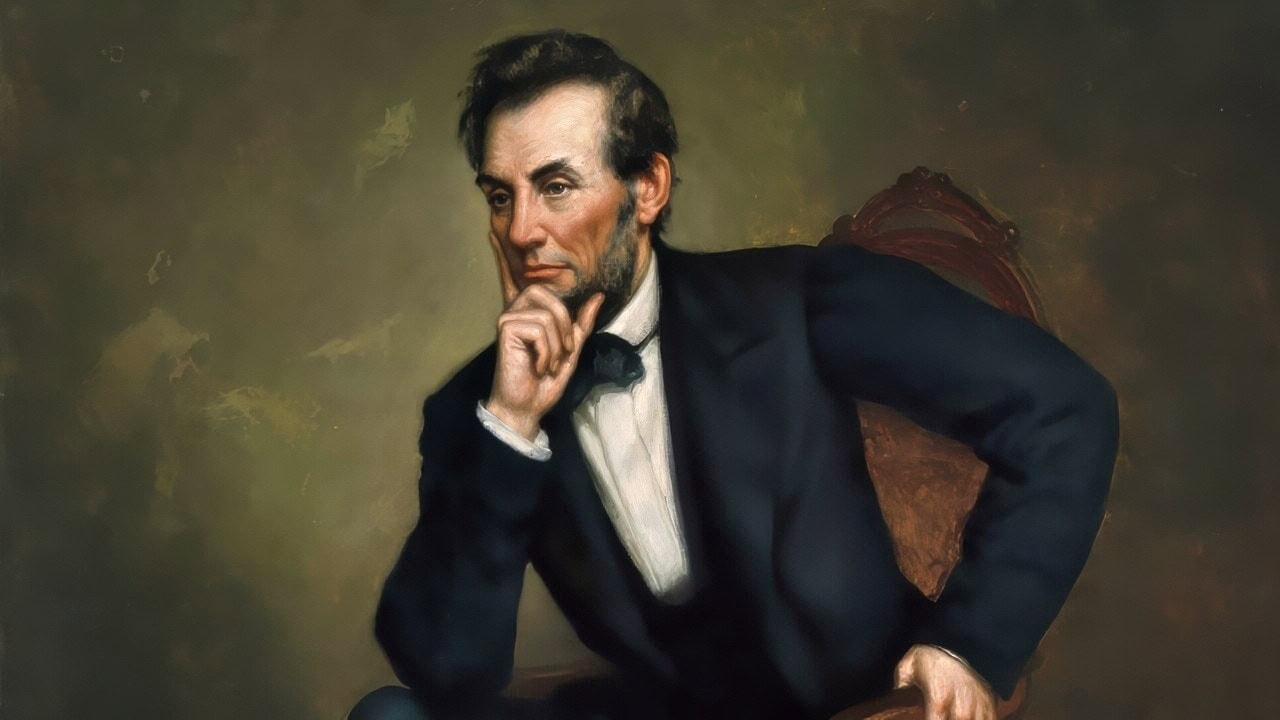
Synopsis: A popular line—“Nations do not die from invasion; they die from internal rottenness”—is widely misattributed to Abraham Lincoln, but its sentiment tracks the crisis he inherited.
-Lincoln rose from a hard frontier childhood into law and politics, then into the presidency at the moment America’s internal contradictions detonated.
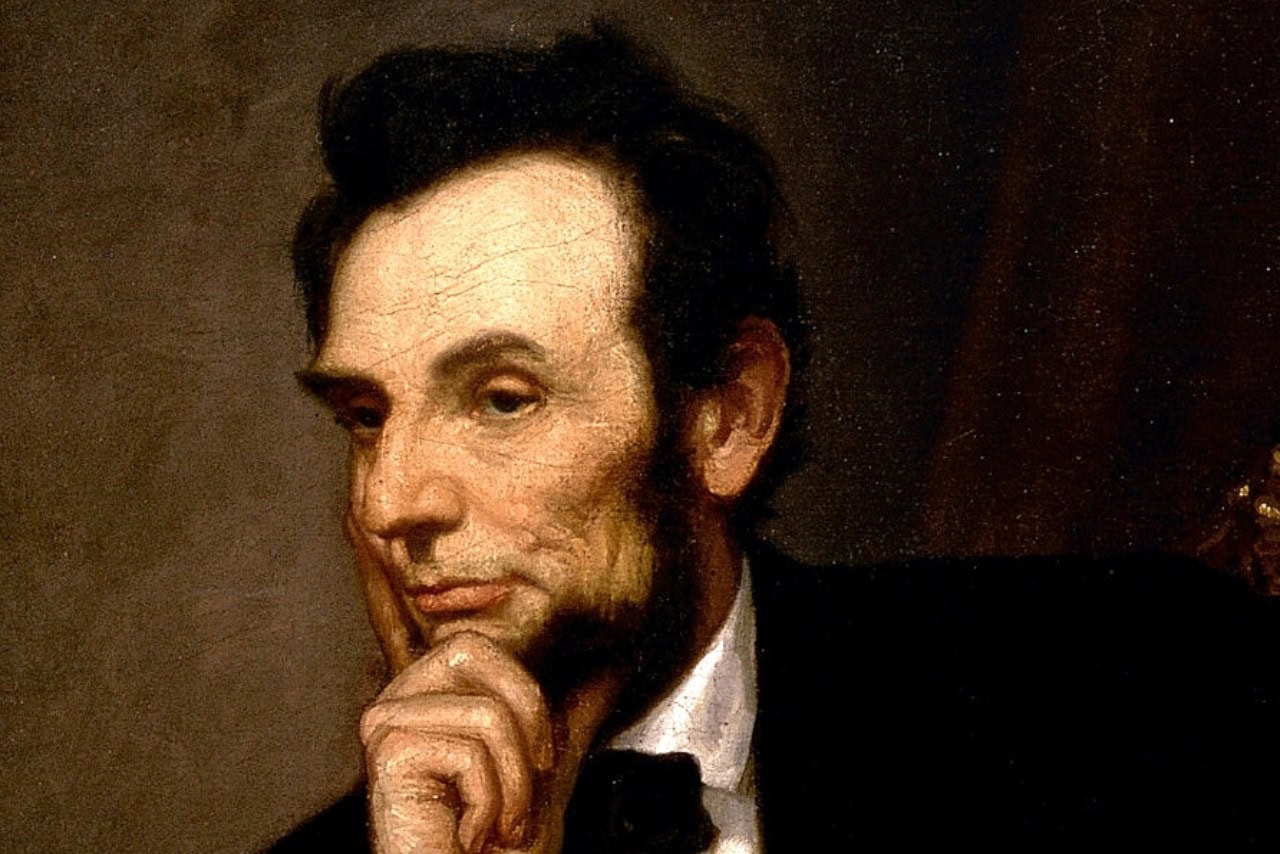
Abraham Lincoln. Image Credit: Creative Commons.
-His election triggered secession, Fort Sumter ignited civil war, and Lincoln navigated competing factions while shaping military strategy and public purpose.
-The Emancipation Proclamation reframed the war and expanded Union manpower, while Gettysburg and the Second Inaugural defined a moral arc toward unity.
-Assassinated in 1865, Lincoln became a national symbol of preserved Union and ended slavery.
Abraham Lincoln Didn’t Say the Quote—But He Lived It: Nations Collapse From Rot Within
“Nations do not die from invasion; they die from internal rottenness,” is a quote widely and falsely attributed to Abraham Linlcoln.
Although Lincoln expressed similar sentiments in his writings, he never said these words.
He did, however, preside over a nation reeling over the rot that was slavery, which culminated in a bloody civil war before it was finally expunged. Lincoln was given the daunting task of maintaining a union between two factions who could no longer coexist peacefully.
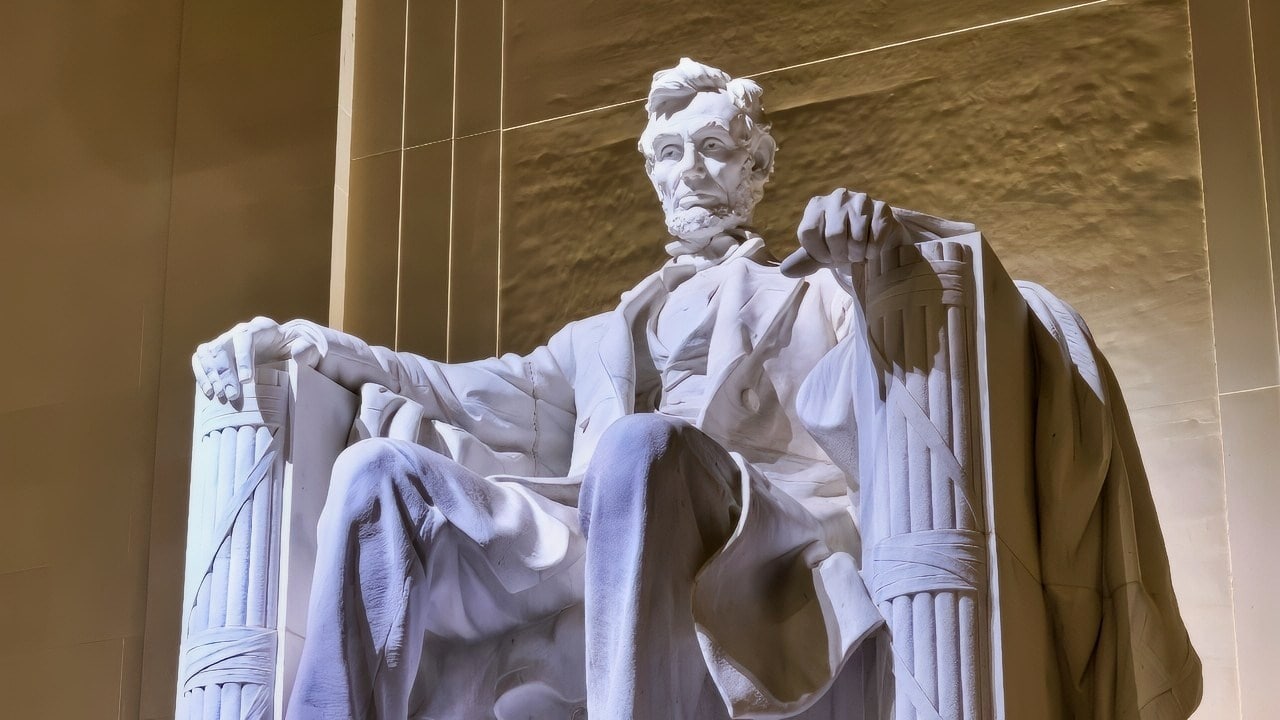
Statue of Abraham Lincoln at the Lincoln Memorial in Washington D.C. on June 12, 2024. The 170-ton statue, sculpted by Daniel Chester French (1850–1931) is located in the Lincoln Memorial on the National Mall. It was carved by the Piccirilli Brothers, assembled in 1920 and unveiled on May 30, 1922.
Through hard work, dedication, and a lot of blood, Lincoln preserved the Union, forever altering the course of the United States.
Early Life
Abraham Lincoln was born on February 12, 1809, in a one-room log cabin on Sinking Spring Farm in Hardin County, Kentucky. His parents, Thomas Lincoln and Nancy Hanks Lincoln, were of modest means and members of pioneer families.
Lincoln’s early life was marked by hardship and frequent relocations due to land disputes. In 1816, the family moved to southern Indiana, where slavery was prohibited under the Northwest Ordinance. Life on the frontier was challenging, and tragedy struck when Lincoln’s mother died in 1818 from milk sickness.
His father remarried the following year, and his stepmother, Sarah Bush Johnston, encouraged Abraham’s love of learning despite his limited formal education—which amounted to less than a year.
Lincoln was largely self-taught, reading voraciously from any book he could find, including the Bible, Shakespeare, and biographies. He worked various jobs as a rail-splitter, boatman, store clerk, and surveyor, all while developing skills in writing, arithmetic, and public speaking.
In 1830, at age 21, Lincoln moved to Illinois, where he settled in New Salem. There, he worked as a storekeeper, postmaster, and surveyor. During the Black Hawk War in 1832, Lincoln served as a captain in the Illinois militia, though he saw little combat.
Political Career
Lincoln’s political career began in earnest when he was elected to the Illinois House of Representatives in 1834 as a member of the Whig Party. He served four consecutive terms through 1842. During this time, he studied law independently and was admitted to the bar in 1836. Lincoln became a successful lawyer on the Eighth Judicial Circuit, earning a reputation for fairness and eloquence.
In November 1842, Lincoln married Mary Todd, a woman from a prominent Kentucky family. Their marriage was affectionate but complicated, marked by Mary’s volatile temperament and bouts of depression. The couple had four sons: Robert Todd Lincoln, Edward “Eddie” Lincoln, William “Willie” Lincoln, and Thomas “Tad” Lincoln. Only Robert survived into adulthood. The death of Willie in 1862 deeply affected both parents, and Mary reportedly sought solace through spiritualism.
Lincoln’s Rise to Power and Presidency
Lincoln served a single term in Congress from 1847 to 1849, during which he opposed the Mexican-American War, criticizing it as an attempt to expand slavery. After his term, he returned to law but re-entered politics in 1854 following the passage of the Kansas-Nebraska Act, which allowed slavery in new territories. The act’s passage galvanized Lincoln to join the newly formed Republican Party, which was dedicated to preventing slavery’s expansion.
In 1858, Lincoln challenged Senator Stephen A. Douglas in a series of debates that was unsuccessful in securing him a Senate seat but elevated him to national prominence. His famous declaration, “A house divided against itself cannot stand,” became a defining statement of his moral vision.
Lincoln was elected the 16th President of the United States on November 6, 1860. His victory triggered the secession of seven Southern states before his inauguration on March 4, 1861. In his inaugural address, Lincoln asserted that secession was unconstitutional and pledged to preserve the Union.
A month later, Confederate forces attacked Fort Sumter, igniting the Civil War. Lincoln faced the immense challenge of maintaining national unity, managing political factions, and overseeing military strategy. He suspended the writ of habeas corpus in Maryland to prevent Confederate sympathizers from undermining the Union. This was a controversial but decisive move.
Ending the Civil War
Lincoln’s primary focus was on preserving the Union, but he came to see abolition as essential to victory. On January 1, 1863, he issued the Emancipation Proclamation, declaring freedom for enslaved people in rebelling states. The Proclamation transformed the war into a moral crusade and allowed Black men to enlist in the Union Army, adding more than 200,000 soldiers and sailors to its ranks. Later that year, Lincoln delivered the Gettysburg Address, a brief but profound speech that redefined the war as a struggle for liberty and equality.
Despite political pressure and war fatigue, Lincoln won re-election in 1864 as the National Union Party’s candidate, with Andrew Johnson as his running mate. His second inaugural address, in March 1865, emphasized reconciliation, urging “malice toward none” as the war neared its end. Lincoln championed the passage of the 13th Amendment, which abolished slavery nationwide—though he did not live to see its ratification.
On April 14, 1865, Lincoln was assassinated by John Wilkes Booth while attending a play at Ford’s Theatre in Washington, D.C. He died the following morning at age 56. Lincoln’s assassination shocked the nation and transformed him into a martyr for freedom and unity.
He was buried at Oak Ridge Cemetery in Springfield, Illinois.
About the Author: Isaac Seitz
Isaac Seitz, a Defense Columnist, graduated from Patrick Henry College’s Strategic Intelligence and National Security program. He has also studied Russian at Middlebury Language Schools and has worked as an intelligence Analyst in the private sector.