Key Points and Summary – Vladimir Putin is recycling Soviet-era rhetoric to address Russia’s “nationality question,” blaming foreign intelligence services for inciting ethnic discord and dismissing calls for “decolonization” as Western plots to “dismember” the Federation.
-In a recent Council on Internationality Relations meeting, Putin emphasized the “unifying role” of the ethnic Russian people while claiming to value diversity—echoing the same contradictory policies of the Brezhnev era.

T-90M Tank Firing Russian Army. Image Credit: Nano Banana Pro.
-Author Dr. Alexander Motyl argues this reliance on “tsarist and Soviet-era Russification” reveals the Kremlin’s deep fear of its non-Russian subjects and suggests Russia may be doomed to repeat the USSR’s collapse.
Russia’s Next Problem Won’t Be Easy to Solve
The “Soviet nationality question” is alive and well in Vladimir Putin’s Russia.
A recent meeting of the Council on Internationality Relations, an agency affiliated with the president’s office, revealed that today’s Russian elites are trapped within the mindset and rhetoric of their Soviet predecessors.
It also revealed just how terrified the Kremlin is of its non-Russian subjects.
Putin Calls Upon Russian History
Russia’s illegitimate president opened the meeting with a short speech. Obsessed as he is with history, Putin started with “the pivotal events of the early 17th century.” He then concluded his introductory remarks with typical Soviet pablum: “Today, our heroes, soldiers, and officers are demonstrating a striking example of genuine interethnic unity and brotherhood in arms during the special military operation [Putin’s term for the invasion of Ukraine]. Together they march into the righteous battle for Russia, proving in this battle that we are all one people.”
But then, like Soviet leaders, Putin muddied this happy picture. It seems that interethnic relations aren’t quite as idyllic as he led us to believe.
To be sure, said Putin, “sociology is recording stable and positive trends across the country, thankfully, on these issues, but that’s just the general picture.” Uh-oh. You mean there are non-general problems?
Apparently, yes: “It’s important to respond immediately to all local incidents if they arise, and they do: life is complex and varied.”
Recall that complexity ultimately did in the USSR. But, in the final analysis, all would be well if it weren’t for those dastardly outside forces that have been messing with Russia since the 17th century. Obviously, “Provocations and attempts to incite discord between people must be stopped, given that the provocateurs themselves are typically based abroad, sponsored, financed, and directed by foreign intelligence services.”
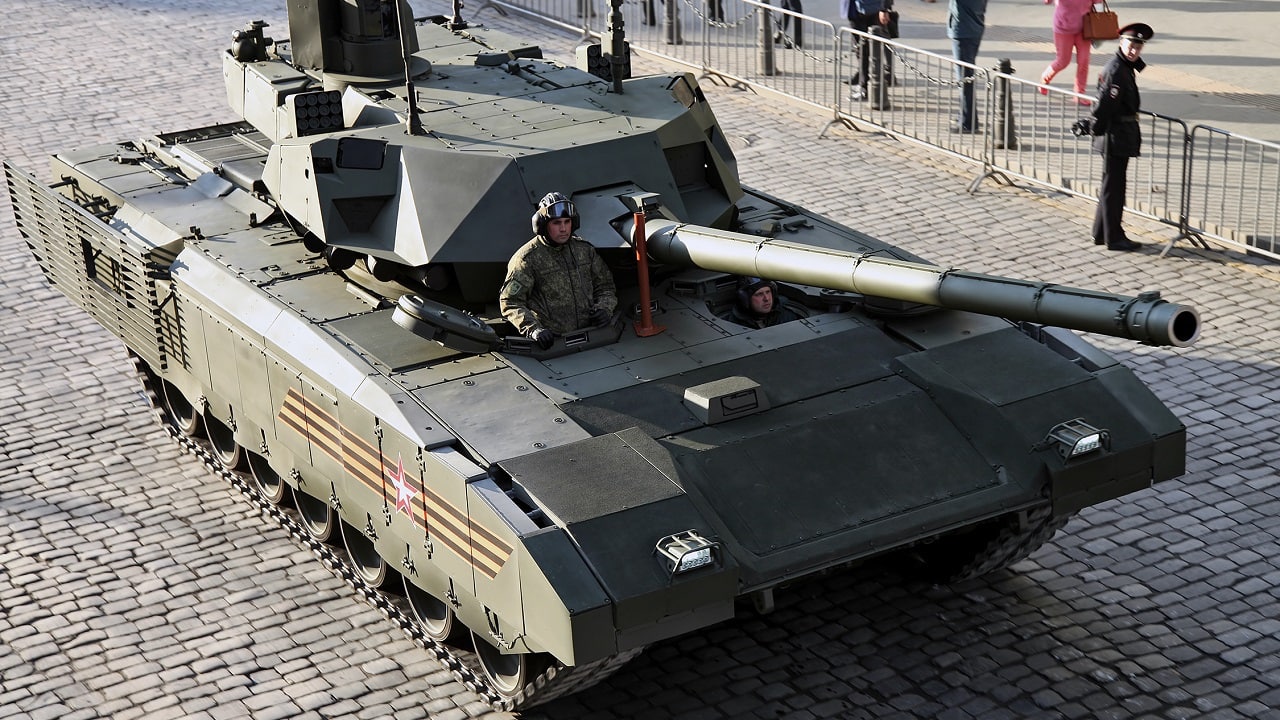
Russian Armata T-14 Tank. Image Credit: Creative Commons.
Blame the CIA
How predictably Soviet! When things go wrong, blame the CIA et al.
“The goal is clear: to undermine our unity,” continued Putin, forgetting to call that unity, in Soviet style, unbreakable. “Our adversaries are using every excuse and pretext—from everyday incidents to migration—to destabilize the situation, inflame, and provoke conflicts. They’re even relying on radical groups, in other words, on outright terrorist methods.” Keep in mind that all democratic activists are terrorists in Putin’s eyes.
Clearly, Russia’s adversaries have struck Putin’s nerve, which means that their influence isn’t quite as illusory as he would have us believe. The following language is straight out of the KGB’s playbook (unsurprisingly, given Putin’s KGB background):
“New so-called international organizations and all sorts of pseudo-national centers are being created outside of Russia, but in reality, these are simply weapons of information warfare against us. You know about this: there’s increasing talk of some ‘decolonization’ of Russia, which essentially amounts to dismembering the Russian Federation and inflicting that same notorious strategic defeat on us.
“They’ve even coined a special term – a kind of ‘post-Russia,’ meaning a territory deprived of sovereignty, torn into tiny fragments controlled by the West. We’ve heard about this many times, in various versions; new ones are already appearing, but essentially nothing has changed.”
Putin, Russia’s opponents, both inside and outside the country, may take heart. If Putin finds it necessary to devote half his speech to their supposedly non-existent threat, then the threat they pose must be large indeed.
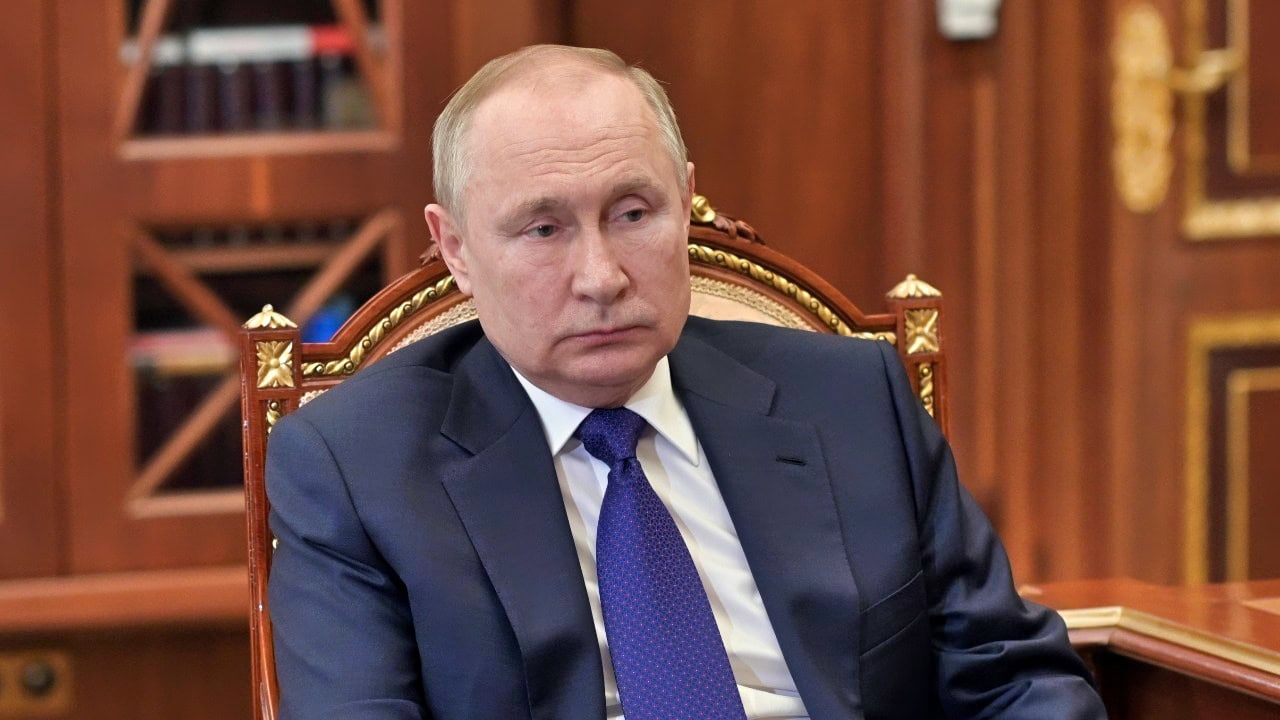
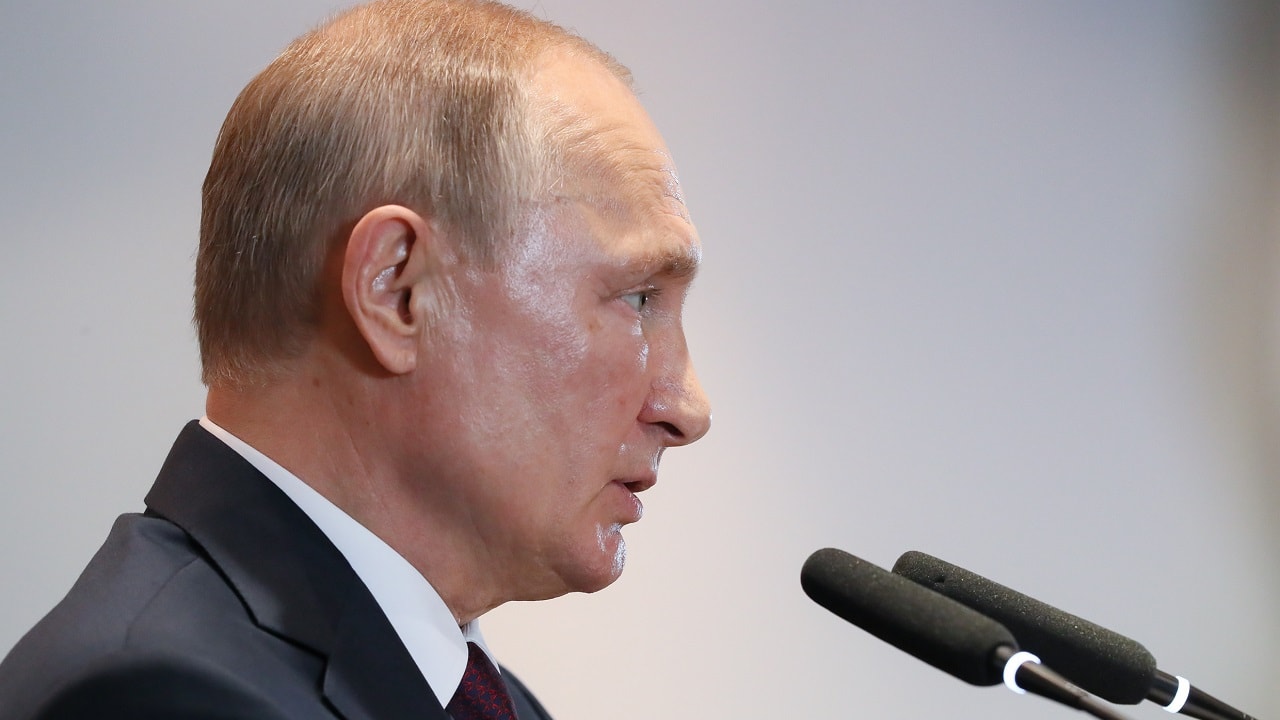
Russia’s President Putin. Image Credit: Russian Government.
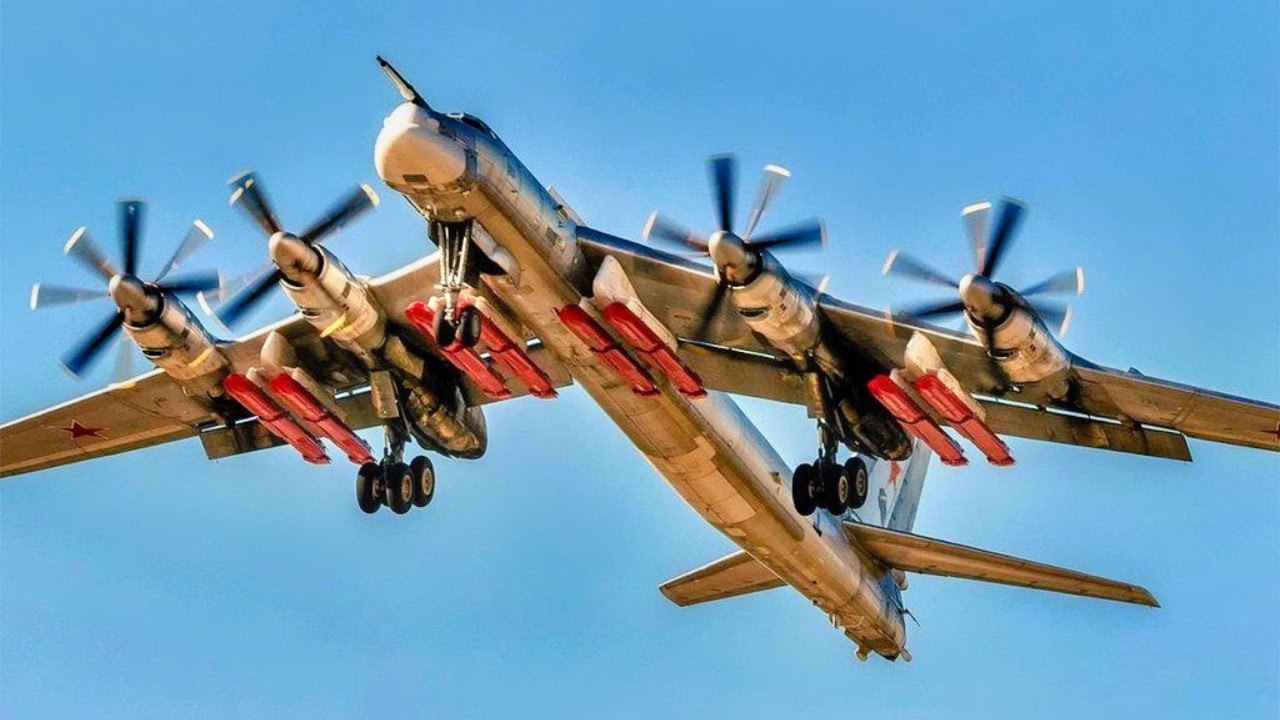
Tu-95 Bomber from Russia. Image Credit: Creative Commons.
Not surprisingly, Putin reverts to tsarist- and Soviet-era Russification as the solution to the problem: “without the Russian people, without the Russian ethnic group—without this factor—Russia itself does not and cannot exist. Therefore, Russophobia in general is the focus of our adversaries.” Which means that “The Russian identity, traditions, culture, and language of our nation-forming people require the utmost care and protection. Their unifying role is a guarantee of the unity of our now multinational Fatherland.”
Leonid Brezhnev would recognize the language. He’d also approve of Putin’s afterthought: “Of course, the culture, customs, and languages of every people in our vast country are also important and necessary for us. Such diversity, and concern for its preservation, is the foundation of Russia’s nationality policy.”
Small wonder that Russia’s minority nationalities find the prospect of post-Russia appealing. It promises to end their second-class status.
Putin, meanwhile, when confronted with the same nationality problems that destroyed the USSR, demonstrates that he is trapped within the Soviet mindset and can only repeat Brezhnev’s words of wisdom.
If this is the best Vladimir Vladimirovich can do, Russia is doomed.
About the Author: Dr. Alexander Motyl, Rutgers University
Dr. Alexander Motyl is a professor of political science at Rutgers-Newark. A specialist on Ukraine, Russia, and the USSR, and on nationalism, revolutions, empires, and theory, he is the author of 10 books of nonfiction, including Pidsumky imperii (2009); Puti imperii (2004); Imperial Ends: The Decay, Collapse, and Revival of Empires (2001); Revolutions, Nations, Empires: Conceptual Limits and Theoretical Possibilities (1999); Dilemmas of Independence: Ukraine after Totalitarianism (1993); and The Turn to the Right: The Ideological Origins and Development of Ukrainian Nationalism, 1919–1929 (1980); the editor of 15 volumes, including The Encyclopedia of Nationalism (2000) and The Holodomor Reader (2012); and a contributor of dozens of articles to academic and policy journals, newspaper op-ed pages, and magazines. He also has a weekly blog, “Ukraine’s Orange Blues.”