
Key Points and Summary – Following the 1960 downing of Francis Gary Powers’ U-2, the U.S. faced a critical intelligence gap over the Soviet Union.
-To address this, Lockheed’s Skunk Works developed the D-21, a supersonic, ramjet-powered drone designed to fly at Mach 3.3 and 90,000 feet. Initially launched from a modified A-12 (the M-21 “mother ship”), the program suffered a fatal mid-air collision in 1966, forcing a redesign for launch from B-52 bombers.
-Despite four operational attempts over China under “Project Senior Bowl,” the D-21 never achieved a fully successful mission, leading to its cancellation in 1971 as satellite technology matured.
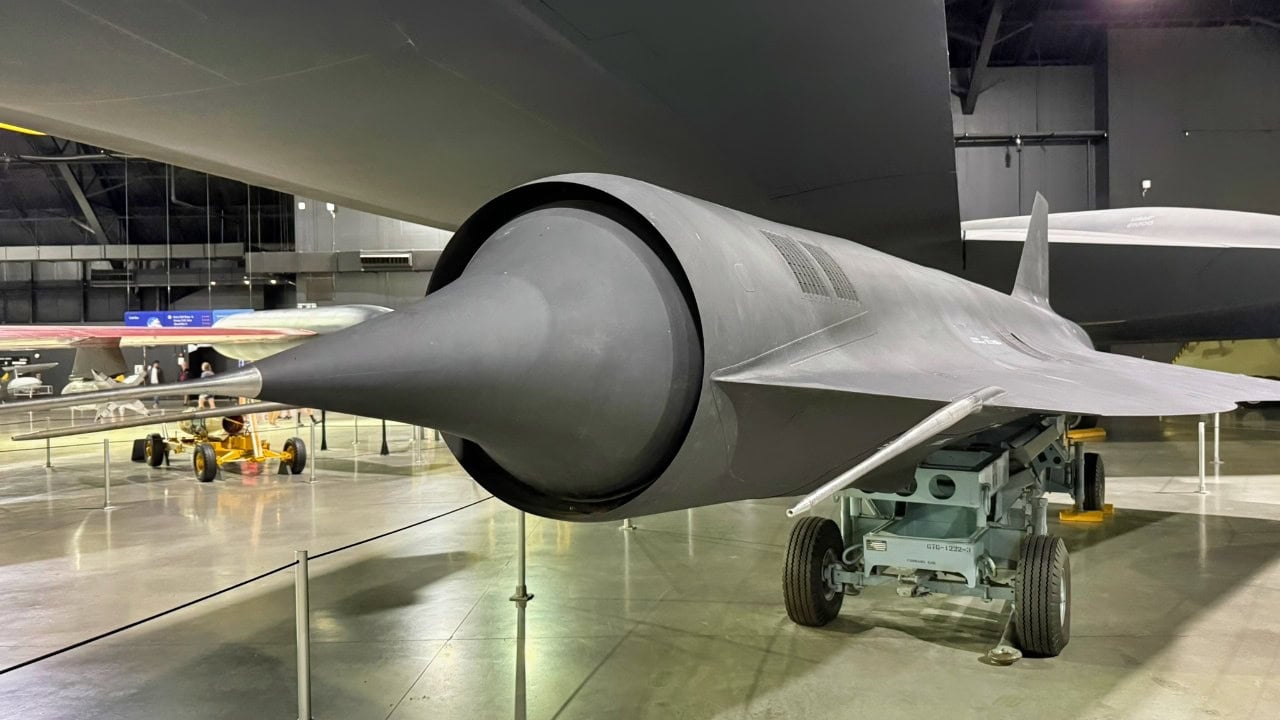
-Bonus: We have included several original images for the D-21 above that we took at the U.S. Air Force Museum back in July of last year.
How the D-21 Drone Became the Cold War’s Most Secret Reconnaissance Program
In the early 1960s, the United States faced a critical intelligence gap after a U-2 spy plane was shot down over the Soviet Union. On May 1, 1960, Francis Gary Powers was captured after his aircraft was downed during a high-altitude flight, prompting President Dwight D. Eisenhower to suspend all manned reconnaissance overflights of hostile territory.
That decision left the U.S. entirely reliant on emerging satellite technology that was not yet capable of delivering high-resolution imagery in a timely manner. To address that gap, the Central Intelligence Agency (CIA) turned to an ambitious unmanned aircraft program aimed at penetrating the most heavily defended airspace without risking the lives of aircrew.
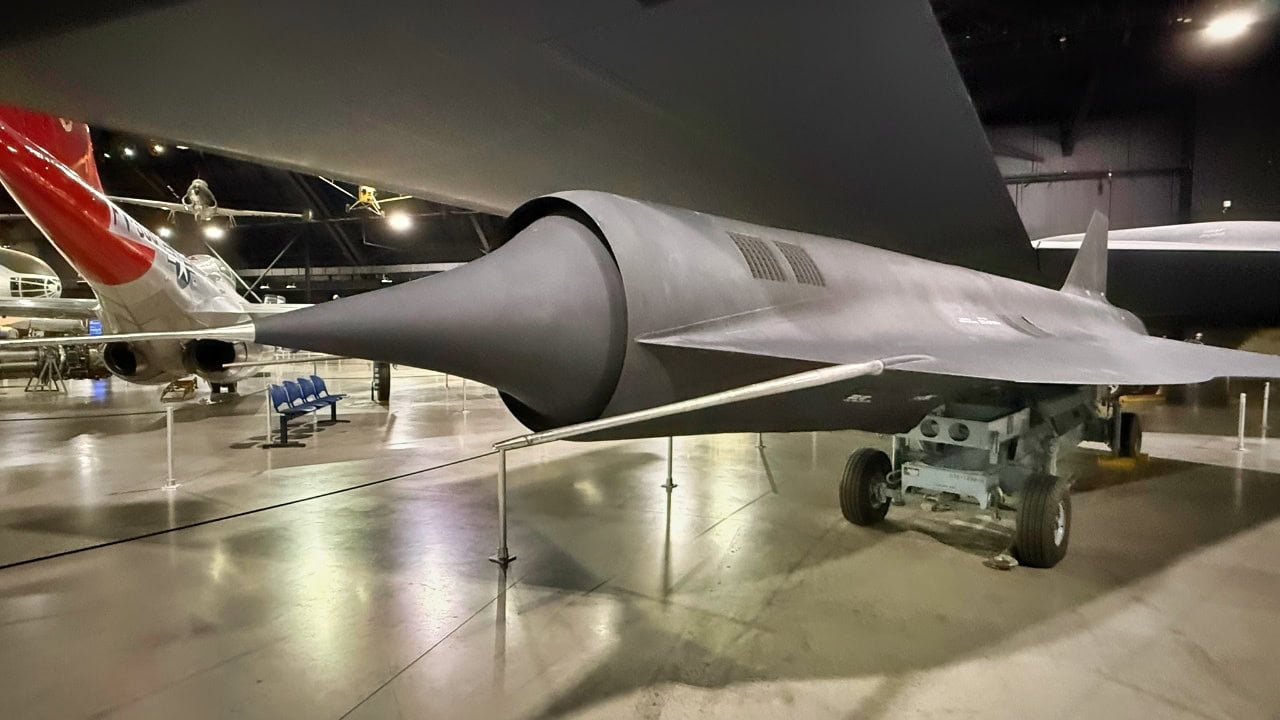
D-21. Image Credit: 19FortyFive.com
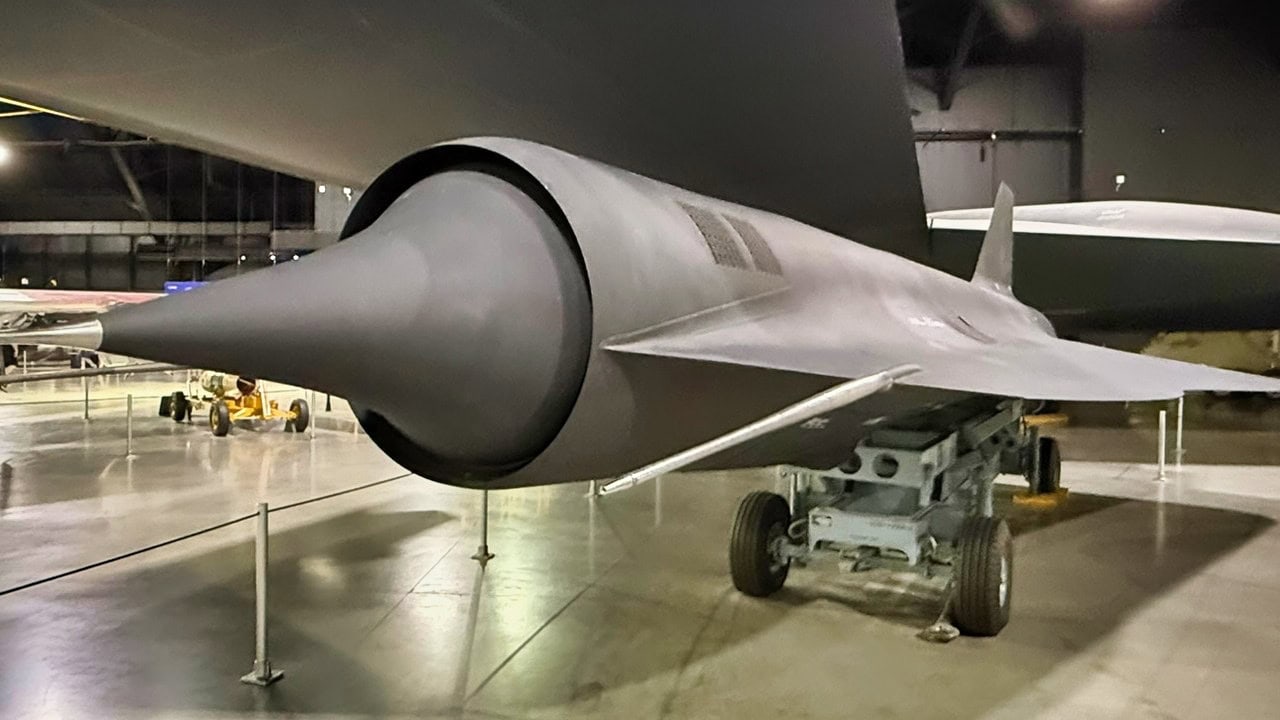
D-21 image taken by 19FortyFive at the U.S. Air Force Museum.
The Lockheed D-21 was a supersonic, high-altitude reconnaissance drone that was developed in the 1960s by Lockheed Martin’s Skunk Works division. The drone was envisioned to fly over denied territory at speeds greater than three times the speed of sound and at altitudes above 90,000 feet, collecting photographic intelligence and returning that imagery without a pilot onboard.
What followed was a highly classified series of programs known initially as Project Tagboard, but which later became Project Senior Bowl – a collection of projects that used cutting-edge aerospace technologies to exert pressure and influence in some of the fiercest geopolitical tensions of the Cold War era.
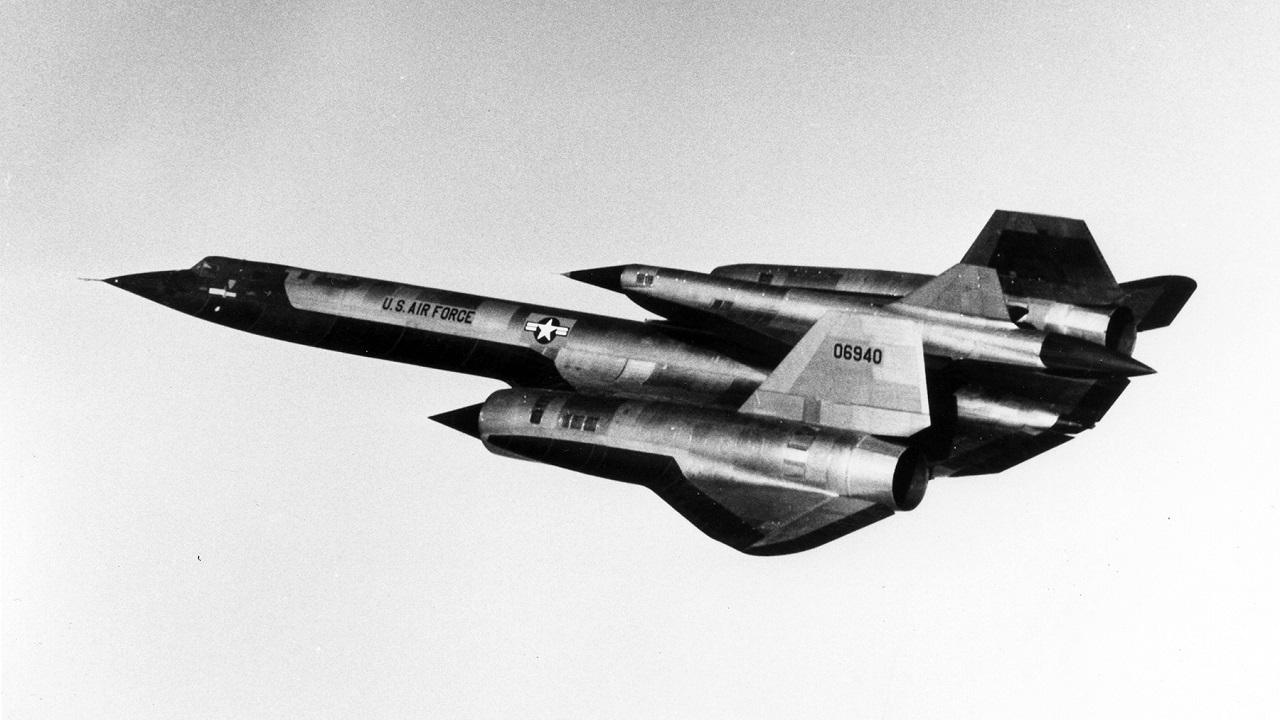
The Lockheed D-21 was a highly-advanced, remotely piloted aircraft (RPA) designed to carry out high-speed, high-altitude strategic reconnaissance missions over hostile territory. Developed by the famed Lockheed “Skunk Works” in the 1960s, the D-21 used technology from the A-12/YF-12/SR-71 “Blackbird” family of high-speed manned aircraft. Unlike the turbojet engines in the Blackbird, however, the D-21 was powered by a ramjet. D-21Bs were used on four flights over communist China under the code name Senior Bowl, but none of these missions fully succeeded. The U.S. Air Force canceled the program in 1971 and put the remaining D-21s in storage. The D-21B on display came to the museum in 1993.

DAYTON, Ohio — Lockheed D-21B at the National Museum of the United States Air Force. (U.S. Air Force photo)
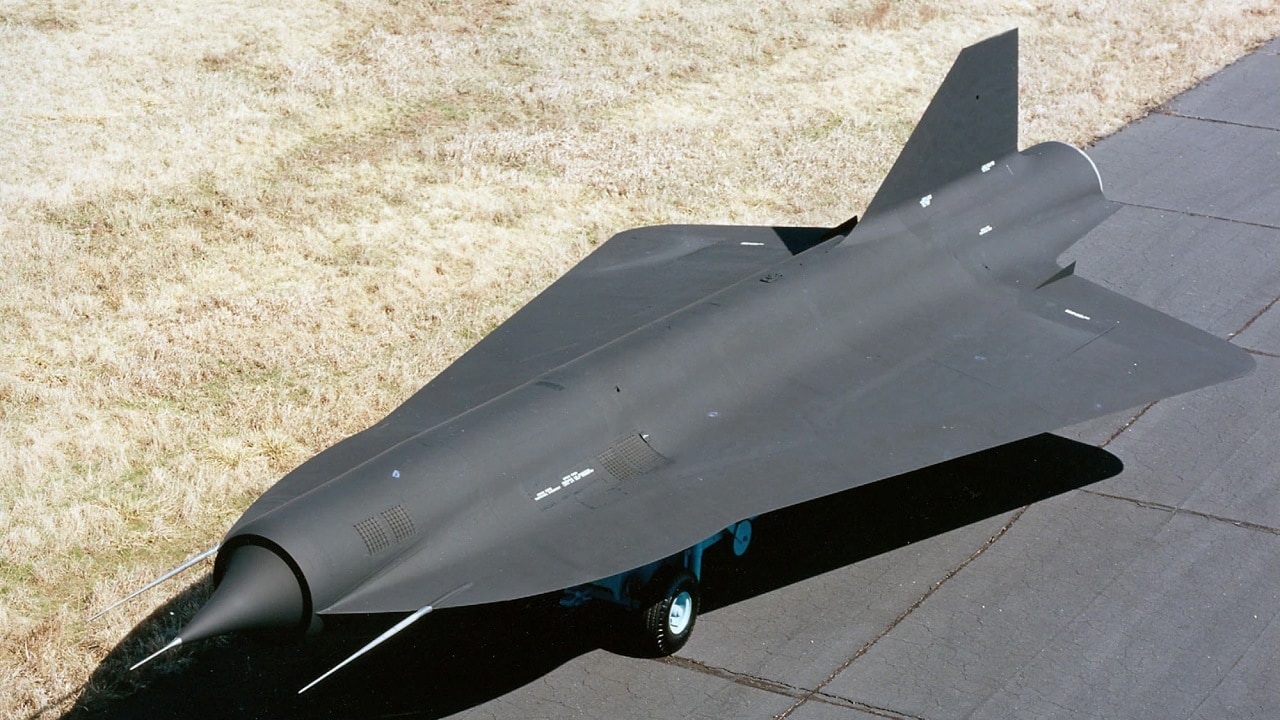
D-21Bs were used on four flights over communist China under the code name Senior Bowl, but none of these missions fully succeeded. The U.S. Air Force canceled the program in 1971 and put the remaining D-21s in storage. The D-21B on display came to the museum in 1993.

Lockheed D-21B at the National Museum of the United States Air Force.
Why Unmanned Reconnaissance Became a Priority
After the U-2 incident in May 1960, U.S. policymakers abruptly halted manned reconnaissance flights over hostile territory. The Eisenhower administration concluded that risking another pilot captured or killed behind the Iron Curtain was unacceptable.
While reconnaissance satellites were in development, those early systems lacked the resolution and responsiveness required to monitor critical targets like nuclear weapons programs and missile test facilities in real time.
The CIA and U.S. Air Force explored alternatives. One concept was a high-altitude, high-speed drone that could fly pre-programmed routes deep into enemy airspace, photograph strategic targets, and then return its imagery for analysis.
By eliminating a human pilot, officials believed the systems would be able to mitigate both political and operational risk. The idea was to bridge the intelligence gap that came as a result of the end of manned overflights – a problem that persisted throughout much of the 1960s.
Designing the D-21 and the M-21 Air Launch System
Development of the reconnaissance drone began in October 1962 when Lockheed’s Skunk Works was directed to study a high-speed, high-altitude unmanned reconnaissance aircraft. The drone, initially designated the Q-12 and later the D-21, was built to cruise at Mach 3.3 and at altitudes approaching 95,000 feet, using a ramjet engine and advanced inertial navigation.
One of the key challenges for the developers was getting the D-21 to speed. Because ramjets cannot operate at low speeds, Lockheed engineers devised a unique air-launch system that used a modified A-12 aircraft as the launch platform.

A-12 Oxcart. Image Credit: Creative Commons.

A-12 Oxcart. Image Credit: Creative Commons.
Two A-12s were converted into “M-21” mother ships with dorsal pylons that carried the drone on top of the fuselage between the vertical tails. In what’s known as the “mother/daughter” combination, the D-21 was attached directly to the M-21 and was intended to be released once it reached supersonic speeds.
The M-21 was also equipped with a second cockpit for a Launch Control Officer who was tasked with initiating and monitoring the drone’s deployment sequence.
The Accident That Ended M-21 Launches
The first flight of the M-21/D-21 combination took place on December 22, 1964, successfully proving that the modified A-12 could carry the drone. However, in July 1966, on the fourth test launch, the program suffered a catastrophic setback. As the D-21 separated from the M-21 at high speed, the drone’s engine inlet experienced an “asymmetric unstart” that disrupted airflow and destabilized the mother ship. The two aircraft then collided in mid-air at about Mach 3.25.
Both crew members ejected, one of whom survived and the other drowned after his helmet visor opened during descent. The accident resulted in the cancellation of the M-21 launch concept. However, aircraft engineers remained convinced of the D-21’s potential for strategic reconnaissance purposes.
After the Redesign
After the fatal M-21 accident, the D-21 was redesigned into the D-21B variant to be launched from Boeing B-52H Stratofortress bombers.
The carrier aircraft were modified with pylons to carry the drones under their wings, and the drones were fitted with large solid rocket boosters to accelerate them to ramjet-ignition speed after release.
Operational flights were conducted under the code name Project Senior Bowl, with the U.S. Air Force’s 4200th Support Squadron at Beale Air Force Base, California, responsible for the missions. Senior Bowl’s first-ever operational launch then took place on November 9, 1969, targeting China’s Lop Nor nuclear test site – a remote area in western China.
Between November 1969 and March 1971, at least four D-21B flights attempted to collect imagery. None achieved fully successful mission outcomes, suffering a series of navigation errors and the loss of recovery capsules, all of which meant that official intelligence was never obtained. The final mission occurred on March 20, 1971.
Project Senior Bowl ended in July 1971 when the U.S. Air Force canceled further D-21 operations after repeated operational setbacks and the emergence of satellite reconnaissance capabilities that could deliver better real-time imagery. Remaining D-21 drones were placed into storage, and the program faded from public view as one of the most highly classified Cold War projects.
About the Author: Jack Buckby
Jack Buckby is a British researcher and analyst specialising in defence and national security, based in New York. His work focuses on military capability, procurement, and strategic competition, producing and editing analysis for policy and defence audiences. He brings extensive editorial experience, with a career output spanning over 1,000 articles at 19FortyFive and National Security Journal, and has previously authored books and papers on extremism and deradicalisation.

