
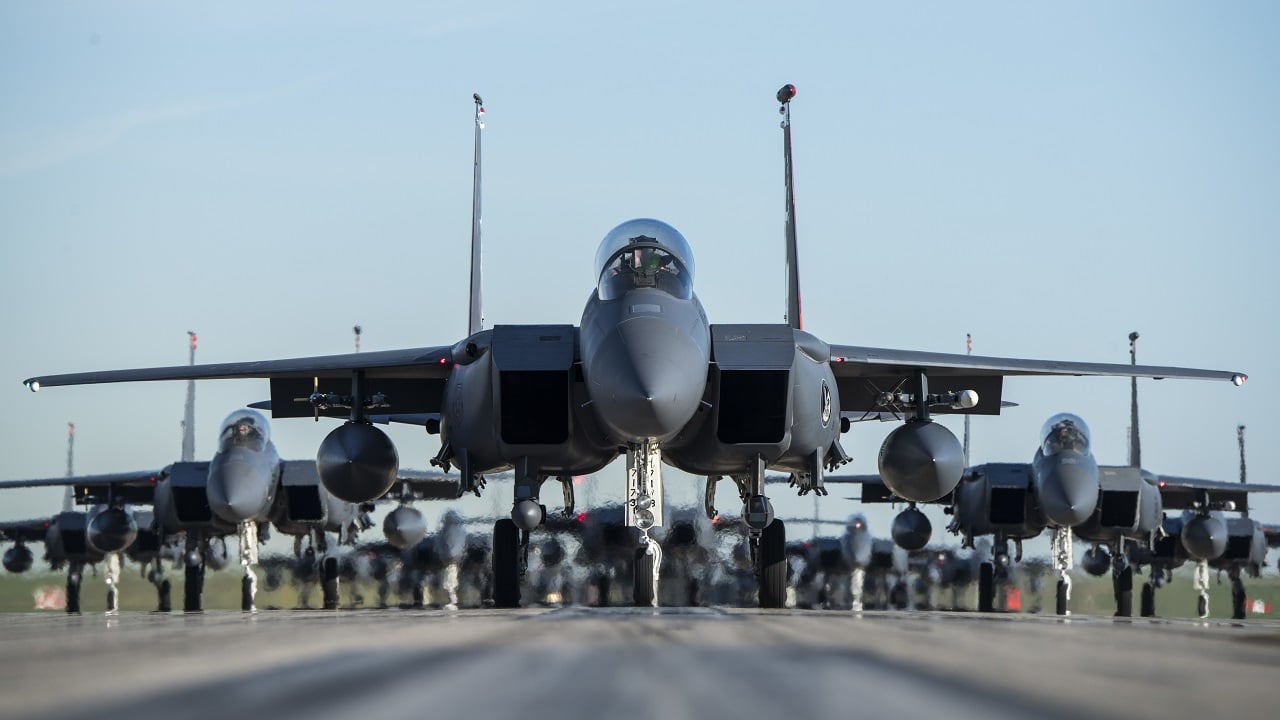
F-15 Fighter Design: Built for 20,000 Hours—and Maybe a 100-Year Run
The F-15EX Eagle II’s debut has raised questions about the platform’s longevity. With airframes like the B-52 slated to serve for over 100 years, the 50-year-old F-15 airframe is drawing similar comparisons.
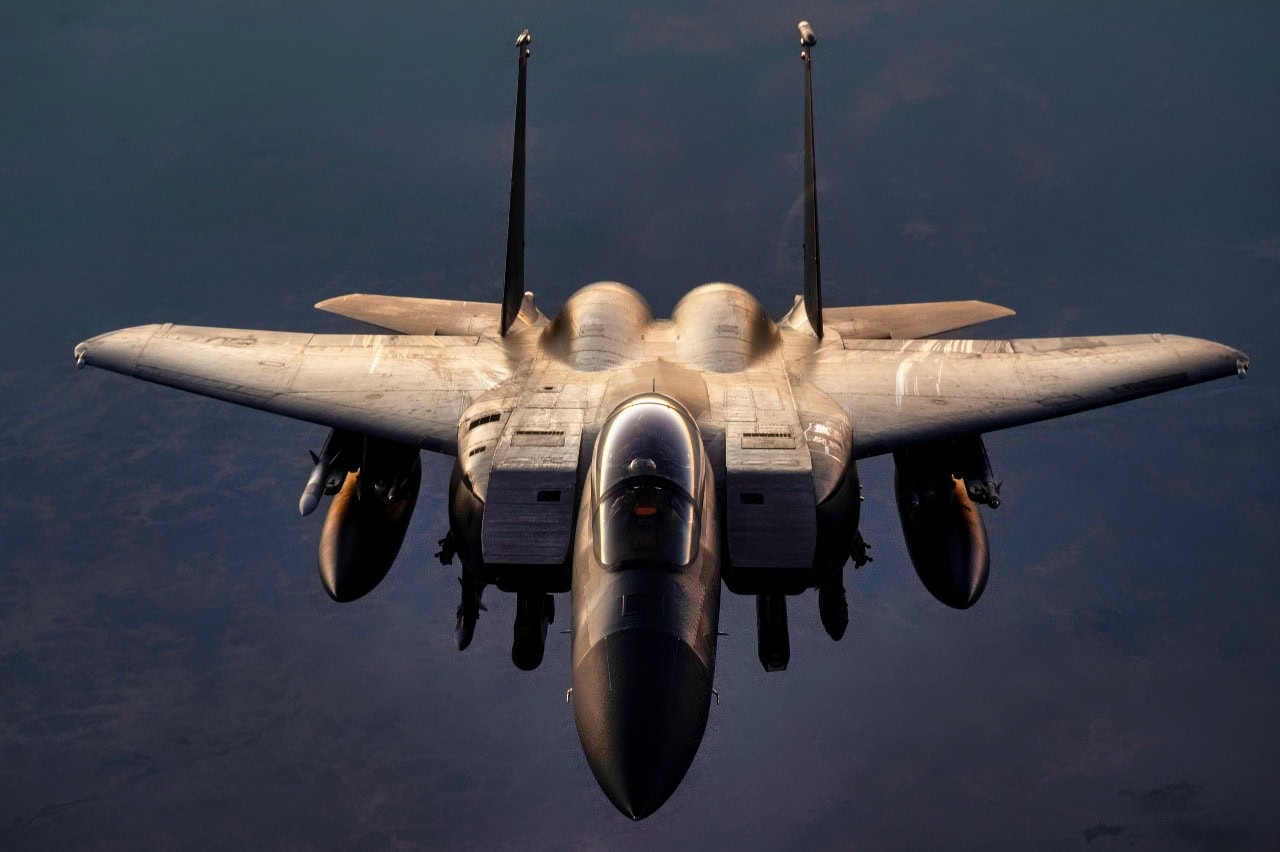
A U.S. Air Force F-15E Strike Eagle flies over the U.S. Central Command area of responsibility, Jan. 7, 2025. The F-15E’s superior maneuverability and acceleration are achieved through its high engine thrust-to-weight ratio and low-wing loading. (U.S. Air Force photo by Staff Sgt. William Rio Rosado)
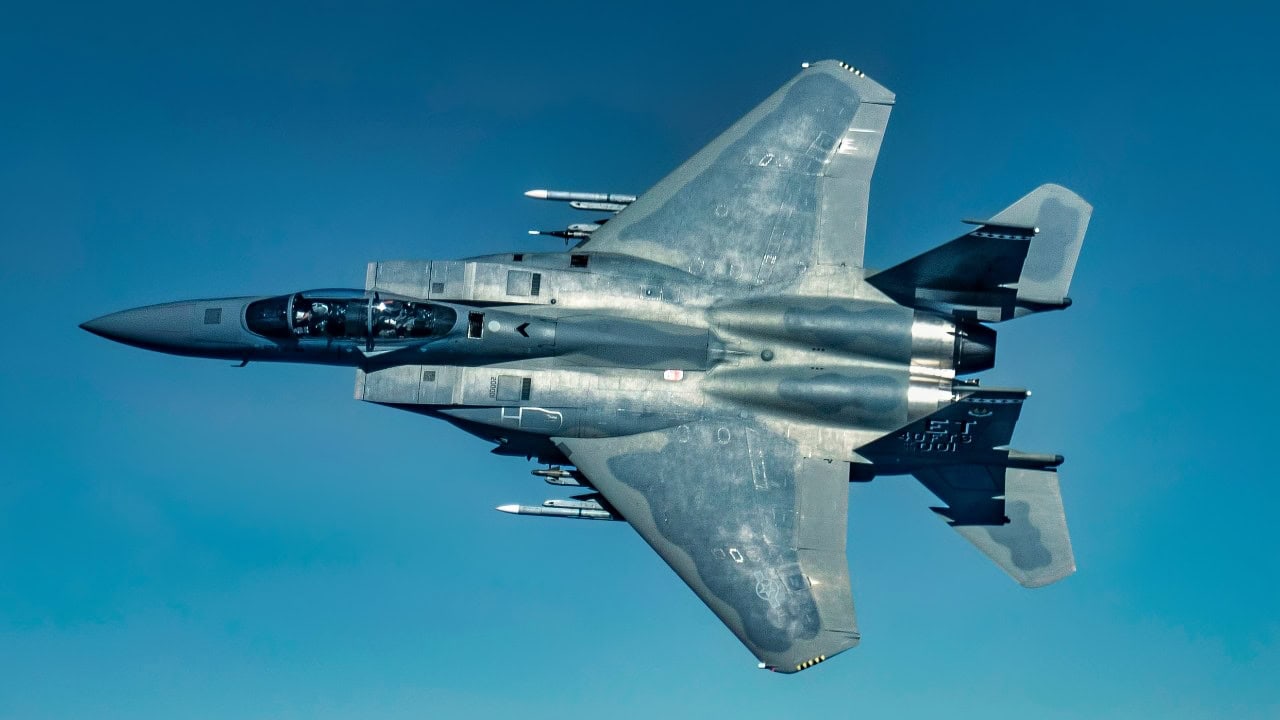
U.S. Air Force Lt. Col. Richard Turner, 40th Flight Test Squadron commander flies 40 FLTS Senior Enlisted Leader, MSgt Tristan McIntire during a test sortie in the F-15EX Eagle II over the Gulf of Mexico on Jun. 14, 2022. Assigned to the 96th Test Wing at Eglin Air Force Base, Fla., the F-15EX Eagle II is the Air Force’s newest 4th generation fighter being tested at the 40 FLTS. (U.S. Air Force photo by Tech. Sgt. John McRell)
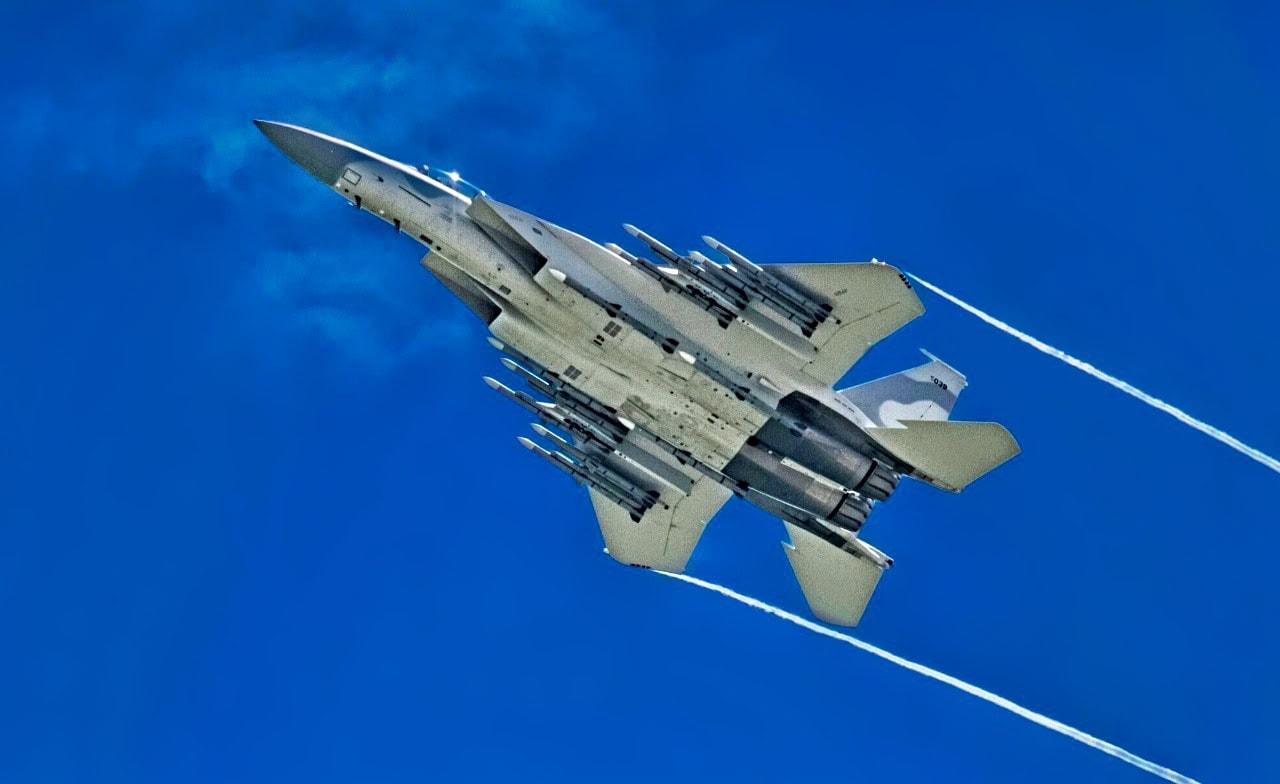
F-15EX Eagle II from U.S. Air Force
Could the F-15 hit the one-hundred-year mark, too? That will depend on mission requirements and the F-15’s ability to incorporate future upgrades.
Design vs Variant of the F-15
To clarify, the F-15EX is a modernized descendant of the venerable F-15 Eagle, designed in the 1970s. But the new F-15EX is not simply a continuation; it features a new airframe, a new digital backbone, and a new mission emphasis.
So, while the F-15EX is familiar, it is highly modernized. Still, the F-15EX represents a continuous evolution of a design family. This is similar to the B-52 story, where the same basic concept has been upgraded continuously with radically different internal components.
Comparisons to the B-52
The B-52 may be the hallmark of military airframe longevity, which stems from several unique factors. The airframe itself benefits from a more forgiving subsonic stress profile and a low-G flight regime. This has enabled the B-52 to experience minimal structural fatigue.
The mission is relatively straightforward and has remained unchanged: payload delivery that requires neither stealth nor maneuverability. Crucially, the B-52 does not need to penetrate increasingly sophisticated air defenses. Stand-off weapons keep the B-52 relevant, regardless. Obviously, the B-52 is an exception, with the perfect confluence of factors to allow for such unique longevity.
How does the F-15 compare?
Durability of the F-15
The F-15 was overbuilt from the start, designed for air superiority and high-G maneuvering, with large wings and powerful engines. The F-15 has a sterling combat record, with hundreds of thousands of flight hours flown across fleets.
Over time, the airframe has proven itself resilient to fatigue, with excellent room for growth. This is why the F-15 still flies worldwide 50 years after being introduced. The EX-variant is different, not just a refurbished legacy jet; it is a new-build aircraft with upgraded materials and manufacturing.
Key changes include a digital fly-by-wire, open mission systems, and modern avionics. The aircraft is structurally rated for 20,000+ flight hours. The mission has shifted, too, from dogfighter to weapons truck, capable of carrying hypersonic weapons and large missile loads. This lowers maneuver stress and attrition risk.
100 Years?
Could the F-15 last another 50 years, reaching a square 100? Structurally, yes, this is possible. Conceptually, it’s much more plausible than with most fighters.
But there are constraints, like radar signatures and survivability in contested airspace. Unlike the B-52, the F-15 must sometimes operate closer to threats; the F-15’s future will depend on stand-off weapons and escort by stealth platforms.
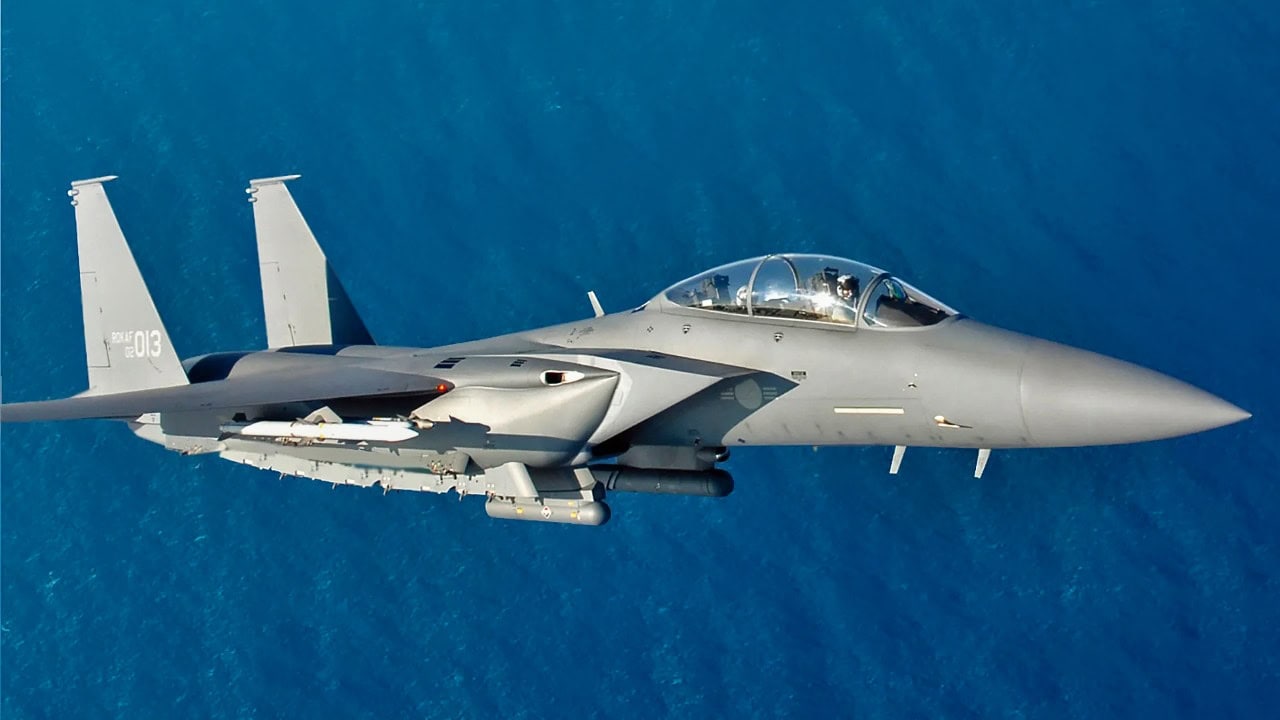
F-15K Slam Eagle. Image Credit: ROK Air Force.
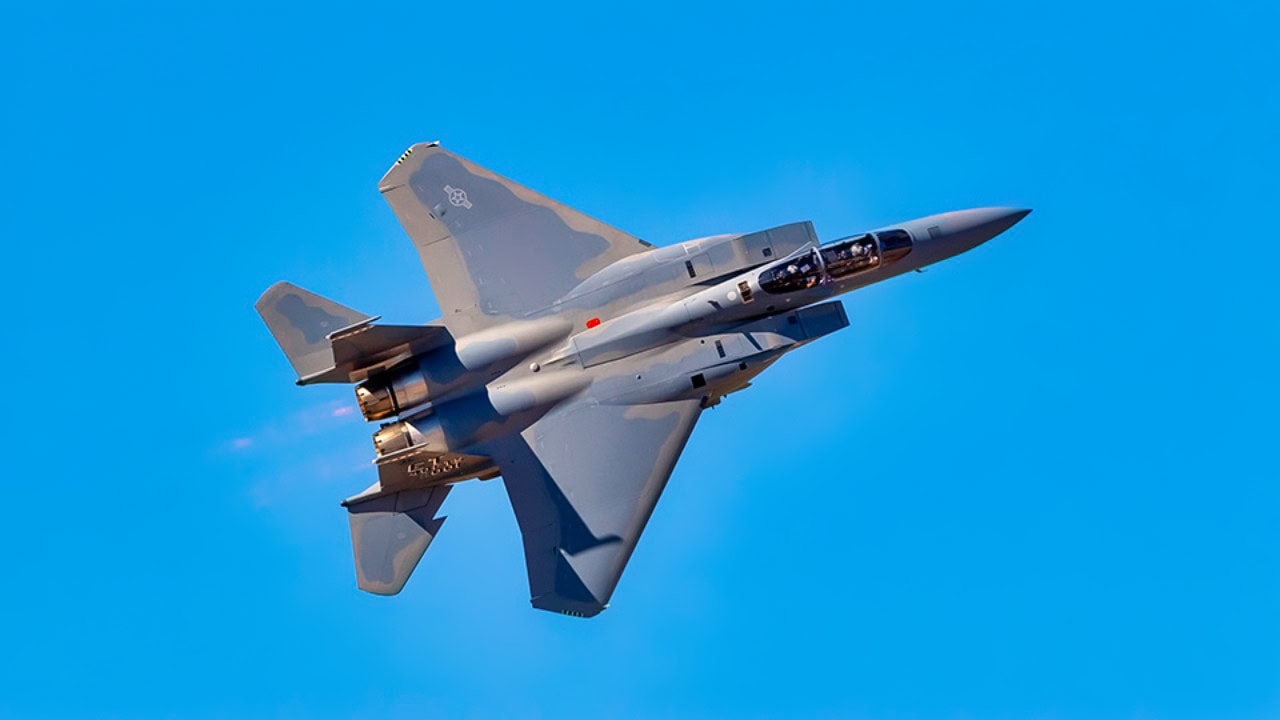
F-15EX Eagle II Fighter from Boeing.

A formation of F-15C/D Eagles assigned to the 44th and 67th Fighter Squadrons, a KC-135 Stratotanker assigned to the 909th Air Refueling Squadron, an E-3 Sentry assigned to the 961st Airborne Air Control Squadron, and an HH-60 Pavehawk assigned to the 33rd Rescue Squadron taxi during a routine wing readiness exercise at Kadena Air Base, Japan, March 2, 2022. The large formation movement was part of a routine exercise scenario that tested the 18th Wing’s ability to generate airpower in support of the defense of Japan and other partner nations, ensuring the stability and security of a free and open Indo-Pacific. (U.S. Air Force photo by Senior Airman Stephen Pulter)
The way the F-15 is used will also determine its longevity; if the aircraft is used in a more limited sense, as a sensor node or a missile carrier, then yes, 100 years is just maybe plausible. If the aircraft is used for air superiority or penetration, no, 100 years becomes unlikely.
Aging Fast
Worth considering: fighters age faster than bombers; fighters endure high-G loads through aggressive maneuvering, which accelerates fatigue accumulation. Fighters also face rapid threat evolution and shorter relevance windows than bombers. Stealth is more important for fighters because non-stealthy designs lose their tactical edge (and their political capital).
Bombers, meanwhile, can adapt more easily to stand-off roles. All of this cuts against the idea of a fighter lasting 100-years. But with the new F-15EX just entering frontline service, another 20 or 30 years seems likely, which would push the F-15 to 70 or 80 years.
Strategic Logic of Longevity
Why would the US keep the F-15 in service? The F-15EX fills a gap with its high payload and high availability. It complements stealth fleets while preserving industrial capacity and pilot pipelines. And the F-15EX will be cheaper to field in numbers than the forthcoming F-47. This allows for risk distribution and acknowledges the strategic fact that not every mission needs stealth or fifth-generation technology.
The US won’t keep the current F-15EX in service for another 50 years. But the Eagle baseline could just possibly get to the 100-year mark. The airframe is strong, and the missions are flexible, with upgrade-friendly architecture. If the F-15 can be adaptive and maintain utility in a mixed fleet, it could stick around.
About the Author: Harrison Kass
Harrison Kass is an attorney and journalist covering national security, technology, and politics. Previously, he was a political staffer and candidate, and a US Air Force pilot selectee. He holds a JD from the University of Oregon and a master’s in global journalism and international relations from NYU.