
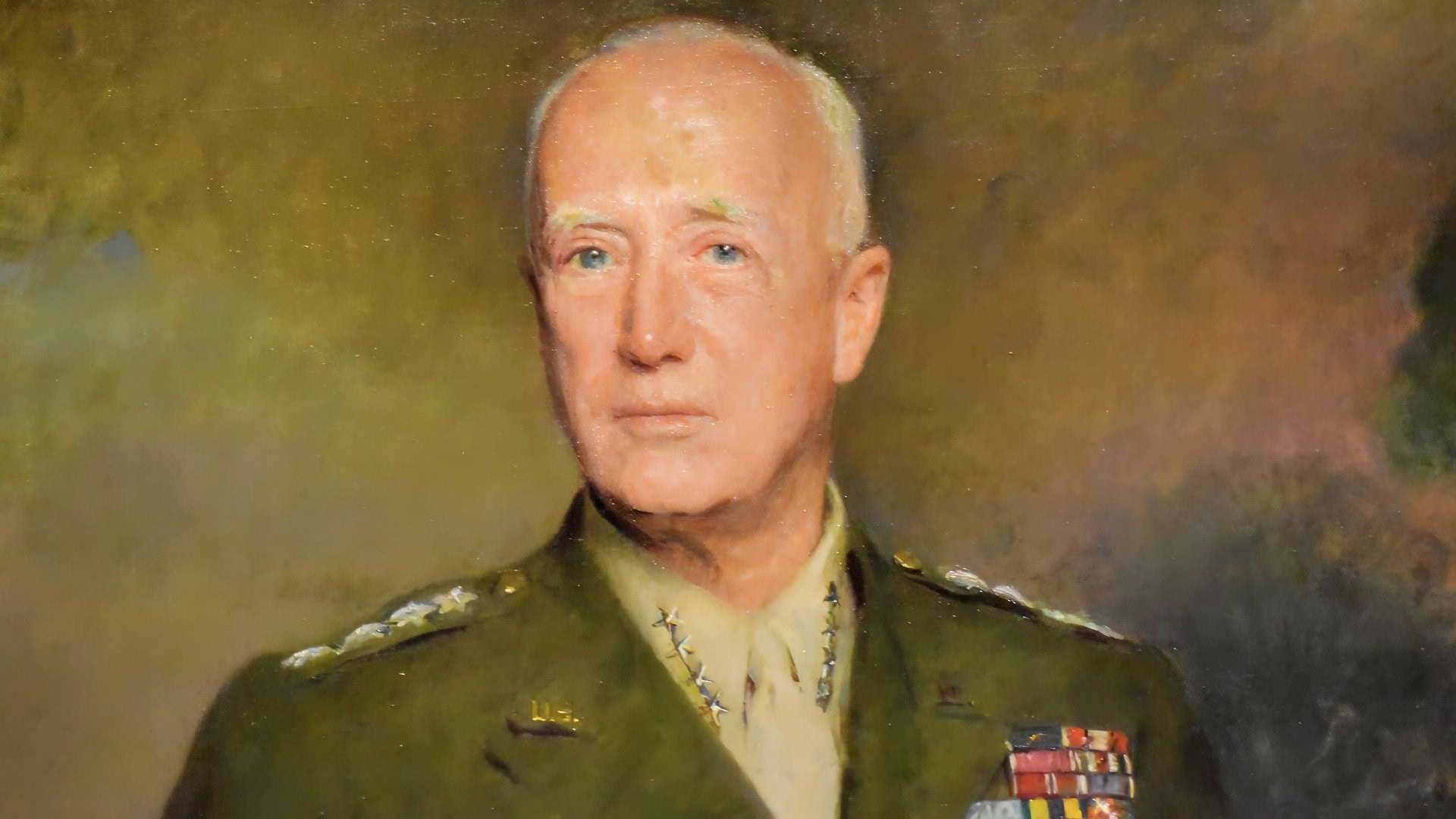
Summary and Key Points: George S. Patton believed history mattered less for dates and maps than for what it reveals about human behavior under mortal pressure and leaders under crushing responsibility.
-He wasn’t alone: fellow senior commanders leaned on historical example to sharpen judgment, sustain morale, and test assumptions before battle.
-Patton’s own habit of reading in the field—down to revisiting Rommel during the Saar campaign—reflected a view of war as a study of decisions made in fear, fatigue, and uncertainty.
-That mindset began early. In World War I, Patton helped pioneer American tank doctrine, learning how to fuse armor and infantry into a decisive combined-arms punch.
Patton’s Quote of the Day Has a Message for Today’s Officers: Read History
Army quote of the day: “I am convinced that much more emphasis should be placed on history”- General George S. Patton
General George S. Patton is known as a figure of history. But he was also thinking a lot about history during his time in command.
“The purpose of history is to learn how human beings react when exposed to the danger of wounds or death, and how high-ranking individuals react when submitted to the onerous responsibility of conducting war or the preparations for war,” Patton wrote, in what an article in Army War College’s Parameters stated was “shortly before his death.”
“The acquisition of knowledge concerning the dates or places on which certain events transpired is immaterial.”
The quote has often been used in the analysis of what military leaders can, in fact, learn from past battles and wars.
Indeed, as that Army War College article notes, Patton was one of many generals who took the time to read military history while leading wars.
“MacArthur, steeped in family tradition and familiar with many of the 4000 volumes inherited from his father, was never at a loss for a historical example to underscore his point of view; Krueger, as a young officer, translated books and articles from the German military literature; Eisenhower spent countless hours listening to the erudite Fox Conner on what could be learned from military history; Marshall and his contemporaries at the Army Staff College at Leavenworth reconstructed Civil War campaigns from the after-action reports,” the article said.
“Patton took the time in 1943 to read a book on the Norman conquest of Sicily nearly nine centuries earlier and to ponder “the many points in common with our operations”; and Eichelberger summoned from memory a passage he had read ten years before in Grant’s Memoirs (which ought to be required reading for all officers) and thereby stiffened his resolve to press home the attack at Buna. These Army commanders were all remarkably well-versed in history.”
Per the same article, Patton wrote in his diary that he was still reading military history during the Saar campaign in early 1945, when the general brought the Third Army into the Saar industrial region in Germany.
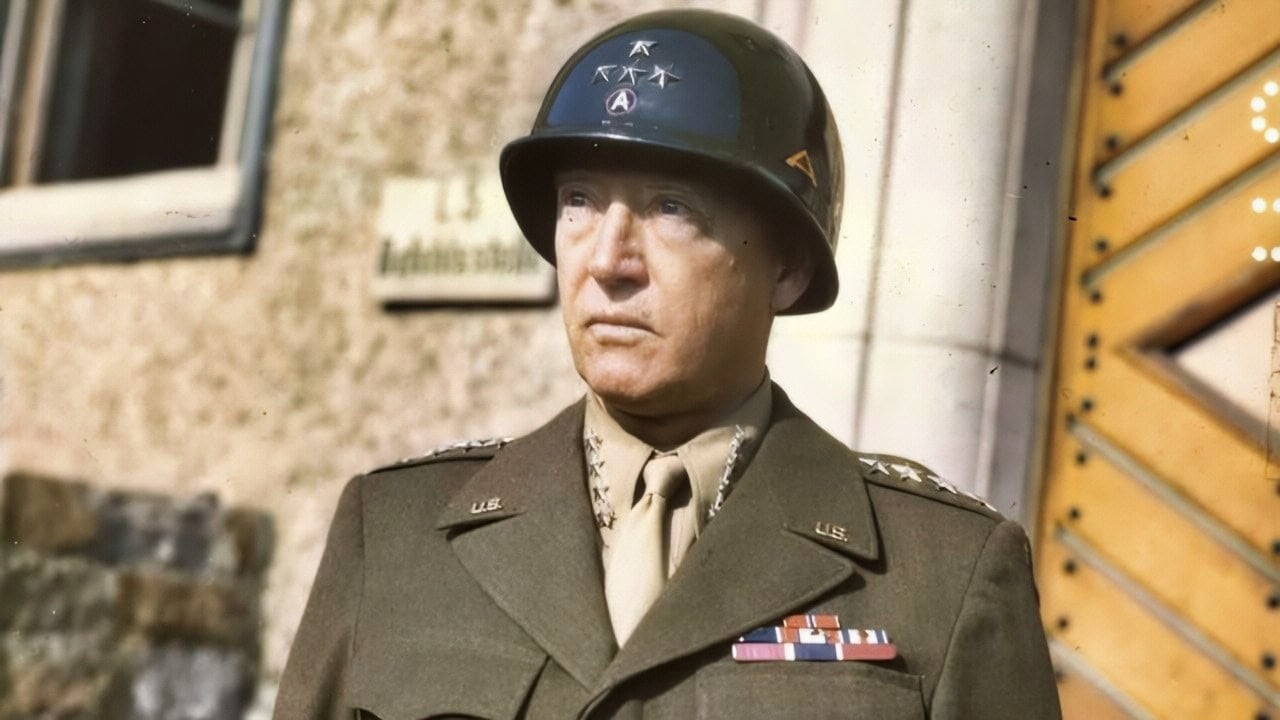
General George Patton U.S. Army Photo
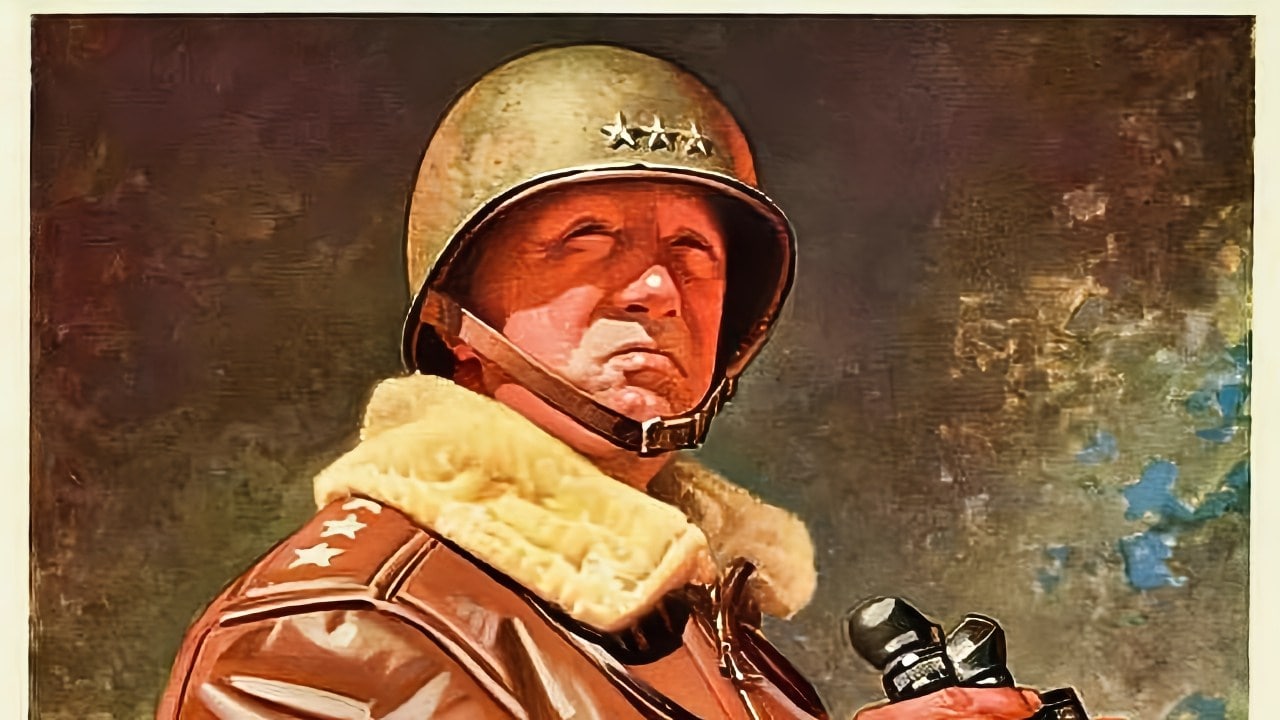
General George Patton. Image Credit: Creative Commons.
“Woke up at 0300 and it was raining like hell. I actually got nervous and got up and read Rommel’s book, Infantry Attacks. It was most helpful, as he described all the rains he had in September 1914 and also the fact that, in spite of the heavy rains, the Germans got along.”
“What Frederick, Napoleon, Rommel, Patton, Wavell, and many others referred to here have shared in common can be summed up in one word: reading. An English general in the 18th century urged young officers to devote every spare minute to reading military history, ‘the most instructive of all reading,’” the Unitas article said.
Patton in World War I
While Patton is best known for his battlefield exploits in World War II, he also clearly learned from his time in World War I, when he commanded the pioneering tank unit.
“Patton’s military achievements did not begin and end in World War II. Instead, they started in World War I. And without his experience in the Great War, Patton might never have learned the fine art of command, of how to combine soldiers and tanks into one irresistible, mighty phalanx—a skill that served the Allies well in the next war,” Warfare History Network wrote of Patton’s lessons from the Great War.
At the time of the U.S. entry into World War I in April of 1917, Patton was on the staff of his mentor, General John J. Pershing. When the war began, Patton went with Pershing to Europe.
“After landing, Patton’s first assignment was to lead 67 troops to their quarters in the Tower of London,” the Warfare History Network account said.
“While not particularly thrilled with the assignment, Patton knew that almost every officer back home would trade jobs with him. Although still far from the front, he was closer to it in London than he would have been in Washington, D.C. For the next few days, Patton kept busy socializing, drinking, and fruitlessly ordering his troops around. After a week of celebrating, Pershing and his staff left for France.”
Early on, Patton “functioned basically as the commander of the headquarters troops.” Before long, he ended up in the tank corps.
Patton was originally uninterested — “the tank is not worth a damn,” he wrote early on in the war — but growing bored in his staff job, Patton eventually changed his mind.
“The casualties in the tanks are high, that is lots of them get smashed, but the people in them are pretty safe as we can be in this war,” he wrote to his wife. “It will be a long long time yet before we have any [tanks] so don’t get worried. I love you too much to try to get killed but also too much to be willing to sit on my tail and do nothing.”
Patton’s Tank Era
Patton was first tasked with learning all he could about tanks to establish the American Expeditionary Force Light Tank School. This included visiting the French tank training center at Chamlieu, where he drove his first tank, and later a factory. Things were slow, mostly due to slow manufacturing back at home.
Patton went on to write a 58-page paper about tanks, which went on to form “the basis of the U.S. Tank Corps.”
“The most insightful aspect of Patton’s paper dealt with tactics and training. While a firm believer in the weapon’s power, he also believed that tanks should function as an aid for infantry,” the Warfare History Network report said.
“The main tactical value of a tank was to help the infantry advance by running over barbed wire, preventing the enemy from manning trench defenses, shielding infantry from enemy machine-gun fire, neutralizing enemy strongholds, preventing counterattacks, and seizing the initiative and attacking beyond the final objective.”
Then the tank school was up and running, and Patton received a series of promotions. And then, it was time for battle.
In September of 1918, Patton led the attack on the St. Mihiel salient.
“When the shelling first [started] I had some doubts about the advisability of sticking my head over the parapet, but it is just like taking a cold bath; once you get in it’s all right. And I soon got out on the parapet,” Patton wrote in his diary.
About the Author: Stephen Silver
Stephen Silver is an award-winning journalist, essayist, and film critic, and contributor to the Philadelphia Inquirer, the Jewish Telegraphic Agency, Broad Street Review, and Splice Today. The co-founder of the Philadelphia Film Critics Circle, Stephen lives in suburban Philadelphia with his wife and two sons. For over a decade, Stephen has authored thousands of articles that focus on politics, national security, technology, and the economy. Follow him on X (formerly Twitter) at @StephenSilver, and subscribe to his Substack newsletter.