
Key Points and Summary – A quote attributed to Gen. George S. Patton—“West Point wins battles; Texas Aggies win wars”—remains controversial because no contemporary record confirms he said it, and later variants attach the line to other schools.
-Still, the legend persists, amplified when Gen. Mark Milley repeated it at a 2021 Texas A&M commissioning ceremony.
-The saying is often tied to Aggies’ World War II service and their outsized officer production, used as shorthand for grit, leadership, and endurance.
-The piece then pivots to Patton’s early WWII arc: Operation Torch at Casablanca, the aftermath of Kasserine Pass, and how his discipline and reorganization helped II Corps earn a breakthrough at El Guettar.
Did Patton Really Praise Texas A&M? The “Army of Aggies” Quote Explained
“Give Me An Army Of West Point Graduates, and I’ll win a battle; give me an army of Texas Aggies, and I’ll win a War” – General George Patton.
The above quote, attributed to General George S. Patton Jr., is the subject of much debate over whether the general ever actually said it.
However, the legend of it has lived on. In 2021, Chairman of the Joint Chiefs of Staff Army General Mark Milley repeated it at the commissioning ceremony for more than 150 Texas A&M Aggies cadets about to enter the US military.
Context Of The Quote
Patton’s quote, if he indeed did say it, is often used to highlight the superior determination, grit, and leadership abilities of Texas Aggies, particularly in the context of the roughly 20,000 Aggies who served in WWII (14,000 as officers), which was more than any other institution, including the combined numbers of the military and naval academies.
While immensely popular among Aggies and often recited (including by Gen. Mark Milley in 2021), the quote is considered an urban legend by some historians. No official, written record of Patton saying this exists, and the earliest recorded citation is from 1993, long after the war.
Similar quotes linking Patton to other military schools (such as VMI, where his father and grandfather attended, or The Citadel) have appeared, leading historians to question the exact phrasing.
Regardless of its veracity, the quote is used to exemplify the high respect Patton had for Texas Aggies on his staff and in his command.
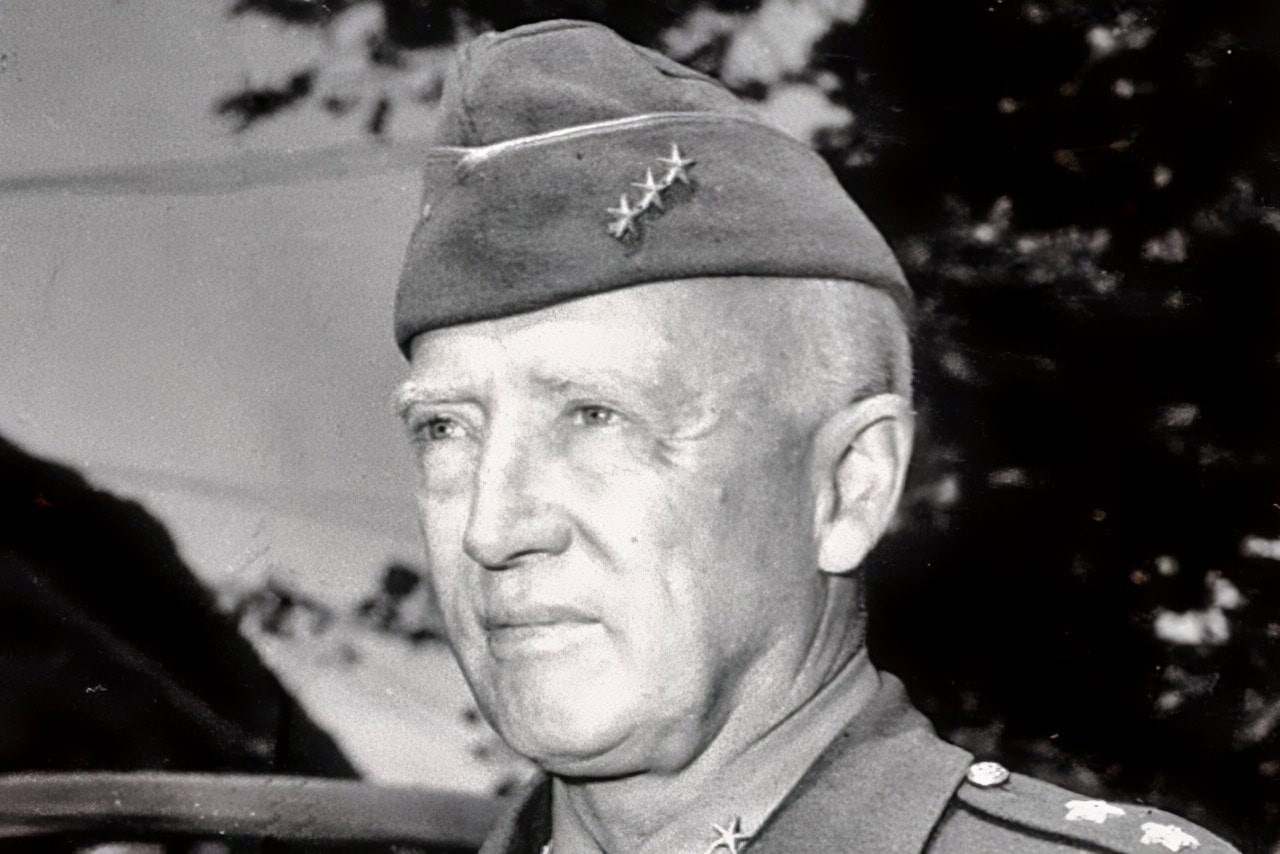
George S. Patton Quote of the Day. Creative Commons Image.
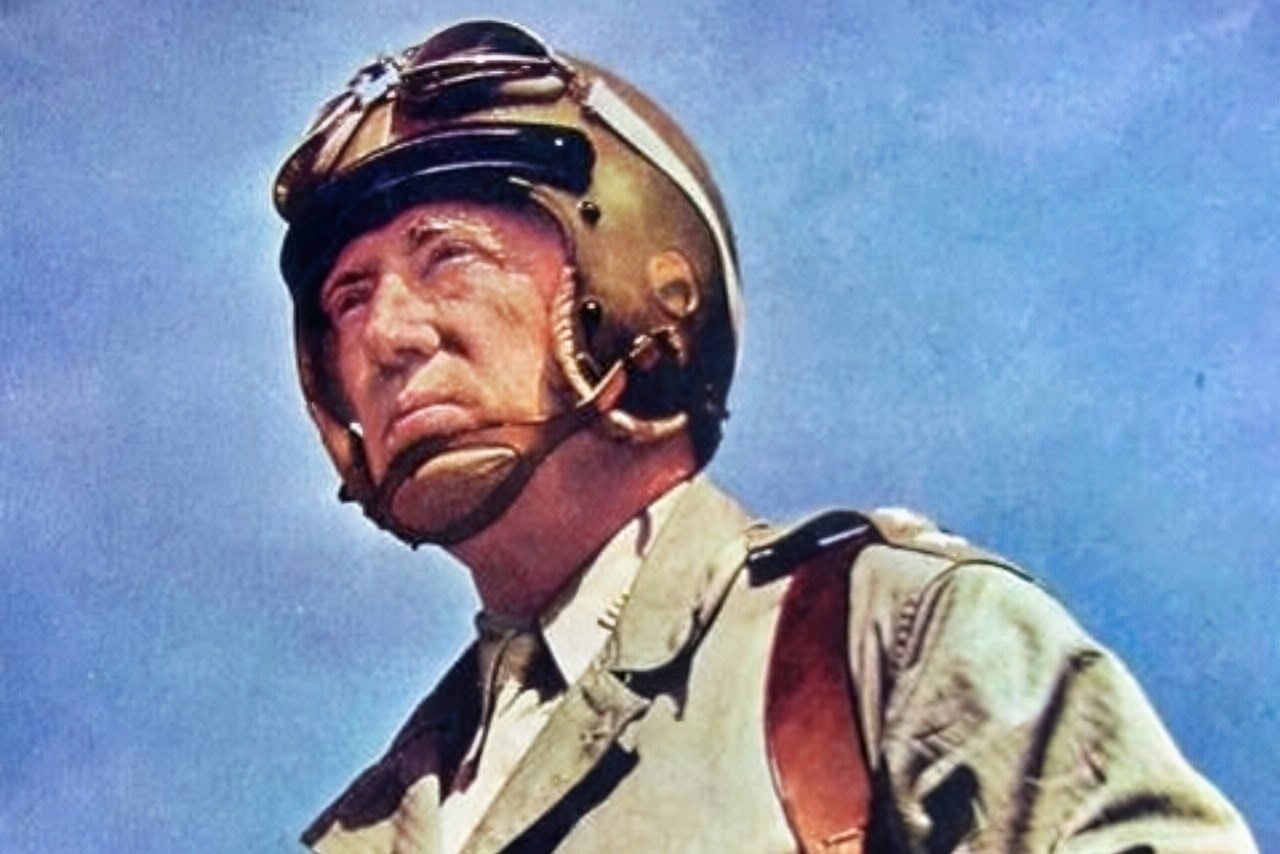
General George Patton of the U.S. Army. Image Credit: Creative Commons.
Early World War II Service
When Pearl Harbor was attacked on December 7, 1941, General George S. Patton was in the United States, commanding the 2nd Armored Division and organizing training in the California desert after a period of being somewhat out of favor in Washington. However, he had previously served in Hawaii and predicted such an attack.
Following the attack, he took command of both the 1st and 2nd Armored Divisions and prepared them for deployment, eventually leading forces in North Africa.
Operation Torch, November 1942
The American Army would get its baptism of fire in the European Theater of Operations (ETO) in North Africa.
Operation Torch was the Allied invasion of French North Africa (Morocco and Algeria), starting on November 8, 1942, led by General Dwight D. Eisenhower, with George S. Patton commanding the Western Task Force landing at Casablanca.
It marked the first significant US involvement in World War II’s European Theater, aiming to clear Axis forces from North Africa, open the Mediterranean, and provide a stepping stone for invading Europe, successfully achieving strategic surprise and securing the region despite initial Vichy French resistance.
Patton commanded the Western Task Force (around 39,000 troops) that landed at Casablanca, Morocco, a significant logistical feat across the Atlantic. The British and Americans transported 670 naval vessels and 107,000 soldiers across the Atlantic without being spotted. It was an incredible stroke of luck.
Patton’s forces faced initial heavy resistance from Vichy French troops but quickly secured the beachhead and captured Casablanca by November 11, 1942.
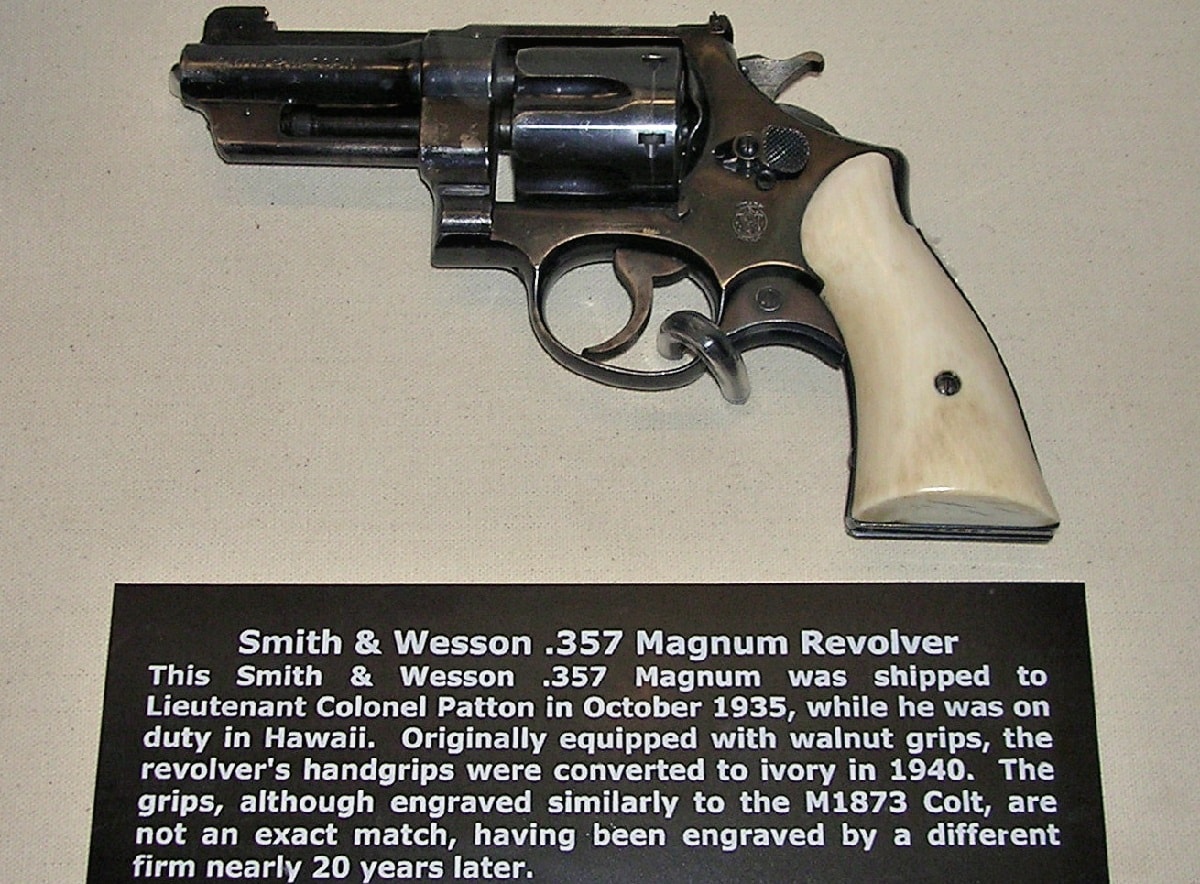
Patton’s well-known custom ivory-handled revolver.
Patton negotiated an armistice with French General Noguès, securing French cooperation. The Allies secured Morocco and Algeria at a cost of just over 2,000 casualties. From then on, French soldiers would fight alongside British and American forces through the remainder of the war.
Operation Torch coincided with stunning victories at El Alamein and Stalingrad. British Prime Minister Winston Churchill summarized the operation’s significance at a speech in London two days after the landings: “Now this is not the end,” he said. “It is not even the beginning to the end. But it is, perhaps, the end of the beginning.”
Patton transformed Casablanca into a crucial military port and hosted the important Casablanca Conference in January 1943.
Patton Takes Over After The Debacle At Kasserine Pass
When the US Army first met the Axis troops of the famed Afrika Korps under the command of General (later Field Marshal) Erwin Rommel, they suffered a humiliating defeat.
Rommel retreated to the Mareth Line in southern Tunisia, a series of French-built fortifications designed to stop an Italian invasion from Libya. The Afrika Corps had been chased across Libya by English General Bernard Montgomery after the Battle of El Alamein.
The American II Corps, under the command of MG Lloyd Fredenhall, reported to British LTG Kenneth Anderson in northern Tunisia. Still, they never communicated with each other and often issued conflicting orders.
Fredenhall set up his HQs 70 miles from the front. He issued orders in gibberish that no one could understand.
“Move your command, i.e., the walking boys, pop guns, Baker’s outfit, and the outfit which is the reverse of Baker’s outfit, and the big fellows to M, which is due north of where you are now, as soon as possible. Have your boys report to the French gentleman whose name begins with J at a place which begins with D, which is five grid squares to the left of M.”
At Sidi Bou Zid, the Germans, with 140 tanks, routed the Americans. Fredenhall had lost command of the situation. General Eisenhower then sent Major General Ernest Harmon, one of the US’s best armored commanders, to II Corps to stabilize the situation.
Harmon did stabilize the situation but urged Eisenhower to relieve Fredenhall, which he did, sending Patton to take over.
Patton Whips II Corps Into Shape
Patton imposed rigorous training, demanding adherence to regulations like shaving daily and wearing helmets and ties (for officers) in combat, turning the demoralized corps into an effective fighting force.
Patton’s immediate goal was to secure Maknassy Pass and break out at El Guettar, threatening the Axis right flank.
During the Battle of El Guettar in March 1943, II Corps, including the 1st Infantry and 1st Armored Divisions, successfully seized terrain, defeated a German counterattack by the 10th Panzer Division, and secured the passes.
The American success at El Guettar against the 10th Panzer marked a shift, giving the US its first victory against the Germans and setting the stage for future campaigns.
By pushing eastward, II Corps protected the British Eighth Army’s flank from the Mareth Line, forcing the Axis to divert forces and aiding Montgomery’s advance toward Tunis.
Patton would then be given command of the US Seventh Army for the invasion of Sicily.
About the Author: Steve Balestrieri
Steve Balestrieri is a National Security Columnist. He served as a US Army Special Forces NCO and Warrant Officer. In addition to writing on defense, he covers the NFL for PatsFans.com and is a member of the Pro Football Writers of America (PFWA). His work was regularly featured in many military publications.