The YF-23 Had a Message for Future Air Combat—But the Air Force Chose the Safer Path
One of the United States Air Force’s better-known competitions was the Advanced Tactical Fighter program, which ultimately yielded the F-22 Raptor stealth fighter. And though much ink has been spilled about the winner of the ATF competition, the YF-23, which came runner-up to the F-22, was not without its merits.
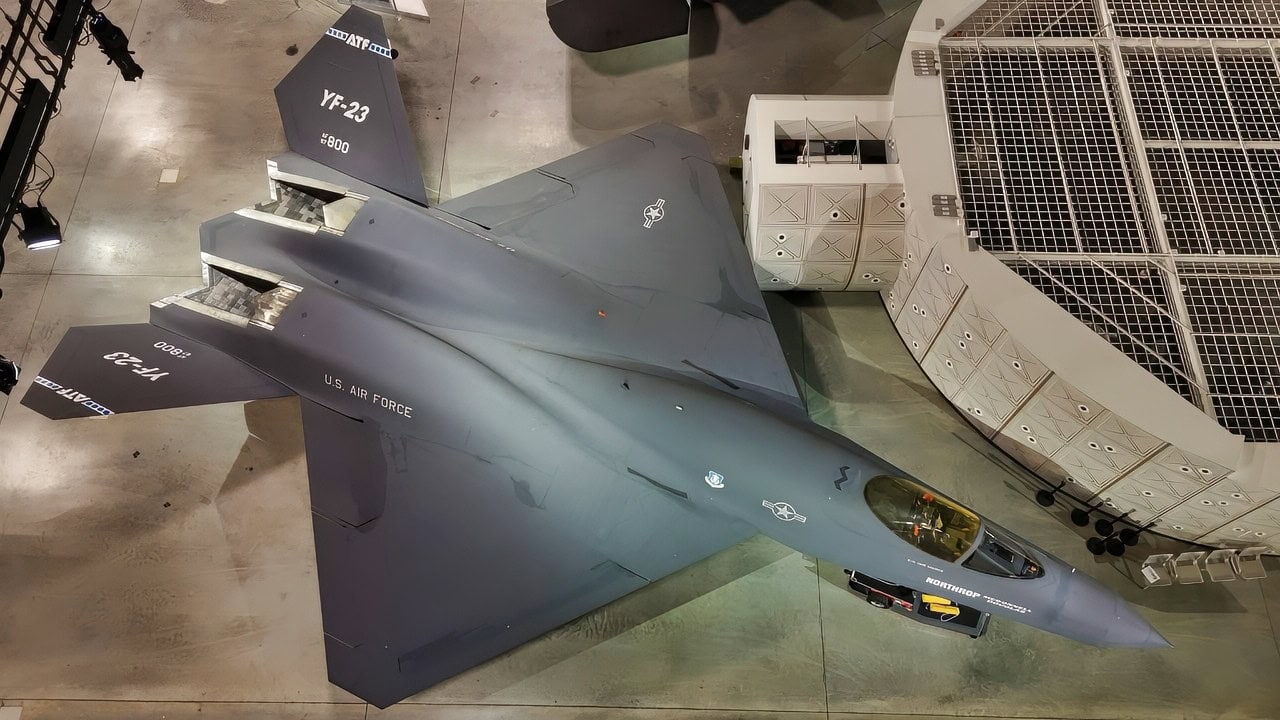
YF-23. Image Credit: Creative Commons.
Northrop’s YF-23 remains a perennial topic of interest despite its loss to the F-22. Northrop’s bird was developed in the latter stages of the Cold War, during the late 1980s and early 1990s. Part of the YF-23’s enduring appeal is due to its more radical design in comparison to the F-22 Raptor.
Advanced Tactical Fighter Competition
By the early 1980s, senior Air Force leadership had become aware that a successor to the F-15 Eagle would be necessary to retain the United States’ qualitative edge over increasingly sophisticated Soviet fighter designs. “US forces have not had to fight without air superiority since 1942,” then-Secretary of the Air Force Donald B. Rice explained in 1991. “And we intend to keep it that way, “ he added.
Soviet air defense assets, particularly the growing prowess of their surface-to-air missile systems, challenged American dominance. To counter this challenge, the United States Air Force sought an aircraft that could combine several desirable characteristics into a single fighter platform: advanced avionics, high maneuverability, supercruise capability, and advanced stealth.
Lockheed, in tandem with General Dynamics and Boeing, collaborated to build the YF-22, which would go on to become the F-22 Raptor fighter. Northrop, on the other hand, joined forces with McDonnell Douglas to develop their YF-23. Both aircraft prototypes would leave the drawing board and take to the skies in the early 1990s, undergoing a series of rigorous tests as part of the Advanced Tactical Fighter competition.
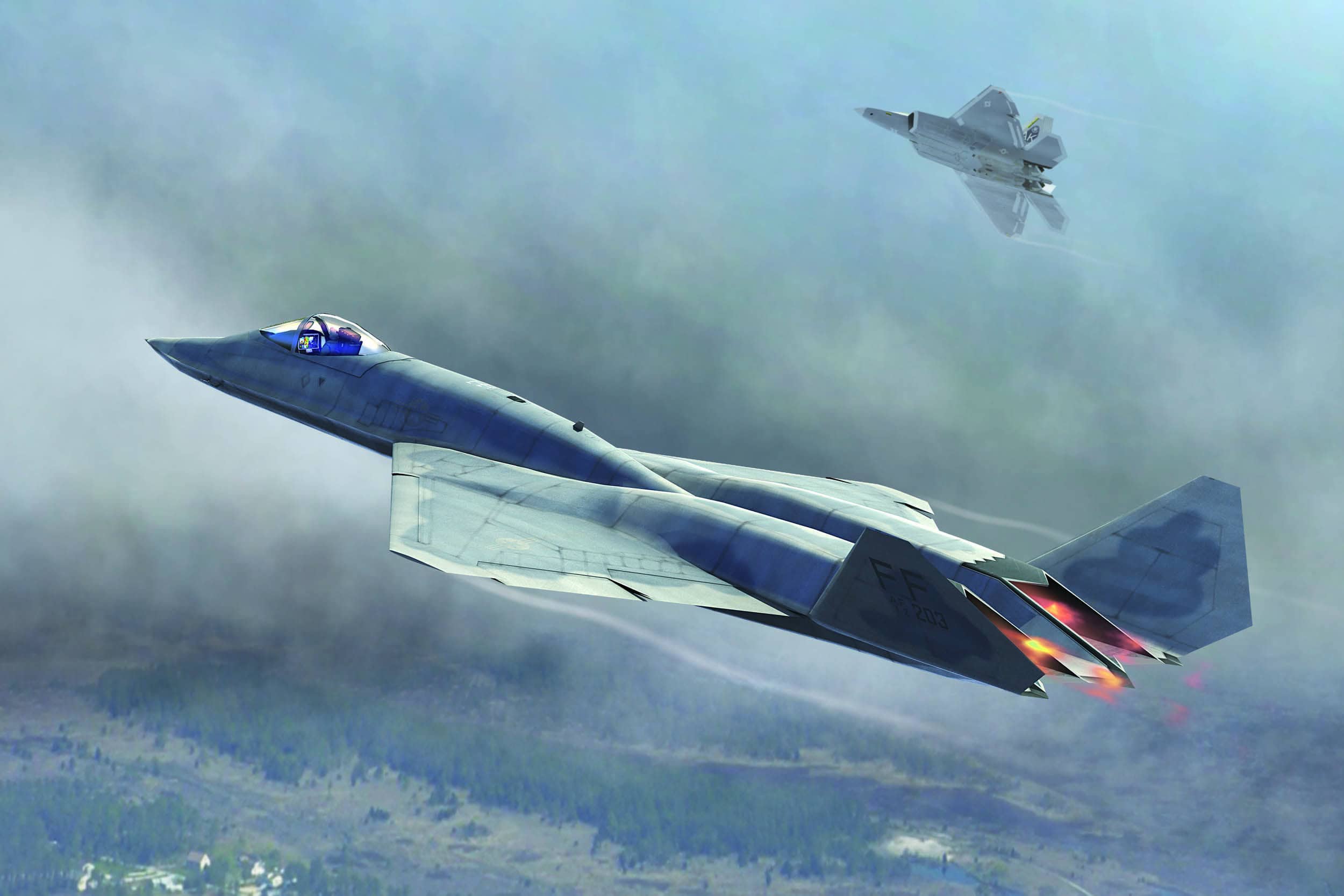
YF-23 Fighter. Image Credit: Creative Commons.
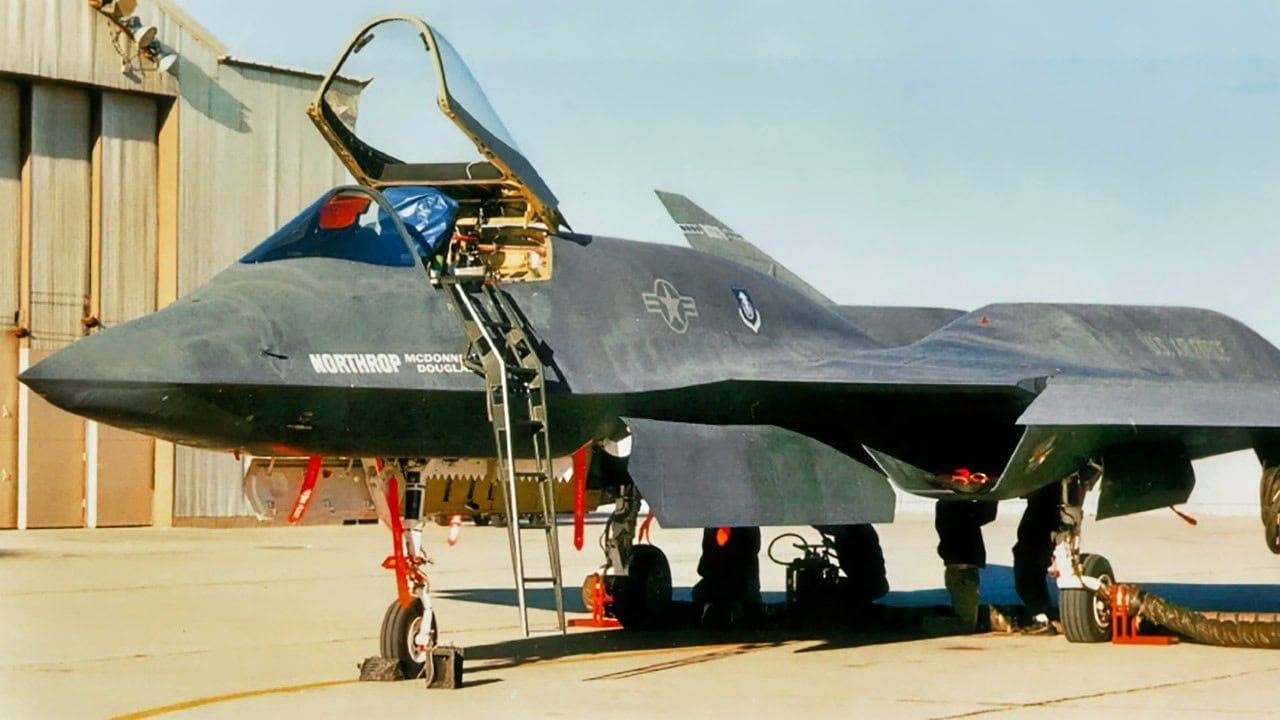
YF-23 Fighter. Image Credit: USAF.
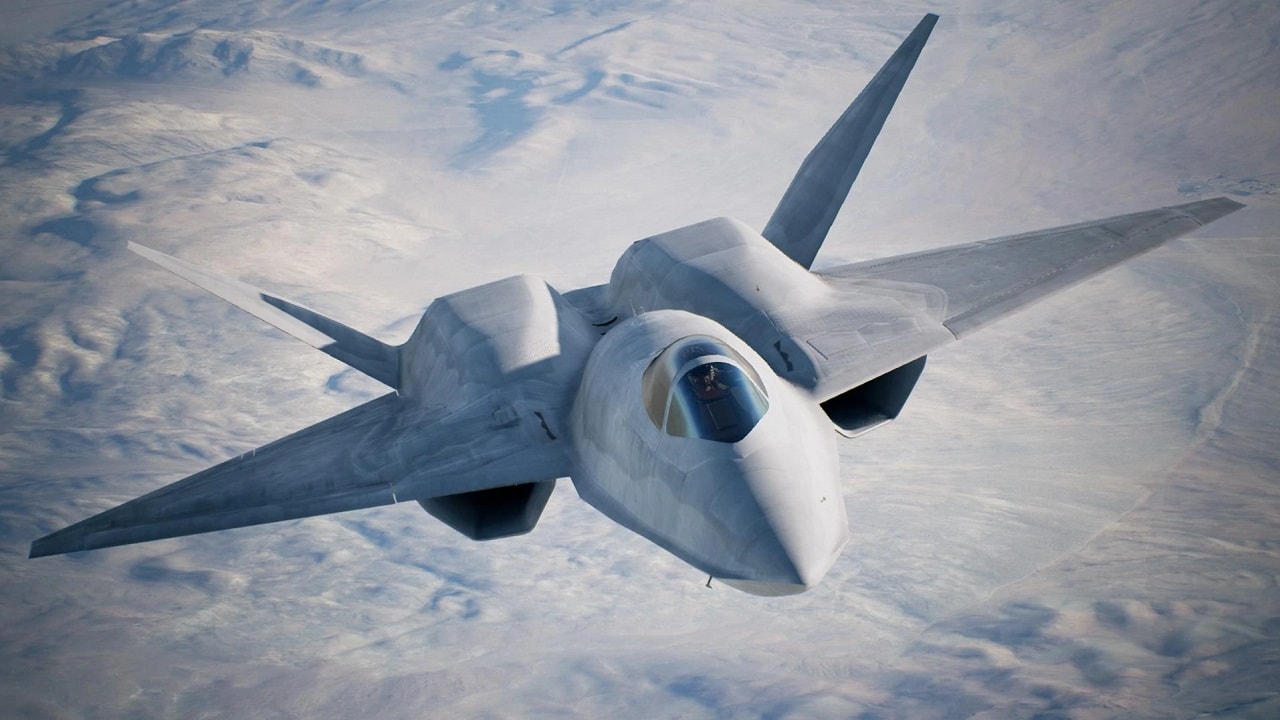
YF-23. Image Credit: Screenshot/Artist Rendering of Possible Final Design.
Northrop’s YF-23: A Radical Departure
Northrop’s YF-23 stands in marked contrast to Lockheed’s entrant to the ATF competition. The YF-23 placed a higher emphasis on stealth, and sported a deeply canted V-tail as well as stealthy diamond-shaped wings, and a smooth wing-body blend that served to significantly reduce the aircraft’s radar cross-section, a measure of detectability by radar.
Like today’s F-22, the YF-23 carried its weapons internally to preserve its stealth, reducing drag and consequently extending range.
A 1990 report explained that the jet’s speed would have been a significant asset.
“It will be the first fighter capable of flying for sustained periods at supersonic speeds, owing to the new engines developed by General Electric and Pratt & Whitney. Kresa said the jet will be able to fly supersonically while holding a third of its engine power in reserve,” the Los Angeles Times penned.
“The YF-23’s engines reportedly have the capability of converting from high-bypass fan-jet operation at subsonic speeds to a pure turbo-jet operation at supersonic speeds. The technology that allows the engines to act as both turbojets and fan jets is highly classified.”
But one of the areas in which Lockheed’s YF-22 outclassed Northrop’s jet was maneuverability.
Postmortem Assessment
Despite the YF-23’s notable innovations, however, the U.S. Air Force ultimately chose Lockheed’s Advanced Tactical Fighter entrant for several reasons.
In comparison to the YF-23, what would become today’s Raptor was extremely maneuverable and boasted a higher degree of agility in flight.

F-22 Raptor Fighter. Image Credit: Creative Commons.
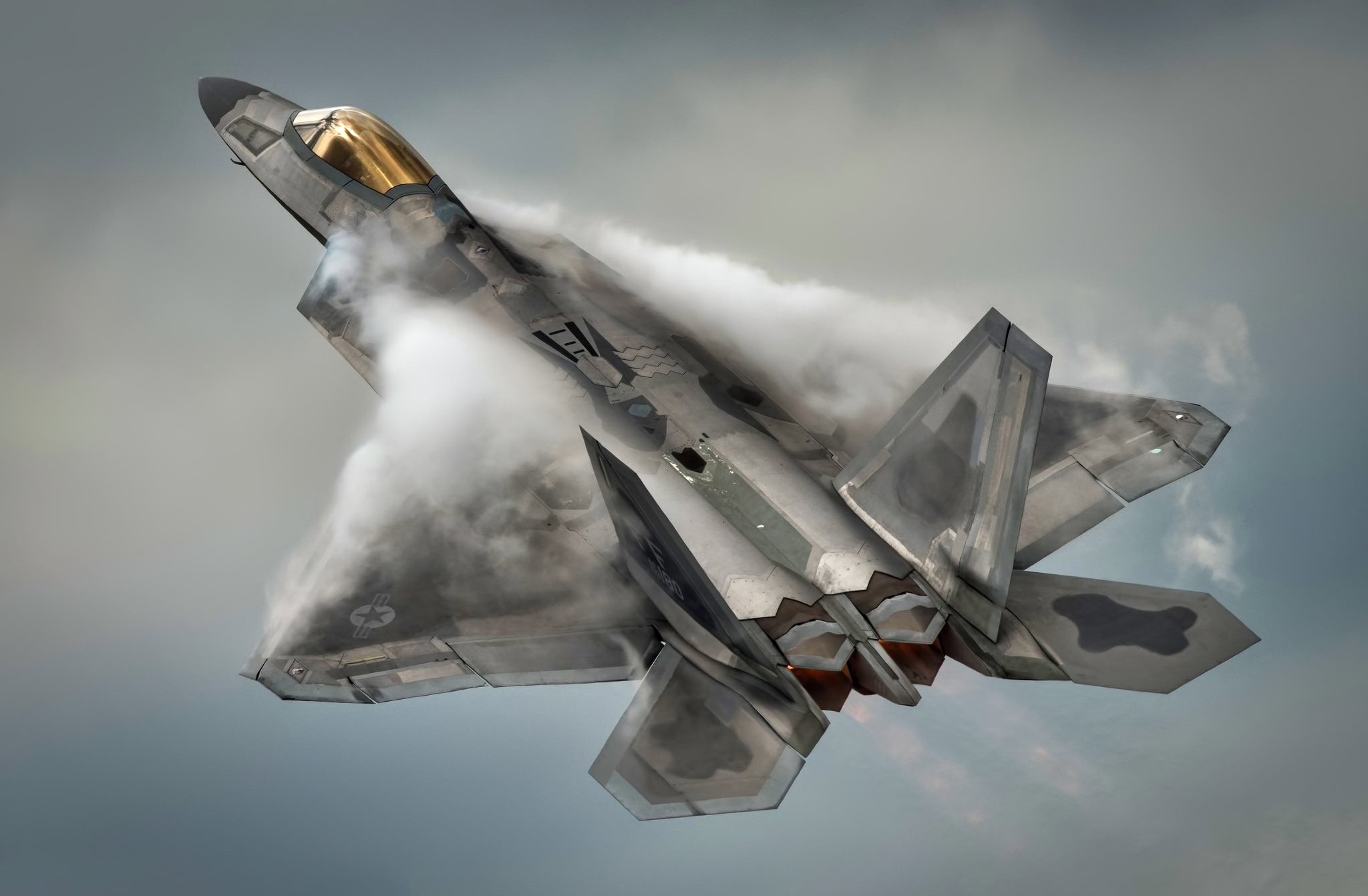
F-22 Raptor Fighter Jet US Air Force
The YF-23, in contrast, eschewed the thrust-vectoring nozzles the YF-22 possessed in order to reduce weight and decrease the likelihood of detection. But for Air Force leadership, super maneuverability was of utmost importance.
The YF-23 was, on paper, also a riskier jet compared to the more conventional YF-22.
Despite its higher speed under certain flight conditions and profiles, the YF-23 was a less mature design and one that suggested maintenance difficulties. Industrial factors also damaged the YF-23’s prospects in the ATF competition.
“In the two prototypes,” Air & Space Forces Magazine wrote, “the Air Force faced a choice between substantially different planes. Experts speculated that the technological contest boiled down to the YF-23’s superior speed vs. the YF-22’s maneuverability. Each prototype met the Air Force’s technical requirements for the ATF, said Secretary Rice. He added, however, that the YF-22 was judged to offer better capability at a lower cost. “I would not describe it as a split decision,” said the Secretary.”
According to reports from the era, the Secretary of the Air Force and senior Air Force leadership selected the YF-22 as the Advanced Tactical Fighter winner just the night before their selection became public, and that “Air Force leader argued that the Lockheed YF-22 prototype had rated higher than Northrop’s competing model in nearly all key criteria.”
About the Author: Caleb Larson
Caleb Larson is an American multiformat journalist based in Berlin, Germany. His work covers the intersection of conflict and society, focusing on American foreign policy and European security. He has reported from Germany, Russia, and the United States. Most recently, he covered the war in Ukraine, reporting extensively on the war’s shifting battle lines from Donbas and writing on the war’s civilian and humanitarian toll. Previously, he worked as a Defense Reporter for POLITICO Europe. You can follow his latest work on X.