
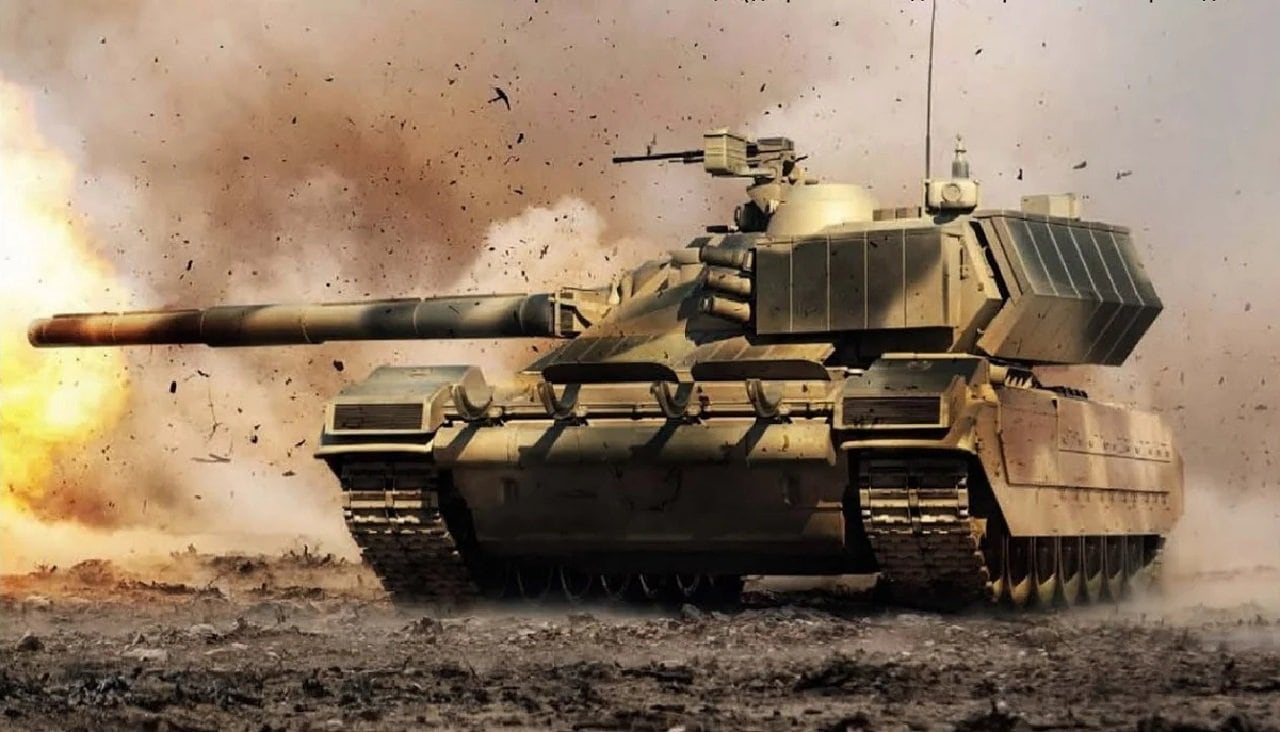
Summary and Key Points: The T-95 (Object 195) was a 58-ton experimental powerhouse designed to revolutionize the battlefield with a massive 152mm smoothbore gun.
-Its most significant innovation was an isolated armored capsule for the three-man crew, physically separating them from the autoloader and fuel—a design meant to end the “jack-in-the-box” turret explosions common in T-72s.
-Although canceled in 2010 due to cost, the T-95 provided the technological DNA for the T-14 Armata. However, in 2026, the T-95’s legacy is one of “lost potential,” as Russia struggles with the same production bottlenecks that killed the original prototype.
Armata’s Ancestor: Inside the T-95 Prototype That Predicted the Future of Armor
The T-95 was a Russian experimental fourth-generation main battle tank (MBT) developed by Uralvagonzavod. The T-95 was supposed to revolutionize armored warfare with advanced features and formidable firepower, but was canceled in 2010.
Planned to be equipped with a 152 mm smoothbore main gun capable of launching guided missiles and firing high-explosive rounds, the T-95 would have had immense firepower, much more than any other MBT in the world.
Additional features included a remote-control fire system with an autoloader and advanced sighting systems for enhanced combat awareness.
However, due to financial constraints and strategic shifts, Russia terminated the T-95 program and opted to develop the T-14 Armata, which inherited some of the T-95’s features.
Meet The T-95 Main Battle Tank:
The T-95 was a 58-ton prototype (Object 195) often described as a tank built as a “fundamental leap forward” and reportedly equipped with a 152mm main gun and an additional 30mm cannon.
The vehicle was designed to accommodate a crew of three, seated in an isolated, armored capsule in the forward section of the hull. This layout physically separated the crew from both the fuel tanks and the ammunition storage areas—an arrangement intended to improve survivability.
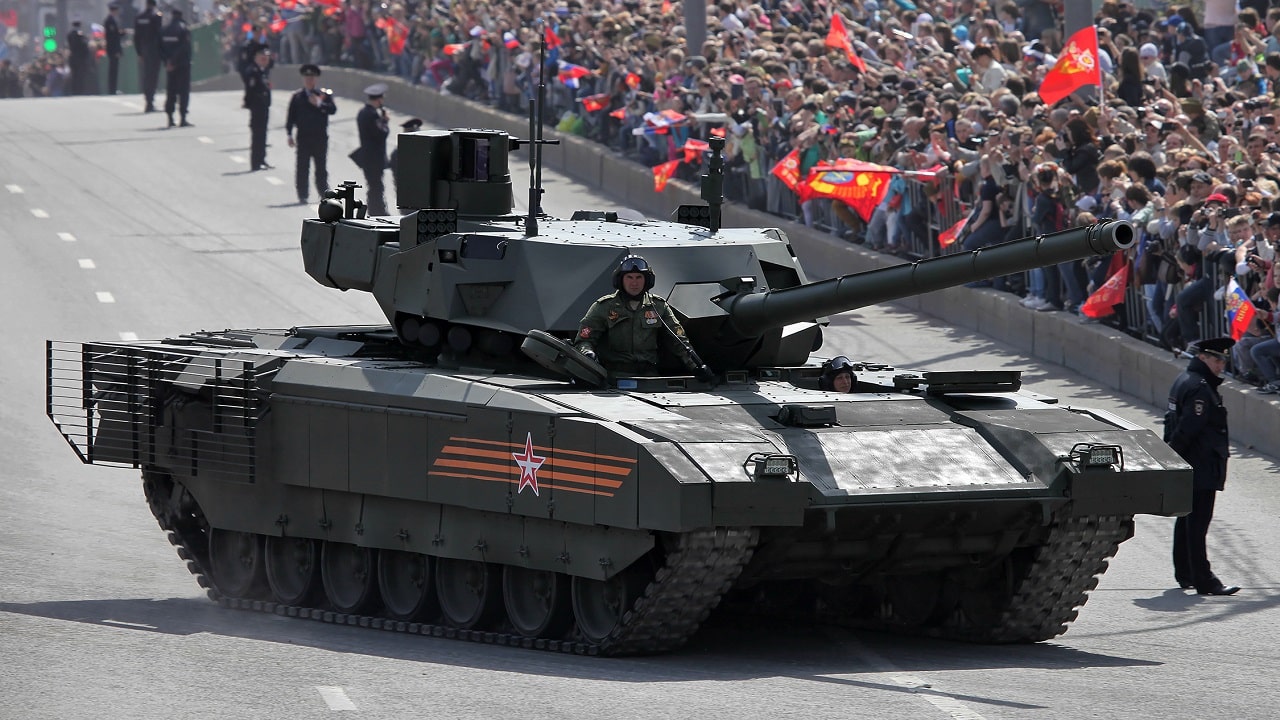
Image of T-14 Armata tank in the Russian Military. Image Credit: Vitali Kuzman.
The main gun’s auto-loader is positioned high above the turret’s floor to minimize the risk of being disabled by an anti-tank mine. Fuel cells are also kept separate from the turret area to prevent a round that penetrates the turret from igniting the tank’s fuel.
The turret was also taller than those of other Russian tanks to accommodate the larger main gun. This allowed for better elevation, which was designed to help out in urban combat based on hard lessons learned from the bloody fighting in Chechnya, in which rebels destroyed many Russian tanks. The gun would also have been able to engage over-the-horizon targets with its guided missiles.
The T-95’s Composite Armor:
The T-95 was intended to include advanced multilayer composite armor, the “Drozd-2” active protection system, and “Relikt,” a next-generation explosive reactive armor (ERA) package.
These combined systems suggest that the tank was being developed to counter modern anti-tank threats on both conventional and asymmetric battlefields.
The T-14 Armata Tank Incorporates Some Of the T-95’s Technology:
When the Russians unveiled the T-14 Armata tank at Moscow’s 2015 Victory Day Parade, the T-14 was touted as the most advanced main battle tank in the world, boasting a suite of technological innovations that, on paper, placed it a generation ahead of Western counterparts.
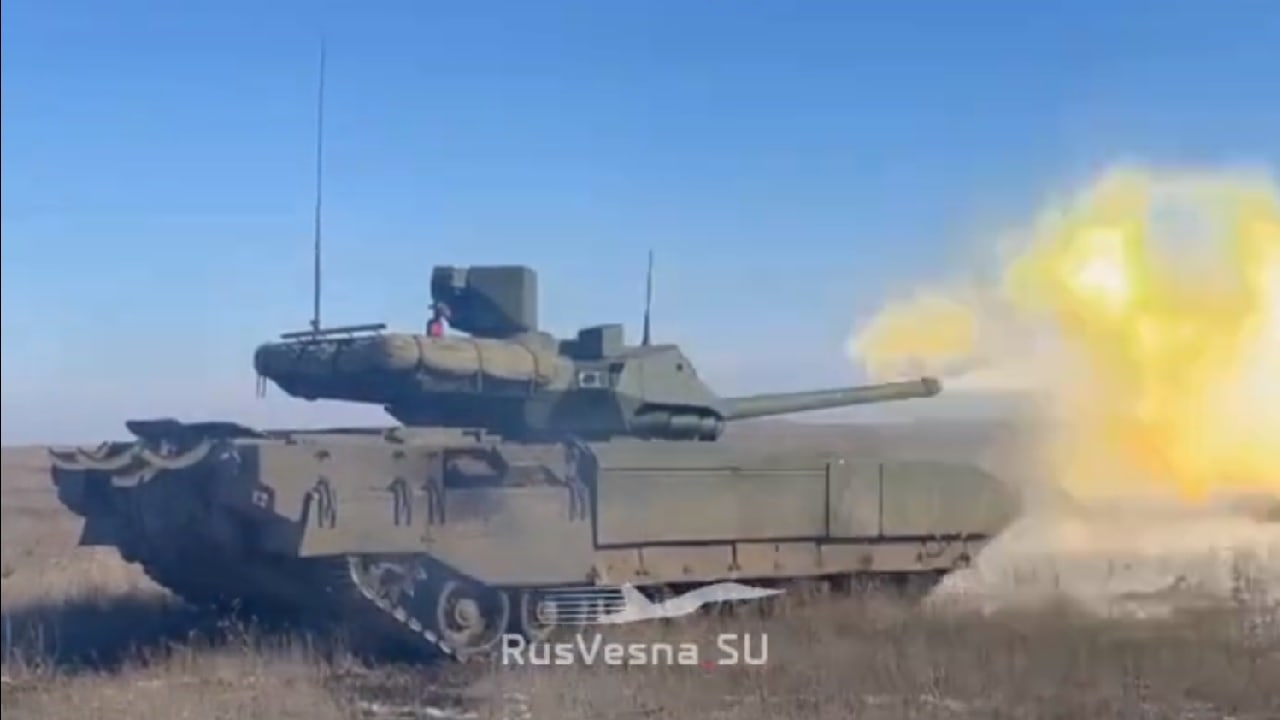
T-14 Armata Screenshot
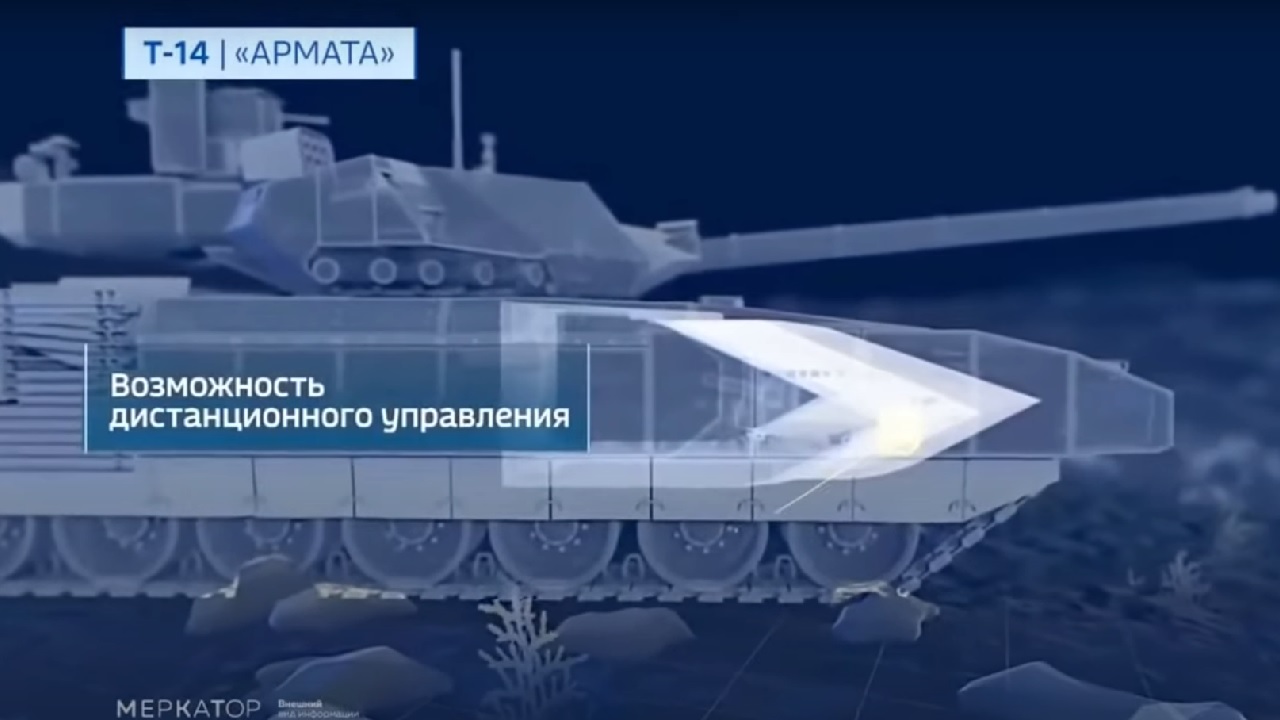
Russia T-14 Armata Tank. Image Credit: YouTube Screenshot.
The T-14 has an uncrewed turret, reducing the crew to three. Its 125mm main gun is also smoothbore and can fire both conventional ammunition and anti-tank guided missiles. The remotely controlled main gun, although of a different caliber, was taken from the T-95.
Boasting active protection systems and cutting-edge sensors, the West was supposed to play catch-up. The reality was quite different from the typical Russian hype.
However, the T-14 Armata has been a microcosm of the Russian military. Heavily hyped, beset by problems, production was nearly non-existent, and unused during a war that had been going on for more than three years, where their armor had been decimated.
Meet The T-14 Armata
In a departure from the historical tradition of Russian tanks being pragmatically designed and easily mass-producible, the T-14 Armata is technologically ambitious and, theoretically, very impressive.
The tank’s primary weapon is a 125mm smoothbore gun in its unmanned turret, which is controlled electronically from a protected crew capsule compartment located in the center of the tank.
An autoloader feeds the main gun, and in addition to traditional rounds, it can also fire the Sprinter Anti-Tank Guided Munition (ATGM), an effective guided missile.
The autoloaders have proved to be a major issue with Russian tanks. When the turret is penetrated by enemy fire, the 125mm rounds usually explode, launching the turret skyward and dooming the crew.
The T-95/T-14’s Advanced Crew Protection
The Armata, by contrast, emphasizes Western-style crew protection and advanced sensor integration, featuring an unmanned turret, an active protection system (APS) to intercept incoming projectiles, and a suite of digital battlefield networking capabilities. Much of this design was first developed by Russia with the T-95.
A February 2015 Rossiyskaya Gazeta article by Sergey Ptichkin states that: “The forward (protected crew shell) has multilayered, combined armor protection that can withstand a direct hit from any type of round that exists today.”
Additional protection comes in the form of an Afghanit Active Protection System (APS), which tracks incoming projectiles and uses charges to detonate them before they hit the tank’s armor.
Eventually, Moscow decided that the T-95 prototypes that they built were too advanced and too expensive for full-scale production. They canceled the program. But they did incorporate many of the features listed above into the T-14 Armata.
However, many of the same issues that they encountered with the T-95 have reemerged with the T-14 Armata. The production of which has been minimal. And they’ve produced so few of them that the Russian Ministry of Defense has decided against deploying any T-14s in Ukraine, where its armor has been decimated, and they’ve been reduced to dusting off ancient, obsolete T-62s from mothballs to fight the Ukrainians.
The T-95 was the best Russian tank that never was.
About the Author: Steve Balestrieri
Steve Balestrieri is a National Security Columnist. He served as a US Army Special Forces NCO and Warrant Officer. In addition to writing on defense, he covers the NFL for PatsFans.com and is a member of the Pro Football Writers of America (PFWA). His work was regularly featured in many military publications.