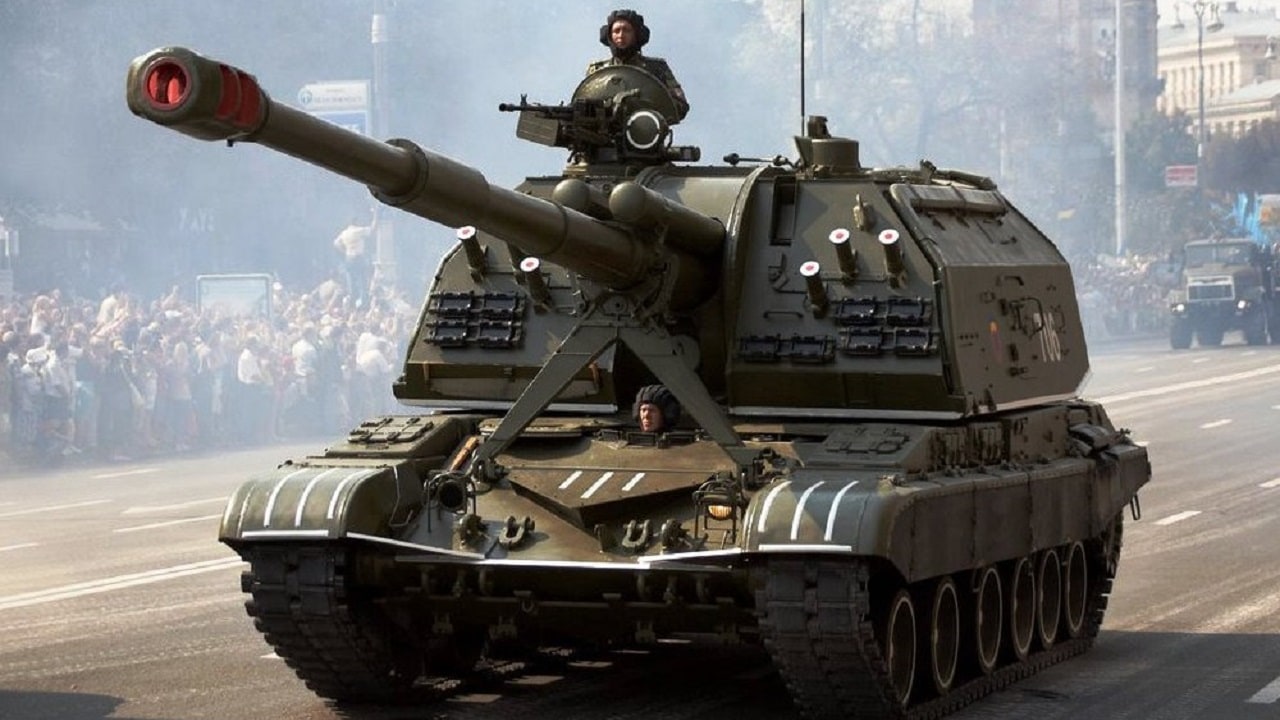
Putin’s Most Embarrassing Milestone: Ukraine War Now Longer Than WWII
Summary and Key Points: Day 1,418 of Russia’s invasion marks a grim milestone: the war has lasted longer than the Soviet Union’s fight against Nazi Germany.
-Moscow’s early push toward Kyiv stalled not because Ukraine lacked warning, but because Russia’s corruption, poor discipline, and hollowed-out modernization effort wrecked sustainment.
-Fuel, food, maintenance, and command-and-control failures turned the campaign into attrition, with shortages and quality-control problems compounding under sanctions.
-The end state is stark: Russia is unlikely to attempt another major land grab soon, but its imperial impulse will persist. Europe’s security hinges on exploiting Kremlin weakness while sustaining support for Ukraine.
Why Russia Can’t Win in Ukraine: Logistics, Corruption, and a Broken War Machine
On Sunday, January 11, Russia’s full-scale invasion of Ukraine that began in February 2022 reached a milestone. Unfortunately for Russian President Vladimir Putin, it is a milestone: it is probably the most embarrassing anniversary he has experienced in his 25 years of ruling his country—and running it into the ground in the process.
This date marks the 1,418th day since the invasion began. Not a memorable or perfectly round number, but a highly significant one, nonetheless. That the war is still ongoing means that former KGB Lt. Col. Putin’s invasion, which he launched four years ago—one which he boasted would see Russia victorious in a handful of days—has lasted longer than Russia’s Great Patriotic War against Nazi Germany from 1941-1945.
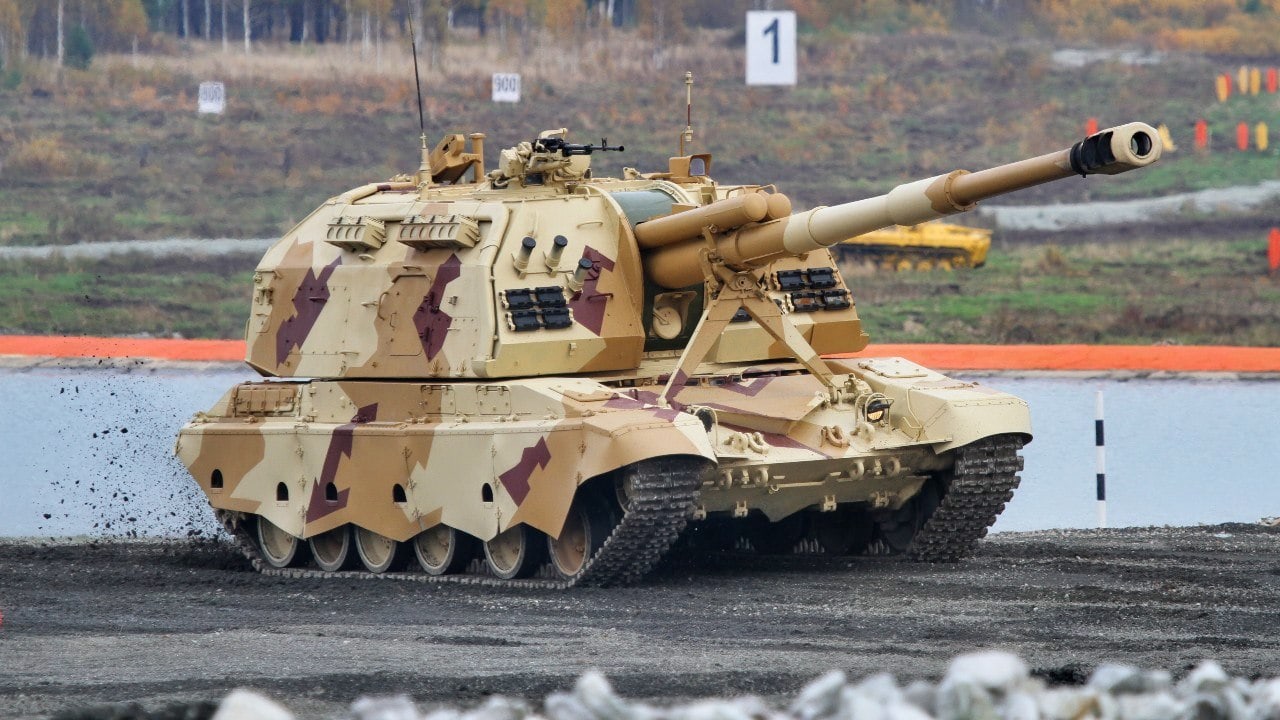
MSTA Artillery from Russian Army.
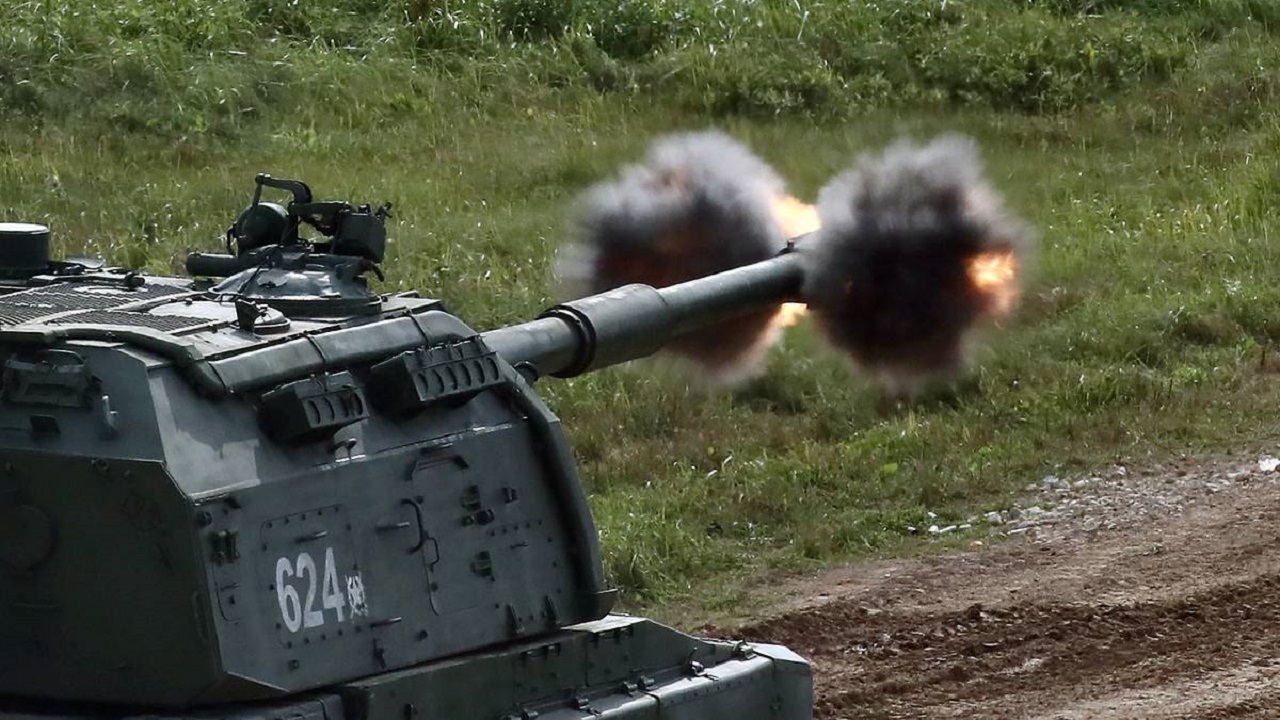
Russian Msta Artillery. Image Credit: Creative Commons.
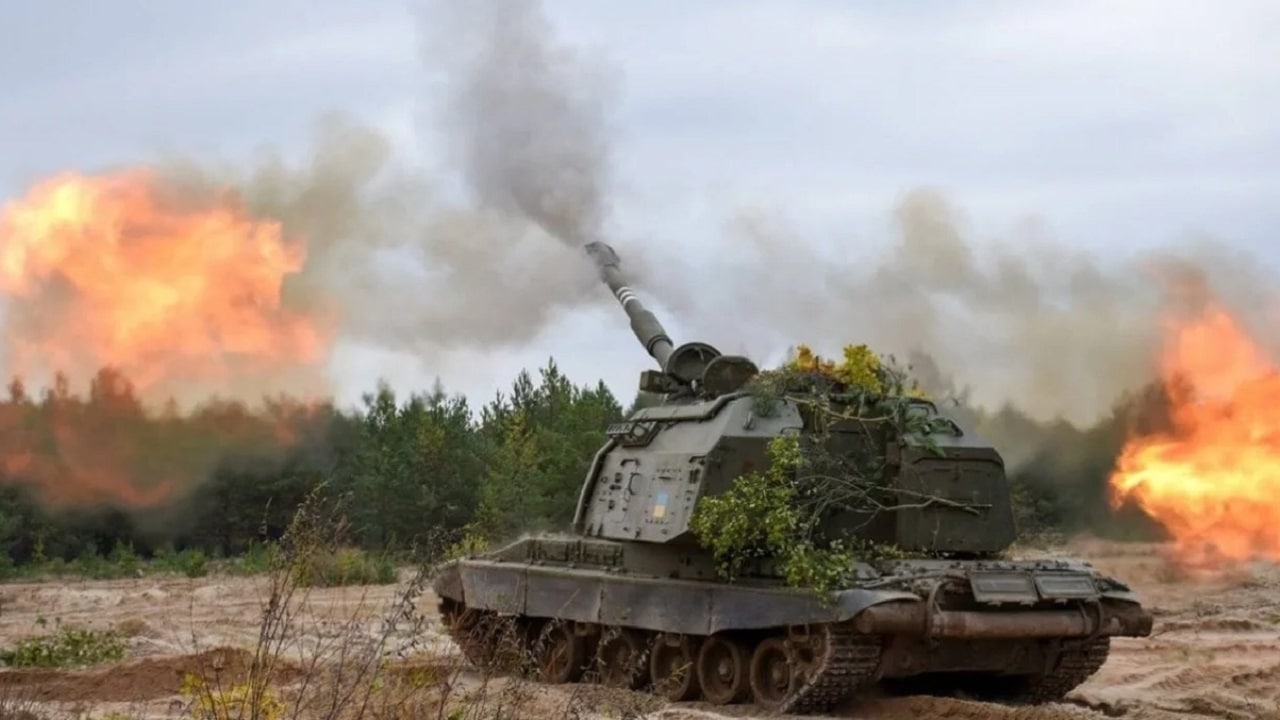
2S19 Msta Artillery in Ukraine War. Image Credit: Russia Military.
Those two wars have lasted now roughly the same number of months. But they have played out so differently that it is hard to believe they both took place on the territory of Ukraine and Russia.
In 1941, the USSR was nearly overrun for several reasons, not the least of which was that the war began with a surprise attack. The Soviet dictator Josef Stalin had those who tried to warn him that the Nazi invasion was coming, but he refused to heed those warnings. Ukraine’s President Volodymyr Zelenskiy had plenty of warning that a Russian invasion, which Putin called a “Special Military Operation“, was coming, and there was little in the way of a surprise for him.
But the reason that Stalin’s army was rolled back hundreds of miles and that Putin’s military has advanced only a short distance into Ukraine has little to do with how much warning there was to be had before Russian columns were marching on Kyiv. Despite the massive numbers of men and equipment thrown into a multi-pronged invasion of his neighbor, Ukraine still controls more than 80 per cent of its territory.
Russia’s military shows few signs of being able to effect any change in the disposition of its forces relative to Ukraine’s. Putin’s sole hope remains that he can bluster and blackmail the West into forcing Kyiv into an inequitable peace settlement that awards Moscow territory that it has not been able to take by force.
Russian Weaknesses: Corruption
Among the first lessons Russia learned was the factor that led to its failure in the initial weeks of the war. This is evident in one of the several vectors of Moscow’s forces, which comprised long columns of vehicles en route to the Ukrainian capital, Kyiv, and its failure is symptomatic of what was wrong within the Russian Army and continues to be so.
Despite the lack of large formations of Ukrainian armor and troops to oppose them, their attempts to storm the capital region failed. What caused that failure were maladies within the armed forces that have been part and parcel of Russian officialdom since the beginning of time: corruption and a complete lack of discipline.
Corruption has always been a problem in the Russian armed forces, and today’s military under Putin is far worse than the practices in the Soviet era. The performance of Russia’s military in the first month alone made it clear that a significant portion of the hundreds of billions of dollars spent beginning in 2011-2012 on what was billed as a ten-year modernization plan for the Russian military was stolen or otherwise embezzled.
The Russian military was expected to have been provided with a large number of modern weapons. The armed forces were supposed to be equipped with 70 per cent new equipment, but many of the planned deliveries never took place.
But more than just major items were never available when the invasion occurred, due to corruption and even outright theft by various cliques and institutions within the armed forces. Simpler issues, such as proper vehicle maintenance and ensuring they were capable of the long trek from Belarus to Kyiv, had these massive columns bogged down before they even got close to their objectives.
Even some basic supplies like fuel and food were apparently sold off on the black market and were nowhere to be found when it came time to invade Ukraine. Even today, Russian troops in the field are forced to either pay for or forage for their own rations.
A story recently recalled accounts of Russian soldiers killing and cooking pigeons on the front lines to keep from starving.
Lack of Logistics and Sustainment
Consequently, Russia has had increasing difficulty maintaining sustained levels of personnel and munitions, as well as some of its major weapons platforms. If there is a lesson here, it is that decades of neglect of the defense sector cannot be remedied overnight. The extent to which Russia has been unable to resolve the mounting difficulties in this area is the primary factor slowing Moscow’s war machine and driving its performance toward a war of attrition.
“The ongoing war on Ukraine and the impact of international sanctions have only deepened existing weaknesses, failings, industry bottlenecks, and other issues in Russia’s military-industrial complex,” reads a Chatham House report from July 2025. Russia is striving to increase the efficiency of its defense-industrial complex (OPK), and that goal remains an official objective for the Russian state, but it is never met.
It is never met as there are too many other additional factors to contend with. Russia faces rising “financial and economic struggles, workforce and labour market deficiencies, industrial over-concentration, and systemic problems such as corruption and poor quality control,” details the same report.
Last month, London’s Royal United Service Institute (RUSI) encapsulated the deteriorating situation for Moscow. “By any measure, the war has been a strategic catastrophe for Putin,” reads their assessment.
“The Russians overestimated themselves as much as they underestimated the Ukrainians, blinded seemingly by the belief that the Ukrainians were Malorusy, or ‘little Russians’, a less capable people, a view founded in racism, chauvinism, and imperialism. This view of a lesser opponent beset by corruption and inefficiencies reinforced the belief that a short, sharp encounter would be all that was needed, the ground prepared by so-called ‘hybrid’ warfare undermining Ukraine through sabotage, espionage, and a media war.
These initial failures were both reflective of and were founded “in an initial shambles of military command, control and logistics within the Russian military,” continue the RUSI experts. Those shortcomings have not been addressed since the war began, and in numerous instances they have worsened.
End State
Several conclusions about this war make clearer both how it should end and what comes after than they were 4 years ago.
One is that, short of its complete collapse, Russia will never stop trying to force its will on its neighbors. But it is highly unlikely after so many failures in this war that Moscow would be able to take a shot at one of the Baltic States or Poland in the future.
But Moscow’s imperial ambitions will always be there, no matter what. The sad conclusion of the RUSI report is that “the only conceivable way this peace could stick and be a viable basis to rebuild Ukraine and reset European security, is for NATO troops to be stationed in those zones as a tripwire for further Russian aggression. Without that, there is little inducement for Ukrainians to believe in their own country.
Additionally, Russia’s economic future is as bleak as it has ever been. This week, the Ukrainian Foreign Intelligence Service released an assessment of the situation. It stated, “Analysts note that the current situation is increasingly compared to the delayed crisis of the late Soviet Union, when economic problems were masked by debt. While the scale of today’s challenges is smaller than in the 1990s crisis, Russia is likely facing a prolonged period of economic instability.”
In the meantime, as a January 2026 report from the European Council on Foreign Relations concludes, “The West should stop buying into Moscow’s bluff that Russia is invincible; instead, it should use the Kremlin’s weaknesses and double down on its support for Ukraine to bring about real negotiations to end the war.”
About the Author: Reuben F. Johnson
Reuben F. Johnson has thirty-six years of experience analyzing and reporting on foreign weapons systems, defense technologies, and international arms export policy. Johnson is the Director of Research at the Casimir Pulaski Foundation. He is also a survivor of the Russian invasion of Ukraine in February 2022. He worked for years in the American defense industry as a foreign technology analyst and later as a consultant for the U.S. Department of Defense, the Departments of the Navy and Air Force, and the governments of the United Kingdom and Australia. In 2022-2023, he won two awards in a row for his defense reporting. He holds a bachelor’s degree from DePauw University and a master’s degree from Miami University in Ohio, specializing in Soviet and Russian studies. He lives in Warsaw.