
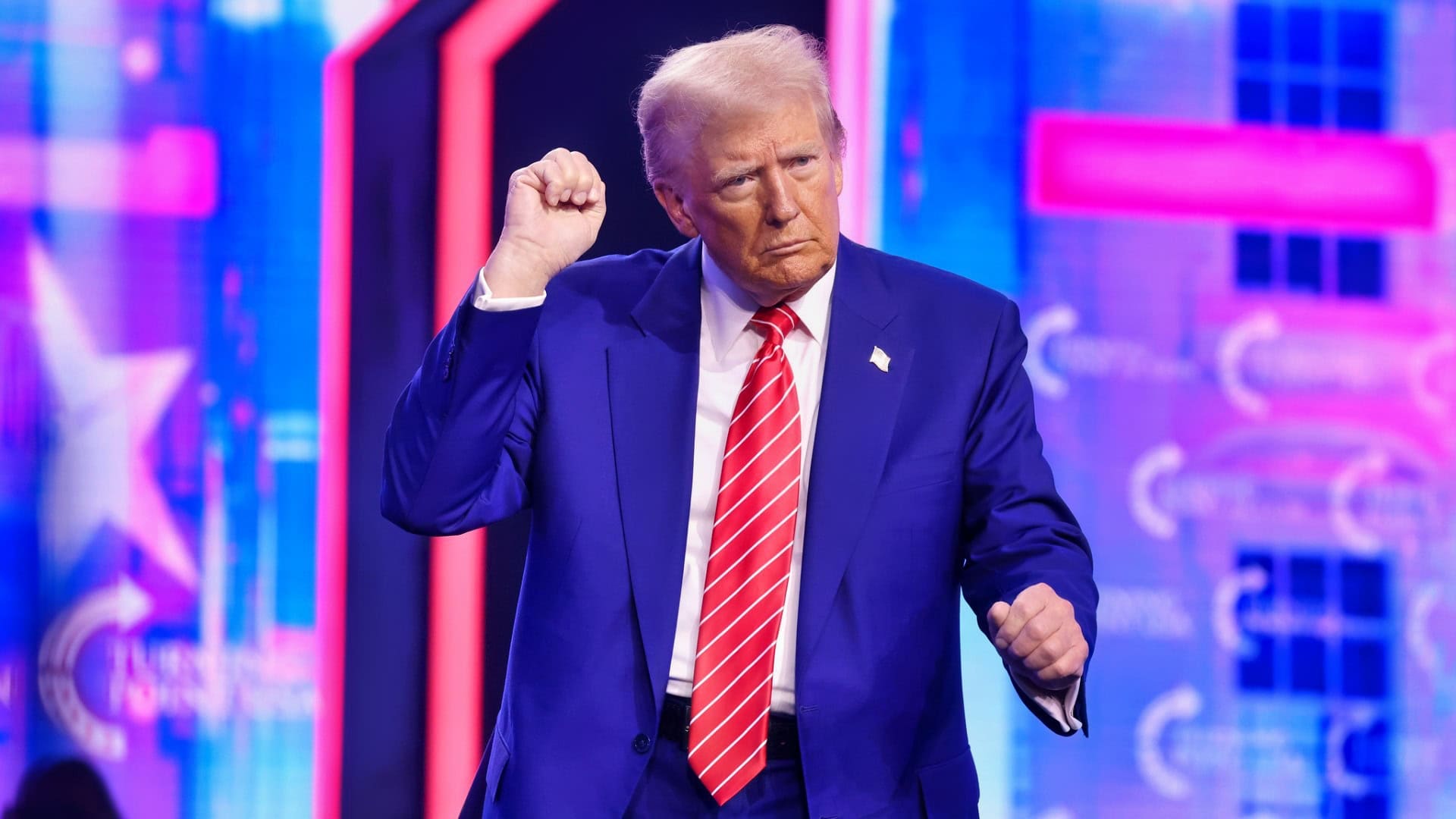
The Trump administration is creating a mess of trouble for itself in the world of sports diplomacy.
The spectacle of sports is deeply important to President Donald Trump, and he takes its political implications seriously.
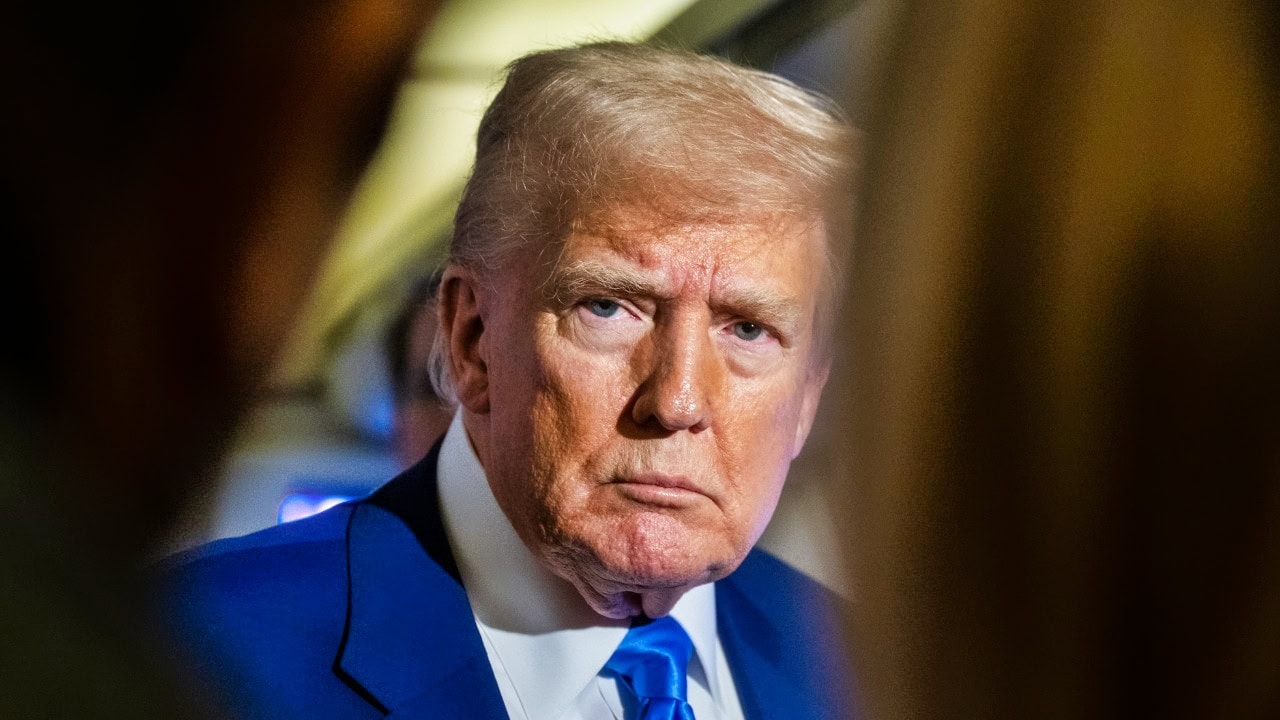
President Donald Trump plays golf in the Senior Club Championship at Trump National Golf Club Jupiter, Sunday, April 6, 2025, in Jupiter, Florida. (Official White House Photo by Molly Riley)
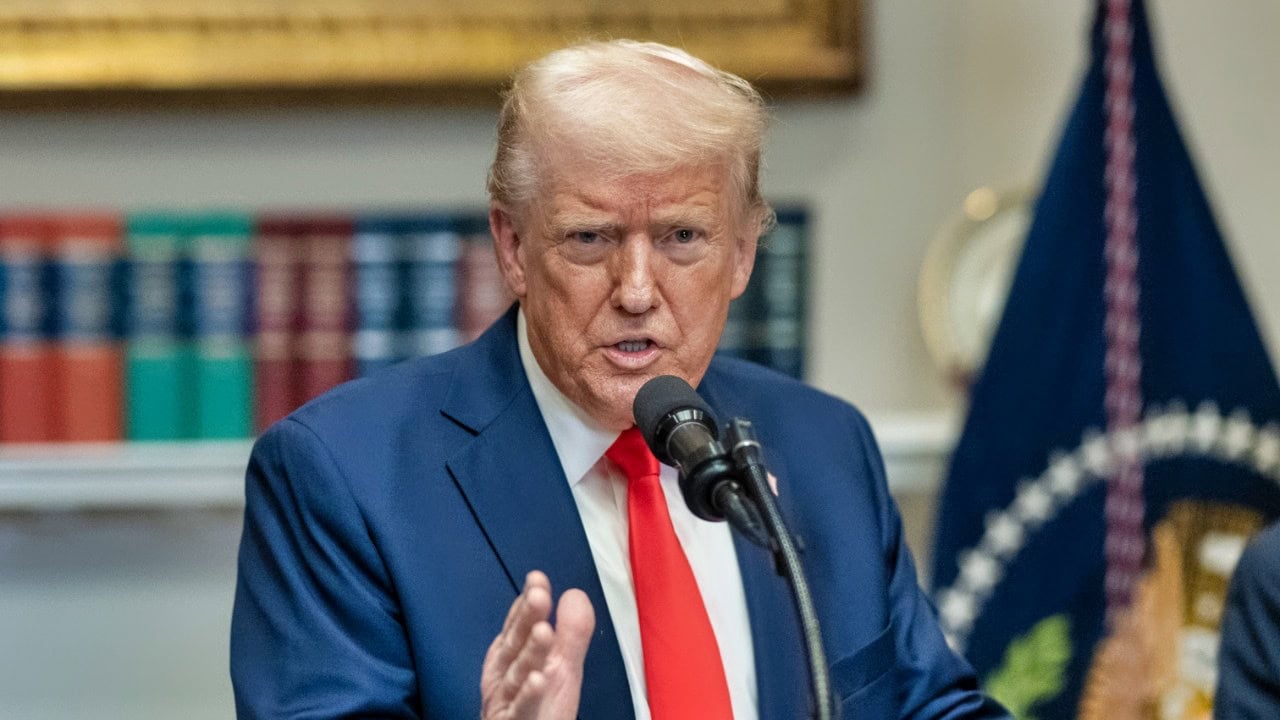
President Donald J. Trump makes an investment announcement, Monday, March 3, 2025, in the Roosevelt Room of the White House. (Official White House Photo by Molly Riley.)
A long-running feud between Trump and the National Football League deteriorated this year into a presidential boycott of the Super Bowl, because of the planned halftime performance of entertainer Bad Bunny.
But with the United States set to participate in the Winter Olympics in Milan and host the 2026 World Cup, the need to present a strong, unified American presence is conflicting with many of Trump’s most cherished policies.
Winter Olympics
The Trump administration’s approach to diplomacy has not won the U.S. any new friends around the globe. Europe in particular has borne considerable criticism from the president and his administration, both for perceived shortcomings in peace negotiations over Ukraine and because of its refusal to cede Greenland to the United States.
These disputes have undercut U.S. popularity on the continent. Unsurprisingly, news that ICE would accompany the U.S. delegation to the 2026 Winter Olympics in Milan has caused controversy in Italy.
While it is not unusual for ICE and other law-enforcement agencies to have a presence in an Olympic contingent, the Italians disapprove of ICE’s behavior in Minneapolis and elsewhere.
The Trump administration probably isn’t worried about American athletes being booed more lustily than normal in Milan, but it should be concerned that medal-winning Americans likely will protest administration policies from the podium.
World Cup
The United States is merely a participant in the Winter Olympics. But, along with Canada and Mexico, the U.S. is a co-host of the 2026 World Cup. FIFA honored the U.S. president with a “peace” trophy last year. Many argue the move was emblematic of the organization’s long-term struggles with corruption, but it was also intended to cut the tension between the organization and the Trump administration.
The award does not seem to have impressed anyone other than Trump himself. Now, there is talk in Germany and elsewhere of a World Cup boycott—former FIFA President Sepp Blatter has joined in backing such a movement.
While a full boycott is unlikely to come together, the suggestion serves to demonstrate the kind of controversy that the president has courted.
Further complicating World Cup logistics is the fact that the United States is currently involved in uncharacteristically sharp disputes with its two co-hosts, Canada and Mexico. Ease of cross-border travel is critical to the success of a co-hosted World Cup, as fans want to follow teams to venues in each country.
However, while Customs and Border Patrol has publicly committed to easing entry and egress, it has also confirmed that it will continue to aggressively investigate social media postings by tourists, potentially generating delay and disarray. The suspension of processing of visas from 75 countries has only made the confusion worse.
The Trump administration needs to make a credible commitment to the many tourists expecting to attend World Cup football matches that they will not be harassed, either by Customs and Border Patrol or by ICE. But given that ICE has focused much of its attention on Americans of Latino descent, and that several teams from Latin America are expected to bring large contingents of fans to the United States, concern over the activities of the organization are hardly surprising.
The poor training and discipline that ICE has displayed in Minneapolis and elsewhere have raised alarm bells for diplomats worried about the safety of their citizens being hosted in the United States.
Looking Forward
Of course, the Olympics and the World Cup have been hosted in the past by brutally authoritarian countries; some of the complaints about Trump and U.S. policies should be taken with a grain of salt.
Nevertheless, Trump may feel constrained by the threat of a boycott. He often makes a point of his indifference to foreign criticism, but that does not mean he enjoys being made the fool.
The World Cup will provide a template for the 2028 Summer Olympics in Los Angeles, which will take place squarely in the middle of the 2028 presidential campaign. At the same time, baseball and American football continue to expand internationally, a process that necessarily brings fans from different countries into collision with one another.
Sports are always political, but they were not as fraught as they are today under Trump.
About the Author: Dr. Robert Farley, University of Kentucky
Dr. Robert Farley has taught security and diplomacy courses at the Patterson School since 2005. He received his BS from the University of Oregon in 1997, and his Ph. D. from the University of Washington in 2004. Dr. Farley is the author of Grounded: The Case for Abolishing the United States Air Force (University Press of Kentucky, 2014), the Battleship Book (Wildside, 2016), Patents for Power: Intellectual Property Law and the Diffusion of Military Technology (University of Chicago, 2020), and most recently Waging War with Gold: National Security and the Finance Domain Across the Ages (Lynne Rienner, 2023). He has contributed extensively to a number of journals and magazines, including the National Interest, the Diplomat: APAC, World Politics Review, and the American Prospect. Dr. Farley is also a founder and senior editor of Lawyers, Guns and Money.