
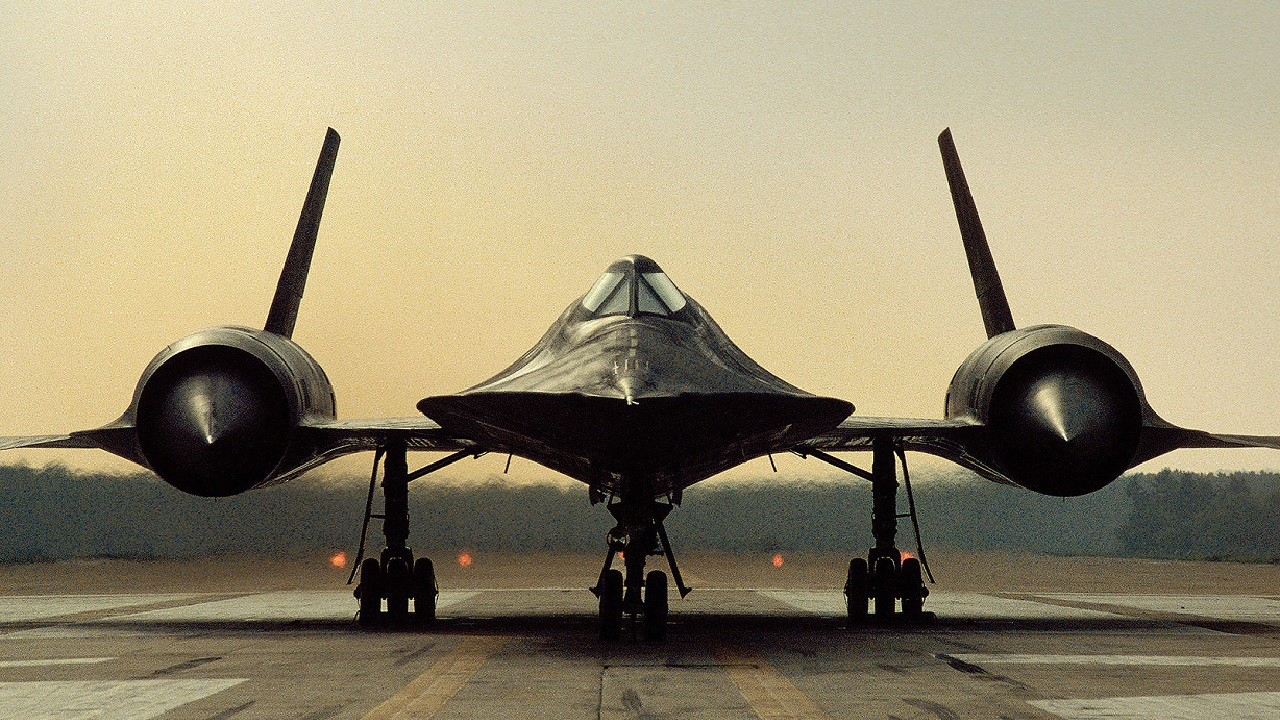
Summary and Key Points: On April 21, 1989, SR-71 #974 suffered a catastrophic engine failure and disintegrated over the South China Sea.
-While the crew safely ejected and were rescued by local fishermen, the wreckage sat in shallow water, posing a massive security risk.
-To prevent its advanced titanium structure and classified sensors—including the “R2D2” Nav Guidance Group—from falling into foreign hands, the U.S. Navy recovered the remains.
-After a bureaucratic battle involving the EPA and the CNO, the “Ichi-Ban” was given a full military burial on Christmas Eve 1989 in the Mariana Trench, 25,000 feet below the surface.
The Last SR-71 Blackbird To Crash Was Given A Burial At Sea
The last SR-71 to crash, back in 1989, was recovered from the Pacific Ocean by the US Navy and given a burial at sea in over 25,000 feet of water in the Mariana Trench.
On April 21, 1989, SR-71 #61-17974 (“Ichi-Ban”) experienced a catastrophic left engine failure, leading to its disintegration over the South China Sea. Pilot Lt. Col. Dan House and RSO Blair Bozek ejected safely and were rescued by local fishermen, while the wreckage was later recovered and buried at sea in the Mariana Trench on Dec 24, 1989.
The Ichi-Ban was the last loss of any Blackbird before the SR-71 was retired less than a year later in January 1990.
Background On the SR-71 Blackbird:
The SR-71 Blackbird is a fantastic aircraft. It was designed and built by Clarence “Kelly” Johnson’s Lockheed “Skunk Works” in Burbank, California. It was intended to be a long-range, high-altitude, Mach 3+ strategic reconnaissance aircraft.
Kelly Johnson, the man behind Skunk Works, is a legend in the aircraft industry. He is akin to what John M. Browning was to arms designers.
The CIA approached Johnson about finding a replacement for the U-2 spy plane, which could fly at extreme altitudes but was slow. Johnson’s Skunk Works produced the aircraft, which was first called the YF-12.
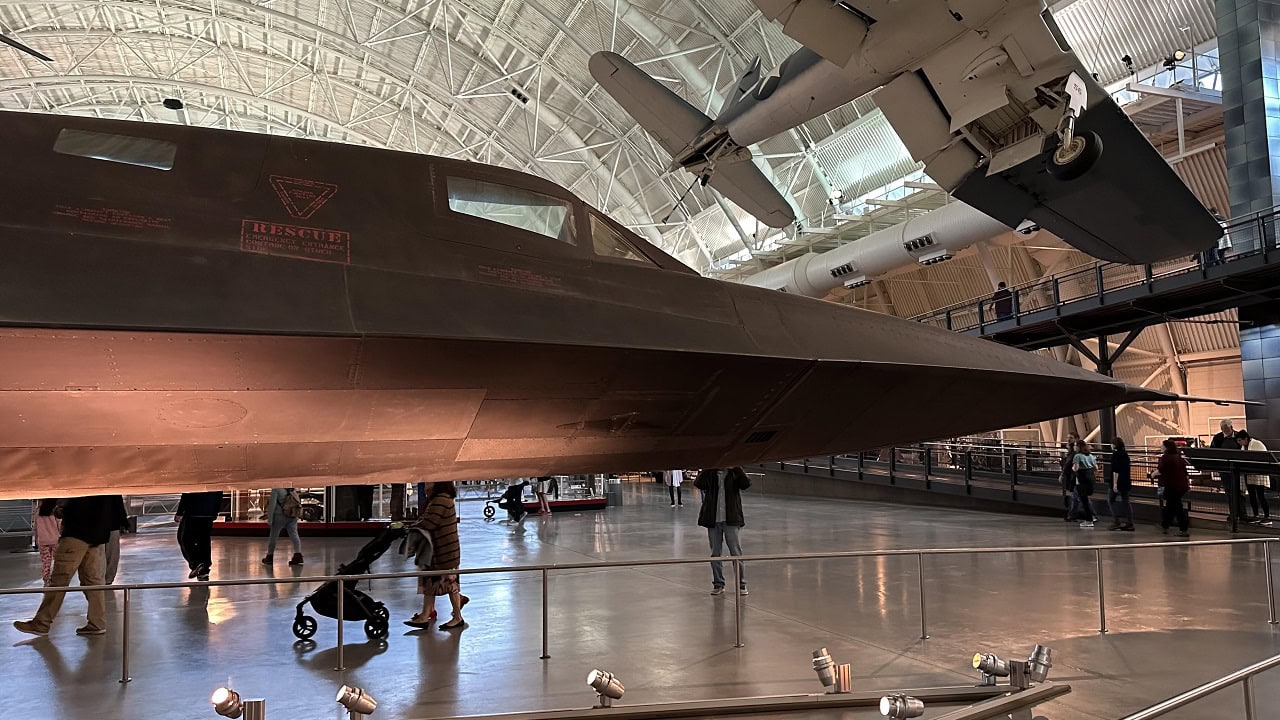
SR-71. SR-71 photo taken at the National Air and Space Museum. Taken by 19FortyFive on 10/1/2022.
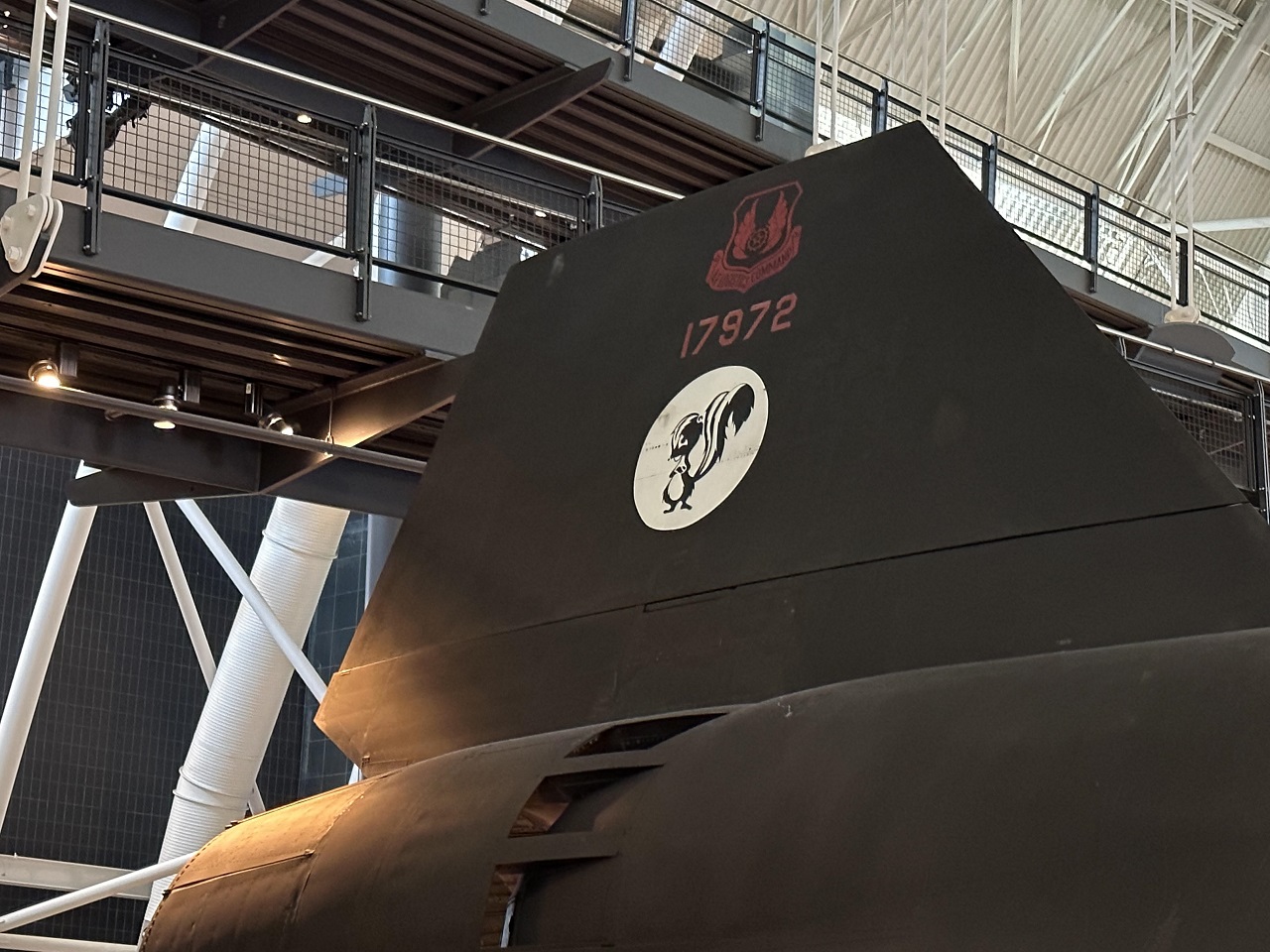
SR-71. SR-71 photo taken at the National Air and Space Museum. Taken by 19FortyFive on 10/1/2022.
However, General Curtis LeMay, the Air Force Chief of Staff, wanted it renamed the SR-71, with the SR referring to the aircraft type as “Strategic Reconnaissance.”
A total of 32 SR-71s were built: 29 SR-71As, two SR-71Bs, and one SR-71C. Johnson designed the aircraft with the smallest possible radar cross-section, one of the earliest attempts at stealth. Two Pratt & Whitney J-58 engines powered it, allowing it to reach Mach 3.2+, or about 2,200 mph. The service ceiling was 85,000 feet.
The Recovery Of the SR-71 “Ichi-Ban”:
The pilots ejected from the stricken aircraft were able to eject and were quickly rescued by fishermen, who not only picked them up but fed them lunch while the Air Force was frantically searching for them.
The aircraft was resting in just 120 feet of water; therefore, the recovery of the sensitive aircraft and other material was paramount.
Former US Air Force (USAF) Tech Rep at Beale AFB, Jack M Levine noted to the Aviation Geek Club, that, “When 974 was raised from the ocean by the US Navy, the chemical TEB that mixed with oxygen to ignite the engines caused flames to shoot out from around the SR-71 like Puff the magic dragon when it was raised up out of the water.
“The chemical caused a high flash temp to get the engines to ignite. This was needed because JP-7 fuel would not ignite without the mix. The TEB was stored in special tanks to allow up to 16 shots to start the engines during unstarts or to ignite the afterburners.
“The tanks were apparently ruptured as the damaged SR-71 showed in the photos. The white box was the Nav Guidance Group. The glass window at the top was for the star tracker platform to scan the sky for star search and acquisition. We used to refer to this Guidance Group as R2D2 from Star Wars. It did not move like a robot. It was installed in the aircraft behind the rear cockpit and in front of the refueling receptacle.”
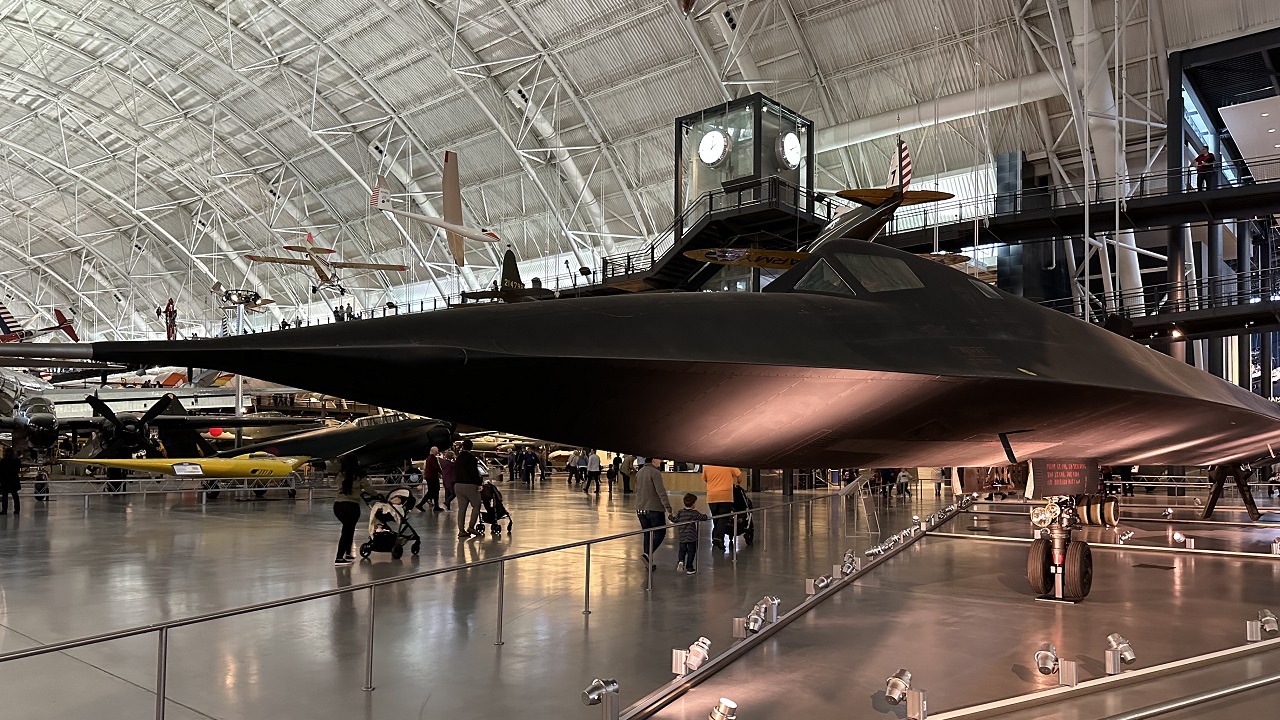
SR-71. SR-71 photo taken at the National Air and Space Museum. Taken by 19FortyFive on 10/1/2022.
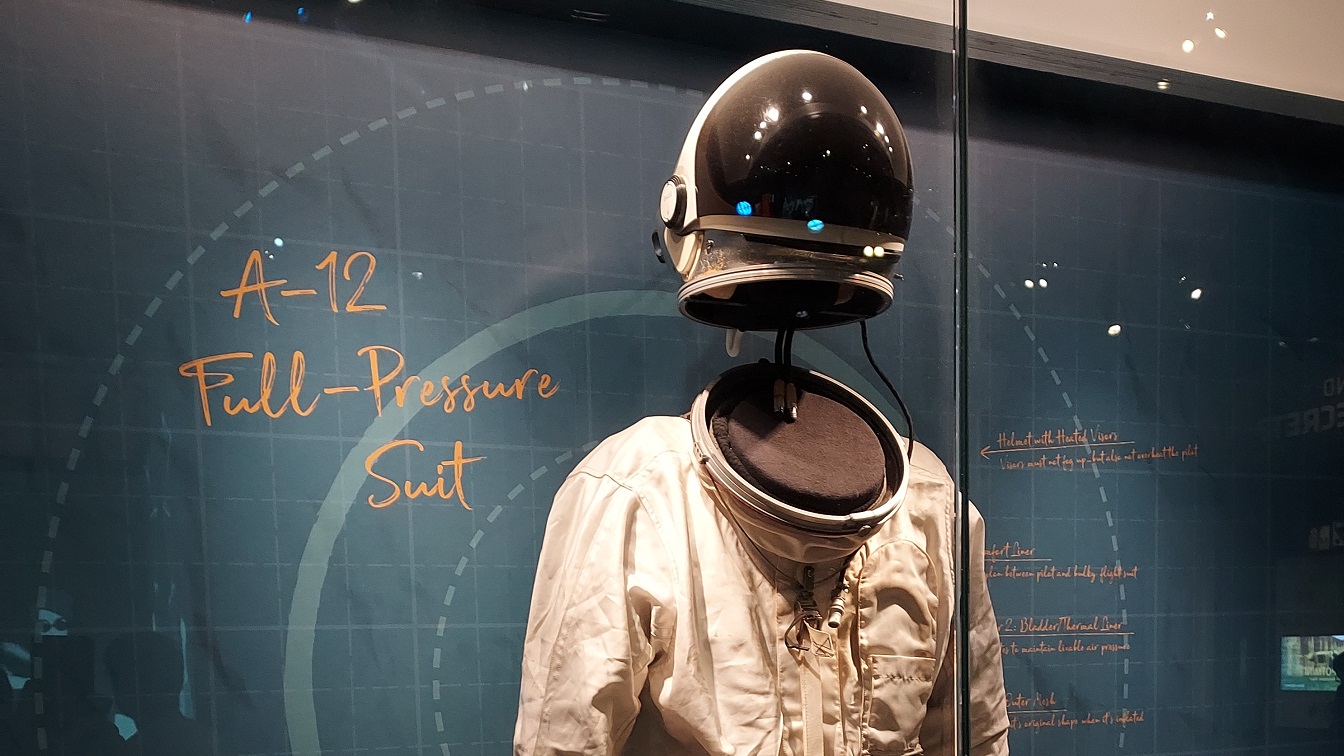
Flight suit. Image Credit: 19FortyFive Original Image.
The SR-71 had crashed into the ocean inverted, and the extreme force of the crash had caused extensive damage. The landing gear had come through the top of the wings, and the engines had completely separated from the nacelles.
The wreckage was moved to the same hangar that it took off from, although according to former Blackbird RSO, Colonel (ret.) Don Emmons didn’t help the morale of the Wing’s airmen.
Why The Burial At Sea?
Emmons was quoted in the book as stating that, “The wreckage could be turned in as salvage to the military’s Defense Reutilization and Marketing Office (DRMO). They would, in turn, sell it as scrap metal to the highest bidder on Okinawa. It could be transported back to the United States for the same type of disposal. Another option was to bury the aircraft remains on Kadena. It could also be disposed of at sea.”
The quickest and easiest solution was burying the SR-71 at Kadena. And the Air Force had already done so; a crashed SR-71 had been buried there over 25 years prior to this incident.
But the Air Force wouldn’t approve the burial because of the constant closures and consolidations of military bases. The Air Force didn’t want to bury it and then have to dig it up and bury it all over again.
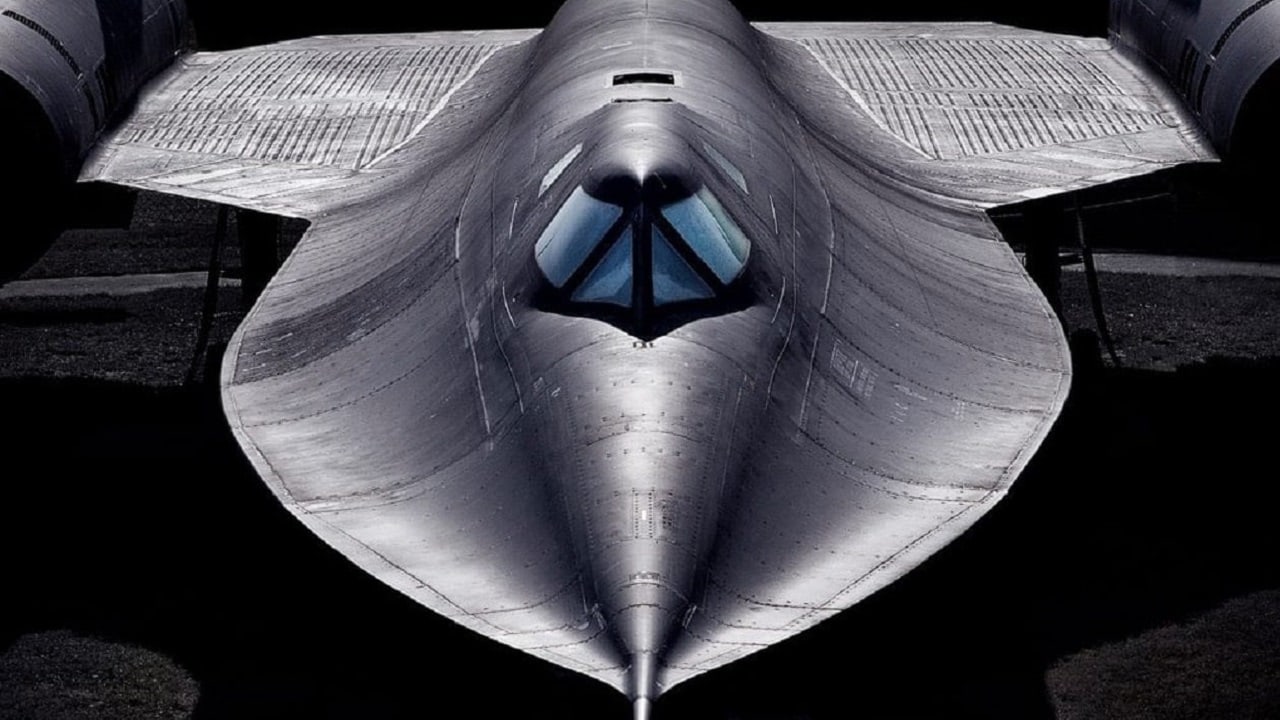
SR-71 Blackbird Spy Plane. Image Credit: Creative Commons.
Selling it through the local DRMO was a non-starter. The local economy consisted of foreign nationals, and the Air Force would have no control over the buyer. The SR-71 and its technology were still highly classified. Titanium is the strongest of metals, and there were still large pieces of the aircraft intact.
The burial-at-sea option required special approval from the Chief of Naval Operations, which meant a complete bureaucratic cluster.
Cynthia Hernandez To The Rescue:
Ms. Hernandez was a program manager for the SR-71’s flight simulator. But she had a stellar reputation for great success in the hard-to-do situations. She asked if she could help with the issue.
Working the phones, she used her persuasive skills to the point, that she had Navy admirals calling her, volunteering to help.
The final two obstacles were the “Law of the Sea,” which required the Environmental Protection Agency (EPA) to approve the burial at sea, ensuring that no environmental impact would result.
She worked the system and had it approved, but the San Francisco earthquake of 1989 damaged the very building that housed the EPA office. It appeared that the burial would be delayed by many months.
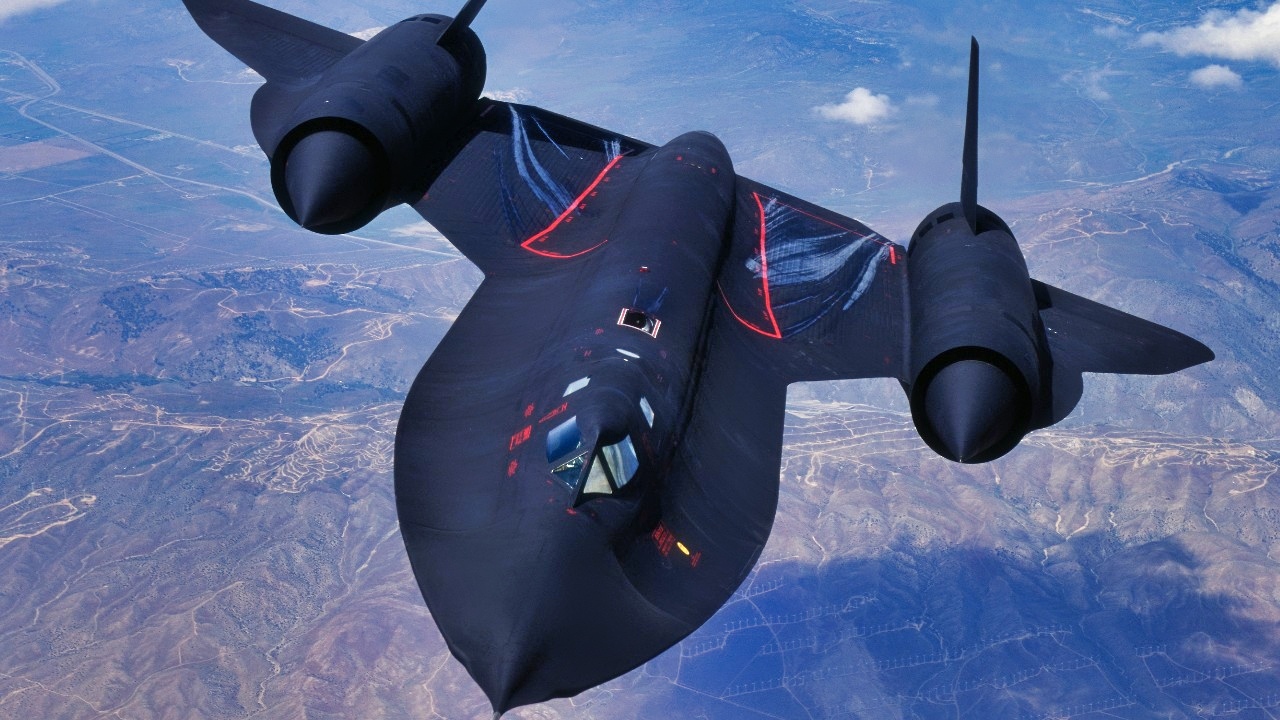
SR-71 Blackbird. Image Credit: Creative Commons.
But she explained the gravity of the situation to the highest-ranking supervisor in San Francisco, who gave her verbal approval to proceed with the planned disposal.
Emmons recalled, “He told her to proceed as necessary and he would personally attend to the follow-up paperwork. The question was, would a verbal approval satisfy the Navy? This would be the proverbial, ‘The check is in the mail!’ When she called the Pentagon, the Navy only asked if the EPA had granted approval.
“She could honestly reply in the affirmative. Fortunately, official copies of the approval were not required on their sign-off sheet—just that it had been obtained. It sailed through the Navy’s system and the CNO granted his permission to use a Navy ship. Thank you again, Cynthia.”
The SR-71 Blackbird Was Buried At Sea With “Full Military Honors”:
Emmons received a message from the captain of the Navy ship where the wreckage was emplaced that the remains of SR-71 #974 were buried at sea with full military honors.
The burial at sea took place at 1157 hours on Christmas Eve of 1989. The coordinates given placed it several hundred miles off the coast of Okinawa. The final resting place was in 25,597 feet of water, in an area known as the Mariana Trench.
About the Author: Steve Balestrieri
Steve Balestrieri is a National Security Columnist. He served as a US Army Special Forces NCO and Warrant Officer. In addition to writing on defense, he covers the NFL for PatsFans.com and is a member of the Pro Football Writers of America (PFWA). His work was regularly featured in many military publications.