

Summary and Key Points: Modern land combat is increasingly defined by a “transparent battlespace,” where persistent sensing collapses the old buffer of concealment and time. Routine movement, heat signatures, and electronic emissions create patterns that enable rapid targeting with little warning, turning exposure into a compounding condition. For the Canadian Army, the challenge is less professionalism than endurance: operating while continuously observed, fighting through degraded communications and electronic interference, dispersing without losing cohesion, and reconstituting after losses without outside rescue. The argument points to structural constraints—brigade-level survivability demands, sustainment vulnerability, and limited personnel depth—as the binding limits on readiness.
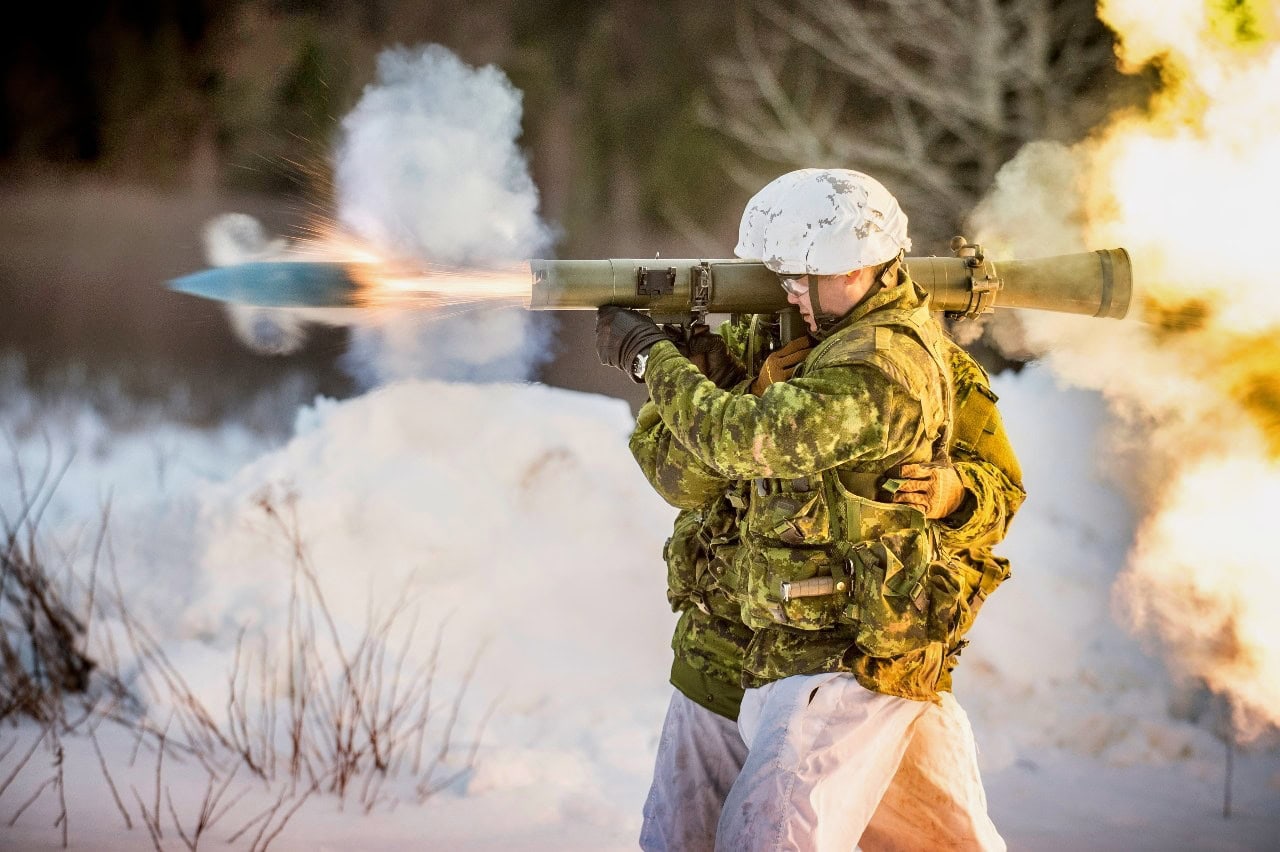
Canada’s military training. Sapper Mathieu Riva Maille (front) and Sapper Tommy Cabana (rear) fire a round from the 84mm Carl Gustaf anti-tank recoilless rifle during exercise Rafale Blanche in Valcartier, Quebec, on 04 February, 2016.
Is the Canadian Army Ready for the Transparent Battlespace?
Modern land warfare no longer signals danger in ways armies were trained to recognize, because the boundary between routine activity and exposure has thinned to the point where ordinary behavior now carries lethal consequences.
For the Canadian Army, this shift raises a direct question about fitness for purpose, as it was based on many assumptions about concealment, recovery time, and protected movement under very different conditions. Units can move, communicate, and sustain themselves in ways that feel familiar while still revealing their position through heat, motion, or electronic traces that accumulate without any single mistake. When fire follows, it often arrives without escalation or warning, leaving little space for correction once targeting has closed.
This is the transparent battlespace. Persistent sensing now shapes land combat in durable ways, which allows forces that fail to adapt to perform adequately in controlled settings while faltering once observation becomes continuous. The question for Canada is whether its Army can meet those conditions with the force it has, rather than the one it once assumed it would deploy.
What the Transparent Battlespace Requires
The transparent battlespace does not remove uncertainty, yet it sharply reduces the buffer once provided by time because concealment now degrades quickly even when discipline is strong. Cheap sensing persists long enough that movement leaves traces that accumulate into patterns before commanders can adjust, turning exposure from an occasional risk into a compounding condition.
Deployment records or exercise results cannot judge readiness in this environment, since those measures say little about survival under sustained observation. The relevant test is whether a force can keep operating once observation becomes constant, then regain effectiveness after losses without outside rescue.

A CF-18 Hornet fighter jet soars through the clouds over Iraq before commencing the next mission during Operation IMPACT on January 23, 2015.
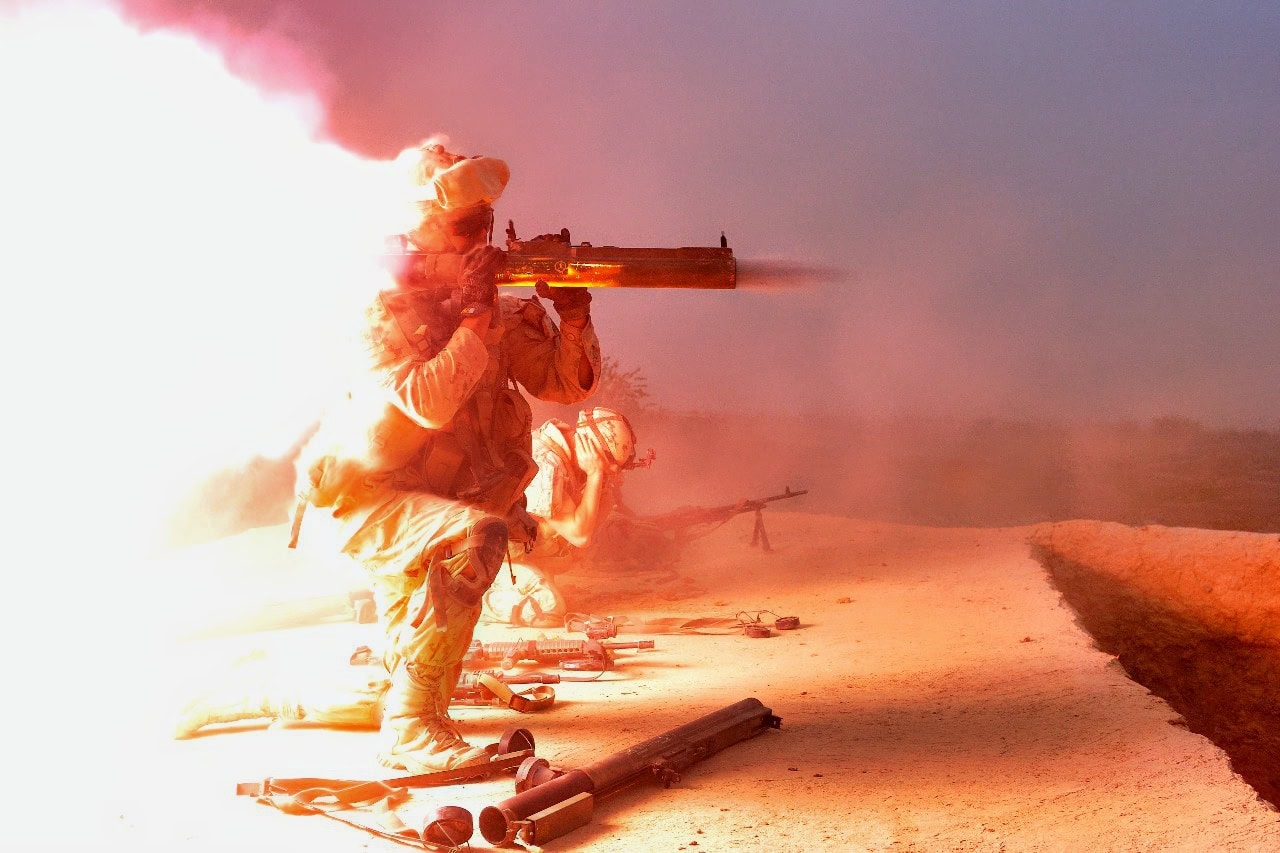
Corporal Brandon Bourdon, 1RCR B COY 4 Platoon, fires an M72 rocket launcher at insurgents that set up an offensive in a grape hut.
Recent experience in high-intensity land combat suggests that forces that integrate signature control and regeneration into daily operations fare better once surveillance becomes continuous. Professionalism still matters, but it no longer ensures endurance once exposure becomes routine.
Equipment and the Problem of Exposure
Canadian Army modernization guidance reflects an institutional understanding that the operating environment has changed in ways that challenge inherited assumptions about survivability. Official policy now emphasizes the need to be structured and sustained for contemporary conflict rather than for permissive deployments.
Recognition, however, does not equal resolution, particularly when adaptation must occur across an entire force rather than within discrete projects.
In a transparent battlespace, survivability depends less on marquee platforms than on how exposure is controlled once forces are under observation.
When sensing becomes persistent, formations stay effective only if they can manage vulnerabilities that were previously treated as peripheral. Canadian defence planning acknowledges gaps in land-based electronic warfare and has initiated efforts to address them. Those steps matter, but they have not yet changed how formations are expected to operate when detection becomes the norm rather than the exception.
Organization and the Endurance Constraint
Persistent sensing has elevated the brigade as the smallest formation able to survive contact and impose cost without immediate reinforcement, because that level of organization provides the minimum coherence required to disperse without collapse. Brigade-level structure allows access to fires, sustainment, and command under threat, even as units relocate to manage exposure. This reflects a structural requirement shaped by the transparent battlespace rather than a doctrinal preference.
Canada can generate elements of such a formation, as demonstrated by its leadership role in Latvia. Official descriptions of Operation REASSURANCE underscore the scale and complexity of that commitment. The difficulty lies in endurance rather than capability.
Sustaining a brigade-level presence abroad consumes a large share of the Army’s deployable capacity, limiting depth elsewhere and constraining regeneration over time. Professional military analysis within Canadian institutions has warned that this posture strains force generation when maintained over extended periods.
Training Under Persistent Observation
The Canadian Army trains effectively in combined-arms maneuver and coalition interoperability, and these strengths remain relevant across many conditions.
The transparent battlespace alters what training must prioritize once exposure becomes constant, because forces can no longer assume protected periods for consolidation or recovery.
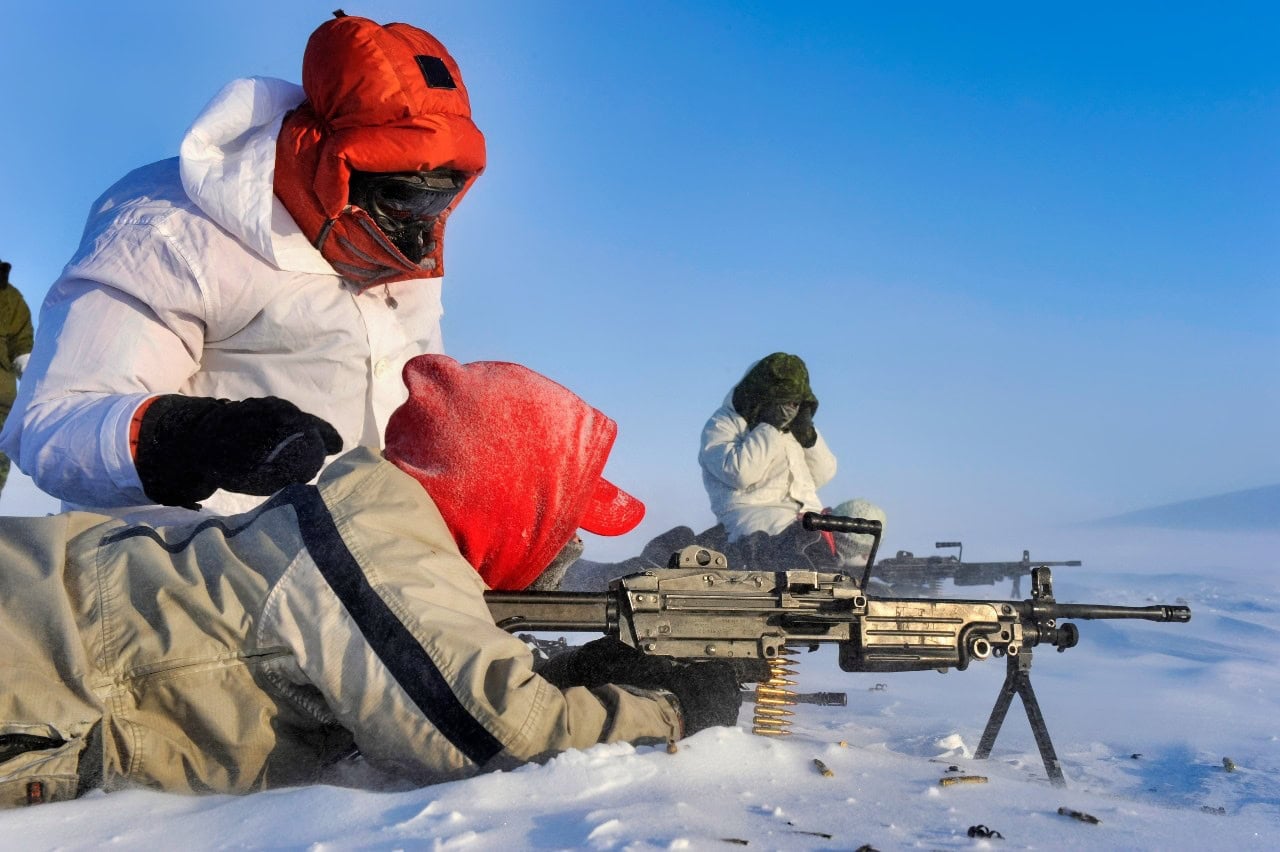
Canada Special Forces
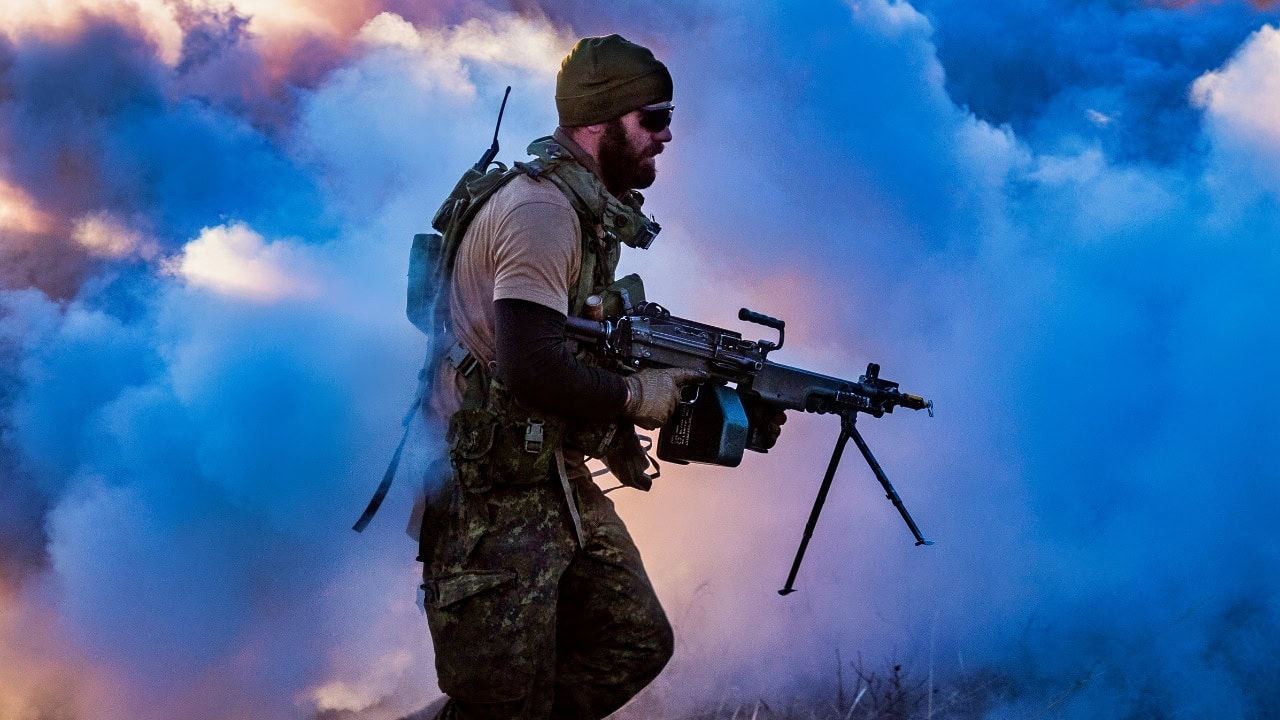
A soldier from 2nd Battalion, Princess Patricia’s Canadian Light Infantry playng as the enemy force runs between positions with his C9A2 Light Machine Gun during Exercise MAPLE RESOLVE at 3rd Canadian Division Support Base Garrison Wainwright, Alberta on May 10, 2021. Photo By: Sailor First Class Camden Scott,
Units must expect degraded communications, routine electronic interference, and frequent displacement as normal operating conditions rather than as contingencies.
Defence policy discussions increasingly frame reconstitution as a central readiness challenge rather than as a post-conflict problem. This reflects the reality that modern conflict consumes combat power faster than legacy training models anticipated. Training that does not habituate forces to operate while observed risks reinforcing patterns that fail once surveillance becomes continuous and time disappears as a buffer.
Sustainment as a Combat Function
Sustainment now draws attention in ways it did not in earlier conflicts, as transparent battlefields expose logistics and repair to routine targeting. Research on industrial performance in recent wars shows how endurance depends on dispersed sustainment and the ability to regenerate matériel under pressure rather than on stockpiles alone. Predictable logistics rhythms now invite disruption rather than efficiency.
Canadian defence reporting shows sustained pressure on maintenance and fleet availability across multiple systems. These pressures matter more in a transparent battlespace, where centralized repair exposes the system and where delays in regeneration quickly translate into operational risk.
Personnel Depth as the Binding Constraint
The transparent battlespace accelerates human exhaustion through constant movement and fragmented rest that compound over time. Specialists attract attention under persistent sensing, which magnifies the operational impact of relatively small personnel losses. These dynamics intersect with Canada’s personnel pipeline, compressing recovery and narrowing margins.
The Auditor General has documented persistent shortfalls in recruiting and training relative to operational requirements. Departmental evaluations highlight retention challenges and the absence of a comprehensive retention strategy. Think-tank analysis reinforces the conclusion that personnel depth now limits readiness as much as equipment. In a transparent battlespace, shallow depth becomes a decisive liability rather than a manageable inconvenience.
The Judgment
The Canadian Army remains professional and capable. But it is not yet fit for purpose in a transparent battlespace where persistent sensing and rapid targeting define land combat. The gap lies in force design, sustainment architecture, and personnel depth rather than in competence or mission.
Canada has begun to adapt, and official policy reflects that shift. What remains unresolved is whether adaptation will occur at the scale and speed the environment now demands.
Why the Moment Matters for Canada’s Army
In the end, the question is not whether the Canadian Army can deploy, integrate, or reassure. It can. The question is whether a force lacking depth and built around inherited assumptions about concealment can absorb loss, adapt under observation, and keep fighting in today’s transparent battlespace.
About the Author: Dr. Andrew Latham
Andrew Latham is a non-resident fellow at Defense Priorities and a professor of international relations and political theory at Macalester College in Saint Paul, MN. You can follow him on X: @aakatham.