
Yesterday’s Supreme Court ruling striking down a large part of Trump’s import tariff hikes is both very bad and some good news for Donald Trump.
The bad news is that it deals a severe blow to a signature part of Trump’s economic program and aggravates an already troubling budget situation.
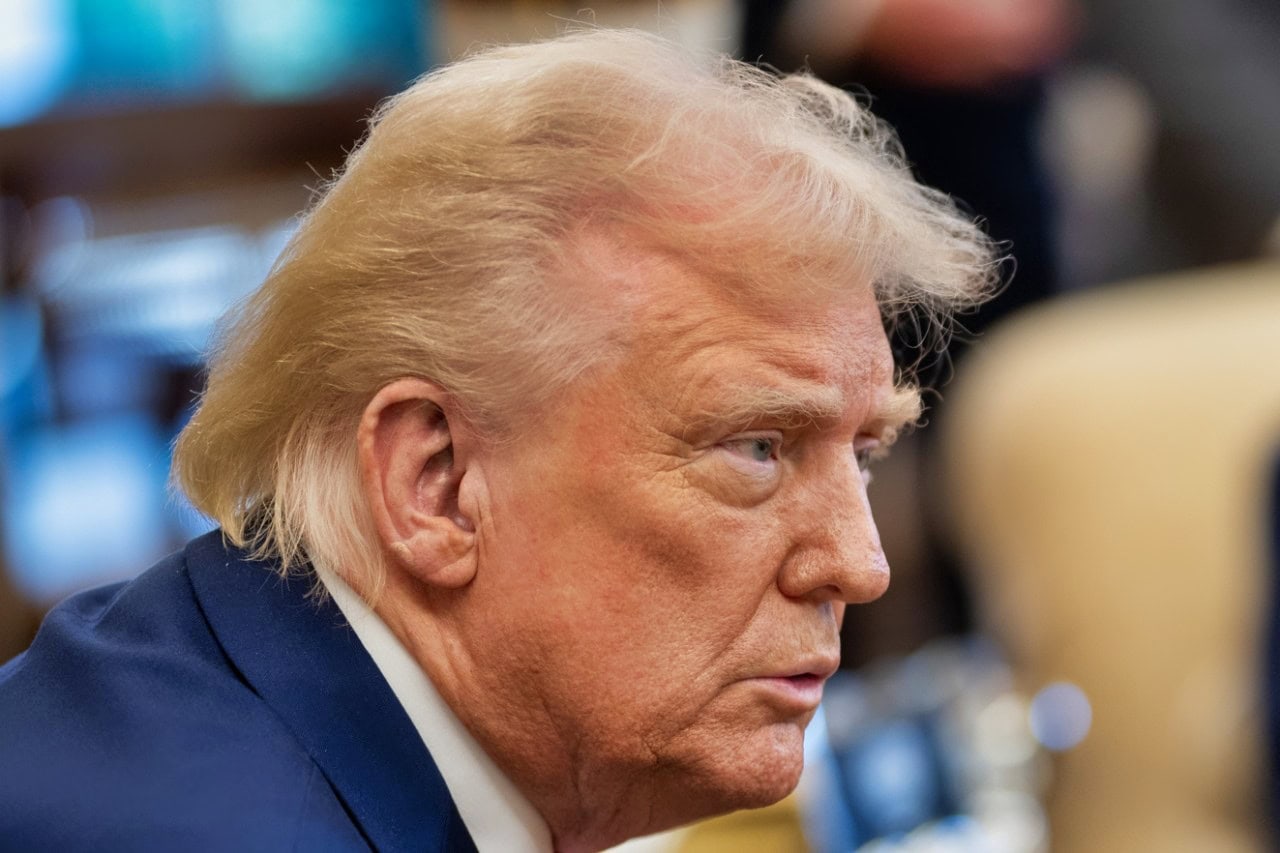
President Donald Trump greets President Volodymyr Zelenskyy of Ukraine, Friday, February 28, 2025, in the West Wing Lobby. (Official White House Photo by Daniel Torok)
The good news is that it offers Trump an off-ramp from his highly unorthodox import tariff policy, which is plainly not delivering the results he promised.
Trump and the Tariffs: A Historic Policy Shift
Over the past year, Trump sharply hiked US import tariffs to their highest level in the past 100-years.
He did so with a view to reducing the country’s gaping trade deficit and to increasing US manufacturing output and employment.
He justified around two-thirds of those tariff hikes under the International Emergency Economic Powers Act.
The Supreme Court has now ruled that Trump exceeded his authority in using those powers and that he needs Congress’s authorization to impose what is effectively a tax on those grounds.
A Policy That Has Failed
Almost one year into Trump’s aggressive import tariff policy, it is not too early to conclude that it is not working.
Start with the trade deficit. According to the Bureau of Economic Analysis, despite Trump’s tariffs, the US trade deficit in goods and services remained around $900 billion in 2025, virtually unchanged from 2024. That is a far cry from Trump’s promise to eliminate that deficit.
That the trade deficit is not narrowing should come as no surprise.
Contrary to what Trump might believe, the trade deficit is simply a reflection of the fact that the country is spending more on consumption and investment than it produces. This remains true irrespective of the tariff level. Given the profligate way our government finances are being run, our rate of spending must be expected to keep outrunning the level of our production.
According to the Congressional Budget Office (CBO), the budget deficit was close to 6 percent of GDP in 2025 or virtually unchanged from the previous year. With the CBO now projecting that, absent policy changes, the US budget deficit will remain over 6 percent of GDP over the next decade, it would be surprising if much progress were made in reducing the trade deficit in the period ahead.
Where Are Those Factory Jobs Trump Promised?
If Trump’s import tariffs are not reducing the trade deficit, they are also not bringing manufacturing jobs back home.
Indeed, this year the US has lost 50,000 manufacturing jobs while manufacturing output has been virtually flat.
Meanwhile, yesterday’s GDP report shows that the economy grew at a slower rate in 2025 than in the previous year, while unemployment has risen from 4.0 percent at the start of Trump’s second term to 4.3 percent today.
The Inflation Problem Isn’t Going Away
Contrary to Trump’s claim that foreigners would pay for the tariffs, it has turned out that the tariffs have kept inflation uncomfortably high.
According to a recent Federal Reserve study, US households and companies are paying about 92 percent of the costs of Trump’s tariff increases.
That is now causing Trump an affordability problem. Instead of prices falling as Trump had promised on the campaign trail, inflation is currently still running at around the same 3 percent that prevailed at the start of his second term.
The Budget Problem
The Supreme Court’s invalidation of a major part of Trump’s tariffs creates a big budget headache for his administration. Not only will the budget be losing an important source of funding going forward.
The government will also have to refund companies between $100 and $150 billion for tariffs collected in error.
The Committee for a Responsible Budget Policy estimates that over the next decade, the Supreme Court’s ruling could cost the government around $2 trillion in lost revenues. This has raised anew the question of how the government will finance its budget deficit in a non-inflationary way.
The Supreme Court’s decision offers Trump an off-ramp from a highly unorthodox tariff policy that has not been delivering the intended results.
However, judging by Trump’s vitriolic response to the court’s ruling, it is reasonable to expect that he will seek other means (like Sections 201, 232, and 301) to replicate those tariffs.
The country will pay an economic price for Trump’s seeming inability to learn from his economic policy mistakes.
About the Author: Desmond Lachman
American Enterprise Institute senior fellow Desmond Lachman was a deputy director in the International Monetary Fund’s Policy Development and Review Department and the chief emerging-market economic strategist at Salomon Smith Barney.