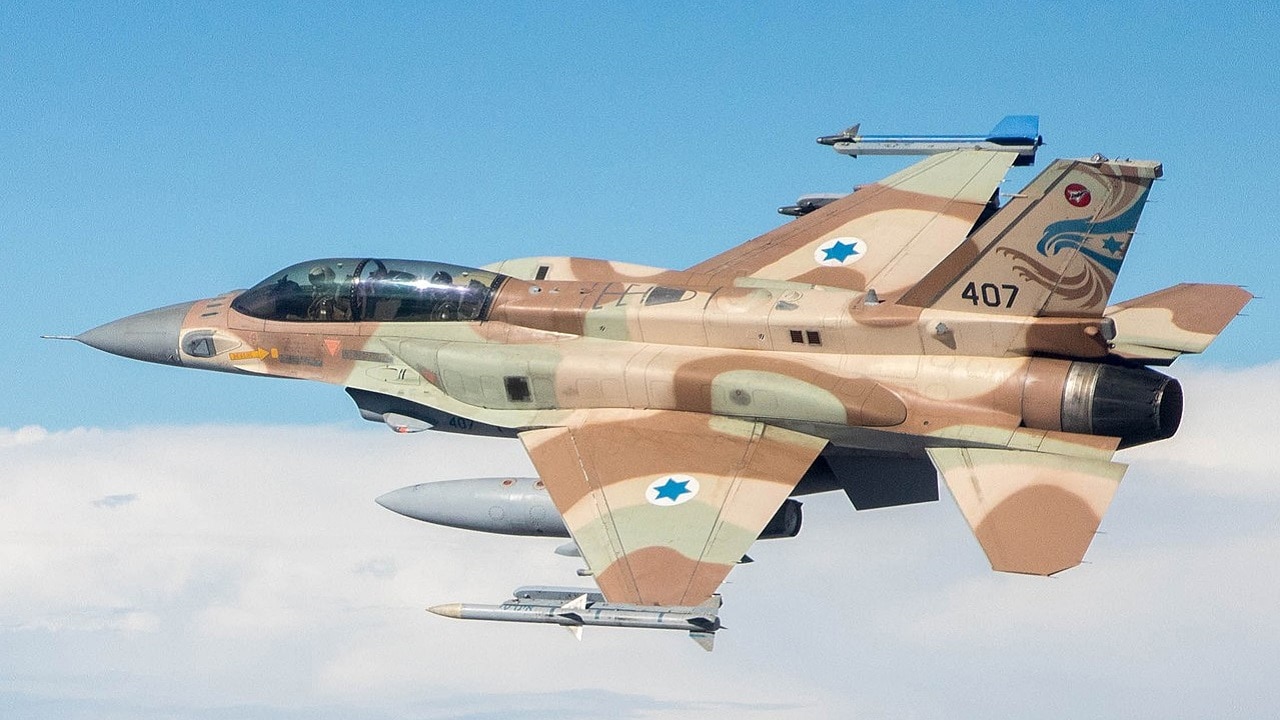
Summary and Key Points: Israel’s F-16I Sufa is built on the F-16D Block 52 foundation, but it’s optimized for long-range, high-complexity strike missions.
-Conformal fuel tanks extend range and time on station without sacrificing weapon stations, shaping the jet around deep-attack requirements.
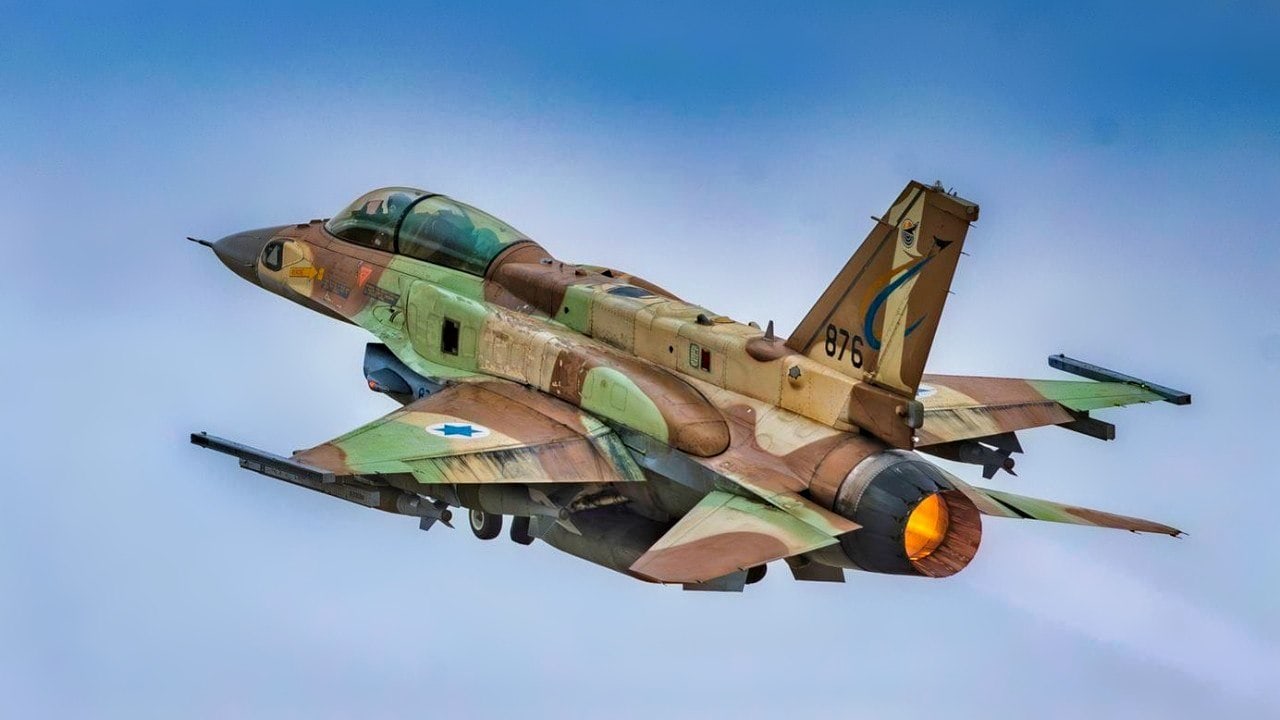
F-16I Sufa from Israel. Image Credit: Creative Commons.
-The biggest differences show up inside the cockpit: Israeli mission computers, displays, and software tailored to local operational concepts, plus a specialized electronic warfare suite designed for survivability against regional air defenses.
-The Sufa also integrates Israeli weapons such as Python and Derby missiles and Spice-guided bombs. A dedicated second crew member supports long flights, heavy targeting workloads, and precision strike execution.
Israel’s F-16I Sufa Isn’t a Normal F-16: Here’s What Makes It Different
The F-16I Sufa is one of the most specialized and heavily modified versions of the F-16 Fighting Falcon ever produced. While it is based on the American F-16D Block 52 airframe, the Israeli version incorporates unique avionics, weapons integration, electronic warfare systems, and structural adaptations tailored to Israel’s specific strategic needs.
Comparing the F-16I to standard U.S. Air Force F-16 variants reveals both shared strengths and important differences in technological composition and Concepts of Operation.
The F-16I is derived from the two-seat F-16D Block 52, but it was built with long-range strike in mind.
One of its most noticeable features is the addition of conformal fuel tanks mounted along the upper fuselage. These tanks significantly extend the operational range without occupying underwing hardpoints, and they can also reduce radar signature by creating a smoother, more rounded, and more horizontal fuselage.
Longer-Range Attack Missions
Some U.S. F-16 Block 50/52 aircraft and F/A-18 Super Hornets have flown with Conformal Fuel Tanks, yet they are not widely used in American service. For Israel, extended range is critical given the distances involved in potential strike missions.
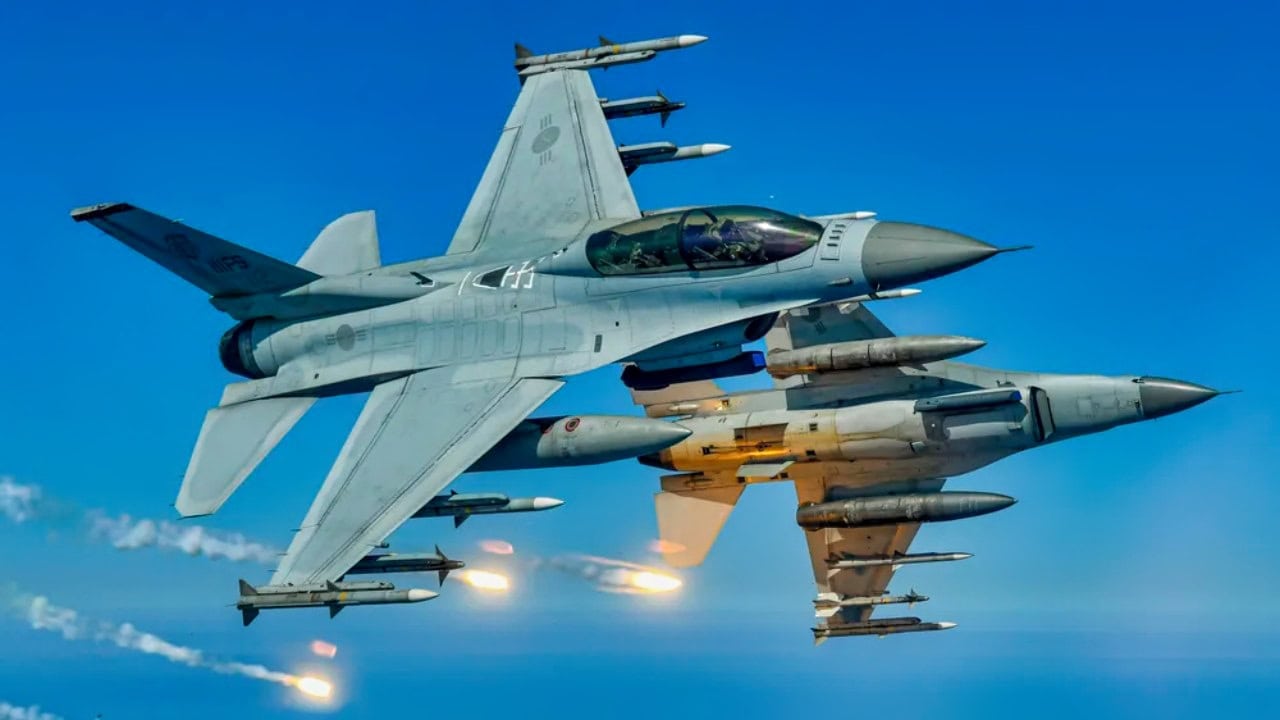
KF-16 Fighter. Image Credit: Creative Commons.
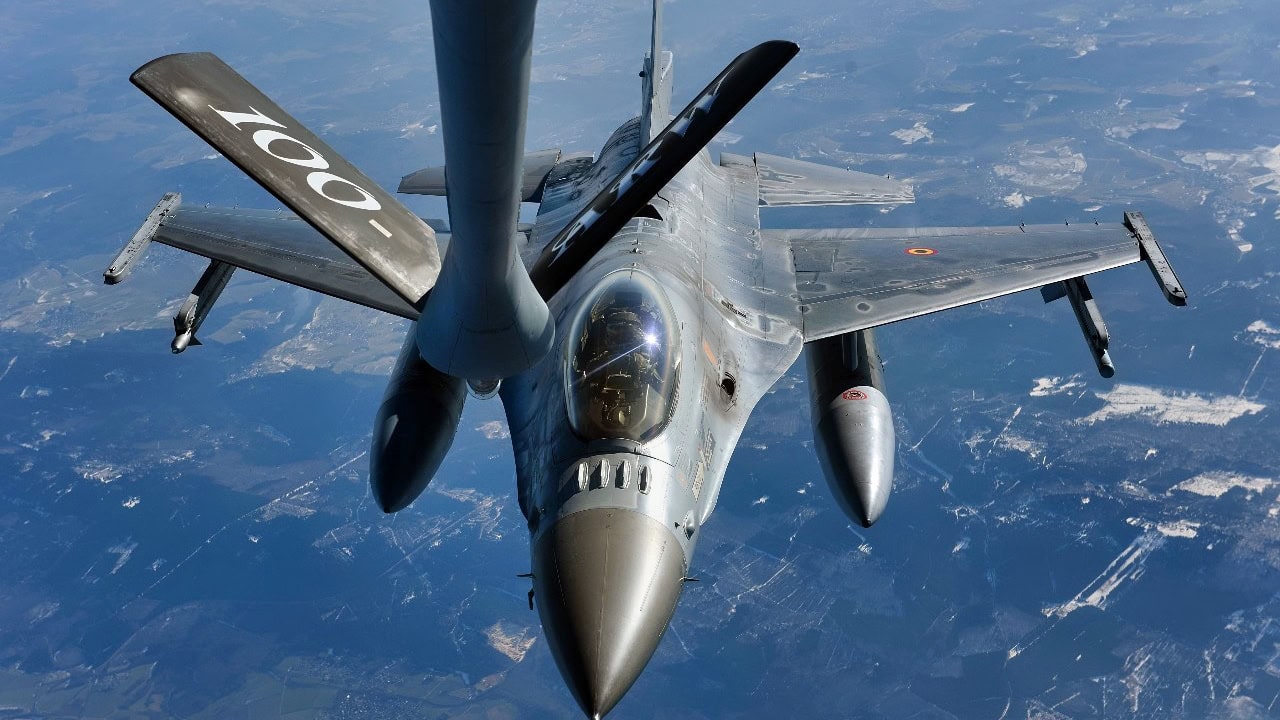
A Belgian Air Component F-16 flies behind a U.S. Air Force KC-135 Stratotanker from the 100th Air Refueling Wing, RAF Mildenhall, England, before receiving fuel over Germany, Feb. 23, 2018. The air refueling was part of a large force exercise with NATO allies including the Belgian, Dutch, French and German air forces. (U.S. Air Force photo by Airman 1st Class Luke Milano)
In the case of Israel’s potential adversaries in the Middle East, Israeli fighters would not be likely to encounter substantial air threats. The Conformal Fuel Tanks allow the F-16I to conduct deep-strike operations while still carrying a heavy weapons load. They, of course, allow for more dwell time, enabling longer attack missions over target areas.
Avionics represent one of the most significant differences between the Israeli and American F-16 variants. Although the F-16I retains the AN/APG-68(V)9 radar found in late-model U.S. Block 52 aircraft, Israel replaced many internal systems with domestically produced electronics.
Israeli companies such as Elbit Systems and Israel Aerospace Industries integrated advanced mission computers, cockpit displays, and software tailored to Israeli operational concepts.
While many details related to this are not likely to be available for security reasons, the F-16i’s indigenously engineered technologies are likely configured to address known regional threats such as Iranian drones, air defenses, and ballistic missile launchers.
Tailored EW for F-16I
It also seems conceivable that the Israeli F-16 variant is equipped with specialized electronic warfare (EW) systems tailored to counter specific weapons and technologies used by adversaries in the region. The F-16I incorporates an advanced Israeli electronic warfare suite designed to counter regional air defense systems.
EW allows the F-16I to operate in heavily defended airspace with enhanced survivability. Israel’s emphasis on electronic warfare is rooted in its experience facing dense surface-to-air missile environments in past conflicts.
Israeli Custom Weapons
The F-16I cockpit features large multifunction displays and helmet-mounted sight systems optimized for Israeli weapons and tactics. Weapons integration further differentiates the two. U.S. F-16s primarily carry American-made munitions such as the AIM-120 AMRAAM, JDAM, and various precision-guided bombs.
The F-16I can carry these as well, but it is uniquely configured to deploy Israeli-developed weapons such as the Python and Derby air-to-air missiles and the Spice precision-guided bomb series.
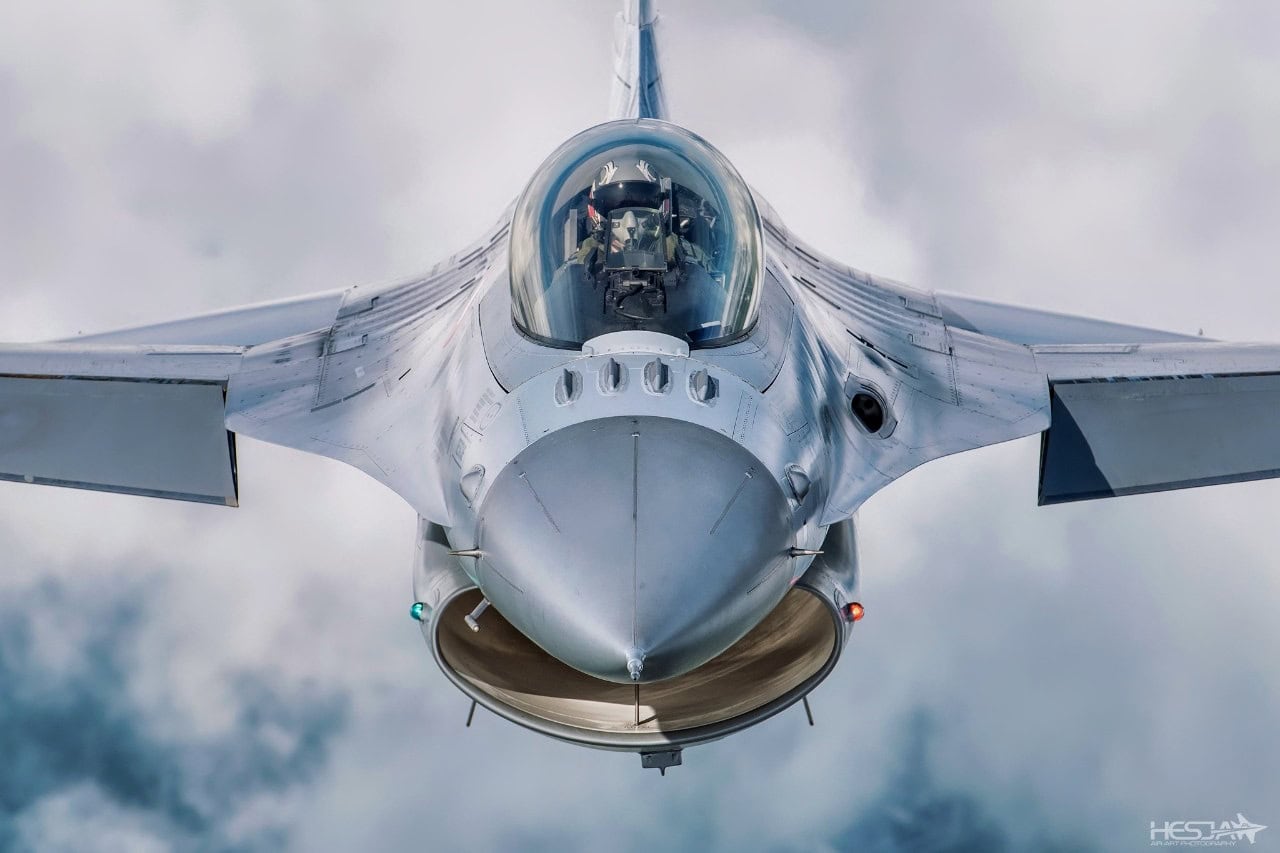
F-16 Fighter. Image Credit: Creative Commons.
Two-Seat Sufa
The F-16I is always operated as a two-seat aircraft, with a pilot and a weapons systems officer. In contrast, many U.S. Air Force F-16s are single-seat variants used for air superiority or multirole missions.
The second crew member in the F-16I enhances performance during complex strike missions, long flights, and high-workload environments. This reflects Israel’s emphasis on deep-strike and precision operations rather than purely air-to-air combat roles, something which makes sense given that Israel is likely to operate with air superiority in the region.
Structurally and aerodynamically, both aircraft share the same basic airframe and engine options, typically the Pratt & Whitney F100-PW-229 in the Block 52 configuration. However, the addition of conformal fuel tanks and specialized equipment slightly increases the F-16I’s weight.

F-16 cockpit. Image Credit: Screenshot.
Despite this, it retains the F-16’s hallmark agility and high thrust-to-weight ratio. Israeli modifications are designed to preserve performance while enhancing endurance and survivability.
About the Author: Kris Osborn
Kris Osborn is the President of Warrior Maven – Center for Military Modernization. Osborn previously served at the Pentagon as a highly qualified expert in the Office of the Assistant Secretary of the Army—Acquisition, Logistics & Technology. Osborn has also worked as an anchor and on-air military specialist at national TV networks. He has appeared as a guest military expert on Fox News, MSNBC, The Military Channel, and The HistoryChannel. He also has a Master’s Degree in Comparative Literature from Columbia.