
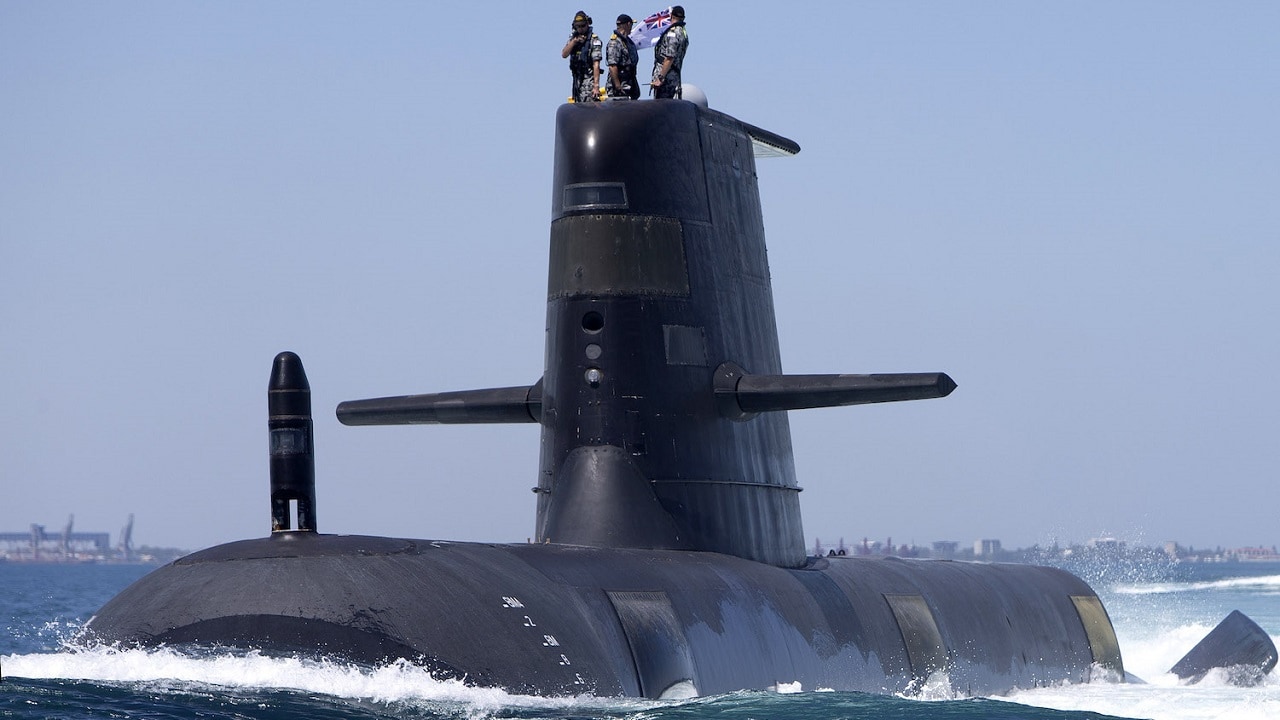
Summary and Key Points: The Royal Australian Navy’s Collins-class fleet has entered a high-stakes transition period as the HMAS Farncomb begins its 2026 Life of Type Extension (LOTE).
-Designated as a “Product of Concern” by the Albanese government, the $5 billion program faces significant hurdles, including “unprecedented corrosion” and the de-scoping of key upgrades like Tomahawk missiles and optronic masts.
-Designed to bridge the gap until SSN-AUKUS nuclear submarines arrive, these diesel-electric stalwarts are receiving critical overhauls to their AN/BYG-1 combat systems and propulsion units.
-The Collins-Class is famous for sinking U.S. Navy aircraft carriers in combat drills; however, many experts have panned these submarines for their problems over the years.
-Maintaining this aging six-boat fleet is now Australia’s most vital—and volatile—naval priority.
The Royal Australian Navy operates a small submarine fleet of six diesel-electric attack Collins-class submarines. Designed by Kockums in Sweden, the Collins-class got off to an unusually rocky start due to poor construction practices, which led to delays and cost increases.
However, thanks to subsequent modernization packages, the Collins-class program endured to provide the undersea capabilities that anchor Australia’s naval strategy.
Origins and Strategic Rationale for Collins-Class
Australia’s vast geographic expanse and enormous maritime border have always shaped its naval strategy. During the 1970s and 1980s, the Royal Australian Navy recognized that the country needed submarines capable of traveling immense distances, remaining submerged for long periods, and gathering intelligence far from Australian shores.
The Oberon-class submarines, while still capable, were aging and limited in their ability to accommodate modern weapon systems and sensors.
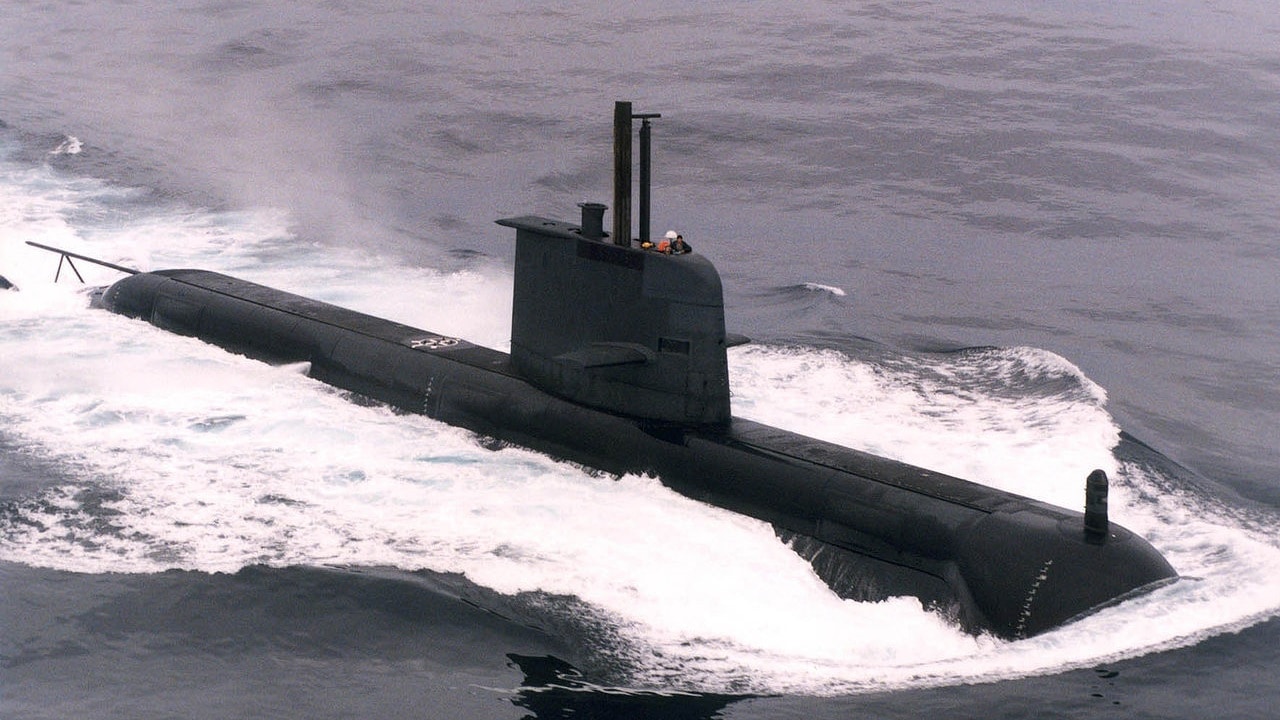
Collins-Class Submarine from Australia.
In response, the Australian Submarine Project was launched to acquire a new class of submarines designed explicitly for Australia’s needs. This new class would have to operate across exceptionally long distances, patrol for weeks or even months at a time, and carry sophisticated weapons and sensors capable of countering modern naval threats.
In addition, the Australian government wanted construction to take place domestically, both to ensure long-term sustainment capability and to lay the groundwork for a sovereign submarine-building industry. These ambitious requirements led Australia to seek an international partner willing to heavily modify an existing submarine design.
Ultimately, the government selected Kockums, a Swedish shipbuilder known for designing quiet, efficient diesel-electric submarines. Although Swedish submarines were traditionally smaller and optimized for the shallow Baltic Sea, Kockums proposed a significantly enlarged and re-engineered design tailored to Australian operational needs. The proposed submarine would become known as the Collins-class.
Design Features for These Submarines
The Collins-class is one of the largest and most capable diesel-electric submarines ever constructed. At approximately 77 meters in length and with a submerged displacement of around 3,400 tons, it is considerably larger than most contemporary conventional submarines.
The increased size supports the submarine’s long-range mission profile by allowing greater fuel storage, larger battery banks, expanded crew accommodations, and a more spacious sensor and combat-system arrangement.
Propulsion is provided by a diesel-electric system. The submarine uses multiple diesel generators to charge extensive battery systems, which in turn power electric motors used for propulsion. This architecture emphasizes stealth; electric motors can operate very quietly, reducing the vessels’ acoustic signature.
The Collins-class was engineered for exceptional quietness, which makes these subs ideal for intelligence-gathering and anti-submarine warfare. Unlike some modern submarines, the Collins-class was not built with air-independent propulsion, though it was studied during the design.
Sensors and Armament
The sensor suite includes advanced sonar arrays, including bow, flank, and towed arrays, which give the submarine a comprehensive acoustic picture of the underwater environment. Over the years, these systems have been upgraded to keep the class relevant against modern submarine and surface threats.
The periscopes and optical systems have also evolved to incorporate more modern imaging equipment and improved data integration.
The submarine’s armament is delivered through six 533-millimeter torpedo tubes located in the bow. These tubes support a variety of weapons, including heavyweight torpedoes such as the U.S. Mk 48 Mod 7 and, when required, Harpoon anti-ship missiles launched from within the torpedo room.
The combat system underwent multiple changes, eventually settling on the U.S.-developed AN/BYG-1 system after earlier arrangements struggled with integration and performance issues.
A Rough Start for Collins-Class
The Collins-class program became well known not only for its characteristics. but also for its controversies. Even before the first submarine was delivered, the program experienced delays, technical setbacks, and cost increases. Building a submarine of this complexity, and tasking a newly created domestic industry to do it, proved to be far more difficult than anticipated.
Mechanical and acoustic performance issues plagued the early fleet. Problems concerned the diesel generators, hulls, and noise levels. The first of the class, the HMAS Collins, had a noise signature that was much higher than other subs of the class, caused by hasty and incomplete construction.
Combat system integration issues became severe enough that the original arrangements were abandoned in favor of a U.S. alternative. These challenges, amplified by intense media coverage and political scrutiny, created a public perception that the Collins-class was fundamentally flawed.
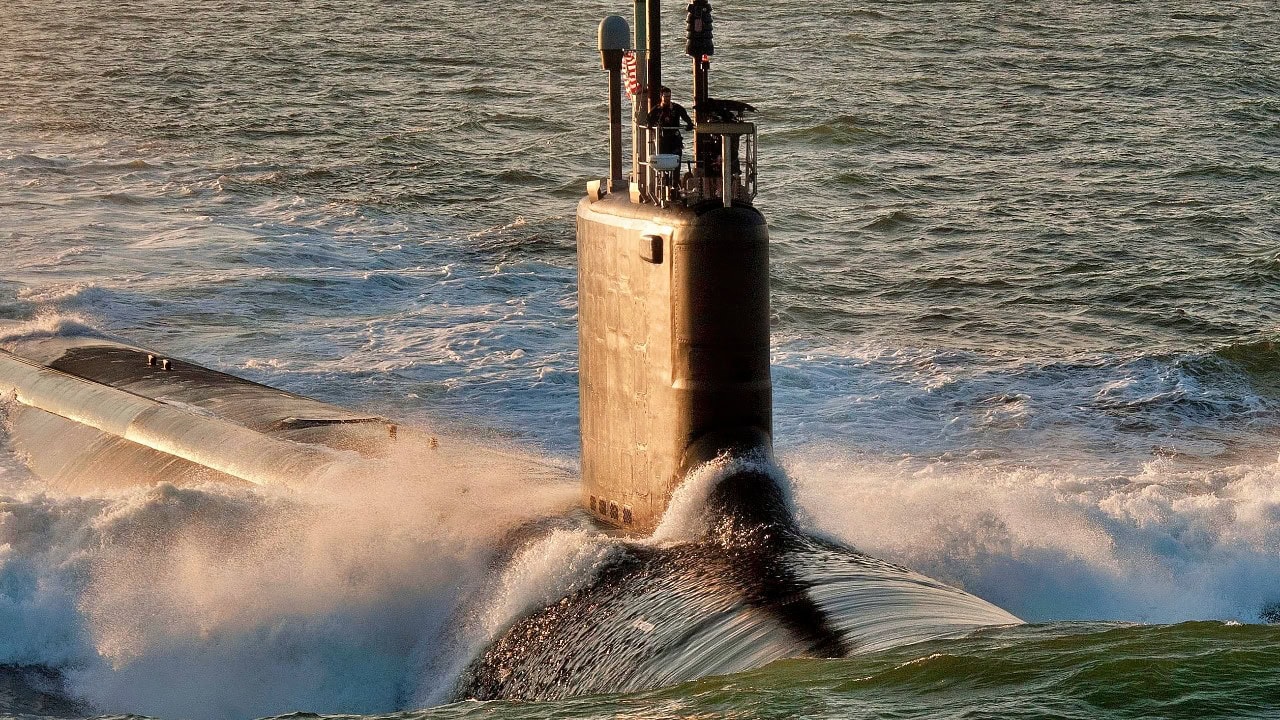
U.S. Navy Virginia-Class Submarine.
However, such challenges are not unusual for a first-of-class system. Complex marine platforms, especially submarines, often require extensive refinement after initial construction. What distinguished the Collins’ experience was the scale of customization and the inexperience of Australia’s domestic shipbuilding industry. Over time, extensive remediation, upgrades, and refinement significantly improved the submarines’ performance.
The Life of Type Extension and Continuing Relevance
As Australia prepares to transition to nuclear-powered submarines under the AUKUS partnership, the Collins-class fleet remains indispensable. To bridge the gap until the introduction of the AUKUS-class, Australia is implementing a comprehensive Life of Type Extension program.
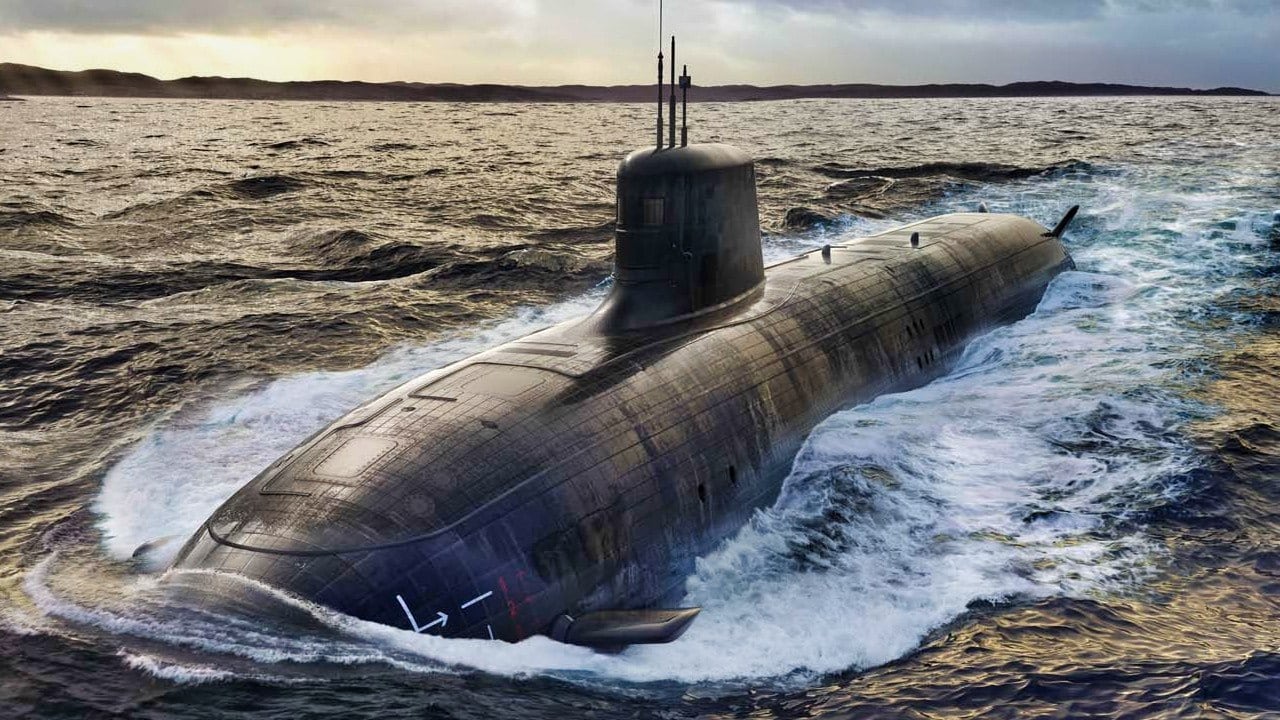
SSN-AUKUS Submarine. Image is Creative Commons Artist Rendering.
This initiative includes major overhauls of mechanical systems; structural refurbishments; substantial upgrades to combat and sensor systems; and improvements to batteries, generators, and habitability features. These efforts ensure the class will remain operationally viable well into the 2030s, and potentially the early 2040s.
About the Author: Isaac Seitz
Isaac Seitz, a Defense Columnist, graduated from Patrick Henry College’s Strategic Intelligence and National Security program. He has also studied Russian at Middlebury Language Schools and has worked as an intelligence Analyst in the private sector.