
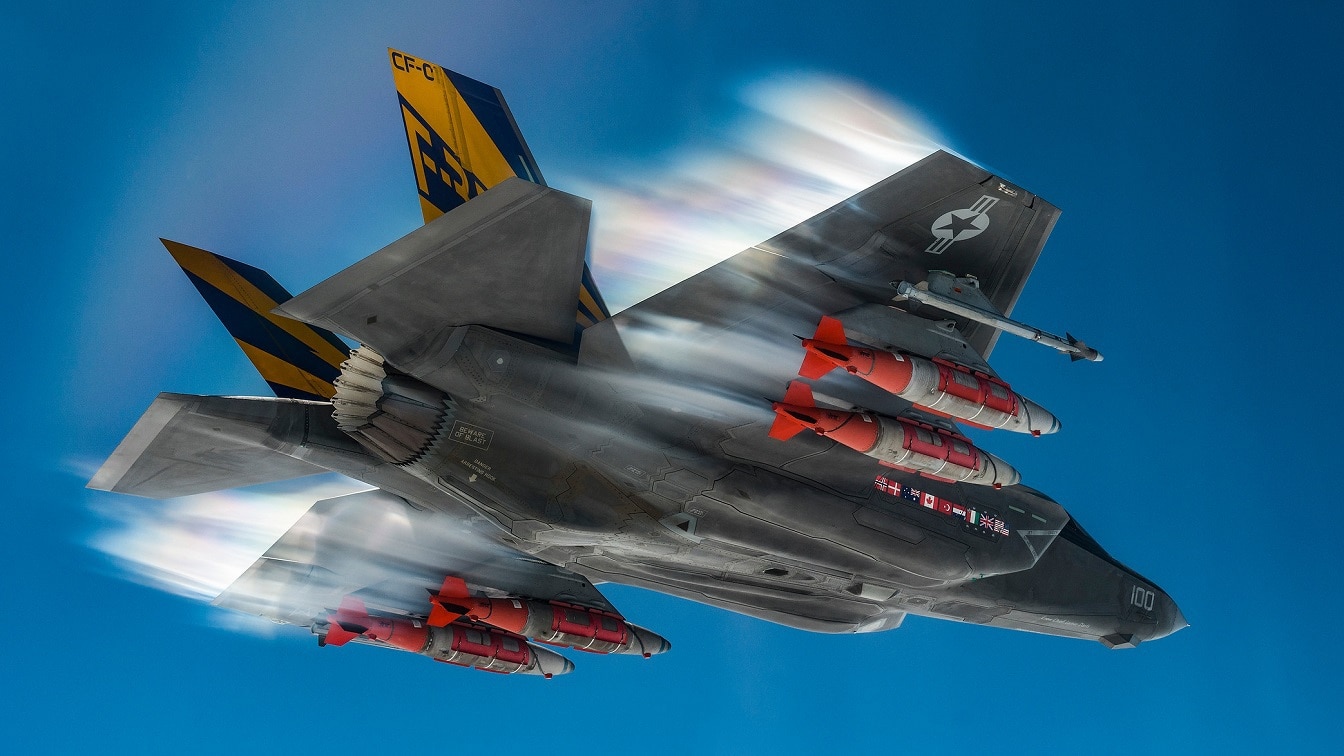
Summary and Key Points: Royal Netherlands Air Force State Secretary Gijs Tuinman sparked international debate in mid-February 2026 by suggesting the F-35’s proprietary software could be “jailbroken” to ensure operational independence.
-As geopolitical tensions strain U.S.-European ties, the Dutch aim to circumvent potential American supply freezes or software “lockouts.”
However, with over 8 million lines of code and a centralized U.S. maintenance network (ODIN), experts remain highly skeptical.
-While the Netherlands has officially retired its F-16s and fully committed to a 58-jet F-35 fleet, “hacking” the Lightning II risks voiding warranties and permanently excluding the nation from critical future hardware and sensor upgrades.
Beyond the “Kill Switch”: Can the Dutch Actually Crack the F-35’s Source Code?
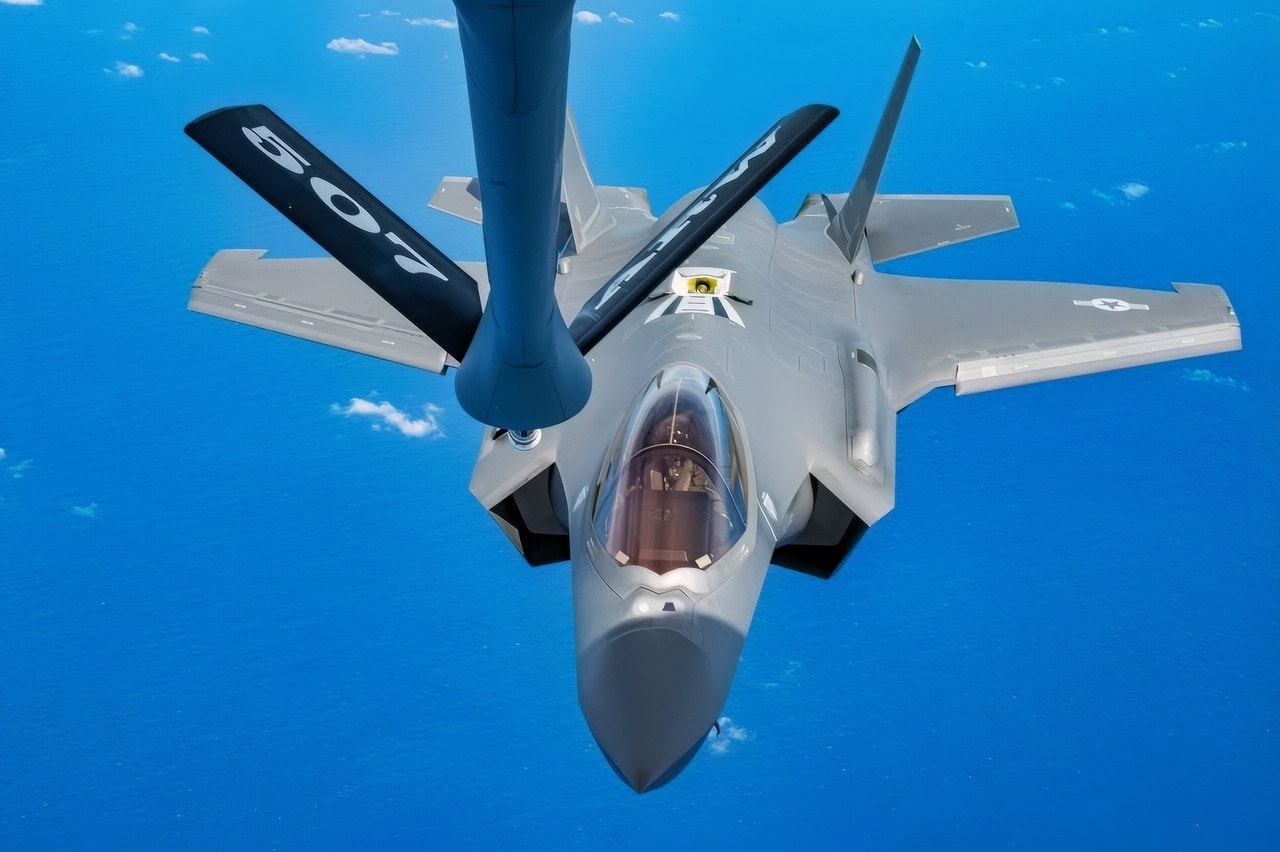
A U.S. Air Force F-35A Lightning II assigned to the 134th Fighter Squadron, Burlington Air National Guard Base, Burlington, Vermont is in pre-contact over the U.S. Indo-Pacific Command area of responsibility before receiving fuel from a U.S. Air Force KC-135 Stratotanker assigned to the 465th Air Refueling Squadron, Tinker Air Force Base, Oklahoma during exercise Cope North 2025, Feb. 7, 2025. The KC-135 provides the core aerial refueling capability for the U.S. Air Force and has performed this role for over 50 years. It provides aerial refueling to the U.S. Air Force, U.S. Navy, U.S. Marine Corps and allied nation aircraft during CN25 to support exercise operations. (U.S. Air Force photo by Staff Sgt. Caleb Roland)
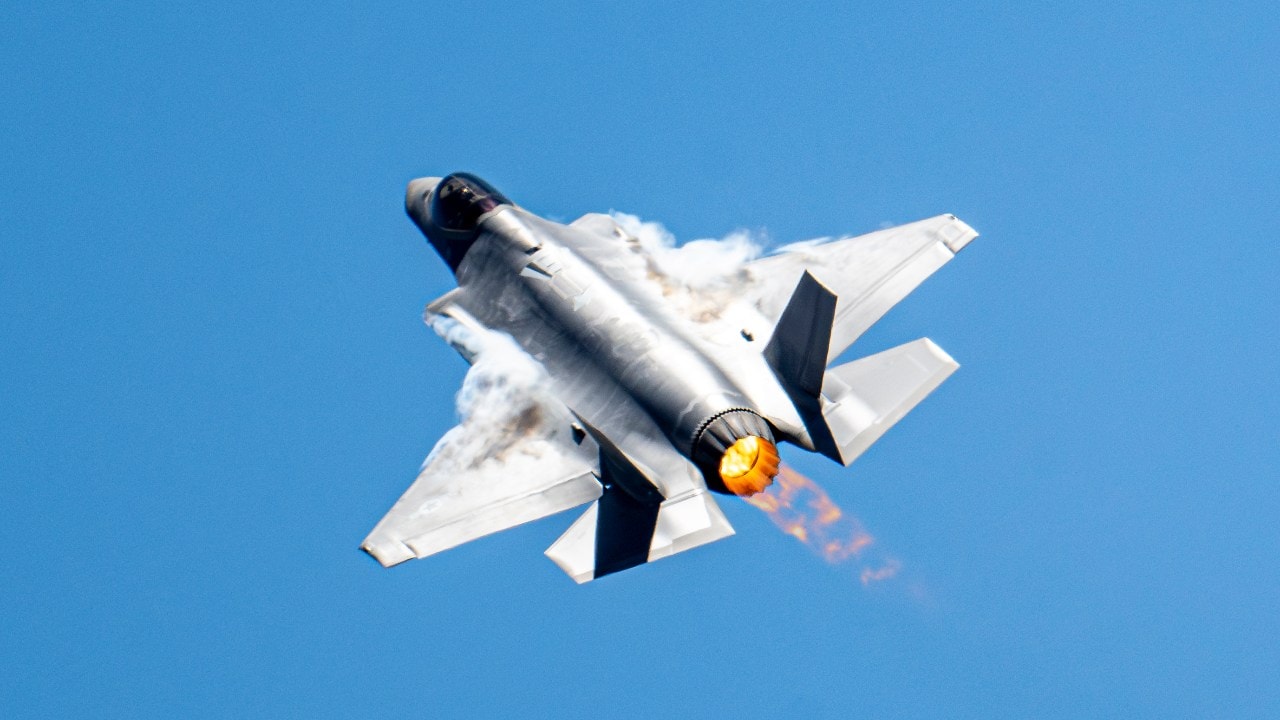
U.S. Air Force Maj. Melanie “Mach” Kluesner, pilot of the F-35A Demonstration Team, performs aerial maneuvers at the Wings and Eagles Airshow at Kingsley Field, Oregon, on July 19, 2025. The demonstration team travels across the country to showcase the power and precision of the world’s most advanced 5th-generation fighter jet. (U.S. Air Force photo by Senior Airman Nicholas Rupiper)
Another F-35-flying NATO ally is considering the prospect of becoming less dependent on the United States for its security.
This time the country in question is the Netherlands. Facing the dilemma of reducing the American security umbrella on the one hand, while still using desirable U.S. technology such as the Skunk Works stealth plane on the other, a Dutch defense official is now claiming they’ve figured out a way to “jailbreak” the Lightning II’s software.
Bottom Line Up Front (BLUF): Daring Dutch Defense Doyen
Dutch Secretary of Defense Gijs Tuinman’s claims are cited by reporter Kai Greet in a February 15 article for The Aviationist. According to Kai, Tuinman made the claims in a radio interview with Dutch radio station BNR Nieuwsradio.
To wit: “The bold claim, the veracity of which is unverifiable from an outside perspective, came as part of a wider dialogue over the operational independence of the F-35 Lightning II, now the Netherlands’ only fighter aircraft.
“Tuinman, who became State Secretary for Defense in July 2024, first of all reassured that, despite a rift opening between the current U.S. Government and many European nations, the jury is still very much out on whether any moves – which would likely take the form of interrupting the supply chain and/or halting software updates – would be made that threatens the continued operation of the F-35.
“However, Tuinman then went on to say that if the worst case scenario does come to fruition he believes that, through unknown means, the F-35’s software could be altered without permission by third party operators. He compared this directly to ‘jailbreaking’ an iPhone, a process which allows end users to access features on iOS devices that are not usually allowed by Apple’s own software at the cost of theoretically voiding the device’s warranty and opening up the risk of security vulnerabilities or software malfunctions.”
Tuinman was mum on the details of his claim.
RNAF Fleet Numbers
Regarding what Greet said about the F-35 now being the Netherlands’ only fighter aircraft, the Royal Netherlands Air and Space Force retired their battle-proven F-16 Fighting Falcons in September 2024 after 45 years of service.
According to the World Directory of Modern Military, the force currently has 40 F-35A airframes in service, with an additional 18 on order. The 40 currently in service comprise 37 percent of the Dutch air force’s total strength of 146 aircraft.
What About That Infamous “Kill Switch?”
Kai Greet additionally reported on a lingering urban legend about the F-35, “We reported previously on this subject, pointing out that the simplistic ‘kill switch’ concept that many claim the U.S. has for F-35s is almost certainly fiction, but noting that reliance on the U.S. for the aircraft’s software updates, the vital mission data files (MDFs), and the sophisticated maintenance and supply chain system could present vulnerabilities without long term U.S. support.”
In any event, Greet casts doubts about the viability of the Secretary’s claims, for both technical and geopolitical reasons:
-From the technical standpoint, a “jailbreak” would require intrinsic knowledge of the aircraft and its systems available to the original manufacturers; the F-35’s source code is complex, comprising more than 8 million lines. Moreover, this hypothetical software fix wouldn’t mitigate the effects of a freeze in the physical supply chain. Yes, some F-35 parts are made in Europe by the Netherlands and its allies—its F135 engine, as well as final assembly on European production lines—but many parts are strictly made In the USA. And even those European production lines still rely on individual components being shipped across the Atlantic first.
-From a geopolitical standpoint, if the Netherlands—or any other foreign military sales customer for that matter—were to make unauthorized changes to their F-35 airframes, they may then be excluded from further official upgrades.
In the long run, this could leave the warbirds essentially frozen in their current configuration and unable to be adapted with new weapons, sensors, or other technologies. This, in turn, could leave the fighter planes unable to correctly identify and protect themselves from newer equipment operated by adversaries.
About the Author: Christian D. Orr, Defense Expert
Christian D. Orr is a Senior Defense Editor. He is a former Air Force Security Forces officer, Federal law enforcement officer, and private military contractor (with assignments worked in Iraq, the United Arab Emirates, Kosovo, Japan, Germany, and the Pentagon). Chris holds a B.A. in International Relations from the University of Southern California (USC) and an M.A. in Intelligence Studies (concentration in Terrorism Studies) from American Military University (AMU). He is also the author of the newly published book “Five Decades of a Fabulous Firearm: Celebrating the 50th Anniversary of the Beretta 92 Pistol Series.”