
Summary and Key Points: Japan’s Taigei-class diesel-electric submarines argue that modern undersea advantage is shifting from reactor endurance to stealth and force structure.
-By using lithium-ion batteries, Taigei narrows the traditional endurance gap that once forced conventional boats to surface or snorkel more often, reducing exposure in contested waters like the East China Sea.
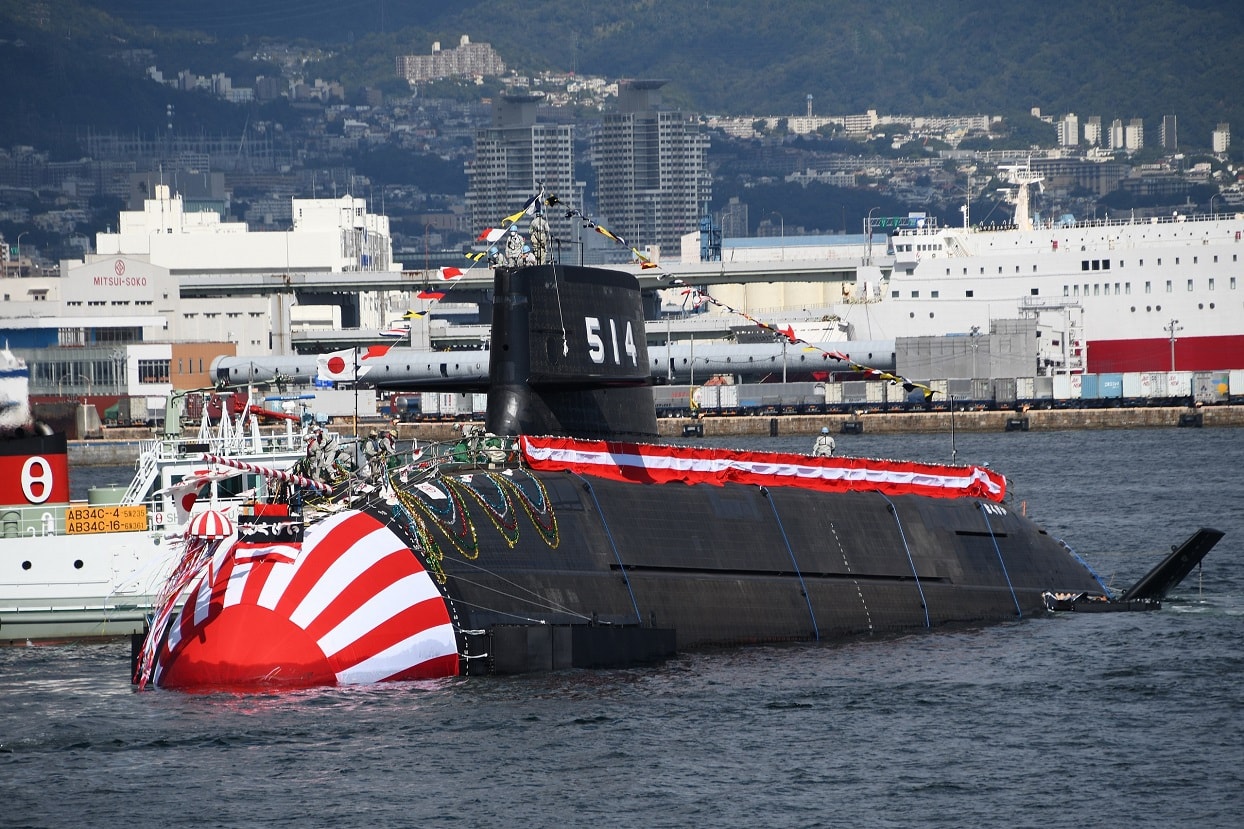
Taigei-Class Submarine. Image: Creative Commons.
-Battery-powered operations can also be exceptionally quiet, especially in shallow, crowded chokepoints where detection is hardest and acoustic discretion matters most.
-Japan is pairing that stealth with steady production, expanding its submarine inventory and sustaining readiness at costs far below nuclear attack boats.
Japan’s Taigei Submarine Has a Message: You Don’t Need Nuclear to Be Deadly
For decades, nuclear attack submarines have been considered the pinnacle of undersea military capability. SSNs can sprint across oceans and remain submerged for months; they can shadow adversaries far from home and remain undetected. But Japan’s Taigei-class is a good reminder that in 2026, undersea combat credibility is increasingly defined not by nuclear power, but by stealth and force structure.
The Taigei-class is Japan’s newest diesel-electric attack submarine (SSK): a conventionally powered boat designed for long-duration submerged operations using lithium-ion batteries rather than traditional lead-acid cells.

Taigei-Class. Image: Creative Commons.
The lead boat entered service in 2022, the next in 2023, and the third in 2024, and follow-on hulls continue moving down the production line as Japan extends its undersea posture amid a rapidly deteriorating security environment in the Western Pacific.
In other words, Japan is building its submarine fleet in plain sight, without nuclear-powered submarines.
Lithium-ion Batteries Narrow the Endurance Gap
Historically, diesel-electric submarines were limited by their battery life. They had to periodically surface or snorkel to recharge their diesel-powered batteries, increasing their risk of detection. The Taigei-class addresses that limitation with lithium-ion battery technology, which delivers significantly higher energy density and recharge efficiency than traditional lead-acid batteries.
Japan was the first navy in the world to operationally deploy lithium-ion batteries in frontline submarines, first with the late-model Soryu-class boats and now fully integrated into the Taigei-class design.
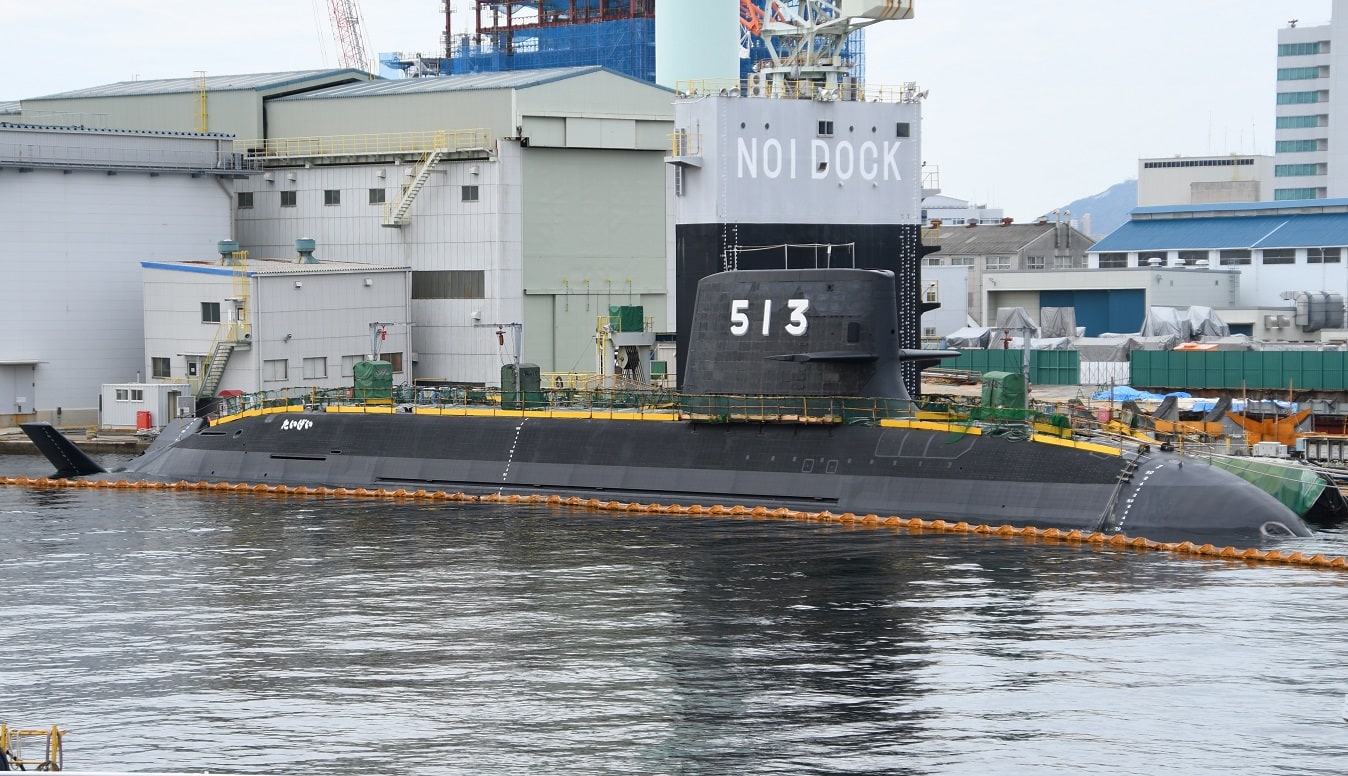
Taigei-class. Image Credit: Creative Commons.

Taigei-Class. Image Credit – Creative Commons.
Lithium-ion batteries allow for longer submerged operations and improved performance compared to older battery systems, allowing submarines to operate more flexibly and minimizing exposure during recharge cycles.
The shift to using lithium-ion batteries has direct operational implications today. Japan’s submarines can now conduct extended patrols in contested waters, such as the East China Sea, without relying on the constant surfacing cycles that once constrained conventional submarines. While nuclear submarines still possess unmatched endurance, lithium-ion propulsion has significantly narrowed the gap in practical, real-world operations.
Stealth, Not Endurance
Endurance alone does not determine submarine effectiveness. In many operational scenarios, stealth can be the decisive advantage, and battery-powered conventional submarines can be exceptionally quiet.
Unlike nuclear submarines, which must continuously operate reactor cooling systems, diesel-electric submarines powered by batteries generate lower mechanical vibrations and acoustic signatures. This makes them especially difficult to detect, particularly in shallow coastal waters and contested chokepoints.
Modern conventional submarines are extremely effective in these environments. Sweden’s Gotland-class submarines, for example, demonstrated the stealth potential of diesel-electric platforms during joint exercises with the U.S. Navy. In April 2025, Sweden’s defense minister told reporters that its stealth submarines were necessary to bolster NATO defenses in strategic waters because they are quieter than nuclear-powered counterparts under certain operating conditions.
For Japan, stealth is particularly critical. Its submarines operate near heavily trafficked and strategically sensitive areas, including the East China Sea and the areas surrounding Taiwan. In these environments, the ability to remain undetected for extended periods can be more valuable than unlimited endurance.
Japan Sets the New Non-Nuclear Submarine Standard
Japan has built one of the world’s most capable submarine fleets without nuclear propulsion. Its submarine force demonstrates that conventional propulsion does not prevent a navy from achieving undersea credibility. The Japan Maritime Self-Defense Force (JMSDF) operates one of the most advanced conventional submarine fleets in the world, supported by a stable industrial base capable of sustaining production and modernization.
As of 2025, Japan operated 22 submarines and plans to expand that number to 24 by the end of the decade. The Taigei-class is central to that expansion, gradually replacing older submarines while maintaining continuous fleet readiness.
That expansion of the Japanese submarine fleet is occurring amid rising naval activity by China, which has significantly increased its submarine fleet and naval presence in the Western Pacific.
Sustainable Costs
Finally, cost is one of the most significant advantages of using conventional submarines. Nuclear-powered submarines can cost several billion dollars each, limiting fleet size even for wealthy nations. Conventional submarines like the Taigei-class are far less expensive, enabling navies to maintain larger, more sustainable fleets.
The lead Taigei-class submarine cost approximately 80 billion yen, or roughly $690 million, making it significantly less expensive than nuclear-powered counterparts. That cost efficiency then enables steady production and sustained fleet expansion.
Japan’s submarine construction pipeline remains very active. Kawasaki Heavy Industries launched the sixth Taigei-class submarine, SOUGEI, in October 2025.
Nuclear-powered submarines are by no means made redundant by the rising number of conventional subs being deployed. They remain indispensable for global power projection and long-range operations.
But Japan’s Taigei-class proves that nuclear propulsion is no longer a prerequisite for becoming a credible submarine power.
About the Author: Jack Buckby
Jack Buckby is a British researcher and analyst specialising in defence and national security, based in New York. His work focuses on military capability, procurement, and strategic competition, producing and editing analysis for policy and defence audiences. He brings extensive editorial experience, with a career output spanning over 1,000 articles at 19FortyFive and National Security Journal, and has previously authored books and papers on extremism and deradicalisation.