
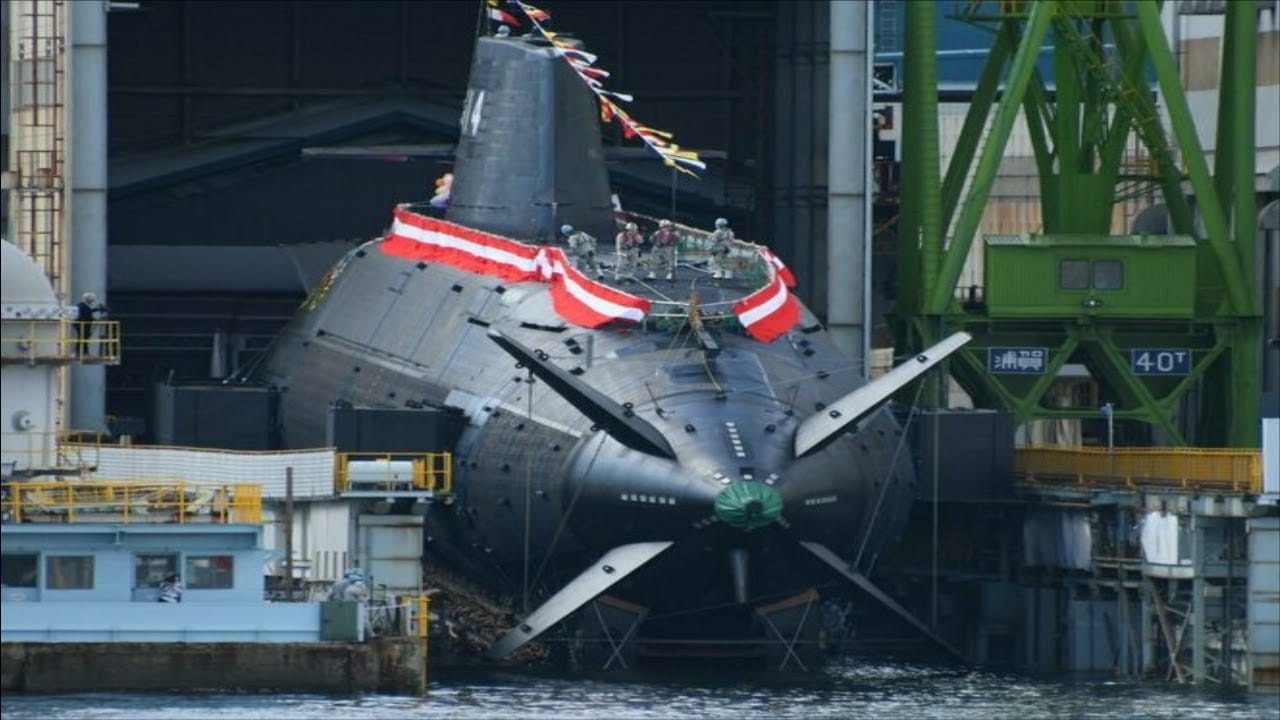
Key Points and Summary: Japan Needs Nuclear-Powered Submarines
-Japan’s superb diesel-electric submarines were built for short, proximate defense, not the vast, fast-moving Western Pacific.
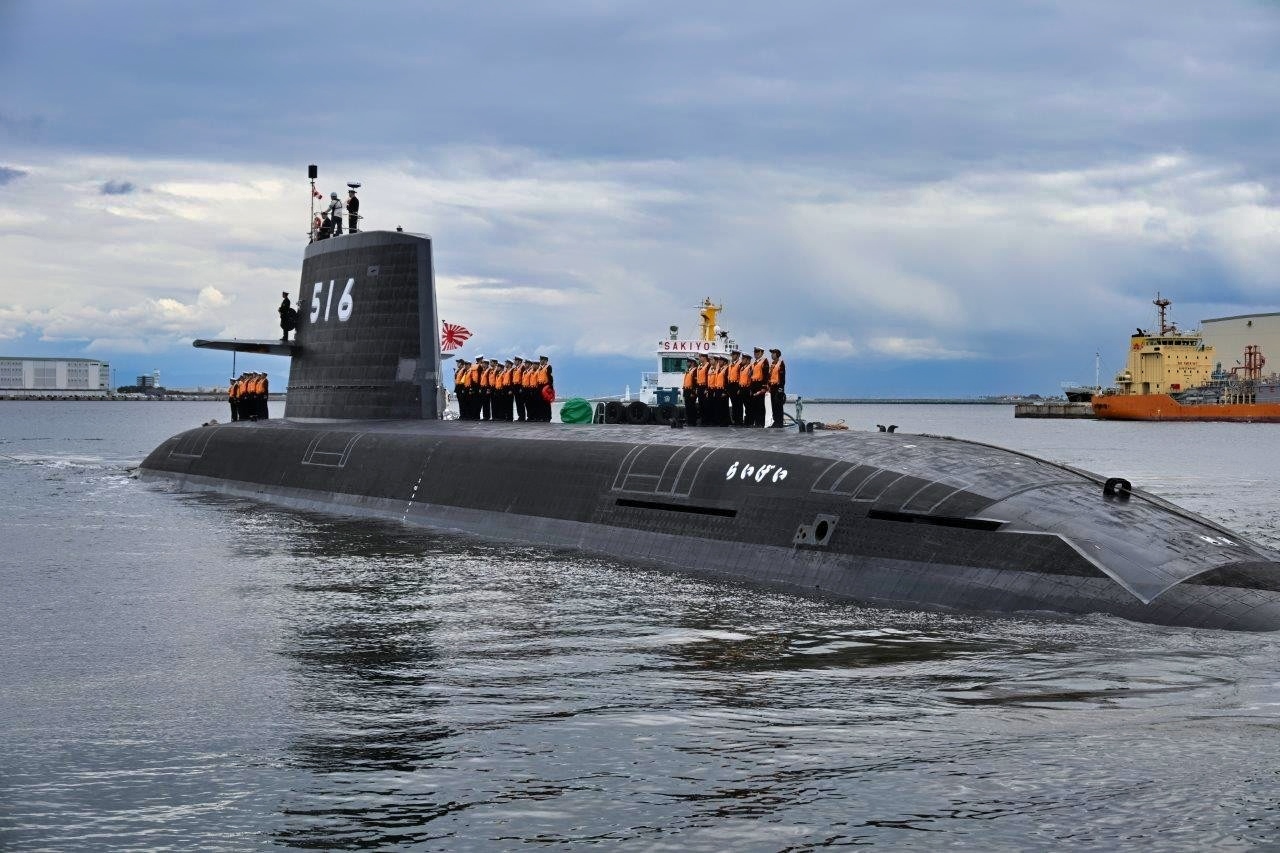
Taigei-Class Submarine. Image Credit: Creative Commons/JSDF.
-As China’s undersea force expands and patrols become persistent, Tokyo’s limiting factor is endurance: transit speed, patrol radius, and time on station.
-AIP and better batteries help at low speed but do not change the geometry of distant operations—especially in a Taiwan contingency that would spill into Japan’s sea lanes and base network.
-Nuclear-powered attack submarines would add sustained presence, rapid redeployment, and a stronger denial posture, increasing deterrence and reducing strain on U.S. forces. Paths include AUKUS-style partnership, Seoul, or sovereign design program.
Endurance Matters: The Case for Japanese Nuclear-Powered Attack Submarines
Japan’s strategic environment has changed faster than its undersea force structure. A maritime trading state whose very survival depends on secure sea lanes now confronts a peer competitor contesting those waters daily, at scale, and with growing confidence. Chinese naval activity around Japan is no longer episodic or symbolic. It is persistent, operational, and backed by a rapidly expanding submarine fleet designed for sustained competition.
That reality exposes a hard truth Tokyo can no longer finesse. Japan’s submarine force is superb—but it is optimized for a world that no longer exists. In an era defined by great-power rivalry, long-range maritime competition, and the looming risk of a Taiwan contingency, Japan needs submarines built for endurance, speed, and presence. The case for nuclear-powered attack submarines is no longer theoretical. It is a strategic necessity.

Taigei-Class. Image Credit – Creative Commons.
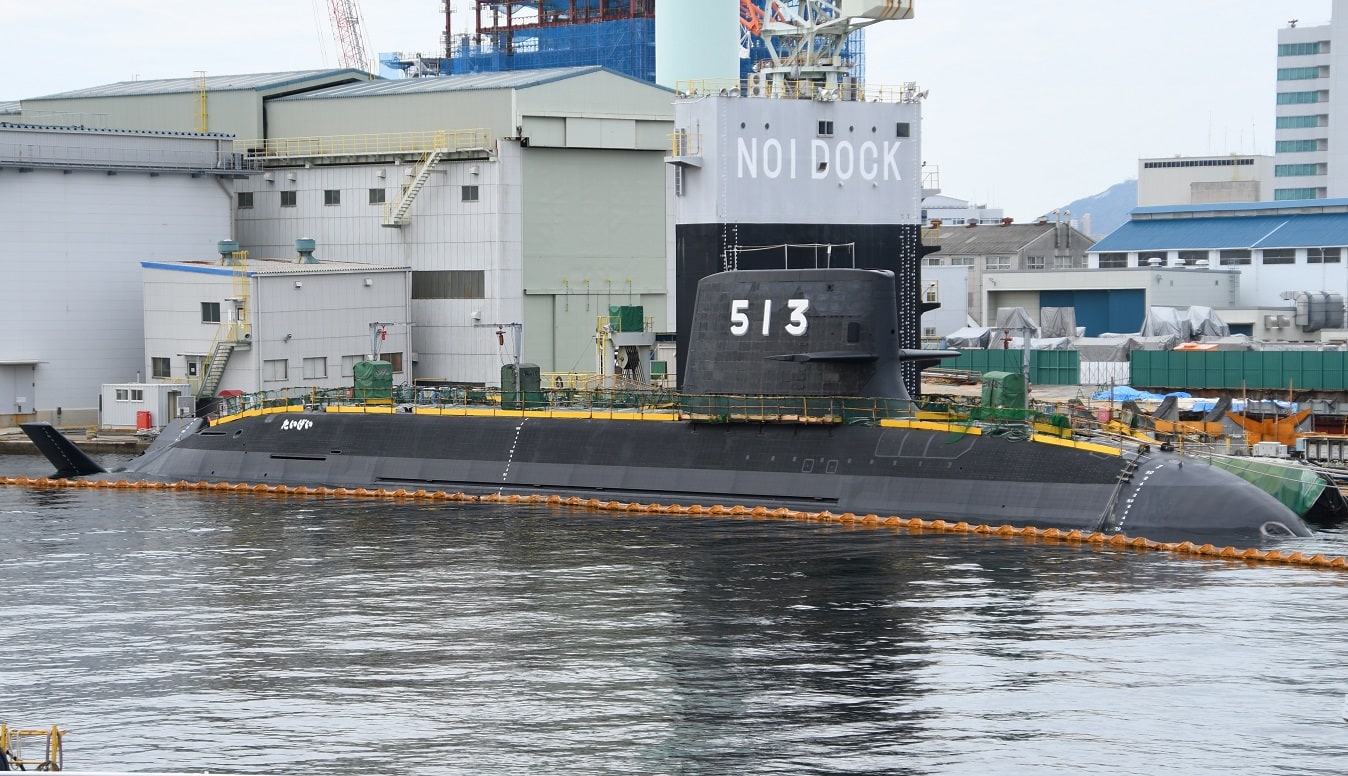
Taigei-class. Image Credit: Creative Commons.
Japan should begin the transition to nuclear-powered submarines now.
The Undersea Balance Has Changed
China’s People’s Liberation Army Navy is no longer a green-water force. It is a blue-water navy with global ambitions and a rapidly maturing undersea arm. Chinese submarines—both nuclear and advanced conventional—now operate with increasing confidence from the East China Sea to the Philippine Sea. They are backed by dense anti-submarine warfare networks, long-range missiles, and an industrial base that can absorb losses and regenerate force faster than any regional competitor.
Japan’s current submarine fleet may be superb—but it is limited. Its diesel-electric boats are quiet, well crewed, and well maintained. They are magnificent ambush predators in constrained waters. What they are not is persistent. Endurance, speed, and sustained presence are the currencies of undersea capability in a theater as vast as the Western Pacific. On those terms, conventional submarines—no matter how advanced—are structurally disadvantaged.
Emerging air-independent propulsion and battery technology can bridge this gap. They can’t. AIP submarines increase submerged endurance at low speeds, but they do not alter the physics of undersea warfare or operational geometry. Transit speed, patrol radius, and time on station in distant waters remain bounded. In a conflict characterized by wide-area maneuver, rapid redeployment, and extended presence outside the first island chain, AIP provides refinement, not transformation. It upgrades a conventional submarine. It does not make it an SSN.
Taiwan Changes the Equation
Any serious discussion of Japan’s maritime posture now runs through Taiwan. A conflict over Taiwan would not be geographically contained. It would spill into the East China Sea, the Ryukyus, and the sea lanes linking Japan to energy and trade flows from the south. Japanese bases would be implicated. Japanese shipping would be exposed. Japanese security would be on the line whether Tokyo liked it or not.

Image: Creative Commons.
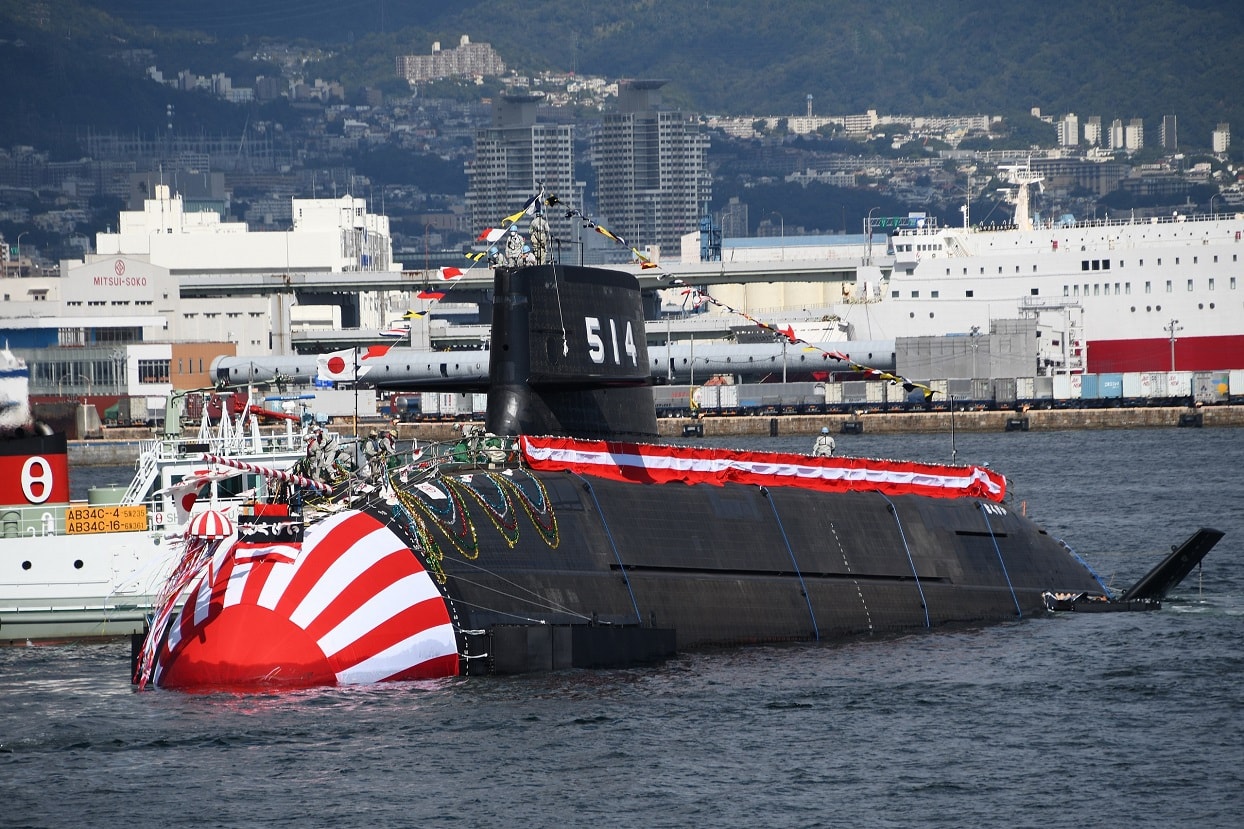
Taigei-Class Submarine. Image: Creative Commons.
In such a scenario, undersea forces are decisive. Submarines shape the battlespace before the first missile flies. They complicate adversary planning, threaten surface forces, and impose caution on escalation. Nuclear-powered submarines do this better—not because they are louder or more lethal, but because they can stay submerged indefinitely, move rapidly between patrol areas, and operate far from home without support.
If Japan intends to be more than a passive geography in a Taiwan contingency, it needs undersea forces built for the fight that would actually occur.
AUKUS, Seoul, or Sovereignty?
Japan has options—but each comes with trade-offs.
One path is partnership. An AUKUS-style framework, adapted to Japan’s legal and political realities, would accelerate access to nuclear propulsion expertise and embed Japan more deeply into allied undersea operations. This would reinforce deterrence through integration and signal strategic seriousness without Japan standing alone.
Another path runs through South Korea. Seoul is already moving toward nuclear-powered submarines and has demonstrated a growing capacity to export complex naval platforms. A procurement or co-development arrangement could shorten timelines and reduce technical risk. But it would also create dependencies—and invite regional politics into Japan’s most sensitive military capability.
The most challenging path is the most consequential: indigenous design and production. Japan has the industrial base, technical sophistication, and maritime culture to do this. What it has lacked is political will. Going indigenous would be slower and more expensive in the short term. It would also lock in sovereign control over one of the most strategically decisive capabilities a regional great power can possess.
The choice is not purely technical. It is about what kind of power Japan intends to be.
Japan as a Regional Great Power
For years, Japan has resisted the language of power while quietly practicing it. That era is ending. Strategic restraint without strategic capacity is not prudence; it is vulnerability. As US attention stretches across multiple theaters and China presses outward, allies are being asked—implicitly and explicitly—to do more.
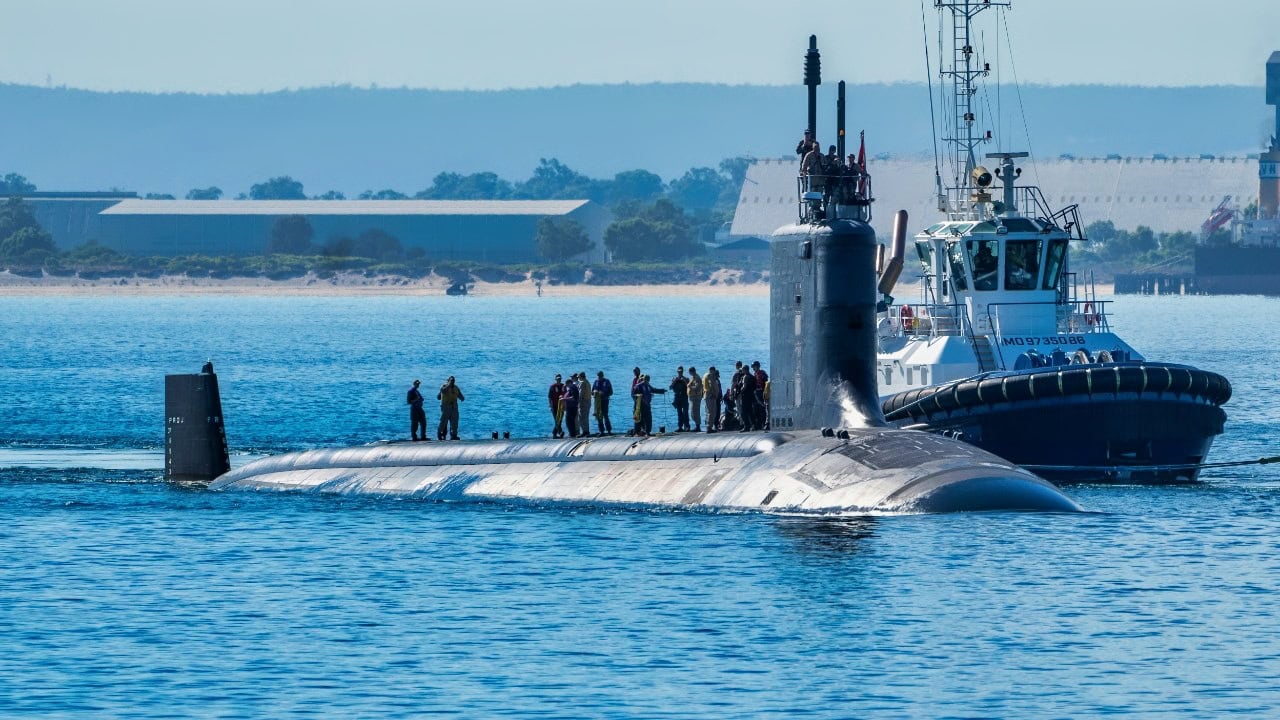
Western Australia, Australia (Feb. 25, 2025) The Virginia-class fast-attack submarine USS Minnesota (SSN 783) prepares to moor at HMAS Stirling, Western Australia, Australia, Feb. 25, 2025. Minnesota arrived in Western Australia kicking off the first of two planned U.S. fast-attack submarine visits to HMAS Stirling in 2025. Minnesota is currently on deployment supporting the U.S. 7th Fleet, the U.S. Navy’s largest forward-deployed numbered fleet, operating with allies and partners in preserving a free and open Indo-Pacific region. (U.S. Navy photo by Lt. James Caliva)
Nuclear-powered submarines would not make Japan reckless. They would make it credible. They would strengthen extended deterrence rather than weaken it by complicating Chinese military planning and reducing pressure on US forces in a crisis. They would signal that Japan accepts the burdens that come with its interests.
This is not a break with Japan’s postwar identity. It is an adaptation of it.
The Logic of the Depths
Submarines are weapons of denial, not domination. They do not seize territory or threaten cities. They deny freedom of action. In an era defined by gray-zone pressure, salami-slicing, and coercion short of war, that matters. A force that can appear anywhere and remain unseen changes behavior without firing a shot.
Japan’s strategic environment no longer rewards minimal sufficiency. It rewards depth of capability, of endurance, of resolve.
The sea around Japan is growing more crowded, more contested, and more dangerous. Diesel-electric submarines will remain valuable. But they are no longer enough on their own. If Japan wishes to shape the balance beneath the waves rather than react to it, nuclear propulsion is not a luxury. It is the next logical step.
About the Author: Dr. Andrew Latham
Andrew Latham is a non-resident fellow at Defense Priorities and a professor of international relations and political theory at Macalester College in Saint Paul, MN. You can follow him on X: @aakatham.