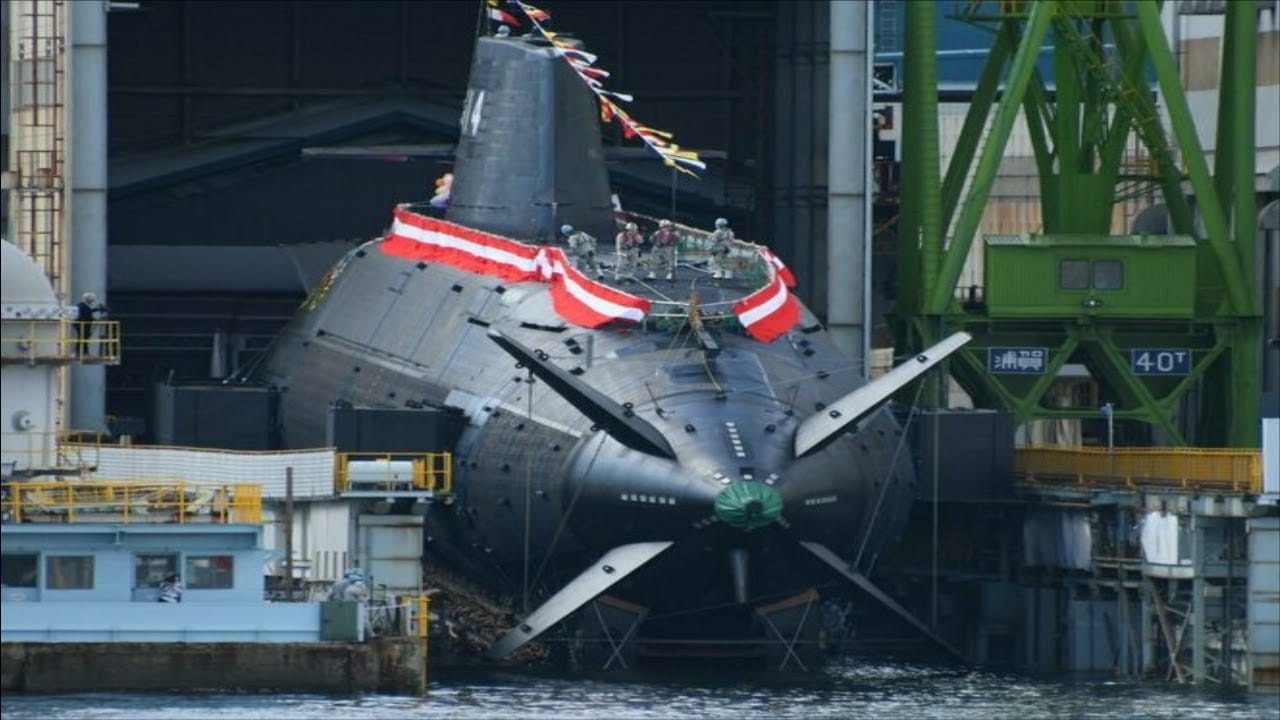
Synopsis: Japan’s new Taigei-class (“Big Whale”) submarines represent a “generational leap” in undersea warfare, designed to be heavier, quieter, and more lethal than the preceding Soryu-class.
-Commissioned since 2022, these boats feature advanced noise-reduction technologies—such as “floating” floorboards and new hull designs—alongside lithium-ion batteries for extended submerged endurance.
-The article argues these stealthy assets are vital for the U.S.-Japan alliance, potentially providing the “undersea superiority” needed to counter China’s naval expansion and defend Taiwan from amphibious invasion.
Japan’s Taigei-Class Is One of the Best Submarines on Earth: Here’s Why
Japan’s new Taigei-class submarine is called the “Big Whale” for a specific reason: the boat is 100 tons heavier, quieter, and more lethal than the preceding Soryu-class.
The Japanese Maritime Defence Force has launched as many as six new Taigei-class submarines, and three have been commissioned since 2022.
The boats are a generational leap forward in undersea technology, intended to improve quieting, stealthiness, survivability, higher power output, and emitted “vibrations.”
Interestingly, while the new submarines have been launched only in the last three years, the boats’ technological components are the result of more than a decade of cutting-edge research.
Stealthy Taigei-Class Submarine
A key focus of the research was to uncover and integrate new propeller and hull-shape designs that reduce noise generation and improve impact resistance.
Similarly, Japanese research also incorporated new “floorboards” attached to the inner shell through a buffer mechanism intended to minimize “vibrations” inside the submarine and prevent a more detectable signal from being emitted into the water. The floorboards are also designed to improve survivability by reducing “shock” impact from outside the boat.
The Taigei-class also incorporates a new “snorkel” power generation system designed to be quieter and generate higher power output, improving functionality and survivability.
Slides published by the Japanese Defense Ministry show that the Snorkel system streamlines power generation and provides the critical added benefit of enabling cutting-edge on-board power for electronic systems.
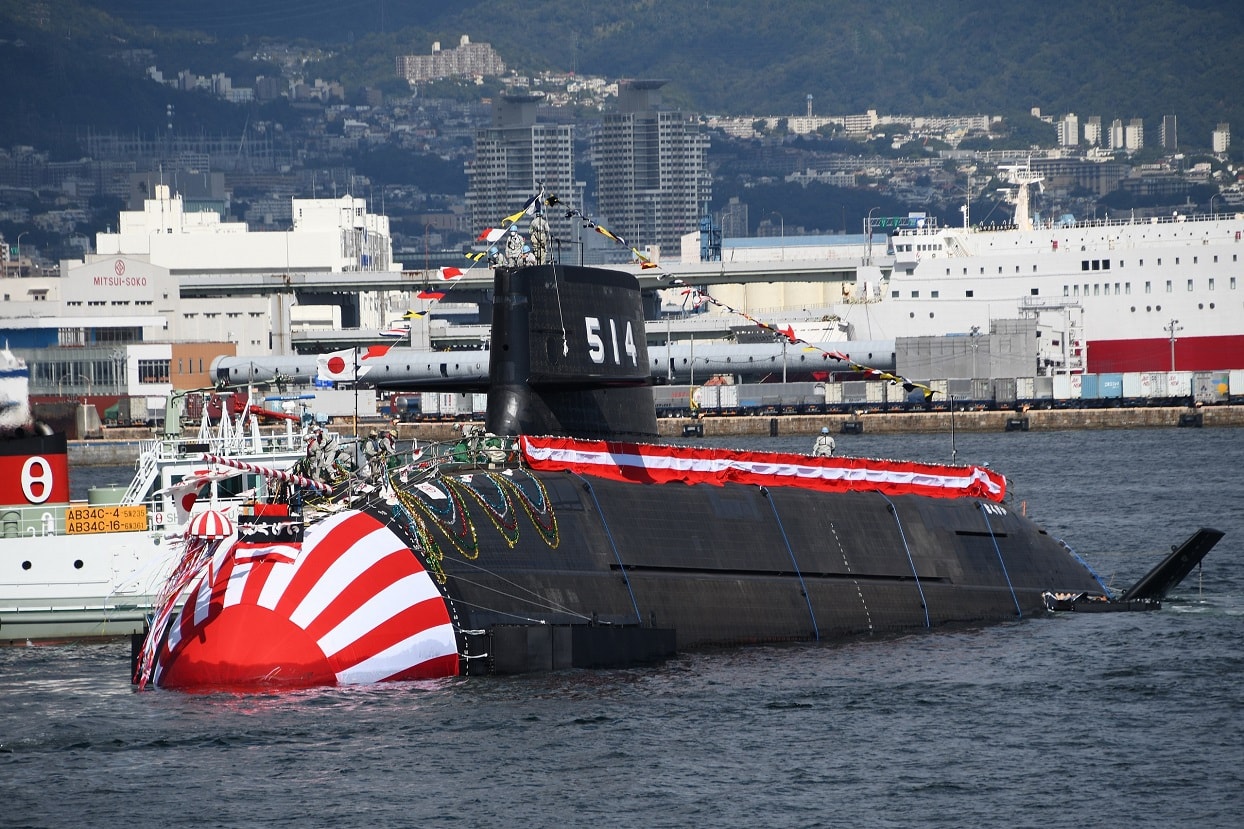
Taigei-Class Submarine. Image: Creative Commons.
Taigei & Virginia-class Submarines
Technologically advanced submarines, such as the United States Navy’s Virginia-class, require new levels of electrical power to support next-generation on-board systems.
Finally, the new JMSDF submarines operate with lithium-ion batteries, which extend undersea mission time more than diesel/electric submarines do.
The arrival of these Japanese submarines is highly significant in terms of a US-Japanese allied deterrence effort in the Pacific, given that China is quickly progressing with its Jin-class submarines and already operates a larger Navy than the United States.
Therefore, a Japanese buildup advancing new generations of technology could immeasurably strengthen US-Japanese undersea superiority and deterrence.
This is of vital significance to any US-Japanese ability to defend Taiwan, as there is a credible argument suggesting that submarines could in fact “save” the island.
Japan vs China: Submarine Faceoff
While the US and Japan would, at least at the moment, enjoy air superiority in the region due to their combined number of available F-35s, China’s surface fleet poses a serious and formidable challenge to any US-Japanese surface defenses and Taiwanese ground-based weapons.
However, should the US and Japan operate with undersea superiority, a Chinese amphibious attack on the surface would be highly vulnerable to destruction from undersea.
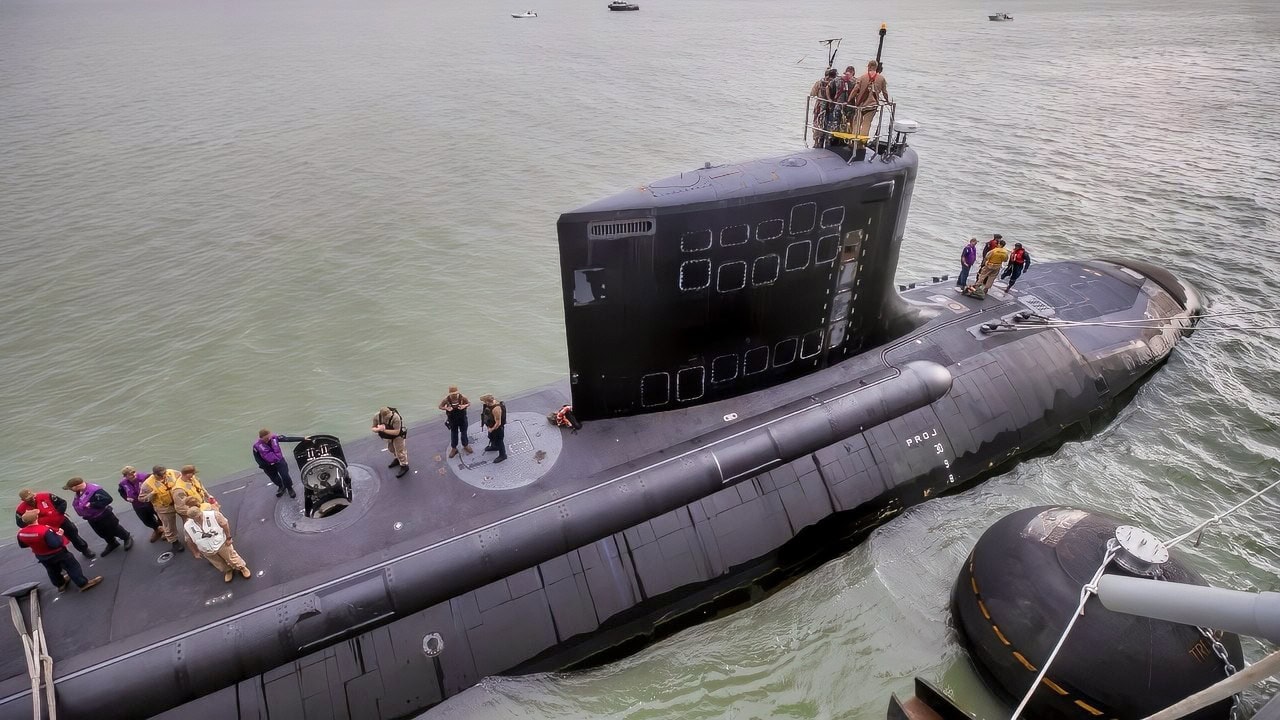
DARWIN, Northern Territory, Australia (March 31, 2025) – The Virginia-class fast-attack submarine USS Minnesota (SSN 783) departs from the submarine tender USS Emory S. Land (AS 39) after a scheduled port visit at Darwin, Northern Territory, Australia, Mar. 31, 2025. Darwin is Emory S. Land’s 17th port call since it departed on deployment May 17, 2024. Emory S. Land and Minnesota are operating in U.S. 7th Fleet, the U.S. Navy’s largest forward deployed numbered fleet, operating with allies and partners in preserving a free and open Indo-Pacific region. (U.S. Navy photo by Mass Communication Specialist Seaman Mario E. Reyes Villatoro)
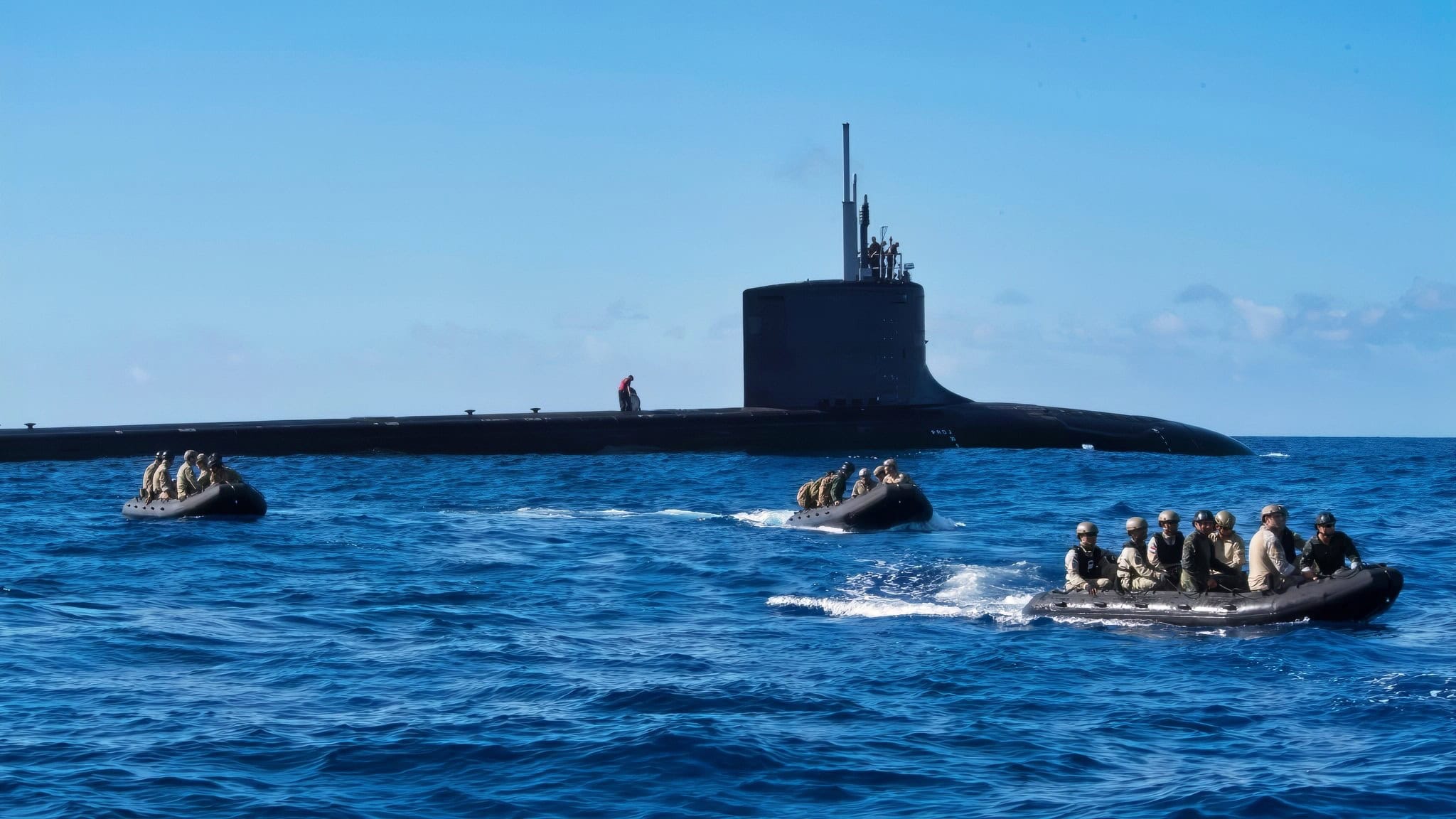
PEARL HARBOR (July 9, 2018) – Multi-national Special Operations Forces (SOF) participate in a submarine insertion exercise with the fast-attack submarine USS Hawaii (SSN 776) and combat rubber raiding craft off the coast of Oahu, Hawaii during Rim of the Pacific (RIMPAC) exercise, July 9. Twenty-five nations, 46 ships and five submarines, about 200 aircraft, and 25,000 personnel are participating in RIMPAC from June 27 to Aug. 2 in and around the Hawaiian Islands and Southern California. The world’s largest international maritime exercise, RIMPAC provides a unique training opportunity while fostering and sustaining cooperative relationships among participants critical to ensuring the safety of sea lanes and security of the world’s oceans. RIMPAC 2018 is the 26th exercise in the series that began in 1971. (U.S. Navy photo by Lt. j.g. Michelle Pelissero)
While the US Navy still operates with an attack submarine deficit, which may grow more pronounced in the coming years, Virginia-class Block III and beyond boats have been integrated into the fleet with a new generation of quieting and stealth-enhancing technologies.
When combined with Japan’s growing fleet of advanced Taigei-Class submarines, it’s conceivable that US and Japanese subs could track and destroy both PRC submarines and surface ships in ways surface ships cannot. Surface ships are detectable by air, satellite, and surface surveillance technologies.
Yet, undersea submarines conducting clandestine reconnaissance and attack missions could destroy a Chinese Navy attack before it is detected fast enough.
About the Author: Kris Osborn
Kris Osborn is the President of Warrior Maven – Center for Military Modernization. Osborn previously served at the Pentagon as a highly qualified expert in the Office of the Assistant Secretary of the Army—Acquisition, Logistics & Technology. Osborn has also worked as an anchor and on-air military specialist at national TV networks. He has appeared as a guest military expert on Fox News, MSNBC, The Military Channel, and The History Channel. He also has a Masters Degree in Comparative Literature from Columbia University.