
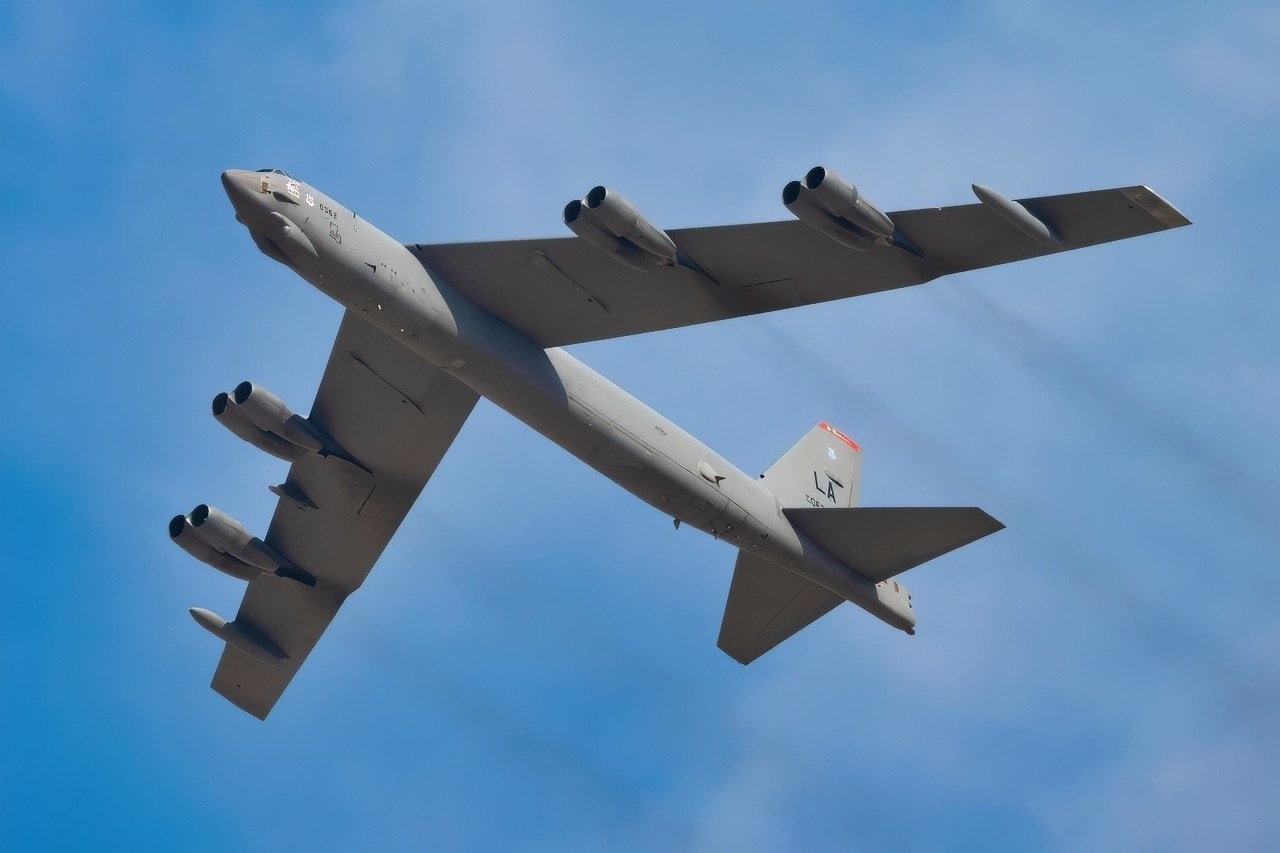
Summary and Key Points: The U.S. Air Force is upgrading the B-52H Stratofortress to the B-52J to modernize the aging fleet, ensuring the platform remains viable until the 2050s.
-Key upgrades include new Rolls-Royce-Hill F130 engines for better fuel efficiency/reliability, a new radar system, and enhanced weapons capacity to carry advanced hypersonic and standoff missiles.
B-52 Bomber. Image Credit: 19FortyFive.com Taken at the National Museum of the Air Force.
-The B-52J acts as a cost-effective, reliable “bomb truck” that supports the nuclear triad while bridging the gap in bomber numbers as the new B-21 Raider is fielded.
-While still a very capable conventional bomber with an enormous payload, why does the Air Force want the B-52J bomber?
The Cost of Longevity: Are Modern Air Defenses Too Lethal for the B-52?
The Air Force has had one constant in the past 70+ years: the B-52 bomber. The B-52J is a proposed upgrade to the B-52 Stratofortress, aiming to extend its service life well into the 2050s with new engines, advanced radar, and updated avionics. That would put the iconic bomber’s age at the century mark.
The B-52J bomber remains the subject of ongoing debate, with some advocating for its continued service and modernization, while others question its long-term value and strategic relevance. It is costly, and with the modern B-21 Raider set to enter service, they argue that the funds would be better spent on the Raider.
Why Does The Air Force Want The B-52J Model
The Air Force is considering combining the B-21 Raider and the B-52J into a package that will deliver massive amounts of firepower, range, and the ability to penetrate enemy defenses to deliver precision weapons.
The B-52J won’t penetrate an enemy’s anti-access, aerial denial (A2/D2) umbrella; it would be highly vulnerable against modern air defenses. That is for the B-21 Raider to do.
Weapons integration has also been improved; the J-variant was designed to carry the JASSM-ER, LRASM, hypersonic weapons, and the LRSO nuclear cruise missile.
The B-52J becomes a stand-off missile arsenal, that launches long-range cruise missiles, such as the Long Range Stand-Off (LRSO) weapon and hypersonic missiles, without entering contested, heavily defended airspace.
Is It A Choice Of The B-52J Or The B-21?
The choice between upgrading the B-52J and acquiring more B-21s is part of a debate within the US Air Force about the future of its bomber fleet, with some arguing that the B-52 upgrade’s cost and delays suggest shifting funds to more B-21s.
The choice between upgrading the B-52J and acquiring more B-21s is complex, as delays in the B-52J modernization program could necessitate the Air Force requesting additional B-21s to maintain its long-range strike capacity.
Some military leaders have advocated for increasing the number of B-21s to accelerate their production timeline, arguing that the B-21 will be the backbone of the future bomber fleet, even with the modernized B-52. The B-52J upgrade is intended to keep the B-52 flying until the 2050s, while the B-21 is the new, stealthy next-generation bomber.
However, the Air Force made the decision, that it wants the B-52J. The B-21 will be used for penetration missions while the B-52J will be used for massed standoff fires. This spreads the risk across platforms and increases flexibility.
The B-52J Program Is Over Budget And Late
However, like many US military programs, the B-52J is over budget and late…three years late. However, the upgrade program aims to modernize the iconic U.S. Air Force bomber by installing new Rolls-Royce F130 engines and advanced AESA radars.
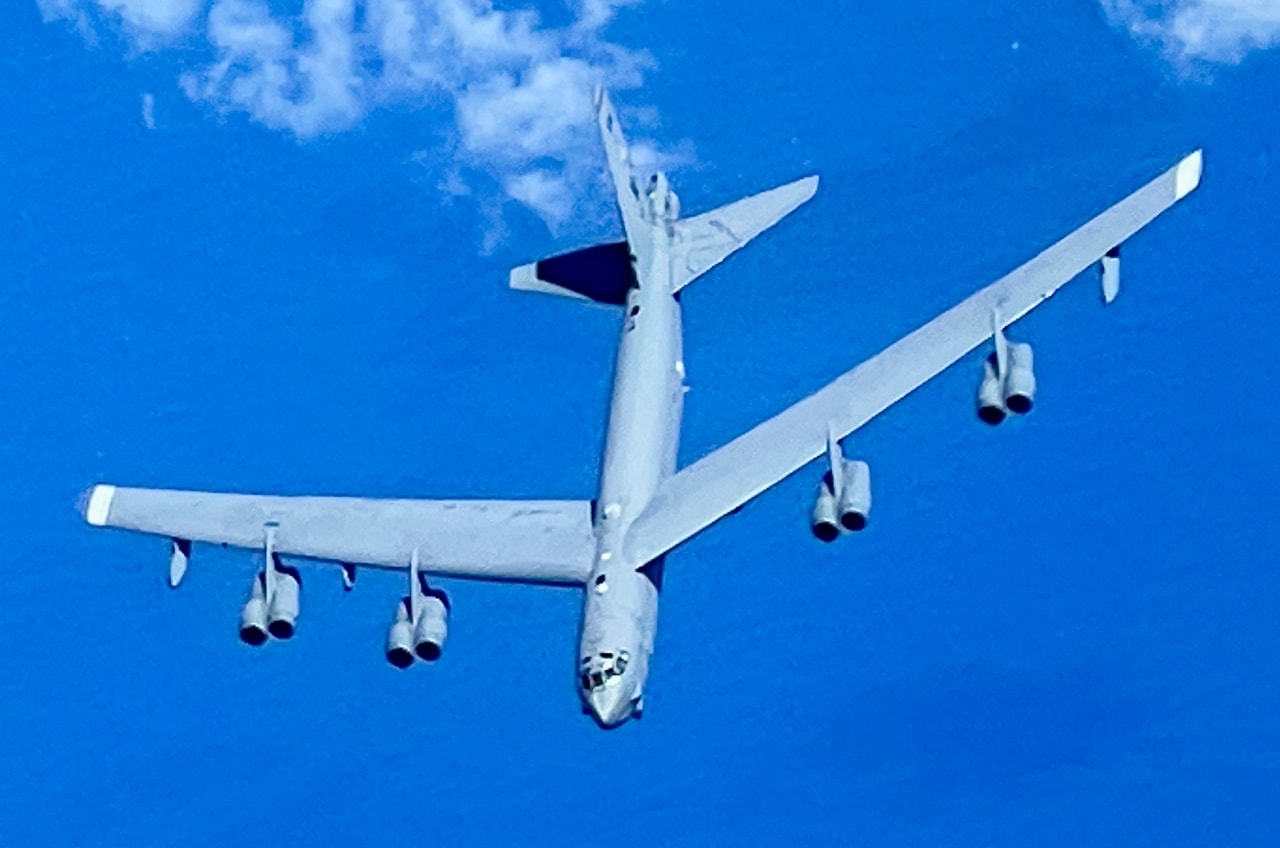
A B-52 Stratofortress assigned to the 2nd Bomb Wing, Barksdale Air Force Base, Louisiana, approaches a KC-135 Stratotanker assigned to the 6th Air Refueling Wing, MacDill AFB, Florida, for fuel over the southeastern United States, Nov. 5, 2024. The B-52 Stratofortress is a long-range, heavy bomber that can perform a variety of missions. As part of the Air Force Global Strike Command, the B-52 enables combat-ready forces to conduct strategic nuclear deterrence and global strike operations in support of combatant commanders. (U.S. Air Force photo by Senior Airman Mia McNeill)
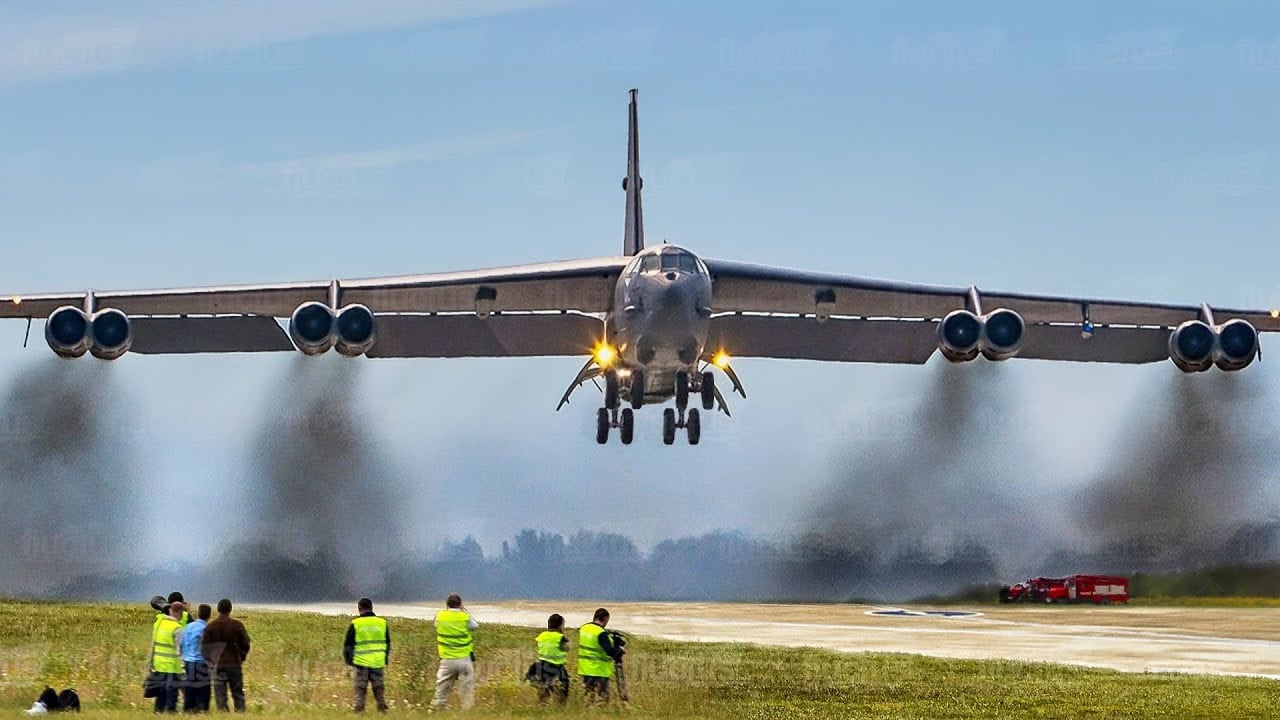
B-52 Bomber. Image Credit: Creative Commons.
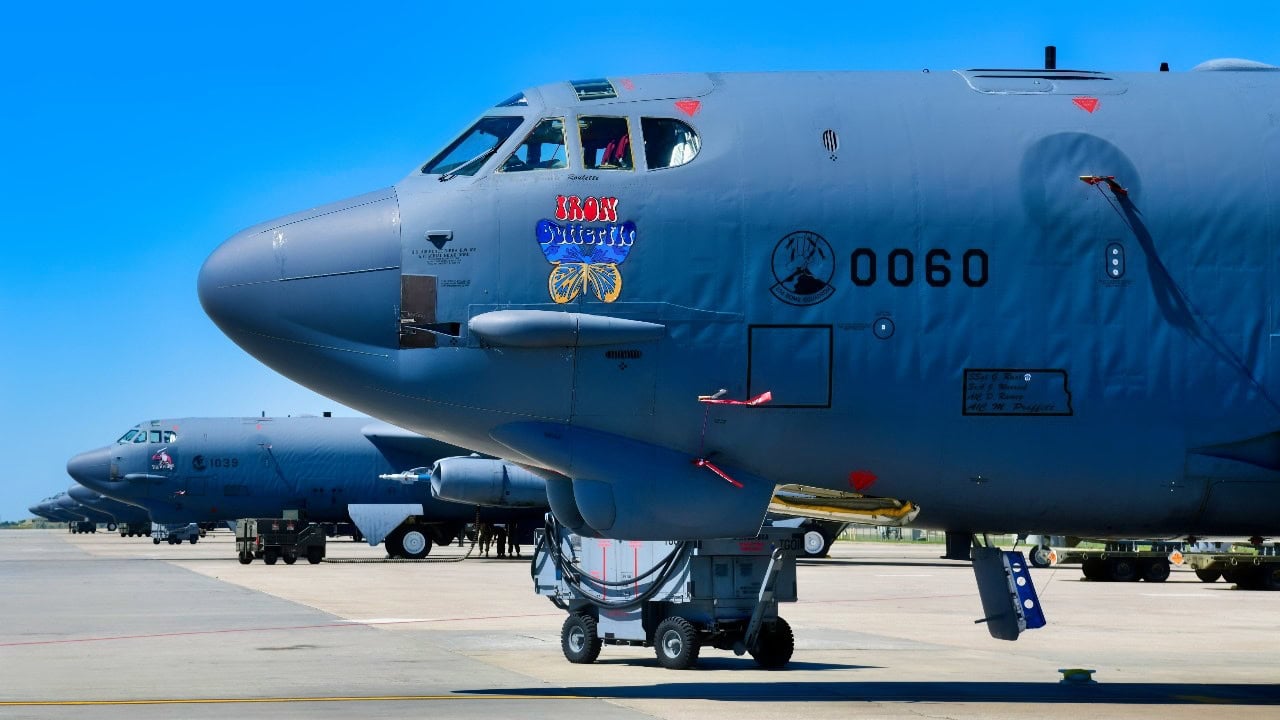
Multiple B-52H Stratofortresses sit parked on the flight line on Minot Air Force Base, North Dakota, Aug. 8, 2022. The B-52 Bomber has been in service since February of 1955. (U.S. Air Force photo by Airman Alysa Knott)
Boeing is the prime contractor for performing the integration work on the B-52, which includes a comprehensive list of other modifications to these aircraft, in addition to the engines. Once these bombers have been retrofitted with this extensive set of onboard systems upgrades, they can remain in service into the 2050s.
After the refit and re-engining are completed, these B-52H models will be redesignated as B-52Js. The B-52Hs were the final production models, with the last H models coming off the Boeing assembly line in 1962.
The B-52J will receive a new radar system straight from the U.S. Navy’s F/A-18 Super Hornet and be upgraded with many new and improved weapons.
B-52J’s Weapons and Armament
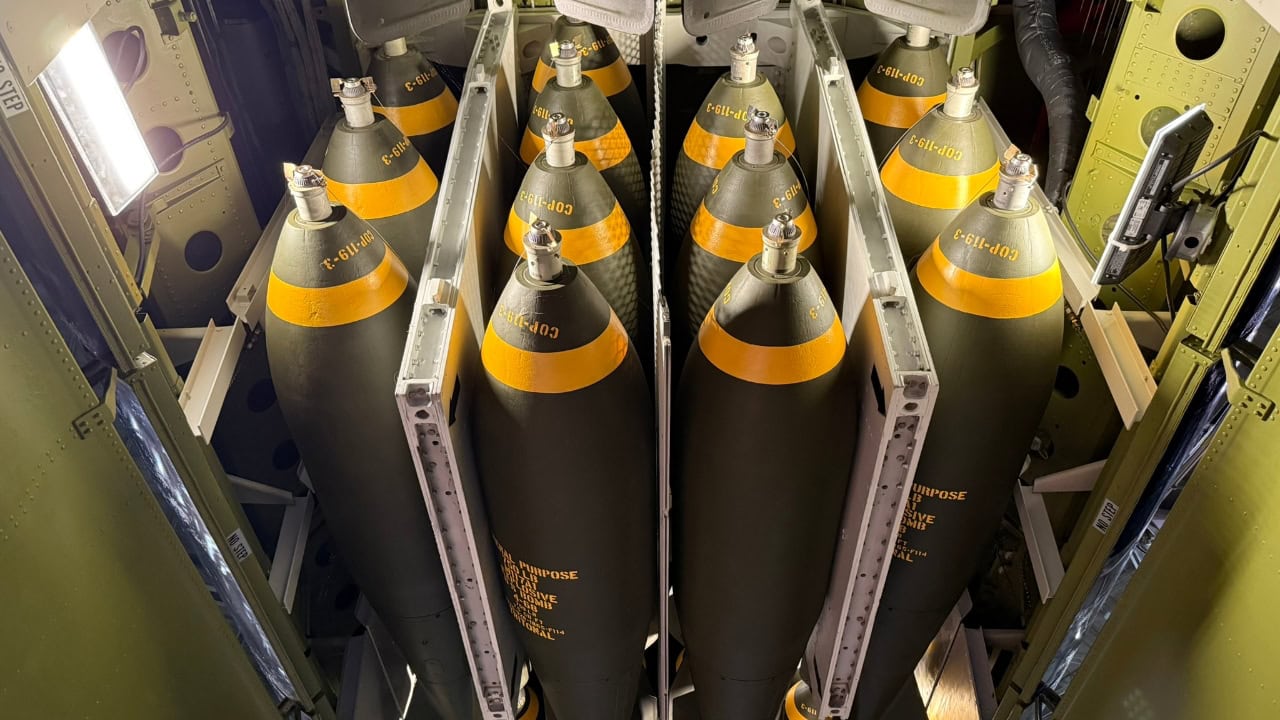
The B-52J is expected to be a versatile platform capable of carrying a wide range of weapons, from gravity bombs to cruise and hypersonic missiles. In total, the B-52J will carry 35 tons of bombs, missiles, etc.
The B-52 Is An Old Aircraft
During Ronald Reagan’s first presidential campaign in 1980, then-Sen. Barry Goldwater said the B-52 “was so old that I think some of them fought with Custer”, referring to the Battle of the Little Bighorn, also known as Custer’s Last Stand. Goldwater’s quip was made 45 years ago.
But even with the more modern B-1 and B-2 stealth bombers that have come into service and then been retired or soon will be, the B-52’s heart beats on. The B-52 remains a superb conventional and nuclear bomber, owing to numerous upgrades and models.
The Bomber Force, Both Old And New
Once the B-21 Raider and B-52J are in full production, the US bomber fleet will number approximately 200, with more than 100 B-21s and the remainder B-52Js, thereby enlarging the force.
According to Gen. Thomas Bussiere, commander of the Air Force Global Strike Command (AFGSC), the bomber force currently stands at approximately 141.

The B-21 Raider was unveiled to the public at a ceremony December 2, 2022 in
Palmdale, Calif. Designed to operate in tomorrow’s high-end threat environment, the B-21 will play a critical role in ensuring America’s enduring airpower capability. (U.S. Air Force photo)
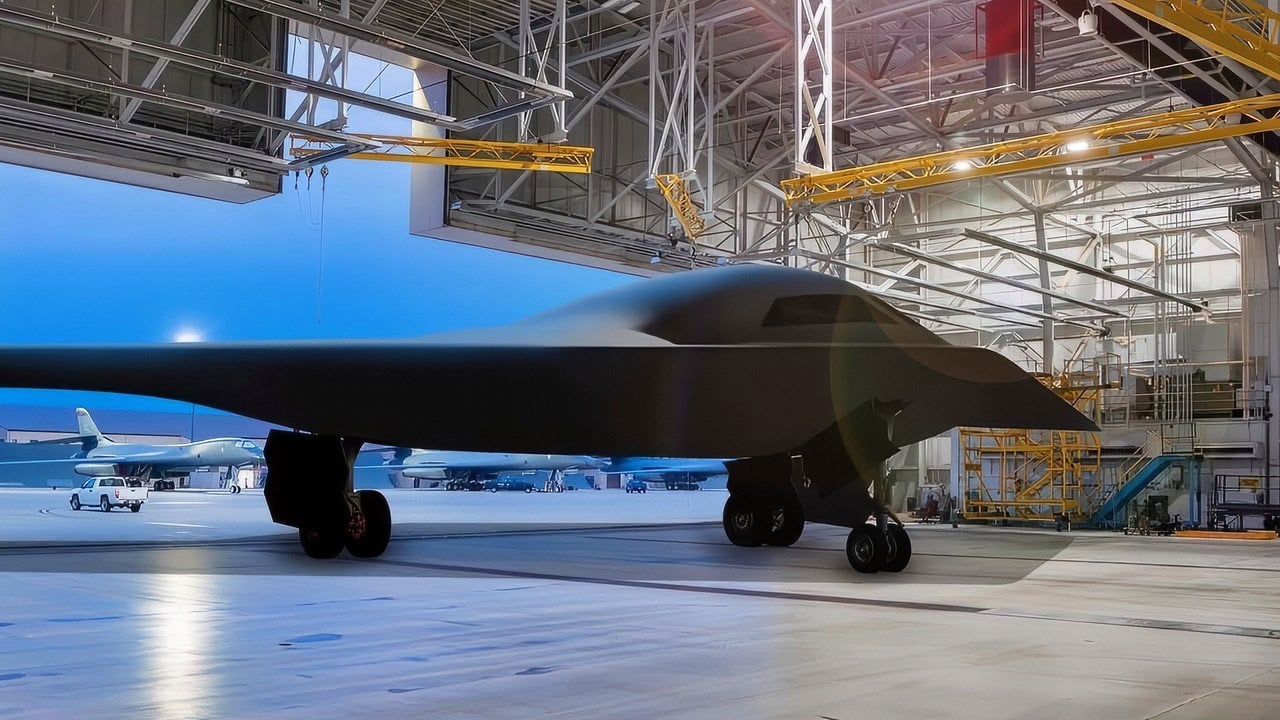
Artist rendering of a B-21 Raider in a hangar at Ellsworth Air Force Base, South Dakota, one of the future bases to host the new airframe. AFCEC is leading a $1 billion construction effort at Ellsworth to deliver sustainable infrastructure to meet warfighter demands for bomber airpower. (U.S. Air Force graphic)
However, one intriguing possibility for the B-52J is its deployment with the Air Force’s newest aircraft, the Collaborative Combat Aircraft (CCA).
“It is the ability of the B-52 to carry such a large payload that can put these unmanned systems into the middle of the fight that makes a difference and will provide more justification for the cost of the upgrade,” said a US air power specialist who was quoted by Reuben Johnson.
“It will make the ‘long arm’ of the B-52 even longer.”
Will the B-52J Be Obsolete When It Arrives?
Because of all the technological issues the aircraft has had to deal with and the ongoing delays, one must wonder if it will become operational in 2033 (not a sure thing), it will already be obsolete.
The estimated $2.56 billion investment in the B-52J upgrades diverts resources from developing and procuring next-generation platforms like the B-21 Raider. As adversaries advance their air defense capabilities, the need for stealthier and more survivable bombers becomes increasingly critical. The B-52 would not survive against dedicated air defenses of a near-peer adversary.
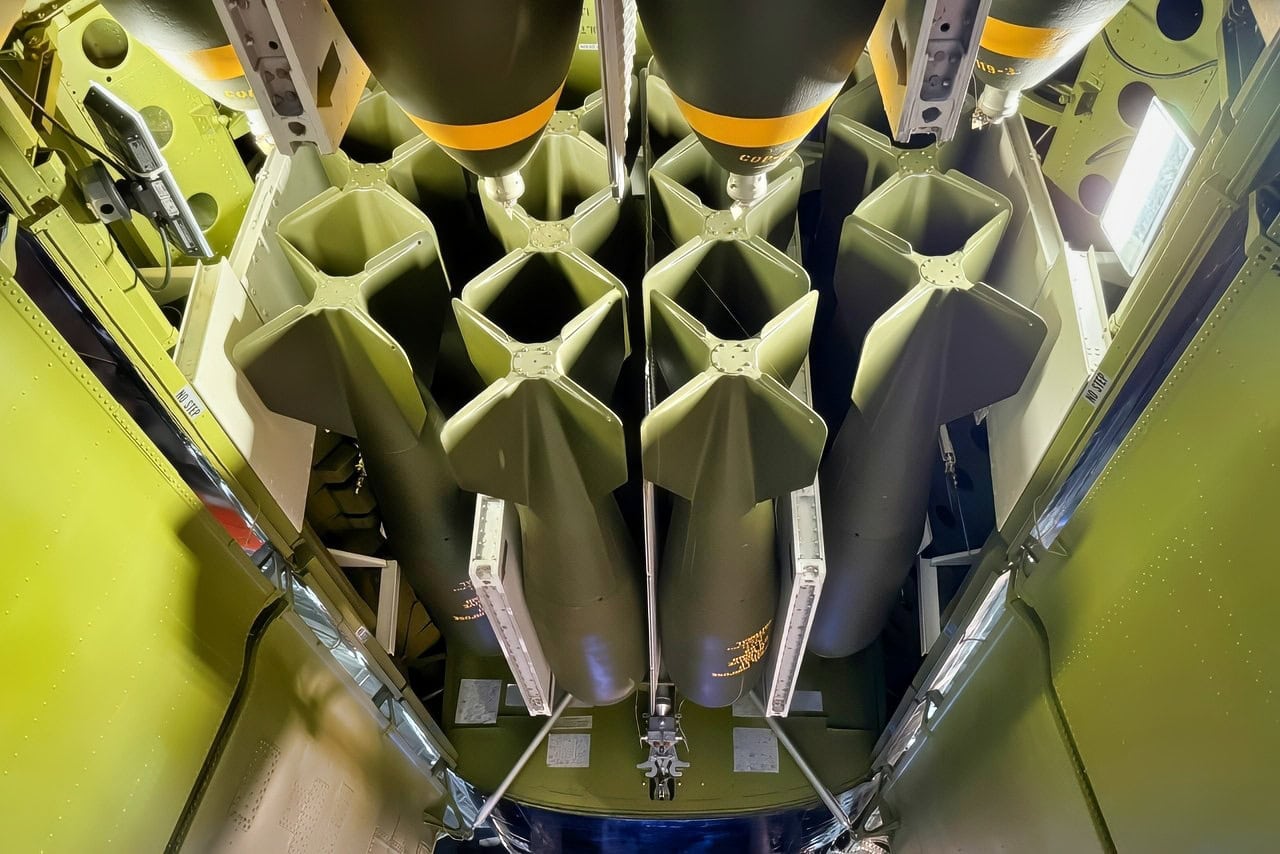
B-52 bombs. Image Credit: 19FortyFive.com Taken at the National Museum of the Air Force.
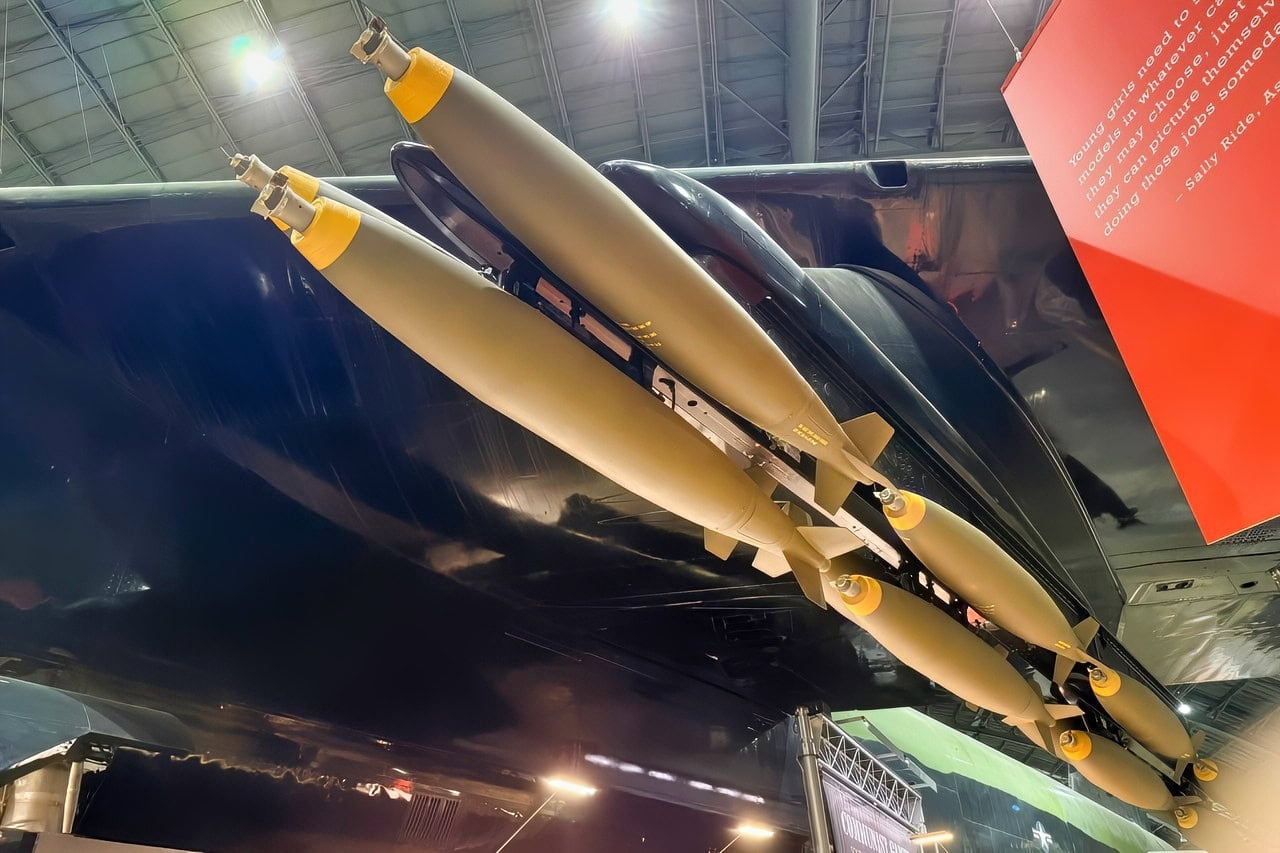
B-52 bombs. Image Credit: 19FortyFive.com Taken at the National Museum of the Air Force.
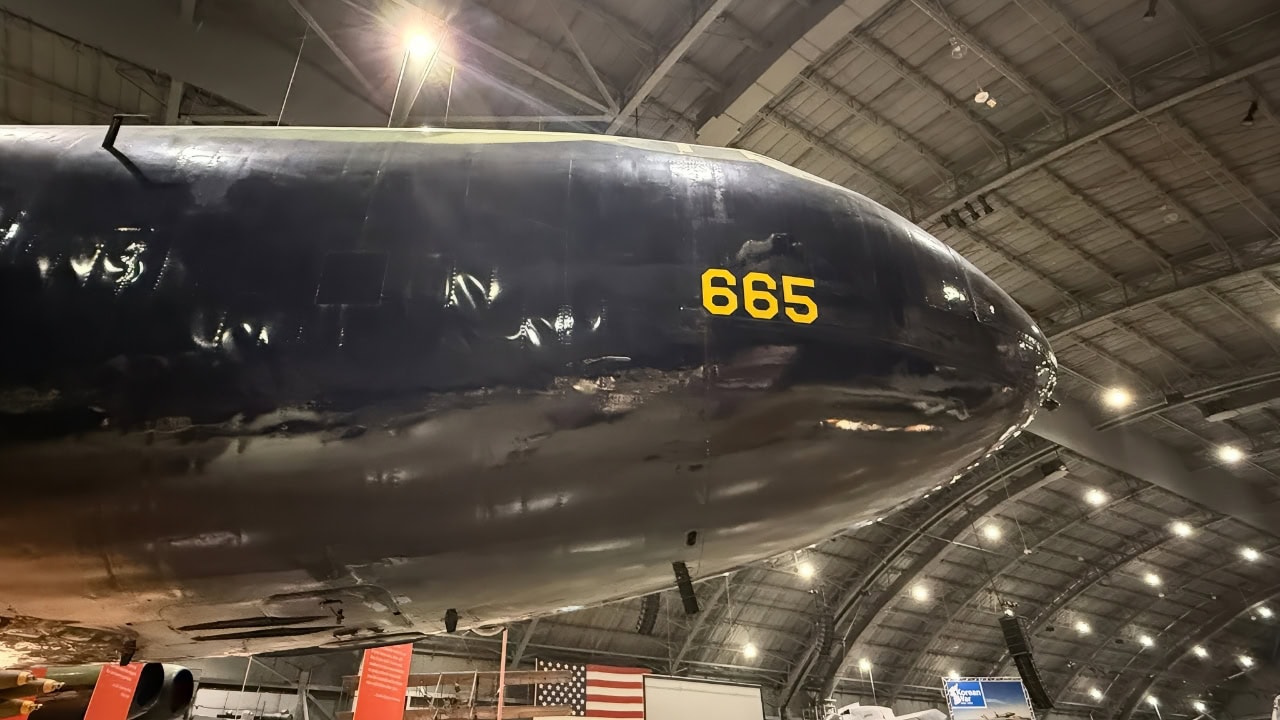
B-52B. Image Credit: 19FortyFive.com
Many argue that the focus should be on accelerating the deployment of these next-generation systems rather than sinking money into a nearly 80-year old platform. Wouldn’t the money be better spent on more B-21s?
The B-52 is obviously a tried and proven aircraft, it is the longest serving aircraft in the US inventory for a reason. But the Air Force is committed to the venerable bomber. And it will remain in the air fleet for the next few decades.
About the Author: Steve Balestrieri
Steve Balestrieri is a National Security Columnist. He served as a US Army Special Forces NCO and Warrant Officer. In addition to writing on defense, he covers the NFL for PatsFans.com and is a member of the Pro Football Writers of America (PFWA). His work was regularly featured in many military publications.