
Ukraine’s Sea Drones Broke Russia’s Black Sea Fleet—and Moscow Still Can’t Fix It
The “special military operation” in Ukraine has been a disaster for the Russian military. The loss of more than 1 million troops, thousands of tanks, and hundreds of their best aircraft to a military thought to be inferior has been an eye-opener.
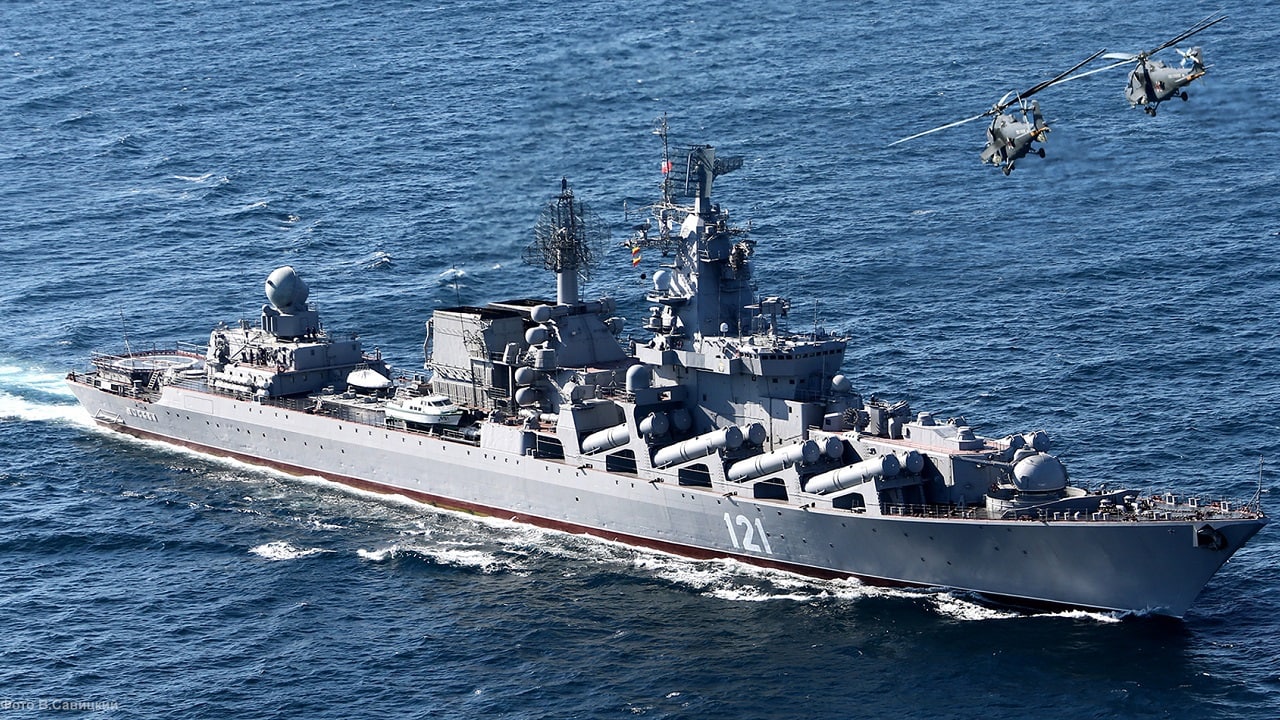
Moskva Cruiser. Image Credit: Creative Commons.
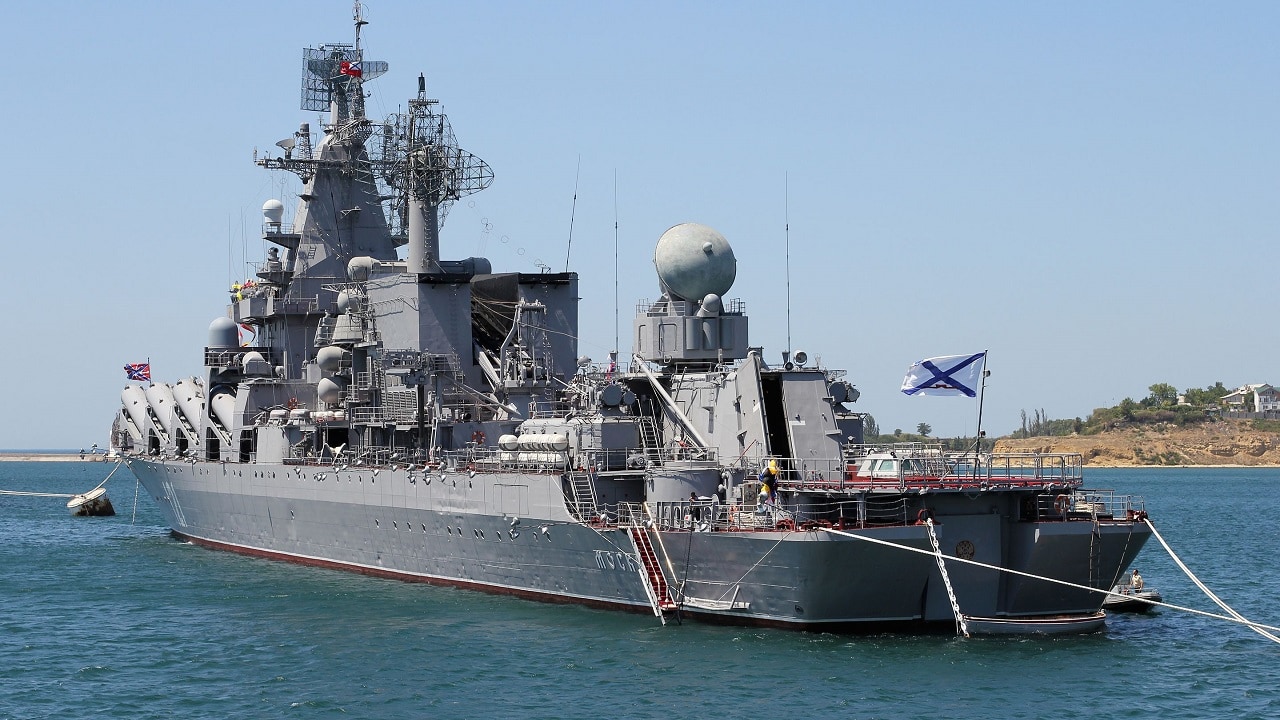
“Moskva” (“Moscow”) (ex-“Slava”, which means “Glory”) is the lead ship of the Project 1164 Atlant class of guided missile cruisers in the Russian Navy. This warship was used in the 2008 Russia-Georgia War. The Black Sea. Sevastopol bay. This photo was taken from a boat.
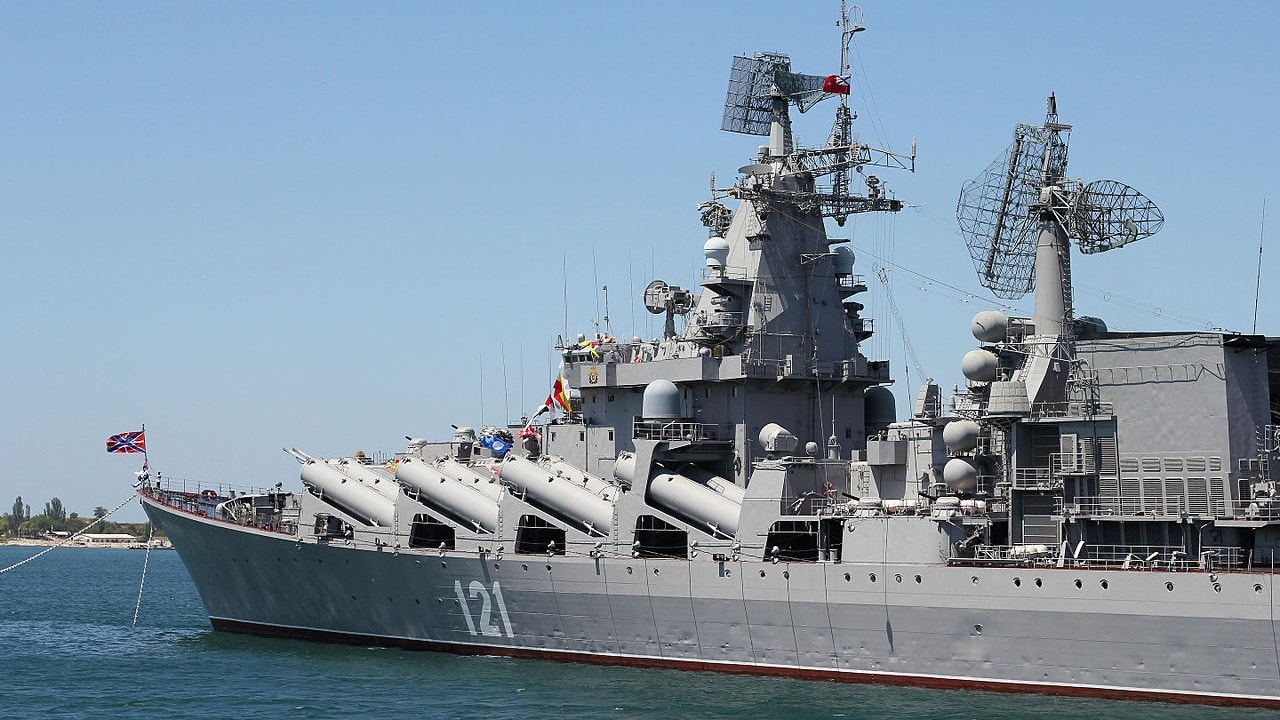
Nowhere is the catastrophe greater than at sea. At least 24 Russian warships have been sunk or severely damaged in the war—nearly a third of the prewar Black Sea fleet. The attacks have come from cruise missiles, which the Russian Navy should have expected, and from advanced, highly maneuverable sea drones, which they could not have foreseen.
Having much of their Black Sea Fleet sunk or forcibly removed from Crimea has to be terribly galling to the leaders of the Russian Navy. Even worse that it would happen against Ukraine, which doesn’t have any ships other than a handful of small coastal vessels.
At the beginning of Russia’s invasion in February 2022, the Ukrainian Navy had one warship— the Hetman Sahaidachny, a Soviet-era frigate—that had to be scuttled in the Ukrainian port of Mykolaiv to prevent it from falling into Russian hands.
The Russians were thought to have complete control of the sea in this war. That belief was wrong. The once proud Black Sea Fleet has taken a beating, and Russia has had to make some significant adjustments.
Ukraine Struck Early in The Invasion
When Russia invaded on February 22, 2022, the Black Sea Fleet had 74 ships, most of them in Crimea, which Russia occupied in 2014. However, in April of that year, the Ukrainians were able to pinpoint the location of the Black Sea Fleet’s flagship, the Moskva.
Once the Ukrainians had located her, they sent a Bayraktar TB-2 unmanned aerial vehicle (UAV) to distract the Russians, and perhaps to confirm the Moskva’s location. Then the frigate was slammed to her port side with two R-360 Neptune anti-ship missiles from Ukrainian shore batteries near Odesa.
Fires were raging; the Russians attempted to fight them, but ammunition detonated. She rolled over on her side and sank on April 14. The Russians claimed that a fire on board caused the ship to sink. The embarrassment for Russian President Vladimir Putin and the Russian Navy was huge.
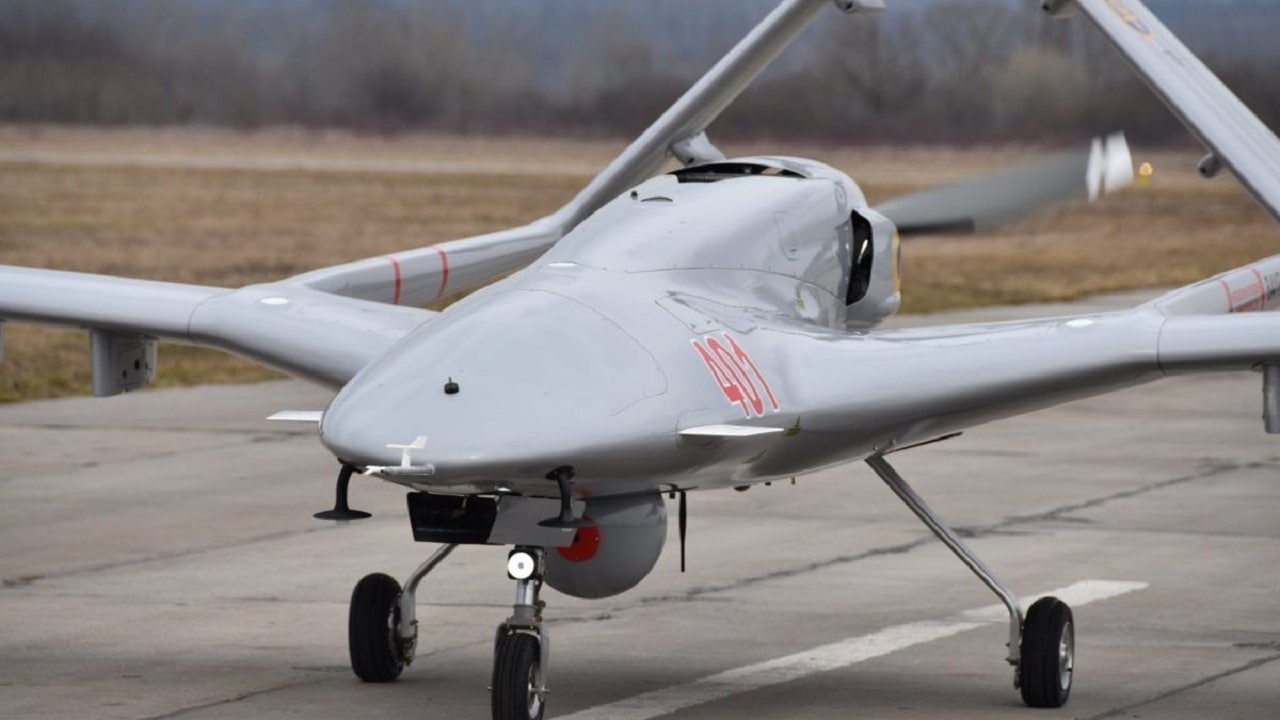
Bayraktar TB2 Drone of the Ukrainian Air Force.
Black Sea Fleet “Functionally Inactive”
From March through July 2022, Ukrainian naval operations were purely defensive. They exploited opportunities and conducted anti-access/area-denial operations near the coastline, and they halted Russian amphibious operations targeting areas west of the Dnipro River.
On June 30, the Ukrainians retook Snake Island. The U.N. brokered the Black Sea Grain Initiative on July 27. The Ukrainians sank the Alligator-class tank landing ship Saratov.
A year later, after Russia withdrew from the Black Sea Grain Initiative, the Ukrainians began an offensive against Russia’s fleet. The campaign’s goals were to neutralize the Black Sea Fleet and isolate the Crimean Peninsula, according to Dan White.
Ukrainian drone and missile attacks grew more deadly and showed the increasing sophistication of Ukraine’s homegrown drone capability. The Ukrainian Special Operations Forces conducted operations that disrupted Russian resupply efforts and troop movements. The Ukrainians recaptured the Boyko Towers oil rigs. One of their strikes took out Black Sea Fleet leaders in Sevastopol.
Since the war began, Ukraine has managed to sink or damage around one-third of Russia’s 74 ships of the Black Sea Fleet. Russian attempts to interdict Ukrainian grain shipments at sea have been largely negated. They are being forced to bomb grain stocks directly, a telling sign that things haven’t gone well.
Russia Forced To Withdraw Its Black Sea Fleet
But the biggest indictment of Russian naval power is that they were forced to move their fleet more than 200 miles—from Sevastopol in occupied Crimea to the safer port of Novorossiysk—because of the Ukrainian drone and missile attacks.
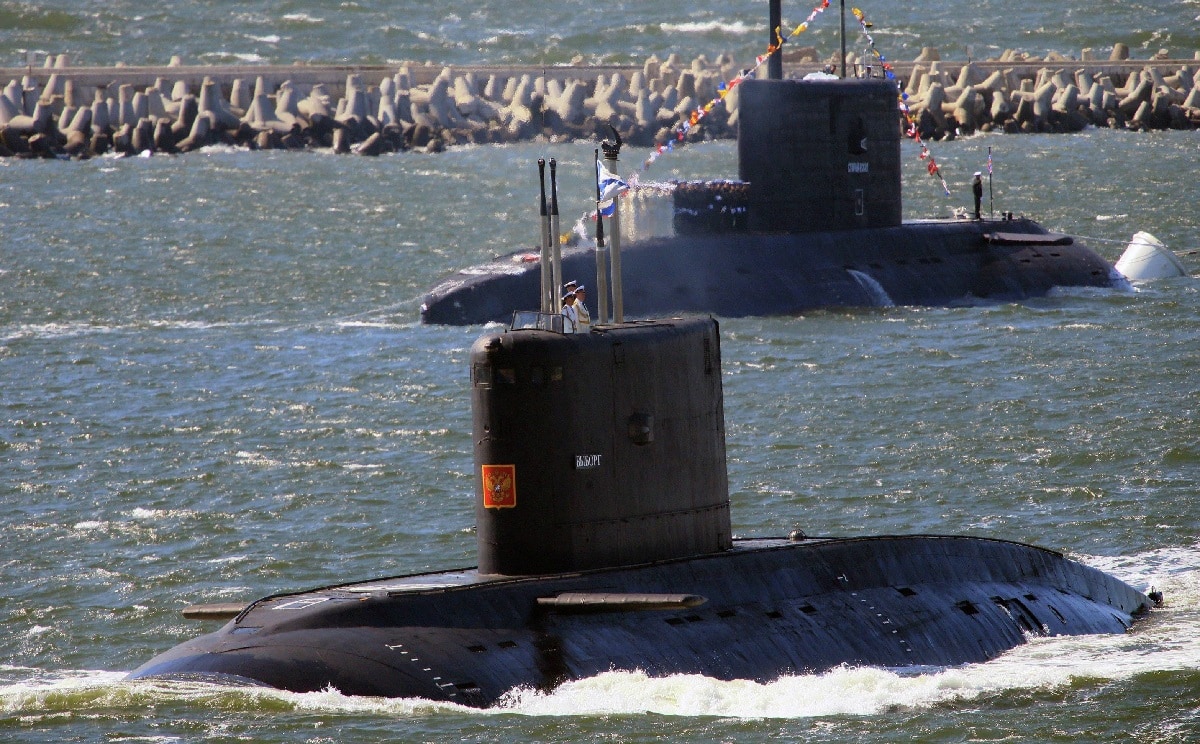
Russian Submarines. Image: Creative Commons.
“The Black Sea Fleet is an illustrative example,” Dmitry Rogozin, a senator for the Russia-controlled Zaporizhzhia region, said, Reuters reported. “It was forced to change, basically, its residence due to the fact that our large ships became just big targets for unmanned enemy boats.”
According to the British Ministry of Defense, the Russian Black Sea Fleet had become “functionally inactive ” by March 2024.
The Situation Grew Worse for Russia
The Black Sea is strategically important to Russia because it facilitates the transport of oil and gas to Europe and the Middle East. However, with just a ramshackle Navy, Ukraine has essentially won the Battle of the Black Sea.
On December 31, 2024, the Ukrainians conducted a drone strike using the Magura V5 naval drone and missiles. They destroyed two Russian Mi-8 helicopters. It was the first time a naval drone had downed a helicopter.
How Has Russia Reacted To The Debacle In The Black Sea?
Russia has shifted its Black Sea fleet strategy from aggressive patrolling to a defensive, rear-area posture. The navy now primarily serves as a standoff platform for long-range cruise-missile strikes—despite reduced visibility, vessels continue to launch Kalibr cruise missiles against Ukraine from these safer distances. Navy ships are restricted to the Eastern Black Sea to avoid detection and engagement, limiting their ability to project power or blockade effectively.
Basically, the Black Sea fleet has adopted a strictly defensive posture, with enhanced focus on protecting remaining assets, especially from two-stage, drone-based attacks.
“Although it has adapted to new challenges posed by Ukrainian operations against Russian civil and military naval infrastructures in the Black Sea, the [fleet] has not been able to overcome all the difficulties emanating from an asymmetric warfare at sea caused by the Ukrainians’ employment of naval drones and cruise missiles,” Igor Delanoe, deputy head of French-Russian Analytical Center Observo wrote for the Foreign Policy Research Institute.
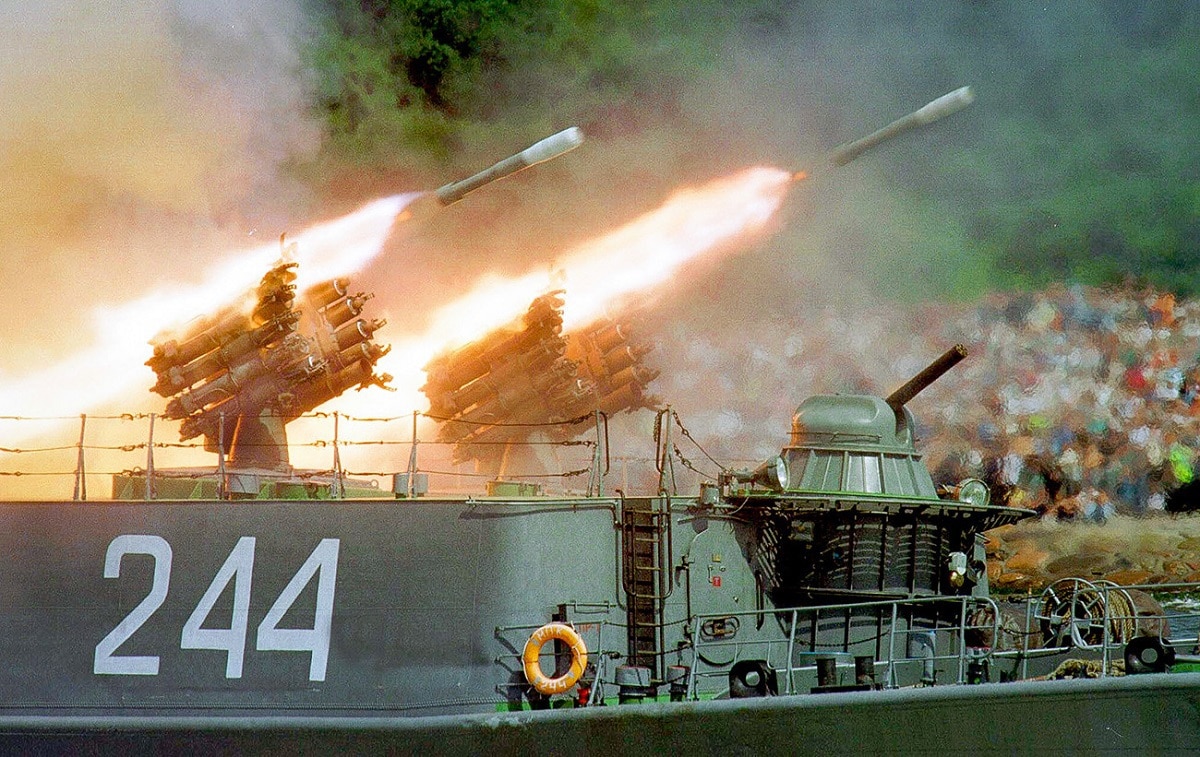
Merkuriy Corvette from the Russian Navy. Image: Russian State Media.
While the war of attrition still grinds on, the Ukrainians have achieved a clear-cut victory in the maritime domain. Russia’s weak attempts to threaten nuclear escalation ring as hollow as the emptiness of its fleet in the Black Sea.
“Russia is unlikely to replace this fleet, and its navy’s surface fleet will increasingly become a littoral force built around smaller surface combatants which operate close to Russian-held shores,” said Dr. Sidarth Khausal, a naval power expert at RUSI.
However, the Russian Navy overall is still a force to be reckoned with. Its current submarine fleet comprises seven ballistic missile submarines, five cruise-missile submarines, and nine nuclear-powered attack submarines, enabling Russia to target ships in the Norwegian Sea from the safety of its own waters. It has been severely weakened in the Black Sea—but Russia’s navy has not been eliminated.
About the Author: Steve Balestrieri
Steve Balestrieri is a National Security Columnist. He served as a US Army Special Forces NCO and Warrant Officer. In addition to writing on defense, he covers the NFL for PatsFans.com and is a member of the Pro Football Writers of America (PFWA). His work was regularly featured in many military publications.