
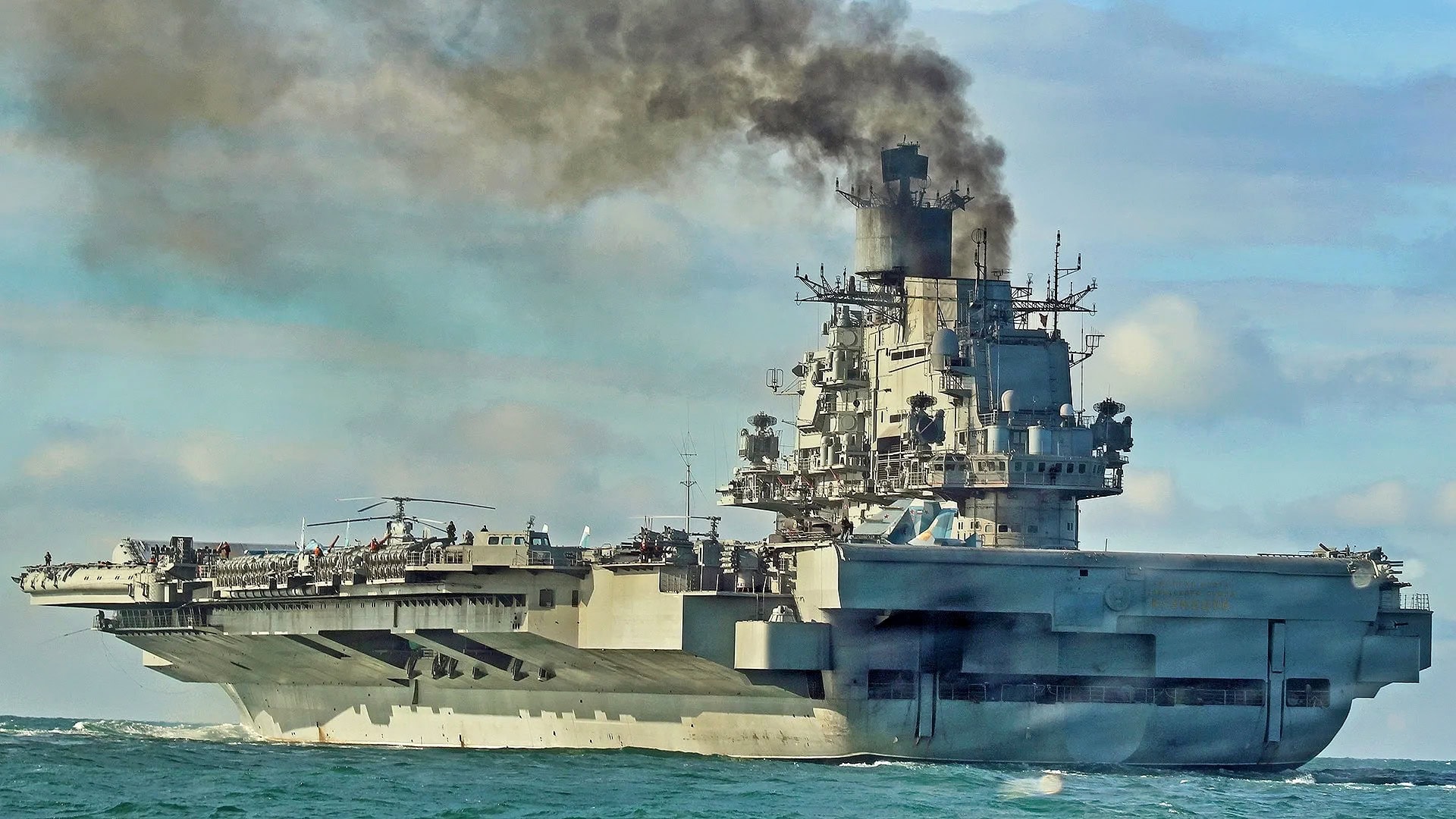
Summary and Key Points: In a move described by naval experts as “absolutely the right move,” the Russian Navy seems ready to retire the Admiral Kuznetsov in late 2025, opting to mothball the ship rather than continue its failed eight-year refit.
-Despite over $1 billion in investment, the carrier was plagued by persistent mechanical failures and the 2018 sinking of its primary drydock, the PD-50.
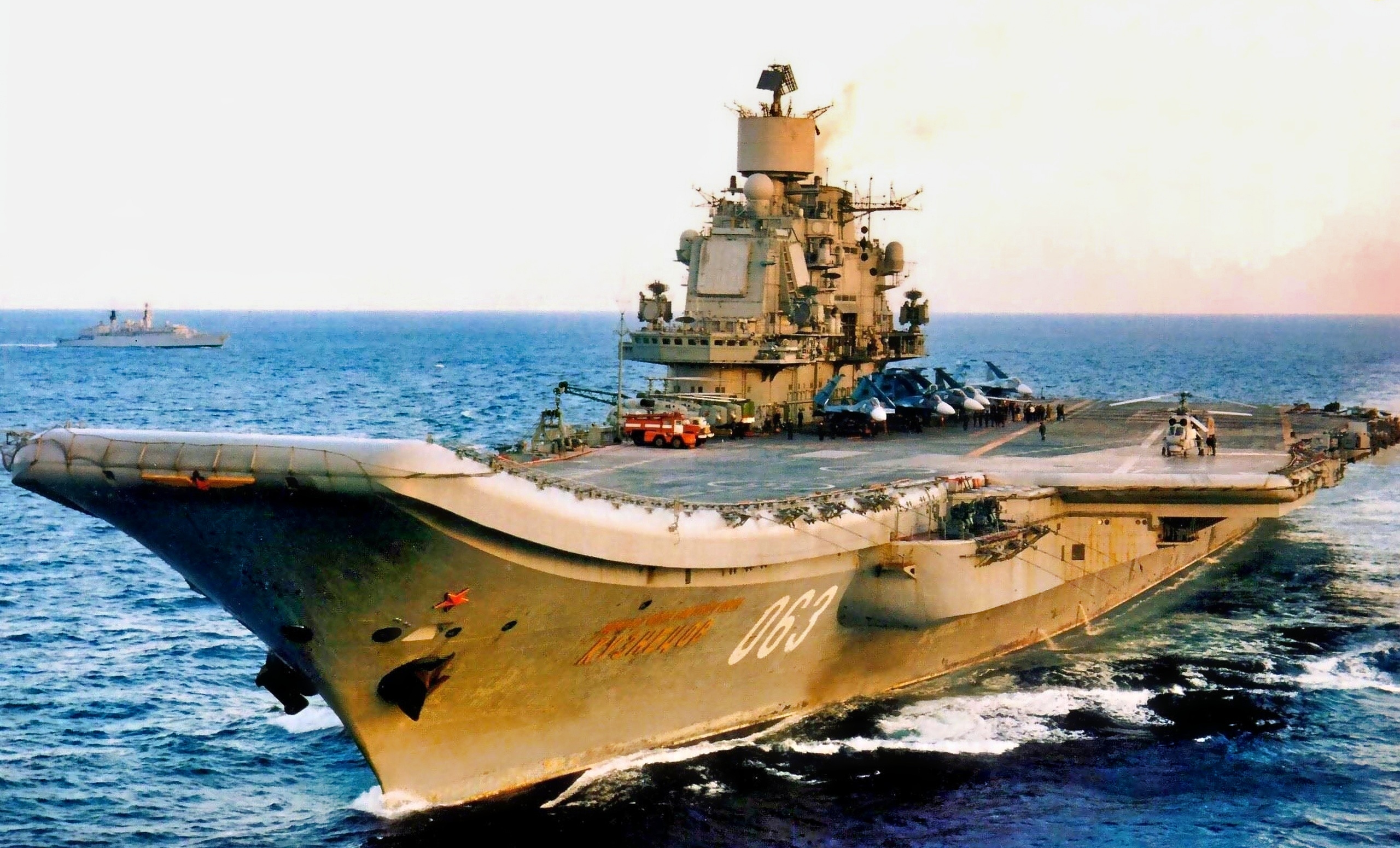
Russia Aircraft Carrier Admiral Kuznetsov. Image Credit: Creative Commons.
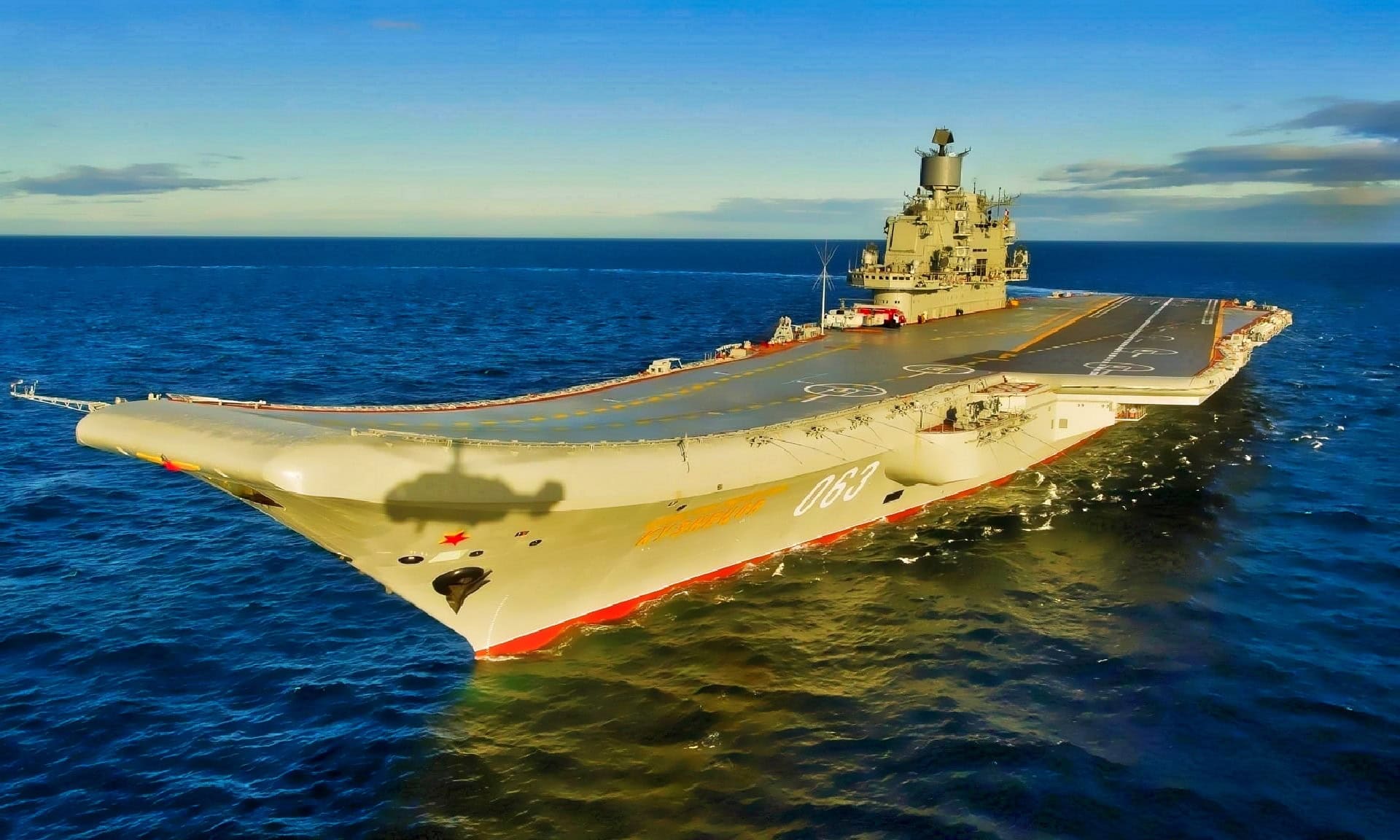
Admiral Kuznetsov Aircraft Carrier. Image Credit: Creative Commons.
-As Russia prioritizes the war in Ukraine and transitions toward robotic systems and unmanned aircraft, the retirement leaves Moscow as the only permanent UN Security Council member without an active carrier.
-The focus now shifts to salvaging the sunken PD-50 drydock.
End of an Error: Why Russia Finally Made the Call to Say Goodbye to Aircraft Carrier Admiral Kuznetsov
To quote a famous poem by Welshman Dylan Thomas: “Do not go gentle into that good night/Old age should burn and rave at close of day/Rage, rage against the dying of the light…Wild men who caught and sang the sun in flight/And learn, too late, they grieved it on its way/Do not go gentle into that good night … Grave men, near death, who see with blinding sight/Blind eyes could blaze like meteors and be gay/Rage, rage against the dying of the light.”
This is a very inspirational poem that embodies a warrior ethos. Indeed, it’s one of the favorite poems of retired FBI Special Agent Ed Mireles, one of the heroes of the 1986 Miami Firefight (this writer and former Federal agent is honored and privileged to count Ed as a personal friend).
But there’s a flip side to that exhortation. Mortal human beings and manmade objects alike have a finite shelf life. Accordingly, even some of history’s best weapons systems have to be retired sooner or later, from the P-51D Mustang fighter of World War II to the F-86 Sabre of the Korean War to the Beretta M9 service pistol to the soon-to-be-retired Nimitz-class nuclear-powered supercarriers.
And then there’s Russia’s lone aircraft carrier, the Admiral Kuznetsov (full official name Admiral Flota Sovetskogo Soyuza Kuznetsov [“Admiral of the Fleet of the Soviet Union Kuznetsov”]. No one in their right mind would categorize the Kuznetsov as “best” in any category; indeed, this writer would consider this star-crossed vessel to be one of the 5 Worst Aircraft Carriers ever.
So then, isn’t it way past time the Russian Navy—officially known as the Voyenno-morskoy flot Rossiyskoy Federatsii (“Navy of the Russian Federation”)—said “Da zvidanya” (Goodbye) to this warship and sent her to the scrapyard?
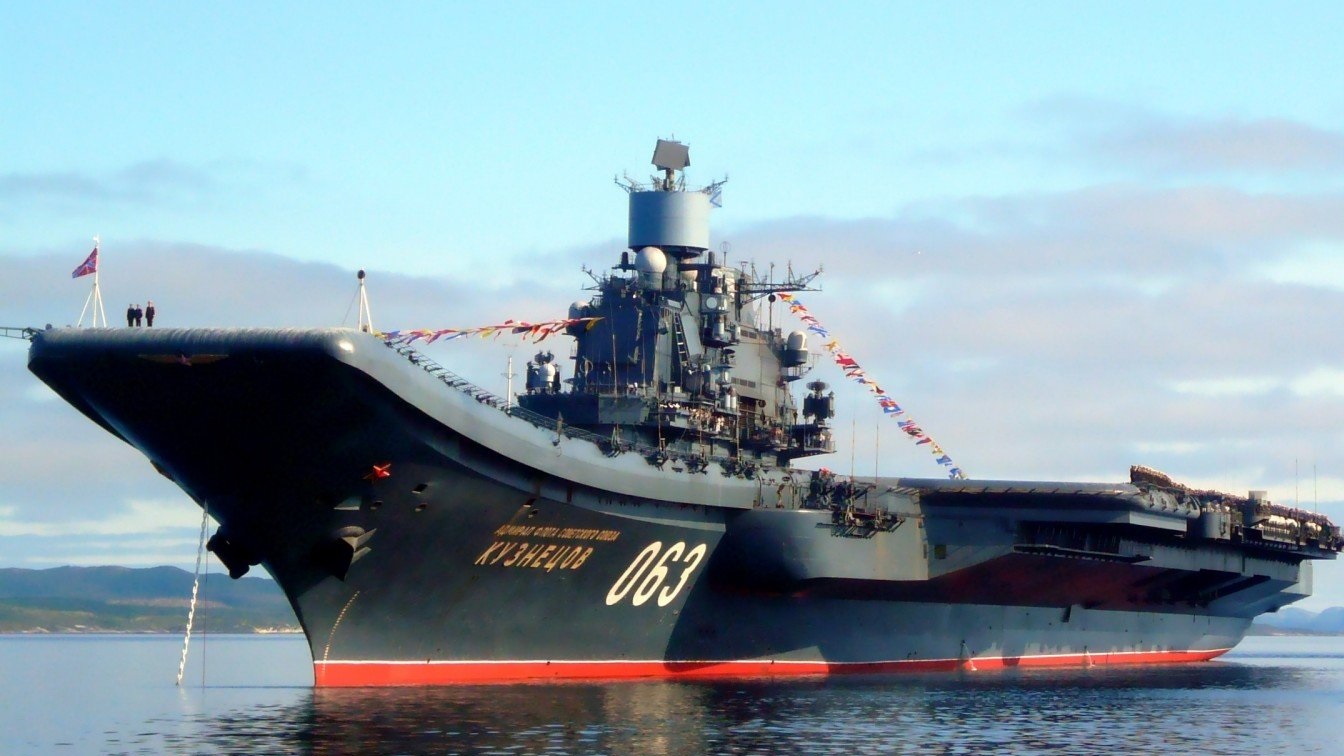
Admiral Kuznetsov. Image Credit: Creative Commons.
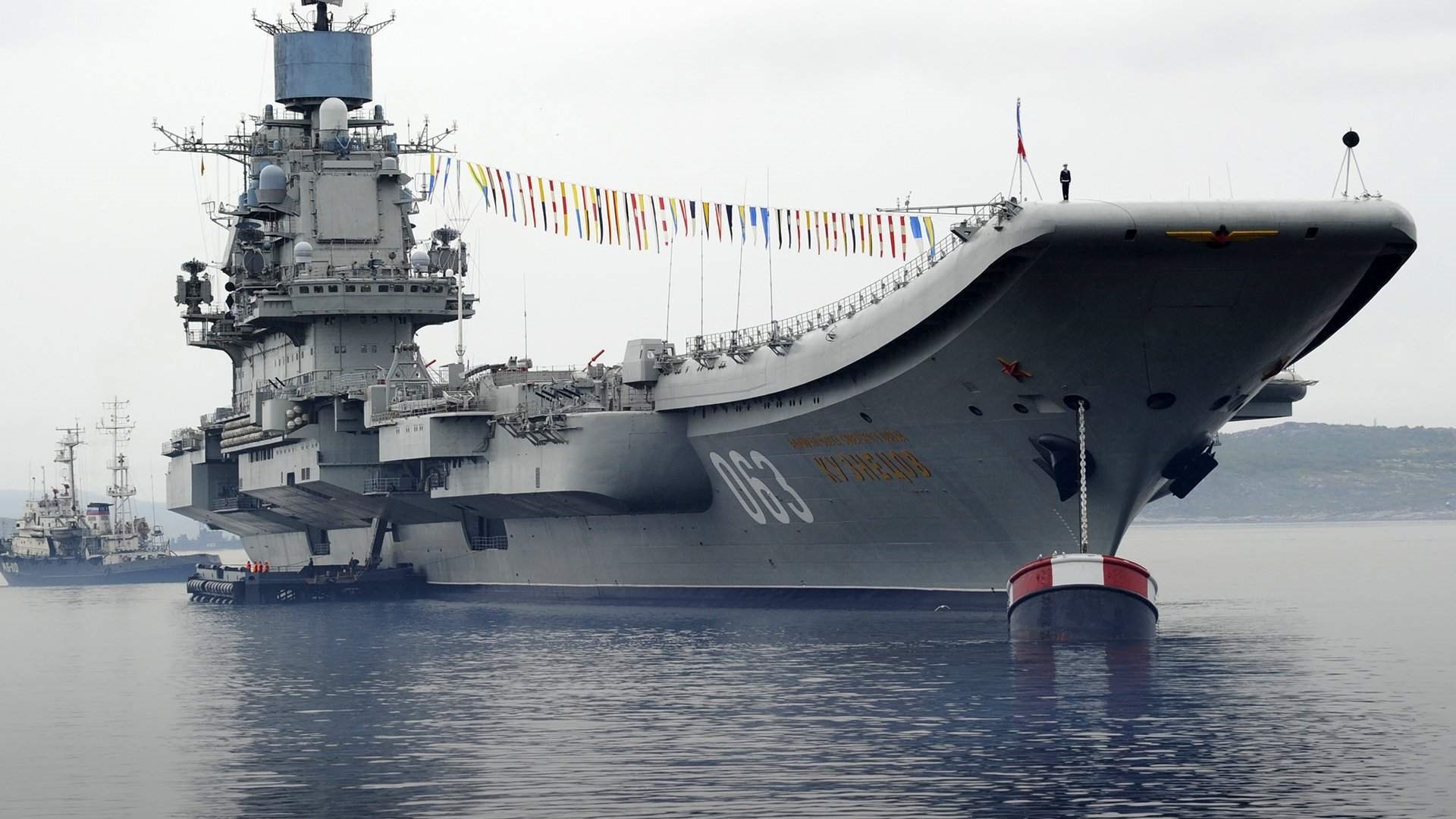
Admiral Kuznetsov, Russia’s last aircraft carrier. Image Credit: Creative Commons.
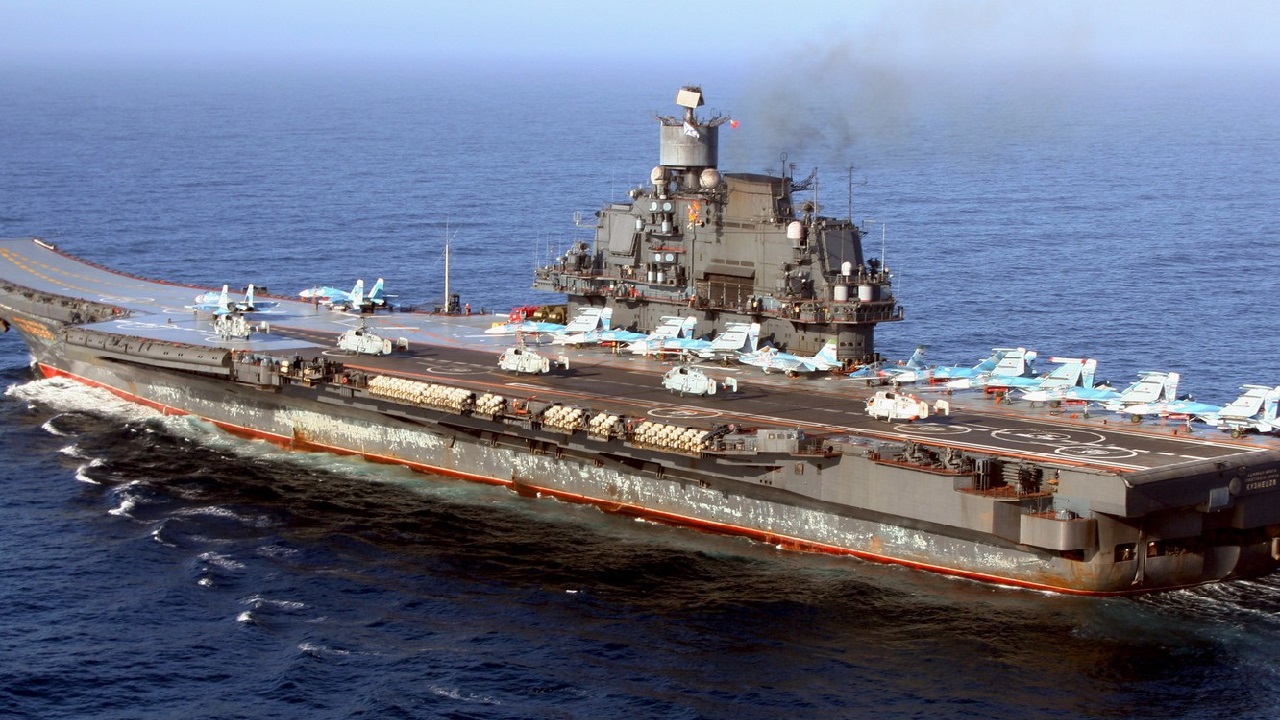
Admiral Kuznetsov Aircraft Carrier. Image Credit: Creative Commons.
Kurtain Kall [sic] for Admiral Kuznetsov
Well, the ship will finally be getting sent to the scrapyard sooner rather than later.
Peter Suciu discussed Kuznetsov’s fate in a December 30, 2025, article for Forbes titled “2025 Was The Year Russia Finally Retired Its Problem Aircraft Carrier.”
To wit: “The Kuznetsov is from a different era,’ Admiral Sergei Avakyants, the former commander of the Russian Navy’s Pacific Fleet, was quoted as stating in July [2025]. This is a very expensive and ineffective naval weapon. The future lies with robotic systems and unmanned aircraft.’…Avakyants called retiring the carrier ‘absolutely the right move’…In July, it was first reported that the ship wouldn’t be returned to service, and by the fall, the Kremlin opted to mothball the warship.”
It only took eight years of retrofitting efforts, along with the expenditure of “hundreds of millions, and possibly even more than a billion, U.S. dollars invested,” before the Russian Navy brass woke up to the harsh reality.
It remains to be determined if the Russians will actually scrap the carrier or try to sell it (the latter sounds extremely unlikely, given the ship’s checkered past, but as P.T. Barnum famously said, “There’s a sucker born every minute”)
Some American Experts’ Opinions
Drs. Richard Moss and Ryan Vest expressed their support for the overdue decommissioning decision in a September 2025 article for the U.S. Naval Institute publication Proceedings: “The decision to mothball the carrier is unsurprising. While it continues its war in Ukraine, Russia cannot afford to modernize the Admiral Kuznetsov, even if it does not want to be the only permanent U.N. Security Council member without a carrier.”

Russian aircraft carrier Admiral Kuznetsov (Picture source: Creative Commons.)
(NOTE: Dr. Moss is a founding member and professor in the Russian Maritime Studies Institute and Holloway Advanced Research Program at the U.S. Naval War College’s Center for Naval Warfare Studies, whilst Dr. Vest served for 23 years as a naval aviator, flying SH-60F, HH-60H, and MH-60S helicopters.)
Killing Kuznetsov, But Resurrecting Her Drydock?
Ironically enough, whilst the Kuznetsov may finally be put out to pasture, there’s actually serious talk of recovering and refloating the PD-50 floating dry dock, which sank in 2018 while servicing that accursed carrier! The Russian firm “Lenmorniiproekt” recently signed a contract to conduct an underwater inspection of the submerged structure, marking the first step toward its potential removal; the contract is valued at 240 million rubles (approximately $2.6 million USD).
The Original Admiral Kuznetsov: Who Was He?
So then, who exactly was the man who inspired the ship’s name (and who’s undoubtedly rolling over in his grave at the embarrassing performance of his mechanical namesake)?
His full name was Nikolai Gerasimovich Kuznetsov, and he lived from July 24, 1904, to December 6, 1974. He had the distinction of being both the 1st and 3rd Commander-in-Chief of the Soviet Navy, with his first term lasting from July 24, 1939, to January 17, 1947, and serving in senior command roles in the “Great Patriotic War” (World War II) and the Cold War alike.
In Admiral Kuznetsov’s own words, “I never suffered great ambition and did not try to climb to the top of the career ladder, but, admittedly, I dreamed of becoming the commander of a ship – large or small – and, standing on the bridge, control it But fate would have liked for several reasons, either to raise me high, or to throw me down and force me to start the service all over again. The proof of this is a literally unique change in my ranks. During all the years of my service, I was twice rear admiral, three times vice admiral, wore four stars on the uniform of the fleet admiral, and twice had the highest military rank in the fleet – Admiral of the Fleet of the Soviet Union.”
About the Author: Christian D. Orr, Defense Expert
Christian D. Orr is a Senior Defense Editor. He is a former Air Force Security Forces officer, Federal law enforcement officer, and private military contractor (with assignments worked in Iraq, the United Arab Emirates, Kosovo, Japan, Germany, and the Pentagon). Chris holds a B.A. in International Relations from the University of Southern California (USC) and an M.A. in Intelligence Studies (concentration in Terrorism Studies) from American Military University (AMU). He is also the author of the newly published book “Five Decades of a Fabulous Firearm: Celebrating the 50th Anniversary of the Beretta 92 Pistol Series.”