
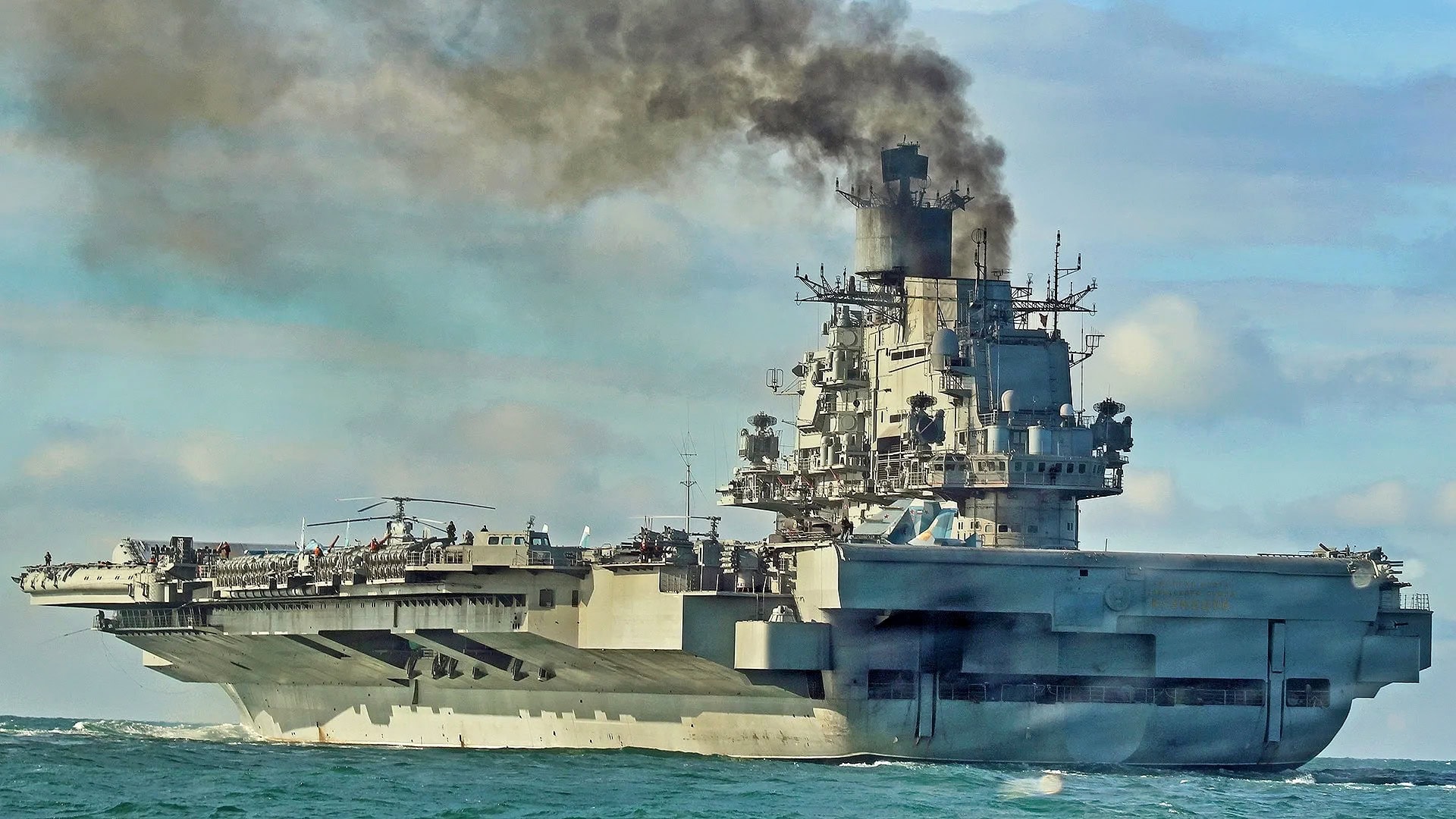
Key Points and Summary – Admiral Kuznetsov was never a normal carrier. Born as a “heavy aircraft-carrying cruiser” to slip through the Montreux Convention, it sailed with balky mazut engines, thick black smoke, and chronic breakdowns that made it the butt of NATO jokes.
-Yet Moscow kept it alive for decades after the Soviet collapse, using the ship to preserve carrier expertise, prop up shipyards, and signal great-power status from Syria to the Barents Sea.

Admiral Kuznetsov. Image Credit: Creative Commons.
-A botched refit, dry dock disaster, fires, and corruption finally pushed the program to the brink. Now, as Russia debates scrapping Kuznetsov, its lone carrier shows both ambition and decay.
Admiral Kuznetsov Is a Floating Disaster – and Moscow Kept It Anyway
The Admiral Kuznetsov is notorious for its grossly inefficient design, its mechanical problems, and the immense amount of funds the vessel has sucked up. Even back during the times of the USSR, when it was considered the crown jewel of the Soviet Navy, the carrier had its share of controversies and technical difficulties.
Yet despite it all, the carrier stayed afloat, mainly due to the tireless efforts of the Russians. So why did Russia invest so much in a horribly designed carrier that caused them nothing but grief?
Cursed By Design
From the very beginning, the Admiral Kuznetsov was a disaster waiting to happen. In fact, it is well-documented that the U.S. Navy feared she might sink.
It was laid down in 1982 at the Nikolayev South Shipyard in what is now Ukraine.
Initially named Riga, then Leonid Brezhnev, and later Tbilisi, it was finally commissioned as Admiral Flota Sovetskogo Soyuza Kuznetsov in 1995, after the collapse of the Soviet Union.
The ship was designed not as a conventional aircraft carrier, but as a “heavy aircraft-carrying cruiser.” The reason for this classification was of course, for a legal workaround that allowed the vessel to transit the Turkish Straits under the Montreux Convention (which restricts passage of aircraft carriers through the Bosporus). By equipping the ship with anti-ship missiles and classifying it as a cruiser, the Soviets ensured its strategic mobility.
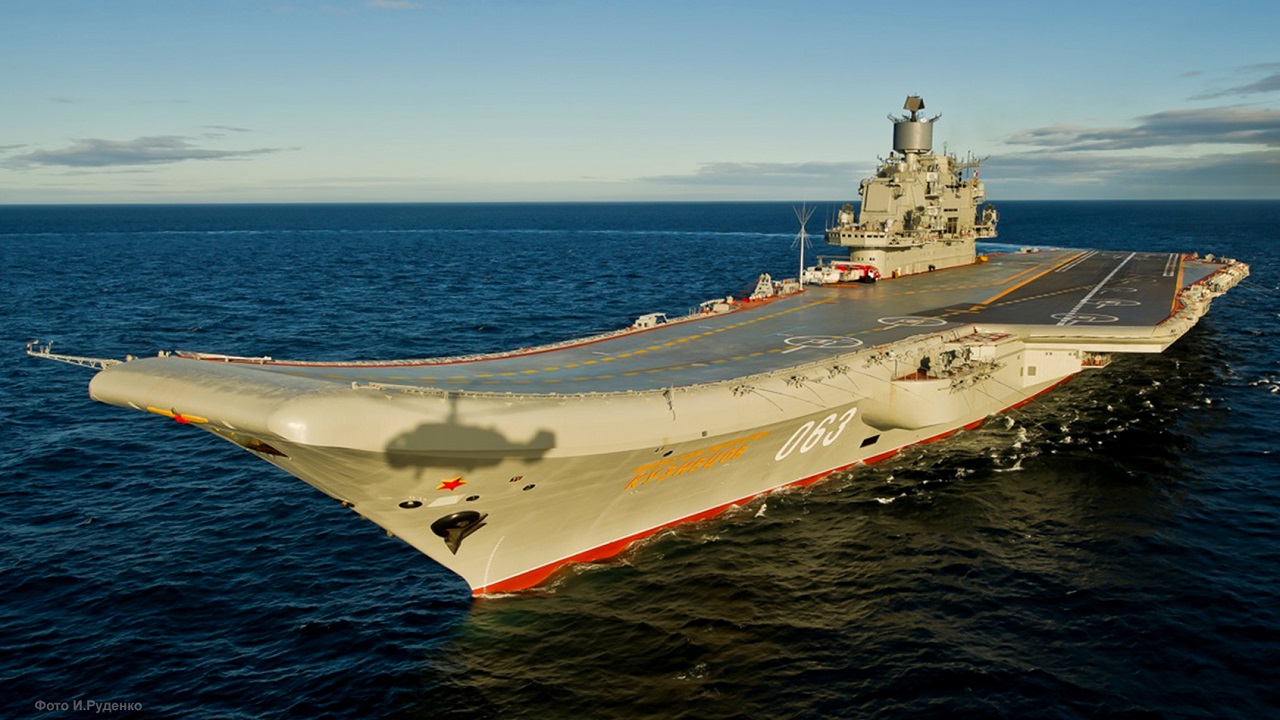
Russia’s Admiral Kuznetsov. Image Credit: Creative Commons.
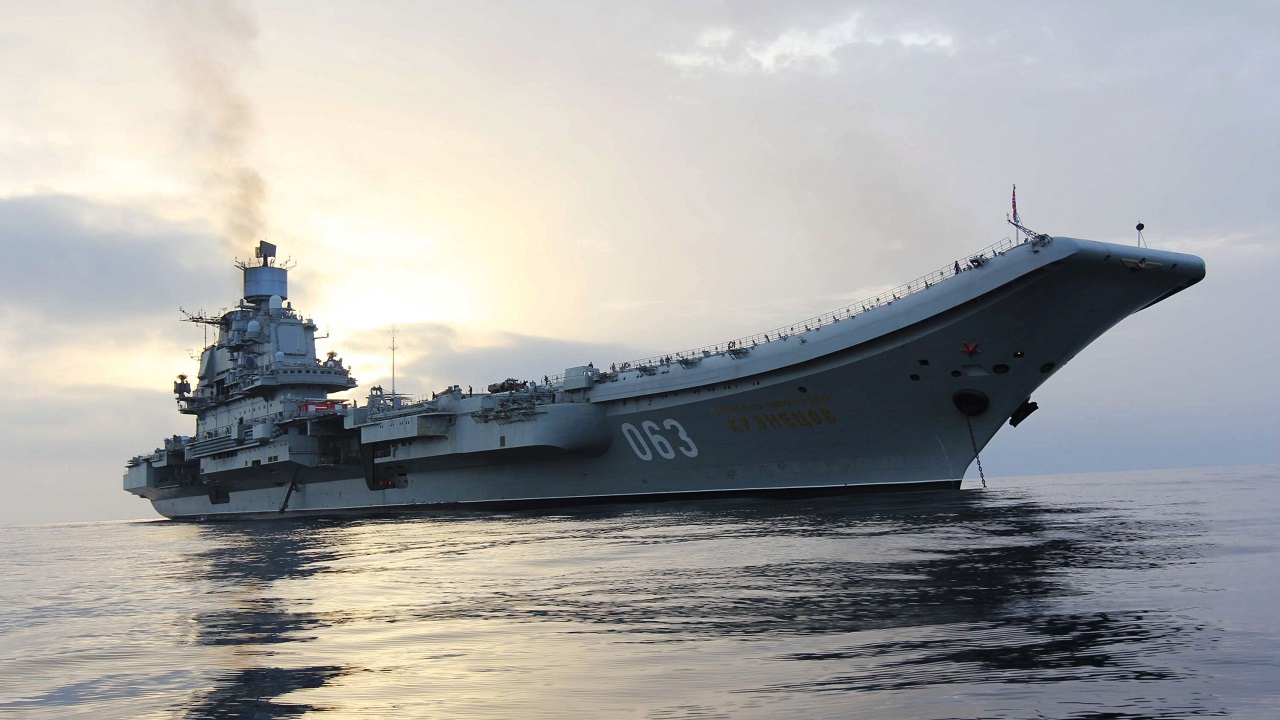
Admiral Kuznetsov Aircraft Carrier from Russia. Image Credit: Creative Commons.
From the outset, the Kuznetsov was intended to serve as a platform for naval aviation, enabling Russia to project air power from the sea.
It was equipped with a ski-jump ramp for launching aircraft, such as the Su-33 and later the MiG-29K, and carried a complement of helicopters for anti-submarine warfare. However, the ship’s operational history has been marred by persistent mechanical failures. Its propulsion system, which runs on mazut, has proven unreliable and inefficient, often requiring the ship to be escorted by tugboats. The engines produce thick black smoke, making the ship a visible and sometimes ridiculed presence on the high seas.
The Admiral Kuznetsov Stays Afloat… Somehow
When the USSR collapsed, the newly formed Russian Federation assumed command of this unreliable and accident-prone vessel while its economy was in a state of free fall. Low on funds and stuck with the problem child of the Soviet Union, it is somewhat amazing that the Admiral Kuznetsov managed to stay afloat the entire time.
The ship had a slew of technical problems during its many deployments, but the Admiral Kuznetsov carried on.
The Admiral Kuznetsov participated in several operations despite its precarious state. Its most notable deployment came in 2016, when it participated in Russia’s military intervention in Syria. The carrier launched airstrikes from the Mediterranean, although the mission was plagued by mishaps, including the loss of two aircraft due to arresting gear failures.
However, the deployment served a symbolic purpose: it demonstrated Russia’s intent to operate beyond its immediate borders and to maintain a blue-water navy capable of global reach.
Why Did the Russians Keep the Kuznetsov for So Long?
Despite everything, the Russians were set on restoring and modernizing the Admiral Kuznetsov instead of scrapping her and building a new carrier from scrap or building other ships. Why? Several factors explain this persistence.
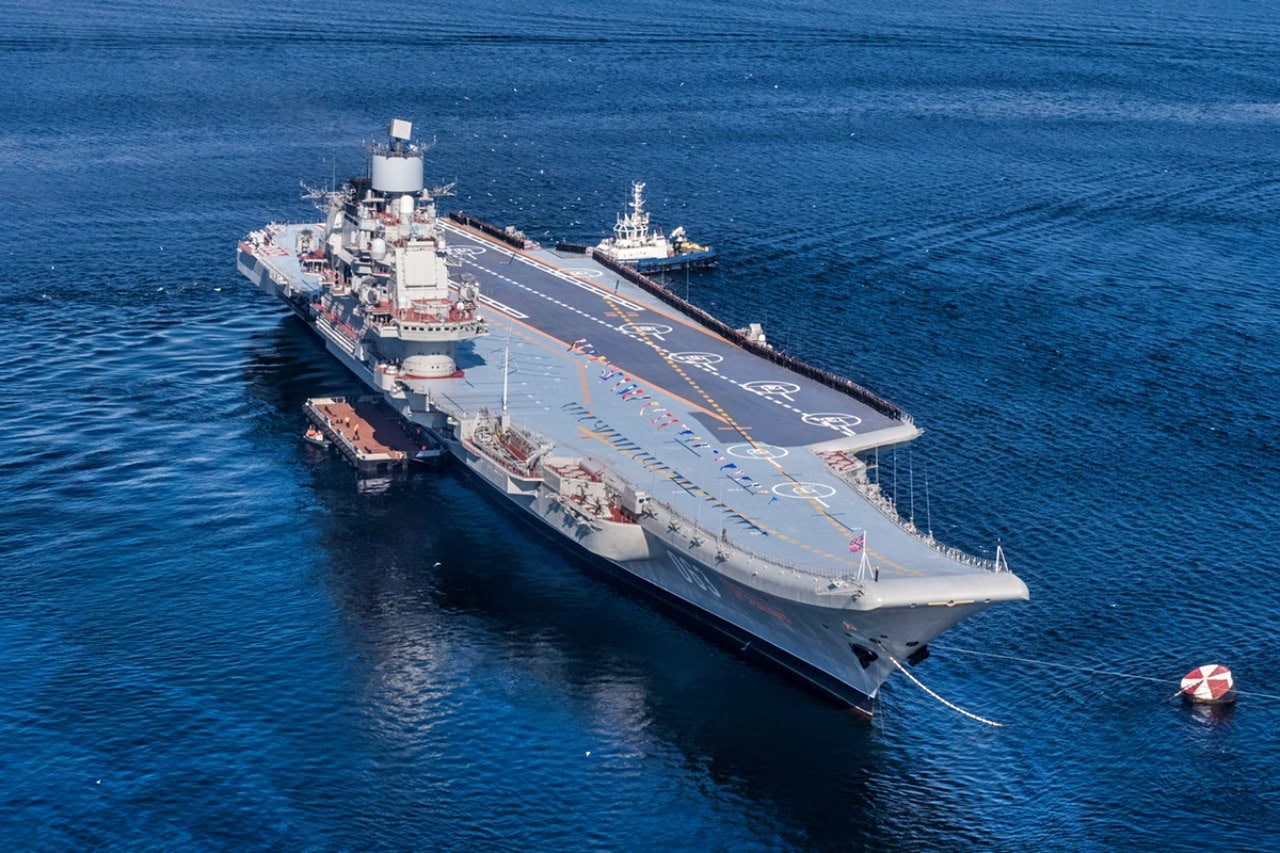
Aircraft Carrier Admiral Kuznetsov from Russian Navy.
First, the ship represents a repository of expertise. Carrier operations require specialized knowledge, and scrapping the vessel without a replacement would mean losing decades of accumulated experience. Second, the ship supports Russia’s shipbuilding and naval aviation industries, sustaining jobs and preserving technological know-how that could be vital for future projects. Third, the carrier serves as a geopolitical tool, allowing Russia to signal its intentions and capabilities to both allies and adversaries.
There is also an economic dimension to the carrier’s continued existence. Russia has earned substantial revenue from carrier-related exports, and maintaining the Kuznetsov helps keep this market alive.
The ship’s presence in international waters, even if limited, reinforces Russia’s image as a capable military power and supports its broader strategic goals.
Admiral Kuznetsov: A Symbol of Russian Perseverance
If there is one word that describes Russia throughout history, it is resilient. In a world where aircraft carriers are seen as hallmarks of great power status, Putin’s insistence on keeping the ship operational reflects a desire to remain in the club of naval powers.
The carrier is a visible manifestation of Russia’s military ambitions and a tool for geopolitical signaling. When it sails into contested waters, it sends a message that Russia is willing to assert its presence and challenge Western dominance.
However, just as the Admiral Kuznetsov is a symbol for Russia’s aspirations, it is also a symbol of its current realities. Since 2017, the ship has undergone a refit intended to extend its service life and enhance its combat capabilities.
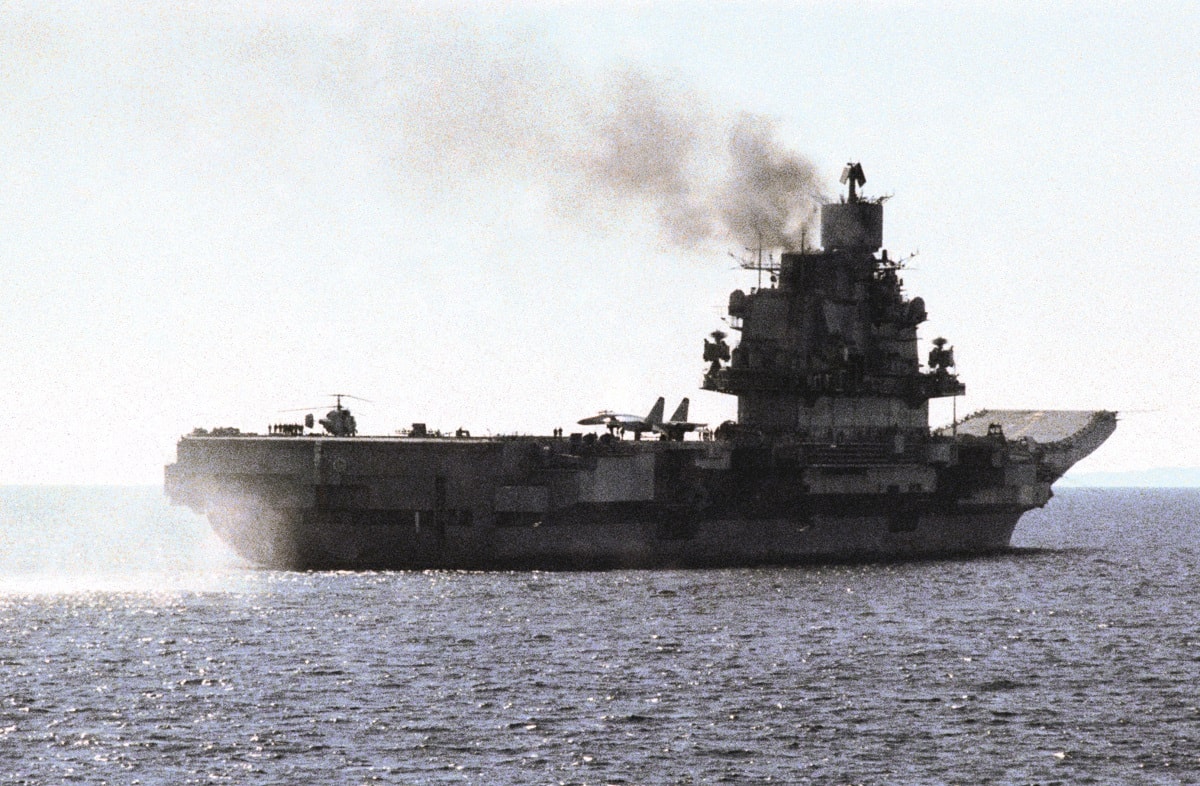
A starboard quarter view of the Russian Navy Northern Fleet aircraft carrier ADMIRAL FLOTA SOVETSKOGO SOYUZA KUSNETSOV exercising at sea.
This effort has faced repeated delays and setbacks. In 2018, a crane collapsed onto the flight deck during a dry dock accident, causing significant damage.
The sinking of the PD-50 dry dock, one of the largest in Russia, further hampered the modernization process.
Fires in 2019 and 2022 added to the woes, and corruption scandals involving shipyard officials have cast a shadow over the entire project.
End of the Line?
As of 2025, Russia may be preparing to retire the Admiral Kuznetsov. Modernization work has been suspended, and discussions are underway regarding the scrapping or sale of the vessel. If it were to retire, Russia would become the only permanent member of the UN Security Council without an operational aircraft carrier.
While there have been proposals to replace it, as of 2017, Russia has not yet committed to any new carrier project; instead, it has invested in other smaller vessels.
About the Author: Isaac Seitz
Isaac Seitz, a Defense Columnist, graduated from Patrick Henry College’s Strategic Intelligence and National Security program. He has also studied Russian at Middlebury Language Schools and has worked as an intelligence Analyst in the private sector.