
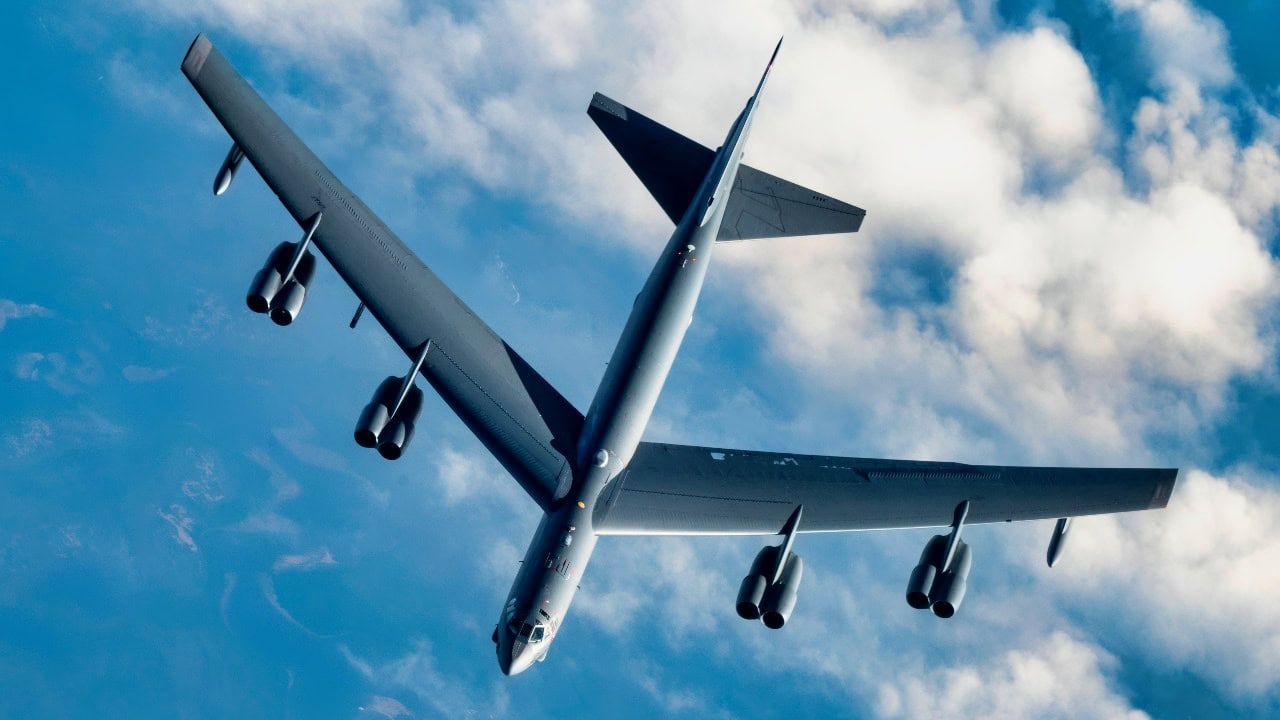
Summary and Key Points: As of February 24, 2026, the B-52 Stratofortress is evolving into the B-52J, a modernized “stand-off” platform designed to remain lethal through its 100th anniversary.
-A new $2 billion contract with Boeing facilitates the installation of Rolls-Royce F130 engines, while the recent integration of AN/APQ-188 AESA radar provides fighter-like targeting.
-By launching long-range weapons like the AGM-181 LRSO (1,500+ mile range) and hypersonic missiles from outside contested airspace, the B-52J bypasses the need for stealth, serving as a high-capacity “missile truck” that complements the penetrating capabilities of the incoming B-21 Raider.
The 100-Year Bomber: Why the New B-52 Upgrade is 2026’s Most Defiant Military Move
In January 2026, the U.S. Air Force signed a $2 billion contract with Boeing to begin installing new Rolls-Royce F-130 engines on B-52 bombers as part of a sweeping modernization effort designed to keep the aircraft operational into the 2050s.
The upgraded version, known as the B-52J, will also receive a new radar and other systems, ensuring the aircraft remains viable nearly a century after its original introduction.
At first glance, this seems counterintuitive. The B-52 Stratofortress entered service in the 1950s and lacks stealth capabilities, making it theoretically vulnerable to modern air defenses. Yet the aircraft remains central to U.S. strategic planning in 2026.
The reason is simple: the B-52 no longer needs to fly over enemy territory to destroy targets. Instead, it launches long-range stand-off missiles from enormous distances, allowing it to strike heavily defended targets while staying far outside the reach of enemy air defenses.
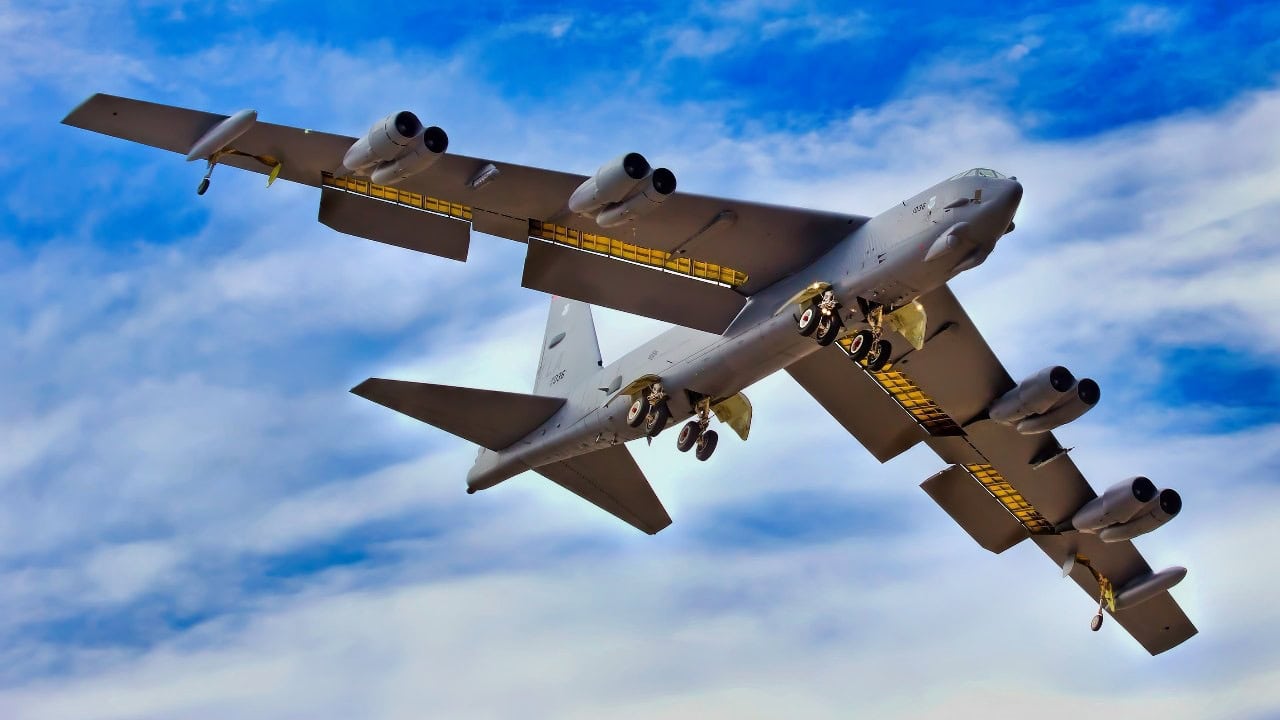
B-52 Bomber. Image Credit: Creative Commons.
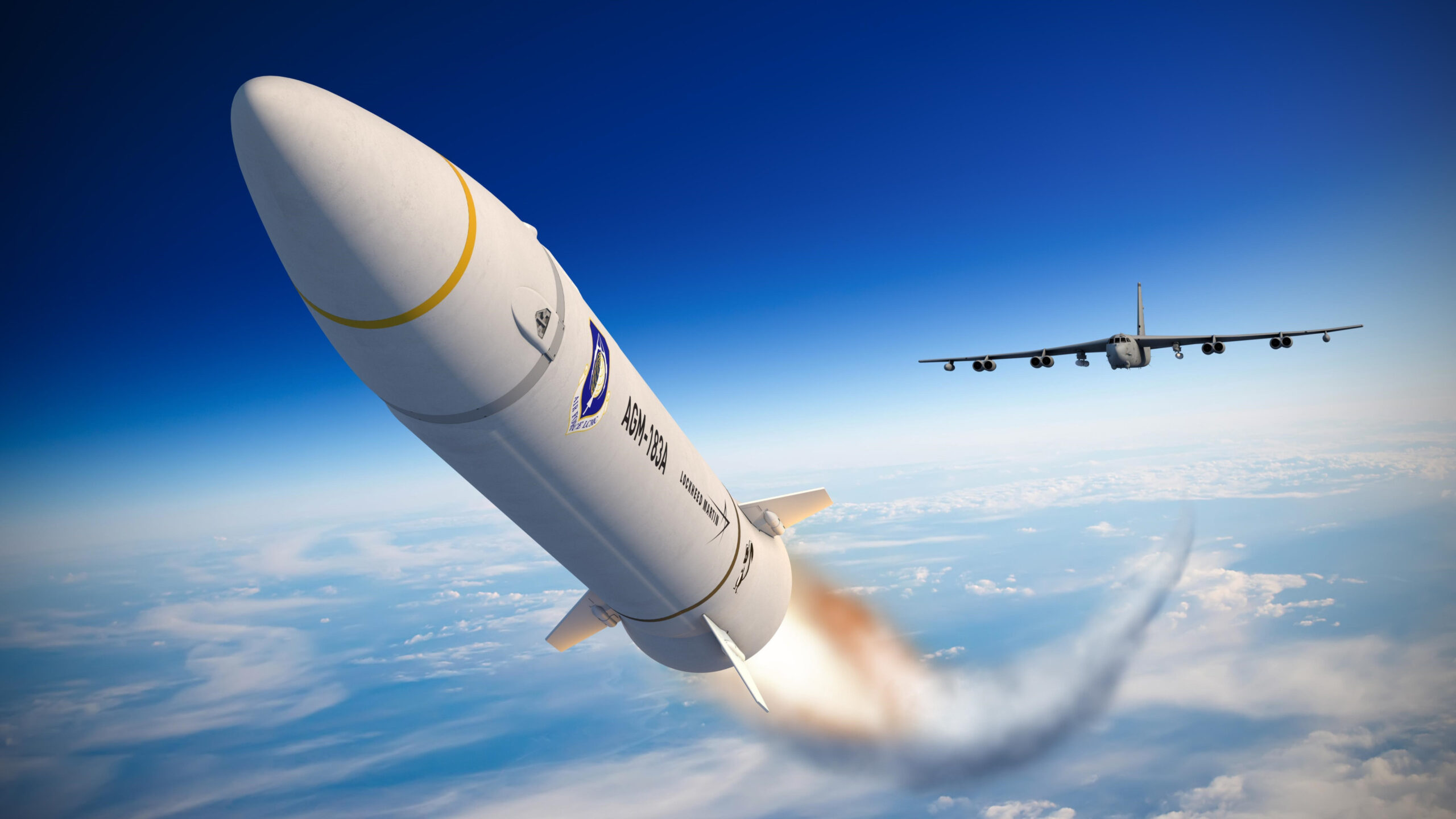
Hypersonic Missiles fired from B-52. Image Credit: Creative Commons.
The B-52 survives today not because it can evade modern defenses, but because its weapons and range allow it to attack from beyond them.
The B-52’s Stand-off Weapons
The most important reason the B-52 remains relevant in 2026 is its ability to launch stand-off weapons. Unlike stealth bombers such as the B-2 and B-21, which penetrate enemy airspace, the B-52 primarily serves as a long-range missile carrier.
The aircraft can carry up to 20 air-launched cruise missiles, including the AGM-86, thereby significantly expanding its ability to strike targets from great distances while minimizing risk to the bomber itself.
The missiles are specifically designed to allow bombers to attack targets without directly entering defended airspace, complicating enemy defenses and increasing survivability.
Newer weapons are further extending this capability. The AGM-181 Long-Range Stand-Off (LRSO) missile, now under development and expected to be deployed on B-52 bombers, is projected to have a range exceeding 1,500 miles, allowing strikes from well outside enemy defensive networks.
Upgrades like these fundamentally change the bomber’s role. Rather than relying on speed or stealth to survive, the B-52 relies on distance: it launches weapons from hundreds of miles away, turning the aircraft into what military planners call a “stand-off strike platform.”
Massive Payload
The B-52’s enormous payload capacity is another key factor in its continued relevance. The aircraft can carry a wide array of weapons, including cruise missiles, precision-guided bombs, and other stand-off munitions, making it one of the most flexible strike platforms in the U.S. arsenal.
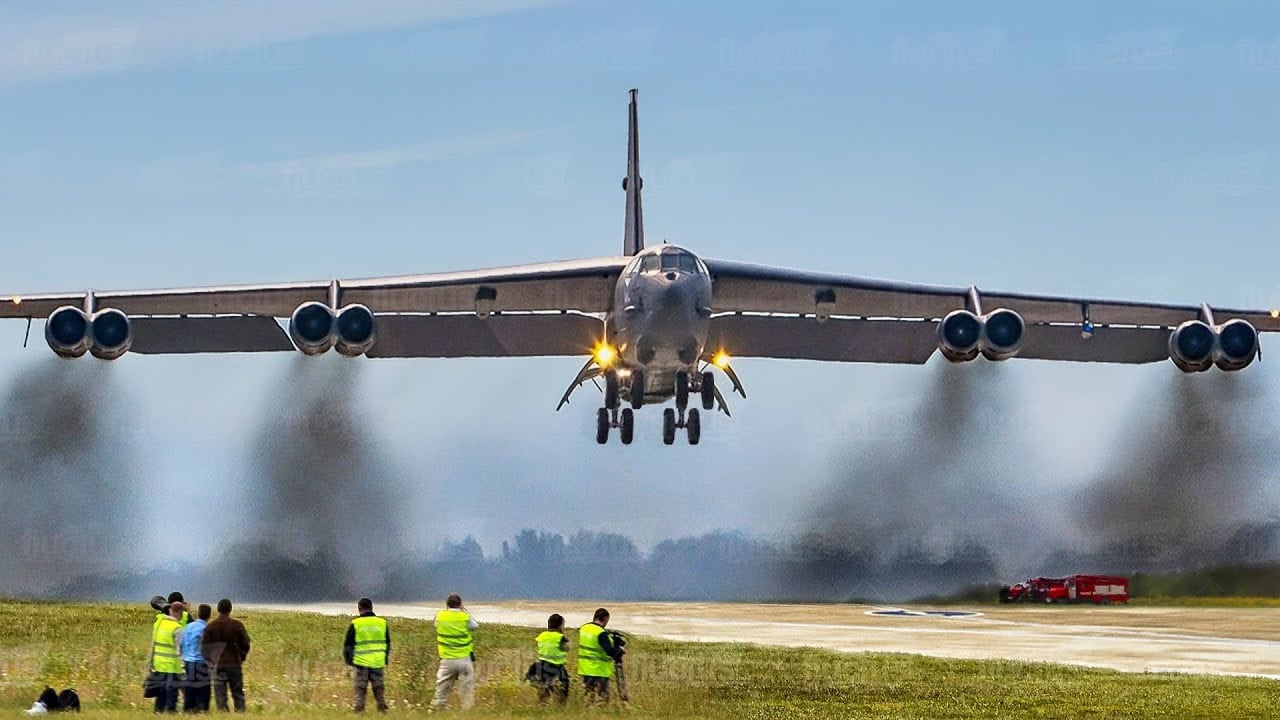
B-52 Bomber. Image Credit: Creative Commons.
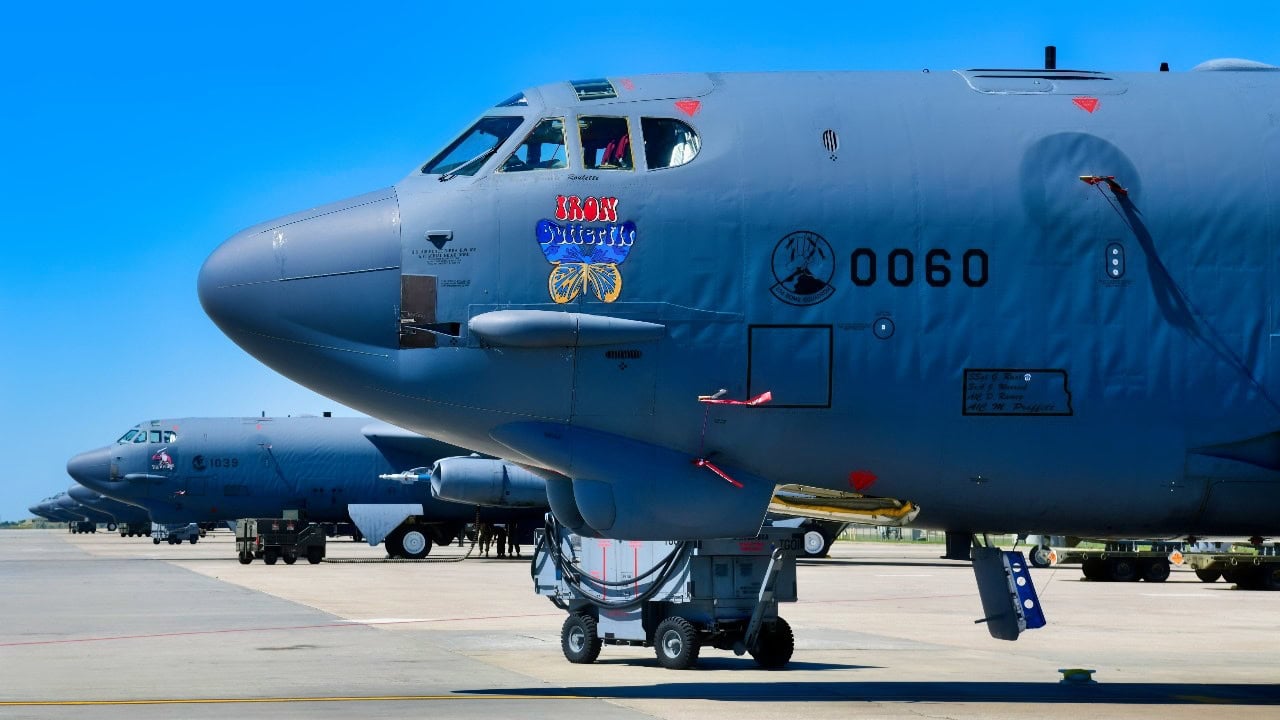
Multiple B-52H Stratofortresses sit parked on the flight line on Minot Air Force Base, North Dakota, Aug. 8, 2022. The B-52 Bomber has been in service since February of 1955. (U.S. Air Force photo by Airman Alysa Knott)
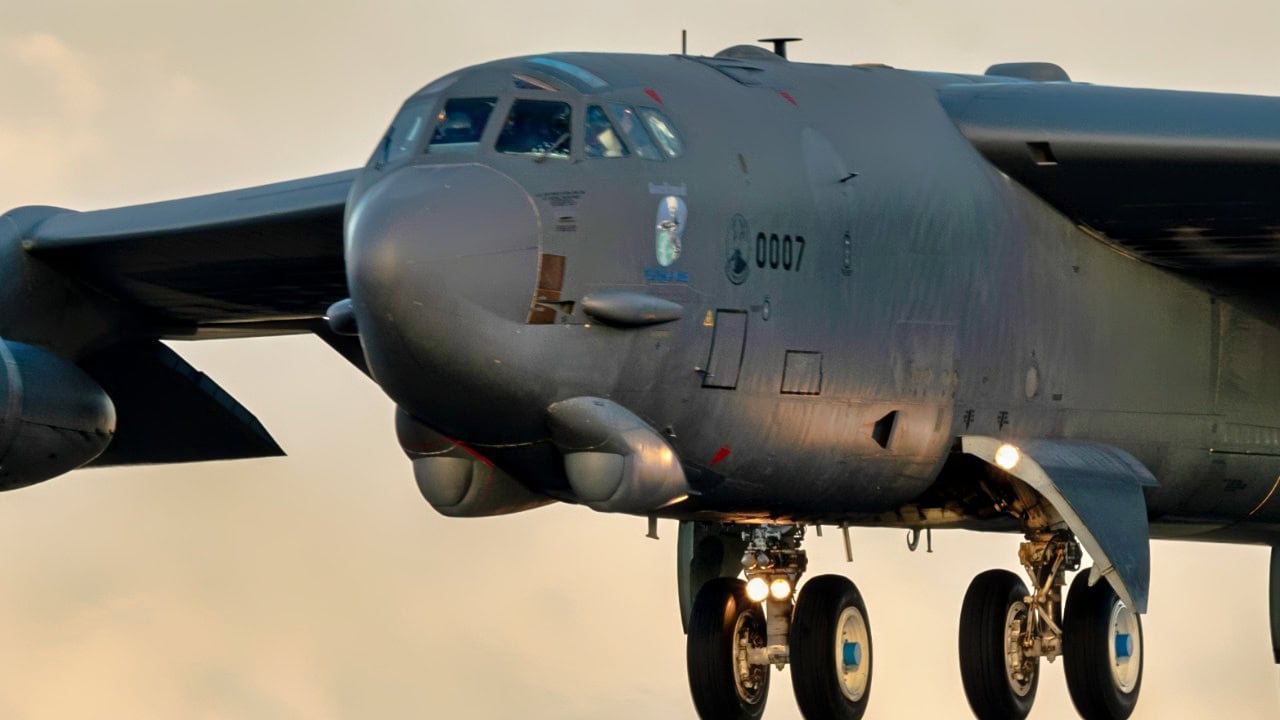
U.S. Air Force B-52H Stratofortress lands at RAF Fairford, England, following a sortie in support of Bomber Task Force 25-2, Feb. 27, 2025. The U.S. maintains a strong, credible strategic bomber force that enhances the security and stability of Allies and partners. (U.S. Air Force photo by Airman 1st Class Luis Gomez)
It can carry up to 20 cruise missiles in a single sortie, enabling it to execute large, coordinated strikes.
That matters because modern air defense systems are designed to intercept incoming threats – but they can be overwhelmed. Launching large numbers of cruise missiles simultaneously forces defenders to track and intercept multiple targets at once, increasing the likelihood that some will succeed.
That capability was demonstrated during Operation Desert Storm in 1991, when B-52 bombers launched long-range cruise missile strikes against Iraqi targets, initiating the air campaign without exposing the bombers themselves to direct attack.
Even today, that ability to deliver large volumes of stand-off weapons remains a central component of U.S. airpower.
Extraordinary Range for B-52 Bomber
Beyond its weapons, the B-52’s range itself is one of its greatest strengths. The aircraft has an unrefueled combat range exceeding 8,800 miles, allowing it to operate across continents without landing.
With aerial refueling, its range becomes virtually unlimited, constrained primarily by crew endurance rather than fuel capacity. That allows the bomber to launch missions from bases thousands of miles away from the battlefield.
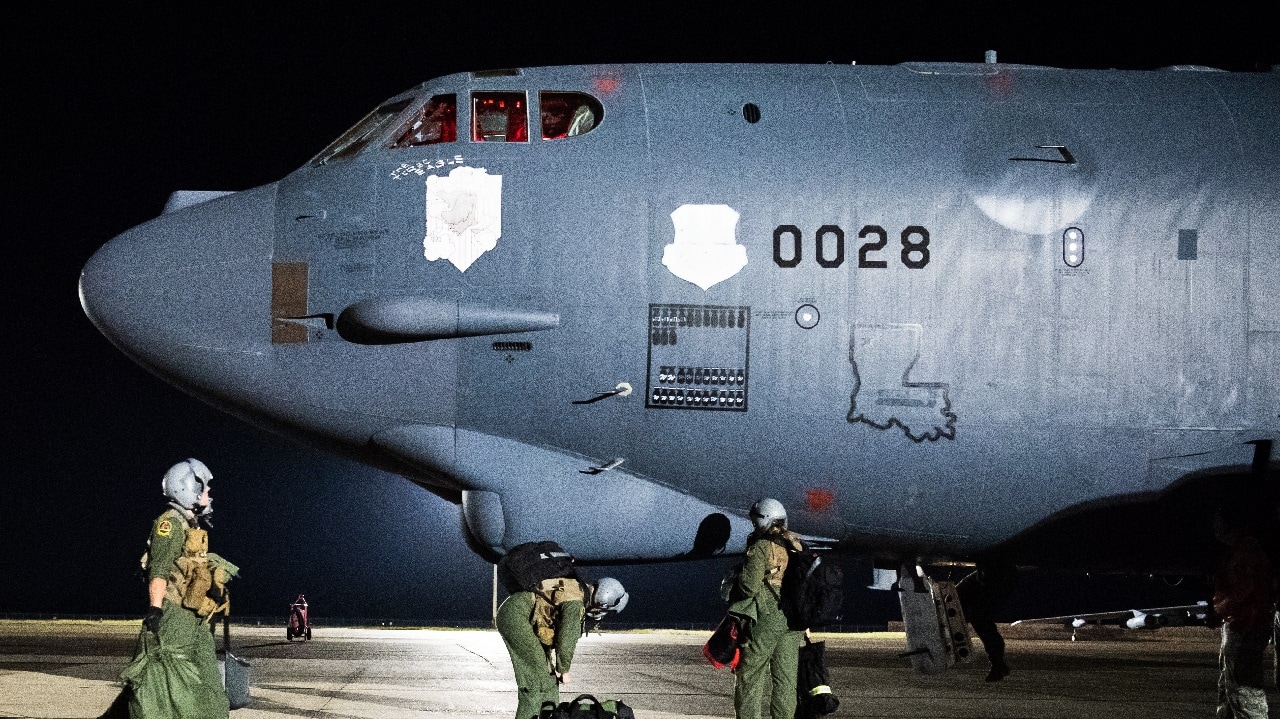
Airmen from the 96th Bomb Sqaudron load gear onto a B-52H Stratofortress at Barksdale Air Force Base, La., Oct. 13, 2020. The crew took part in a NATO crossover exercise designed to increase interoperability with NATO mission partners. (U.S. Air Force photo by Airman 1st Class Jacob B. Wrightsman)
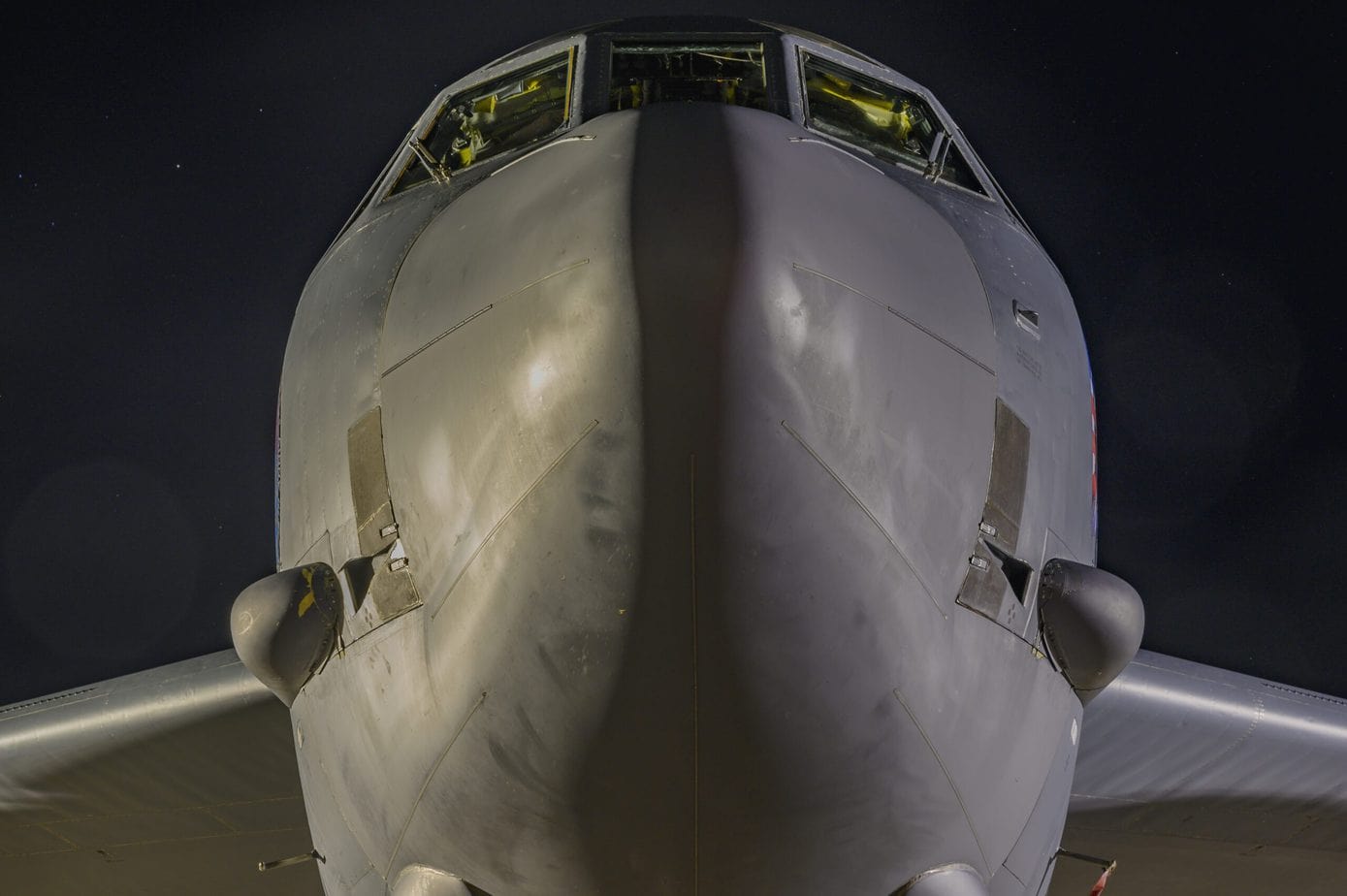
A U.S. Air Force B-52 Stratofortress assigned to Barksdale Air Force Base, La., is prepared for a Mark-82 munitions load, in support of a Bomber Task Force deployment, Feb. 1, 2020, at Andersen Air Force Base, Guam. The bomber deployment underscores the U.S. military’s commitment to regional security and demonstrates a unique ability to rapidly deploy on short notice. (U.S. Air Force photo by Senior Airman Jacob M. Thompson)
Such global reach is critical to modern deterrence. The United States can deploy B-52 bombers to distant regions without needing local bases near hostile territory. From those distant positions, the aircraft can launch stand-off strikes while remaining safely outside contested airspace.
Modern Upgrades Ensure Continued Relevance for This Air Force Bomber
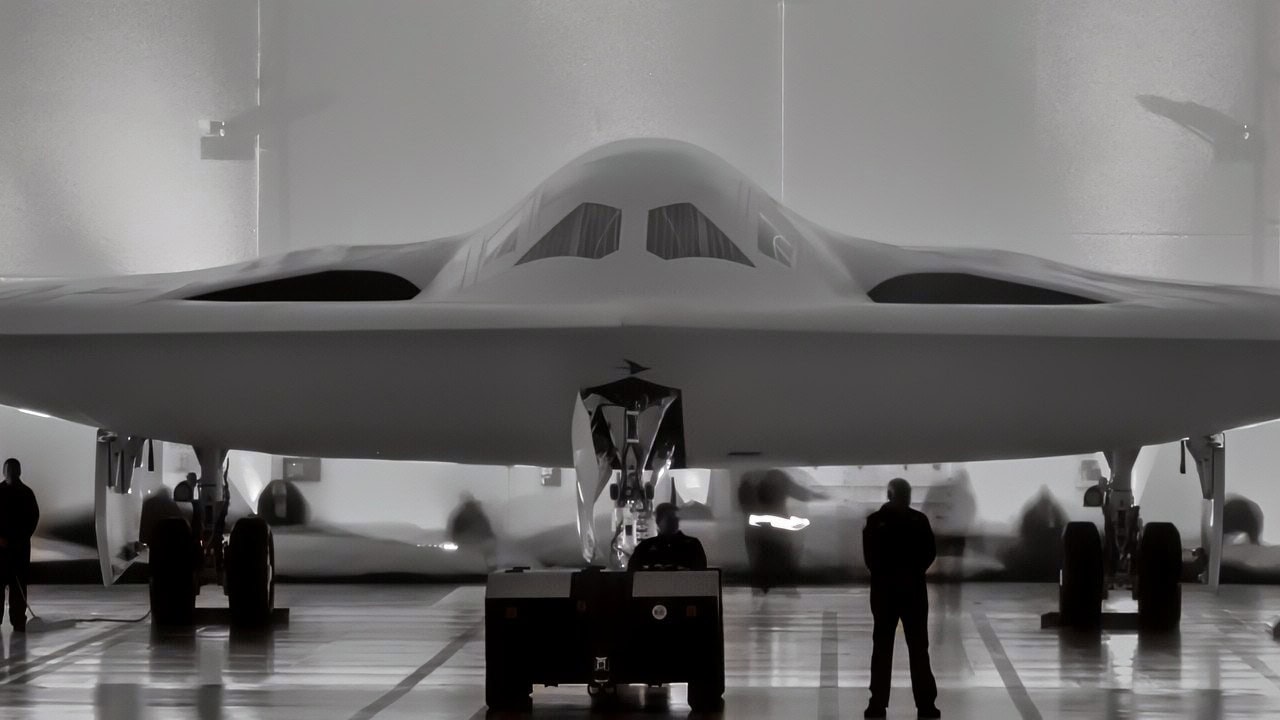
A B-21 Raider is unveiled at Northrop Grumman’s manufacturing facility on Air Force Plant 42 in Palmdale, California, Dec. 2, 2022. The B-21 will be a long-range, highly survivable, penetrating strike stealth bomber capable of delivering both conventional and nuclear munitions. (U.S. Air Force photo by Airman 1st Class Joshua M. Carroll)

U.S. Air Force Airmen with the 912th Aircraft Maintenance Squadron prepare to recover the second B-21 Raider to arrive for test and evaluation at Edwards AFB, Calif., Sept. 11, 2025. The arrival of a second test aircraft provides maintainers valuable hands-on experience with tools, data and processes that will support future operational squadrons. (U.S Air Force photo by Kyle Brasier)
The recent engine and radar upgrades now underway are designed specifically to enhance the B-52’s stand-off strike role.
The new Rolls-Royce F130 engines and modern radar systems will improve reliability, fuel efficiency, and targeting capability, ensuring the aircraft remains operational into the 2050s. It means the bomber will operate more efficiently and support future weapons systems, including next-generation cruise missiles.
Importantly, the Air Force has already defined the B-52’s role in the future bomber force as a stand-off strike platform. In contrast to stealth bombers designed to penetrate defended airspace, the B-52 will remain outside enemy defenses while launching long-range weapons.
To this day, the B-52 – despite its age – is still one of the most effective bombers in the world because of its incredible range and ability to carry large numbers of stand-off weapons. Although it will eventually be replaced, and the U.S. is poised for a record number of new long-range stealth bombers as the B-21 Raider program matures, the B-52 has many years ahead of it.
About the Author:
Jack Buckby is a British researcher and analyst specialising in defence and national security, based in New York. His work focuses on military capability, procurement, and strategic competition, producing and editing analysis for policy and defence audiences. He brings extensive editorial experience, with a career output spanning over 1,000 articles at 19FortyFive and National Security Journal, and has previously authored books and papers on extremism and deradicalisation.