
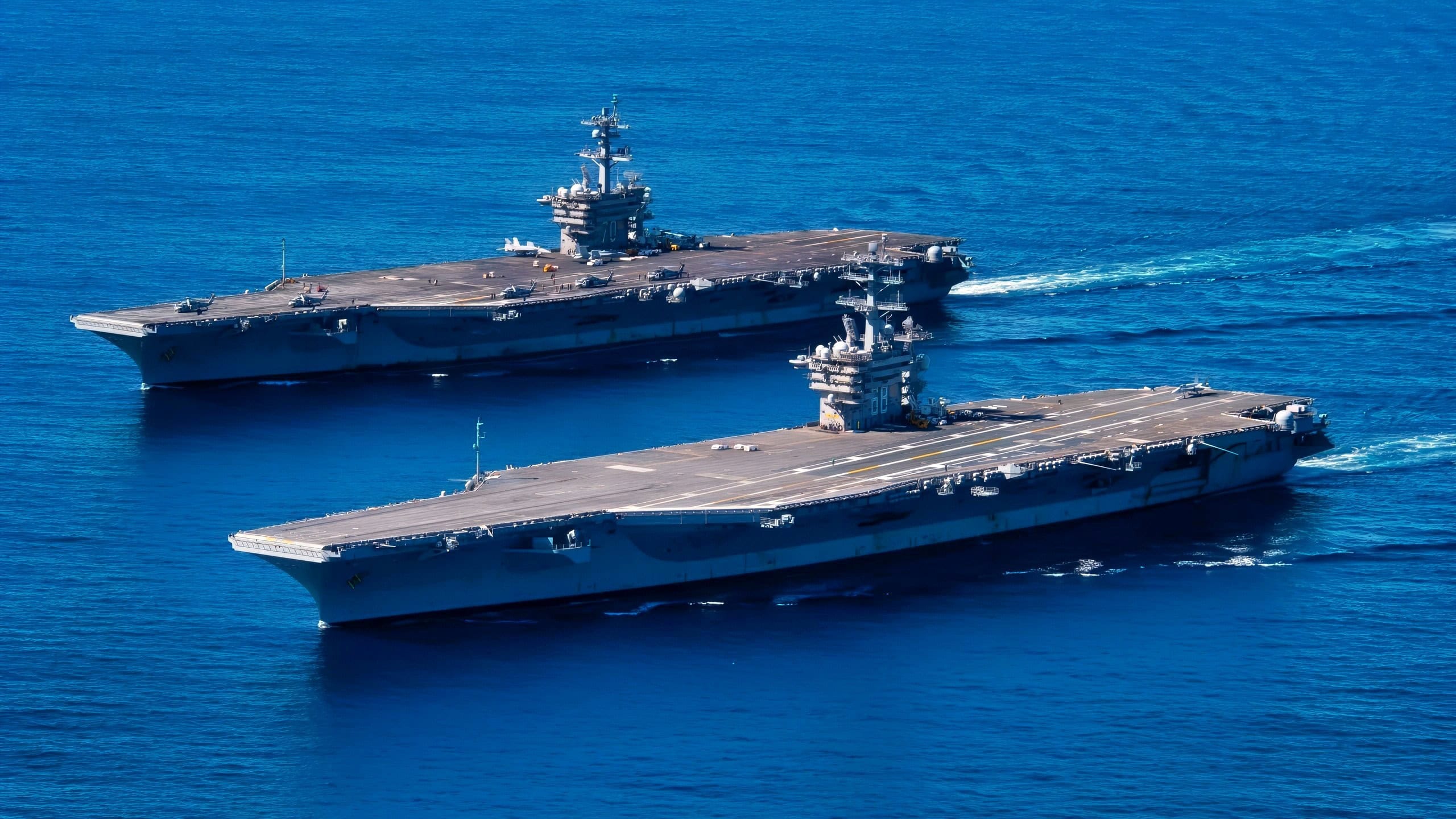
The USS Nimitz Disaster: How a 1981 Crash Changed the U.S. Navy Forever
On May 26, 1981, the USS Nimitz suffered one of the most shocking peacetime carrier disasters in US Navy history. During routine night flight operations in the Arabian Sea, an EA-6B Prowler crashed on the flight deck, triggering explosions and a massive fire.
The final death toll was 14, with another 45 injured. After the incident, toxicology reports revealed drug use among crew members, inciting controversy beyond the initial disaster.
Operational Context of the Incident
The USS Nimitz (CVN-68) is the lead ship of the Nimitz-class, a nuclear-powered supercarrier that still forms the backbone of the US carrier fleet today, and, with the exception of the Ford-class, is perhaps the most advanced warship in the world.
In 1981, the USS Nimitz was deployed to the Indian Ocean and Arabian Sea to bolster the US presence in the region amid Cold War tensions and Middle East instability. While deployed, the Nimitz maintained continuous flight cycles, with a high tempo, even at night.
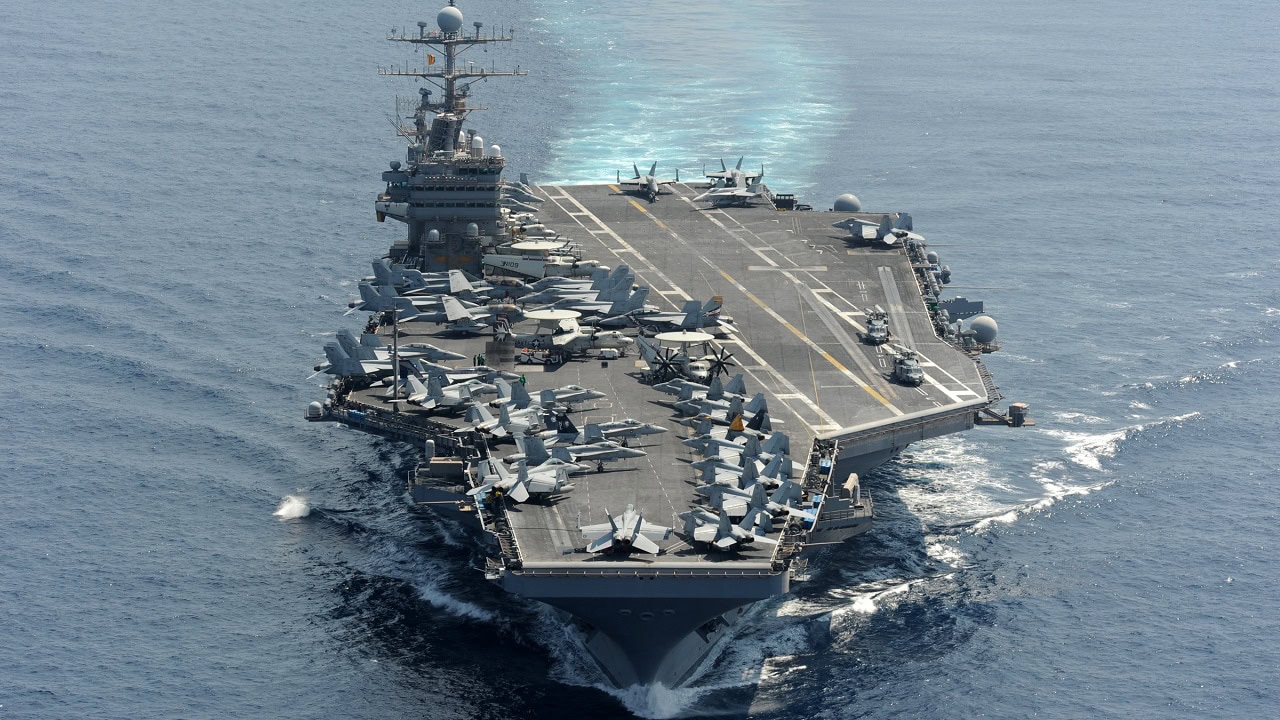
120118-N-QH883-003
INDIAN OCEAN, (Jan 18, 2012) The Nimitz-class aircraft carrier USS Abraham Lincoln (CVN 72) transits the Indian Ocean. Abraham Lincoln is in the U.S. 7th Fleet area of responsibility as part of a deployment to the western Pacific and Indian Oceans to support coalition efforts. (U.S. Navy photo by Chief Mass Communication Specialist Eric S. Powell/ Released)
Carrier operations are dangerous at any time of day, but especially so at night, where low visibility forces reliance on instruments and deck coordination. The margins for error are minimal.
What Actually Happened
During night recovery operations, an EA-6B Prowler was attempting to land. Something went wrong during the approach and landing sequence, and the aircraft’s tailhook failed to catch the Nimitz’s arresting gear. Instead, the jet crashed onto the flight deck and collided with parked aircraft.
Instantly, the collision ruptured fuel tanks and ignited jet fuel, causing a cascade of secondary explosions.
Because carrier decks are tightly packed and loaded with fueled aircraft and munitions, they are inherently hazardous.
In the 1981 incident, the Prowler crash triggered a large-scale fire across the deck. The explosion continued to spread as fuel ignited and nearby aircraft, each loaded with fuel, also caught fire.
The deck quickly became chaotic as flames and fuel spread. The flight deck crews were immediately exposed, with many casualties in the first few instances of the fire.
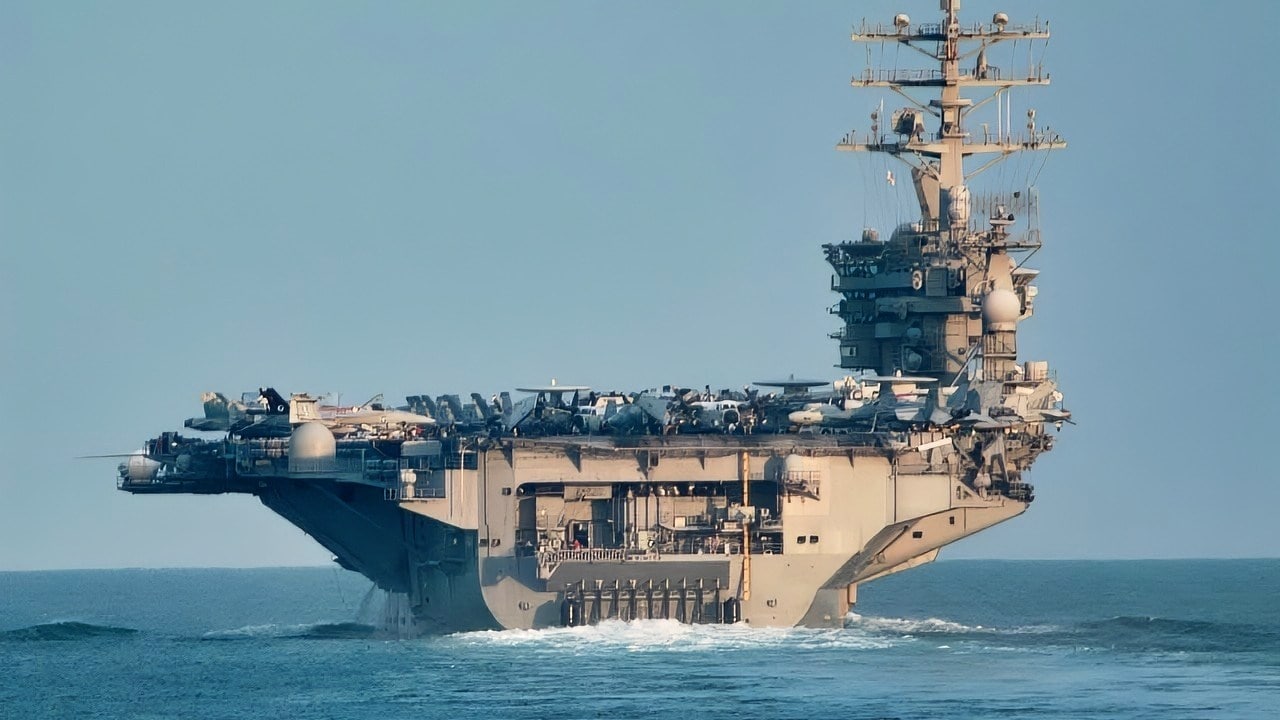
(September 11, 2003) – USS Nimitz (CVN 68) navigates one of the busier sea lanes in the Indian Ocean. Nimitz is deployed with Nimitz Carrier Strike Force in support of Operation Iraqi Freedom, the multi-national coalition effort to liberate the Iraqi people, eliminate Iraq’s weapons of mass destruction and end the regime of Sadaam Hussein. US Navy photo by Photographer’s Mate 2nd Class Monica L. McLaughlin.
The Aftermath
Fourteen personnel were killed. Another 45 were injured—many with burns and blast injuries. Several aircraft were destroyed or damaged, and the flight deck was heavily impacted.
But the ship itself survived, with the fire being contained before catastrophic loss.
In the immediate response, flight deck crews and damage control teams moved instantly to fight the fire; their priority was to contain the flames, prevent ordnance detonation, and rescue the injured. Of course, firefighting on a carrier is extremely dangerous because of the heat, the explosions, and the finite space within which to maneuver.
But despite the challenges, the crew ultimately prevented an escalation that would have ruined the ship.
The Controversial Discovery
The post-incident investigation revealed a controversial discovery: some crew members tested positive for marijuana and methamphetamine, including personnel involved in flight deck operations. Naturally, this became the defining narrative of the incident.
It remained unclear, however, whether there was a direct causation between drug use and the crash, but the enduring perception was powerful.
Because flight deck operations require precision, alertness, and coordination, the implication was that any impairment was an unacceptable risk. The Navy reacted as expected.
The Navy Reaction
The Navy executed a major crackdown on drug use, leading to zero-tolerance policies and the expansion of drug testing programs.
Long-term, this reshaped the Navy culture. The Navy also refocused on flight deck discipline and operational procedures, emphasizing accountability and supervision.
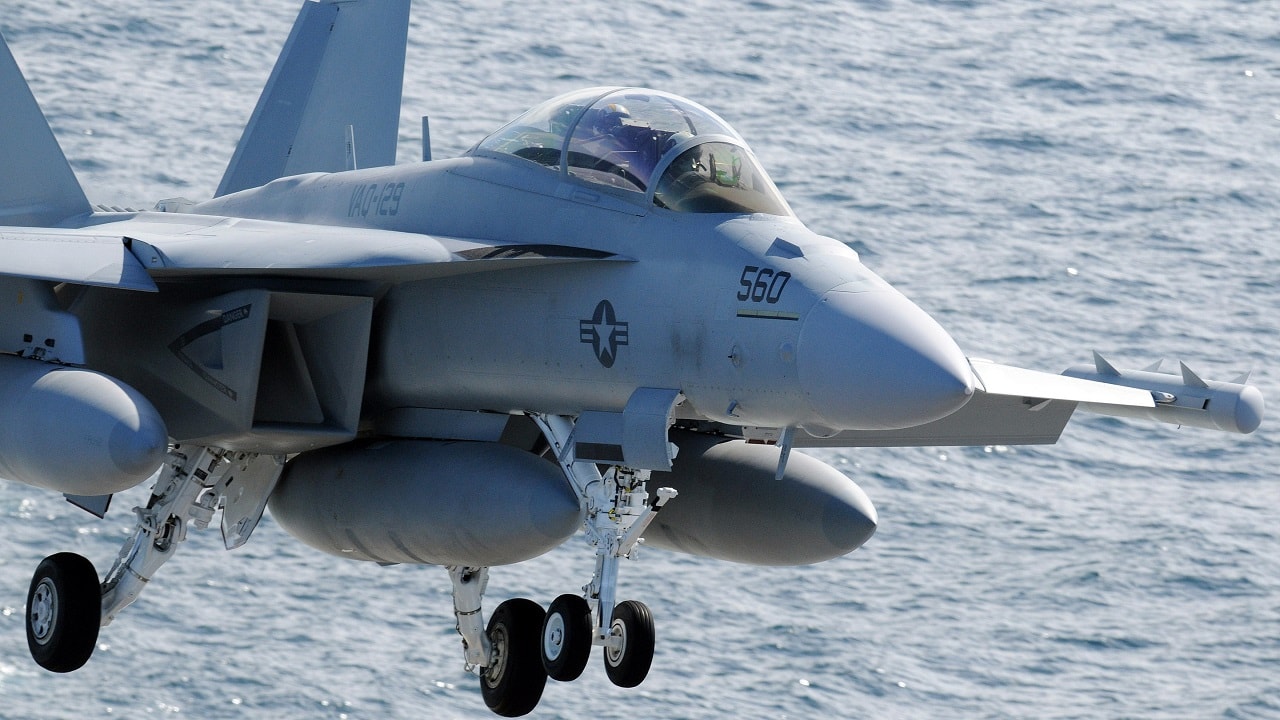
(Feb. 17, 2009) An EA-18G Growler assigned to the “Vikings” of Tactical Electronic Warfare Squadron (VAQ) 129 aligns itself for an at sea landing aboard the Nimitz-class aircraft carrier USS Ronald Reagan (CVN 76). The Growler is the replacement for the EA-6B Prowler, which will be replaced in the 2010 timeframe. Ronald Reagan is underway performing Fleet Replacement Squadron Carrier Qualifications in the Pacific. (U.S. Navy photo by Mass Communication Specialist 3rd Class Torrey W. Lee/Released).
And the Navy improved the training pipeline, reinforcing emergency response drills and crash/fire protocols.
Broader Context of the Fire
Carriers are inherently dangerous environments. Repeated peacetime incidents, like the Oriskany, Forrestal, and Nimitz, have made that point clear. Internal accidents can be catastrophic; the combination of aviation, fuel, explosives, and confined spaces ensures that even during peacetime, the risk remains high. Add in the human factor, and it’s a miracle incidents like this don’t happen more often.
The 1981 Nimitz fire served as a reminder that the world’s most powerful warships still depend on human performance. And when that breaks down, even just slightly, the margin between routine operations and catastrophe disappears instantly.
About the Author: Harrison Kass
Harrison Kass is an attorney and journalist covering national security, technology, and politics. Previously, he was a political staffer and candidate, and a US Air Force pilot selectee. He holds a JD from the University of Oregon and a master’s in global journalism and international relations from NYU.