
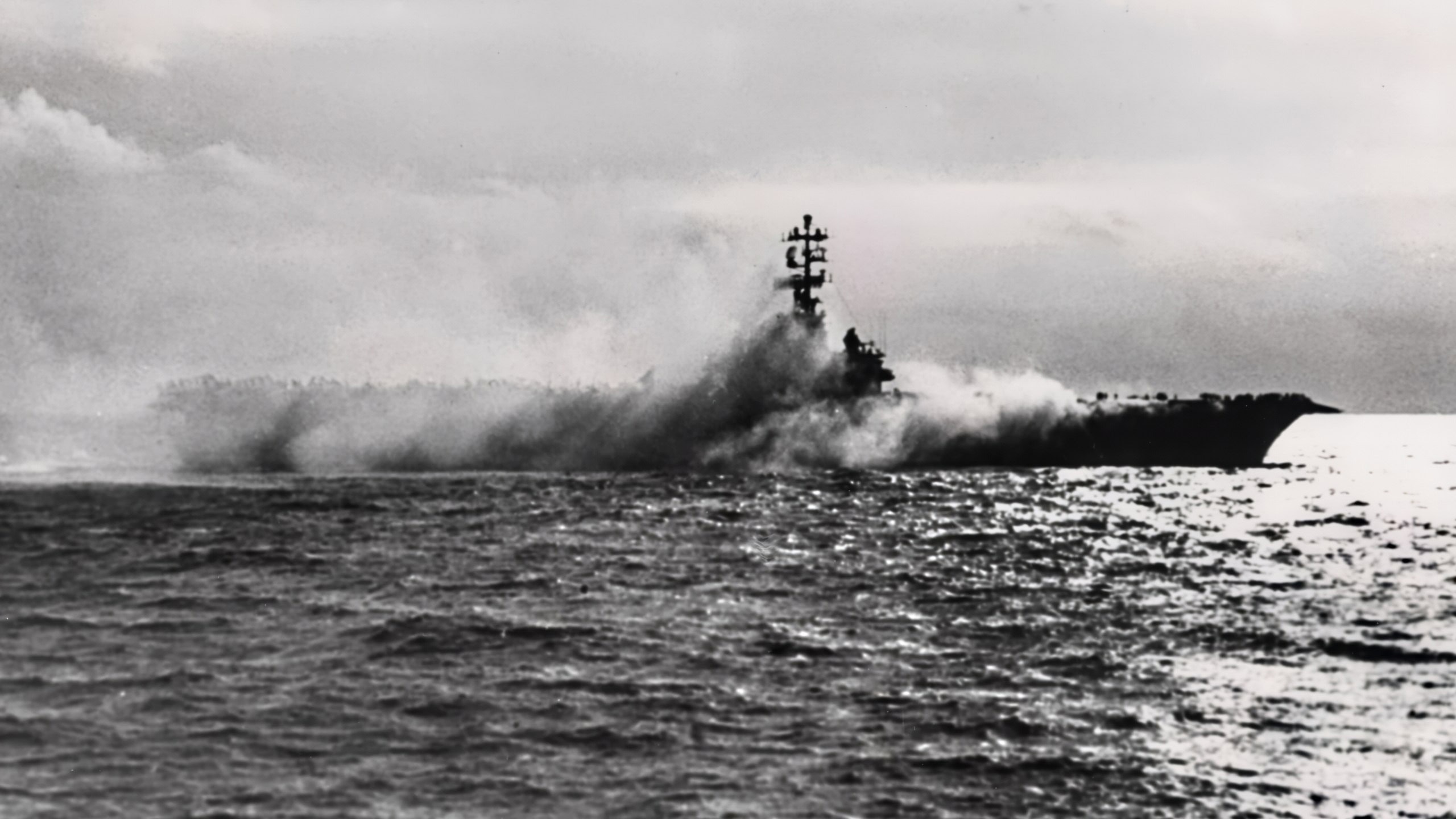
The USS Oriskany Tragedy: How a Mishandled Flare Killed 44 Sailors
The USS Oriskany fire of October 26, 1966, remains one of the deadliest non-combat disasters in US naval history.
The fire occurred aboard the Essex-class aircraft carrier while the ship was operating in the Gulf of Tonkin during the Vietnam War.
And what began with a mishandled flare quickly turned into a devastating conflagration, killing 44 sailors and aircrew.
The incident demonstrated just how vulnerable aircraft carriers could be—not just to enemy attack, but to a volatile combination of fuel, ordnance, confined spaces, and uptempo operations that are inherent to naval aviation.
World War II Vintage
The USS Oriskany (CV-34) was an Essex-class aircraft carrier, modernized after World War II. By 1966, the carrier was conducting combat operations off Vietnam as part of America’s then still expanding air war.
At the time, as the Vietnam War intensified, carrier life consisted of intense sortie rates, high ordnance loads for bomb runs, crowded flight decks and hangar spaces (the Essex-class was built for a time with smaller aircraft and ordnance), and constant operational pressure. Basically, the Essex-class was packed with munitions and men and operating at a high tempo—exactly the conditions in which accidents at sea are likely to occur.
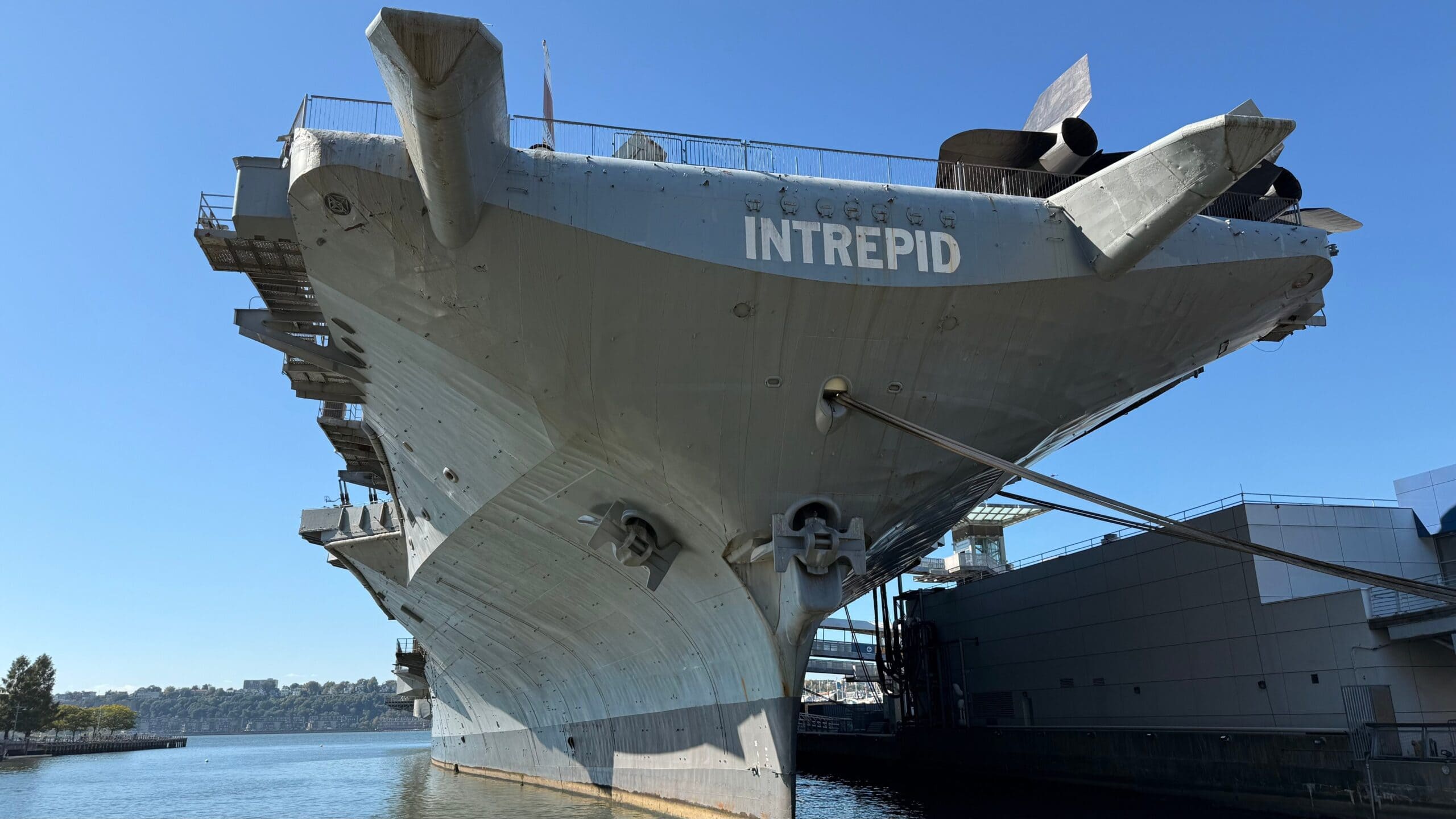
Exterior of Essex-Class USS Intrepid. Image Credit: 19FortyFive.com
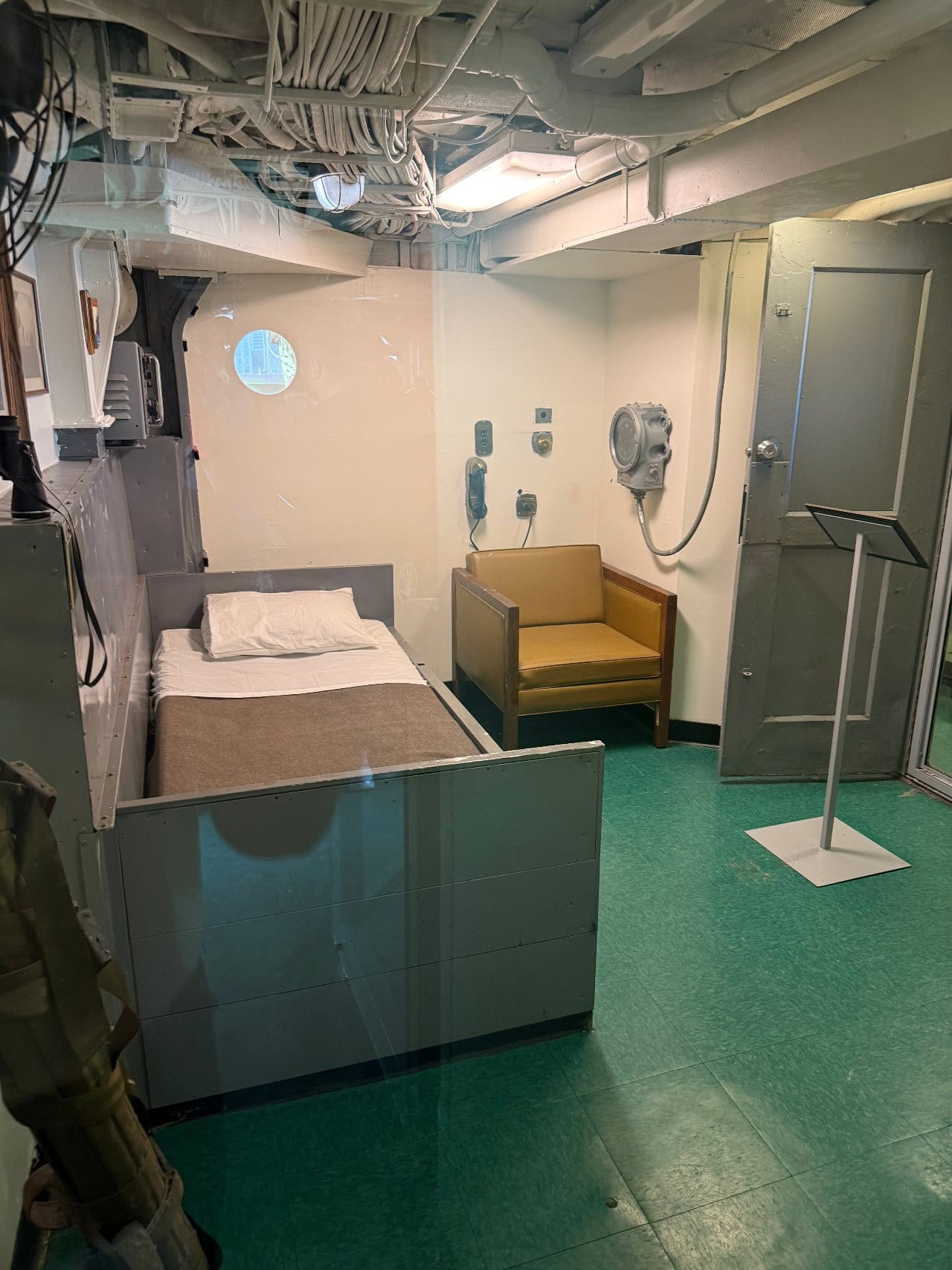
Inside USS Intrepid Essex-class. Image Credit: 19FortyFive.com
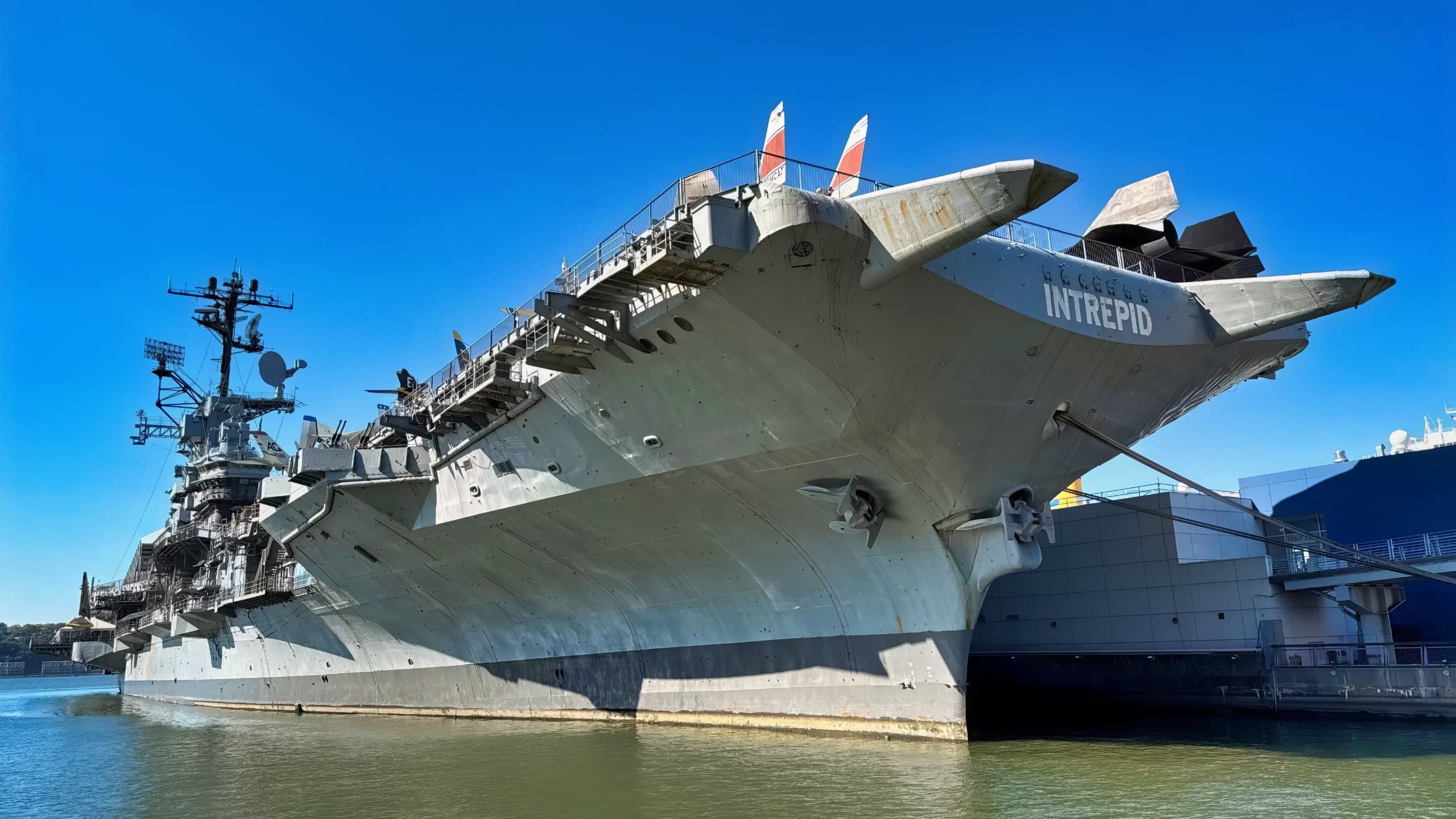
Essex-Class USS Intrepid 19FortyFive.com Photo
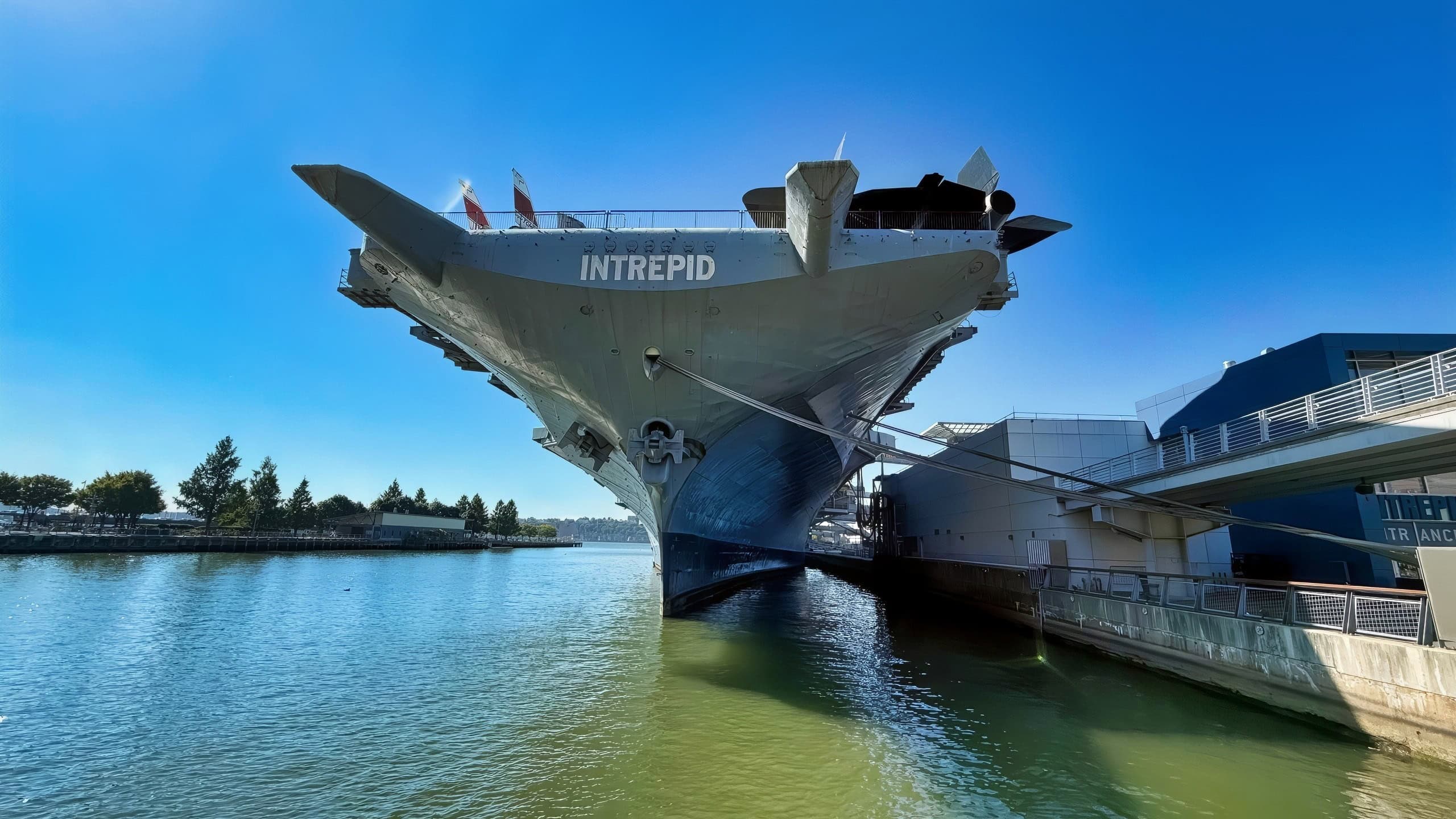
USS Intrepid Essex-Class Aircraft Carrier 19FortyFive.com Photo.
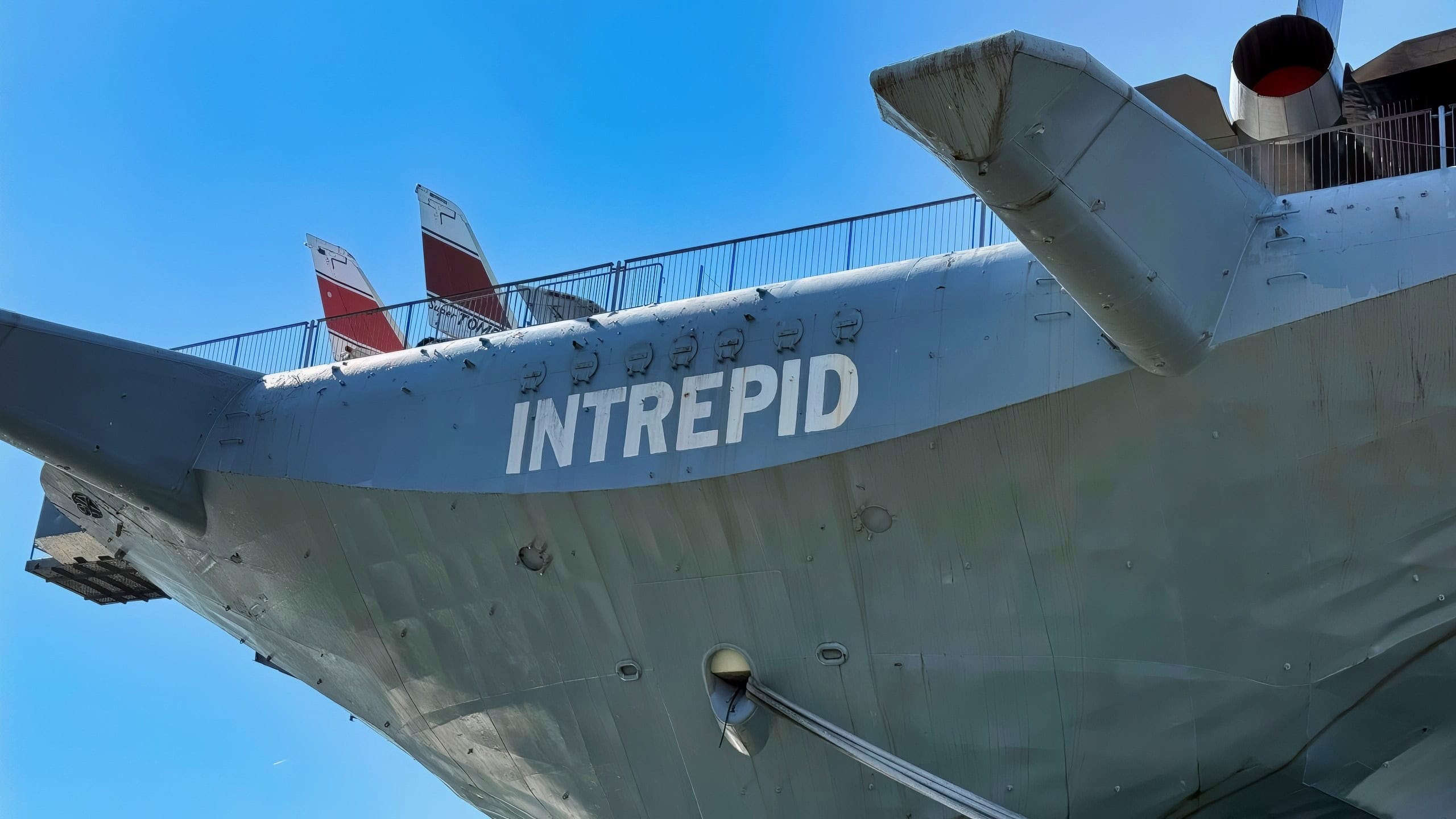
USS Intrepid of the Essex-Class Aircraft Carriers. Image Credit: 19FortyFive.com Original Photo.
How It Began
The fire began in the early morning hours of October 26, 1966. The immediate cause? A magnesium parachute flare was accidentally ignited while being handled in a forward flare locker. Unfortunately, magnesium flares burn at extremely high temperatures and are extremely difficult to extinguish.
What personnel should have done is allow the flare to burn out in as safe a manner as circumstances allowed.
Instead, they tried to dispose of the flare quickly.
The still-burning flare was tossed into a locker that happened to contain dozens of other flares. It was a mistake that would prove fatal.
Spreading Fast
Once the burning flare was tossed into the locker, the other stored flares ignited simultaneously.
A violent fireball erupted, producing extreme heat and heavy, rapidly spreading toxic smoke that spread rapidly through adjoining compartments.
The flare locker became an inferno almost instantly. Flames and smoke spread through nearby passageways and berthing areas, where men sleeping or stationed had little to no warning.
Dense smoke and superheated air blocked escape routes, trapping men within the confines of the ship.
Why It Was So Deadly
The fire was so lethal because it erupted in an internal compartment of the ship, rather than on the open flight deck where most carrier fires occur.
And within the carrier’s compartments, the spaces were narrow and enclosed, maze-like, making it extremely difficult to escape and allowing the rapid spread of smoke and heat.
The source of the fire compounded the issue; magnesium flares produce intense heat, blinding light, and toxic fumes—they are designed for use in the open air, not the belly of an aircraft carrier.
Smoke inhalation killed many of the victims, with the smoke spreading through ventilation, causing confusion in confined spaces.

Essex-Class Aircraft Carrier. Image Credit: Creative Commons.
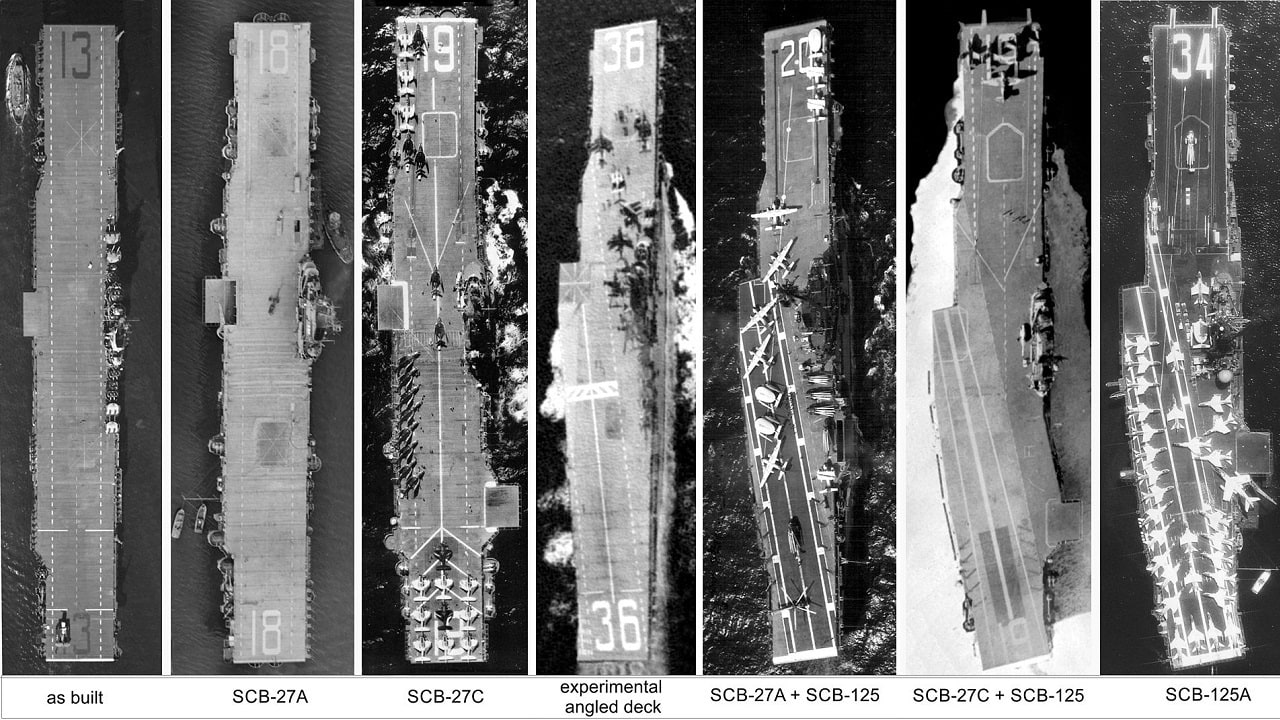
Seven aerial photographs showing the major different modernizations of the U.S. Navy Essex-class aircaft carriers (l-r): USS Franklin (CV-13), a “short hull” type as delivered, 21 February 1944. Franklin, USS Bunker Hill (CV-17), USS Boxer (CV-21), USS Princeton (CV-37), USS Tarawa (CV-40), USS Valley Forge (CV-45) and USS Philippine Sea (CV-47) received no or little modernization. USS Wasp (CV-18), after her SCB-27A conversion in late 1951: new hydraulic catapults, new island, removal of the deck guns, new bow. Modernized as such were USS Essex (CV-9), USS Yorktown (CV-10), USS Hornet (CV-12), USS Randolph (CV-15), Wasp, USS Bennington (CV-20), USS Kearsarge (CV-33) and USS Lake Champlain (CV-39). USS Oriskany (CV-34) was completed as such. USS Hancock (CV-19) after her SCB-27C modernization, circa 1955: like SCB-27A but new steam catapults and relocation of the aft elevator to the deck edge. USS Intrepid (CV-11) and USS Ticonderoga (CV-14) also received SCB-27C. USS Antietam (CV-36) after the installation of an experimental angled deck, circa 1954. USS Bennington (CV-20) after SCB-125: enclosed hurricane bow, angled deck, starboard deckedge elevator. USS Essex (CV-9), USS Yorktown (CV-10), USS Hornet (CV-12), USS Randolph (CV-15), Wasp, USS Bennington (CV-20) and USS Kearsarge (CV-33) received SCB-125. USS Hancock (CV-19) after SCB-125 in April 1957. The three SCB-27C ships were modernized as such an had the starboard deckedge elevator located further aft. The forward elevator was enlarged. USS Oriskany (CV-34) received SCB-125A, here on 30 May 1974. Similar to SCB-27C/SCB-125, only the starboard deckedge elevator was located further forward, as with the SCB-27A/SCB-125 ships. USS Lexington (CV-16), USS Bon Homme Richard (CV-31) and USS Shangri-La (CV-38) received SCB-27C/SCB-125 in one refit but had the starboard elevator in the same position as Oriskany.
Assessing the Damage
Forty-four sailors and aircrew were killed in the fire.
Many others were injured. Most of the deaths were among enlisted sailors, though aviators were also killed. The damage in the involved compartments was severe, but the carrier itself survived.
Importantly, the fire did not trigger the type of mass ordnance explosion that would be seen just one year later aboard the USS Forrestal. Even so, the death toll was devastating.
The Immediate Response
The fire was met with a courageous first response. Sailors and damage control teams rushed into smoke-filled compartments to rescue trapped crewmen. Shipboard firefighting is one of the most dangerous tasks in the military.
Poor visibility, extreme heat, the risk of ordnance explosions—it all makes for a hazardous environment. Despite these conditions, responders aboard the Oriskany located and contained the fire before it destroyed the entire ship.
The Immediate Fallout
The fire shocked the Navy—but reinforced an apparent truth: aircraft carriers are dangerous; small errors can become mass-casualty events very quickly.
Specifically, the disaster highlighted problems with flare storage, handling procedures, and crew training for internal fires.
The Navy launched an investigation into the fire, with renewed scrutiny of ordnance storage, pyrotechnic handling, compartment safety, and damage control doctrine.
The Oriskany would become part of a broader Navy effort to improve fire prevention aboard carriers, contributing to changes in training standards, storage discipline, and emergency procedures.
About the Author: Harrison Kass
Harrison Kass is an attorney and journalist covering national security, technology, and politics. Previously, he was a political staffer and candidate, and a US Air Force pilot selectee. He holds a JD from the University of Oregon and a master’s in global journalism and international relations from NYU.