
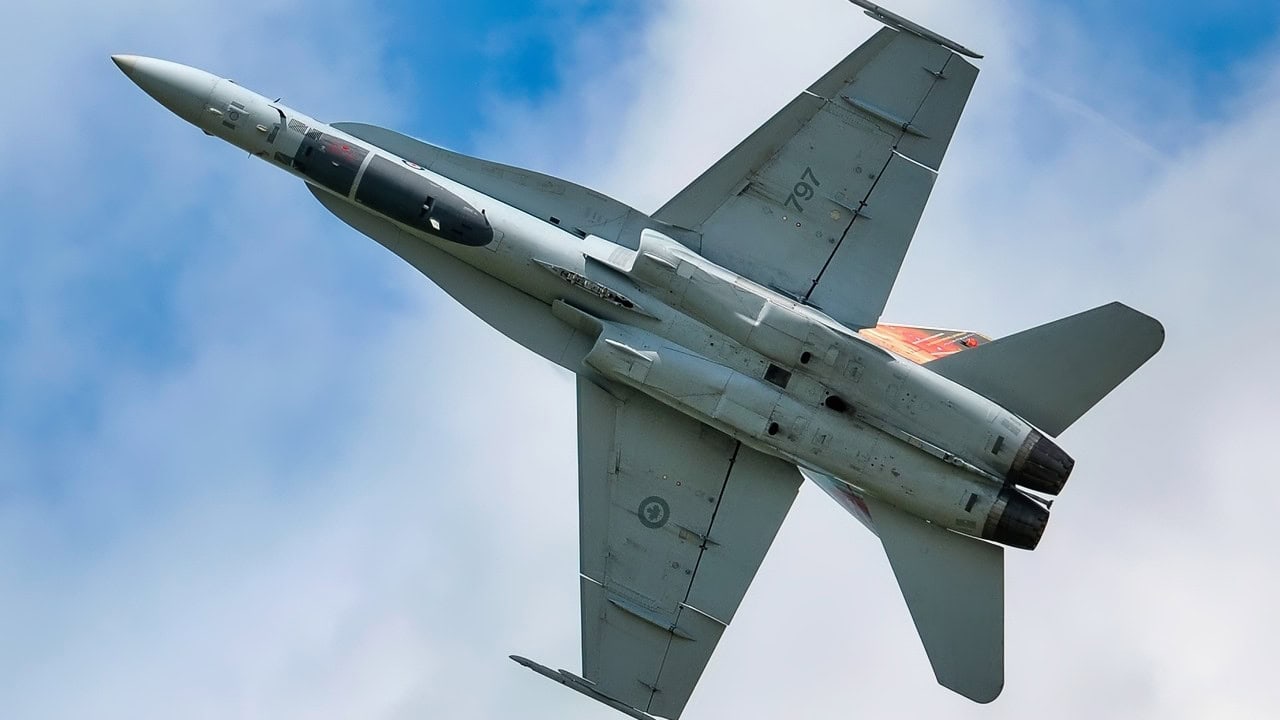
Summary and Key Points: Journalist Harrison Kass explores the legacy of the CF-18 Hornet, Canada’s primary fighter since 1982.
-Adapted from the F/A-18, this Arctic-optimized jet features a 600,000-candlepower spotlight and a distinct “false canopy” on its belly to confuse adversaries.
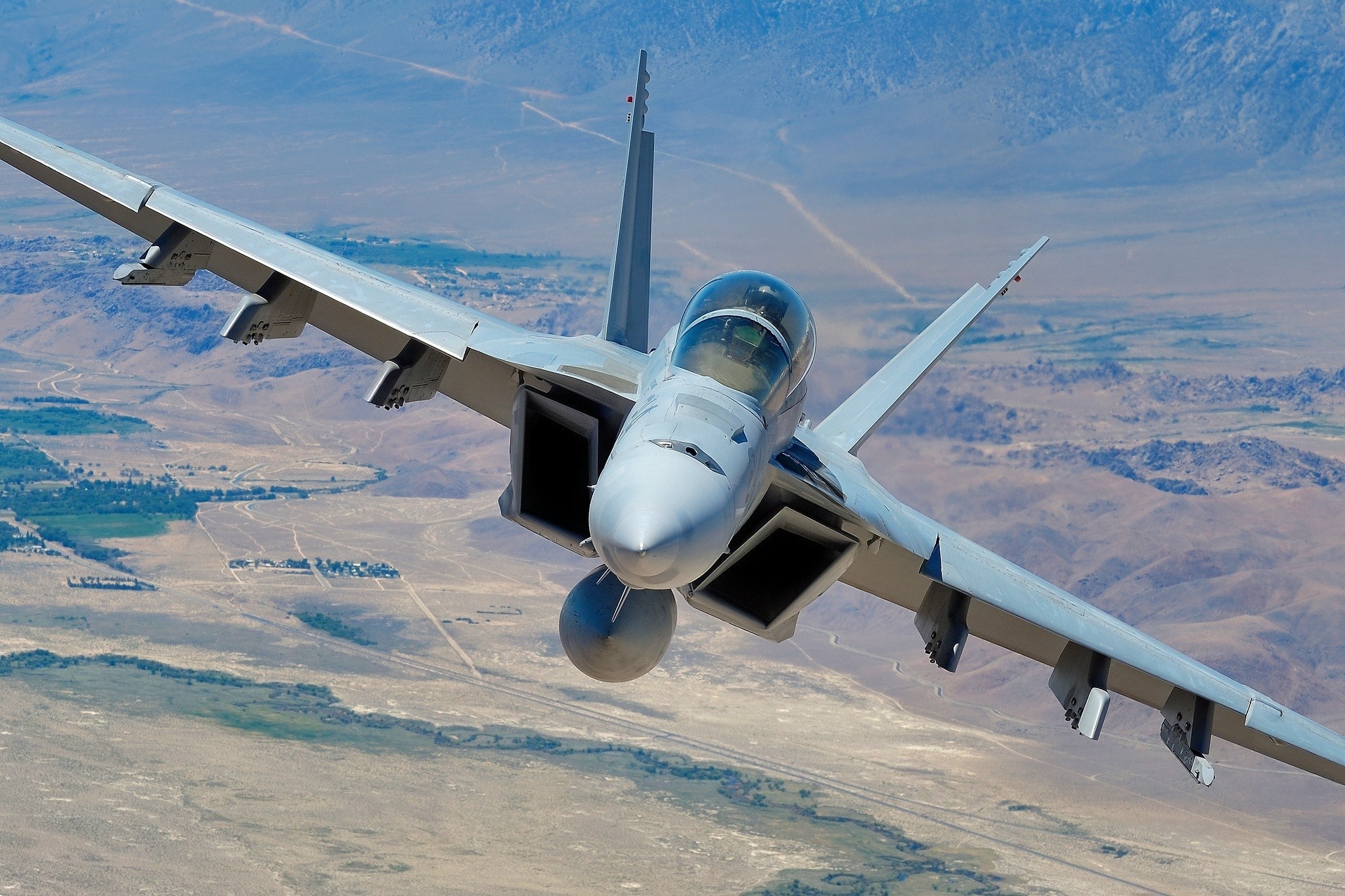
CF-18 Canada. Image Credit: Creative Commons.
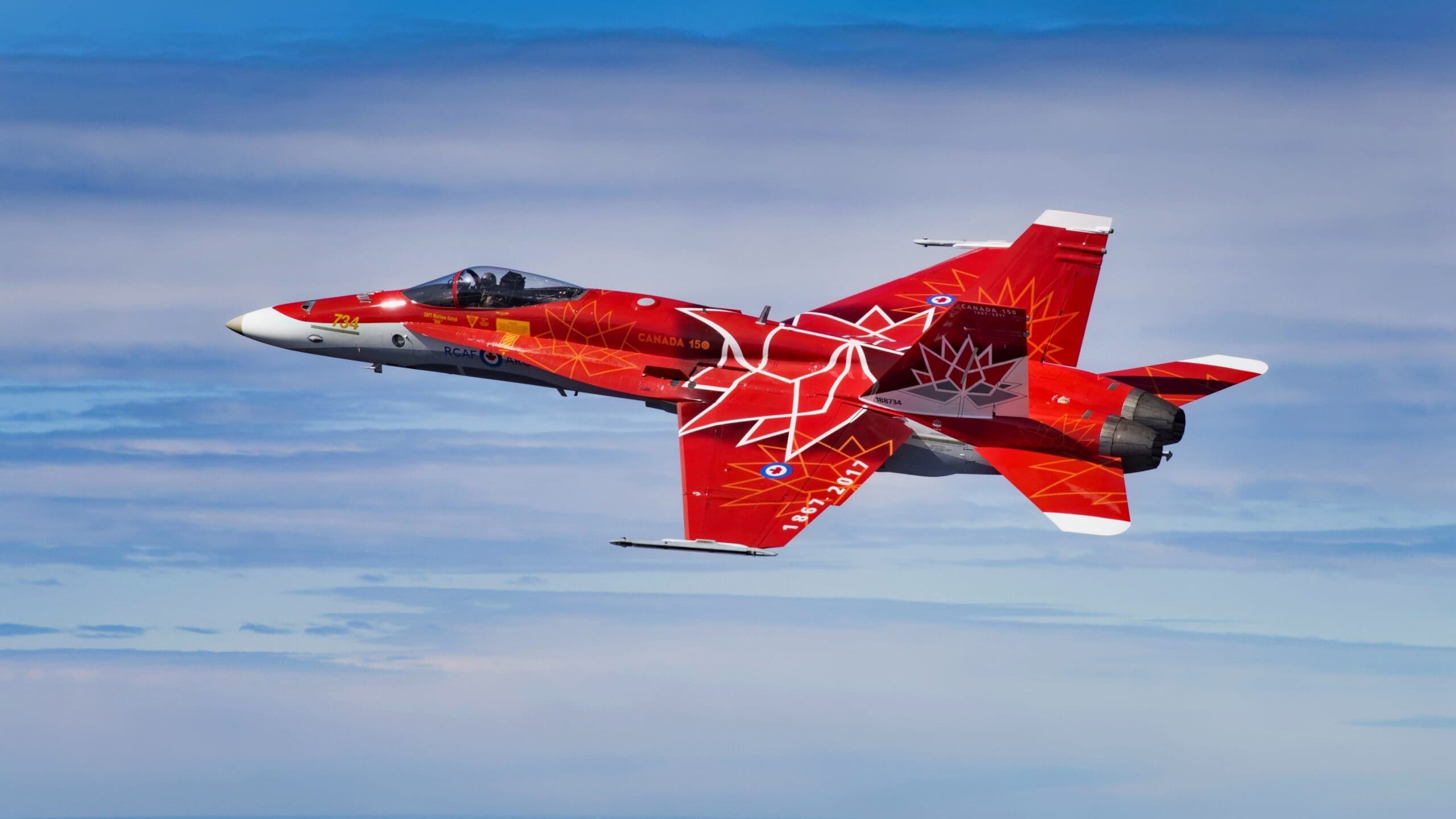
CF-18 Fighter from Canada. Image Credit: Creative Commons.
-While the Hornet has been vital for NORAD defense and NATO missions in Libya and Syria, the 40-year-old fleet now suffers from structural fatigue and parts shortages.
-As Ottawa reviews its $30 billion commitment to the F-35 Lightning II, the Swedish Saab JAS 39 Gripen remains a viable alternative in an increasingly complex political procurement battle.
The 40-Year Legacy: Why Canada’s CF-18 Hornet is Finally Facing Retirement
For more than four decades, the CF-18 Hornet has served as the backbone of Canada’s fighter fleet.
Based on the F/A-18 Hornet, the CF-18 entered service with the Royal Canadian Air Force (RCAF) in the early 1980s.
The aircraft has since participated in a wide range of missions, from Arctic air defense patrols to NATO combat operations overseas. Today, however, the fleet is aging rapidly. And as Canada works to modernize its air force, the CF-18’s term of service is coming to an end.
Origins of the Program
In the late 1970s, Canada began searching for a replacement for several aging fighter aircraft, including the CF-104 Starfighter, CF-101 Voodoo, and CF-116 Freedom Fighter.
These Canadian variants of the US Century Series aircraft had served through the Cold War, but were becoming outdated. Canada wanted something capable of performing both air defense and ground attack roles, appropriate for the late 20th century.
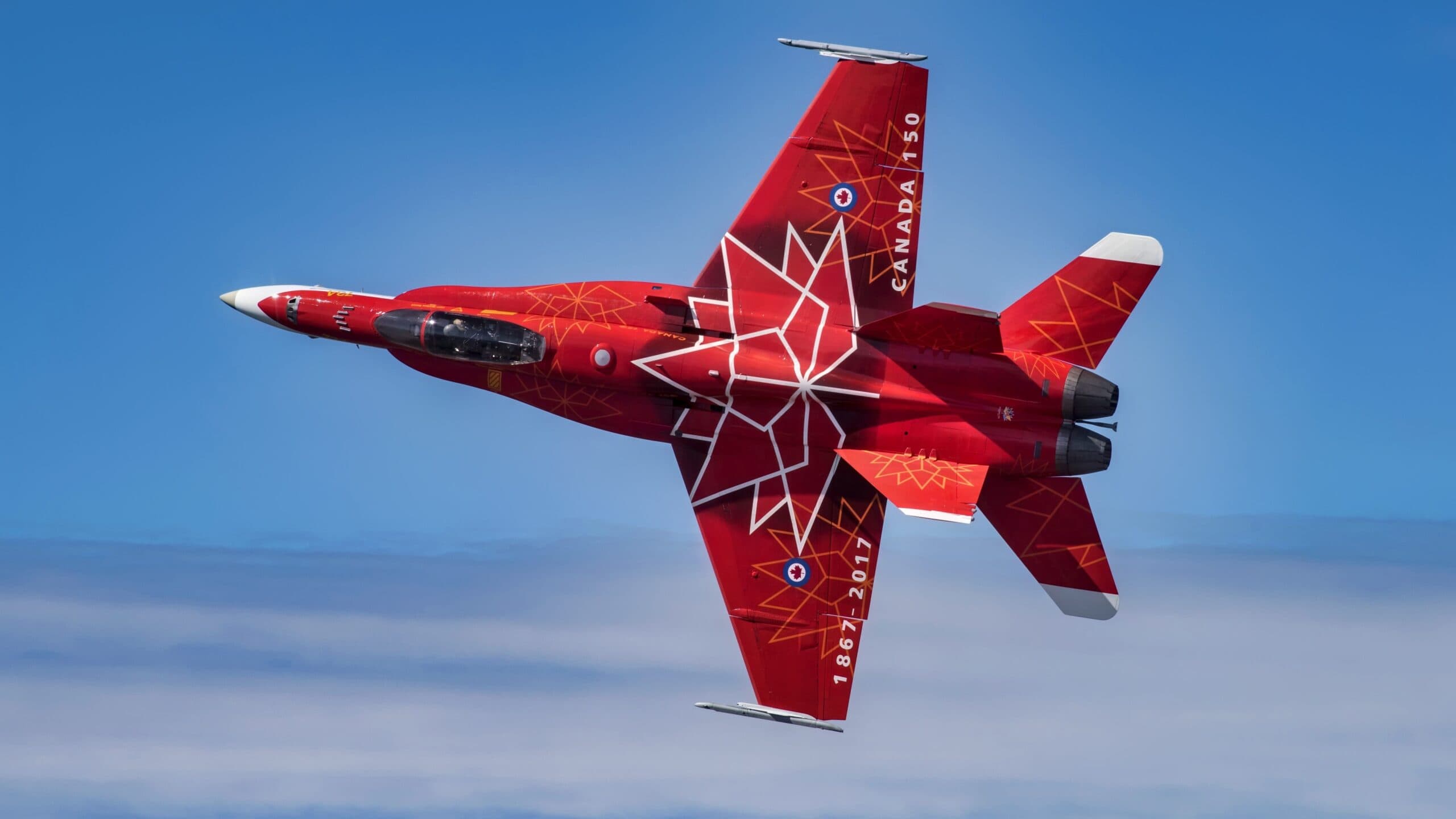
CF-18 Fighter from Canada.
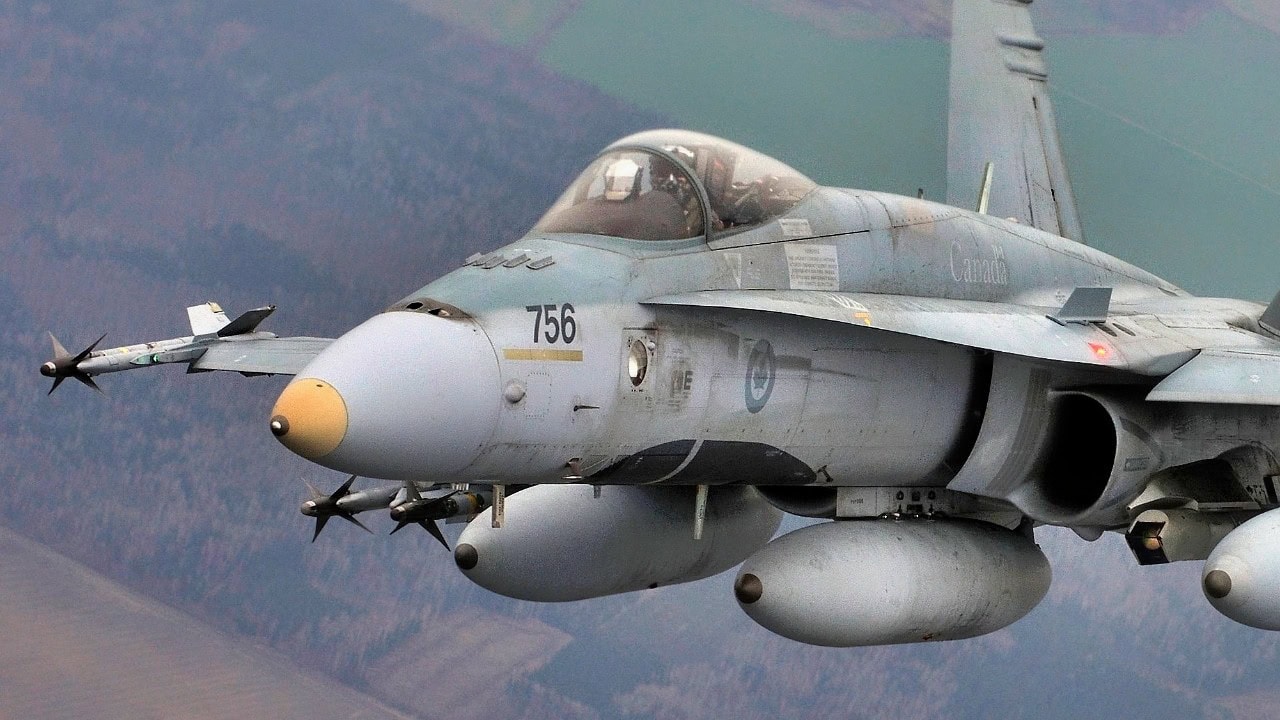
A CF-188 Hornet from the Canadian Air Task Force Lithuania flies over Lithuania on November 20, 2014 for the NATO Baltic Air Policing Block 36 during Operation REASSURANCE.
Photo: Air Task Force — OP Reassurance, DND
After evaluating several candidates, Ottawa selected the versatile F/A-18 Hornet, ordering 138 aircraft and designating them the CF-18A (single-seat variant) and CF-18B (two-seat variant).
The first CF-18 entered service in 1982 and has been a mainstay ever since.
Differing from the F/A-18
The CF-18 is based on the American F/A-18 but includes several key differences, all tailored to Canada’s specific requirements.
Notably, the CF-18 is equipped with a spotlight mounted on the left side of the nose.
This 600,000-candlepower spotlight allows Canadian pilots to visually identify aircraft during nighttime interceptions, which was particularly important during Cold War air defense missions against Soviet bombers. The CF-18 also uses a combination of metric and imperial instrumentation, reflecting Canadian operational standards.
And because of Canada’s geography, in the far north, the aircraft systems were adapted to operate in extreme Arctic conditions, where Canada conducts many of its air defense missions. A specialized cold-weather survival kit was added as well.
And while the F/A-18 is adapted to land on carriers, the CF-18 is land-based, retaining the arrestor hook and robust landing gear, but with main gear shock absorbers that were modified for better performance on land runways. Lastly, the CF-18s feature a painted underside canopy.
This tactic is designed to momentarily confuse an enemy pilot during a dogfight regarding the aircraft’s orientation.
Deploying the CF-18
The CF-18 serves as Canada’s primary multirole fighter aircraft and is accordingly used in several mission categories.

A CF-18 Hornet fighter jet soars through the clouds over Iraq before commencing the next mission during Operation IMPACT on January 23, 2015.
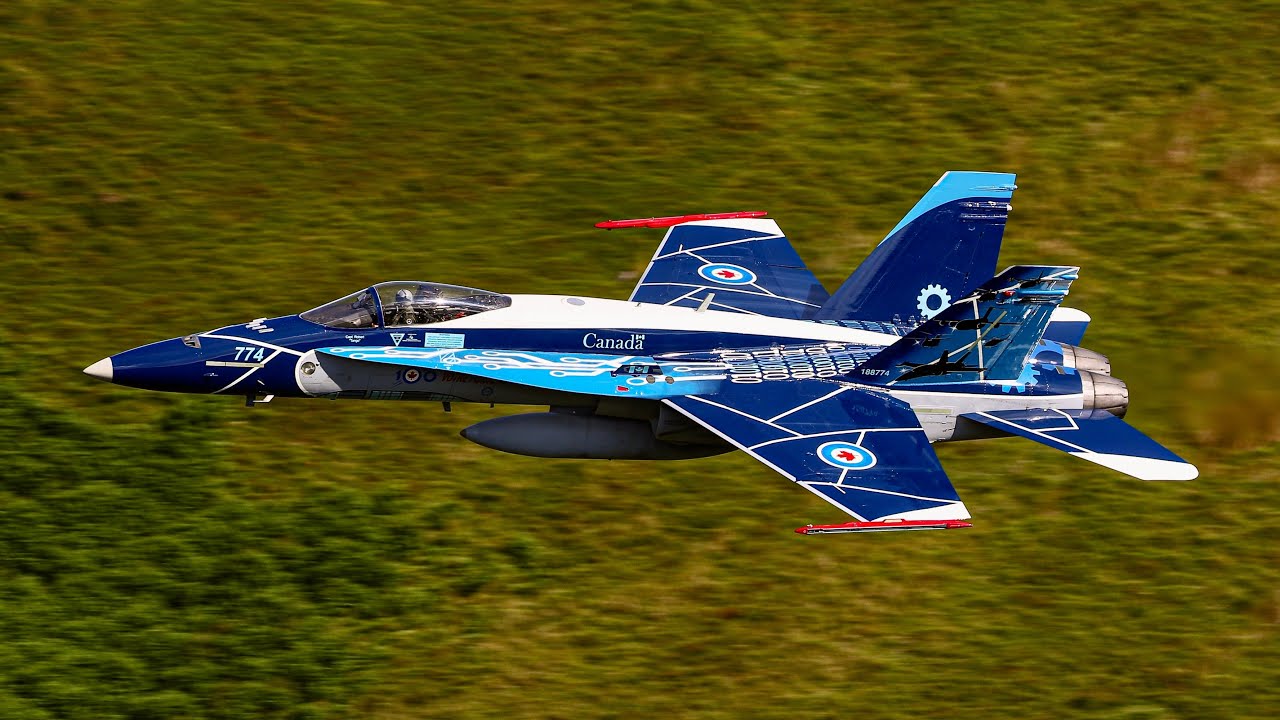
CF-18 Hornet Canada Air Force. Image Credit: Creative Commons.
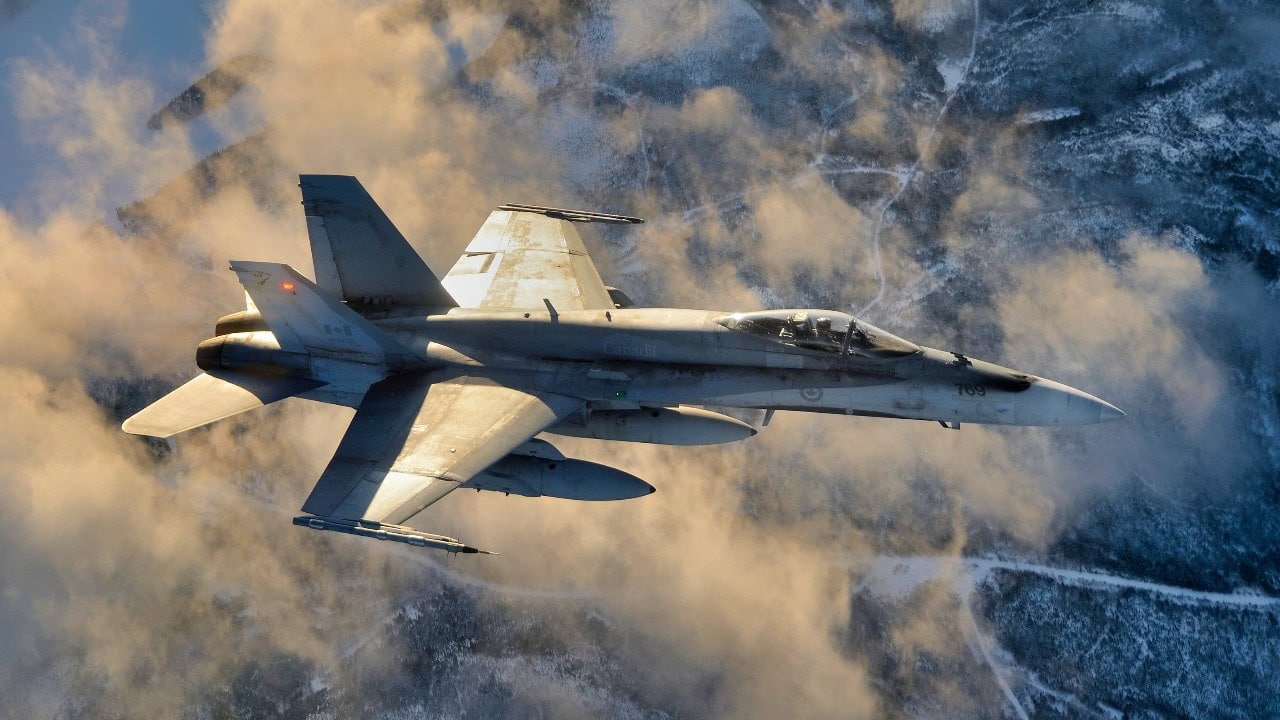
A Canadian CF-18 Hornet in flight during an air combat training exercise for Squadron 425 pilots from Bagotville.
The CF-18 regularly conducts patrols under the North American Aerospace Defense Command (NORAD), intercepting aircraft approaching North American airspace, particularly over the Arctic.
This role has taken on renewed importance with Russian aircraft repeatedly testing the boundaries of NORAD airspace.
Canada also deploys their CF-18 aircraft to support NATO missions. These deployments demonstrate Canada’s commitment to collective defense.
And the CF-18 has been deployed on expeditionary combat missions several times, including the Gulf War, Kosovo, Libya, and operations against ISIS in Iraq and Syria. These missions have demonstrated the aircraft’s flexibility as both an air-to-air and air-to-ground platform.
Strategic Importance for Canada
Canada faces a unique geographic challenge: defending one of the largest national airspaces in the world.
Much of this territory lies in the Arctic, where long distances and harsh conditions complicate operations. So, the CF-18 has therefore played a critical role in maintaining sovereignty over Canadian airspace.
Key strategic roles have included monitoring northern approaches, responding to Russian bomber patrols, supporting continental defense with the US, and maintaining Canada’s credibility within NATO.
An Aging Fleet
Yet, despite these valuable contributions to Canadian national security and despite multiple upgrades over the years, the CF-18 fleet is nearing obsolescence; they are over 40 years old. Aging aircraft pose several challenges, including rising maintenance costs, increased repair downtime, parts shortages, declining availability rates, and structural fatigue.
Canada has conducted modernization programs, keeping the aircraft operational with upgraded radar and avionics.
But it’s not enough; the fleet is approaching the end of its lifecycle, which is why Canada has been searching for a replacement.
Obviously, the search has devolved into a political quagmire.
Despite originally selecting the US F-35 Lightning II as a replacement and ordering 88 aircraft, Ottawa has chosen to review the procurement, placing a hold on the order as they reportedly consider the Swedish Saab JAS 39 Gripen.
About the Author: Harrison Kass
Harrison Kass is an attorney and journalist covering national security, technology, and politics. Previously, he was a political staffer and candidate, and a US Air Force pilot selectee. He holds a JD from the University of Oregon and a master’s in global journalism and international relations from NYU.