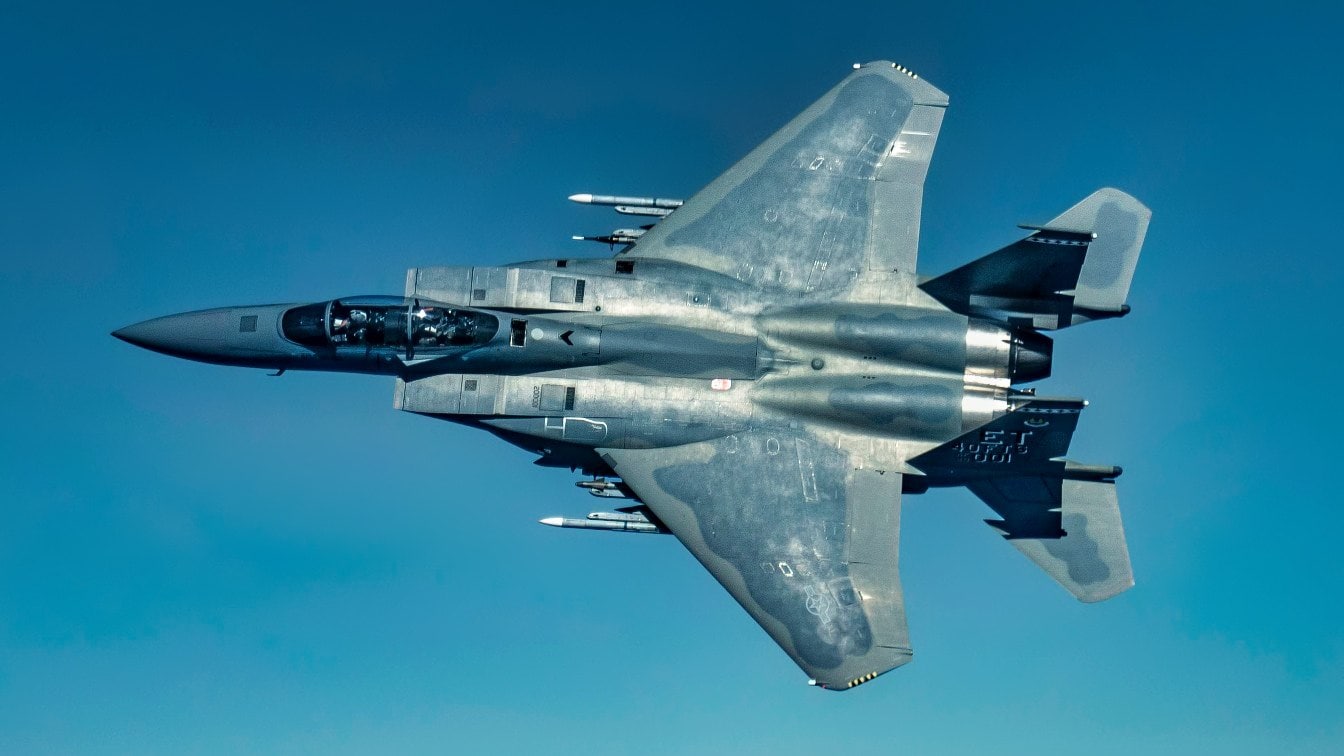
Summary and Key Points: Kris Osborn, President of Warrior Maven, evaluates the F-15’s continued relevance following the friendly fire downing of three Strike Eagles over Kuwait.
-Despite the lack of stealth, the F-15’s evolution—driven by the ADCP II computer, AESA radar, and EPAWSS electronic warfare suites—enables it to function as a formidable “bomb truck” in support of 5th-generation assets.
-This 19FortyFive report analyzes how the F-15 retains a perfect combat record and Mach 2.5+ speeds, concluding that the platform’s survival and successful aircrew ejections during recent intercepts validate decades of structural and technological modernization.
The F-15 Fighter Isn’t Going Anywhere
A perfect combat record, a computer capable of 87 billion functions per second, Active Electronically Scanned Array (AESA) radar, and a new generation of electronic warfare (EW) technologies are just a few of the capabilities associated with the famous U.S. Air Force F-15. Not only has the U.S. Air Force engineered a 4.5+ generation F-15EX, but the service and Boeing have been upgrading the entire F-15 fleet for the past several years.
The friendly fire downing of F-15s over Kuwait has again thrust the aircraft into the spotlight as a high-performing, massively upgraded, and effective platform.
Perhaps first and foremost, the aircraft was highly successful in deploying its combat “ejection” seats, a critical technological factor that saved the lives of several U.S. Airmen.
Kuwait Air Defenses
Kuwait is known to operate extremely advanced, modern U.S.-built Patriot Missile Batteries and the well-known National Advanced Surface-to-Air Missile System (NASAMS), both of which have proven successful in Ukraine.
If the initial indications are correct, Kuwaiti ground forces may indeed have mistaken the aircraft for an Iranian one. Certainly, additional safety measures can be put in place to ensure this does not recur, and fortunately, the incident did not result in the loss of life.
There are, however, several key variables of great relevance here regarding advanced air defenses and F-15 concepts of operation. It may not be clear which variants of the PAC-3 Patriot interceptors Kuwait operates; however, the most modern, upgraded variants feature Raytheon-built advanced radar, enabling the weapon to simultaneously track several maneuvering threats.
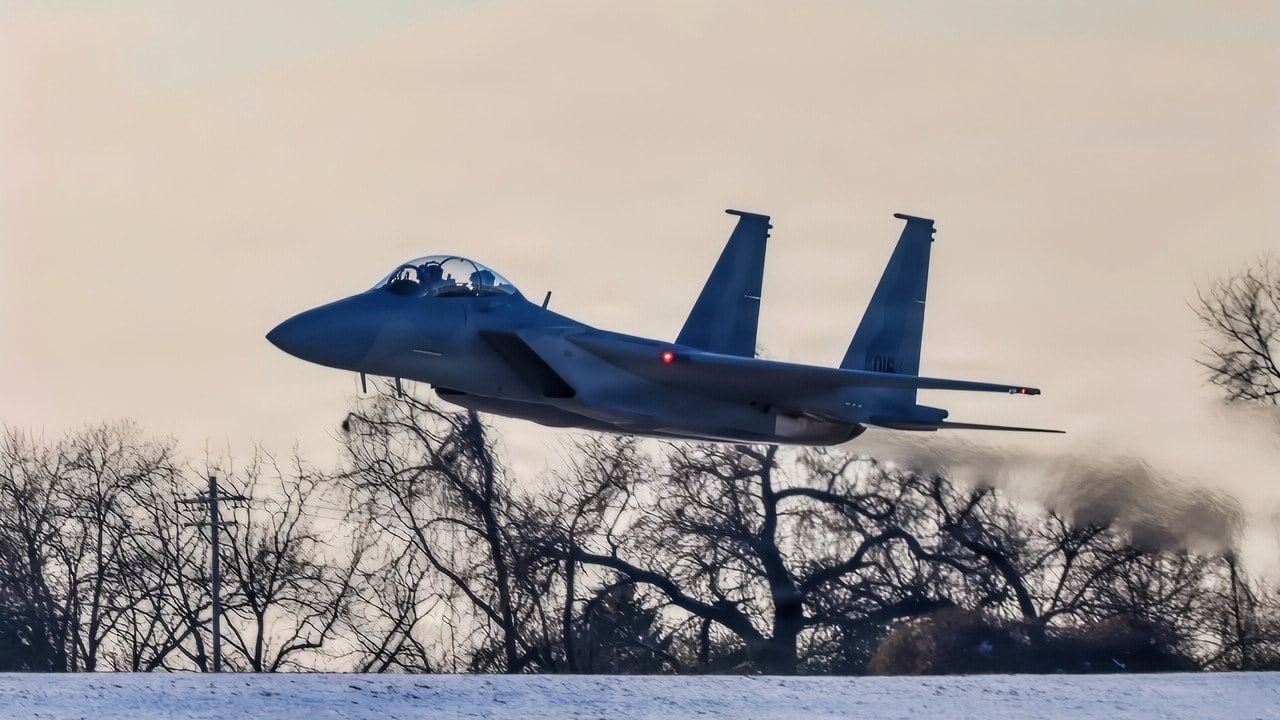
An F-15EX departs for Portland Air National Guard Base. The U.S. Air Force, in partnership with Boeing and the Defense Contract Management Agency, has resumed F-15EX Eagle II deliveries to the Portland Air National Guard Base, overcoming recent production delays. (Courtesy photo)
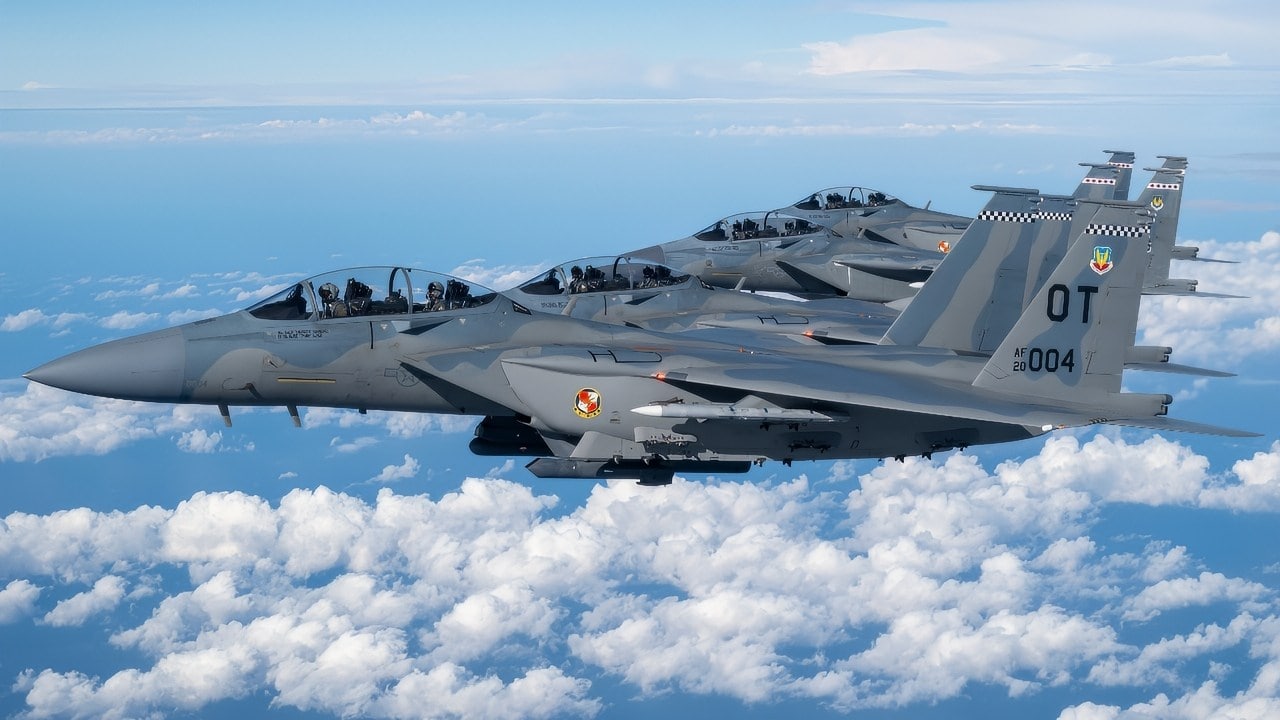
A formation of four U.S. Air Force F-15EX Eagle II fighter jets, assigned to Eglin Air Force Base, Florida, fly over the Gulf of America, Nov. 21, 2025. Secretary of the Air Force Troy Meink flew in the backseat of the lead jet as part of his visit to Eglin AFB. The flight oriented Meink to F-15EX tactics, techniques and procedures being developed and advanced by the 53d Wing to include weapons capacity, next-gen survivability, and next-generation radars, sensors and networking capabilities. (U.S. Air Force photo by Staff Sgt. Blake Wiles)
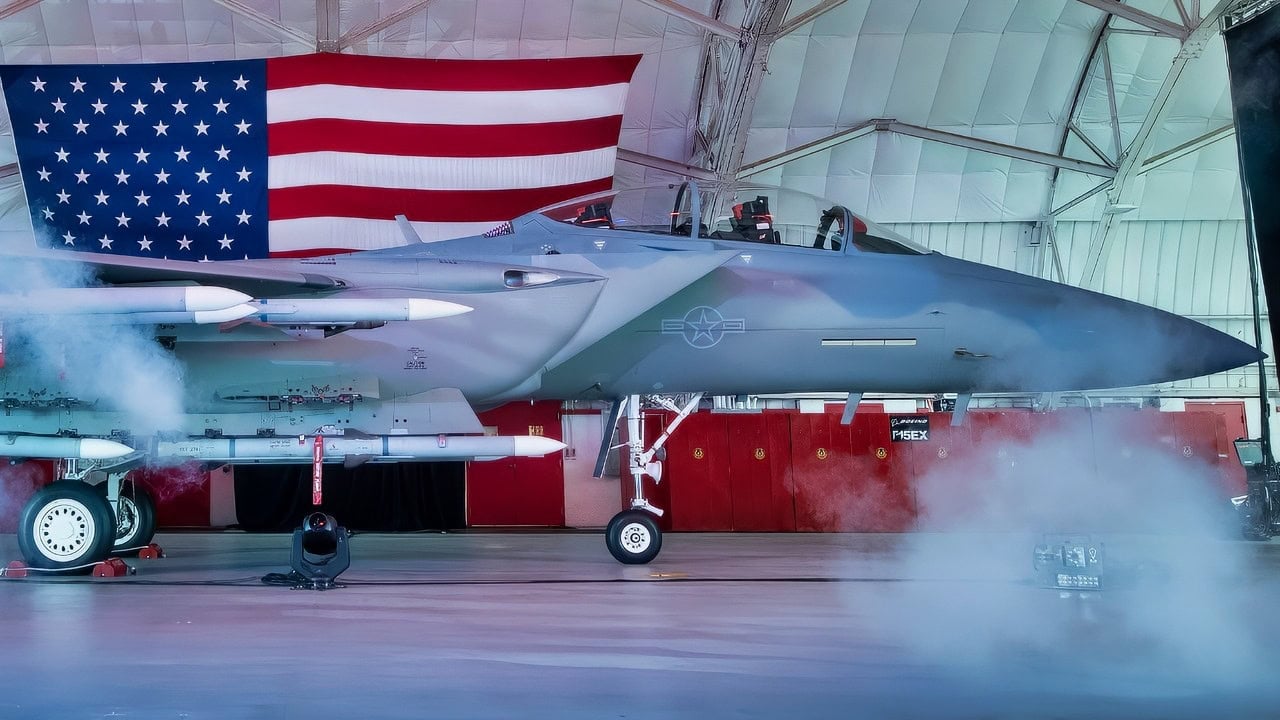
The Air Force’s newest fighter, the F-15EX Eagle II, was revealed and named during a ceremony April 7 at Eglin Air Force Base, Fla. The aircraft will be the first Air Force aircraft to be tested and fielded from beginning to end, through combined developmental and operational tests. (U.S. Air Force photo/Samuel King Jr.)
At one point during testing several years ago, advanced Patriot interceptors proved capable of tracking and destroying two maneuvering “cruise” missiles simultaneously. This was quite significant, as it demonstrated an expanded operational capability for the Patriot.
This weapon has historically been used to counter standard ballistic missiles following a parabolic trajectory, rather than cruise missiles, which can follow a more horizontal path closer to the earth’s surface.
These advancements to the Patriot are quite relevant because the weapon has broken new ground in Ukraine and has been successfully used to destroy “aircraft.” An ability to destroy aircraft is indicative of the fast-growing operational capacity of the Patriot, so it is conceivable that Kuwait used this weapon in its attempt to shoot down the F-15s.
However, Kuwait most likely used the well-known NASAMS to track and hit the F-15s, as it is known to be effective against 4th-generation aircraft, as regularly shown in Ukraine.
F-15 Concepts of Operation
The largest element of this equation likely pertains to modern Concepts-of-Operation associated with the F-15; as an advanced 4th-generation fighter, the aircraft is not designed for “stealthy” missions against advanced air defenses.
Of course, the platform is not stealthy like an F-22 or F-35, so it is not necessarily intended to fully elude modern radar systems and air defenses. Yet, it is known as an extremely effective 4th-generation air-to-air and air-to-ground platform designed to support and further fortify 5th-generation air attacks.

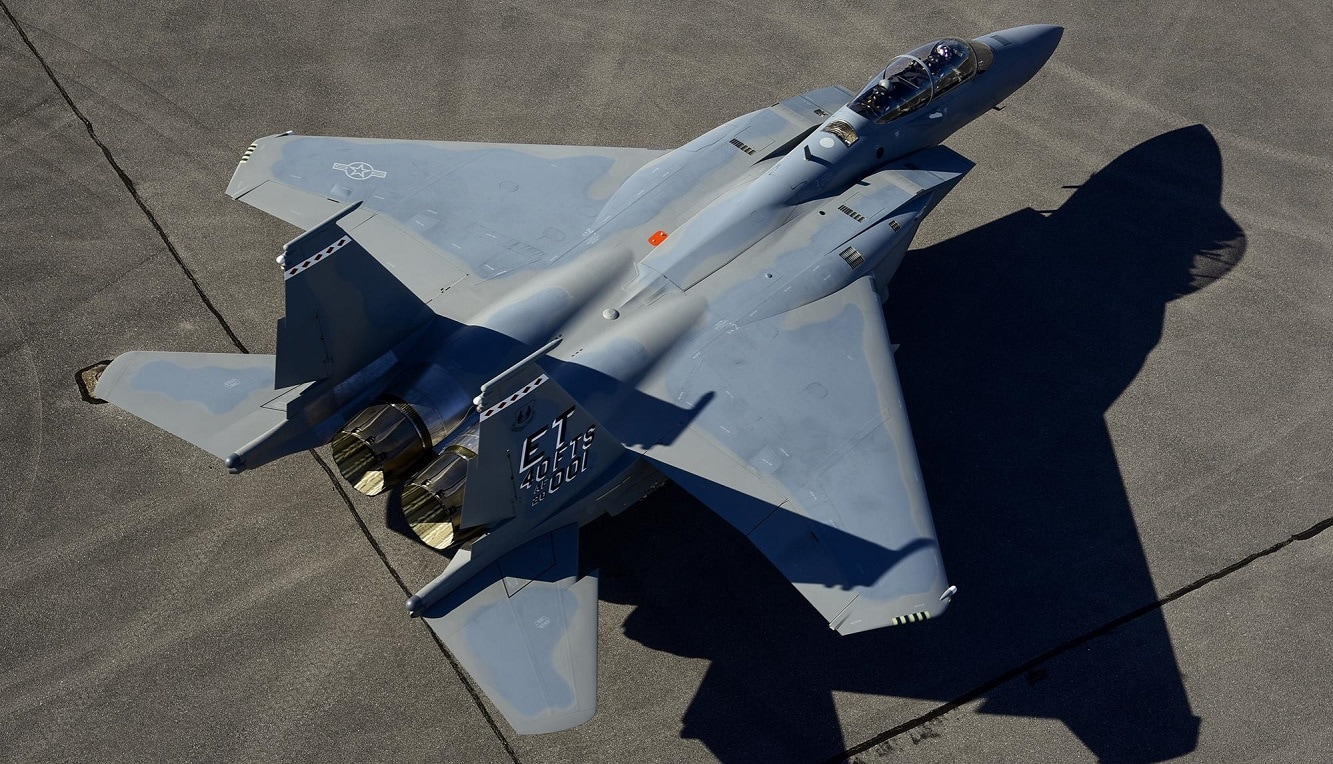
An F-15EX fighter jet taxis to its parking spot at Wright-Patterson Air Force Base, Ohio, Nov. 8, 2021. The jet visited Wright-Patt to give the Air Force Life Cycle Management Center’s F-15EX program office the opportunity to see the aircraft up close. (U.S. Air Force photo by Jaima Fogg)
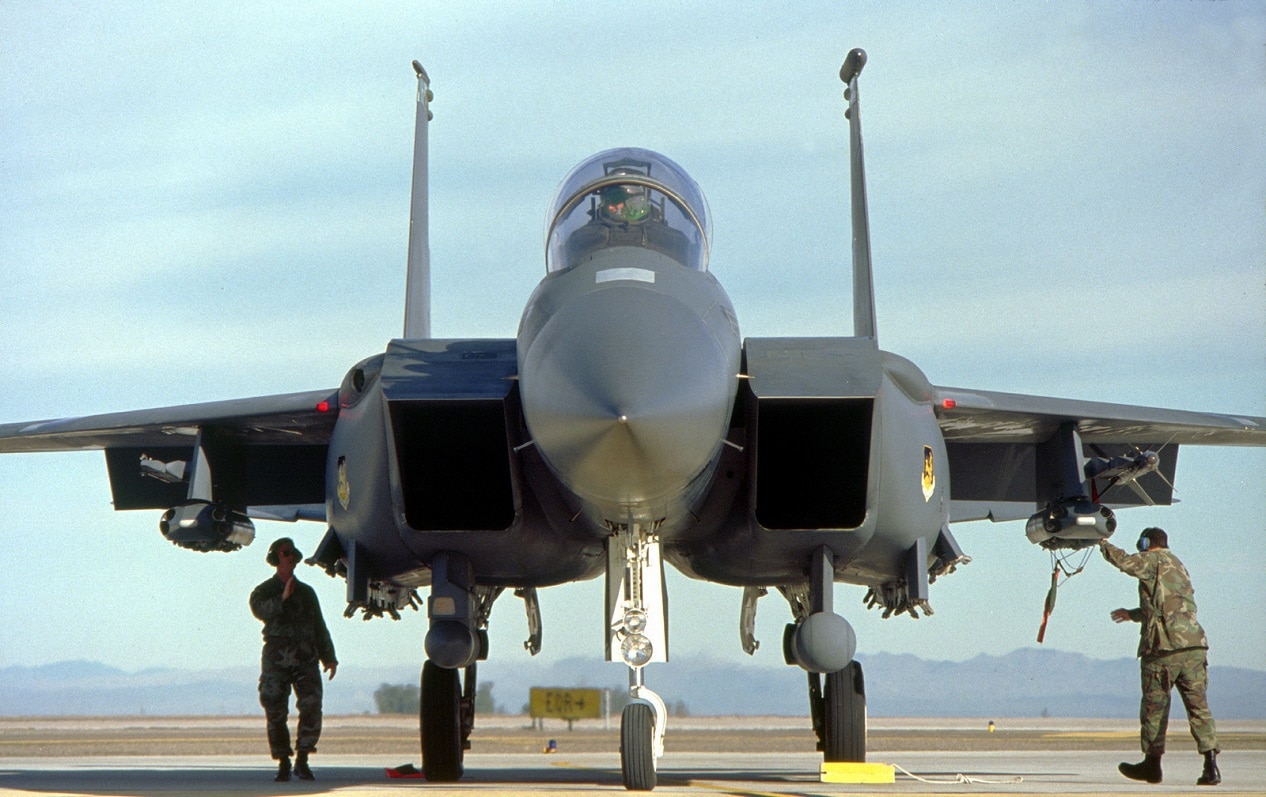
Staff Sgt. Dave Smith and Senior Airman John Pusieski from the 58th Operational Support Squadron, 58th Fighter Wing, peform last-minute checks and arm practice bombs on an F-15E Eagle aircraft from the 461st Fighter Squadron.
The concept is to use F-15s as support-bomb truck weapons, able to fly through a safer air corridor after U.S. 5th-generation stealth aircraft such as F-22s and F-35s destroy advanced air defenses.
The F-15, therefore, remains effective, if not superior, against rival 4th-generation aircraft anywhere in the world, and is well positioned to greatly support 5th-generation aircraft in a large-scale air campaign by leveraging its extensive weapons arsenal to supplement those of the F-22 or F-35.
The F-15 can also be used to combat and destroy enemy 4th-generation aircraft and perform high-value air-to-ground and air-to-air attacks in support of an offensive military effort. Therefore, for these and other reasons, the friendly fire shoot-down of F-15s does not in any way reflect poorly upon the F-15 itself.
Modern F-15
Remarkably, the aircraft may have first taken to the sky decades ago as an 1980s platform. Yet, the fighter has remained relevant, constant, and extremely effective for nearly a generation of operational combat. The U.S. Air Force has, in recent years, learned a valuable lesson about fighter and bomber airframes: they can remain effective and viable for decades beyond their intended service life.
This has been the case with the B-52 and F-16 airframes, which have received sufficient structural support to propel them into a modern threat environment. While the airframes, of course, require upkeep, structural reinforcement, and maintenance, these legacy fighters have become entirely different aircraft, capable of remaining effective, if not superior, decades beyond what may have initially been expected.
Not only is the B-52 an entirely new aircraft with a new engine, weapons bay, and weapons capability, but both the F-15 and the F-16 have received what the Air Force calls Service Life Extension Programs (SLEP) designed to integrate new generations of sensing, targeting, avionics, communications technology, and weapons.
With new sensors, radar, EW capability, computing, and weapons integration, the F-15 has become an entirely different aircraft from the one it was at its inception in the 1980s. This is a key reason why the F-15 is being used effectively in the ongoing U.S. & Israeli strikes on Iran.
The F-15 is famous for never having lost a dogfight or air-to-air engagement in its entire history, and the platform is slated to be capable of F-22-like speeds of Mach 2.2 or faster.
The F-15’s thrust-to-weight ratio may help explain its unparalleled air-war success. An interesting compilation from World Defense lists the F-15 as having a 1.29 thrust-to-weight ratio, right next to the Russian Su-35 at 1.30. The F-22, however, when outfitted with “round nozzles,” can hit a 1.37 thrust-to-weight ratio, according to the assessment.
Upgrade Success
Perhaps the largest reason for the extension lies in the widely recognized reality that successful upgrades can transform a legacy fighter or bomber into a modern, highly capable, relevant aircraft equipped for major modern combat operations. Airframes themselves often remain viable for decades beyond an aircraft’s intended or expected service life, particularly if reinforced structurally.
This has proven to be the case with the C-130, F-16, and famous Vietnam-era B-52, a classic aircraft which now has a new engine, new weapons bay, new communications technology, and new sensing and avionics.
Today’s B-52 will fly farther and faster and likely launch drones, fire hypersonic weapons, and carry an unprecedented arsenal into war. Similarly, overall flight hours for the Air Force’s F-16s have been extended by several thousand due to its successful SLEP (Service Life Extension Program). The F-16 SLEP has not only included avionics, sensing, and communications technology but also retrofitted several F-35 components into the aircraft, such as its Active Electronically Scanned Array (AESA) radar.
F-15 Upgrades
Various versions of the F-15 are also receiving AESA radar upgrades, technologies that can increase the range and accuracy with which enemy targets can be detected and verified. AESA, in particular, is engineered to detect a wide range of threats simultaneously and can cover a growing number of frequencies.
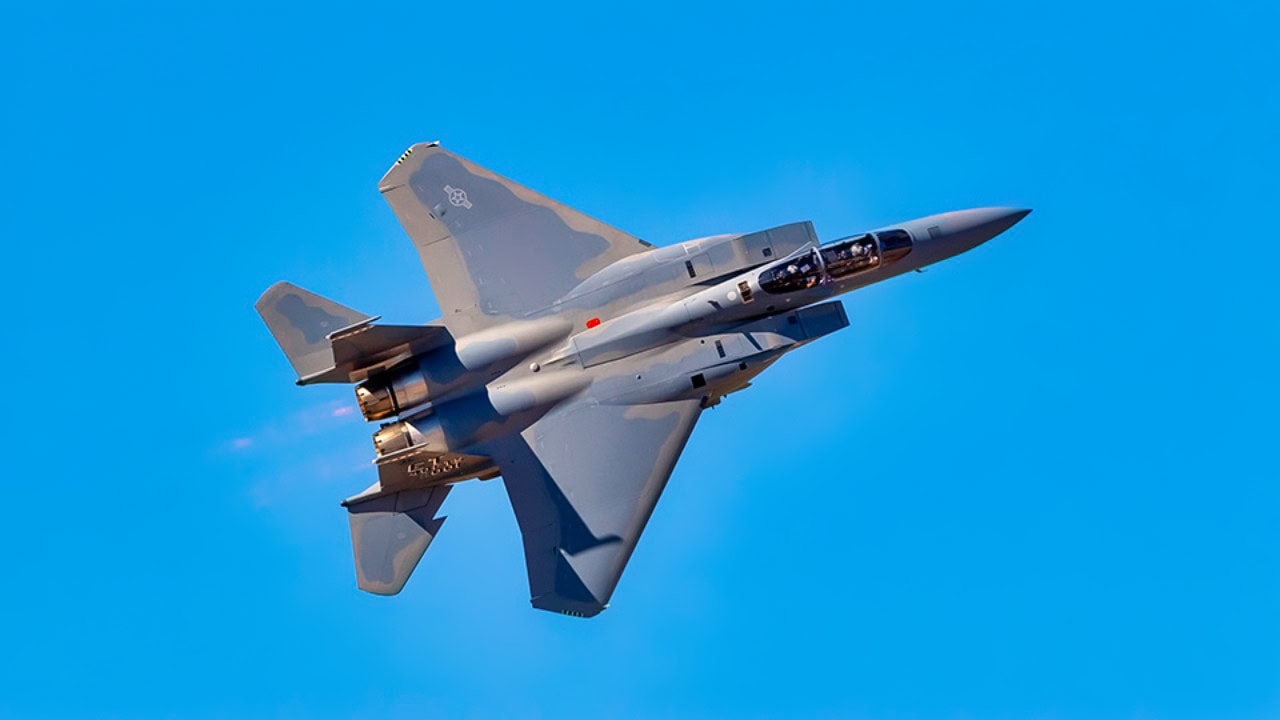
F-15EX Eagle II Fighter from Boeing.
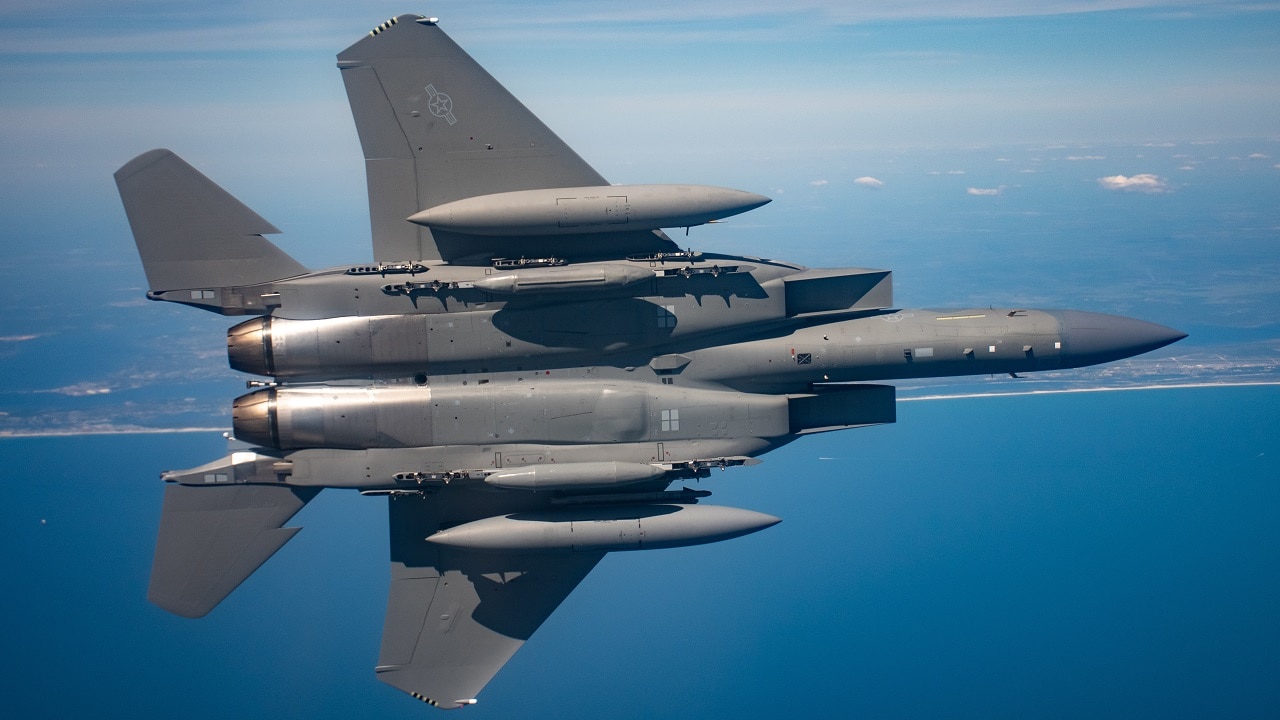
An F-15EX Eagle II from the 85th Test and Evaluation Squadron, 53rd Wing, takes flight for the first time out of Eglin Air Force Base, Fla., April 26, 2021, prior to departure for Northern Edge 2021. The F-15EX brings next-generation combat technology to a highly successful fighter airframe that is capable of projecting power across multiple domains for the Joint Force. (U.S Air Force photo by 1st Lt Savanah Bray)
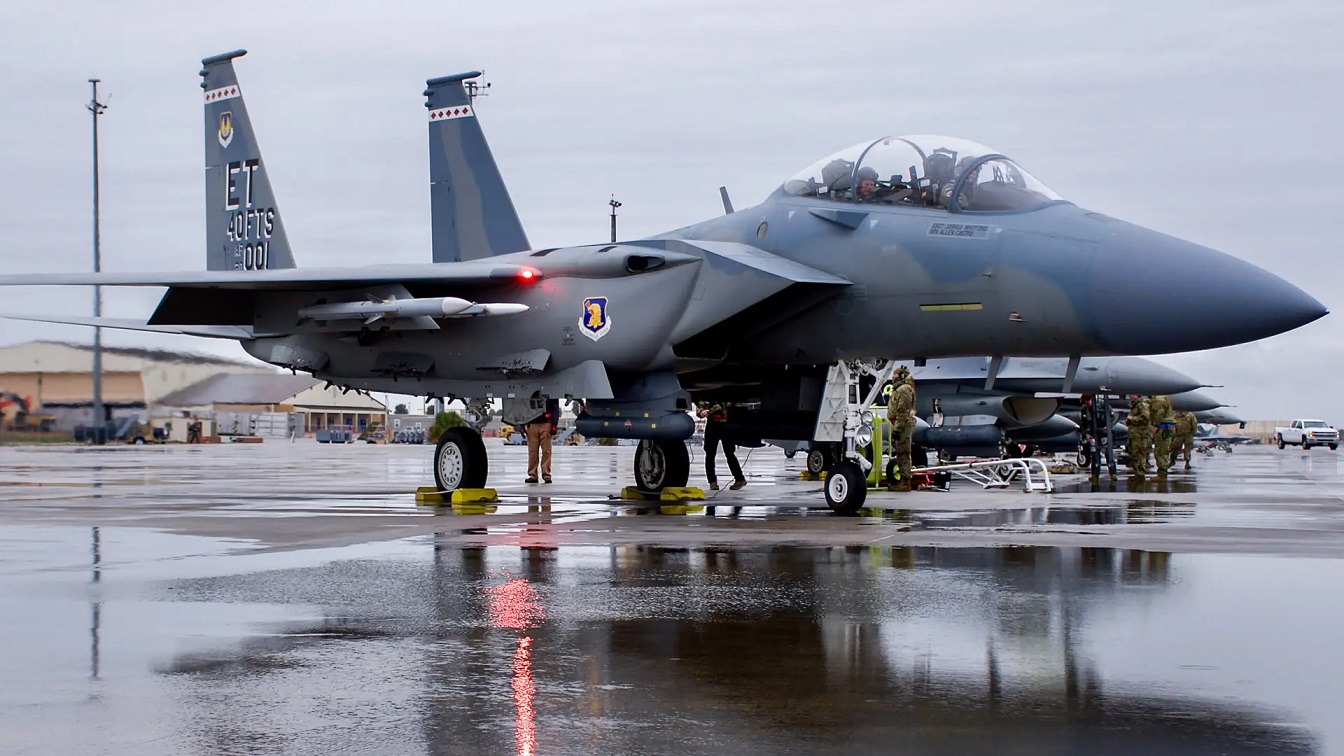
F-15EX. Image Credit: U.S. Air Force.
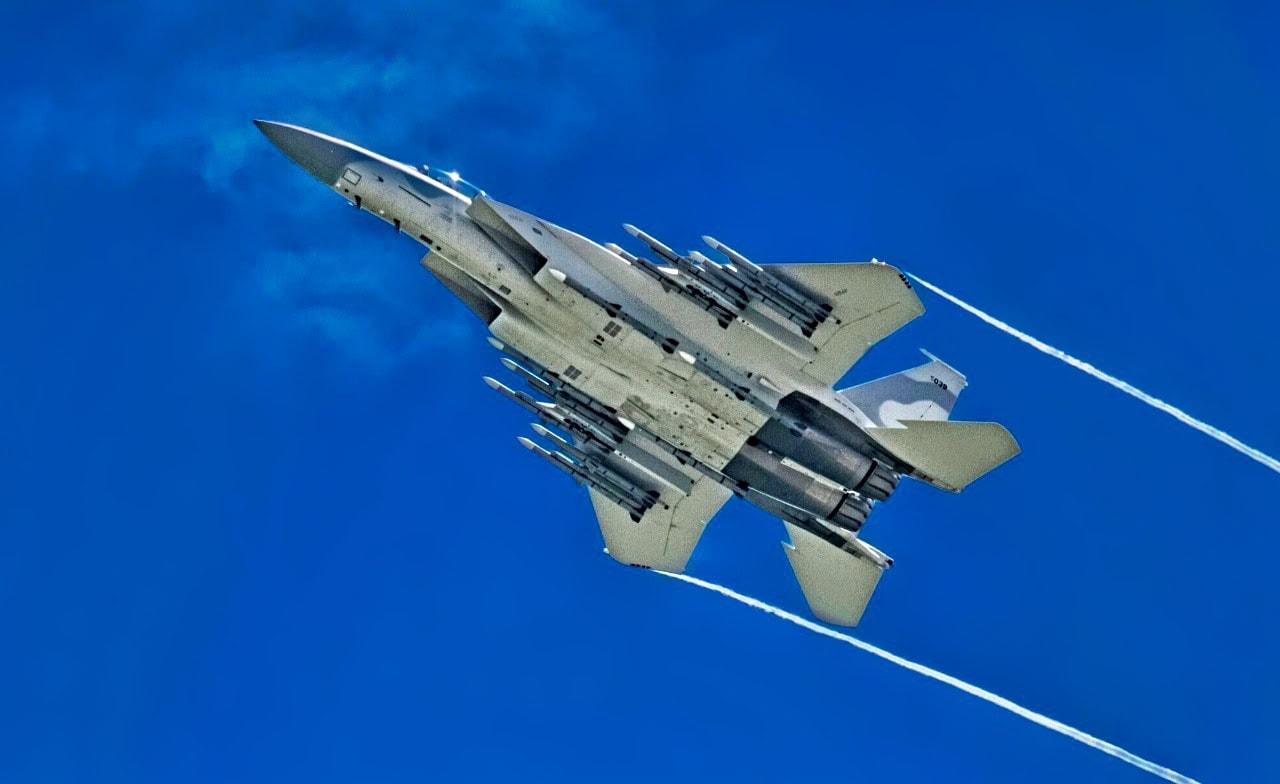
F-15EX Eagle II from U.S. Air Force
The range and image fidelity of a radar system are, in large measure, determined by the number of its Transmit/Receive modules and the “packaging” of how densely and effectively they are engineered into the nose radome of an aircraft.
Therefore, an F-15, which has a much longer and more precise detection range, can adapt to a modern threat environment and detect potential enemy targets from much greater distances. The F-15 has also been engineered with an extremely powerful Advanced Display Core Processor II computer, a machine with processing speed so fast it can perform 87 billion functions per second.
New High-Speed Computer
A significant US Air Force essay from 2016 catalogs the first flight of the ADCP II on an F-15.
“The ADCP II high-speed processing and interface designs enable advanced systems integration, increased mission effectiveness, augmented fault-tolerance, enhanced system stability and aircrew survivability,” the Air Force essay explains.
According to the US Air Force, the most critical element of the computer upgrade is that the new computer will support ongoing aircraft upgrades that dramatically improve performance capacity and allow for continued software enhancements.
The ADCP II supports the Eagle Passive/Active Warning Survivability System and the well-known and highly impactful Infrared Search and Track Systems (IRST). These technologies greatly enhance the aircraft’s ability to operate in a high-threat electronic warfare (EW) “Jamming” environment. IRST is also integrated into the US Navy’s F/A-18 and is credited with greatly improving targeting precision, range, and accuracy.
About the Author: Kris Osborn, President of Warrior Maven
Kris Osborn is the President of Warrior Maven – Center for Military Modernization. Osborn previously served at the Pentagon as a highly qualified expert in the Office of the Assistant Secretary of the Army—Acquisition, Logistics & Technology. Osborn has also worked as an anchor and on-air military specialist at national TV networks. He has appeared as a guest military expert on Fox News, MSNBC, The Military Channel, and The History Channel. He also has a Masters Degree in Comparative Literature from Columbia University.