
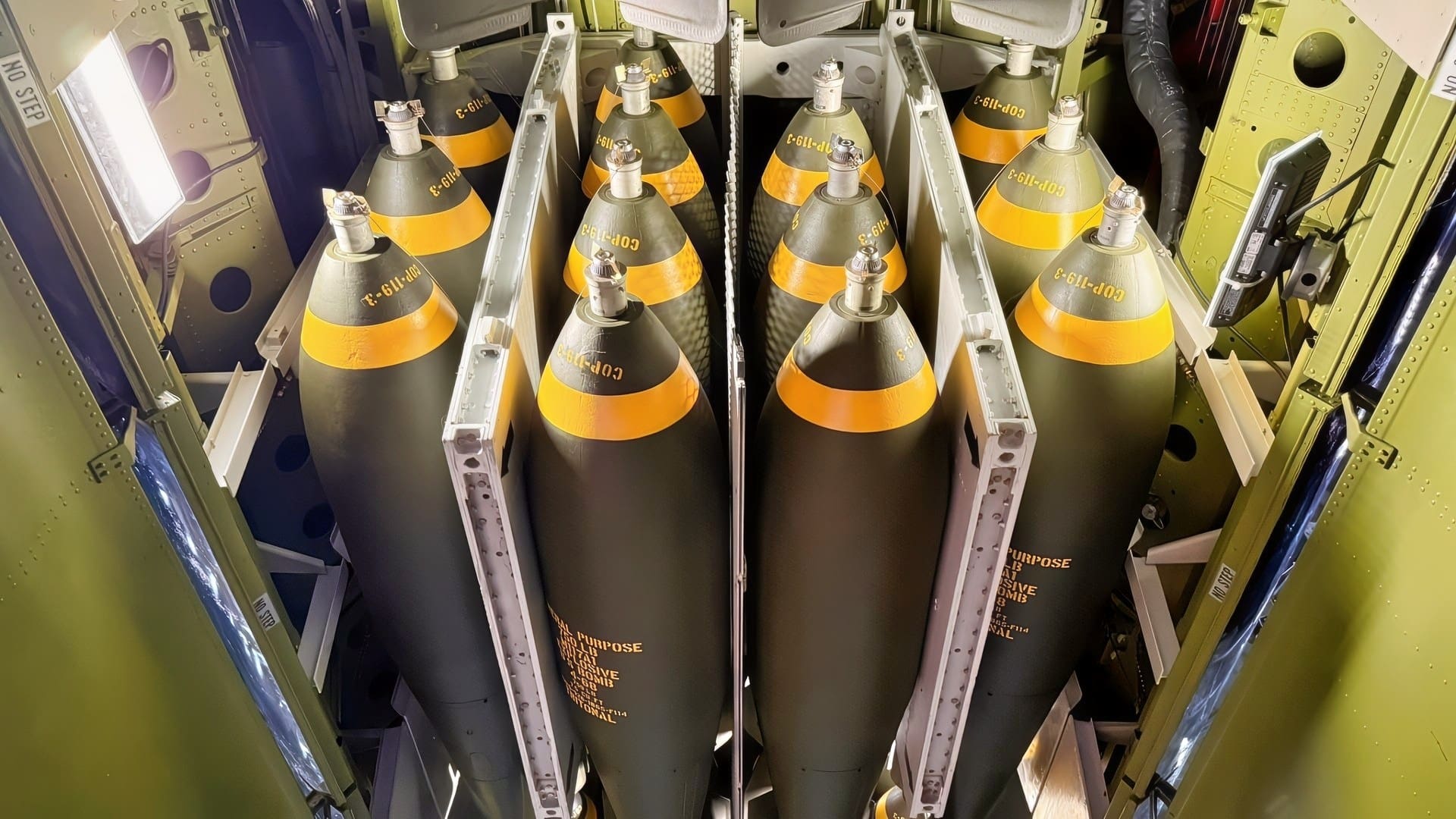
Summary and Key Points: Dr. Andrew Latham, a non-resident fellow at Defense Priorities and professor of international relations, evaluates the emerging Trump Doctrine of military force and defines the 2026 landscape while using the Iran war as a test case.
-As Operation Epic Fury strikes Iranian nuclear and missile infrastructure, this report analyzes the transition from post-Cold War nation-building to strategic coercion.
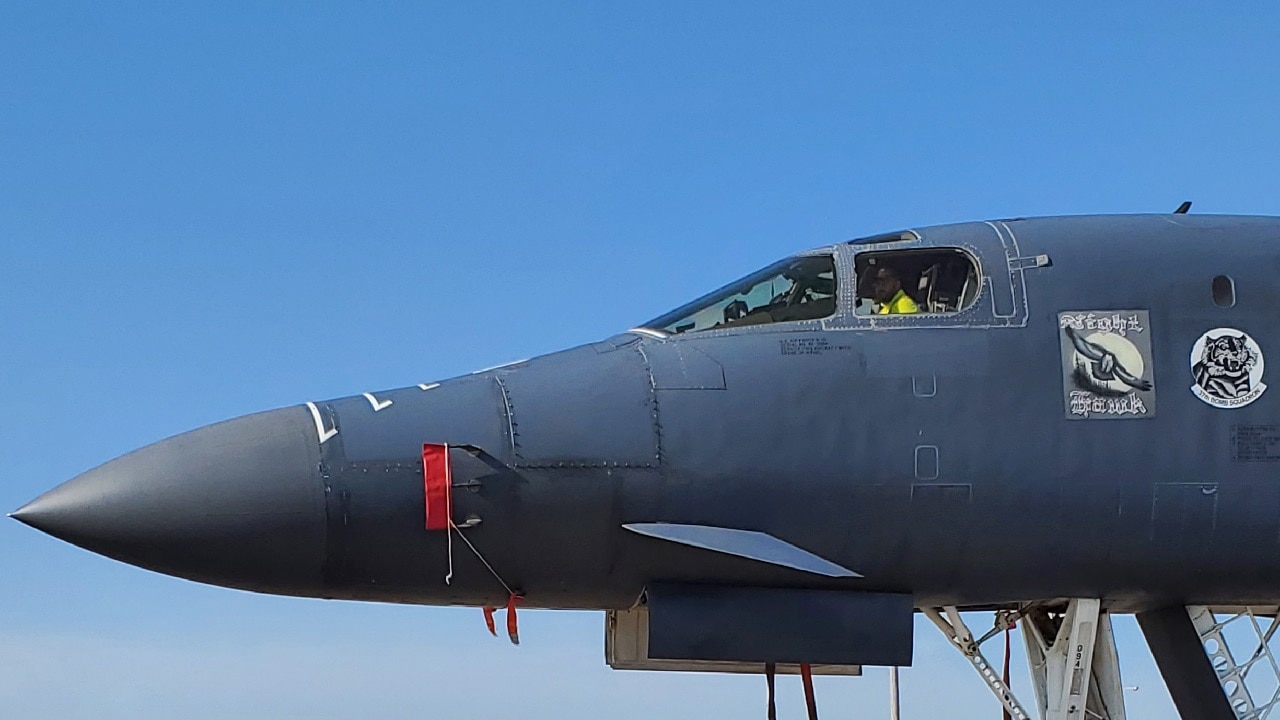
A B-1B Lancer, tail number 86-0094, is moved across Douglas Blvd. to the Maintenance Repair and Overhaul Technology Center (MROTC) to receive an initial portion of Gate 1 of programmed depot maintenance April 21. 567th AMXS personnel will perform three days of maintenance which include single system checks on 40 individual actuators validating voltage outputs as
well as interrogating each actuator for hydraulic leaks. After single systems are completed, the horizontal stabilizers will be removed from the aircraft. This is the first time that horizontal stabilizers have ever been removed at the MROTC. Once complete, the aircraft and horizontal stabilizers will be brought back across Douglas to the 569th AMXS strip facility for plastic media blasting. Once stripped, the horizontal stabilizers will be routed to the 76th Commodities Maintenance Group for overhaul and repairs. (U.S. Air Force photo/Kelly White)
-Unlike the Powell Doctrine, this model prioritizes leadership disruption and the destruction of command networks over political reconstruction.
-Latham concludes that by focusing on short-duration, high-intensity campaigns in theaters like Venezuela and Iran, Washington is effectively abandoning the open-ended stabilization habits of the last three decades.
The 2026 Trump Doctrine: Why U.S. Forces are Striking Iran Without Any Plan for Occupation
American aircraft striking Iranian nuclear and missile infrastructure today are revealing more than the opening phase of a military campaign.
They also reveal the outlines of a different American doctrine of force, and Iran gives us some examples.
Earlier this year, a similarly bounded operation in Venezuela followed the same basic logic.
American forces moved quickly, disrupted the regime’s strategic position, and disengaged before the mission expanded into a project of political reconstruction. Taken together, these episodes point to a pattern in how Washington is beginning to use military power.
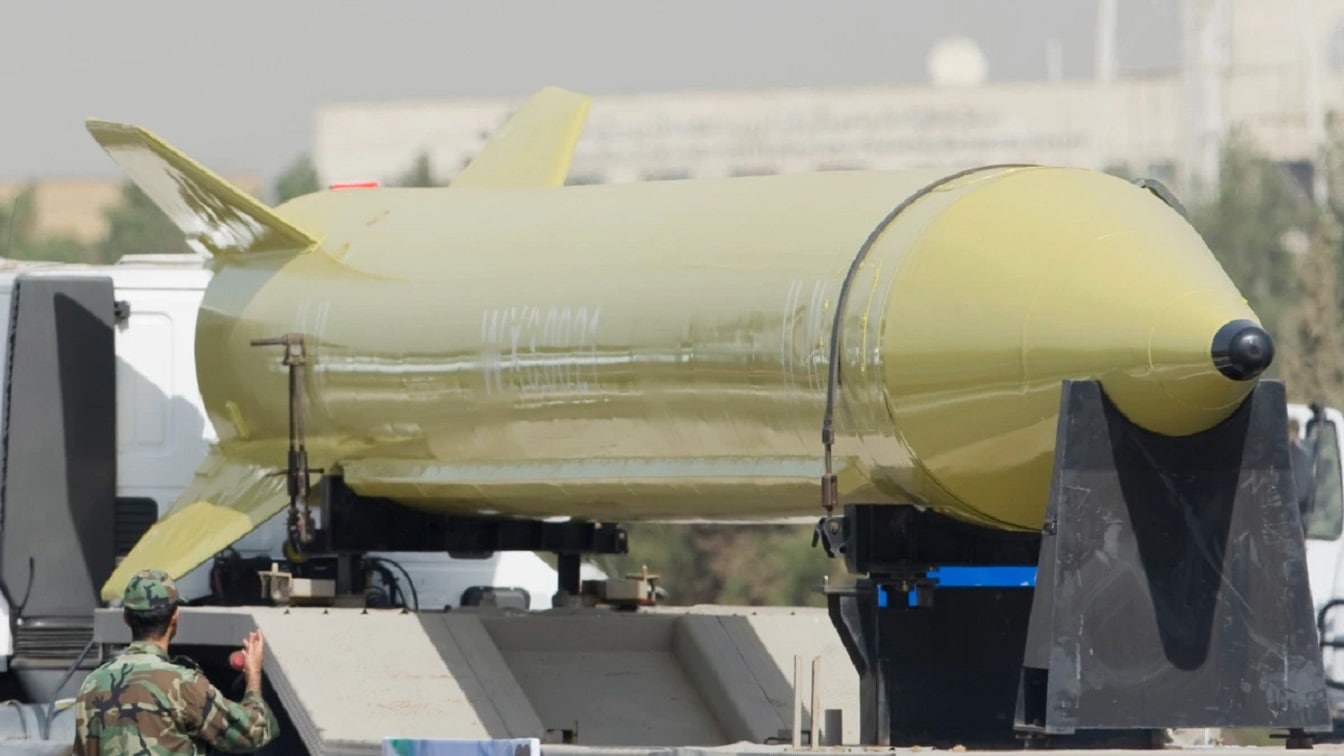
Iranian Ballistic Missile. Image Credit: Creative Commons.
Much of the commentary surrounding these events treats them as reflections of Donald Trump’s personality or the internal politics of his administration. That explanation carries little analytical weight. Across American history, doctrines governing the use of force rarely originate in personality alone. They tend to emerge when the strategic environment changes and older habits of statecraft stop working.
Doctrines Follow Strategic Environments
The Monroe Doctrine, often remembered simply as James Monroe’s warning to European powers to stay out of the Western Hemisphere, reflected the vulnerability of a young republic confronting stronger European empires.
Geography mattered, but so did commerce in the hemisphere and the quiet reality that British naval power helped make the warning credible. A century later, the Truman Doctrine emerged from a very different environment. Soviet power dominated Eastern Europe, and Washington concluded that preventing further expansion required a long campaign of containment supported by alliances and forward military presence.
Later still came the Powell Doctrine, shaped by the long shadow of Vietnam. It was an attempt to restore discipline to the use of American force. Military action, in this view, should occur only when political objectives are clear and when the United States is willing to commit enough power to prevail decisively. War was not to be entered lightly, and once entered, it was supposed to end cleanly. The Gulf War of 1991 vindicated that logic. An overwhelming force was applied to limited objectives, and the campaign ended quickly.

B-52J Bomber U.S. Air Force. Image Credit: Creative Commons.
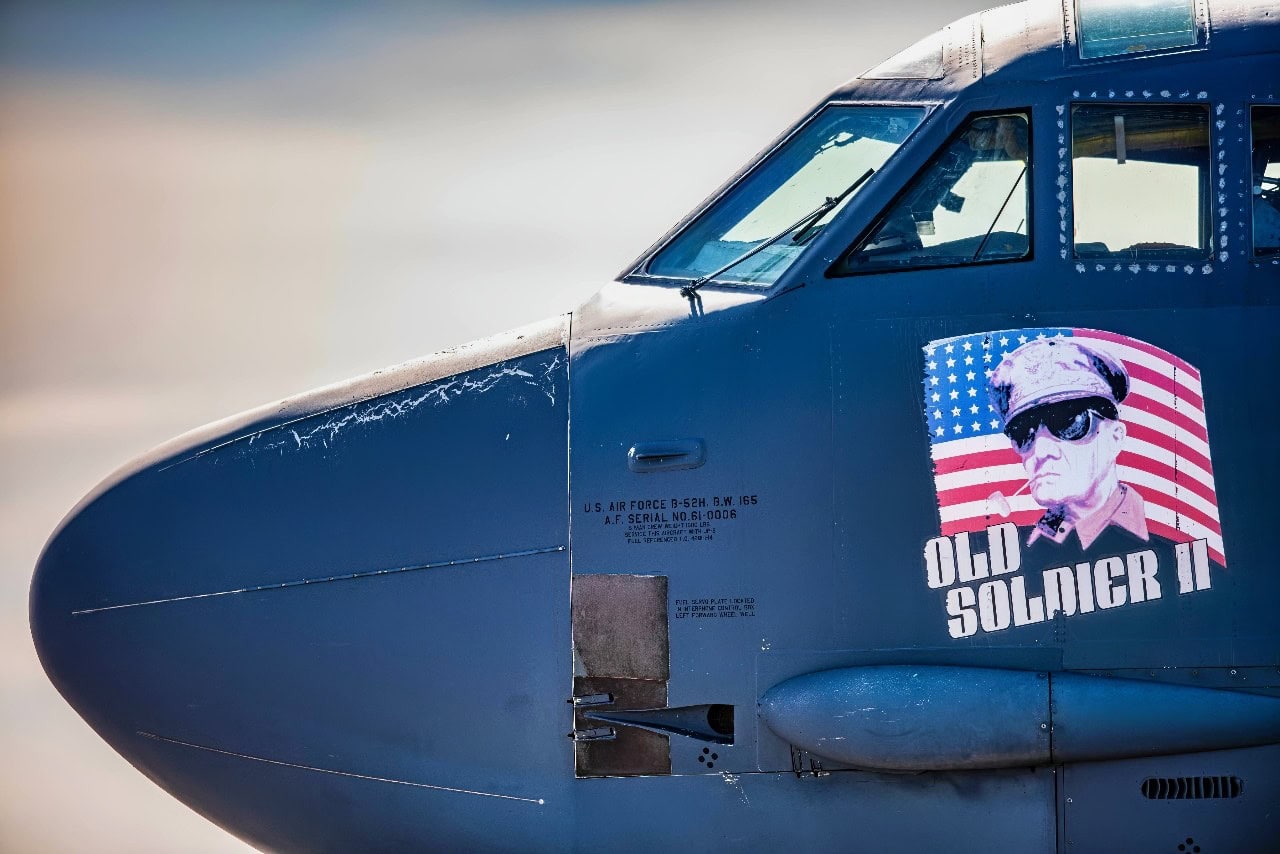
A U.S. Air Force B-52H Stratofortress assigned to the 96th Bomb Squadron, Barksdale Air Force Base, Louisiana, sits on the flightline during exercise Prairie Vigilance 25-1 at Minot Air Force Base, North Dakota, April 12, 2025. For more than 60 years, the B-52 has been the backbone of the strategic bomber force of the United States. As a routine training mission, PV 25-1 enhances the safety, security, and reliability of the bomber leg of the U.S. nuclear triad. (U.S. Air Force photo by Senior Airman Kyle Wilson)
The Core Logic of the Trump Doctrine
Set against that longer history, the approach taking shape around the Trump presidency looks less like improvisation than a response to changing strategic circumstances.
What stands out most is a different sense of what military force is supposed to do. During the long wars after the Cold War, American strategy gradually came to link battlefield success with political reconstruction.
When hostile regimes collapsed, Washington usually found itself responsible for stabilizing the country and rebuilding the political order that followed. Iraq and Afghanistan turned that expectation into something close to a habit.
The Trump Doctrine breaks that habit. Military force is treated primarily as an instrument of coercion within an ongoing geopolitical rivalry rather than as the opening move in a campaign intended to culminate in political reconstruction.
The objective is narrower and more traditional: to undermine the capabilities that allow hostile regimes to threaten American interests and to force those regimes to reconsider their strategic calculations. Nuclear infrastructure, missile forces, command networks, and leadership nodes tied to those systems become the central targets. The aim is not to redesign the adversary’s political system. It is to alter the behavior of the state that commands those capabilities.
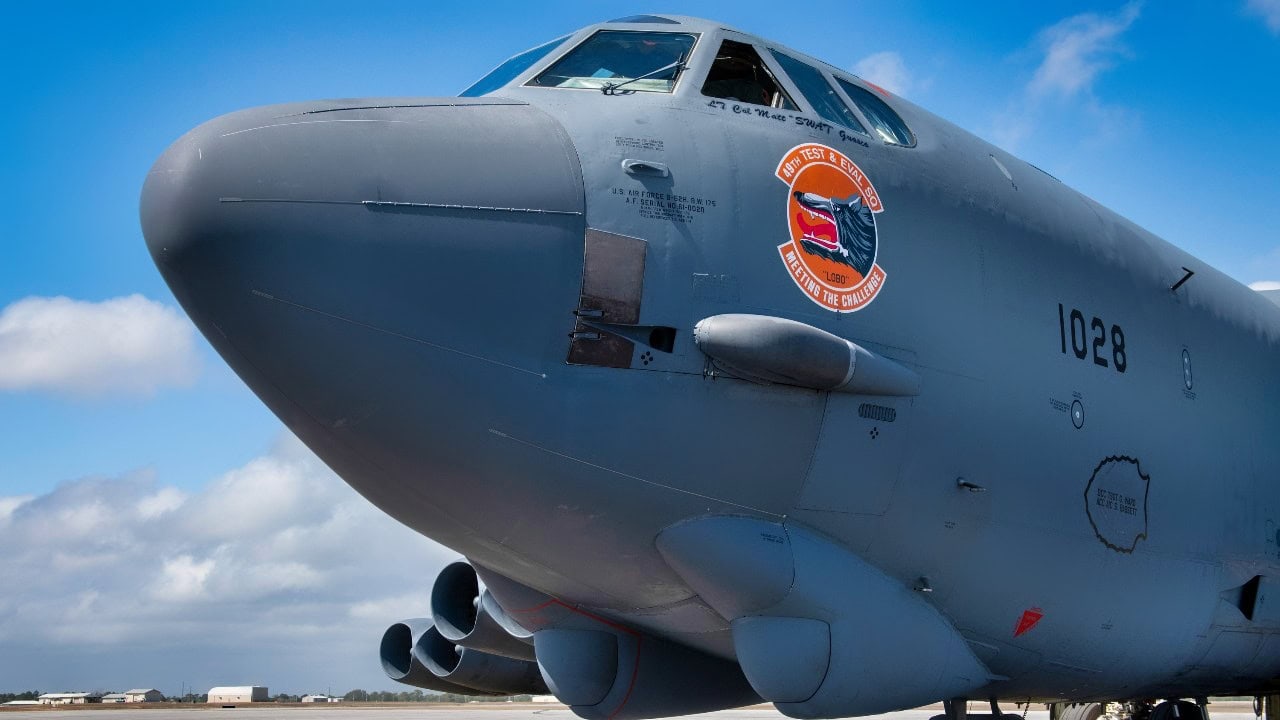
A 53rd Wing B-52 Stratofortress sits on the flightline Feb 22, 2022 at Eglin Air Force Base, Florida. The 49th Test and Evaluation Squadron aircrew brought the bomber from Barksdale AFB, Louisiana, to allow wing personnel an opportunity to see one of their geographically separated aircraft up close. (U.S. Air Force photo/Ilka Cole)
The strikes against Iranian nuclear and missile facilities illustrate that logic clearly. The goal is to weaken Tehran’s ability to project military power and threaten regional stability. Earlier operations against the Maduro regime in Venezuela followed a similar pattern.
American forces imposed strategic disruption and then disengaged before the mission expanded into an open-ended political project.
Coercion by Capability and Leadership Disruption
Within this framework, the doctrine allows more than one route to changing state behavior.
One path works through capability destruction, like in Iran. By damaging nuclear facilities, missile forces, or other strategic assets, the United States reduces the adversary’s ability to threaten American interests and forces the regime to recalculate its options.
Another path focuses on leadership disruption. Sometimes the obstacle to behavioral change lies within the ruling elite itself.
The Venezuela operation illustrated this approach in relatively surgical form. American forces removed Nicolás Maduro while leaving much of the Venezuelan state apparatus intact. The objective was not to dismantle the Venezuelan state but to alter the leadership configuration shaping its strategic behavior. Speculation surrounding the current conflict with Iran suggests a harsher variant of the same logic. The aim in either case remains the same: change how the state behaves without inheriting responsibility for governing it.
Short Wars Without Occupation
Another defining feature of the doctrine lies in the structure of the campaigns themselves. Operations are designed to be intense but brief.
Military action begins with clearly defined operational objectives and ends once those objectives are achieved. That structure reflects the hard lessons of previous generations of war. Long occupations create political burdens that often exceed the threats they were meant to eliminate. They absorb resources, consume strategic attention, and entangle American forces in internal conflicts that are difficult to resolve.
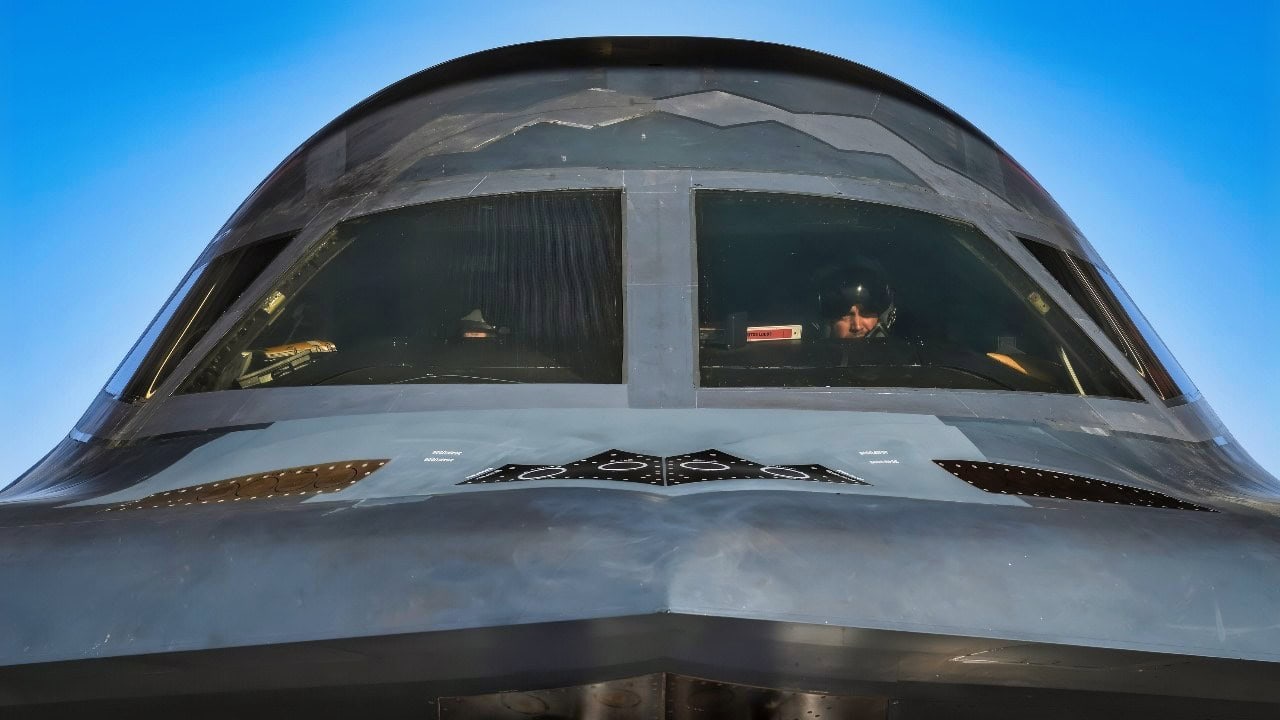
A U.S. Air Force B-2 Spirit aircrew performs pre-flight checks in the cockpit of their aircraft at Whiteman Air Force Base, Missouri, March 8, 2020. The B-2 took off from Whiteman AFB to support U.S. Strategic Command Bomber Task Force operations in Europe. The 131st Bomb Wing is the total-force partner unit to the 509th Bomb Wing. (U.S. Air Force photo by Tech. Sgt. Alexander W. Riedel)

B-2 Spirit Stealth Bomber 19FortyFive Image. Taken By Harry J. Kazianis at U.S. Air Force Museum in 2025.
Several structural pressures have pushed American strategy in this direction. The geopolitical environment has changed. The United States no longer operates in the relatively permissive setting of the early post–Cold War years, when unipolar dominance made large expeditionary campaigns seem feasible and affordable. The system today is more crowded and competitive, with multiple crises competing for attention and resources. In that environment, tying down large formations in prolonged stabilization missions carries obvious opportunity costs.
The nature of the threats Washington faces has shifted as well. In the early 2000s, Afghanistan and Iraq were treated as regimes that could be removed and replaced without fundamentally altering the wider balance of power. Contemporary adversaries such as Iran or Venezuela pose a different problem. They cannot defeat the United States conventionally, but they can impose costs through missiles, proxy networks, and other asymmetric tools designed to stretch out conflicts and exploit American patience.
Technology reinforces these pressures. Advances in surveillance, drones, and precision strike capabilities allow the United States to damage critical targets without occupying territory. In contrast, the spread of long-range missiles and unmanned systems has given weaker states new ways to threaten stronger ones.
Beyond Iran and Venezuela: A Different Relationship Between War and Politics
The Trump Doctrine, therefore, reflects a shift in how American strategy connects military force with political outcomes, with Iran showing us a test case. For much of the post–Cold War era, Washington assumed that defeating an adversary would naturally lead to rebuilding the political order that followed.
The emerging doctrine discards that assumption. It accepts that the United States may need to use force against dangerous regimes while declining to assume responsibility for reconstructing them once the fighting stops.
That approach carries real risks. Coercive campaigns rarely produce tidy political outcomes, and once the bombing stops, Washington cannot control what follows. Adversaries can adapt, rebuild damaged capabilities, or shift the contest elsewhere.
Even so, the calculation behind this doctrine is fairly straightforward. Occupations impose costs—strategic, political, and financial—that often outweigh the dangers created by leaving the political aftermath unsettled. In this framework, military force is not meant to rebuild societies or redesign regimes. It is meant to alter the strategic behavior of hostile states.
About the Author: Dr. Andrew Latham
Andrew Latham is a non-resident fellow at Defense Priorities and a professor of international relations and political theory at Macalester College in Saint Paul, MN. You can follow him on X: @aakatham.