
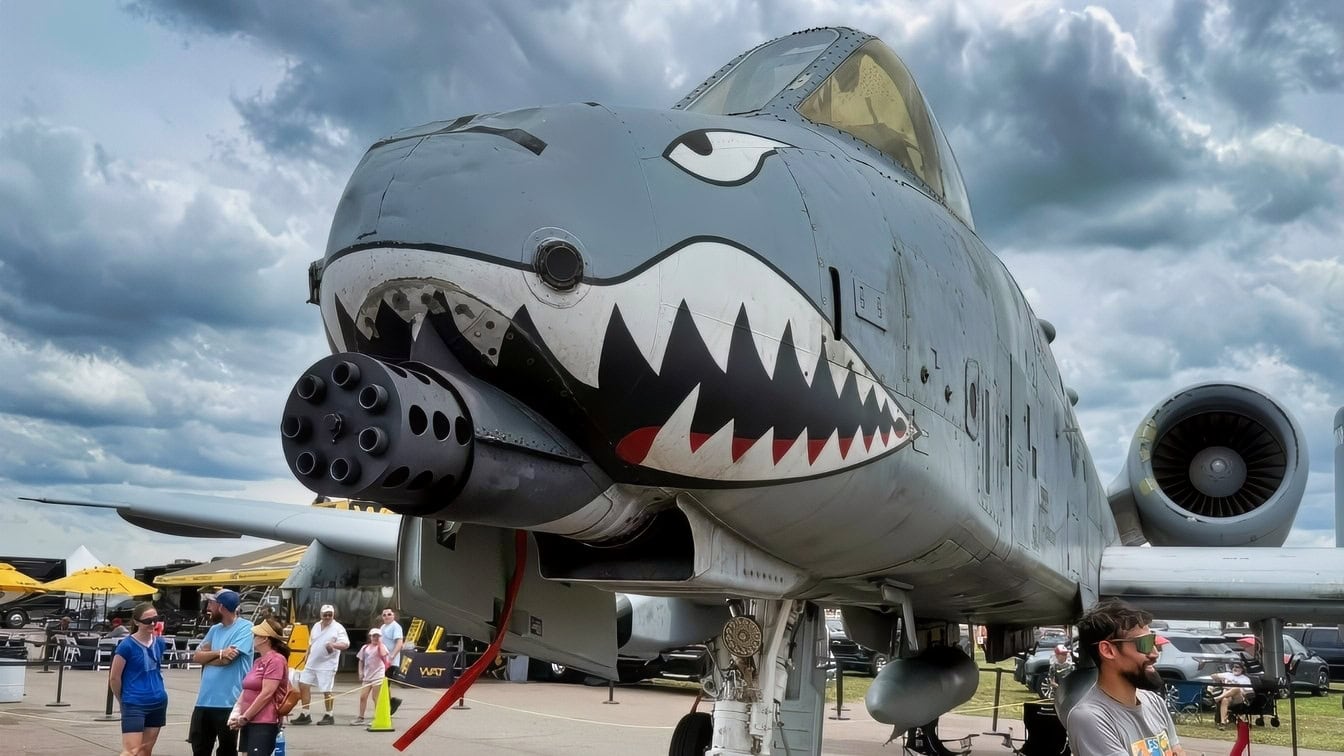
Back on Sunday, 19FortyFive was so close to an A-10 Warthog that we could almost touch it, thanks to the U.S. Air Force team at a recent airshow in Lakeland, Florida. And, in fact, the images of the A-10 in this article come from that visit.
And the timing could not have been better: Air Force Secretary Troy Meink confirmed this week that the A-10 Warthog will remain in service until at least 2030. This move reverses previous early retirement plans. Meink stated the extension will preserve combat power while the defense sector ramps up aircraft production.
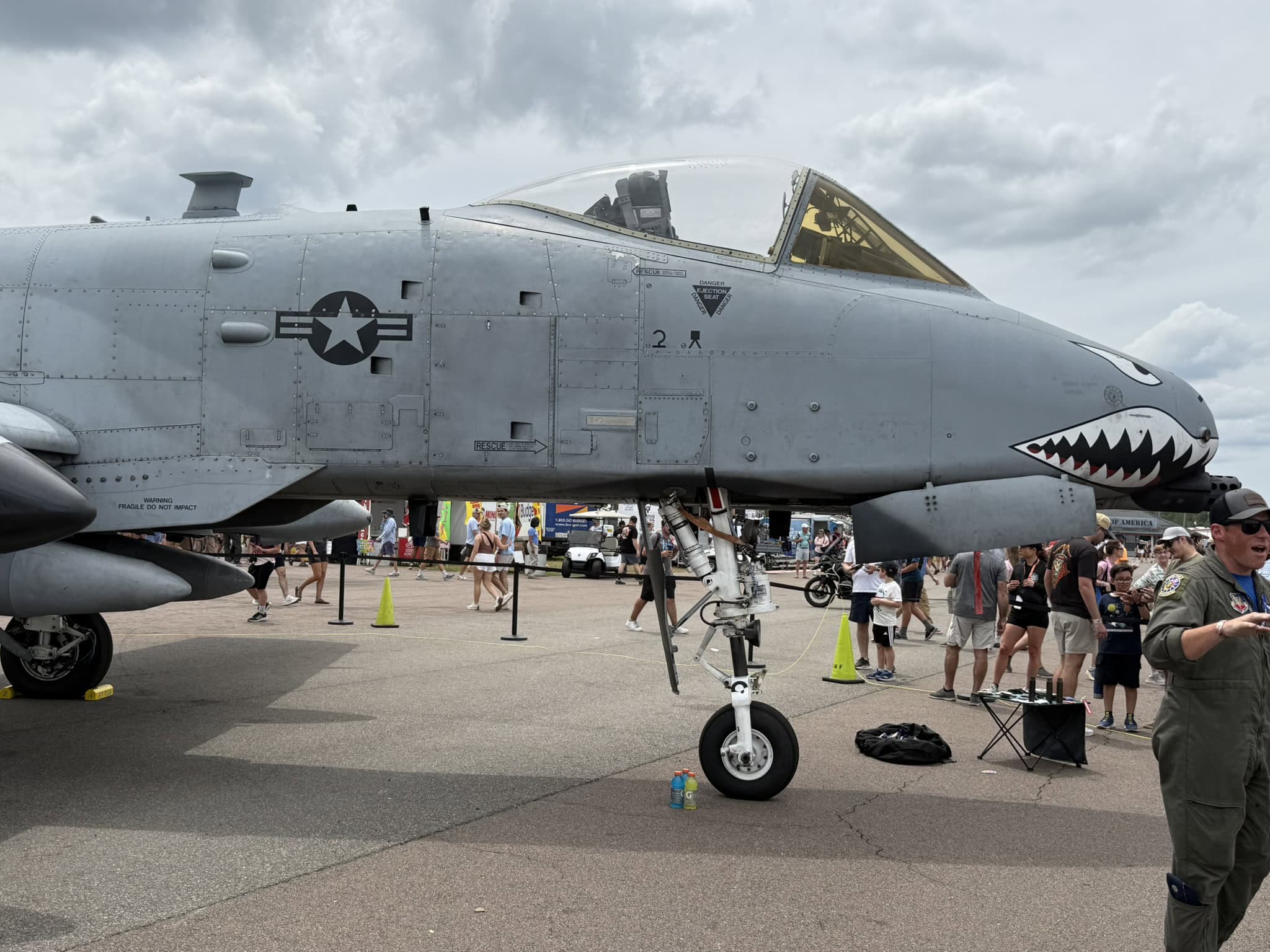
A-10 Warthog. 19FortyFive.com image from Lakeland, Florida airshow on 4/19/2026.
The comment, made on social media, is a polite way of saying the Air Force still needs usable combat aircraft now, and not just theoretical replacements further down the line.
The announcement also comes after the A-10 was recently deployed in the current war with Iran, conducting attacks on Iranian maritime targets in the Strait of Hormuz. While the aging A-10, introduced in 1977, continues to prove its worth, the Pentagon is working to modernize and expand production of key aviation assets to meet global commitments, even as its fighter inventory is under strain.
Why the U.S. Air Force Changed Course
For years, Air Force leadership has argued that the A-10 is too old, too slow, too exposed, and too expensive to maintain.
The service has repeatedly pushed to retire it so money and manpower could be redirected toward the F-35 Lightning II and next-generation aircraft.
But despite being half a century old, the Warthog has remained in service.
Previous plans would have retired the remaining fleet by 2026, but as of fiscal year 2026, the Air Force still had 162 A-10s in its inventory.
Congress had already required the service to keep at least 103 aircraft through the end of the fiscal year – a product of the Air Force not having a replacement prepared for close-air-support missions.
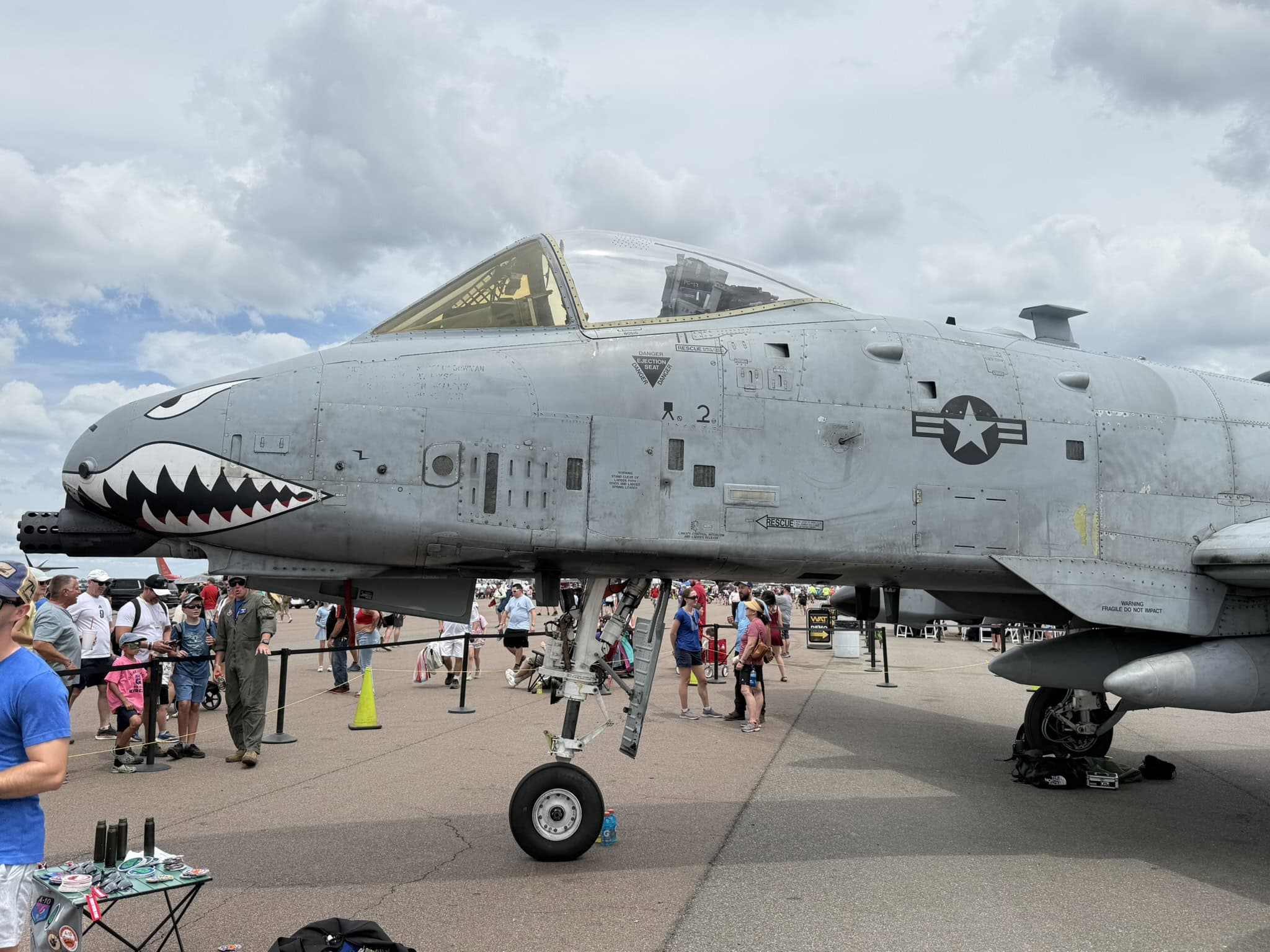
A-10 Warthog. 19FortyFive.com image from Lakeland, Florida airshow on 4/19/2026.
But wartime demand has forced yet another rethink.
Combat operations in the Middle East – like the ongoing conflict in Iran – require aircraft that can fly now, remain on station for long periods, fly low and slow, and strike low-value targets without wasting expensive stealth fighter hours.
The Warthog can support troops and ships under pressure, and retiring it during an active regional conflict, where it has proven its worth after F-35s secured air dominance, would be unwise.
The Warthog Was Built for War
The A-10 Thunderbolt II first flew in 1972 and entered service in 1977.
It was designed during the Cold War to destroy Soviet armored formations as they poured through Europe. Unlike many multirole aircraft, it was built around a single purpose: killing enemy ground forces while protecting friendly troops.
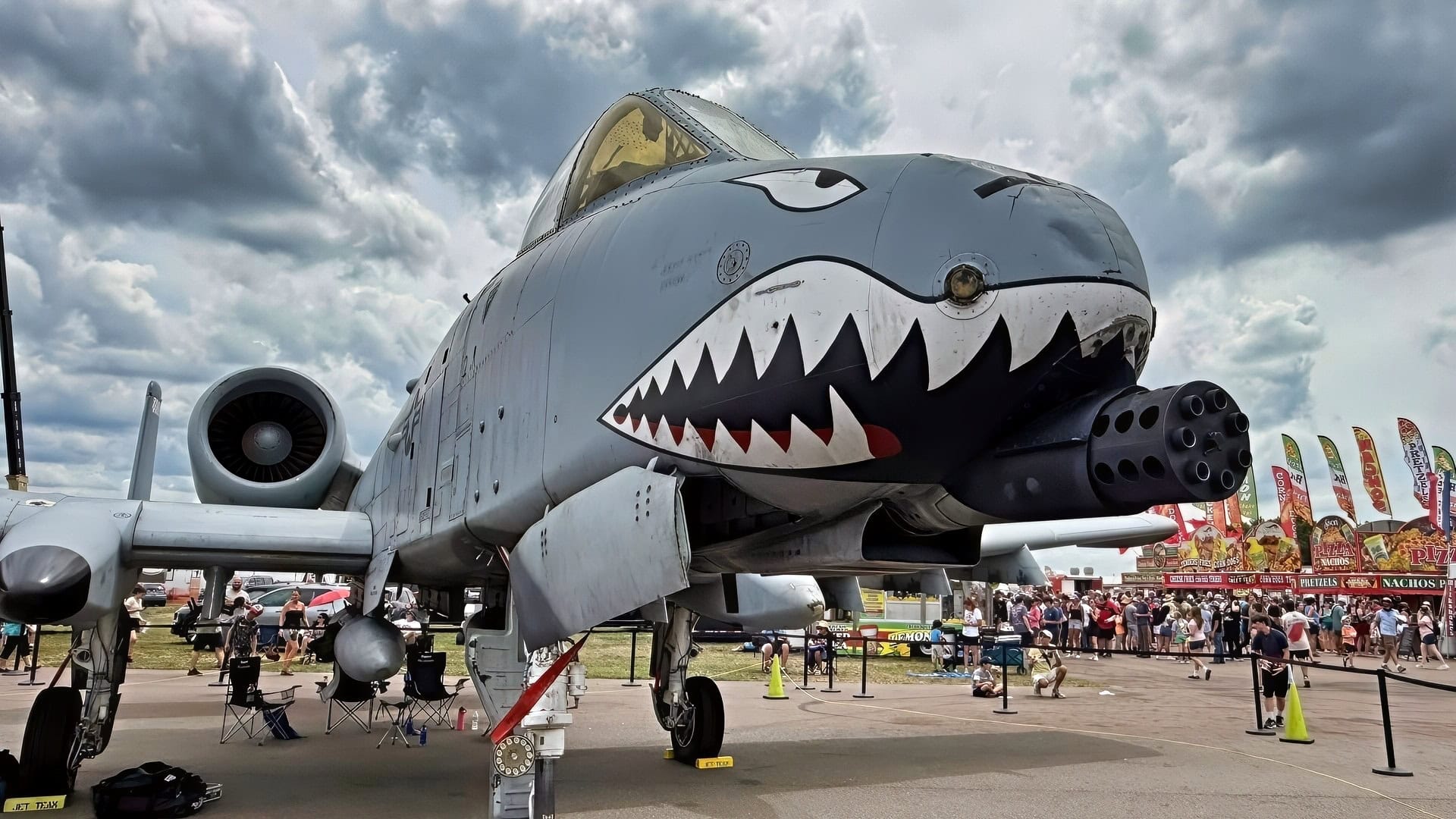
A-10 Warthog Sun’ and Fun Airshow 19FortyFive. Taken 4/19/2026.
Its most famous feature is the GAU-8/A Avenger 30mm cannon, mounted in the nose and capable of firing armor-piercing rounds at a ferocious rate. The pilot sits inside a titanium armored cockpit tub. The aircraft’s engines are mounted high to reduce vulnerability and improve survivability. It can absorb damage that would end many other aircraft and still return home.
The Warthog has been dismissed as obsolete for decades, and yet, it has repeatedly shown up when wars have become prolonged. It played a major role in the 1991 Gulf War. It supported troops in Iraq and Afghanistan.
It flew anti-ISIS operations in Syria.
Every time analysts declared it finished, some new conflict appeared that still required a durable aircraft with long loiter time and heavy firepower.
How It Has Been Used In Iran
If there was any doubt that the A-10 was useful in modern conflicts, the ongoing Iran War proved otherwise. While Iran was a particularly weak target, given the dire state of its air force and mismatched air defense systems, the Warthog has proved its worth.
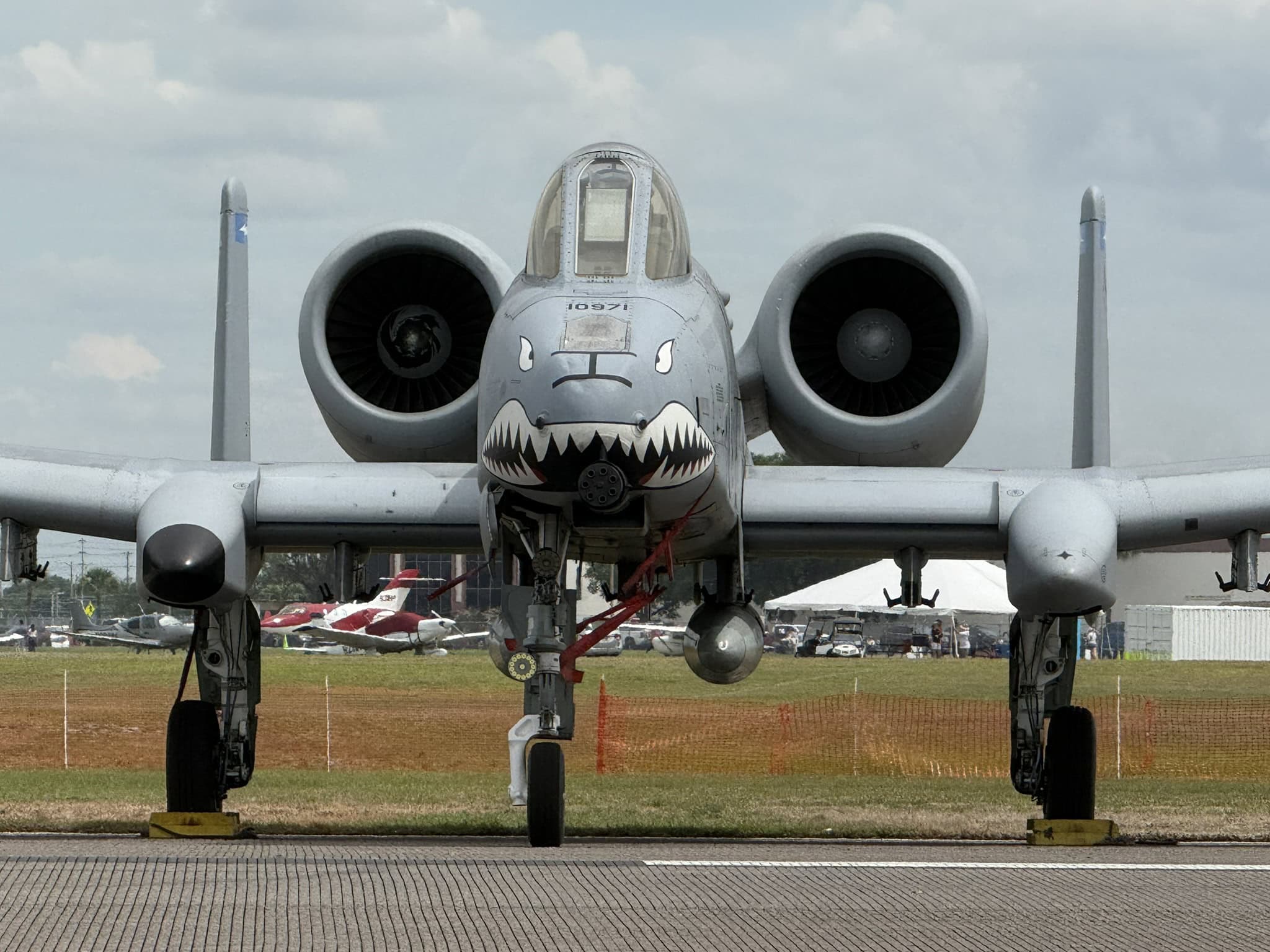
A-10 Warthog. Image Credit: 19FortyFive.com Taken on 4/19/2026.
Its cannon has reportedly been employed against Iranian ships in the Strait of Hormuz, including fast attack craft, swarm boats, and lightly protected maritime targets that do not always require stealth aircraft dropping premium munitions. Sometimes they require a pilot overhead who can just see clearly and fire repeatedly.
The A-10 was also involved in combat rescue support roles during the war, rescuing downed U.S. pilots in Iranian territory.
The A-10 is not being kept because it is advanced, nor do military officials expect it to perform well against peer adversaries like China. It is being kept for missions like Iran, where expensive, modern platforms simply aren’t necessary.
The Best Case for the Warthog
The strongest case for keeping the A-10 is simple: capacity still matters.
The Air Force cannot replace every retiring aircraft overnight, especially while sustaining F-35 production, developing the F-47 next-generation fighter, fielding the B-21 Raider, and modernizing the broader force. Secretary Meink specifically pointed to the limits of current industrial capacity, and that’s an important point.
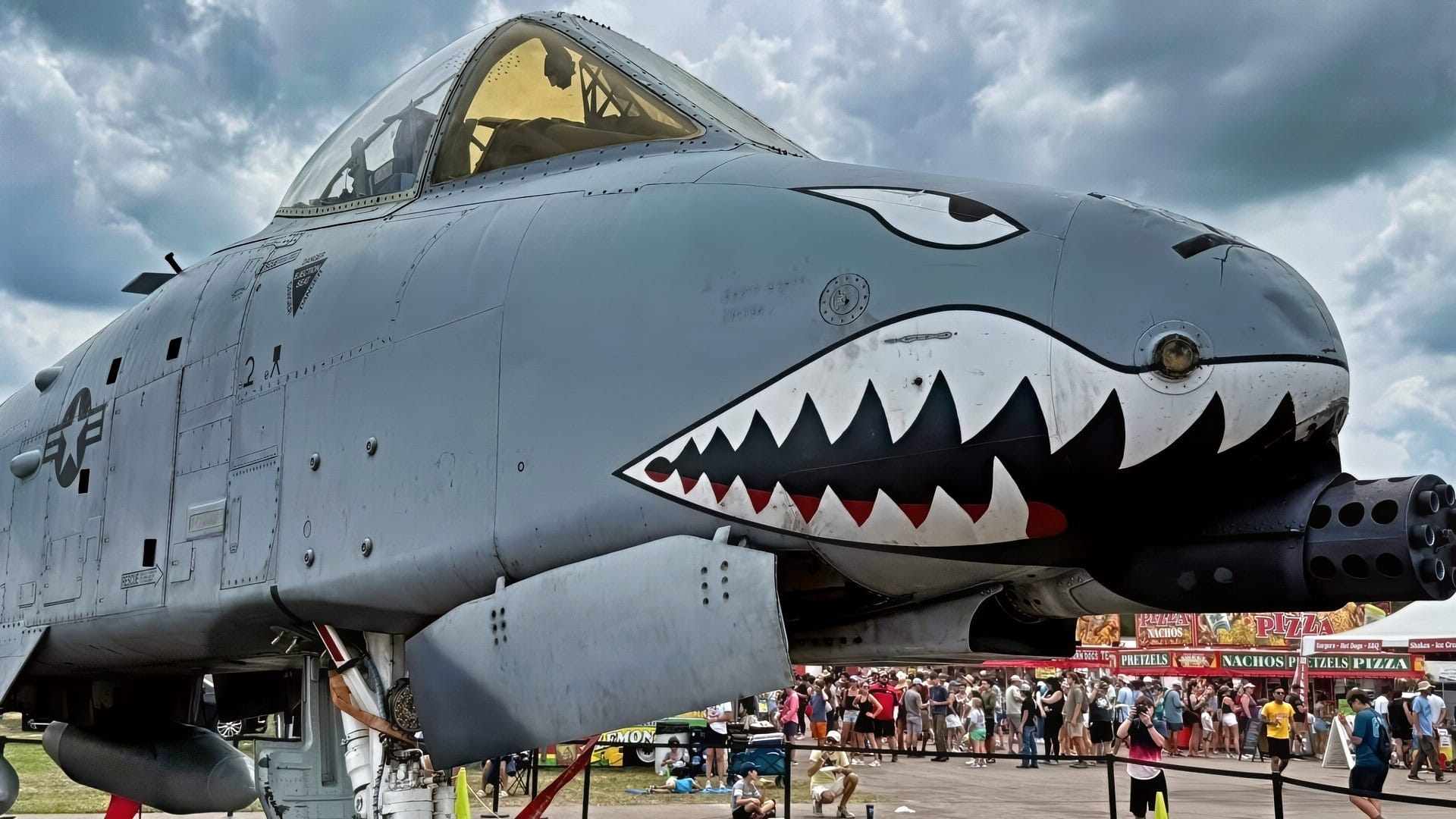
A-10 Warthog Lakeland Florida Airshow 19FortyFive.com. Taken on 4/19/2026.
Keeping the A-10 also preserves a low-cost option for lower-end wars, as previously mentioned, as well as for maritime security missions and close air support operations where stealth is not necessary. That not only reduces risk to more valuable systems, but also allows fifth-generation aircraft to focus on missions only they can perform.
The Warthog may well have been built for another era, but old tools often come in handy. With 162 aircraft still in inventory and its proven combat relevance in Iran, combined with the fact that there is no one-for-one replacement for its niche role, it’s clear that retiring it now would create an avoidable gap.
About the Author: Jack Buckby
Jack Buckby is a British researcher and analyst specializing in defense and national security, based in New York. His work focuses on military capability, procurement, and strategic competition, producing and editing analysis for policy and defense audiences. He brings extensive editorial experience, with a career output spanning over 1,000 articles at 19FortyFive and National Security Journal, and has previously authored books and papers on extremism and deradicalization.