

Summary and Key Points: Drawing on his extensive operational background as a former Air Force Security Forces officer and private military contractor, defense expert Christian D. Orr breaks down a major logistical hurdle facing the U.S. Navy: a lack of aircraft carriers.
-While Operation Epic Fury is successfully dismantling Iran’s military infrastructure, the United States is currently fighting its largest air campaign since 2003 with only a single supercarrier.
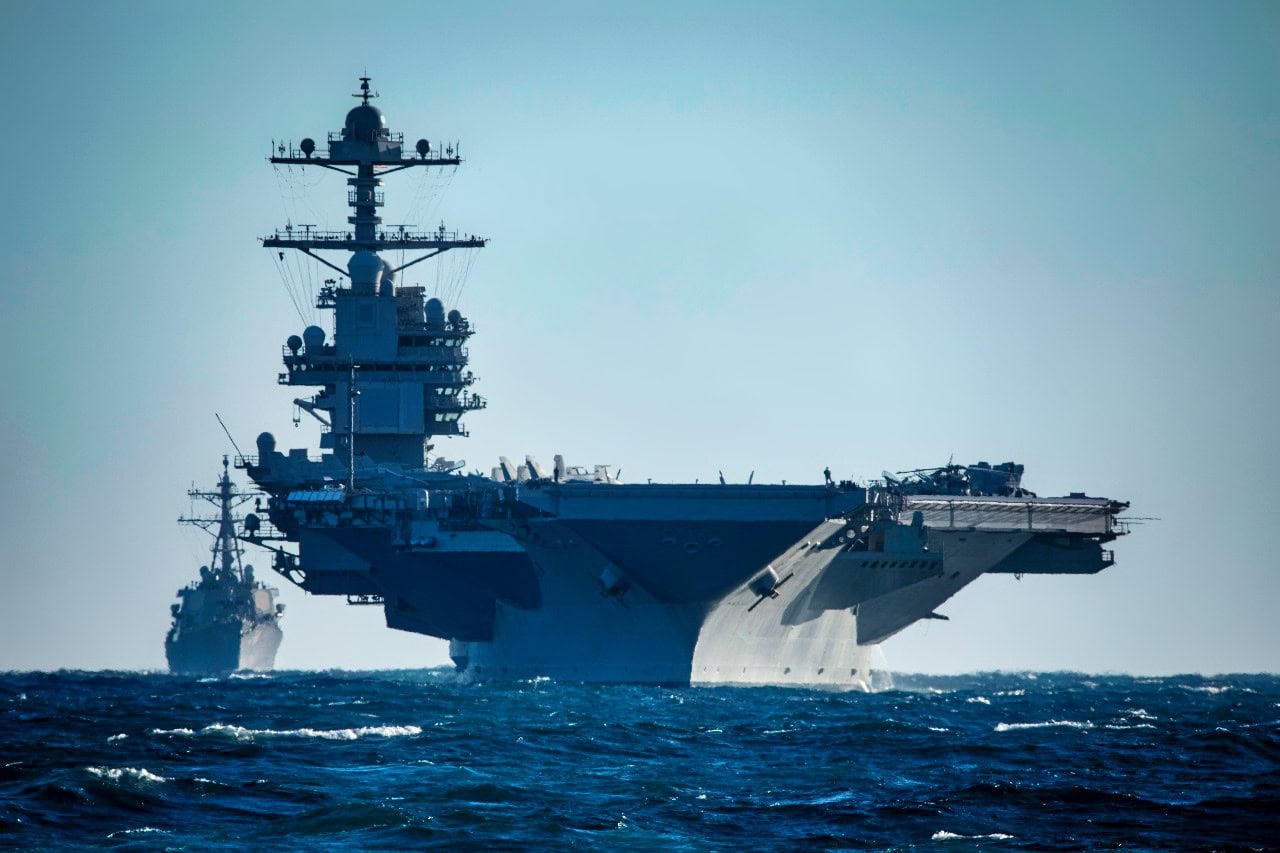
A view from the Ticonderoga-class guided missile cruiser USS Normandy (CG 60) of the first-in-class aircraft carrier USS Gerald R. Ford (CVN 78) and the Arleigh Burke-class guided missile destroyers USS Thomas Hudner (DDG 116), USS Ramage (DDG 61) and USS McFaul (DDG 74) as the ships steam in formation during a drill while underway as part of the Gerald R. Ford Carrier Strike Group March 5, 2023. Ford Carrier Strike Group is underway in the Atlantic Ocean executing its Composite Training Unit Exercise (COMPTUEX), an intense, multi-week exercise designed to fully integrate a carrier strike group as a cohesive, multi-mission fighting force and to test their ability to carry out sustained combat operations from the sea. As the first-in-class ship of Ford-class aircraft carriers, CVN 78 represents a generational leap in the U.S. Navy’s capacity to project power on a global scale. (U.S. Navy photo by Mass Communication Specialist 2nd Class Malachi Lakey)
Ford-Class Aircraft Carrier U.S. Navy. Image Credit: Creative Commons.
-Orr explains how a freak laundry fire sidelined the USS Gerald R. Ford, leaving the USS Abraham Lincoln to hold the line while exposing deep, systemic issues with America’s carrier maintenance cycles.
Lone Supercarrier: Why Only One U.S. Navy Aircraft Carrier is Fighting Iran
Contrary to the protestations of the mainstream media and political pundits alike, the Operation Epic Fury/Operation Roaring Lion campaign against the totalitarian, theocratic, and terroristic regime of the Islamic Republic of Iran is going quite well for the most part.
Much of the regime’s senior leadership—including former Supreme Leader Ali Khamenei himself—has been blown to kingdom come, and their air force and navy alike have been utterly devastated.
However, the overall positives notwithstanding, the United States Navy is dealing with one very big logistical concern: this is the U.S. military’s largest air campaign since Operation Iraqi Freedom back in 2003, but as these words are being typed, the USN has one nuclear-powered aircraft carrier (AKA “supercarrier”) contributing to the fight against Iran. So, why is this so, and what is being done about it?
The Aircraft Carrier Challenge and Iran: The Numbers Problem
Epic Fury did, in fact, start with two nuclear-powered carriers (as in nuclear-powered, that is, not literally carrying nuclear weapons) in the region, namely the Nimitz-class “flattop USS Abraham Lincoln (CVN-72) and the lone operational vessel of the successor Ford-class, the USS Gerald R. Ford (CVN-78). However, the Ford recently ran afoul of a freakish fire.
That fire broke out on March 12, 2026. It flared up in the aft laundry facility and resulted in a major damage control response that displaced seamen across the carrier and disrupted operations throughout the vessel. Thankfully, there were no fatalities.
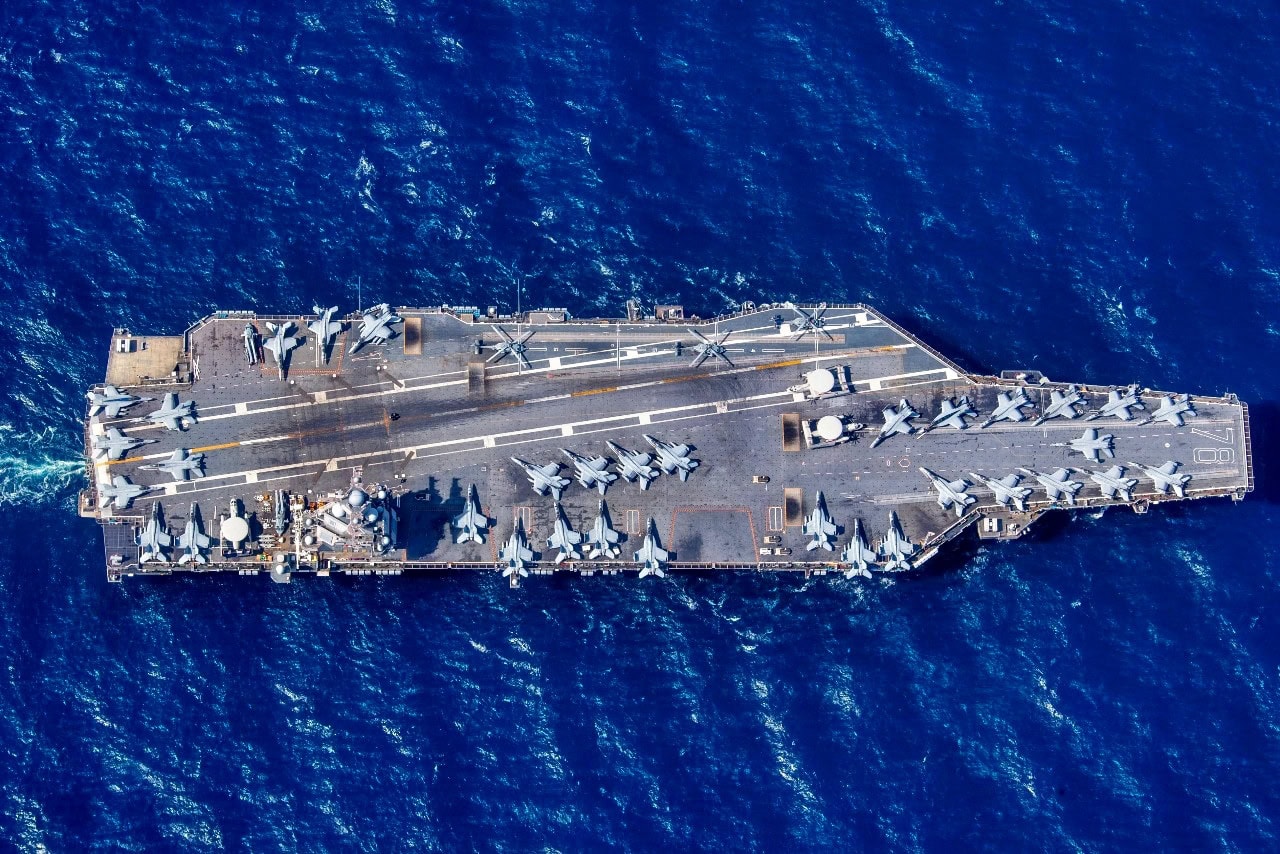
The first-in-class aircraft carrier USS Gerald R. Ford (CVN 78) transits the Atlantic Ocean, March 19, 2023. Ford is underway in the Atlantic Ocean executing its Composite Training Unit Exercise (COMPTUEX), an intense, multi-week exercise designed to fully integrate a carrier strike group as a cohesive, multi-mission fighting force and to test their ability to carry out sustained combat operations from the sea. As the first-in-class ship of Ford-class aircraft carriers, CVN 78 represents a generational leap in the U.S. Navy’s capacity to project power on a global scale. (U.S. Navy photo by Mass Communication Specialist 2nd Class Jackson Adkins)
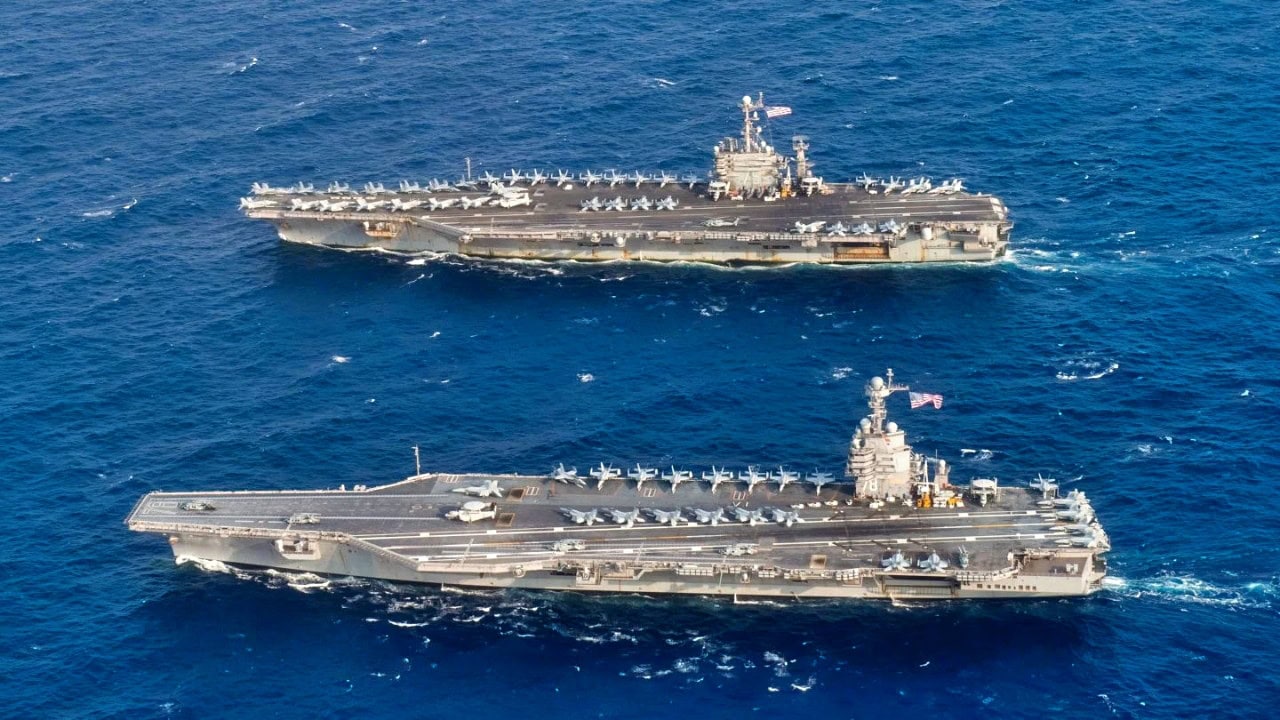
The Ford-class aircraft carrier USS Gerald R. Ford (CVN 78) and the Italian aircraft carrier ITS Cavour (CVH 550) transit the Atlantic Ocean March 20, 2021, marking the first time a Ford-class and Italian carrier have operated together underway. As part of the Italian Navy’s Ready for Operations (RFO) campaign for its flagship, Cavour is conducting sea trials in coordination with the F-35 Lightning II Joint Program Office’s Patuxent River Integrated Test Force to obtain official certification to safely operate the F-35B. Gerald R. Ford is conducting integrated carrier strike group operations during independent steaming event 17 as part of her post-delivery test and trials phase of operations.
However, over 200 sailors were treated for smoke inhalation; one crew member was medevac’ed from the vessel after being injured in the damage control effort and is in stable condition, whilst two others were treated for lacerations.
There are already conspiracy theories (which we shall discuss at length in a separate article) formulating that this was a deliberate act of internal sabotage by members of the ship’s own crew, with the motive for the (alleged) crime being frustration over an extended deployment.
Whether sabotage or purely accidental, CVN-78 was compelled to sail to Naval Support Activity Souda Bay in Crete for more than a week of pierside repairs.
So, that leaves the Lincoln for now to carry on the fight. As stated by the USNI News Fleet Tracker, “The Abraham Lincoln Carrier Strike Group is operating in the Arabian Sea in support of Operation Epic Fury.” Meanwhile, the Cruising Earth website, which draws upon the USNI Tracker, hastens to add that “The current location information above is an estimate from public reports and open-source intelligence. Exact positions are classified for operational security (OPSEC).”
Help Is On the Way …
As noted by Abdul Mohammed of The House of Saud, “The Pentagon is preparing to deploy a third aircraft carrier strike group to the Middle East as the war between the United States and Iran enters its second week, according to U.S. defense officials and open-source intelligence reports. The USS George H.W. Bush (CVN-77) completed pre-deployment exercises off the coast of Virginia on Thursday and is expected to cross the Atlantic toward the eastern Mediterranean within days.”
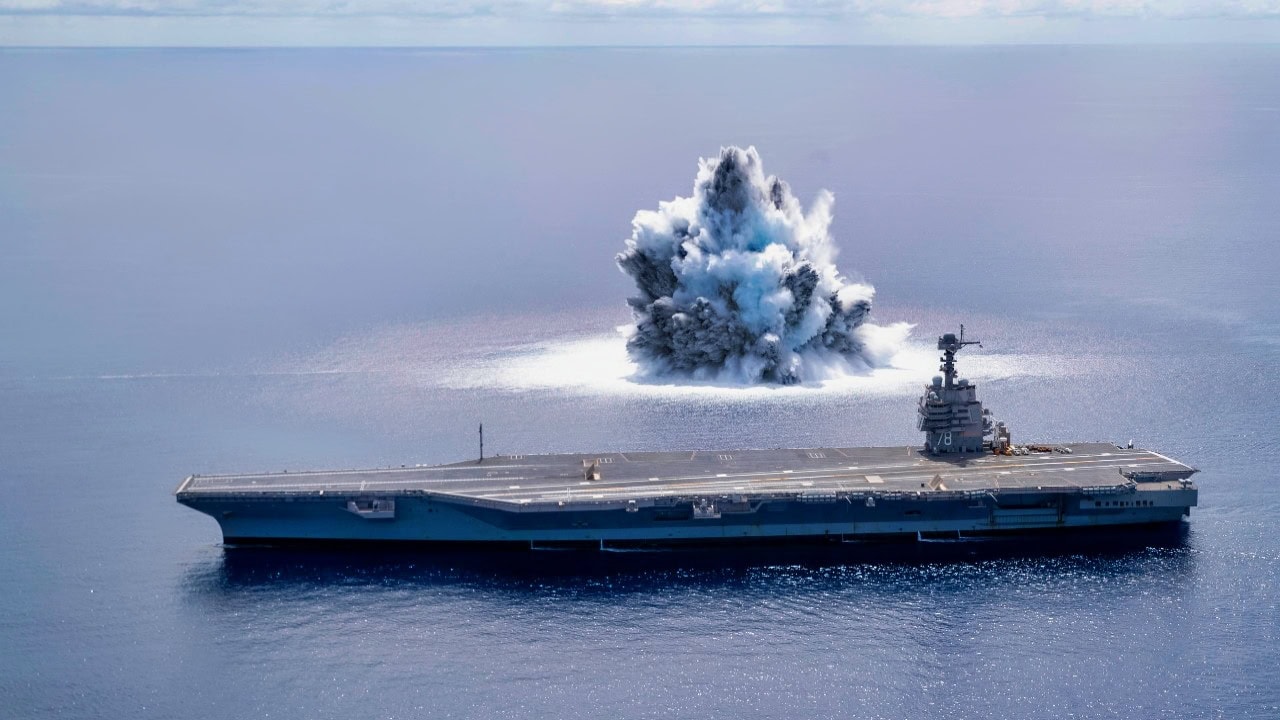
The aircraft carrier USS Gerald R. Ford (CVN 78) completes the first scheduled explosive event of Full Ship Shock Trials while underway in the Atlantic Ocean, June 18, 2021. The U.S. Navy conducts shock trials of new ship designs using live explosives to confirm that our warships can continue to meet demanding mission requirements under harsh conditions they might encounter in battle. (U.S. Navy photo by Mass Communication Specialist 3rd Class Riley B. McDowell)
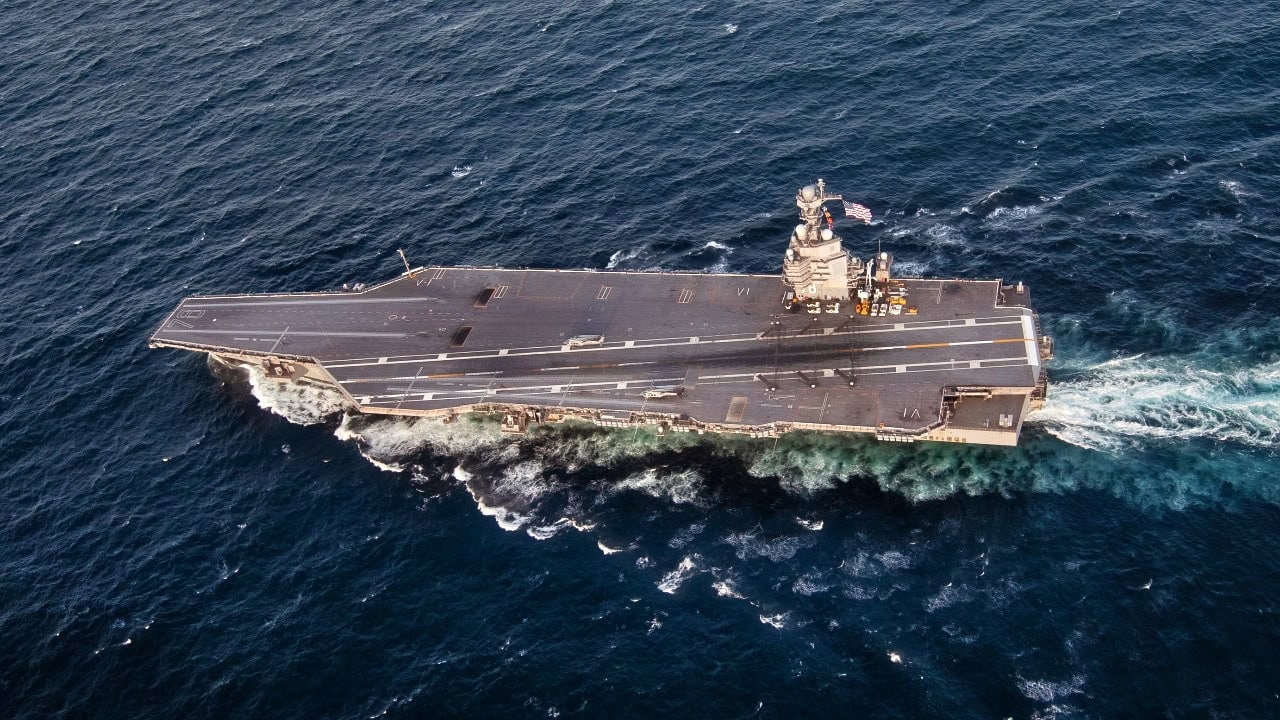
The Ford-class aircraft carrier USS Gerald R. Ford (CVN 78) and the Italian aircraft carrier ITS Cavour (CVH 550) transit the Atlantic Ocean March 20, 2021, marking the first time a Ford-class and Italian carrier have operated together underway. As part of the Italian Navy’s Ready for Operations (RFO) campaign for its flagship, Cavour is conducting sea trials in coordination with the F-35 Lightning II Joint Program Office’s Patuxent River Integrated Test Force to obtain official certification to safely operate the F-35B. Gerald R. Ford is conducting integrated carrier strike group operations during independent steaming event 17 as part of her post-delivery test and trials phase of operations.
That report was written on March 7, and as far as we know, the Bush hasn’t arrived in the region yet.
Meanwhile, the USS Tripoli (LPH-10) is also rushing to the region.
However, from a glass-half-empty perspective, the Tripoli is considered an amphibious assault ship rather than a supercarrier.
But from a glass-half-full standpoint, she’s a “lightning carrier” that punches well above her weight class, as she accommodates 20 airframes of the U.S. Marine Corps’ variant of the F-35 Lightning 5th Generation stealth fighter, the F-35B.
RCOH Rigamarole (Reprise and Redux)
We’ve discussed it before, but it bears re-beating this proverbial dead horse yet again: there are two big reasons why the Navy was facing a carrier shortage even before the Iran War began:
USN “loggie-doggies” (logisticians, that is) apply a “rule of thirds” to work on carriers: At any given time, one-third of carriers are deployed, one-third are preparing for deployment, and one-third are undergoing maintenance. With 11 carriers in the fleet, this means that only three to four are typically out to sea.
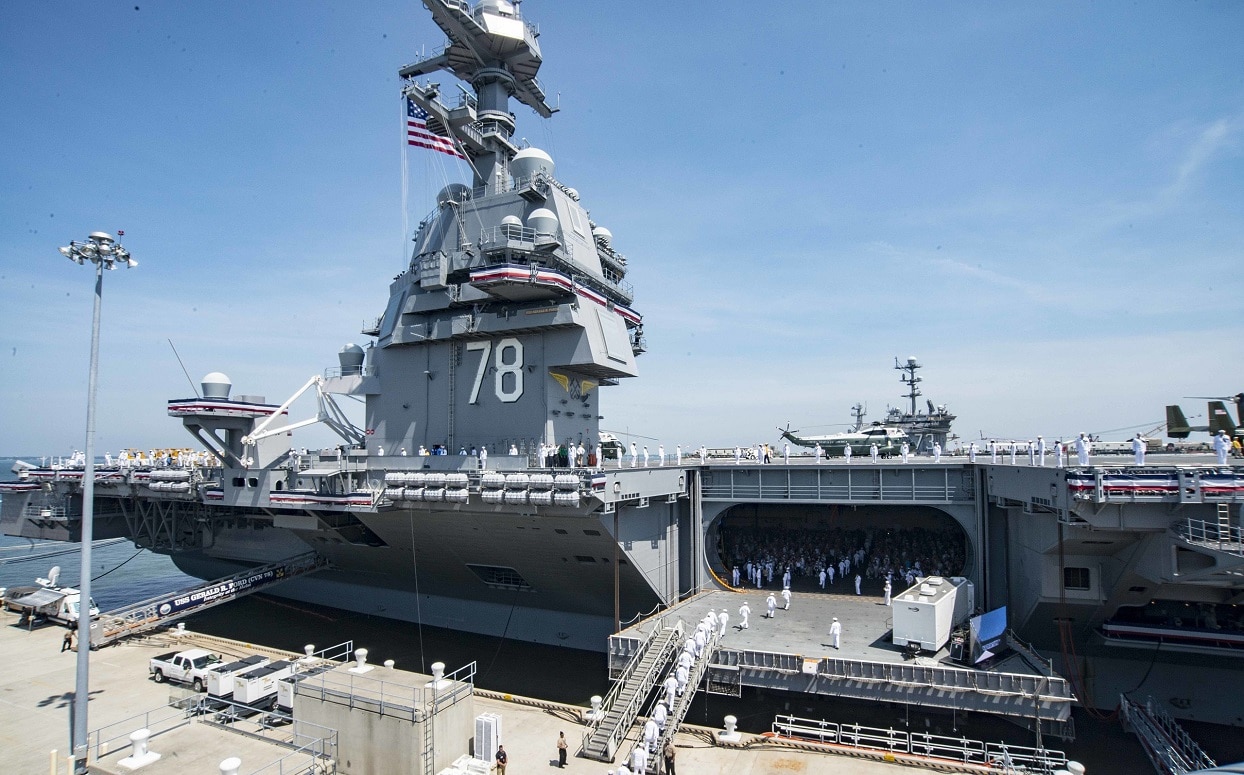
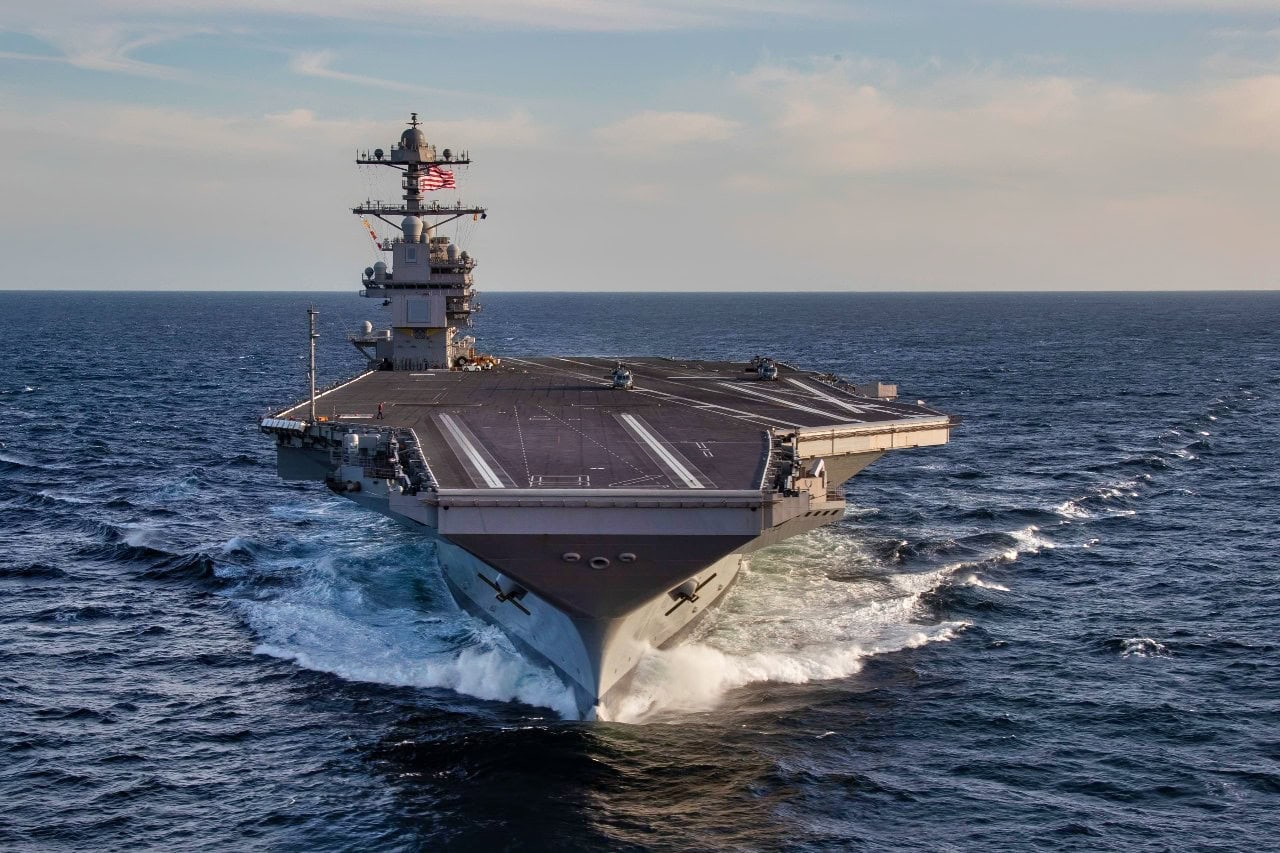
Gerald R. Ford-class. Image: Creative Commons.
Speaking of maintenance, CVNs are required to undergo a refueling and complex overhaul (RCOH) every 25 years.
This procedure entails cutting a massive hole into the hull and replacing everything from catapult systems to water purifiers.
To cite just one example of the agonizing slowness of the RCOH process, the USS George Washington (CVN-73) was out of action for a whopping 2,100 days.
About the Author: Christian D. Orr, Defense Expert
Christian D. Orr is a Senior Defense Editor. He is a former Air Force Security Forces officer, Federal law enforcement officer, and private military contractor (with assignments worked in Iraq, the United Arab Emirates, Kosovo, Japan, Germany, and the Pentagon). Chris holds a B.A. in International Relations from the University of Southern California (USC) and an M.A. in Intelligence Studies (concentration in Terrorism Studies) from American Military University (AMU). He is also the author of the newly published book “Five Decades of a Fabulous Firearm: Celebrating the 50th Anniversary of the Beretta 92 Pistol Series.”