Summary and Key Points: National security analyst Brandon J. Weichert evaluates the Littoral Combat Ship (LCS), a program that cost U.S. taxpayers $22 billion for warships deemed ineffective for high-end combat.
-The Navy is hurriedly decommissioning early models of the Freedom-class (plagued by transmission issues) and Independence-class (suffering from structural cracking).
US Navy Littoral Combat Ship. Image Credit: Creative Commons.
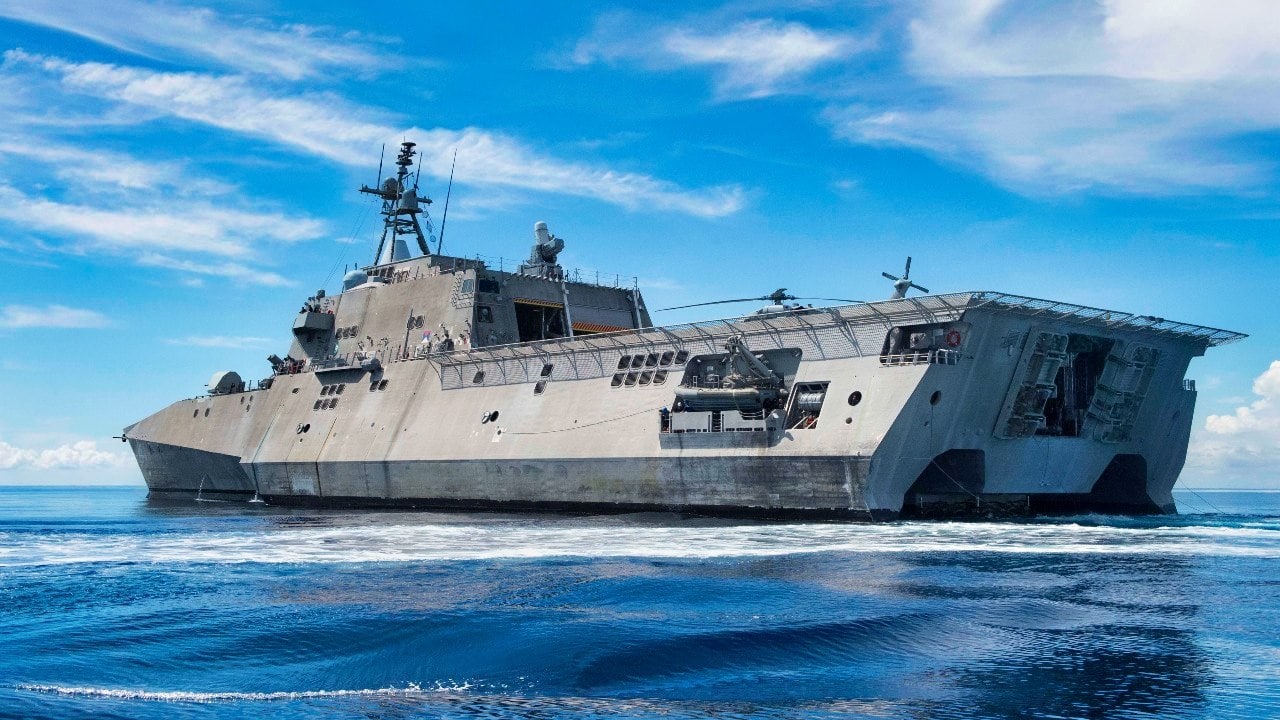
170623-N-PD309-122 BOHOL SEA (June 23, 2017) Littoral combat ship USS Coronado (LCS 4) transits the Bohol Sea during an exercise with the Philippine Navy for Maritime Training Activity (MTA) Sama Sama 2017. MTA Sama Sama is a bilateral maritime exercise between U.S. and Philippine naval forces and is designed to strengthen cooperation and interoperability between the nations’ armed forces. (U.S. Navy photo by Mass Communication Specialist 3rd Class Deven Leigh Ellis/Released)
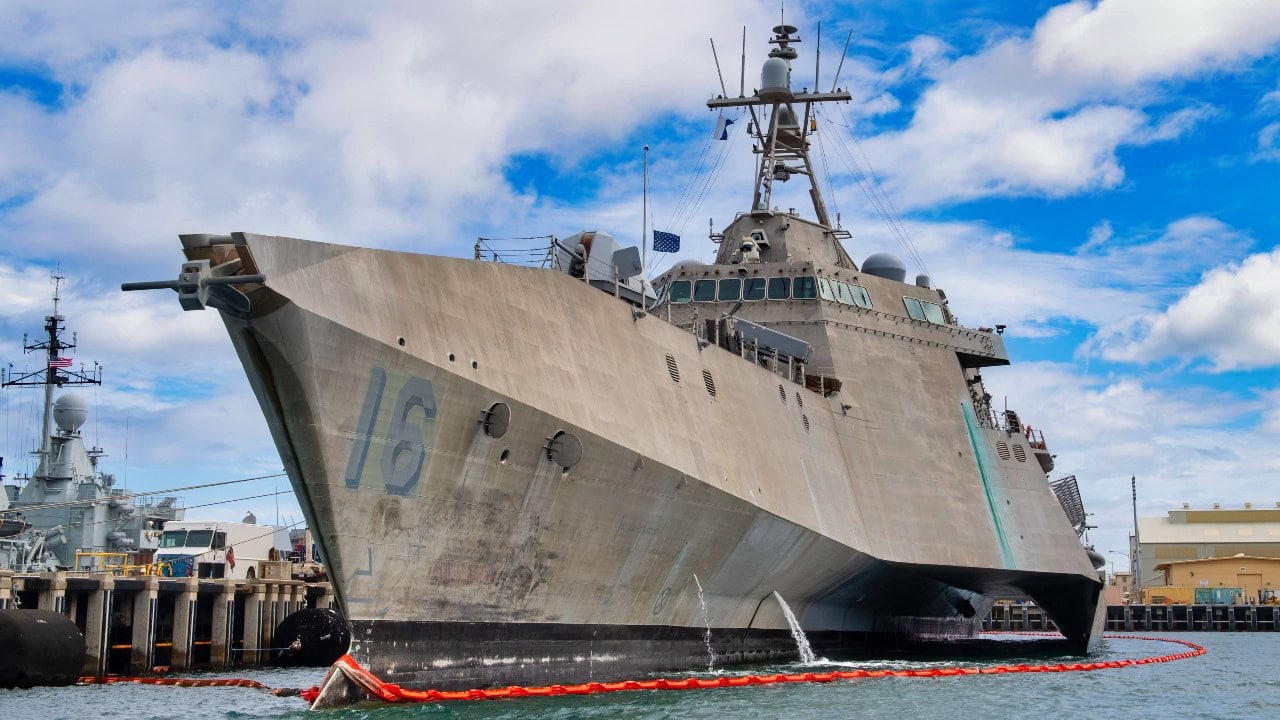
(July 7, 2022) – Independence-variant littoral combat ship USS Tulsa (LCS 16) moored at Joint Base Pearl Harbor-Hickam during Rim of the Pacific (RIMPAC) 2022. Twenty-six nations, 38 ships, four submarines, more than 170 aircraft and 25,000 personnel are participating in RIMPAC from June 29 to Aug. 4 in and around the Hawaiian Islands and Southern California. The world’s largest international maritime exercise, RIMPAC provides a unique training opportunity while fostering and sustaining cooperative relationships among participants critical to ensuring the safety of sea lanes and security on the world’s oceans. RIMPAC 2022 is the 28th exercise in the series that began in 1971. (U.S. Navy photo by Mass Communication Specialist 3rd Class Demitrius J. Williams)
-This report analyzes the failure of the modular mission packages, specifically the canceled Anti-Submarine Warfare (ASW) module.
-Weichert explores the resulting reliance on the delayed Constellation-class frigate, concluding that the LCS program has left the U.S. Navy at its weakest point since the Interwar Years.
The LCS Post-Mortem: Why the Navy’s $22 Billion “Modular Dream” Became a Procurement Nightmare
Since the end of the Cold War, the United States Navy has been in a bit of a rut.
A very costly rut at that.
The Littoral Combat Ship (LCS), which is better known among sailors who’ve had the misfortune of serving on these ships as “Little Crappy Ships,” costs US taxpayers around $22 billion.
And what’d the taxpayer get?
The Navy’s Post-Cold War Procurement Curse
Warships that were inundated by mechanical problems, high operational costs, and overall combat ineffectiveness. These warships were meant to be small, fast, and maneuverable. Instead, they were clunky (ugly, too) and had low survivability ratings.
In fact, the Navy admitted in official documents that the LCS fails to “provide the lethality or survivability in a high-end fight.” This was a particularly pointed comment by the Navy, considering that even as the LCS was making its way to the world’s conflict zones, China was rising as a near-peer competitor.
This all led the Navy—finally—to decide to retire the earliest models of the LCS.
Two Variants, Two Sets of Problems
The LCS was plagued by a variety of technical problems throughout its relatively short (and expensive) life cycle. One of the biggest problems was issues with the ship’s transmission.
Of the two LCS variants, the Freedom-class and the Independence-class, the former suffered multiple debilitating problems with its transmission, while the latter struggled with structural cracking.
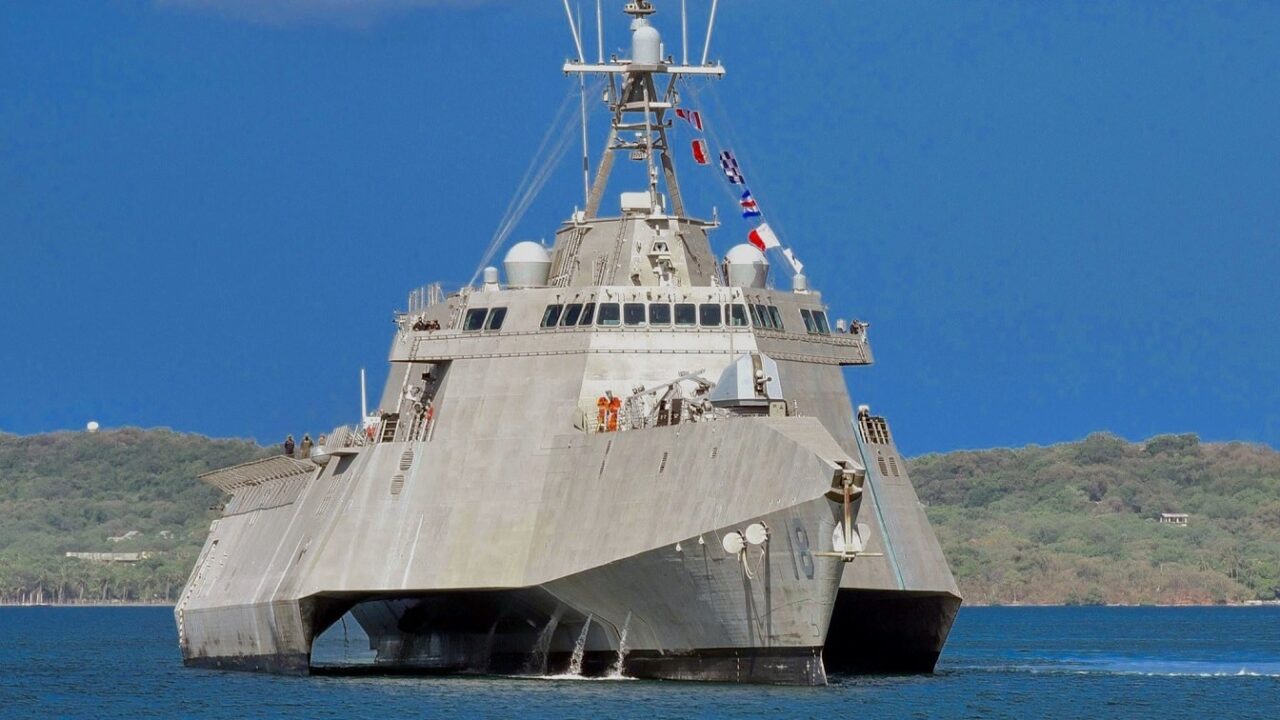
Littoral Combat Ship. Image Credit: US Navy.
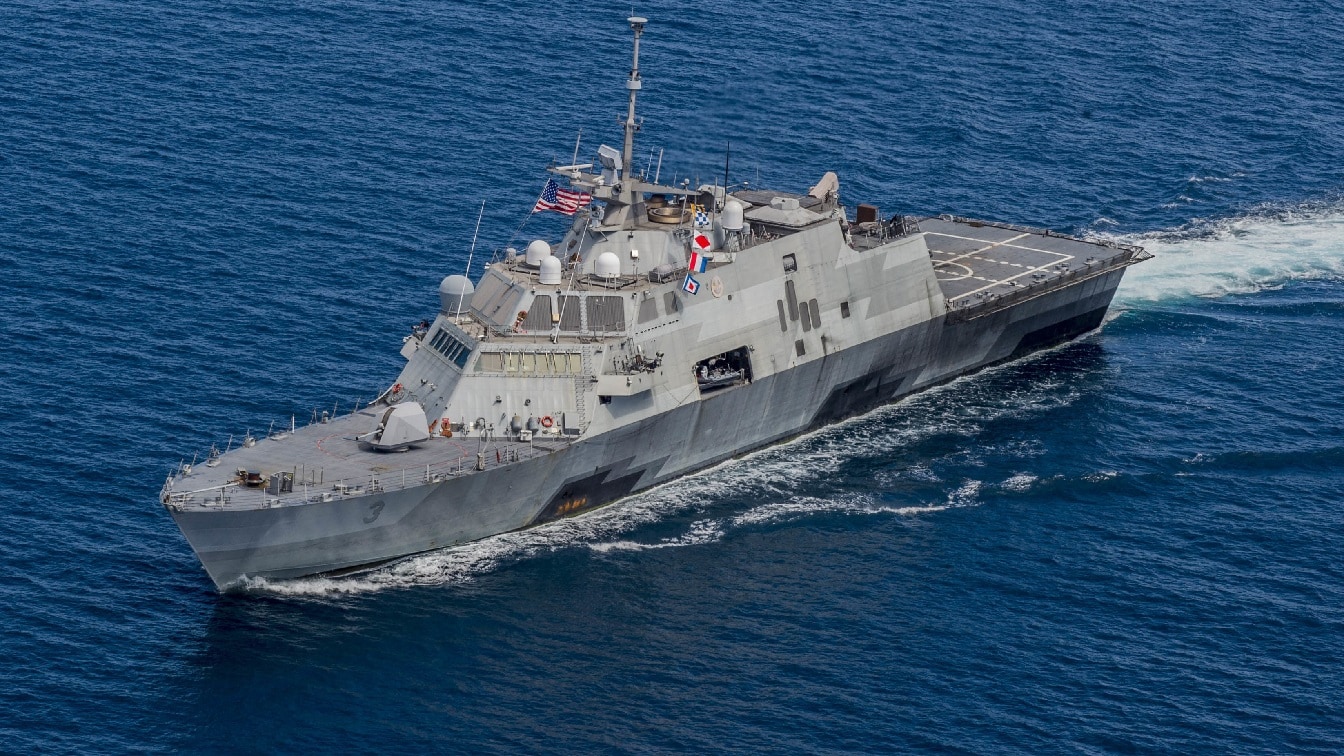
(Aug. 19, 2015) The littoral combat ship USS Fort Worth (LCS 3) assembles in formation with ships from the Royal Malaysian Navy as part of Cooperation Afloat Readiness and Training (CARAT) Malaysia 2015. CARAT is an annual, bilateral exercise series with the U.S. Navy, U.S. Marine Corps and the armed forces of nine partner nations. (U.S. Navy photo by Mass Communication Specialist 2nd Class Joe Bishop/Released)
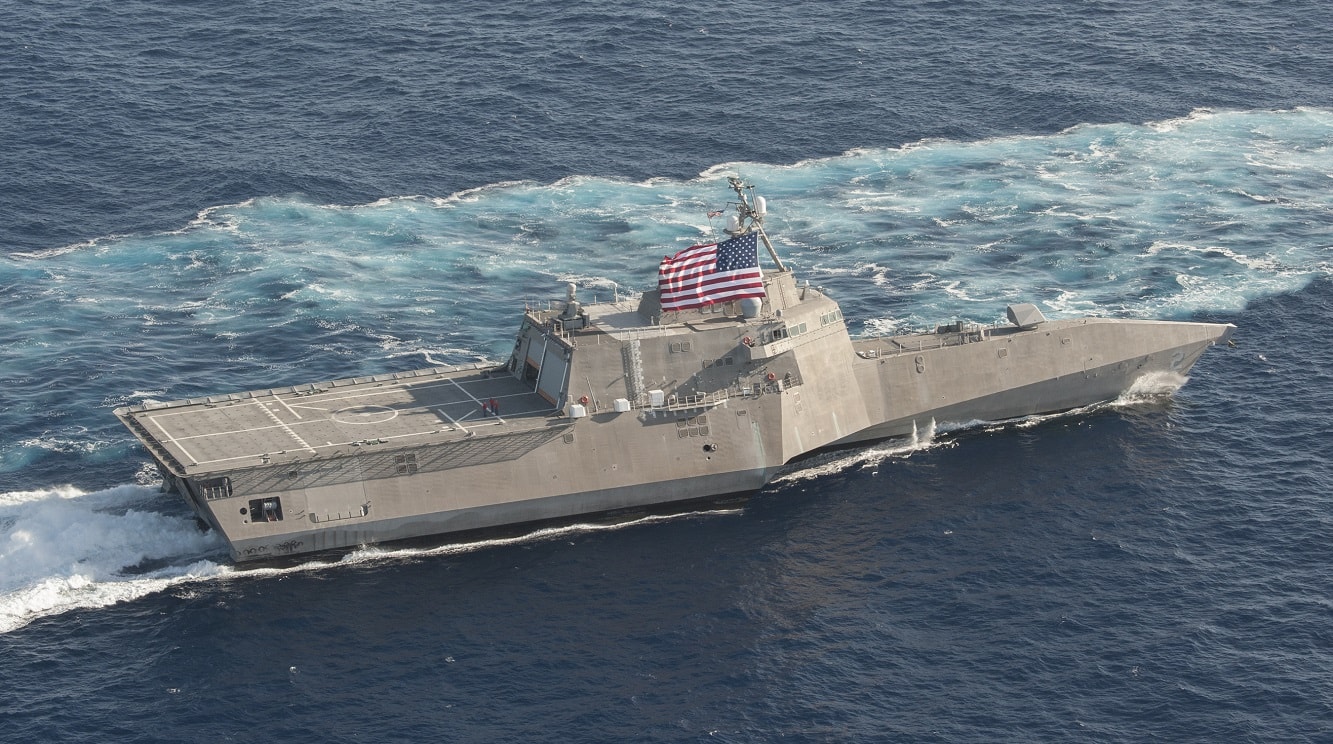
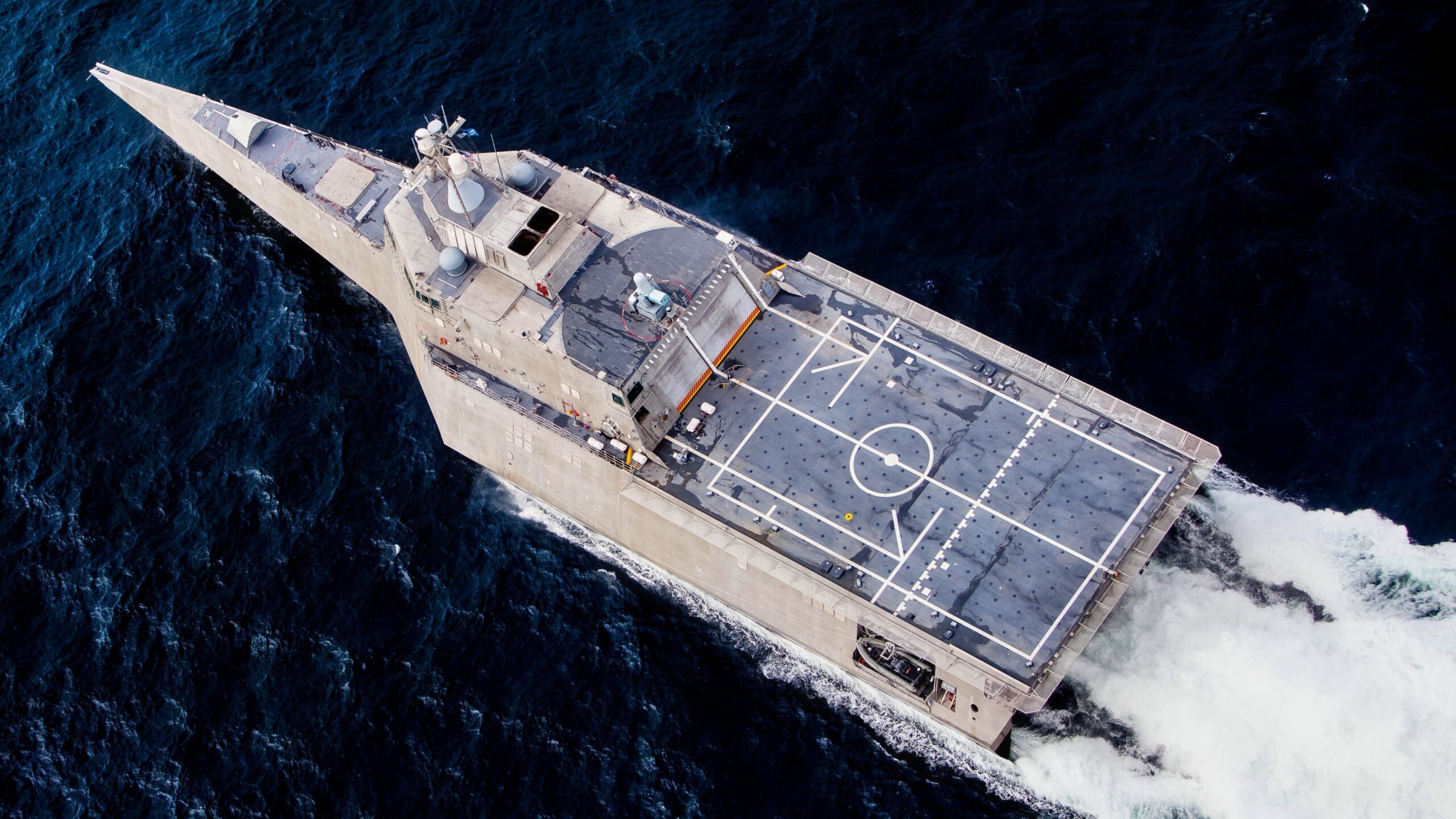
The littoral combat ship USS Independence (LCS 2) is underway in the Pacific Ocean. (U.S. Navy photo by Chief Mass Communication Specialist Keith DeVinney/Released)
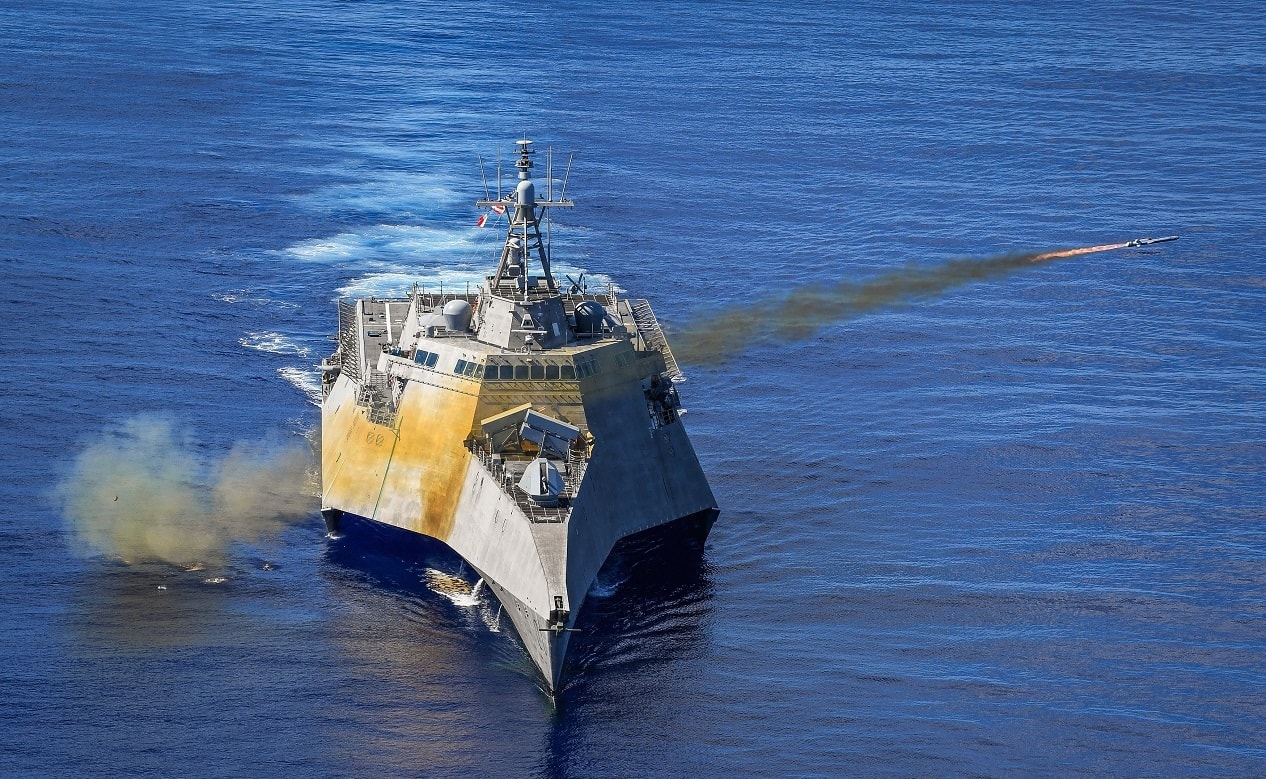
PHILIPPINE SEA (Oct. 1, 2019) Independence-variant littoral combat ship USS Gabrielle Giffords (LCS 10) launches a Naval Strike Missile (NSM) during exercise Pacific Griffin. The NSM is a long-range, precision strike weapon that is designed to find and destroy enemy ships. Pacific Griffin is a biennial exercise conducted in the waters near Guam aimed at enhancing combined proficiency at sea while strengthening relationships between the U.S. and Republic of Singapore navies. (U.S. Navy photo by Chief Mass Communication Specialist Shannon Renfroe/Released)
So, one variant’s engine didn’t work right, leaving it dead in the water while the other variant experienced a broken hull every time it hit a wave.
What’s more, both variants of the LCS costs around $500 million to build and around $70 million to maintain per year.
Because of these high costs and the very poor performance of these warships, the Navy has been hurriedly decommissioning them more than a decade before their intended 25-year service life.
This is so that the Navy can save that money and use the funds for more pressing matters and programs—especially considering that the Navy is the smallest (and weakest) it has been since the Interwar Years of the last century.
Littoral Combat Ship: The Modular Dream That Became a Nightmare
Part of the LCS’ appeal to the Navy was its swappable mission modules. Essentially, the ship itself was, unlike other warships in the Navy, designed to be a plug-and-play system. It was believed this would save money while enhancing innovation.
The Navy created individual modules for minesweeping, anti-submarine warfare (ASW), and surface warfare. Whenever a specific mission need arose, rather than waiting for an individual minesweeper or the like, the Navy could just plug a mission-specific module into the LCS.
The modular system never worked as planned.
In fact, by 2022, the ASW module was canceled entirely. It turns out that the process of swapping out the modules was harder than the Navy had envisioned. Rather than saving money, it just increased the overall program’s cost.
Early Retirement and a Growing Capability Gap
Interestingly, the Navy may have abandoned most of the LCS program—and the modules—but the maritime branch is still investing in the minesweeping module (likely because America’s minesweeper capacity has become greatly reduced over the years).
Other experts advise that the LCS could be used in ancillary mission sets or even transferred to allies. They point to the LCS’s high speed, which allows it to be used in counternarcotics and counter-piracy operations at sea.
None of that makes the high cost and unmanageable complexity worth it, though. Besides, the Navy shifted its focus to the Constellation-class frigate, which it viewed as a conventional, albeit more powerful, warship worthy of the Navy’s finite resources and time.
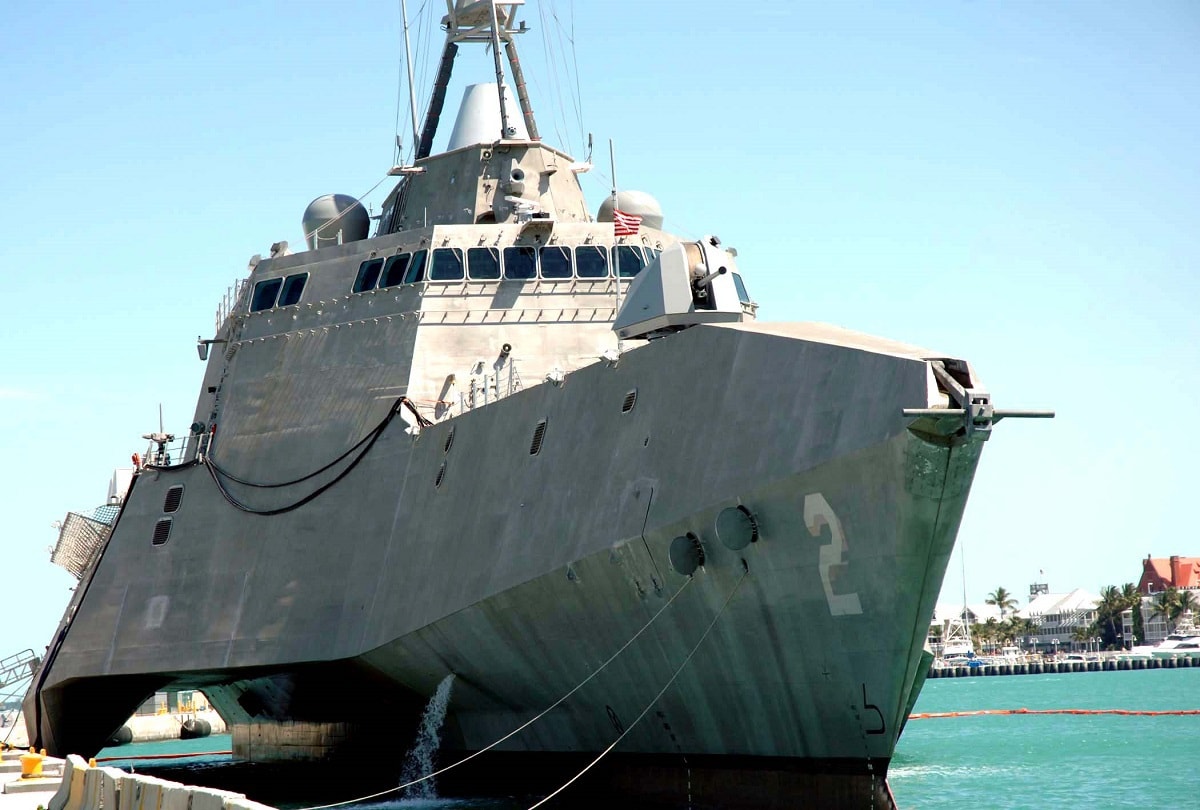
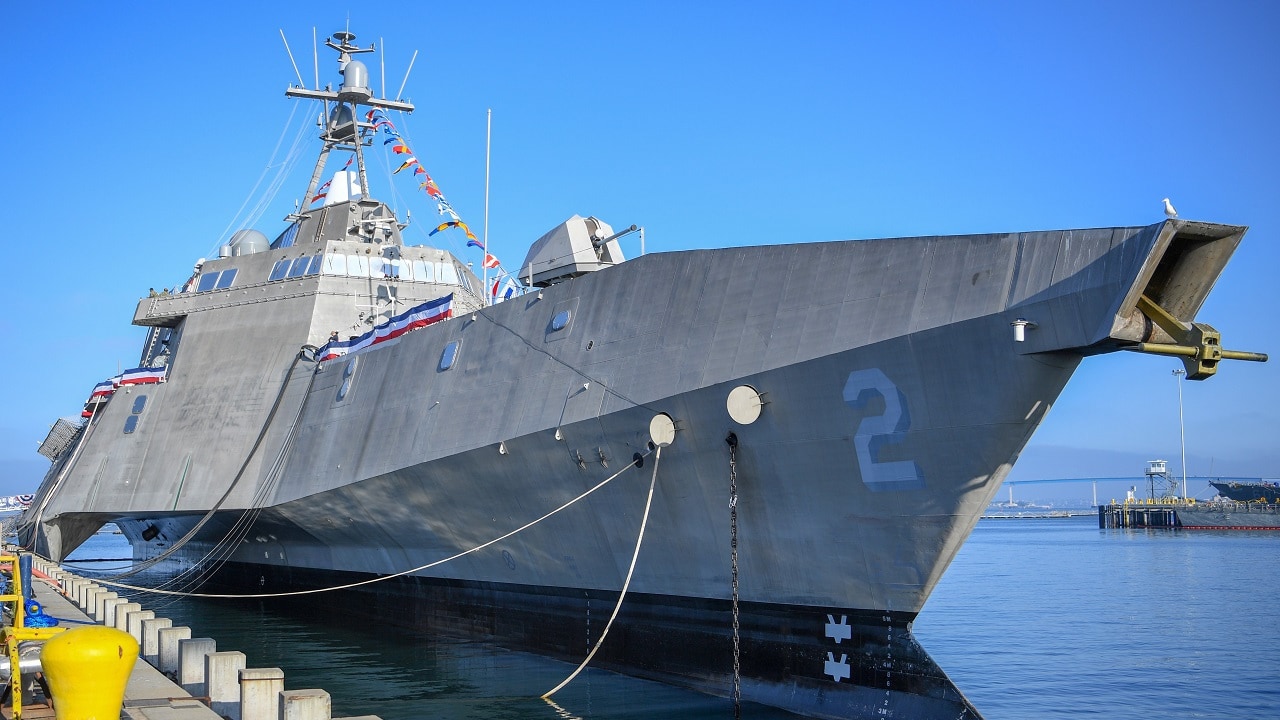
KEY WEST, Fla. (March 31, 2010) The littoral combat ship USS Independence (LCS 2) is pier side during a port visit to Key West, Fla. Independence is enroute to Norfolk, Va., for commencement of initial testing and evaluation of the aluminum vessel before transiting to its homeport in San Diego. (U.S. Navy photo by Lt. Zachary Harrell/Released)
Sadly, that program has hit one snag after another, so now there is even doubt whether the Constellation-class will come online (meaning a serious capabilities gap will form in the Navy the longer we go without a proper ship in this class).
The LCS program stands as a dire warning about what happens when ambitious concepts outrun political (and economic) realities.
What was supposed to be the Navy’s ship of the future became an expensive lesson in failed procurement, leaving the fleet smaller, weaker, and scrambling to recover lost time. Unless the Navy relearns how to build reliable, affordable warships—and does so quickly—the LCS fiasco may not be the last costly mistake to haunt America’s ability to control the seas.
About the Author: Brandon J. Weichert
Brandon J. Weichert is the Senior National Security Editor at 19FortyFive.com. Recently, Weichert became the editor of the “NatSec Guy” section at Emerald.TV. He was previously the senior national security editor at The National Interest. Weichert is the host of The National Security Hour on iHeartRadio, where he discusses national security policy every Wednesday at 8pm Eastern. He hosts a companion show on Rumble entitled “National Security Talk.” Weichert consults regularly with various government institutions and private organizations on geopolitical issues. His writings have appeared in numerous publications, among them Popular Mechanics, National Review, MSN, and The American Spectator. And his books include Winning Space: How America Remains a Superpower, Biohacked: China’s Race to Control Life, and The Shadow War: Iran’s Quest for Supremacy. Weichert’s newest book, A Disaster of Our Own Making: How the West Lost Ukraine, is available for purchase wherever books are sold. He can be followed via Twitter/X @WeTheBrandon.