
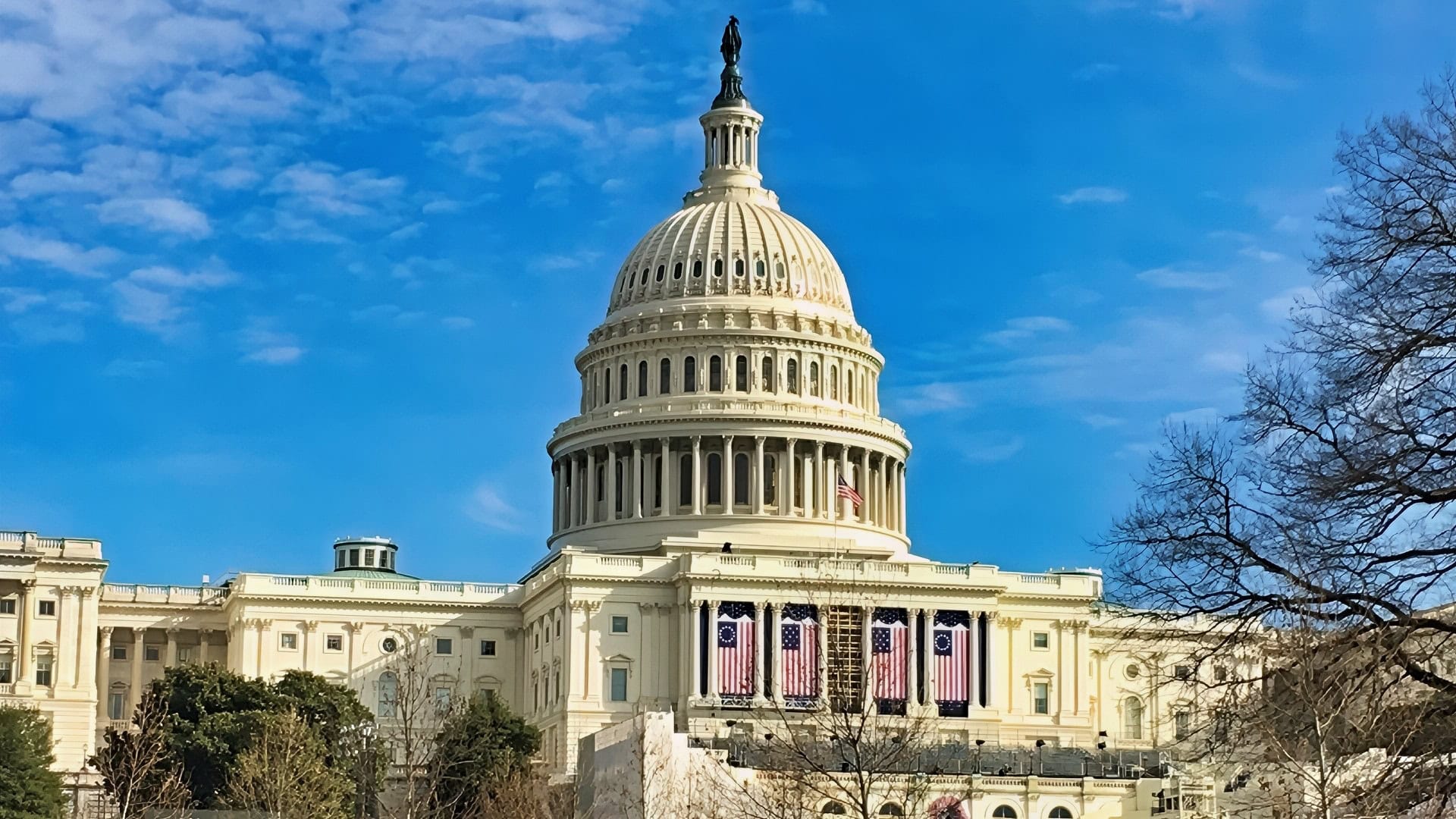
My wife and I are political scientists, and what better way to study politics than living in Washington, DC? Plus, I am a foreign policy specialist, and this is one of the best areas of the world to ply my trade. My wife and I have both worked in the U.S. Senate, so we have enjoyed a taste of what it means to be in the center of power. I have also taught at three universities in the DC area.
It has been a wonderful ride, and there is always something to do in your free time. Simply visiting all the monuments and museums is enough to make you happy. Washington is a world-class sports town with many top professional teams, and it is not a bad place for fine dining.
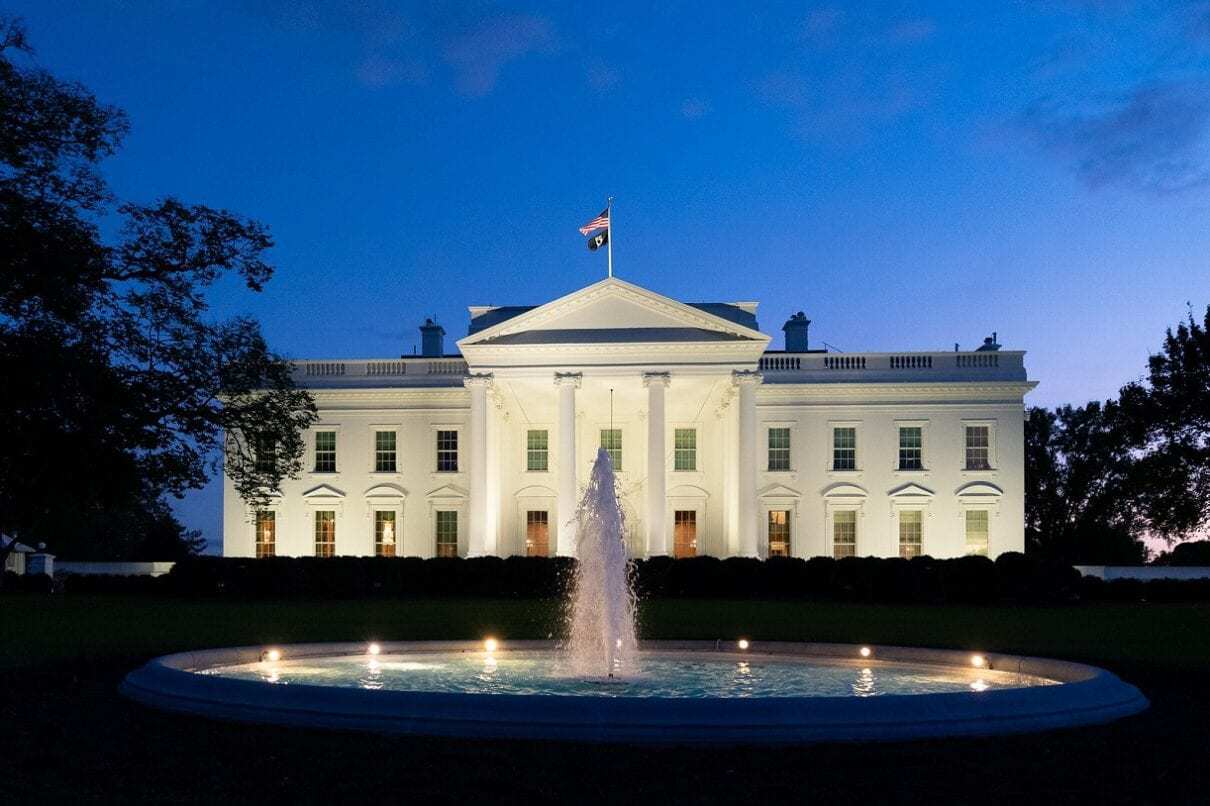
A POW/MIA flag flies atop the White House Friday, Nov. 8, 2019, a day after President Donald J. Trump signed S. 693 the National POW/MIA Flag Act Thursday, Nov. 7, 2019, in the Oval Office of the White House. (Official White House Photo by Andrea Hanks)
Where You Live Is Extremely Important
But my oh my, living in the “DMV” (DC, Maryland, and Virginia) is incredibly expensive. In the DMV, you are defined by the neighborhood or suburb you live in. The rule of thumb is that the closer you live to downtown DC, the more expensive it is.
Proximity to the power nexus is everything. Living near metro subway stops is more desirable. Tony neighborhoods in the city include Capitol Hill, Foggy Bottom, Georgetown, Adams Morgan, and Dupont Circle. This is usually condo and townhome real estate. The prices for these types of dwellings are $1 million to $2 million, with Georgetown townhomes running above $2 million.
The Best Suburbs Will Cost You
Next are the suburbs. In Virginia, the desirable areas include North Arlington, Old Town Alexandria, McLean, and Falls Church. In Maryland, the hot suburbs are Chevy Chase, Silver Spring, and Potomac.
These have the best public schools, but home prices are astronomical.
How Much Is Housing?
My wife and I, along with our 18-year-old son, live in North Arlington, Virginia, in the Court House/Clarendon neighborhood. This is a hot area, within walking distance of two metro stops and great bars, restaurants, and cafes. As with many wealthy areas, there is a Whole Foods that you can walk to.
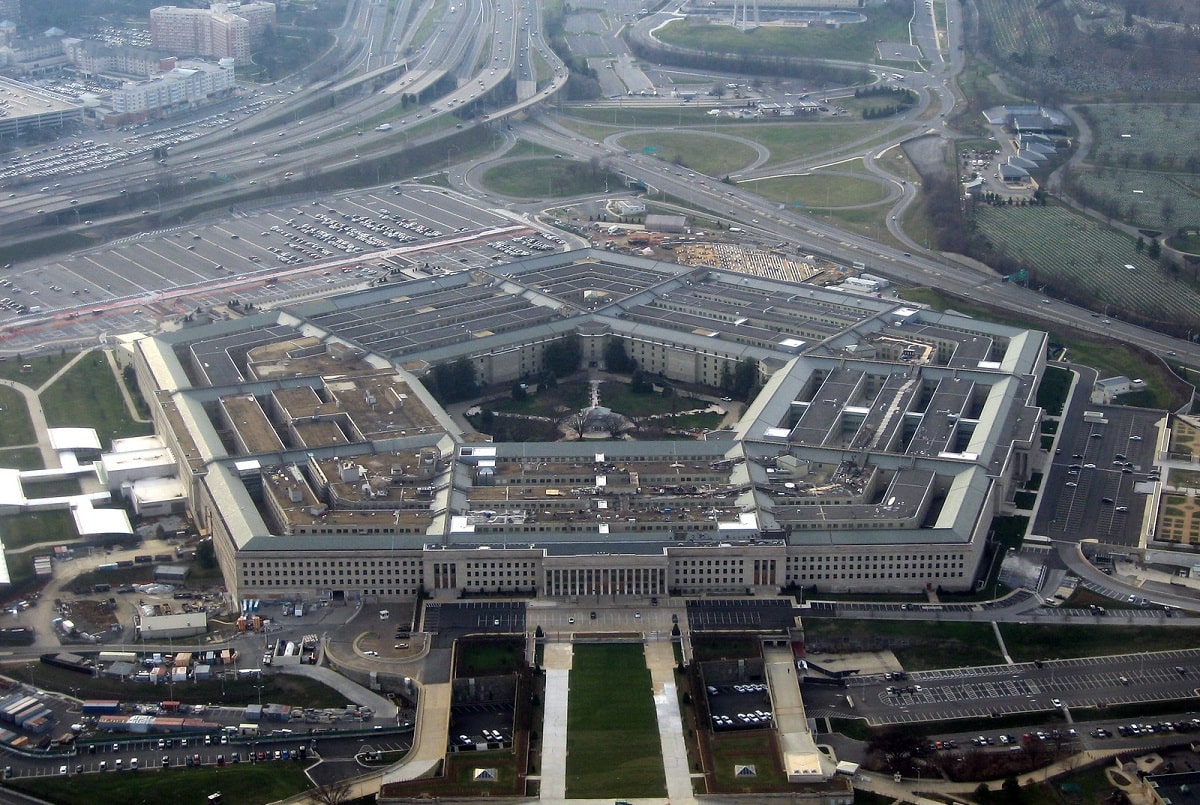
The Pentagon. Image: Creative Commons.
We have a three-bedroom, 1,600 foot townhome with no garage. In 2022, we paid $907,500 for it, and it was in terrible shape – pretty much unlivable. We invested $ 50,000 to $60,000 in renovating it. Our mortgage is $3,500 a month, plus $700 a month in homeowners association dues, for a grand total of $4,200 a month to live here. To put that in perspective, my in-laws pay $600 a month on a mortgage for a four-bedroom home in the Dallas, Texas, metro area.
We were lucky to buy because renting the same property we live in now would cost over $5,000 a month. Most young people live with roommates. A one- or two-bedroom condo costs between $500,000 and $1,000,000. These are usually around 1,000 square feet.
Single-family Homes Are Out of Reach
Single-family homes in North Arlington are dreadfully expensive. There are no detached homes priced under $1.5 million. They are usually sold for $2 million to $3 million or more.
Always Reaching for Your Credit Card for Food
The next big expense is food. The DMV has many independent themed restaurants that we call “nice.” Nice restaurants are at least $100 to $300 for a family of three. That does not include alcoholic drinks that run between $10 to $20 a piece. Even beer is that high. I don’t happen to drink alcohol, so I save a lot of money.
My family and I never eat at nice restaurants. We frequent many fast-food and fast-casual restaurants. Chipotle, Taco Bell, Chick-fil-A, and the hot bar/salad bar at Whole Foods are go-tos. There are a few diners that we can afford, but those are expensive. We try to keep our restaurant expenditures at $15 per person. If we are feeling the need to splurge, we will go to Outback Steakhouse.
The cheapest places for groceries are Aldi and Safeway, and we spend around $200 per visit, usually every seven days. In the interim, we buy a “few things” at Trader Joe’s. This usually costs around $40 to $50 a visit.
I Waste Too Much Money on Coffee
I’m a coffee drinker and do most of my work in cafes. The last two books I have written have been drafted exclusively at coffee shops. I usually go to Starbucks and Dunkin’.
These shops have the cheapest coffee in the DMV. A grande drip coffee at Starbucks is $3.13, and a medium drip at Dunkin’ is $3.47. Going to “nice” independent coffee shops and cafes will give you sticker shock. I never order premium coffee drinks at these places. A large drip coffee is always over $5 at these establishments and can sometimes be more than $6, so I stick with Starbucks and Dunkin’.
Transportation Costs Are Not That Bad
Next is transportation. If you need to take a metro ride, that is a good way to save money. Many one-way metro trips cost only $2.25. Some jobs will pay for your metro fees. Gas is $4 per gallon due to the war in Iran, but petrol is usually $3 or more per gallon.
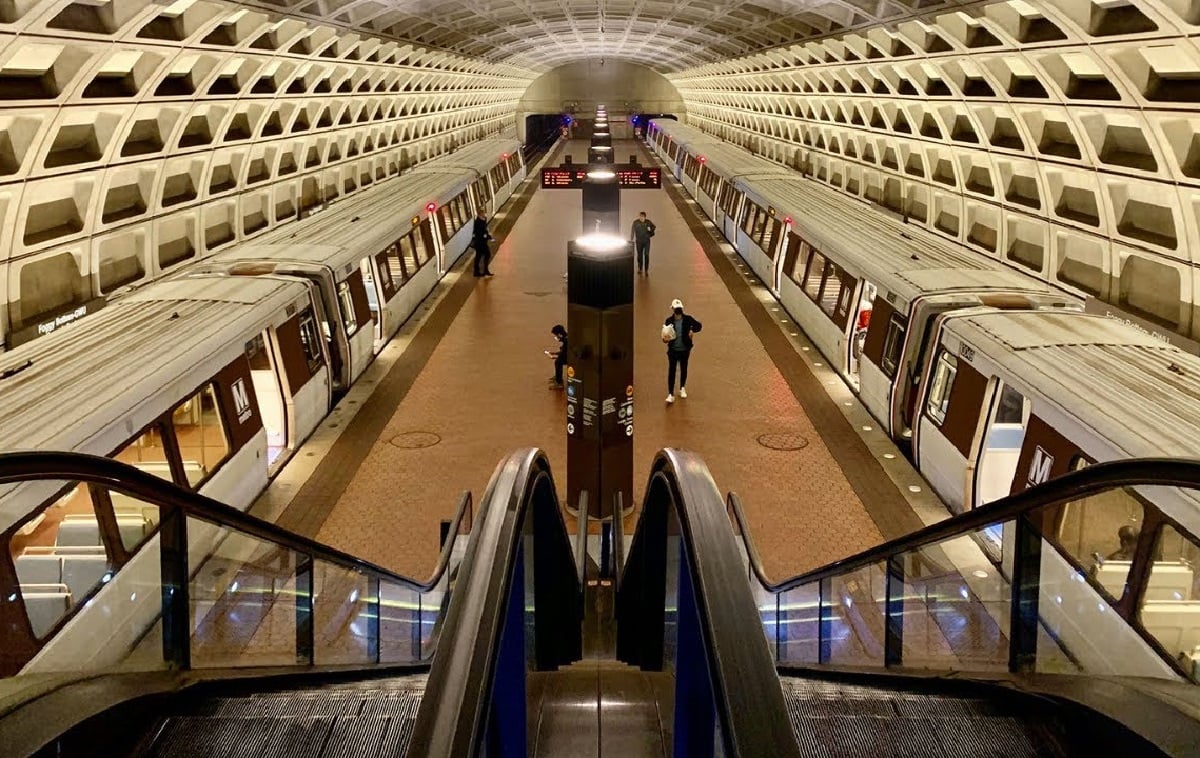
Washington, DC Metro. Image Credit: Creative Commons.
Uber and Lyft are always $10 or more per one-way ride. Usually, you should plan to spend around $20 per one-way ride. Keeping a car in the city of DC is difficult because people rarely have garages, and parking is hard to find. A monthly fee is sometimes required to park your car. Some people do not have cars. Auto insurance costs me $100 a month.
Forget Taking Advantage of Entertainment
Next is entertainment. Well, since we spend so much on the other categories, my wife and I don’t attend many cultural events in the DMV. The most we will do is see a movie at a theater, but our main entertainment expenses are streaming services like Netflix and Amazon Prime.
I can’t remember the last time we experienced any entertainment events in the DMV.
Well, there you have it. If you want to live in the DMV, you are going to pay the price. I don’t know how single people do it, but it is expensive for families, too. The name of the game is finding a nice location that you can afford. Everyone wants to live in the hot neighborhoods and suburbs.
The farther from downtown DC you live, the cheaper it is, but this affects your home’s resale value, and unless you are close to a metro stop, it will be more difficult to sell.
Despite the expenses, I have loved my time in the DMV. This is a great place to be a defense and foreign policy specialist. I live minutes from the Pentagon and a short drive to CIA headquarters. Many foreign policy think tanks are a few metro stops away.
Ronald Reagan National Airport is a 15-minute drive from where I live.
But if you want to live here, you have to stick to a strict budget. There are simply things to do in the city that cost so much, you can’t afford them. That’s why many people live in the DMV for only a few years before they have to move out of the area. Many return to where they originally come from.
But for some professions, especially for foreign policy, one must live in the DMV for the best way to advance one’s career.
Just keep a hand on your wallet at all times. You will often take the credit card out and cringe when you swipe it.
About the Author: Brent M. Eastwood, PhD
Author of now over 3,500 articles on defense issues, Brent M. Eastwood, PhD, is the author of Don’t Turn Your Back On the World: A Conservative Foreign Policy and Humans, Machines, and Data: Future Trends in Warfare, plus two other books. Brent was the founder and CEO of a tech firm that predicted world events using artificial intelligence. He served as a legislative fellow for US Senator Tim Scott and advised the senator on defense and foreign policy issues. He has taught at American University, George Washington University, and George Mason University. Brent is a former US Army Infantry officer. He can be followed on X @BMEastwood.