
Summary and Key Points: Stephen Silver, an award-winning national security and economy journalist, evaluates the tension between President Donald Trump’s military objectives in Iran and his “cheap gas” campaign promises.
-As of March 2026, the national average for gasoline has risen to $2.94, driven by uncertainty in the Strait of Hormuz.

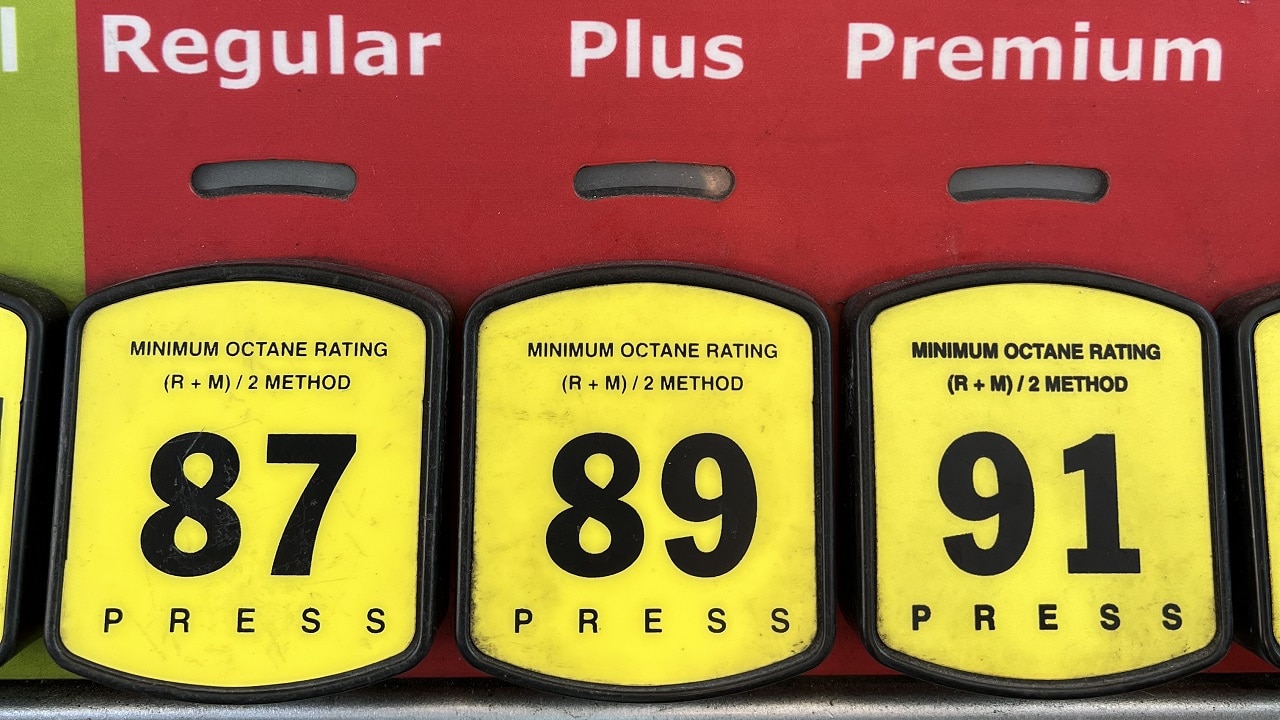
Gas Pump Sign. Image Credit: Creative Commons.
-This report analyzes Chief of Staff Susie Wiles’ efforts to find price-lowering solutions and Press Secretary Karoline Leavitt’s argument that removing Iranian control of energy routes will ultimately lower costs.
-Silver concludes that while Trump promises “American Energy Dominance,” the refinery’s reliance on foreign heavy crude remains a structural bottleneck.
The $2.94 Average: Analyzing the 5.6-Cent Gas Price Spike Following the Strikes on Iran
Throughout his political career, Donald Trump has promised low gas prices while attacking his opponents for delivering high gas prices.
Trump has often bragged about gas prices hitting historic lows in the summer of 2020, during his first term, although that was mostly due to the pandemic, which brought global oil demand to a record low.
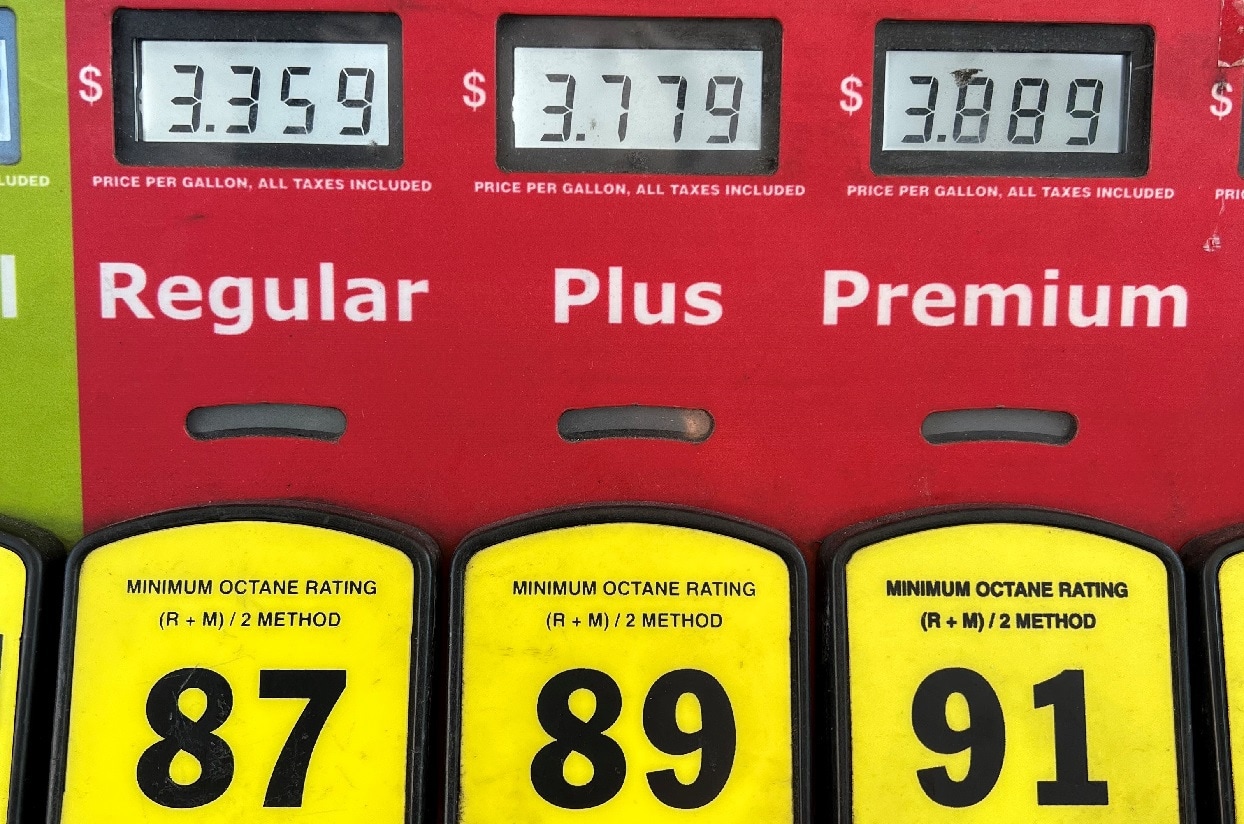
Gas Prices at the Pump. Image: Creative Commons.
GasBuddy, a major authority on gas prices and their causes, has been critical of Trump and other politicians and the claims they often make about gas prices. Many politicians, for instance, will point to outlier prices and make false claims about broader trends.
In the spring of 2025, Trump bragged on Truth Social that gasoline prices “broke $1.98 a Gallon.”
Patrick De Haan, head of petroleum analysis at GasBuddy, pushed back at the time.
“We don’t have any data showing any individual stations below $2 a gallon today nor have we really seen any of that in the last several weeks since these claims have started,” De Haan said in a statement at the time, per The Hill.
Trump has also often bragged about delivering “energy independence,” although as various experts have pointed out, that’s more of a political slogan—one used at different times by both Trump and Joe Biden—than a true concept.
“If energy independence means the country is producing more energy than it consumes, then both leaders have achieved it,” Arianna Skibel wrote in an op-ed for Politico in 2024. “While Biden rarely talks up his efforts to produce oil and natural gas, the nation’s output under his leadership continues to smash records. And starting under Trump’s tenure, the U.S. began annually producing ‘more crude oil than any country, ever.’”
But “energy independence” does not mean the United States uses no oil from outside the country.
A U.S. Sailor moves behind a flight deck foul line before the launch an F/A-18E Super Hornet aircraft, attached Strike Fighter Squadron 31, from the flight deck of the world’s largest aircraft carrier, Ford-class aircraft carrier USS Gerald R. Ford (CVN 78), while underway in the Caribbean Sea, Feb. 5, 2026. U.S. military forces are deployed to the Caribbean in support of the U.S. Southern Command mission, Department of War-directed operations, and the president’s priorities to disrupt illicit drug trafficking and protect the homeland. (U.S. Navy photo)
A U.S. Sailor signals the launch of an E/A-18G Growler aircraft, attached to Electronic Attack Squadron 142, from the flight deck of the world’s largest aircraft carrier, Ford-class aircraft carrier USS Gerald R. Ford (CVN 78), while underway in the Caribbean Sea, Jan. 31, 2026. U.S. military forces are deployed to the Caribbean in support of the U.S. Southern Command mission, Department of War-directed operations, and the president’s priorities to disrupt illicit drug trafficking and protect the homeland. (U.S. Navy photo)
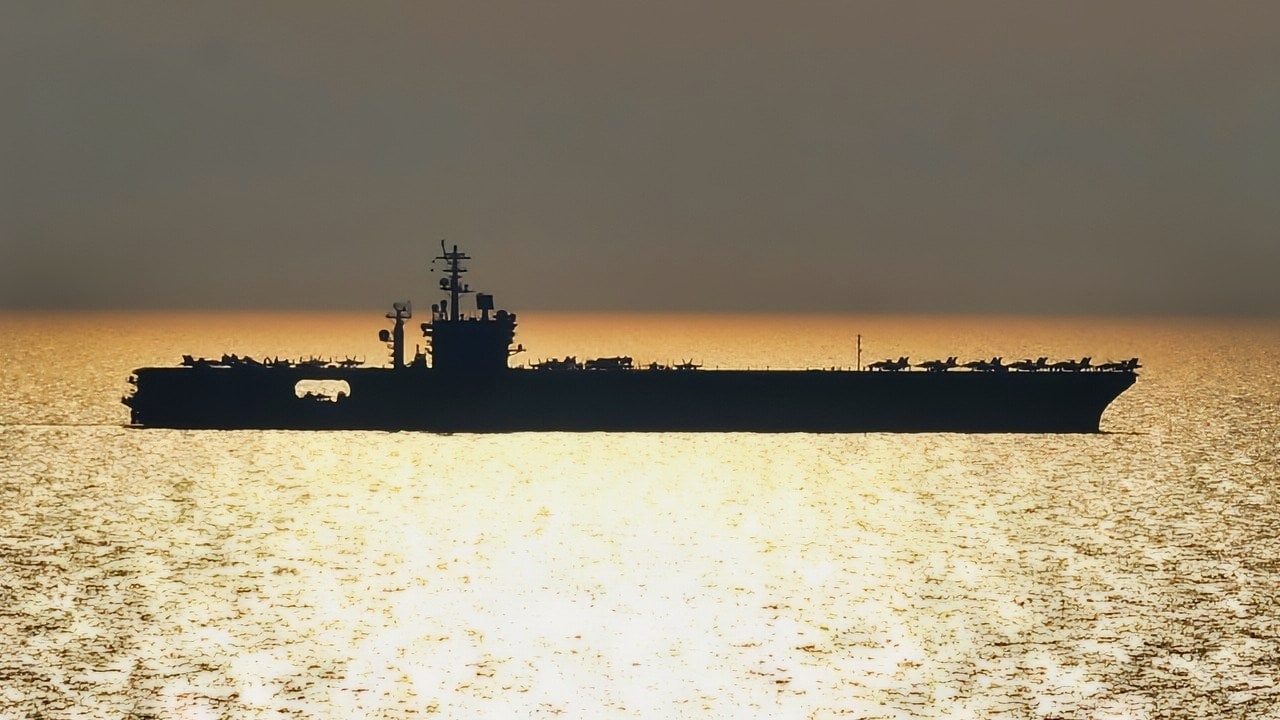
(Oct. 17, 2017) The aircraft carrier USS Nimitz (CVN 68) transits the Arabian Gulf, Oct 17, 2017. Nimitz is deployed in the U.S. 5th Fleet area of operations in support of Operation Inherent Resolve. While in this region, the ship and strike group are conducting maritime security operations to reassure allies and partners, preserve freedom of navigation, and maintain the free flow of commerce. (U.S. Navy photo by Mass Communication Specialist Seaman David Claypool/Released)
“Still, the nation has continued to import foreign fuels as well. So if energy independence means no imports, then neither president has done it. According to that definition, the country hasn’t been energy independent for more than 75 years,” Skibel wrote.
“That’s in part because the oil the U.S. produces isn’t the oil the country’s infrastructure prefers. The nation’s refineries were largely built before the U.S. fracking boom and are designed to process heavier crude oil typically found in Russia and the Middle East. The lighter stuff found in the U.S. is often cheaper to export.”
Trump, in his second term, has for the most part delivered low gas prices and has certainly continued to tout it, with announcements claiming “American Energy Dominance Is Back Under President Trump.”
But then, Trump decided to attack Iran. And it’s sent gas prices rising, which threatens political problems for a president who was elected to a second term in part on promises to reduce inflation and deliver lower prices.
The Strait of Hormuz Factor in Iran War
Oil prices had already been rising for a few weeks, as tensions rose ahead of a possible war in the Middle East.
As pointed out by GasBuddy earlier this week, the average gas price in the country rose 5.6 cents in a week, to $2.94 per gallon. The average had risen 7.8 cents from a month earlier, while, for now, remaining lower than a year ago.
“The national average price of gasoline has climbed for a fourth straight week, driven primarily by seasonal tightening and broader market dynamics,” De Haan said, although he added that high prices are likely to come.
“Looking ahead, markets will now begin reacting to this weekend’s U.S.–Iran attacks, which have elevated geopolitical risk premiums even in the absence of immediate supply disruption. Oil prices have firmed as traders assess the potential for further escalation, and while fundamentals such as inventories and refinery activity remain important anchors, the risk of broader instability— particularly involving key transit routes— has injected fresh uncertainty into energy markets.”
Per a CNBC report on Tuesday, Trump announced that the United States would “provide insurance to tankers in the Persian Gulf to get maritime traffic moving through the Strait of Hormuz.” This led to an easing of global oil prices.
“If necessary, the United States Navy will begin escorting tankers through the Strait of Hormuz, as soon as possible,” Trump said in a social media post.
However, the White House seems aware that gas prices have the potential to create a political problem for them, while also undermining public support for the war effort.
A Warning From Wiles on Iran and Gas Prices
Politico reported on Thursday that the White House chief of staff, Susie Wiles, is “telling [Trump’s] advisers to bring ideas to the Oval Office to lower gasoline prices in the wake of the U.S. attack on Iran.” The sources for the Politico story were “two energy industry executives familiar with the conversations.”
The White House, per the report, is “looking under every rock for ideas on improving energy prices, especially gasoline prices.”
“Folks are scrambling for announcements and messaging to counter the narrative,” Politico’s source said.
As for the messaging from the White House, White House Press Secretary Karoline Leavitt addressed the prices at a briefing this week.
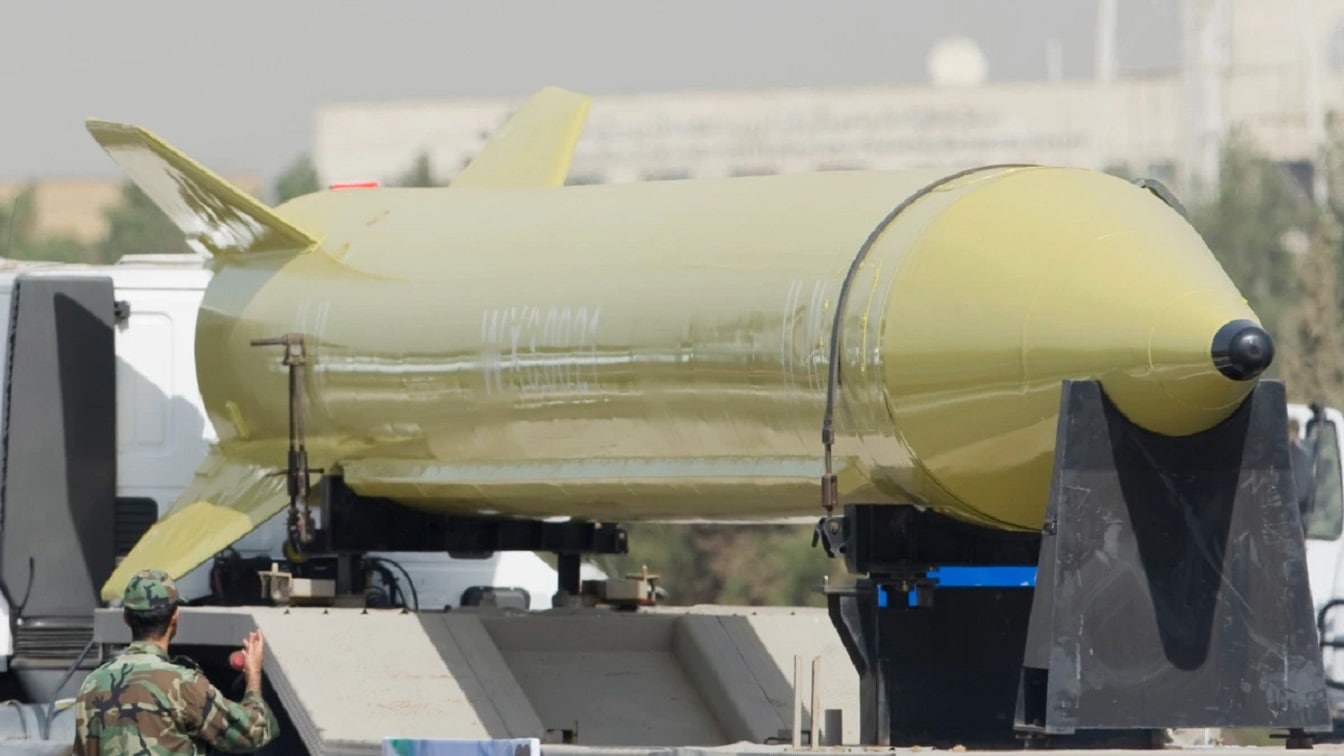
Iranian Ballistic Missile. Image Credit: Creative Commons.
“I think it speaks to why this action was so necessary that ultimately the energy industry is going to benefit from the president’s actions with respect to Iran, because Iran will no longer be controlling the Strait of Hormuz and restricting the free flow of energy,” Leavitt said.
Among the ideas under consideration, per the Politico report, are a temporary gas tax holiday, although there are doubts about whether Congress would pass it, while it’s not clear if savings would be passed on to drivers.
Trump himself has also addressed the issue.
“If we have a little high oil prices for a little while, but as soon as this ends, those prices are going to drop, lower than even before,” Trump said this week.
But if gas prices stay high, and it looks like the campaign in Iran might go on for months or even longer, the president could find it difficult to continue on the current course.
About the Author: Stephen Silver
Stephen Silver is an award-winning journalist, essayist, and film critic, and contributor to the Philadelphia Inquirer, the Jewish Telegraphic Agency, Broad Street Review, and Splice Today. The co-founder of the Philadelphia Film Critics Circle, Stephen lives in suburban Philadelphia with his wife and two sons. For over a decade, Stephen has authored thousands of articles that focus on politics, national security, technology, and the economy. Follow him on X (formerly Twitter) at @StephenSilver, and subscribe to his Substack newsletter.