
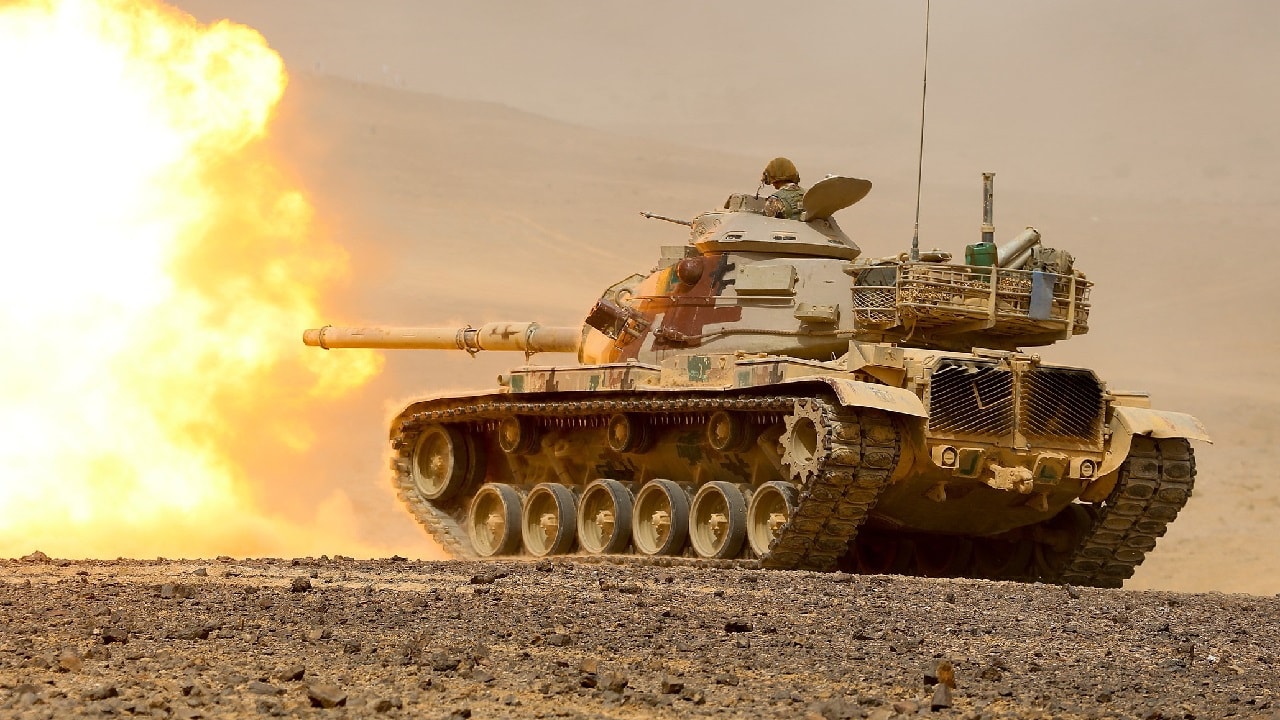
One and a half months into Operation Epic Fury, aka Operation Roaring Lion, i.e., the joint U.S.-Israeli military operation against the theocratic terrorist regime in Iran, the Islamic Republic of Iran Ground Forces (IRIGF; Niruye Zaminiye Arteše Jomhuriye Eslâmiye Irân [NEJAZA], aka Artesh [“Army”]) has practically been the forgotten (or perhaps more accurately, ignored) component of the regime’s armed forces.
The focus has been instead on the Islamic Revolutionary Guard Corps (IRGC, aka the Sepâh), the twin menaces of Iranian ballistic missiles and Shahed drones, and the near-total annihilation of their navy (IRIN) and air force (IRIAF).
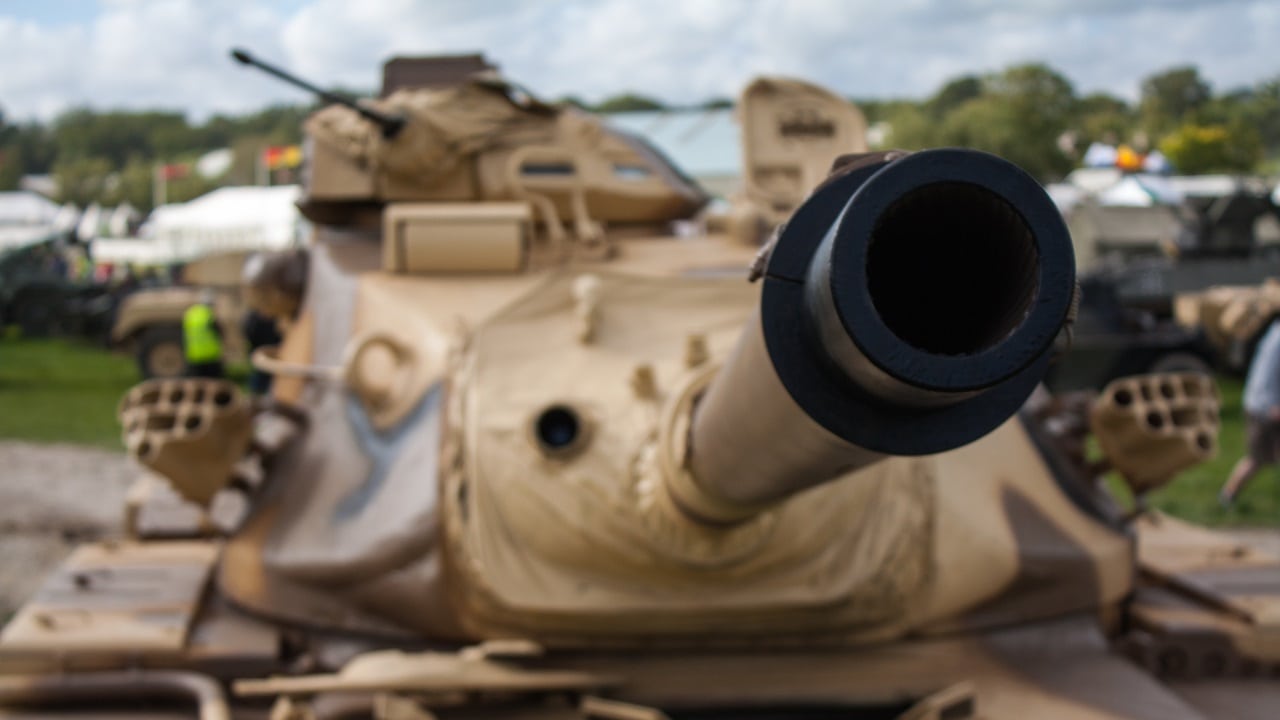
M60 Tank. Image Credit: Creative Commons.
What’s more, U.S. President Donald John Trump continues to downplay the notion of American ground troops being sent into Iran.
That said, rumors continue to abound that U.S. Marine Corps ground pounders (and presumably some Special Operations troops) will be sent in to take Kharg Island.
So then, (1) if this comes to pass, and (2) if that were to further escalate into a full-scale conventional war between American and Iranian ground troops, what sort of manpower and materiel would the latter be able to bind to bear?
Iran’s Army: IRIGF/Artesh/NEJAZA Basic Manpower Numbers
According to a 2019 Defense Intelligence Agency (DIA) estimate titled “Iran Military Power: Ensuring Regime Survival and Securing Regional Dominance,” the IRIGF has a total of 350,000 soldiers, compared with 18,000 sailors in the IRIN, 37,000 airmen in the IRIAF, and 15,000 troops in the Islamic Republic of Iran Air Defense Force (IRIADF).
GlobalSecurity.org divvies those NEJAZA manpower numbers into 130,000 regular troops and 200,000 conscripts, a 1.69:1 ratio in favor of the latter demographic; “The ratio of conscripts to professional soldiers has remained a persistent structural concern, as Iranian Army planners have consistently recognized that a force in which conscripts form the majority of manpower is constrained in its operational range, readiness, and capability for sustained or complex operations.”
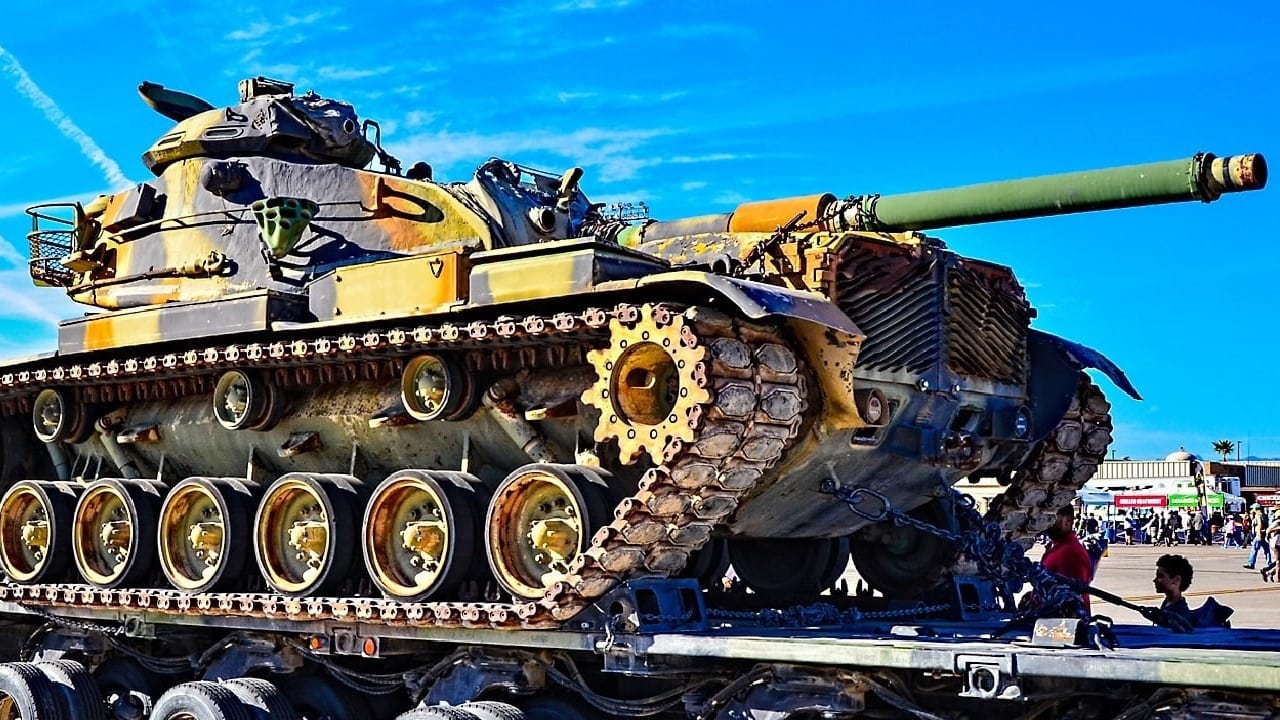
M60 Tank. Image Credit: Creative Commons.
The numbers are further divvied into one logistics brigade, an infantry brigade, an airborne brigade, special forces (Takavaran [“attack-trooper”]) brigades, and five artillery brigades/regiments.
IRIGF/Artesh/NEJAZA Weapons Part 1: Small Arms
-Heckler & Koch (HK) G3A6 7.62x51mm NATO: A license-built version of the famous Cold War-era German-designed HK G3 battle rifle (which debuted in 1959), this is the standard Artesh infantry rifle. The Iranian version differs from the Deutschlander originals by having a dark-green, slimline handguard, a fixed stock, and a trigger pack.
–MASAF-2 7.62x51mm NATO: Unveiled in 2021, this is the slated successor to the HK G3A6; thus far, it has already been issued to the 35th Rapid Reactionary Brigade.
–PC-09 Zoaf 9x19mm: This is an unlicensed homegrown copy of the Swiss-German-redesigned SIG Sauer P226 traditional double-action (TDA) semiautomatic pistol made famous by elite Western units such as the U.S. Navy SEALs and the British Special Air Service (SAS) (and, for a brief while, the field agents of the FBI). It was introduced in 1995.
-Tondar MPT9 9x19mm: License-built version of the HK MP5 submachine gun (SMG), which is arguably the most successful SMG ever made, thanks to antiterrorist units such as the British SAS, the FBI’s Hostage Rescue Team (HRT), and Germany’s GSG-9 (Grenzschutzgruppe 9).
IRIGF/Artesh/NEJAZA Weapons Part Deux: Tanks
–Zulfiqar-3: This is the latest variant of Iran’s homegrown main battle tank (MBT), named after the sword of Ali ibn Abi Talib (c. 600 – 661 CE), the fourth caliph of Islam.
Development was completed in 1999, followed by public unveiling in 2011. Bearing a very similar cosmetic resemblance to the American-made M1 Abrams (the most successful MBT ever made), it wields a 2A46 125mm main gun, 12.7mm and 7.62mm machine guns for secondary armament, and weighs 52 tons. Production number estimates range from 100 to 250.
-T-72S: So much irony here, as this infamous Soviet-designed MBT was actually used *against* the Iranian Army by then-Iraqi dictator Saddam Hussein’s elite Republican Guard troops during the Iran-Iraq War of 1980-1988.
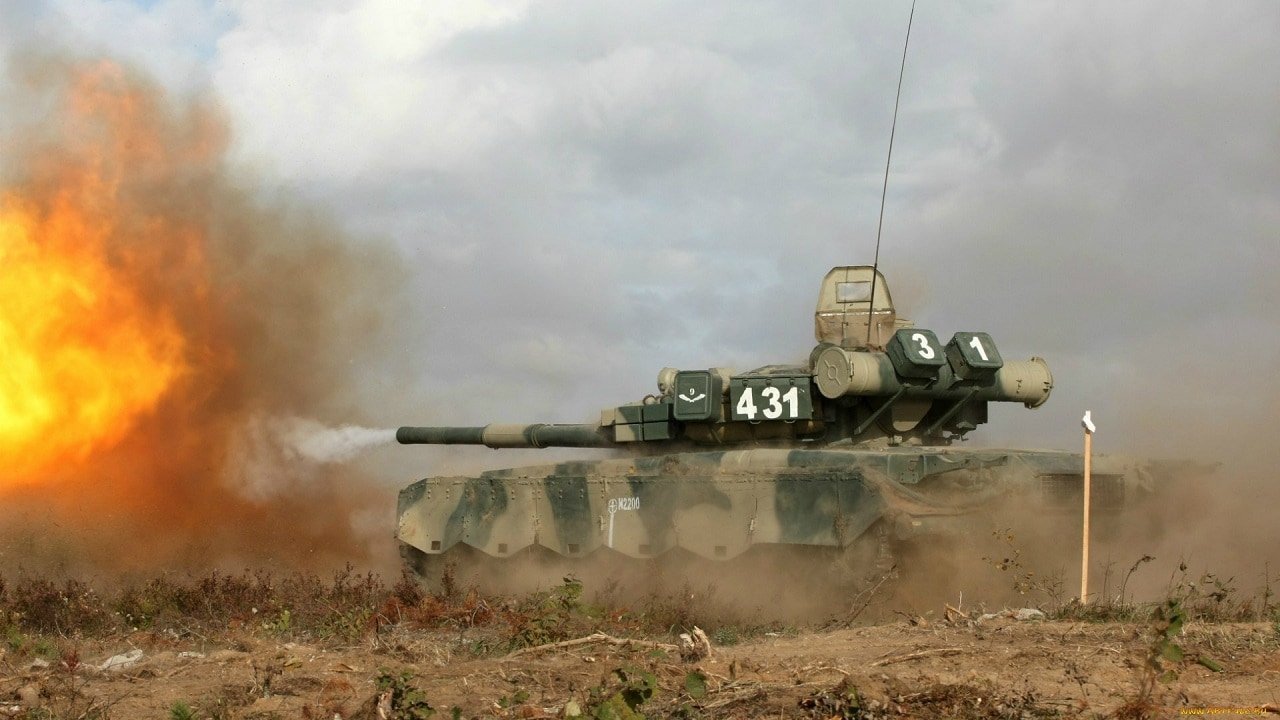
T-72 Main Battle Tank. Image Credit: Creative Commons.
The Islamic Republic has an estimated 460 T-72s, with the majority received under license from Russia between 1993 and 2012, and an additional 104 from Poland from 1994 to 1995, and 37 from Belarus starting in 2000.
-M60 “Patton”: Yes, that’s right, an actual American-made MBT and not just an unlicensed copycat species; as was the case with the U.S.-made F-4 Phantom II and F-14 Tomcat fighter jets in the hands of the IRIAF, the Iranian-owned M60 tanks are carryovers from happier times for U.S.-Iran relations, i.e., back when the Shah was still in power. The NEJAZA is believed to have 150 of these left.
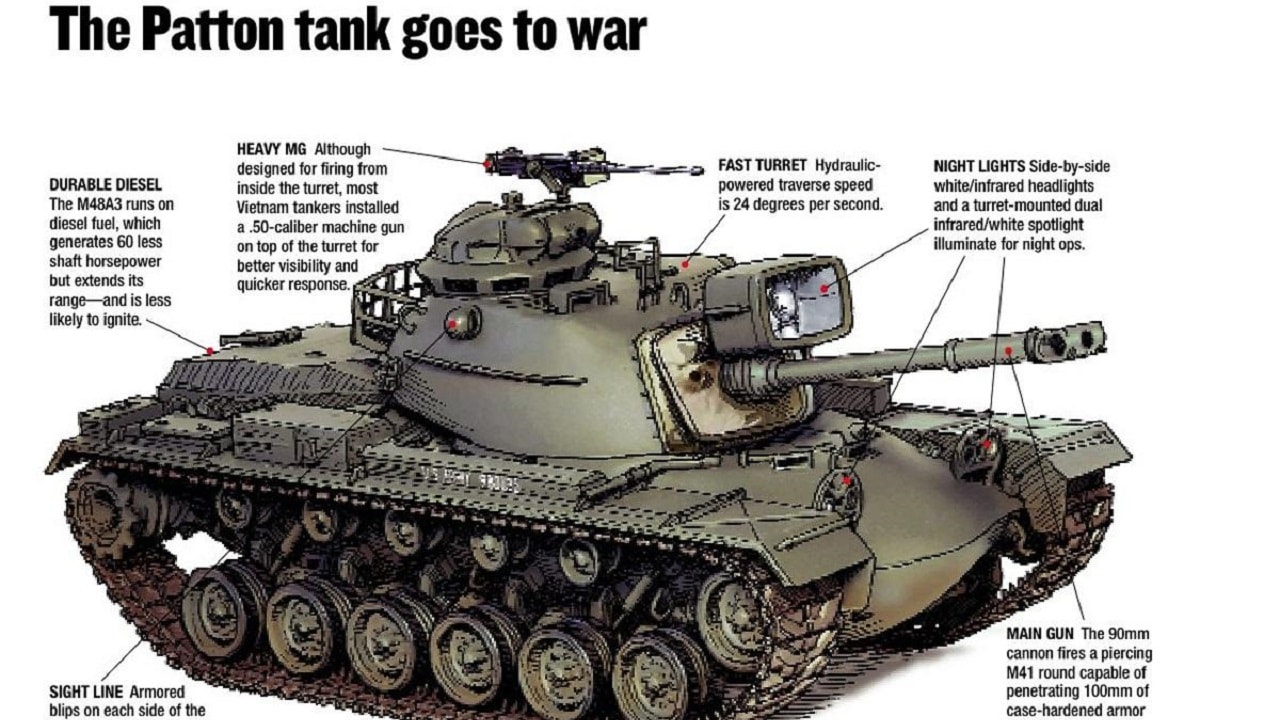
M60 Tank. Image Credit: Creative Commons.
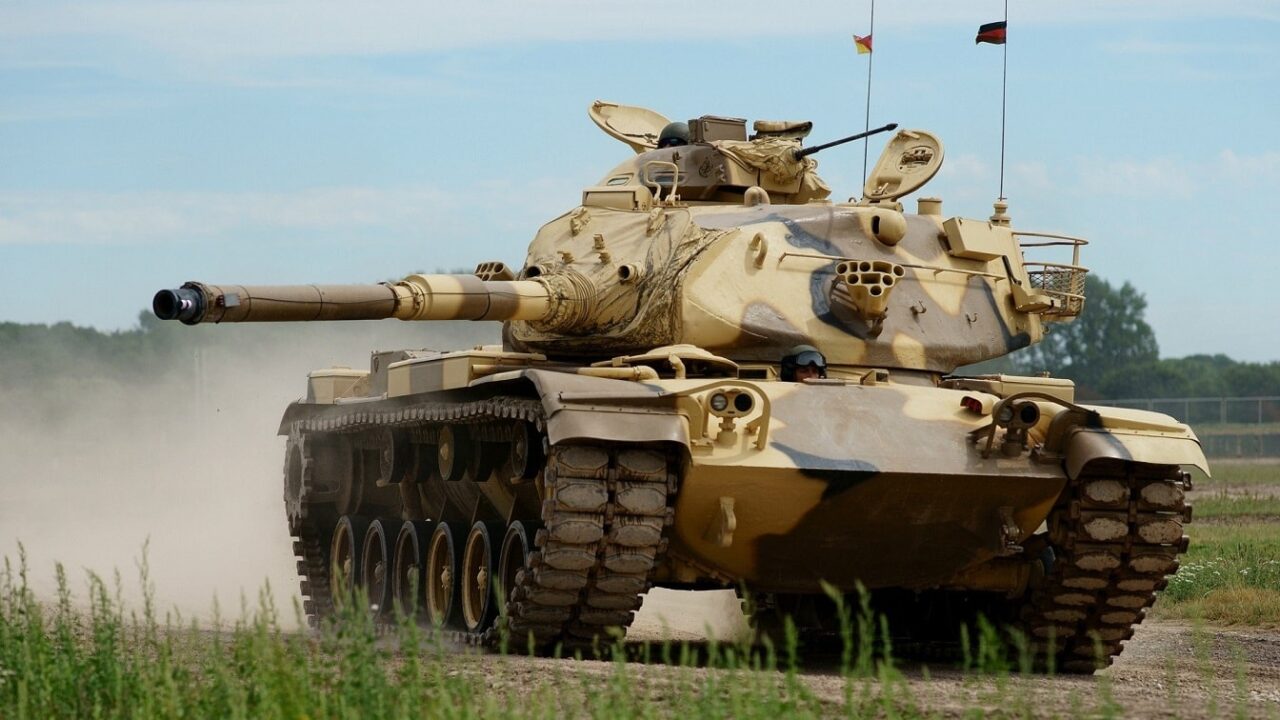
US M60 tank. Image Credit: Creative Commons.
IRIGF/Artesh/NEJAZA Weapons Part III: Armored Personnel Carriers (APCs)
-Boragh aka Boraq: Named for the “winged steed” of Islamic mythology, this is generally considered to be a reverse-engineered and upgraded model of the Chinese Type 86 infantry fighting vehicle (IFV), which is turned into the ChiComs’ license-built version of the Soviet BMP-1.
In production since 1997, it weighs 13 tons, has a crew of three, a pax capacity of eight troops, and armament consisting of a Shipunov 2A42 30mm autocannon as primary armament and a secondary coaxial PKT 7.62mm general-purpose machine gun (GPMG).
An estimated 140 Boraqs are in service.
MORE – The U.S. Navy’s Ford-Class Is Just a Big Experiment
MORE – The SR-71 Hit Mach 3.56 And It Can’t Happen Ever Again
Christian D. Orr, Defense Expert
Christian D. Orr is a Senior Defense Editor. He is a former Air Force Security Forces officer, Federal law enforcement officer, and private military contractor (with assignments worked in Iraq, the United Arab Emirates, Kosovo, Japan, Germany, and the Pentagon). Chris holds a B.A. in International Relations from the University of Southern California (USC) and an M.A. in Intelligence Studies (with a concentration in Terrorism Studies) from American Military University (AMU). He is also the author of the book “Five Decades of a Fabulous Firearm: Celebrating the 50th Anniversary of the Beretta 92 Pistol Series,” the second edition of which was recently published.