
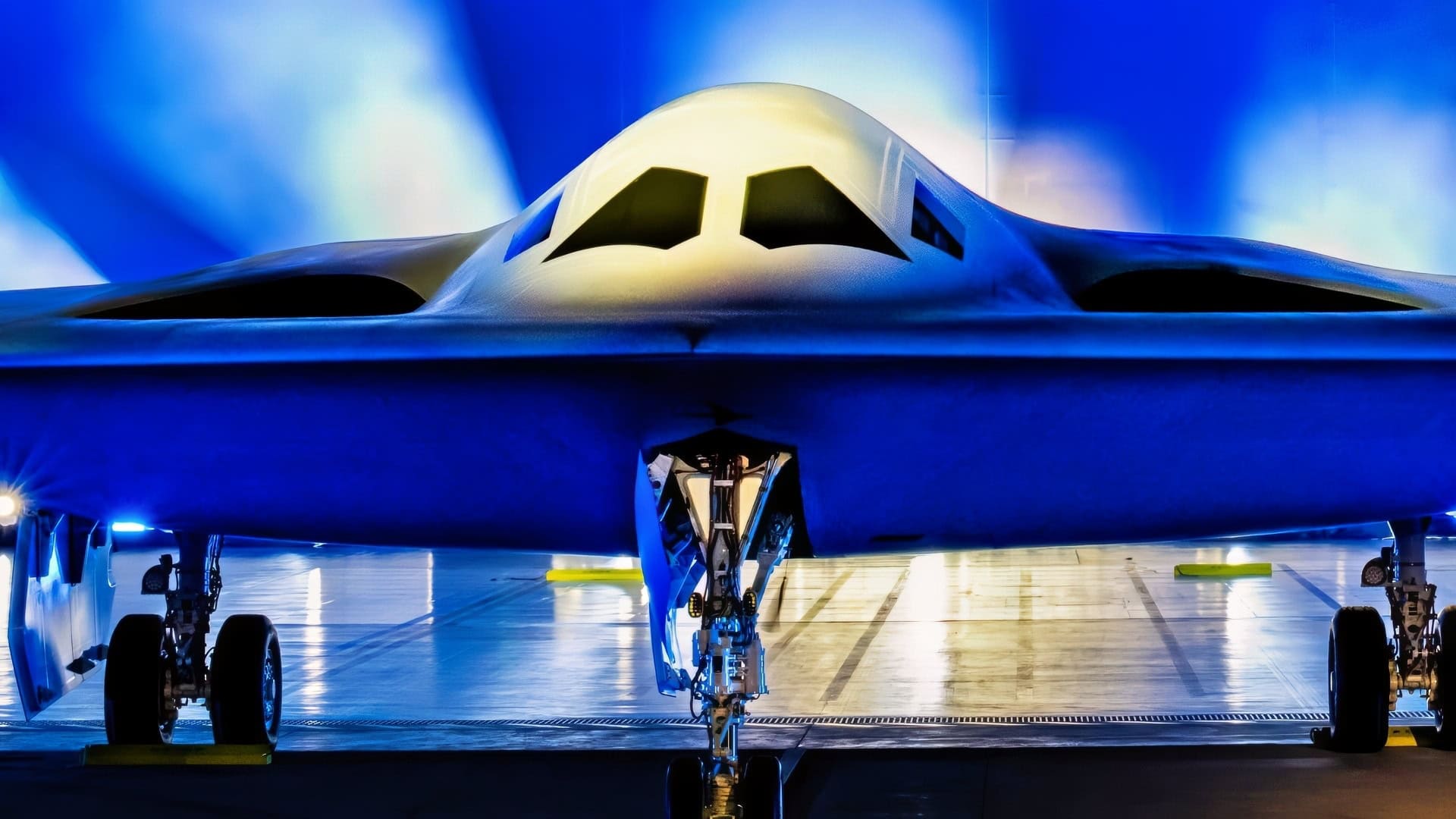
The Future B-21 Raider Is the Winner of the Iran War: The United States did not deploy its next-generation stealth bomber in the Iran War. Obviously, the B-21 Raider is still not operational.
And yet, by the time a ceasefire was agreed, it was clear that the platform’s relevance had been effectively proven.
That’s because the war did two things at once. First, it validated the core concept behind stealth bombing – deep penetration into defended airspace to strike hardened targets. And at the same time, it exposed the limitations of relying on a small, aging fleet of B-2 Spirit aircraft to carry out that mission.
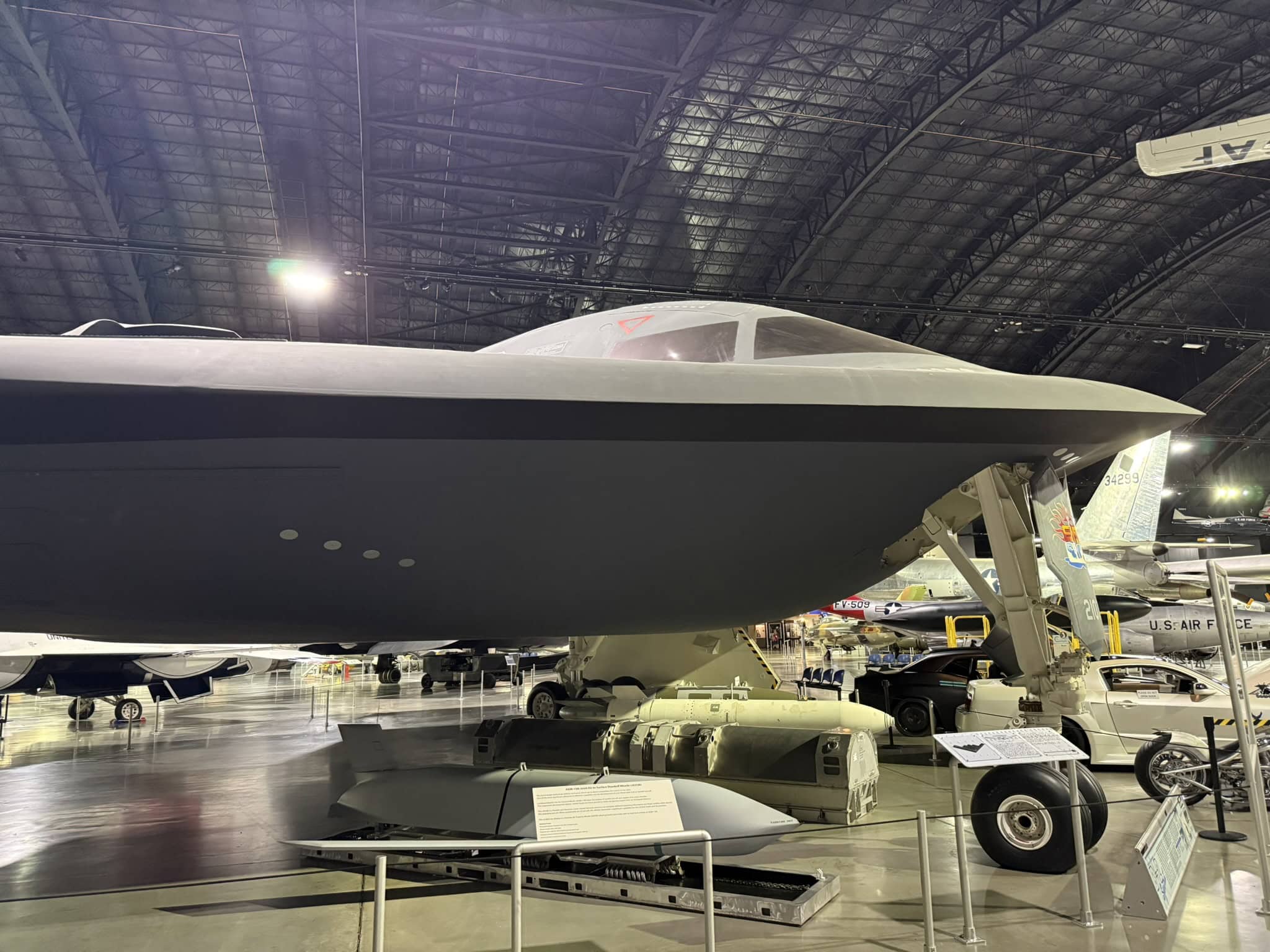
B-2 Spirit Stealth Bomber. 19FortyFive.com Photo from National Museum of the U.S. Air Force Visit in 2025.
Iran was, by any serious assessment, an easy target compared to what the United States may face in the future. Its air defenses were degraded quickly, its air force posed little threat, and U.S. and Israeli forces were able to establish air dominance early in the campaign.
But even in that environment, the United States repeatedly turned to the B-2 for the most difficult and strategically significant strikes.
And that’s the point: if the B-2 was necessary in Iran, the B-21 will be essential elsewhere.
What the B-2 Proved
When U.S. forces launched the first phase of Operation Epic Fury, targeting Iranian military infrastructure across the country, B-2 stealth bombers were among the assets deployed. The aircraft flew directly from Whiteman Air Force Base in Missouri.
The B-2s were used the same way they were during Operation Midnight Hammer last year: they struck underground facilities – this time, ballistic missile sites – using penetrating munitions, bypassing Iranian defenses and hitting targets that would have been far more difficult to engage using stand-off weapons alone. That was a major demonstration of a capability that has existed for decades but which is often misunderstood.
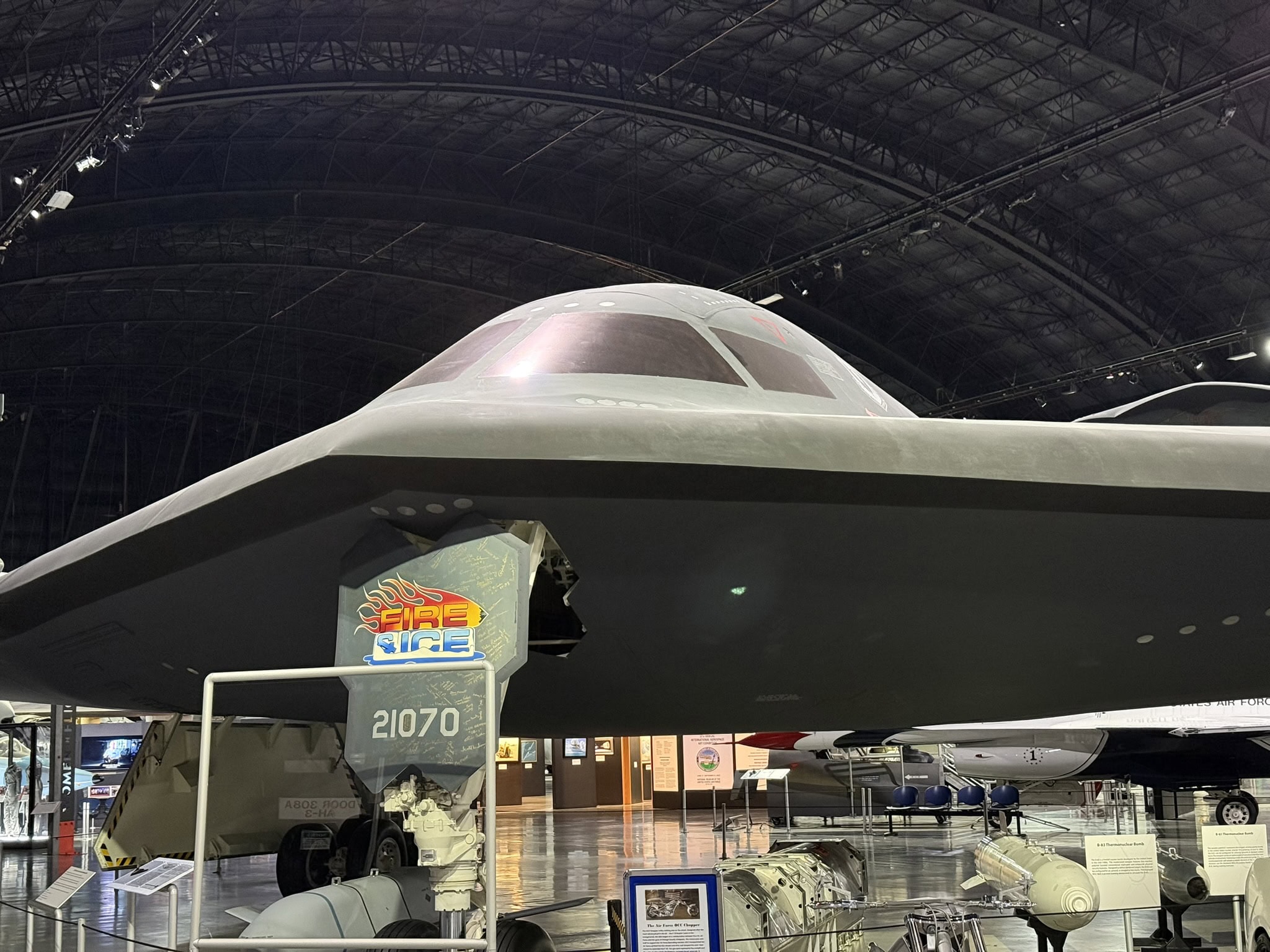
B-2 Spirit Stealth Bomber. 19FortyFive.com Photo from National Museum of the U.S. Air Force Visit in 2025.
The B-2, first flown in 1989 and introduced into service in 1997, was designed specifically to penetrate sophisticated air defense systems and deliver precision strikes against high-value targets. And that’s exactly what it did in Iran.
In fact, throughout the campaign so far, B-2 missions have been used in the same way – and to reach their targets, they have often flown incredible distances. Some sorties lasted as long as 37 hours, involving a round-trip from the United States. Not only is this a capable bomber in terms of the payloads it can deliver, but it can also travel great distances.
Stealth penetration, then, is proving itself. It remains one of the few ways to reliably destroy hardened, high-priority targets.
Why the B-2 Cannot Fight the Next War
The United States operates a fleet of 19 B-2 bombers, a number that has remained essentially unchanged since the aircraft entered service in 1997. Two have since been lost, but the point is that these are not high-volume assets. They are strategic tools that are used sparingly, in part because they are extraordinarily expensive and maintenance-intensive.
In Iran, the United States could afford to rely on a small number of stealth bombers because the campaign environment was permissive. Iranian air defenses were already not all that impressive, and were degraded very quickly. Fighter opposition was also limited.
Other assets, including F-35s and cruise missiles, could operate with relatively low risk. But even so, the B-2 was still required to take out the hardest targets.
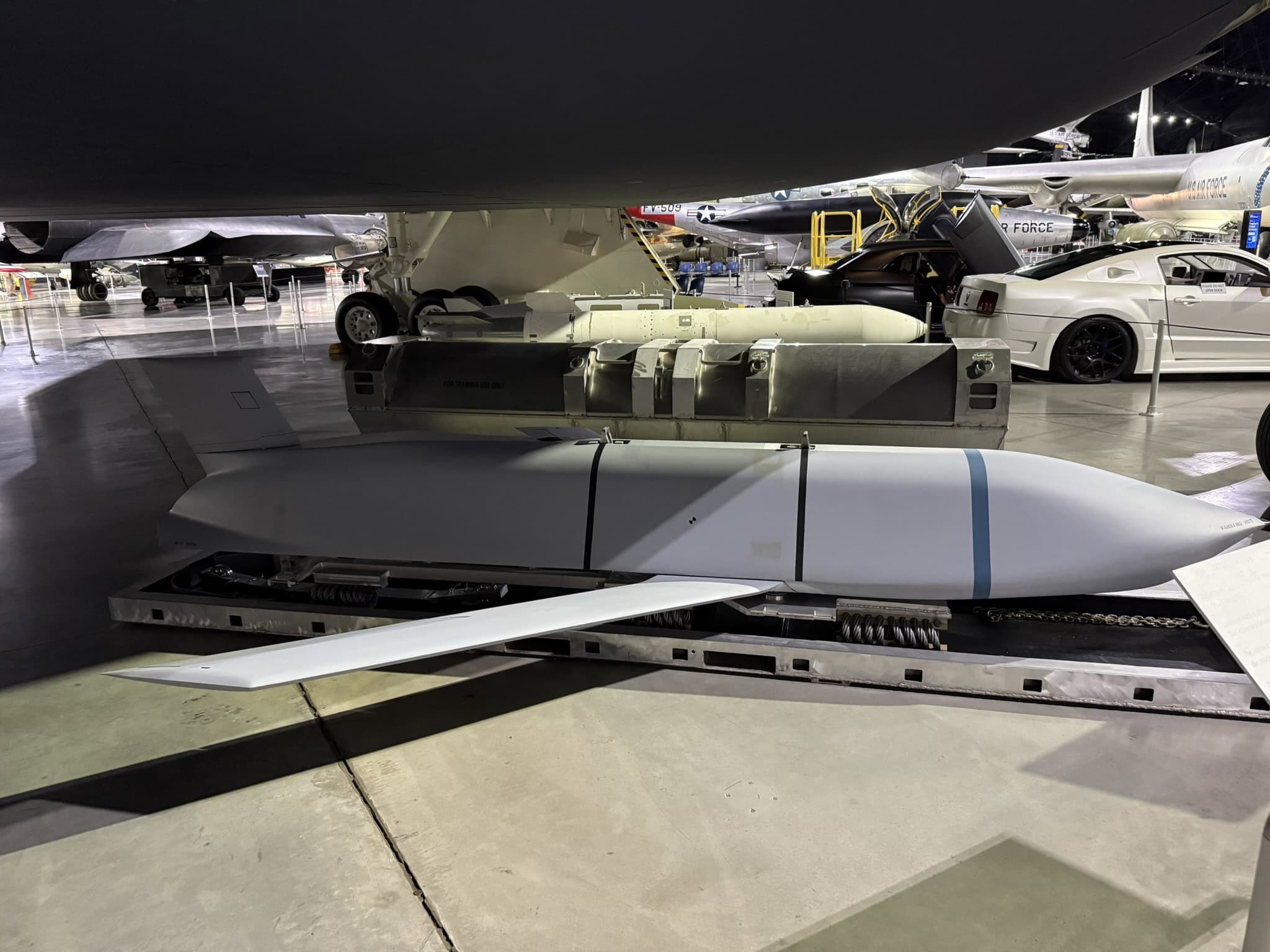
JASSM Cruise Missile. 19FortyFive.com Image.
That creates a problem if you scale up the scenario. A fleet of roughly 20 aircraft cannot sustain high sortie rates over extended periods, nor can it absorb losses without any serious strategic consequences. A fleet of that size also cannot cover multiple theaters simultaneously, even if you assume that every single one is available at the same time, which is not the case.
Iran did not stress those numbers to the breaking point, but there’s no reason why that cannot happen in the future. It can.
Even the missions themselves illustrate the problem. Flying 30-40-hour sorties from the United States is a remarkable capability, but it is not a scalable model for sustained, high-intensity conflict.
The B-21 Changes Everything
Future conflicts will be different, and that’s where the B-21 Raider comes in. The next-generation stealth bomber is designed to do the same job as the B-2 – penetrate defended airspace and strike high-value targets – but do so under entirely different assumptions about scale and survivability.
The U.S. Air Force plans to acquire at least 100 B-21 aircraft, with plans for a second production line potentially paving the way for more orders. The platform will form the backbone of the future bomber force alongside the B-52. That alone is a fundamental shift in strategy.
Quantity alone is far more than a marginal improvement, but combined with its improved stealth and networking, it hugely affects Air Force capability.
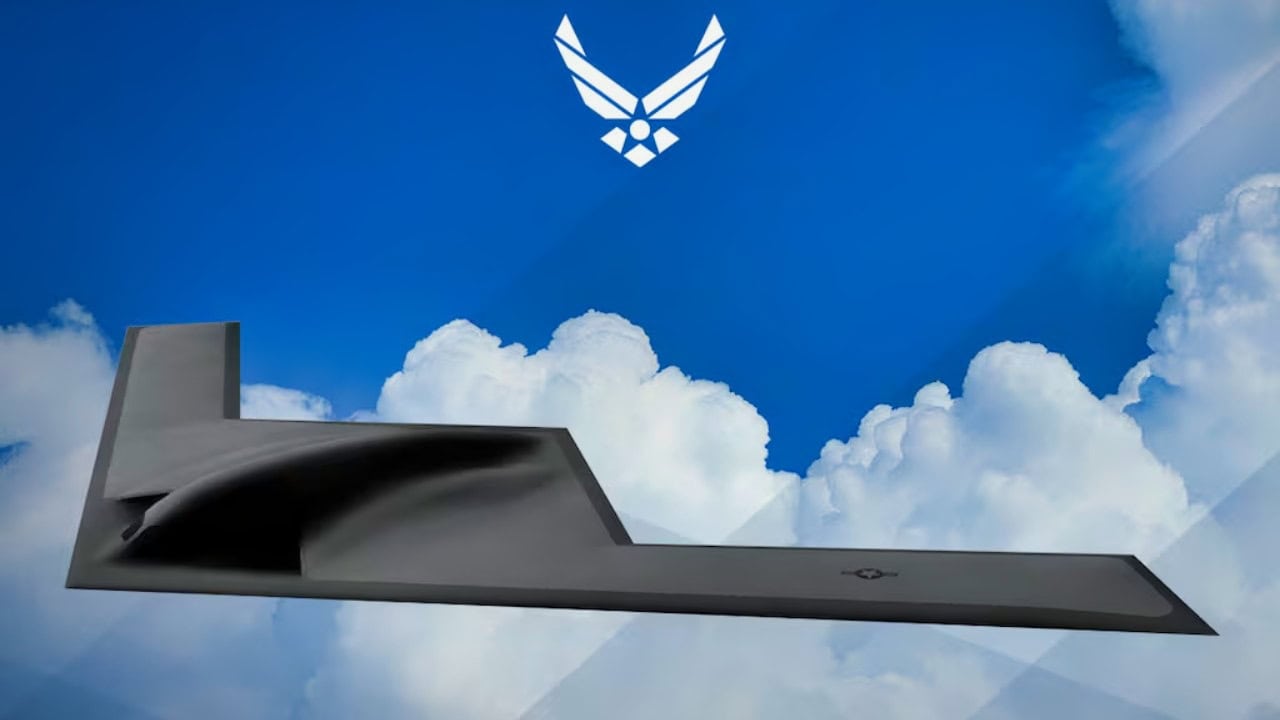
B-21 Raider Bomber.
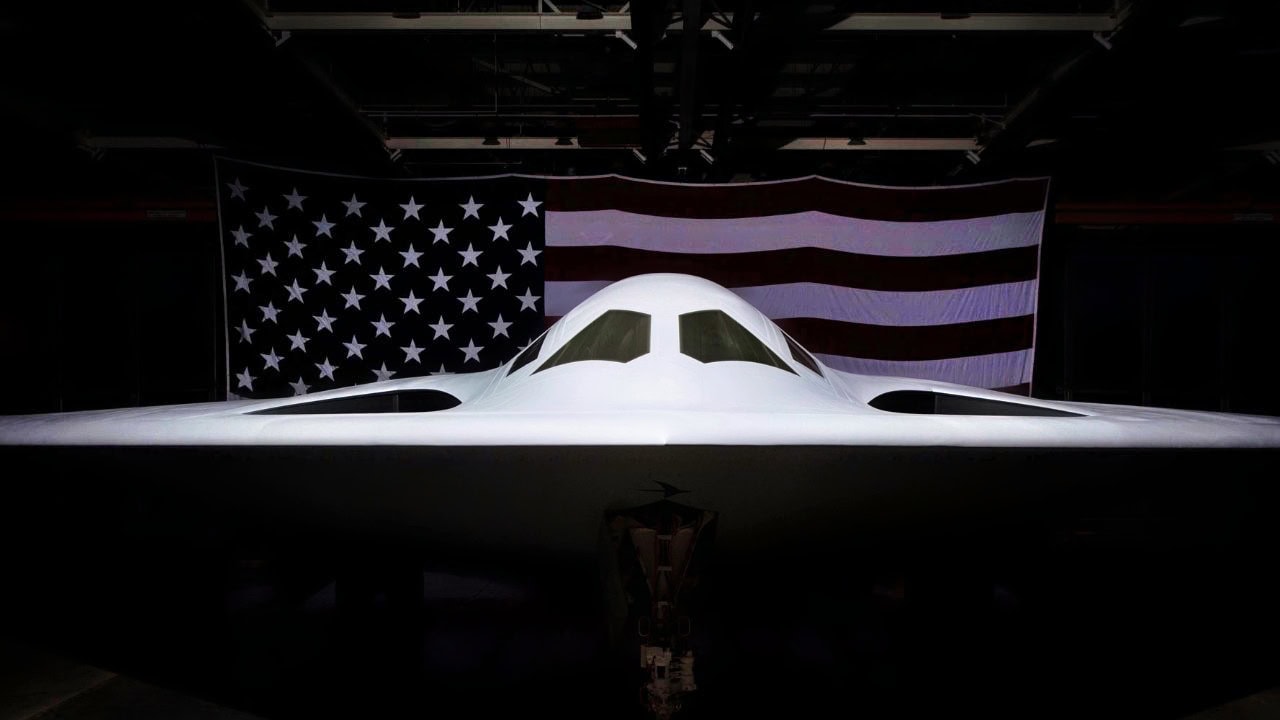
B-21 Raider Bomber. Image Credit: Creative Commons.
What’s more, the bomber will feature an open systems architecture, allowing it to be upgraded over time as threats change.
Remember: the B-2 was fielded in the 90s, but it was designed in the 1980s. This is an aging aircraft that is hard to maintain, let alone upgrade. The B-21 is designed for the 2030s and beyond. It is better and more adaptable in every way, and will be able to carry both stand-off weapons and direct-attack munitions.
It will integrate with new systems more easily and, like the upcoming Next Generation Air Dominance (NGAD) fighter, operate as part of a “family of systems” that includes networked strike.
That all means higher sortie generation rates, a lower maintenance burden, improved survivability against increasingly capable modern air defenses, and the ability to sustain operations over time.

Image: Lockheed Martin showing a refueling NGAD fighter.
Iran Was the Easy Fight – What About the Next One?
Looking beyond quality and quantity, let’s consider context. Iran was not a peer adversary. It wasn’t even close. The country’s air defense network, while capable on paper, was a patchwork of systems that do not integrate well.
It could not match a modern system fielded by the United States or adversaries like China or Russia, for that matter. Its air force was also limited, and its ability to contest U.S. air operations collapsed very quickly once the campaign began. That’s precisely why U.S. forces have been able to fly A-10 Warthogs throughout the campaign, despite being a slow and non-stealthy aircraft.
This is not the environment that the U.S. is planning for. A conflict with a more capable adversary – particularly China – would look very different. It would involve dense, layered air defense systems, advanced radar networks, a large and modern fighter force, including stealth aircraft, and an enormous geographic scale.
If sustained combat in Iran was taxing on U.S. resources – and it indeed was – then imagine a conflict against a peer adversary.
Without the Raider, it’s frankly hard to imagine. In a contingency with China, air dominance cannot be achieved as it was in Iran, changing the role of stealth bombers entirely.
To be clear: the Iran war did not introduce a new era of warfare. In many ways, it is like fighting a force from another era.
But change is coming, and while Iran may not find it easy to rebuild, American adversaries are rapidly building their own competing naval and air assets, forcing the United States to adapt and innovate.
About the Author: Jack Buckby
Jack Buckby is a British researcher and analyst specializing in defense and national security, based in New York. His work focuses on military capability, procurement, and strategic competition, producing and editing analysis for policy and defense audiences. He brings extensive editorial experience, with a career output spanning over 1,000 articles at 19FortyFive and National Security Journal, and has previously authored books and papers on extremism and deradicalization.