
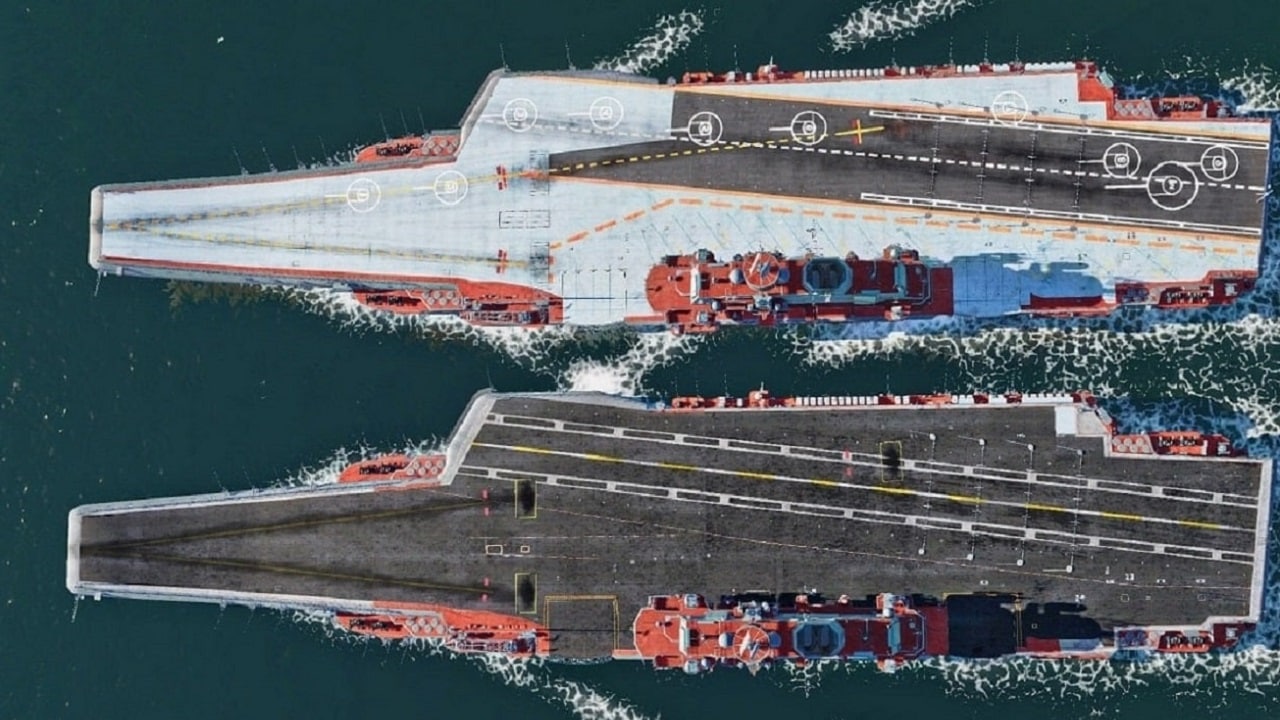
State Shipbuilding Chief Andrei Kostin Says the Admiral Kuznetsov Will Likely Be Sold or Scrapped
In July 2025, Andrei Kostin, the chairman of Russia’s state shipbuilding corporation, told reporters that Russia’s only aircraft carrier, Admiral Kuznetsov, was likely to be sold or scrapped. The comments were the clearest indication yet that the vessel may never return to service.
The comments followed nearly a decade of setbacks for the ship, which has not deployed operationally since its 2016-2017 Syria mission.
It has been stuck in an overhaul cycle since 2017 that has been repeatedly delayed by accidents, including a 2018 drydock collapse and a major onboard fire in 2019.
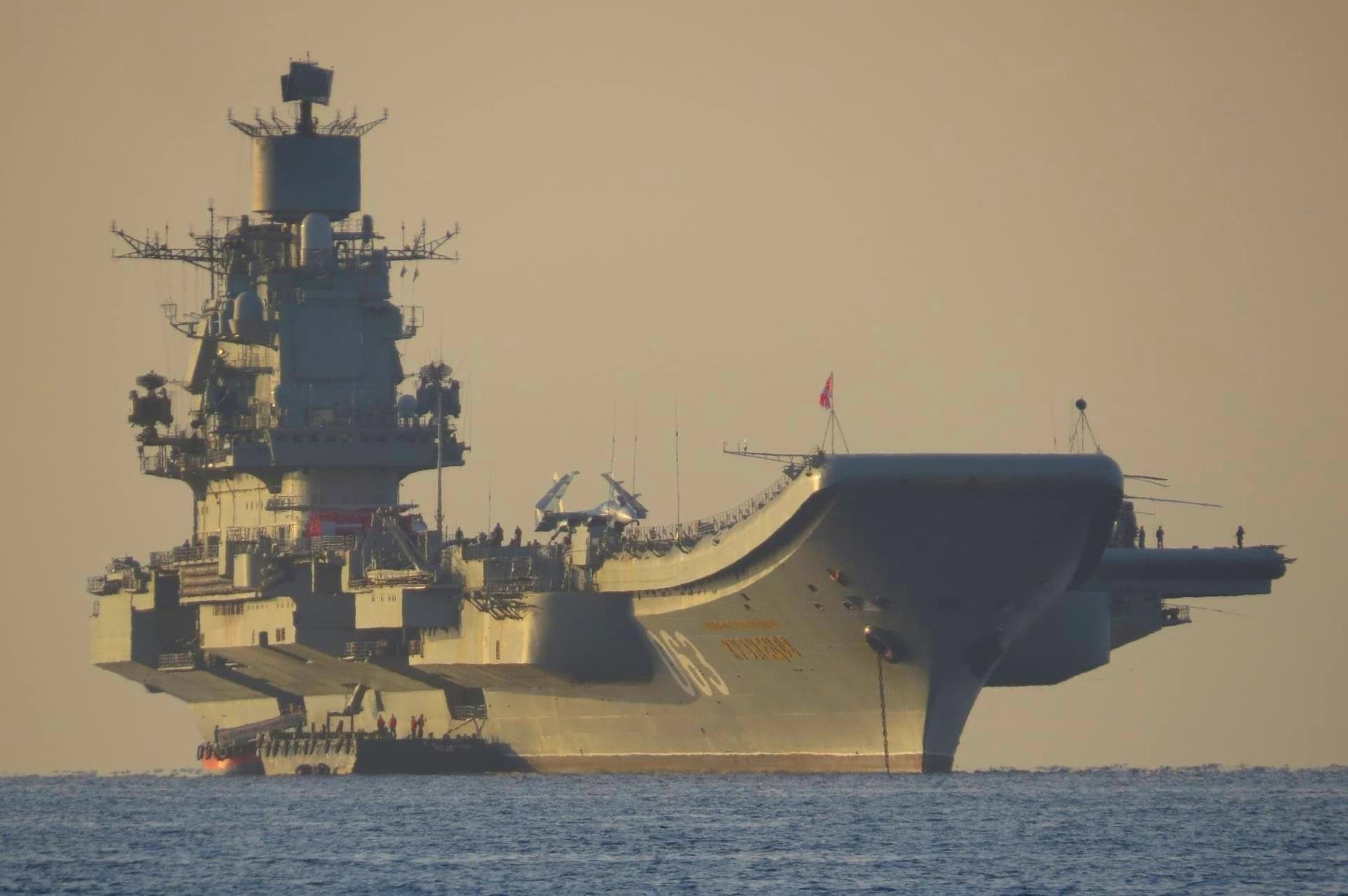
Aircraft Carrier Admiral Kuznetsov. Image Credit: Creative Commons.
By 2025, reports indicated that repair work had been suspended entirely, with costs continuing to rise and timelines slipping indefinitely.
The likely loss of Kuznetsov is a huge setback for Russia, leaving its forces without a functioning aircraft carrier.
And on top of the obvious capability gap it creates, the story of Kuznetsov is one of persistent failure and mistakes, with a ship once built to symbolize Soviet naval power becoming one of the most failure-prone major warships in modern service.
Built for Soviet Power Projection
The Kuznetsov was conceived during the late Cold War as part of a broader Soviet effort to develop a blue-water navy capable of challenging the United States globally.
Construction began in 1982 in what was then the Ukrainian Soviet Socialist Republic, and the ship was launched in 1985 before entering service in 1991, just as the Soviet Union collapsed.
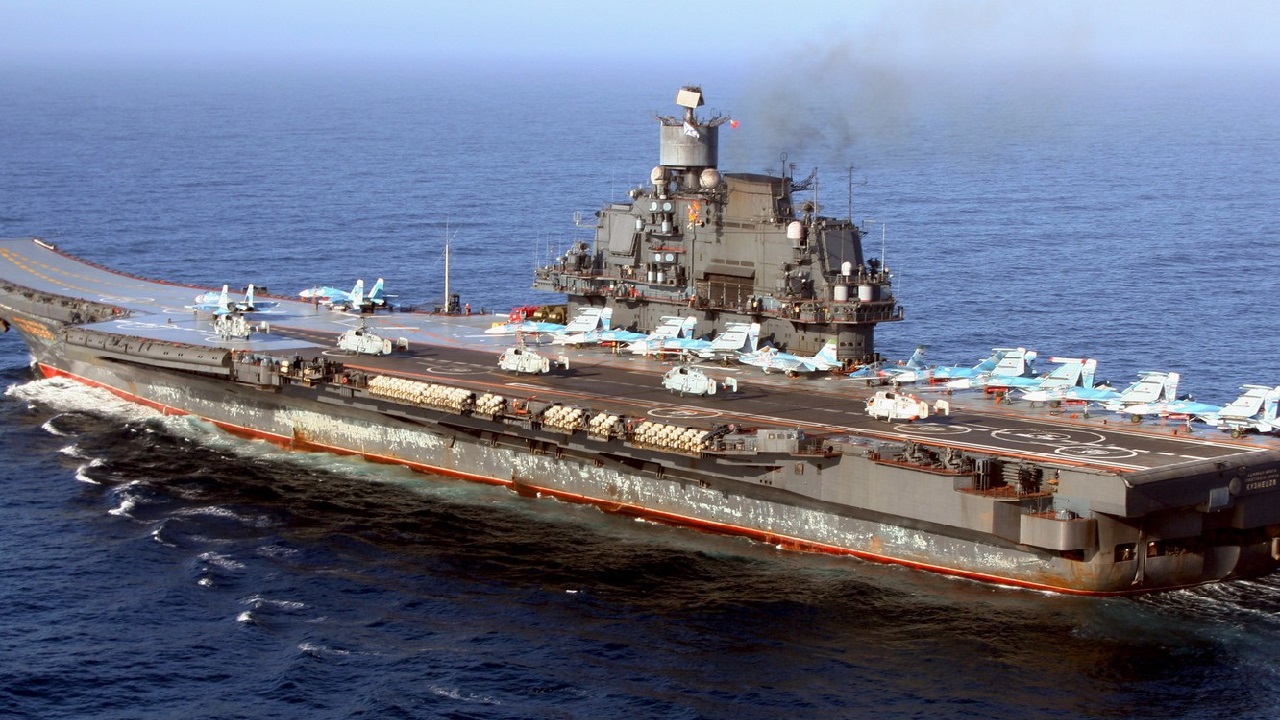
Admiral Kuznetsov Aircraft Carrier. Image Credit: Creative Commons.
It was never actually intended to replicate American carrier doctrine, though. Instead, Soviet planners designed it as a heavy aircraft-carrying “cruiser” – a hybrid warship that combined the functions of an aircraft carrier and a missile cruiser.
That design choice introduced a number of limitations for the ship. Unlike U.S. carriers, Kuznetsov was equipped with P-700 Granit anti-ship cruise missiles, reducing space for aircraft and prioritizing anti-surface warfare over air dominance.
The flight deck also used a ski-jump launch system (STOBAR) instead of catapults, which simplified engineering but ultimately limited aircraft payload and sortie generation. It was an aircraft carrier in the sense that it could carry aircraft, but it came nowhere near the capabilities of American carriers of the time.
Its propulsion system was another compromise. Rather than nuclear power, the ship relied on conventional mazut-fueled boilers.
Mazut is a high-viscosity and high-sulfur heavy fuel oil (HFO) produced as a byproduct of petroleum refining, primarily in Russian industry. In a sense, the ship was fueled by Russian industrial waste. That sounds great on paper, but the boilers proved to be inefficient and prone to breakdowns, producing the thick black smoke that became one of its defining features.
Originally, Kuznetsov was intended to lead a class of carriers – but that never happened. Its unfinished sister ship, Varyag, was later sold to China and became the Liaoning – leaving Kuznetsov as the only carrier Russia would ever operate.
From the beginning, Kuznetsov was a platform defined by compromise, designed to project power but constrained by Soviet industrial limitations, inefficiency, breakdowns, and failed attempts to sustain it.
Theoretical and Real Capabilities
On paper, Kuznetsov appeared to offer a credible carrier capability.
The ship displaced roughly 58,000 tons, measured more than 300 meters in length, and it could theoretically carry 40-50 aircraft, including Su-33 fighters, MiG-29K variants, and helicopters. The vessel’s actual performance, however, consistently fell short.
The absence of catapults was a big factor. Without them, aircraft had to launch with reduced fuel and weapons loads, which limited both range and strike capability. The ski-jump system also restricted sortie rates compared to American vessels, which could launch multiple aircraft simultaneously.
That was bad enough, but the ship had its own range problems – not because it was forced to carry less fuel, but because its propulsion system was notoriously unreliable, to the point that deployments typically included a tug escort in case of breakdown.
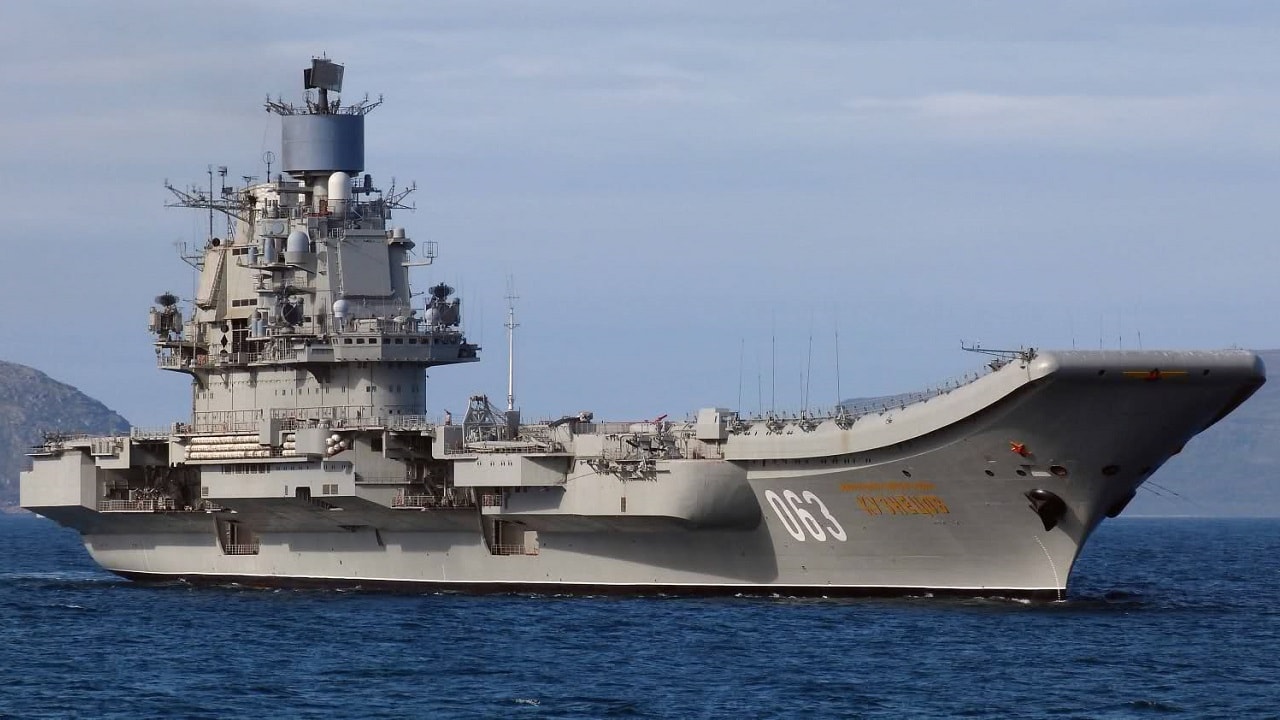
Admiral Kuznetsov Aircraft Carrier. Image Credit: Creative Commons.
Every carrier needs maintenance, but the Kuznetsov’s constant problems meant that its maintenance demands were much higher – and the ship frequently spent long periods in port undergoing repairs. And when it was working, its air wing was limited in both size and effectiveness – not just because aircraft were forced to take off with limited payloads, but because there was a shortage of trained carrier pilots.
When compared to American supercarriers, which are designed for sustained global operations, Kuznetsov couldn’t compete by any metric, making it more of a regional presence platform that was capable of limited operations but could not keep up with continuous high-tempo warfare.
Accidents and Limited Combat Use
Kuznetsov’s service history is defined more by its failures than victories. Its only real combat deployment was in 2016-2017, when it supported Russian operations in Syria.
The deployment was part of Russia’s intervention to stabilize the government of Bashar al-Assad and help reverse battlefield losses against insurgent groups, including Islamic State and Jabhat al-Nusra. Russian forces had already been conducting airstrikes from land bases since 2015, but the deployment of Admiral Kuznetsov in October 2016 marked an escalation in the conflict, bringing a carrier strike group into the eastern Mediterranean to reinforce operations and demonstrate power projection beyond Russia’s immediate region.
From November 2016, aircraft operating from the carrier conducted strikes against militant infrastructure and troop formations. Throughout the deployment, Russian officials claimed the air wing flew around 420 combat sorties and struck more than 1,200 targets with precision-guided munitions.
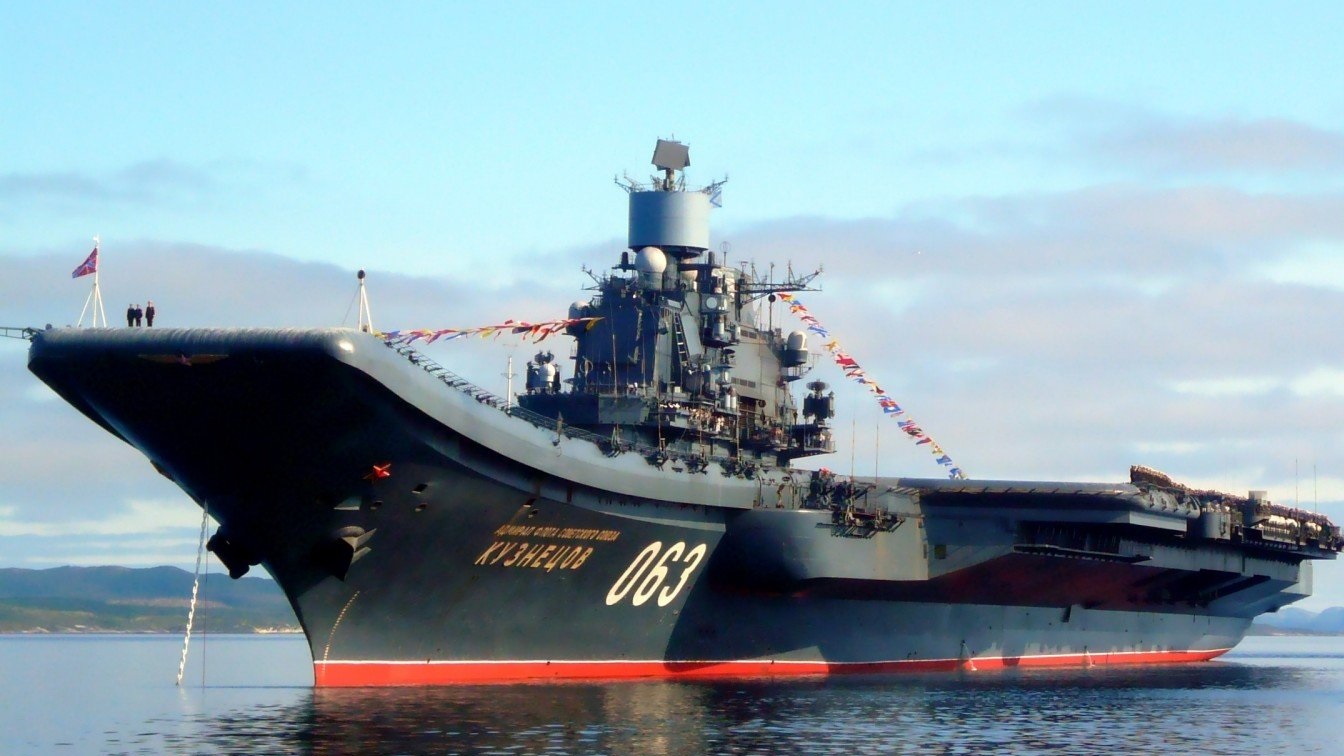
Admiral Kuznetsov. Image Credit: Creative Commons.
However, the operation exposed major limitations for the vessel, with only a portion of the sorties actually flown from the ship itself. Many aircraft were later relocated to the Khmeimim air base in Syria to sustain operations after repeated technical failures occurred on board.
Two aircraft were famously lost during the mission, with one MiG-29K crashing after running out of fuel while waiting to land, and an Su-33 being lost due to arrestor gear failures. But this is just one story in a long list of embarrassments. In 2009, a fire resulted in fatalities, and in 2018, the PD-50 floating dock sank, and a crane crashed onto the ship’s flight deck. In 2019, an onboard fire caused extensive damage and killed workers.
Every one of those incidents delayed repairs and increased costs, and cemented the ship’s reputation as being unreliable. By the late 2010s, Kuznetsov had effectively become an expensive maintenance project.
Russia technically owned it, but it was by no means an operational asset and was spending more time under repair than at sea. And even its overhaul program, which was launched in 2017 to extend its service life, has been mired in delays and corruption allegations.
A Capability Russia May Never Get Back
If Admiral Kuznetsov is scrapped, Russia will become the only permanent member of the United Nations Security Council without an operational aircraft carrier. It will also represent a deep and structural change in its naval posture. It’s bad news for Russia, too, because there are no credible signs that any kind of replacement is imminent.
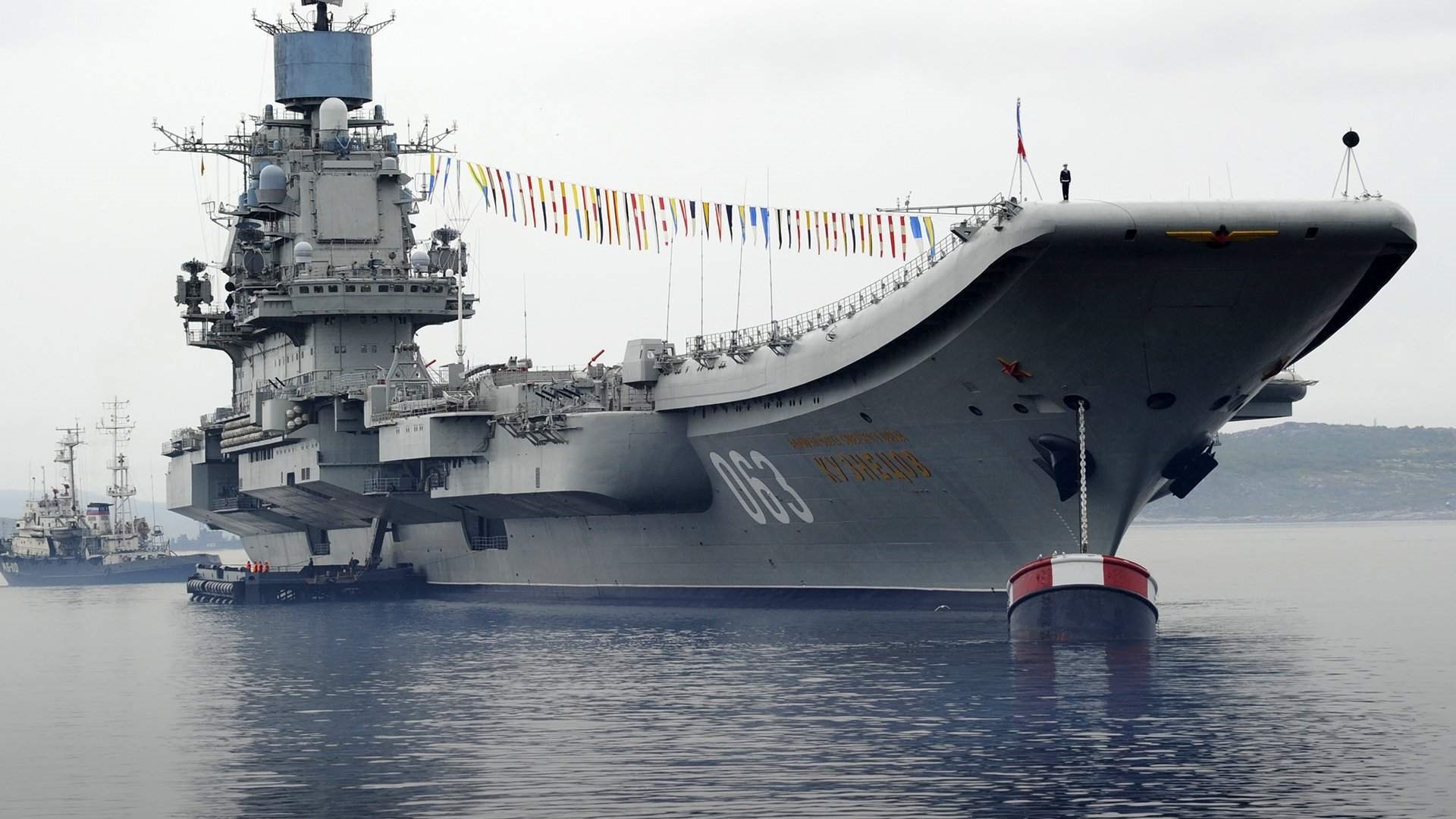
Admiral Kuznetsov, Russia’s last aircraft carrier. Image Credit: Creative Commons.
While Russia has long discussed future carrier concepts such as the Project 23000 “Shtorm,” plans to build a new carrier have been repeatedly delayed or effectively paused, with funding redirected elsewhere amid industrial capacity limitations and conflict in Ukraine.
Earlier ambitions to begin construction by the mid-2020s have also not materialized, and any new carrier would likely take a decade or more to build even under optimistic conditions.
That leaves Russia without a pathway to sustain carrier aviation – and instead, its navy is being increasingly structured around a combination of submarines, long-range cruise missiles, and land-based airpower – all of which are better suited to its current strategic focus but which will, in the long term, deny its forces the flexibility of a carrier strike group.
MORE: China’s H-20 Stealth Bomber – Will It Ever Fly?
About the Author: Jack Buckby
Jack Buckby is a British researcher and analyst specializing in defense and national security, based in New York. His work focuses on military capability, procurement, and strategic competition, producing and editing analysis for policy and defense audiences. He brings extensive editorial experience, with a career output spanning over 1,000 articles at 19FortyFive and National Security Journal, and has previously authored books and papers on extremism and deradicalization.