
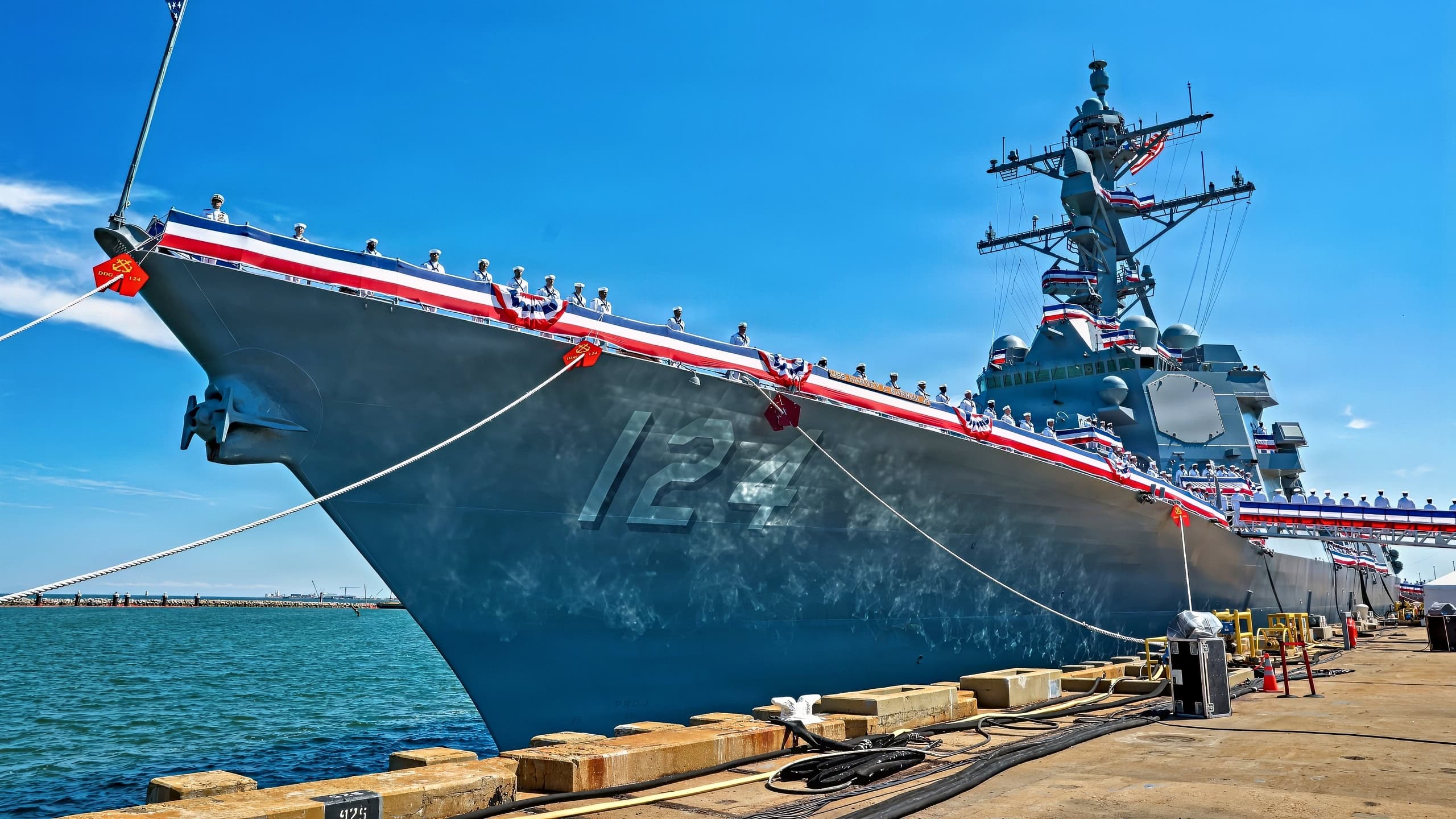
The Strait of Hormuz is the most important artery in the global energy system. Roughly 20 million barrels per day of oil transited the strait in 2024, accounting for around 20% of global petroleum consumption and more than a quarter of all seaborne oil trade. Around 84% of that oil went to Asia, with China, India, Japan, and South Korea accounting for 69% of total Hormuz crude and condensate volumes.
The recent conflict in Iran has begun to stress-test that global system, with Iran moving to restrict passage through Hormuz and allowing transit only under its control and subject to fees – some of which have been paid in cryptocurrency. And then, the United States disrupted those extortion efforts, announcing a naval blockade on April 13 targeting shipping to and from Iranian ports, rather than fully closing the Strait itself.
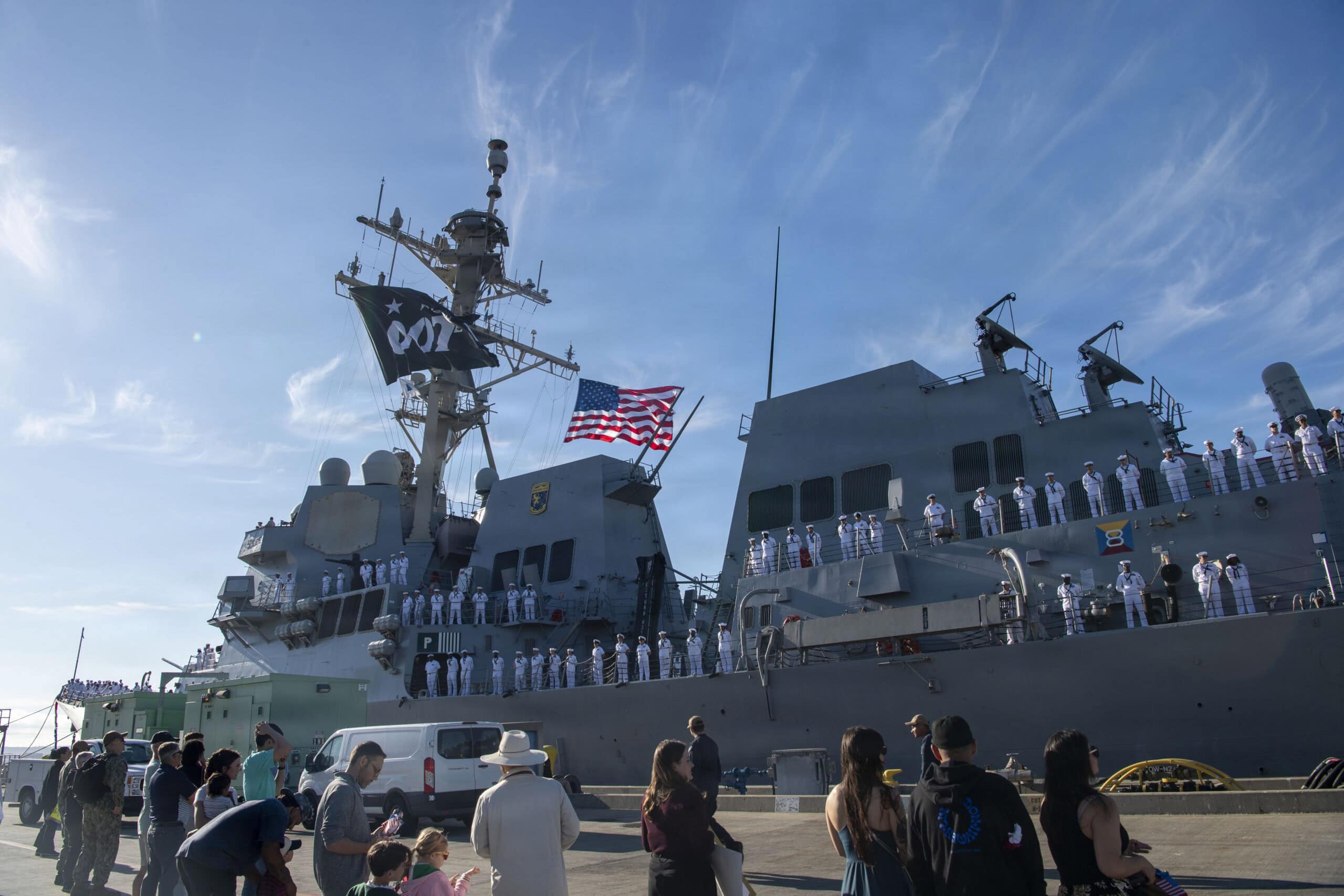
SAN DIEGO, Ca. (April 10, 2026) – Friends and family greet Arleigh Burke-class guided-missile destroyer USS Stockdale (DDG 106) from the pier, as the ship returns to its homeport of Naval Base San Diego following a seven-month underway to the U.S. 4th Fleet area of operations, April 10. Stockdale returns safely home having successfully carried out sustained operations at sea, maintaining peace through strength and sustaining credible deterrence alongside our allies and partners. (U.S. Navy Photo by Mass Communication Specialist 1st Class Sara Eshleman)
And while China and India both import more oil from the region in absolute terms, Japan and South Korea are arguably the clearest examples of the economic disruption being caused by the ongoing crisis. Both countries are almost entirely dependent on imported energy.
They also both rely heavily on Middle Eastern crude routed through the Strait of Hormuz and have already taken emergency measures to address the damage. Among other measures, both countries have begun releasing oil from their strategic reserves and imposing fuel controls that restrict industrial use.
The crisis in Iran is having measurable effects on major global economies, and the longer it continues, the worse the situation will become.
What Actually Happened in the Strait – and What the U.S. Blockade Does
After the war began in late February, Iran moved to establish full control over the Strait of Hormuz, restricting passage and imposing fees on vessels it allowed to transit. That reduced throughput and introduced uncertainty into one of the world’s most critical shipping lanes, with reports indicating a 95% or higher drop in traffic through the Strait since the war began.
In response to Iran charging a toll fee and its refusal to comply with U.S. demands during recent in-person negotiations, U.S. President Donald Trump announced a blockade in the region.

Ecuadorian navy Esmeralda-class missile corvettes BAE Manabi (CM 12) and BAE Loja (CM 16) conduct formation maneuvering alongside Nimitz-class aircraft carrier USS Nimitz (CVN 68) and Arleigh Burke-class guided-missile destroyer USS Gridley (DDG 101), part of Nimitz Carrier Strike Group (NIMCSG), in the Pacific Ocean, April 8, 2026. Nimitz is deployed as part of Southern Seas 2026, which seeks to enhance capability, improve interoperability, and strengthen maritime partnerships with countries throughout the region through joint, multinational and interagency exchanges and cooperation. (U.S. Navy photo by Mass Communication Specialist 3rd Class Gina Gallia)
The operation targets ships entering or leaving Iranian ports and coastal areas, warning that vessels doing so without authorization may be intercepted or seized.
It does not fully close the strait to neutral shipping bound for non-Iranian destinations – a point that has been missed by much of the online commentariat.
Some tankers have continued to transit Hormuz even during the blockade, while others have been turned back. The U.S. military said that six merchant vessels reversed course in the first 24 hours of enforcement.
But even without a total shutdown, the economic impact has been severe. War-risk insurance premiums have surged, and shipping schedules have been disrupted indefinitely, with no clear indication when, or if, passage will return to normal.
The International Energy Agency (IEA) has described the situation as the largest oil supply shock in history, estimating a disruption of around 1.5 million barrels per day. Oil prices briefly approached $150 per barrel before stabilizing closer to $100 in recent weeks.

(March 29, 2026) Boatswain’s Mate Seaman Franko Cazares acts as landing signalman enlisted during flight quarters aboard the Arleigh Burke-class guided-missile destroyer USS Gonzalez (DDG 66), March 29, 2026. Gonzalez is on a scheduled deployment in the U.S. 6th Fleet area of operations to support the war fighting effectiveness, lethality and readiness of U.S. Naval Forces Europe-Africa, and defend U.S., Allied and partner interests in the region.(U.S. Navy photo by Mass Communication Specialist 3rd Class Mark Peña)
The IMF has also warned that if prices remain above $100 into 2027, the global economy could face recessionary pressure.
Why Japan and South Korea Were So Exposed
Japan and South Korea entered the crisis with vulnerabilities that few other advanced economies share. Japan depends on the Middle East for roughly 95% of its oil imports, with about 70% of its crude supply passing through Hormuz.
In January 2026 alone, Japan imported around 2.8 million barrels per day, including 1.6 million barrels per day from Saudi Arabia, alongside additional volumes from the UAE, Kuwait, and Qatar.
South Korea’s exposure was similar. About 70% of its crude imports come from the Middle East, with roughly 61% of crude oil and 54% of naphtha (a refined oil produced during crude distillation) imports reliant on transit through Hormuz. Approximately 1.7 million barrels per day of South Korean crude supply has been directly affected by the disruption.

U.S. Navy Naval Air Crewman (Helicopter) 2nd Class Justin Baker, from Illinois, assigned to Helicopter Maritime Strike Squadron (HSM) 51, executes a safety and function check on an M240D machine gun on an MH-60R Sea Hawk helicopter on the flight deck of Arleigh Burke-class guided-missile destroyer USS Rafael Peralta (DDG 115) in the South China Sea, March 25, 2026. Rafael Peralta is forward-deployed and assigned to Destroyer Squadron (DESRON) 15, the Navy’s largest DESRON and the U.S. 7th Fleet’s principal surface force. (U.S. Navy photo by Mass Communication Specialist 1st Class Ryre Arciaga)
The difference between these two countries and other economies like China and India is a lack of alternative sources of oil. China, for example, can draw on pipeline imports from Russia and Central Asia, as well as its larger strategic reserves.
It has already responded to the crisis by reducing Middle Eastern crude imports by 28% year-on-year in early 2026 while increasing alternative sourcing. Similarly, India benefits from a more flexible refining system that can source discounted crude from multiple suppliers and then export refined products itself.
Japan and South Korea do not have these options – at least, at scale. Both are maritime energy economies that are built around a predictable Gulf supply, making them uniquely sensitive to disruptions in Hormuz.
What the Oil Shock Has Already Done
There have already been substantial and measurable economic effects in both countries. In Japan, refinery utilization – how much of the country’s oil refining capacity is actually being used at a given time – fell to 67.7% of capacity in early April.
In response, the government began releasing oil from strategic reserves on March 16, making roughly 50 days’ worth of consumption available, with an additional 20-day release reportedly under consideration. Total reserves remain substantial at around 230-254 days of coverage, but distribution bottlenecks are already being noticed – with heavy fuel oil and diesel becoming harder to procure in certain regions, forcing the government to intervene and instruct refiners and distributors to prioritize supply regardless of existing commercial agreements.
U.S. Marine Corps Lance Cpl. Hunter Cross, a native of Midlands, Mich., and a combat engineer with 2d Combat Engineer Battalion, 2d Marine Division, fires an M3E1 multipurpose anti-armor anti-personnel weapon system (MAAWS) on Camp Lejeune, N.C., Dec. 9, 2021. The MAAWS, also known as the Carl Gustaf, is a man-portable, reusable, breech-loading, 84 mm recoilless rifle capable of destroying armored targets. (U.S. Marine Corps photo by Lance Cpl. Brian Bolin Jr.)
The economic impact is inflationary, meaning costs are rising nationwide.
South Korea’s response has been different. The government imposed a maximum price system for petroleum products, introduced emergency fuel measures, and warned of possible driving restrictions if crude prices rise to $120-$130 per barrel. Refinery operating rates have also fallen by around 10%, while domestic naphtha supply has declined by 10% to 20%.
That disruption is also extending into industrial policy, with authorities banning hoarding of key petrochemical products, including ethylene, propylene, and benzene, and capping inventories at no more than 80% above levels from June last year.
So, while Japan is experiencing financial and inflationary stress, South Korea is experiencing direct industrial and production disruption.
Can Their Mitigation Strategies Hold?
The question now is how long the tools being used by countries impacted by the Hormuz crisis can hold – and, indeed, whether they will need to hold. Japan’s position is comparatively robust.
It has large strategic reserves, supplemented by joint stockpiles with Saudi Arabia and elsewhere, and the government is exploring expanding domestic storage of U.S. crude. But reserves like these are temporary.
They can smooth supply shocks, but they cannot replace long-term oil flows. As refinery utilization drops and distribution bottlenecks persist, the limits of even a well-prepared system like this will gradually become exposed.
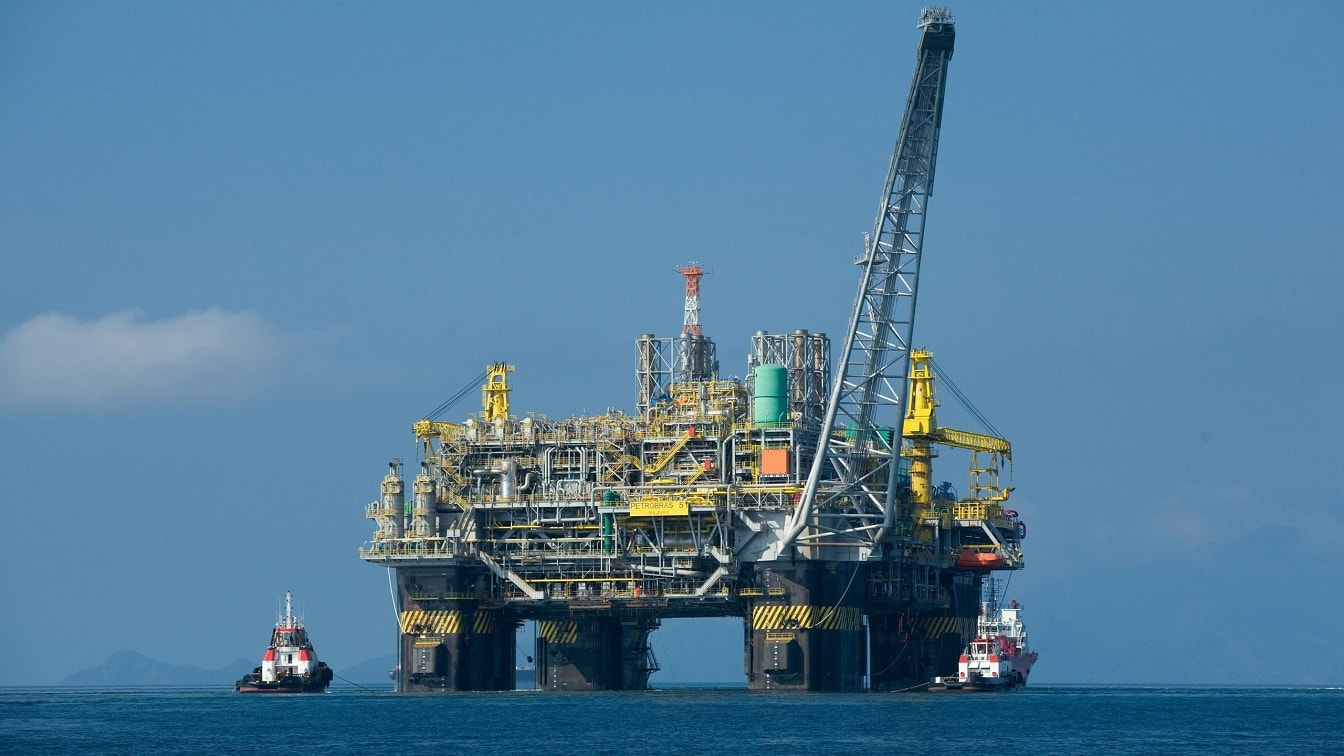
Oil Refinery. Image Credit: Creative Commons.
South Korea’s approach is arguably more fragile. Seoul has secured a 24 million barrel supply commitment from the UAE and is negotiating additional volumes from Kazakhstan. It has also identified around 110 million barrels of alternative crude from 17 countries for near-term delivery – enough to cover roughly 60-70% of demand over April and May. The challenge is the time and cost.
Replacement cargoes from Kazakhstan or the United States take 50 to 60 days to arrive, and even after normalization, officials expect shipping delays of around 20 days for Middle Eastern routes.
South Korea’s president has acknowledged that the country must now accept a “certain degree of risk.” There is simply no other option. But if the crisis persists, both countries face a narrowing set of options and the potential for a crisis.
About the Author: Jack Buckby
Jack Buckby is a British researcher and analyst specializing in defense and national security, based in New York. His work focuses on military capability, procurement, and strategic competition, producing and editing analysis for policy and defense audiences. He brings extensive editorial experience, with a career output spanning over 1,000 articles at 19FortyFive and National Security Journal, and has previously authored books and papers on extremism and deradicalization.