There is an energy crisis brewing, the likes of which the world has never experienced.
It will be systemic and, if alternatives to the current petroleum-based systems are not developed quickly (and scaled), the world will be in for some severe energy rationing.
The impending energy crisis has been exacerbated by the ongoing Iran War and the disruptions to global energy flows it has brought about, including the related closure of the Strait of Hormuz.
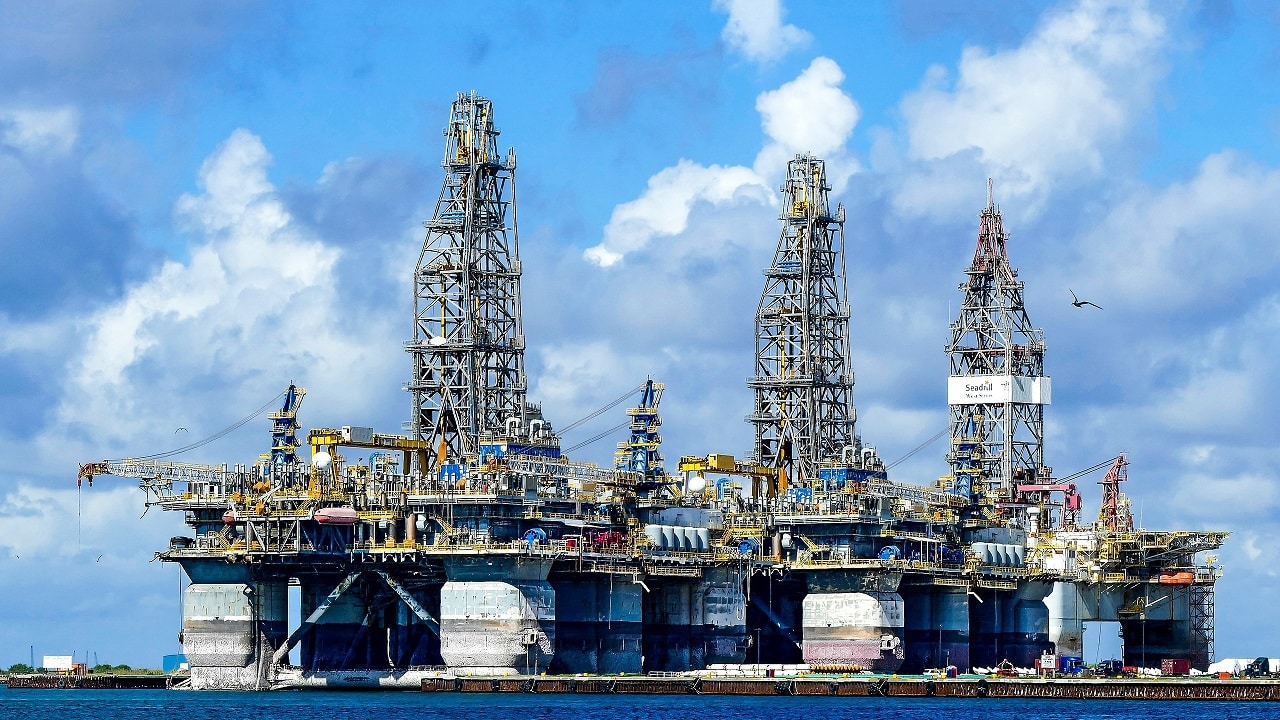
Refurbishment Platform for Drilling Rigs in Corpus Christi Bay.
But the crisis was always coming; it was just a question of what sparked it.
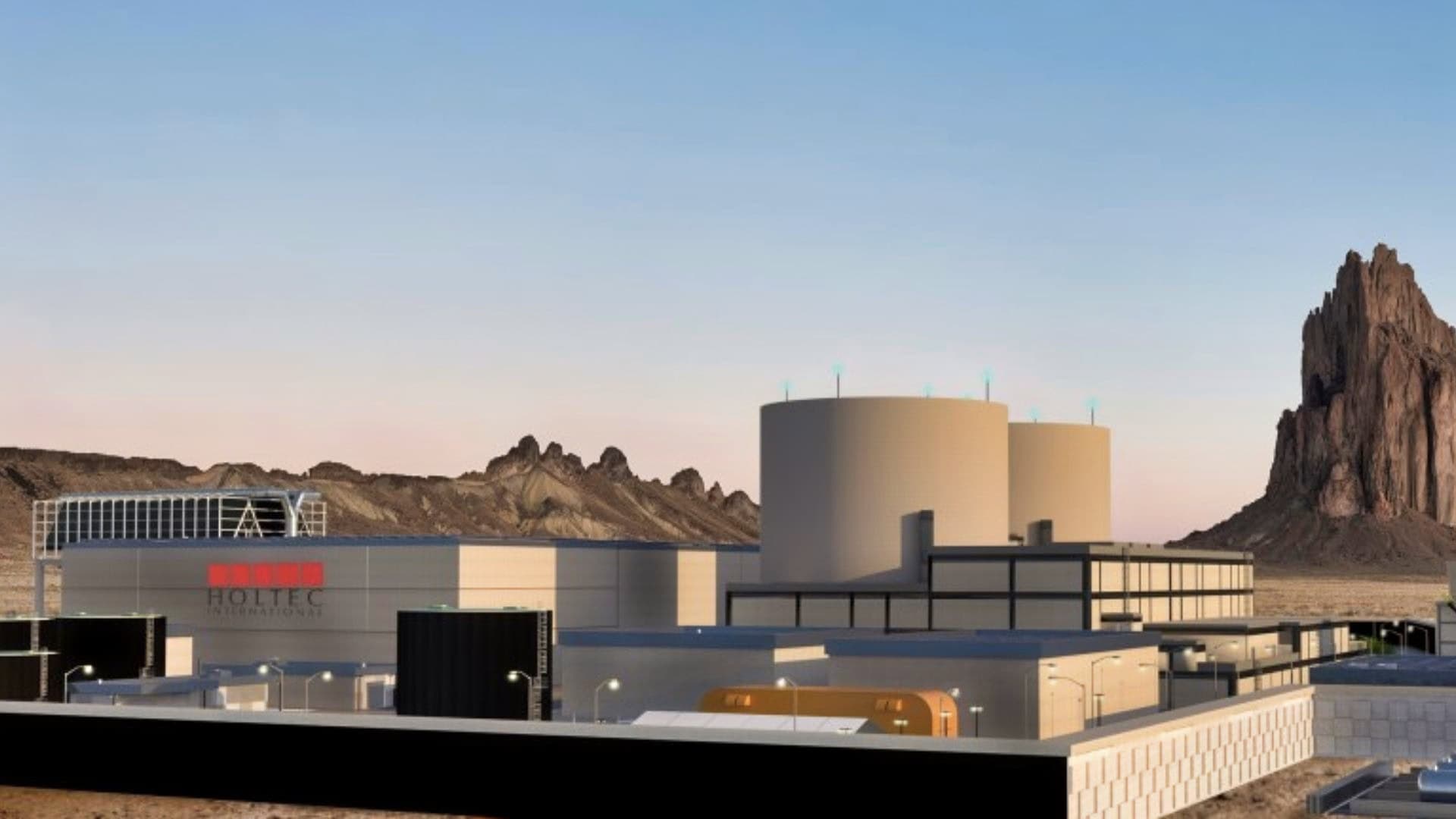
A new 1.5-gigawatt nuclear project in Utah that plans to use five 300-megawatt Holtec Small Modular Reactors (SMRs) rather than two massive conventional reactors is getting much-needed attention.
That’s because SMRs promise to utterly rewrite the energy game in America and around the world.
A Different Way to Build Nuclear Plants
Traditional nuclear power plants are enormous. They typically generate 1,000 to 1,600 megawatts each and cost upwards of $30 billion.
These systems take anywhere between ten and 15 years to build.
What’s more, traditional nuclear power plants have a checkered history of delays and cost overruns, and they could always melt down (though the media often overstate those risks).
SMRs flip this model.
Rather than constructing one gigantic reactor from scratch, utilities could build multiple smaller reactors that are largely factory-manufactured before being shipped to the site for assembly.
That modular approach is intended to reduce costs, improve quality control, and shorten construction timelines.
The Utah Project
The Utah project mentioned above is part of “Operation Gigawatt,” an initiative to dramatically expand reliable electricity generation in Utah.
One notable feature is that Holtec’s design can use an air-cooled condenser. That means the five reactors built by Holtec allow it to operate in dry regions, where water is scarce.
In other words, Utah is the perfect place to test and develop these systems.
Why This Matters
To be clear, this is not just another power plant.
It isn’t even another nuclear power plant of the kind we’re used to seeing.
With the United States facing increased power demand from artificial intelligence (AI) data centers, semiconductor manufacturing facilities, electrification of transportation, and industrial reshoring, many analysts correctly surmise that the grid cannot support this growth with wind and solar alone (because those sources are intermittent).
SMRs, however, promise to provide 24/7 baseload electricity—zero carbon emissions during operation. SMRs mean smaller footprints, too.
Some futurists have even speculated that homes will eventually be built with SMRs underground, rather than relying on a centralized grid (though that seems problematic for obvious reasons).
SMRs allow for greater siting flexibility, too, along with an incremental expansion (as demand grows).
That’s why companies like Google, Meta, and major industrial firms have begun signing long-term agreements tied to advanced nuclear projects.
Part of a National Nuclear Revival
The Utah project is only one piece of a much broader push toward restoring–and expanding–America’s nuclear power capacity. After all, no new nuclear power plant has been constructed in the United States in decades.
France, meanwhile, has dozens of them.
To its credit, despite my severe criticism of this administration on other issues, the Trump administration has funded advanced reactor demonstrations; it has opened federal sites for new reactor testing; it has expanded licensing support; it has offered billions in loans for reactor construction and supply chains, and it has encouraged standardized reactor designs that can be replicated nationwide.
Further, Trump’s personal social media firm, Truth Social, has invested a sizable sum in a nuclear energy startup, underscoring the president’s commitment to nuclear energy.
The goal is to reverse decades of stagnation in the US nuclear industry while competing against Russia and China, both of which have moved more aggressively on advanced nuclear technologies (and other alternatives).
Challenges Remain
SMRs still face significant hurdles.
The United States Nuclear Regulatory Commission (NRC) must grant licenses for any firm seeking to establish new nuclear reactors–even startups looking to build SMRs. The NRC licensing process is burdensome for any firm, thereby increasing costs and extending the time required to bring these systems into operation.
Because the United States has not truly had a nuclear industry in decades, a domestic supply chain must be established from scratch.
That, too, takes time–and money. Relatedly, specialized reactor components must be manufactured to support these systems.
Through all these complications, Holtec must demonstrate that it can build at scale, on schedule, and within budget.
The United States has not yet put a commercial SMR into operation, although several demonstration projects are now under construction, preparing for deployment.
A Warm Light for All Mankind…?
The Utah project represents more than just another nuclear plant.
It is part of a broader attempt to industrialize nuclear construction in the same way aircraft, ships, and automobiles are produced–through standardized designs and factory-built components.
If successful, projects like this could fundamentally change how America generates electricity over the next 20 years.
These new nuclear projects might provide steady, high-output power needed for AI, advanced manufacturing, and an increasingly electrified economy.
Whether SMRs can deliver on their promise will depend less on reactor physics–which is largely proven–and more on whether industry can manufacture and deploy them at scale and at competitive cost.
About the Author: Brandon J. Weichert
Brandon J. Weichert is the Senior National Security Editor at 19FortyFive.com. He also manages The Weichert Brief on Substack. Weichert also hosts “National Security Talk” on Rumble. He is the author of four bestselling national security books, the most recent of which is A Disaster of Our Own Making: How the West Lost Ukraine (Encounter Books). Follow him via Twitter/X @WeTheBrandon.