During the Second World War and some of the darkest hours in French history, France Libre — Free France — was the watchword of the government in exile. Led by then-Brigadier General Charles de Gaulle from the United Kingdom, and aided by the French Resistance, France Libre would eventually become more than just words.
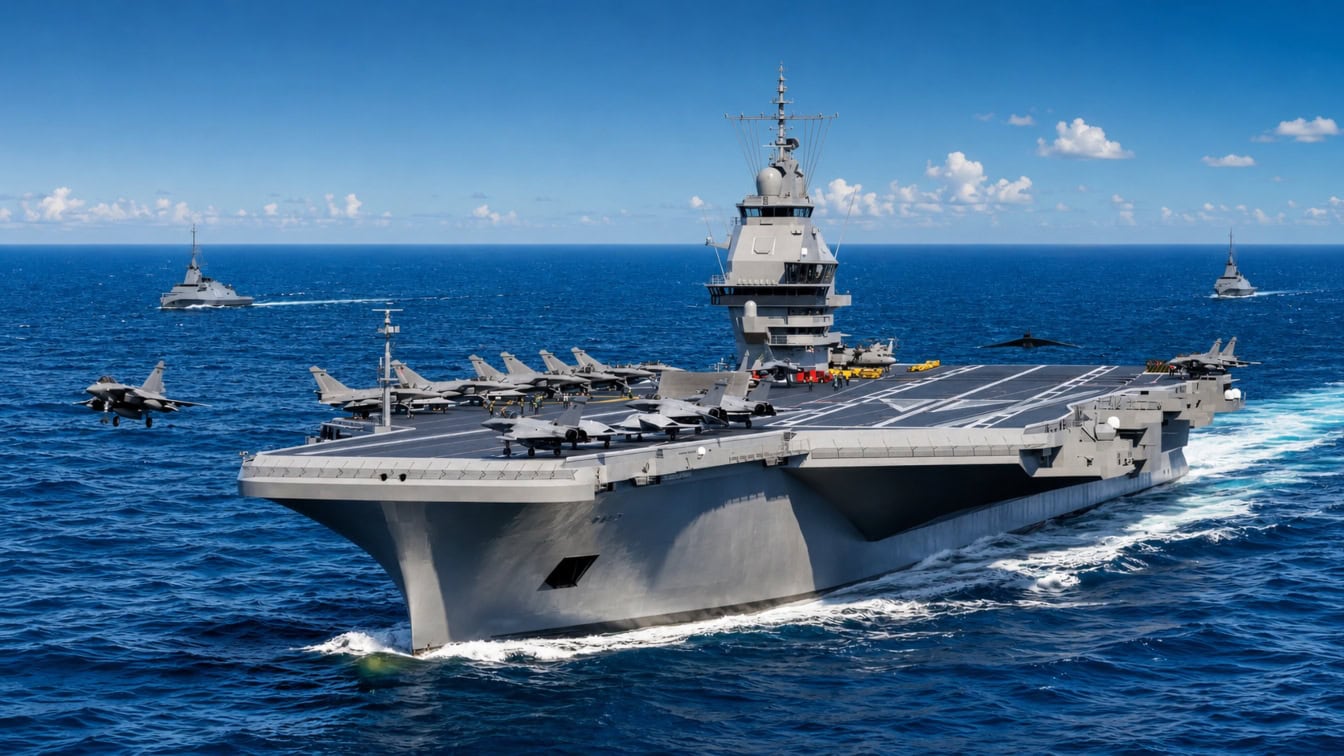
This year, new life was breathed into that wartime legacy with the announcement by French President Emmanuel Macron that the French Navy’s newest aircraft carrier would bear that name: France Libre.
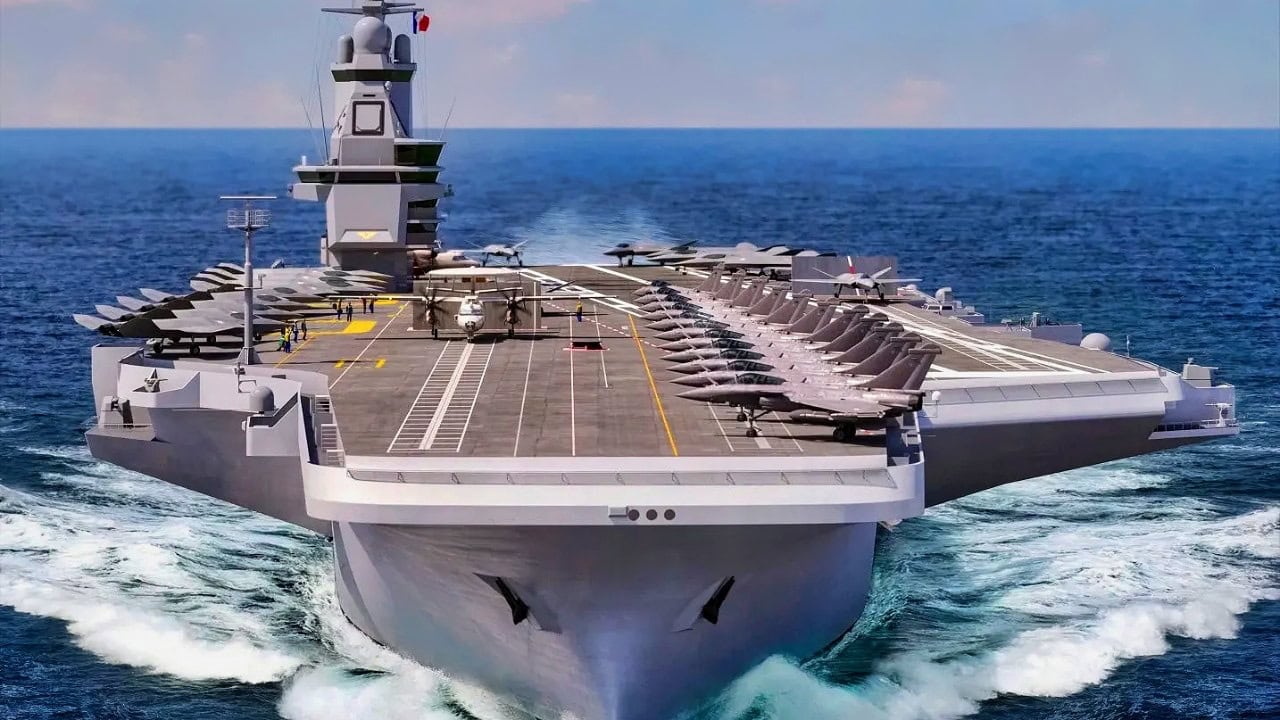
PANG Aircraft Carrier from France. Image Credit: Industry Handout.
Replacing the Charles de Gaulle
France Libre is France’s upcoming nuclear-powered aircraft carrier and will replace the French Navy’s current aircraft carrier, the Charles de Gaulle, around the end of the next decade. Compared to its predecessor, France’s Libre will be significantly larger and incorporate several new technologies, including an electromagnetic catapult and advanced arresting gear, and offer more capabilities than the Charles de Gaulle. The Charles de Gaulle has been the Marine Nationale’s only aircraft carrier since 2001.
France Libre Aircraft Carrier: Greater Displacement, Greater Capabilities
The France Libre’s displacement will be nearly double that of the Charles de Gaulle, measured at 80,000 and 42,000 tons respectively.
Powered by a pair of K-22 reactors moving three shafts, the new carrier will also boast a greatly expanded flight deck replete with cutting-edge naval technologies.
These, as well as the carrier’s larger size, mean that France Libre will be able to both launch and recover aircraft simultaneously, unlike the Charles de Gaulle. Under high-tempo conditions, the new carrier is anticipated to generate around 60 sorties per day.
Facilitating this higher sortie rate are the Electromagnetic Aircraft Launch System, known as EMALS, and Advanced Arresting Gear, called AAG, both of which will be supplied to the Marine Nationale by General Atomics, an American defense prime, under a Foreign Military Sales agreement.
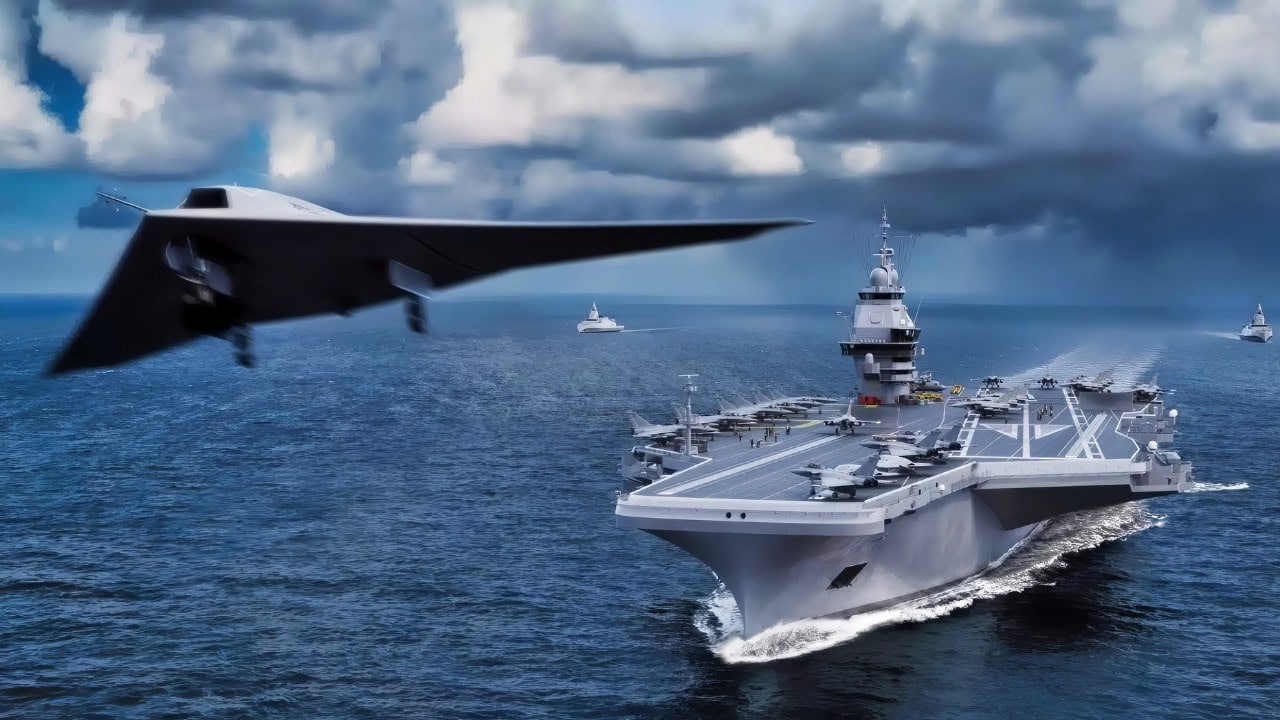
PANG France Nuclear Aircraft Carrier. Image Credit: French Government.
Both systems are a feature of the United States Navy’s Gerald R. Ford-class supercarriers.
The aircraft carrier is designed to sail with an air wing of around 30 combat planes. The core of the ship’s aerial armament will initially be the Dassault Rafale M fighters, all of which are anticipated to be F5 planes, optimized for operations in tandem with UAVs. Three E-3D Advanced Hawkeye airborne early warning aircraft, made by Northrop Grumman, as well as six NH90 Caïman helicopters.
While France does not yet operate any stealth fighters — unsurprisingly, French operational requirements for carrier compatibility torpedoed the Future Combat Air System venture with Germany — it is unlikely that will remain the case in the coming years; fifth or potentially sixth-generation aircraft could become a feature of the upcoming France Libre’s operations.
A Numbers Game
The aircraft carrier will be a one-off design thanks to the convergence of several factors, including cost, strategy, and force structure.
Unlike the United States, France has typically favored a single aircraft carrier, judging that a single flattop is sufficient to meet its needs and commitments around the globe. Operational costs are another aspect the Marine Nationale must consider, as purchasing a second aircraft carrier would be extremely costly and would compete directly for funds that could otherwise be allocated to fighters, submarines, nuclear forces, and other defense priorities.
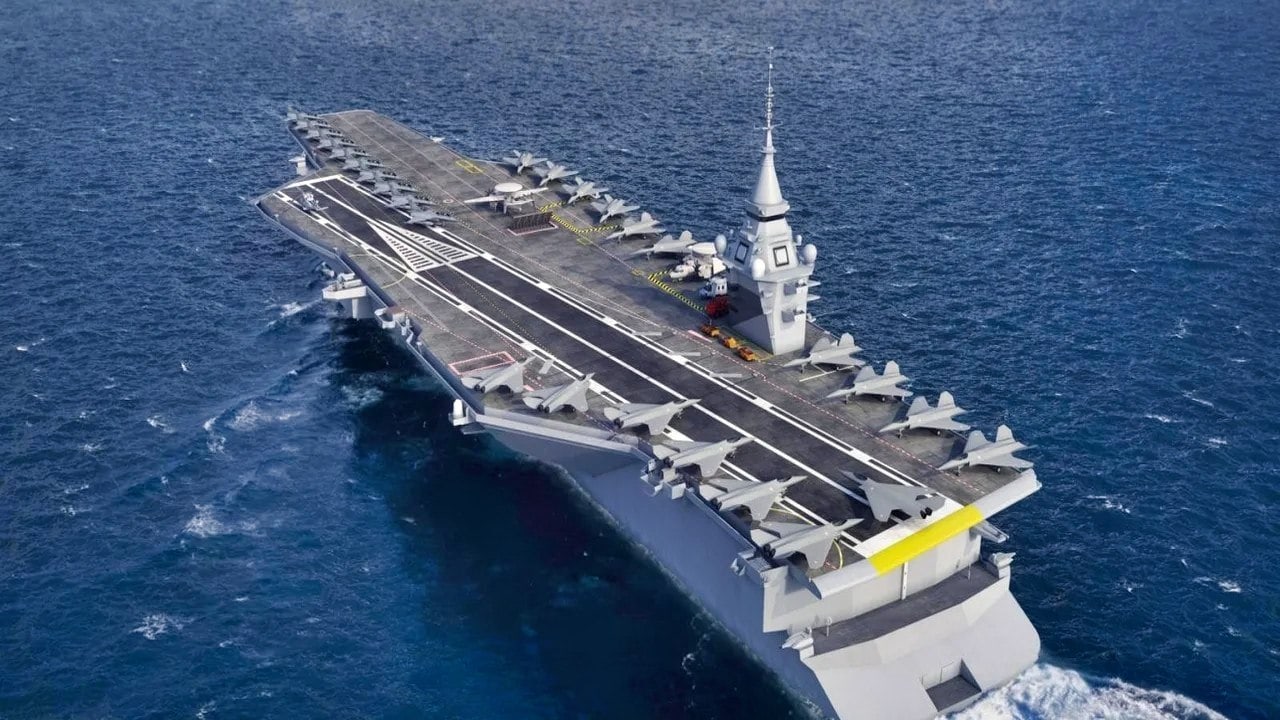
PANG Aircraft Carrier from France. Image Credit: French Navy.
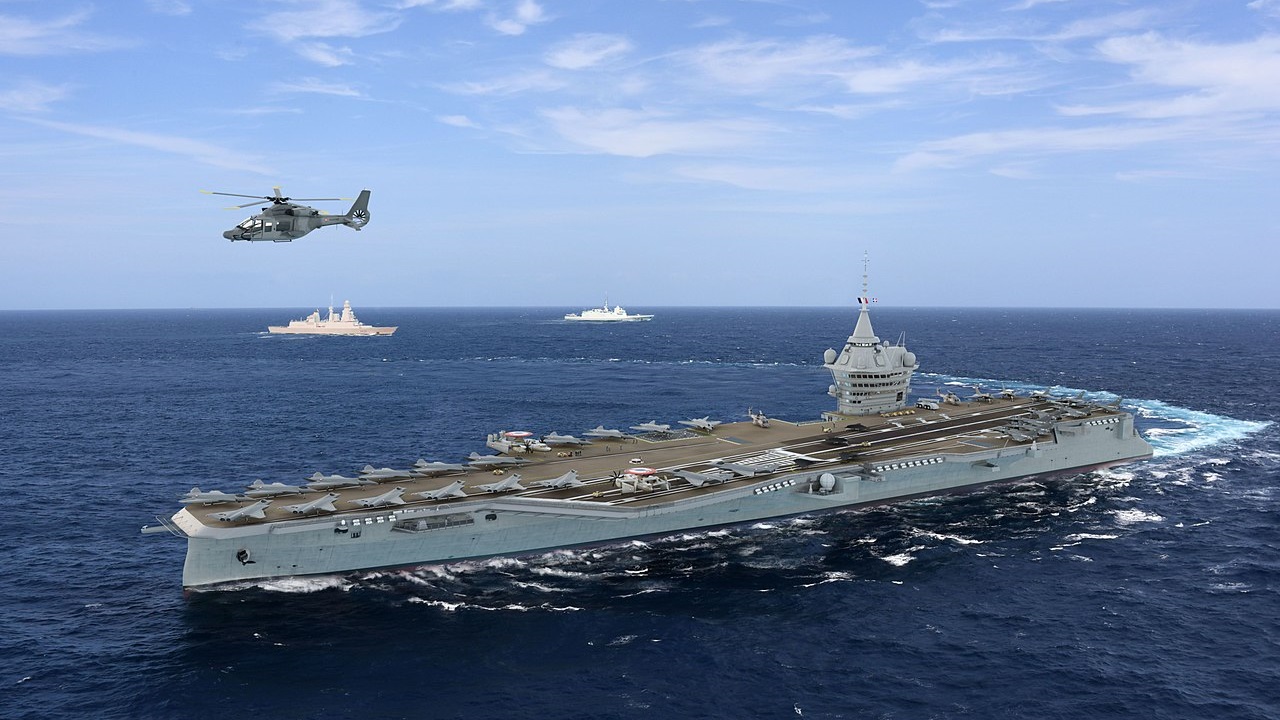
PANG Aircraft Carrier. Image Credit: Creative Commons.
French naval strategy, in essence, does not require the same continuous global power projection as the United States Navy. Instead, the Marine Nationale favors sovereign power projection with a single advanced, highly capable aircraft carrier rather than a fleet of ships.
Retiring the Charles de Gaulle
If French planning documents remain on track, the Charles de Gaulle will retire from service with the Marine Nationale in 2038, at which point the upcoming France Libre will take its place within the navy.
What is in a Name?
“I wished to place our future aircraft carrier in the lineage of General de Gaulle. His life, his destiny, and the choices made as early as June 1940 following the collapse—these speak to a certain idea of France,” President Macron said during his aircraft carrier address.
“That is why our new aircraft carrier will bear the name ‘France Libre’. Within this name lives the memory of the women and men who stood up against barbarism. United to save the fatherland. Determined to defend a certain idea of our nation. To the Companions of the Liberation, this name seals a vow for the future: To remain free, we must be feared. To be feared, we must be powerful. And to be powerful, we must be ready for effort.”
About the Author: Caleb Larson
Caleb Larson is an American multiformat journalist based in Berlin, Germany. His work covers the intersection of conflict and society, focusing on American foreign policy and European security. He has reported from Germany, Russia, and the United States. Most recently, he covered the war in Ukraine, reporting extensively on the war’s shifting battle lines from Donbas and writing on the war’s civilian and humanitarian toll. Previously, he worked as a Defense Reporter for POLITICO Europe. You can follow his latest work on X.