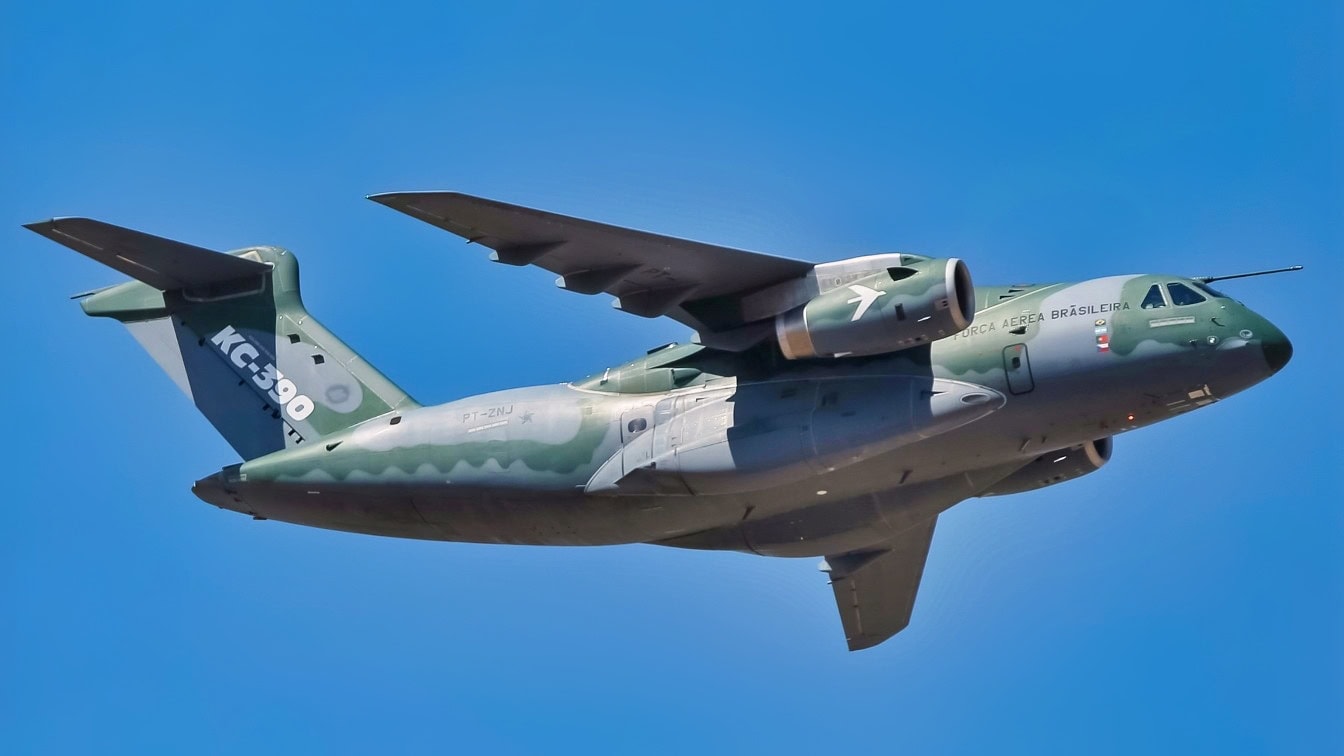
Coming about one month after the United Arab Emirates (UAE) signed a deal for as many as 20 Embraer C-390 cargo lifters, Greece has also selected the Brazilian-made airlifter to replace its aging Lockheed C-130 Hercules aircraft. The Greek parliament approved funding on 11 June to procure three of the type, which are to be ordered via an intergovernmental contract with Portugal.
This agreement was previously organized to establish a European base for the acquisition, leasing, and maintenance of the C-390. Under the terms of the cooperative partnership, customers of other European NATO countries can secure purchase options for orders from Portugal, another NATO member.

C-130 Image: Creative Commons.
The Greek Ministry of Defense (MoD) has secured €600 million ($695 million) for the C-390 acquisition, which breaks down as €473 million for the purchase of the aircraft and €90 million for an initial support package. A final contract has not yet been signed, but the first C-390 delivery is scheduled for 2027.
The announcement was made at last week’s ILA Berlin Air Show, with the C-390 among eight defense programs for Greece totaling €1 billion. These are reportedly procurements that have already been approved by the Hellenic Parliament’s Defense Committee.
Other acquisitions announced for the Greek armed forces include Lockheed Martin (LM) Hellfire missiles, microsatellites from Finland’s Iceye, and unmanned aircraft systems from Shield AI and Israel Aerospace Industries (IAI). The Hellfire will be acquired not as a commercial sale to Greece, but through the US Foreign Military Sales (FMS) process.
Displacing Hercules: The Business & Industry Case for C-390
Greece’s C-390 order will come from the 10 purchase options Portugal exercised last September, after Lisbon ordered its sixth of the type.
The process of the southern European nation transitioning from just a customer for the aircraft to becoming the purchasing and leasing base for the C-390 began in 2023 with the announcement by the Embraer Defense & Security CEO Bosco da Costa Junior during that year’s Latin American Aerospace and Defense exposition (LAAD) in Rio de Janeiro.
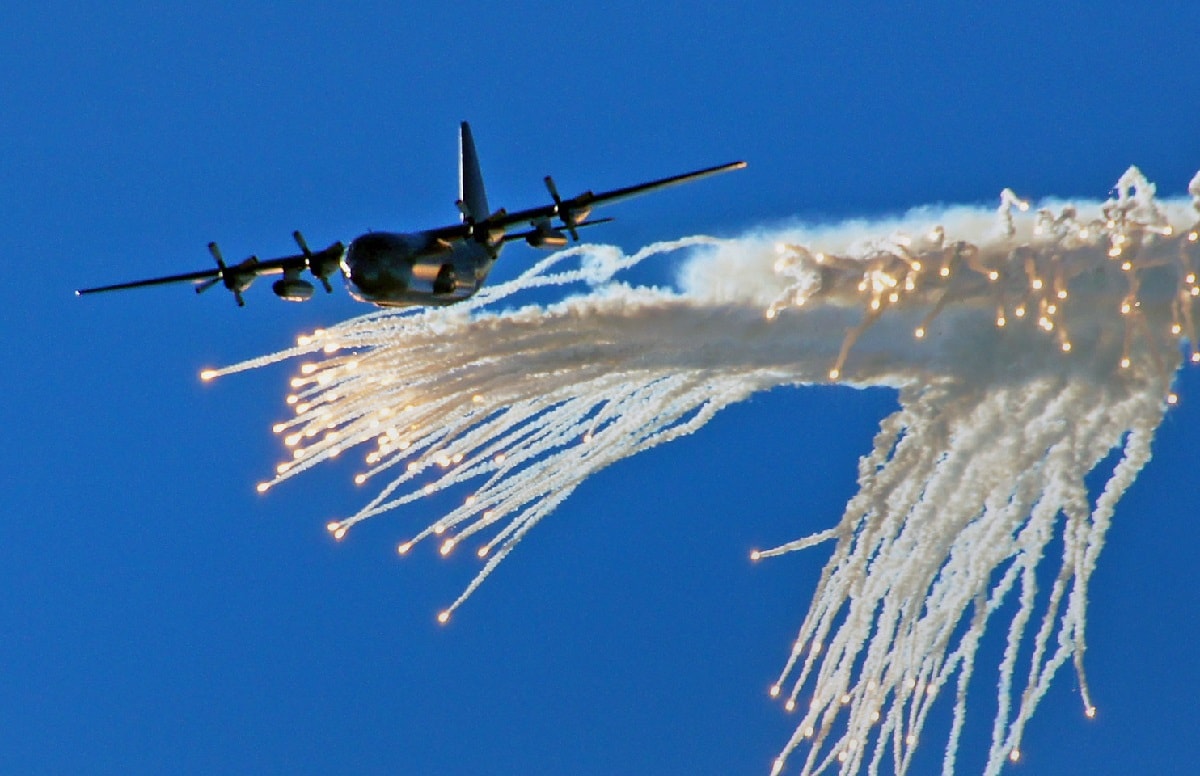
Image: Creative Commons.
“The C-390 has already started a successful international career, with orders from Portugal and Hungary, and more recently the selection by the Netherlands, and we are sure that obtaining the FOC certificate will be another differential for the success of our marketing campaigns,” he said.
In the interim, the C-390 has acquired several new customers who were either operating a version of the C-130 or were potential customers for one of the brand-new versions of the LM propeller-driven cargo carrier. In addition to the UAE, the C-390 has been procured by European nations that were renewing their transport fleets. These include Austria, the Czech Republic, the Netherlands, and Sweden, as well as the aircraft already in service in Portugal and Hungary.
The two aircraft are similar in price, with the major differences being operational factors and performance. The C-390 has lower operating and lifecycle costs, and, as a jet-powered aircraft, it flies more than 50 percent faster than the C-130: 870 km/h (543 mph) vs. 530 km/h (330 mph) for the slower US-made turboprop.
The C-130’s advantage is that it has been in service with so many nations for so many decades that it has an international supply and servicing network greater than that of most other military cargo aircraft worldwide. The C-130 is also capable of rough field landings on unpaved airstrips, which the Embraer aircraft is not.
Foregone Military Conclusion
The Greek decision was practically a foregone conclusion, as several weeks before ILA, Embraer had signed agreements with Greece’s Hellenic Aerospace Industry that positioned in-country servicing for the C-390.

A U.S. Air Force C-130J Super Hercules aircraft sits on the flight line at Bagram Airfield, Parwan province, Afghanistan, Feb. 6, 2014. (DoD photo by Senior Airman Kayla Newman/Released)
The Hellenic Air Force already operates the Saab Erieye Airborne Early Warning and Control (AEW&C) system that is installed aboard the EMB-145H. The Greek military also has a small fleet of EMB-135s for VIP and passenger missions.
One country at a time, the C-390 is displacing LM aircraft worldwide. There are several reasons for this, but one of the chief factors is that the C-390 has superior, design-in multi-mission flexibility.
One of the main features in this category is the in-flight refueling capability, which can be added without extensive modifications. Nations that want to acquire that capability can do so more easily with the C-390. and without the numerous export restrictions and the lack of industrial autonomy that are hallmarks of US-made alternatives.
About the Author: Reuben F. Johnson
Reuben F. Johnson has thirty-six years of experience analyzing and reporting on foreign weapons systems, defense technologies, and international arms export policy. Johnson is the Director of Research at the Casimir Pulaski Foundation. He is also a survivor of the Russian invasion of Ukraine in February 2022. He worked for years in the American defense industry as a foreign technology analyst and later as a consultant for the U.S. Department of Defense, the Departments of the Navy and Air Force, and the governments of the United Kingdom and Australia. In 2022-2023, he won two awards in a row for his defense reporting. He holds a bachelor’s degree from DePauw University and a master’s degree from Miami University in Ohio, specializing in Soviet and Russian studies. He lives in Warsaw.