
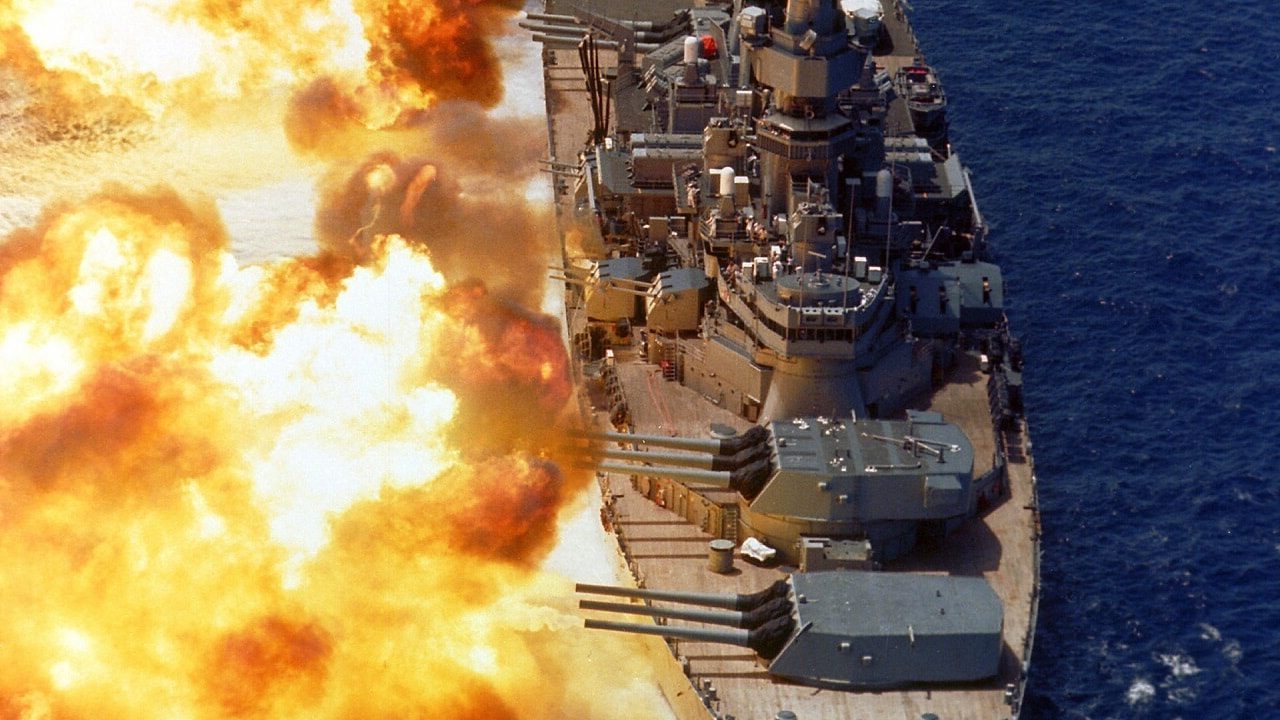
Iowa vs. Yamato: Why the US Navy Battleship Was Better – Japan’s Yamato-class battleships win the most obvious comparison. Yamato and Musashi were heavier, wider, more heavily armored, and armed with the largest guns ever placed aboard an operational battleship. An Iowa-class ship looked smaller beside them and fired a lighter shell.
That does not settle which class was better.
A battleship was more than its belt armor and main-battery caliber. It had to find the enemy, generate an accurate firing solution, maneuver into a favorable position, survive damage, defend the fleet, and reach the part of the ocean where it was needed. Measured as a complete combat system, the Iowa class held advantages that Yamato’s extra displacement did not erase.
This does not mean that one Iowa was guaranteed to defeat Yamato in every imagined duel. A clear-weather engagement at the wrong range could expose the American ship to nine devastating 18.1-inch guns. Yamato’s armor and enormous shells made it one of the most dangerous surface combatants ever completed. The case for Iowa rests on the number of ways the American ship could shape the battle before Yamato landed those hits.
Yamato Won the Contest in Size, Armor, and Shell Weight
Yamato displaced approximately 72,000 metric tons at full load. The battleship measured about 863 feet long and nearly 128 feet across the beam. Twelve boilers and four turbines produced 150,000 shaft horsepower, driving the ship at approximately 27.5 knots.
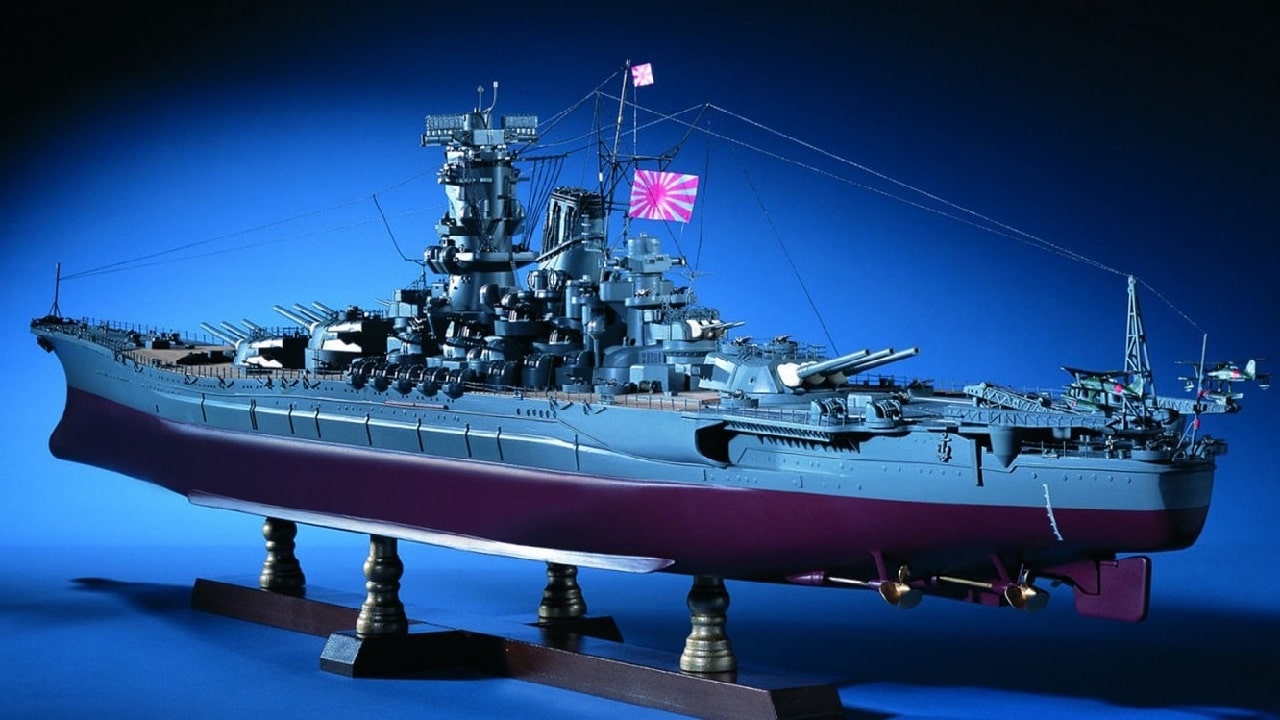
Yamato-class battleship model. Image Credit: Creative Commons.
The main armor belt reached 16.1 inches. The principal armored deck was almost eight inches thick, while the faces of the main turrets approached 26 inches. Iowa’s principal belt was about 12.1 inches thick and inclined inside the hull. Its armored and splinter decks totaled roughly 6.6 inches over important sections.
Yamato also carried the heavier battery. Each of its nine 18.1-inch guns fired an armor-piercing shell weighing approximately 3,219 pounds. A full broadside placed 28,971 pounds of projectiles into the air, almost 14.5 tons. Maximum gun range approached 26 miles.
An Iowa fired nine 2,700-pound armor-piercing shells for a broadside weighing 24,300 pounds, slightly more than 12 tons. Its published maximum reach was about 23 miles.
Yamato therefore held real advantages. Its shells carried more mass, its armor offered stronger protection and its guns reached farther. Any argument beginning with the claim that Iowa overmatched Yamato in every physical category is wrong.
Iowa’s Radar Fire Control Changed the Entire Engagement
The decisive Iowa advantage sat above the armored decks rather than behind them.
The American ship used Mark 8 fire-control radar linked to the Mark 38 director and an analog fire-control computer. The system measured range, bearing, and the fall of shells around a target. It allowed the battleship to establish firing solutions at night, in poor visibility, and through smoke.
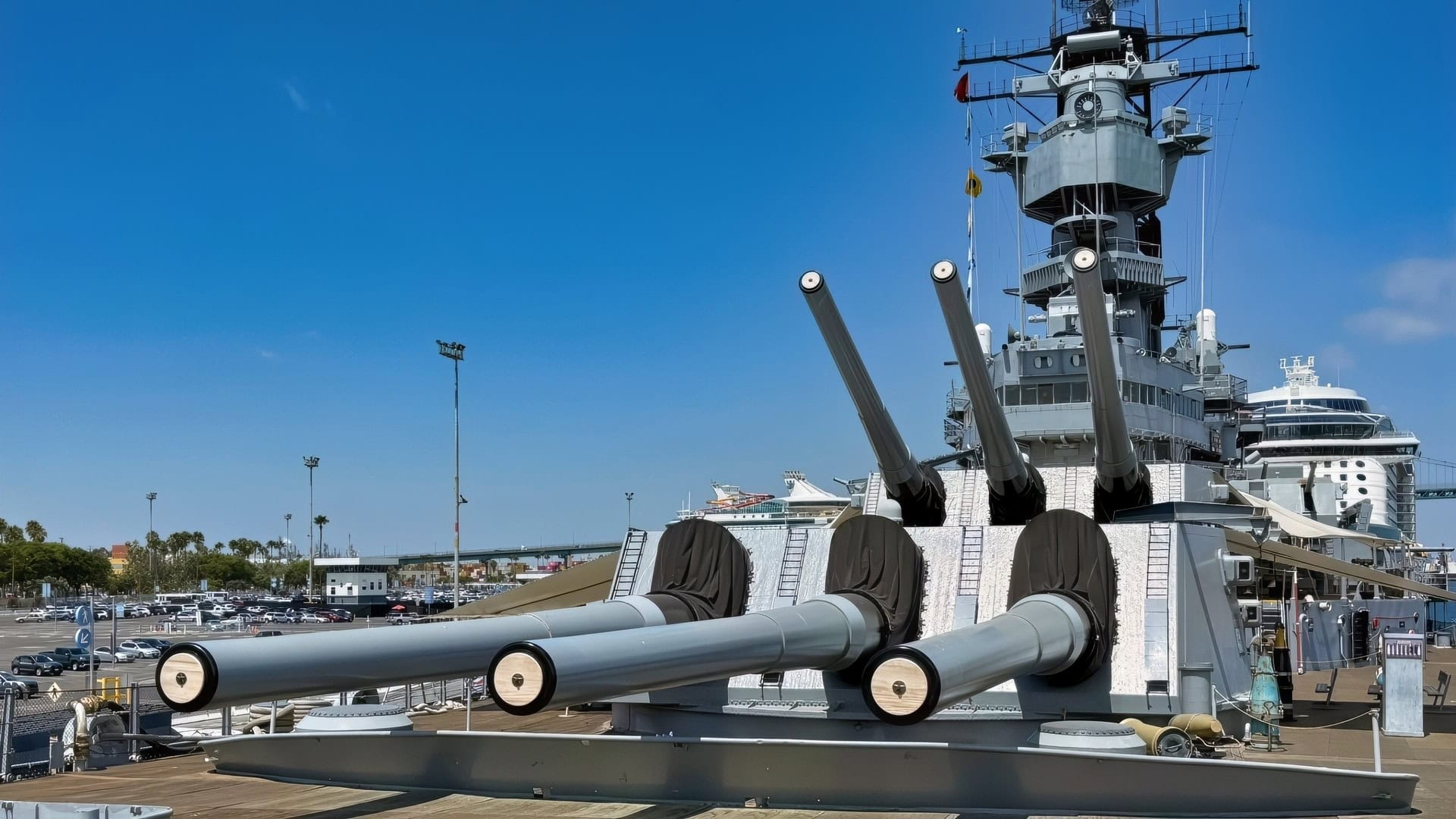
USS Iowa Battleship Guns 19FortyFive.com Image
Yamato carried extraordinary optical rangefinders, and Japanese crews trained for long-range daylight shooting. Its Type 22 radar could help locate surface contacts, but it did not equal the American system as a complete main-battery fire-control instrument.
A classic Naval Institute analysis of the hypothetical engagement placed Iowa’s radar advantage at roughly 35,000 to 40,000 yards. Yamato’s reliance on optical direction became especially serious at night. If the American ship used smoke, Iowa could continue ranging electronically while Yamato lost a clear optical view.
The first heavy-caliber hit did not need to penetrate the main belt to alter the fight. A shell striking the bridge, radar, rangefinder, communications spaces or exposed fire-control equipment could reduce accuracy and command effectiveness. A hit below the waterline or near the machinery spaces could cut speed, turning a moving target into a far easier one.
Yamato’s armor protected magazines and machinery. It did not place every director, antenna, cable and officer behind 16 inches of steel.
Iowa’s 33-Knot Speed Let It Control the Range
An Iowa-class battleship produced 212,000 shaft horsepower and exceeded 30 knots, with the class commonly credited with a maximum speed near 33 knots. Yamato’s 150,000-horsepower plant produced about 27.5 knots.
A difference of more than five knots was operationally important. Iowa could close the distance, withdraw, change bearing more rapidly and choose whether to continue an engagement. The faster ship had a stronger chance of holding the range and angle preferred by its commander.
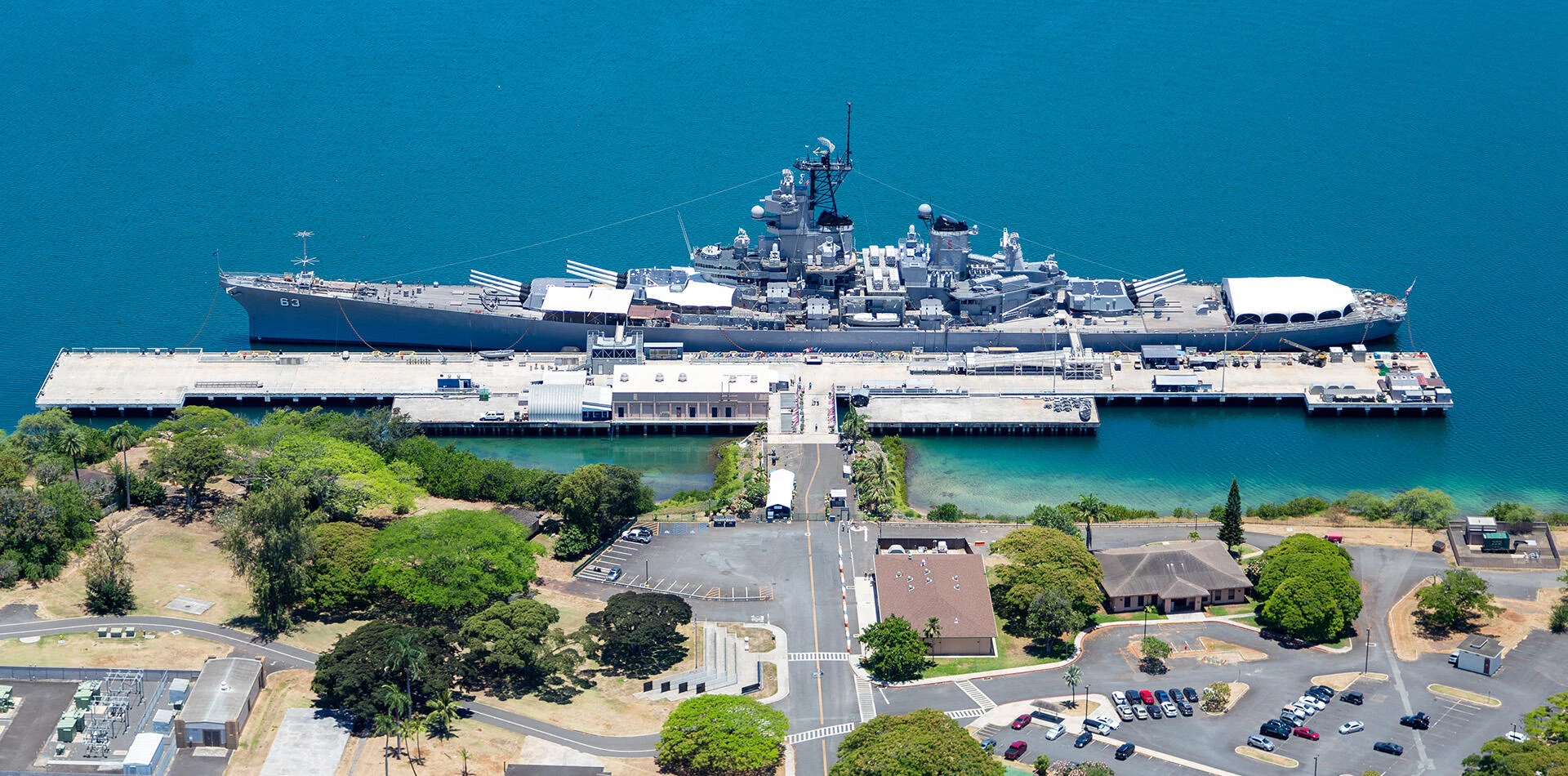
USS Missouri. Image Credit: USS Missouri.
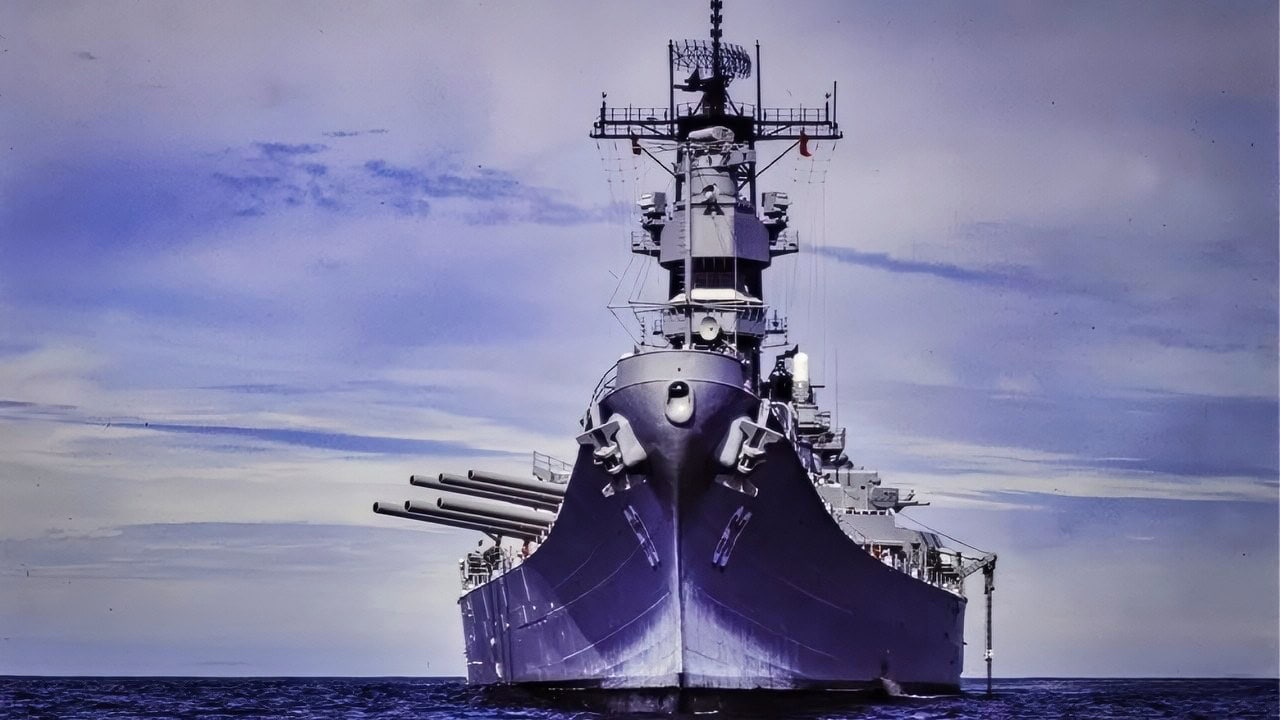
USS Missouri Navy Battleship. Image Credit: Creative Commons.
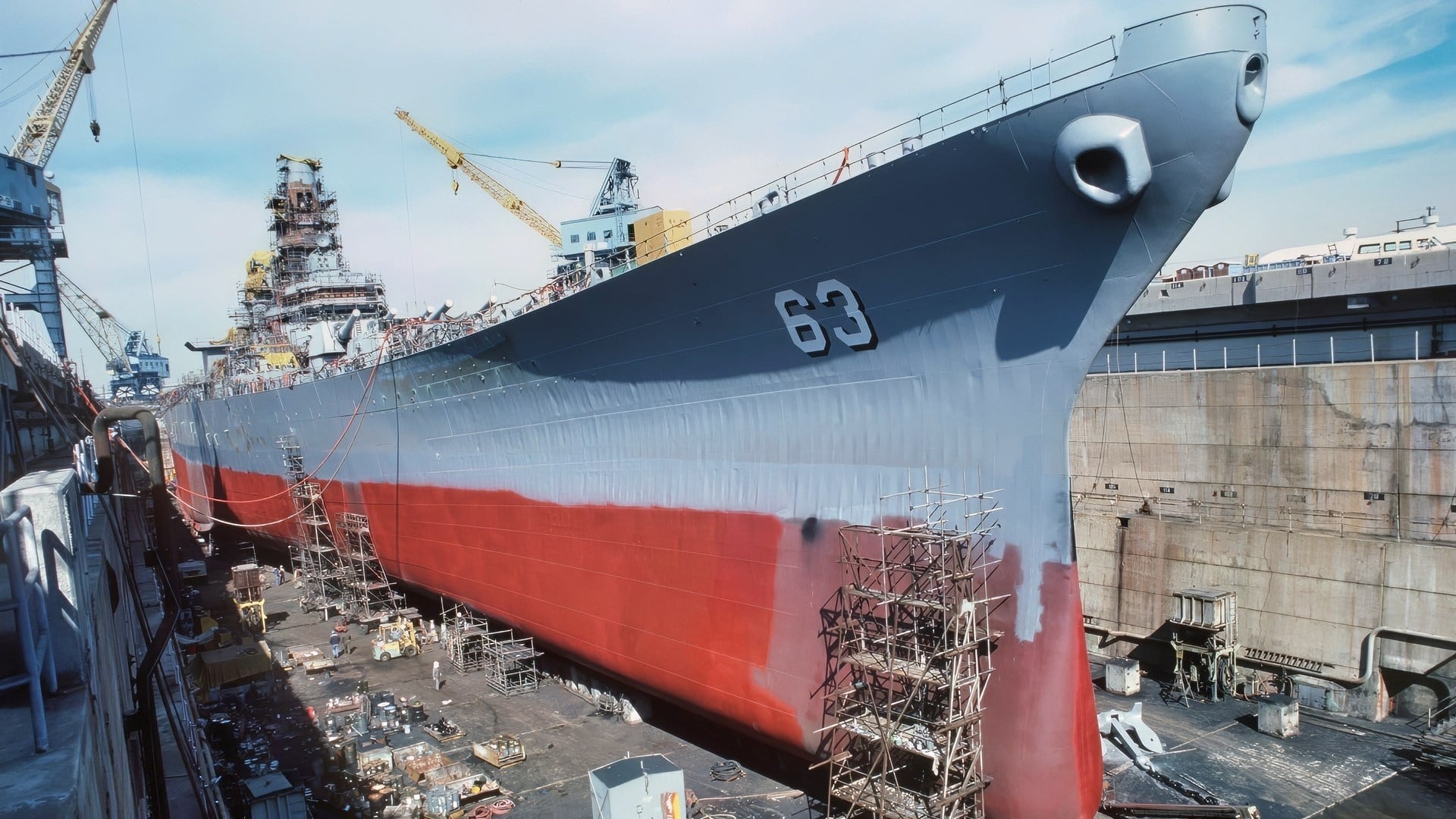
A starboard bow view of the battleship USS MISSOURI (BB 63) in dry dock for reactivation/modernization work prior to recommissioning. Image Credit: Creative Commons.
Yamato’s longer gun reach gave it an opening advantage in a clear daylight encounter. The Japanese ship might fire several salvos before Iowa entered its own extreme range. Hitting a battleship maneuvering at more than 30 knots from more than 20 miles away remained difficult, especially without equivalent radar spotting.
Once Iowa entered effective range, Yamato could not force it closer. If the American commander disliked the position, the faster ship could open the distance. If Yamato suffered steering or propulsion damage, Iowa’s speed advantage would become overwhelming.
The American hull also fit through the Panama Canal. That 108-foot beam gave the Navy a battleship able to shift between the Atlantic and Pacific without sailing around South America. Yamato’s 128-foot beam restricted its strategic mobility and reduced the number of suitable docks and repair facilities available to it.
The 16-Inch Mark 7 Closed Much of the Gun-Power Gap
Yamato’s 18.1-inch weapon was larger, but Iowa’s 16-inch/50-caliber Mark 7 was not an ordinary 16-inch gun.
The American weapon fired the Mark 8 “super-heavy” armor-piercing shell. Its 2,700-pound weight gave the projectile strong deck penetration at long range, where shells descended at steeper angles. The U.S. Navy had deliberately paired the shell with radar-directed fire control intended for long-distance combat.
A Naval History examination of the Mark 8 argued that the projectile gave American battleships much of the armor-piercing performance associated with a larger gun. It did not make every 16-inch hit equal to an 18.1-inch hit, but it narrowed the practical difference.
Rate of fire strengthened that effect. Iowa’s Mark 7 guns were rated at about two rounds per minute. Yamato’s main guns were generally credited with about 1.5 rounds per minute. Iowa could fire roughly three salvos in the time Yamato required for two.
The result was a trade. Yamato placed more weight into each broadside. Iowa placed more salvos around the target, corrected them through radar, and increased the chance of scoring the first damaging hit. The American battery’s combination of projectile weight, firing speed, and fire control mattered more than caliber alone.
Iowa Was Better Equipped for the War That Actually Happened
The Pacific War did not develop into a series of isolated battleship duels. Aircraft carriers became the fleet’s main striking arm. A useful battleship was needed to operate with those carriers and protect them from aircraft.
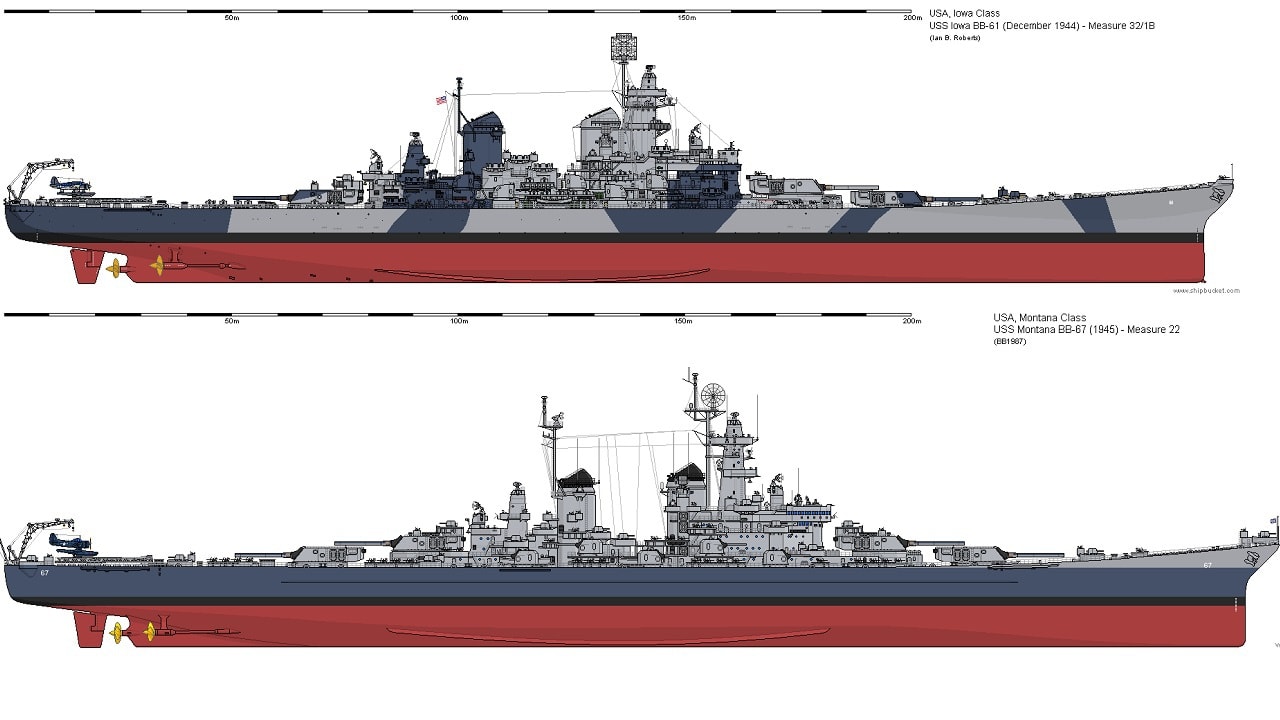
Image of Iowa-class battleship compared to Montana-class battleship that was never built. Image Credit: Creative Commons.
Iowa’s speed allowed it to remain with the fast carrier task forces. Its World War II anti-aircraft battery included twenty 5-inch/38 dual-purpose guns, eighty 40mm Bofors barrels, and dozens of 20mm weapons. Radar-directed 5-inch fire and proximity-fuzed ammunition made the American defensive system especially dangerous.
Yamato carried twelve 127mm dual-purpose guns and eventually more than 150 25mm barrels. The Japanese Type 96 weapon suffered from 15-round magazines, slow training, excessive vibration and sights poorly suited to fast American aircraft. The number of barrels hid the battery’s weaknesses.
Musashi absorbed an extraordinary number of bomb and torpedo hits before sinking in the Sibuyan Sea. Yamato also required a large carrier strike to destroy it during Operation Ten-Go. Their losses proved the strength of the hulls. They also showed how little thick belt armor meant when a battleship lacked fighter cover and effective fleet air defense.
The Iowa class operated inside a stronger system of carriers, destroyers, radar pickets, submarines, tankers, and repair ships. A warship did not fight as an isolated engineering diagram. The force around it contributed to its combat value.
The Iowa Class Had a Far Better Operational Record
Yamato and Musashi were built to defeat the American battle line in the decisive engagement Japanese planners expected before the war. Neither fulfilled that mission. Musashi never fired its main guns at an enemy surface ship. Yamato fired at American escort carriers and destroyers off Samar but failed to turn the battle into the strategic victory Japan needed.
The four completed Iowas spent World War II screening carriers, bombarding Japanese positions and providing antiaircraft defense. They never received the classic battleship duel for which their main guns had been designed, a point examined in this history of the class’s missing surface battle.
That absence did not make them useless. Iowa, New Jersey, Missouri and Wisconsin adapted to the missions the war produced. New Jersey later fought in Korea, Vietnam and Lebanon. Iowa, Missouri and Wisconsin served in Korea. All four returned during the 1980s with Tomahawk cruise missiles, Harpoon anti-ship missiles and modern electronic warfare systems. Missouri and Wisconsin fired in combat during Desert Storm.
Yamato’s size demanded a huge investment for a short and strategically disappointing career. Musashi’s own record illustrates the imbalance between its 72,000-ton design and limited operational effect.
Iowa Was the Better Battleship, but Not Because Yamato Was Weak
A daylight slugging match at medium range would have been dangerous for either ship. Yamato’s first successful 18.1-inch hit might have damaged Iowa severely. Iowa’s 16-inch shell might not have penetrated every part of Yamato’s armored citadel at every distance. No responsible analysis turns the engagement into an easy American victory.
The stronger case is that Iowa gave its commander more advantages before the first hit: better radar, faster shooting, greater speed, stronger fleet integration and greater strategic mobility. Its Mark 7 gun and 2,700-pound shell also prevented Yamato from enjoying the overwhelming artillery advantage suggested by the difference between 16 and 18.1 inches. The technical argument behind that conclusion is explored in this comparison of the two main batteries.
Japan designed Yamato to be individually superior because it knew American industry would produce more ships. The design succeeded in making the world’s largest and most heavily armed battleship. It did not solve Japan’s disadvantages in radar, aviation, logistics, fuel, repair capacity or fleet size.
The Iowa class did not need to be the largest battleship to become the strongest overall battleship class. It needed to find targets sooner, hit them more accurately, move faster, and remain useful after the age of the battleship duel had ended.
Today, all four Iowas survive as museum ships. Yamato and Musashi rest on the Pacific floor. On Missouri’s deck at Pearl Harbor, visitors stand near the place where Japan signed its surrender while the ship’s nine 16-inch guns remain trained over the water.
About the Author: Harry J. Kazianis
Harry J. Kazianis (@Grecianformula) was the former Senior Director of National Security Affairs at the Center for the National Interest, a foreign policy think tank founded by Richard Nixon in Washington, D.C. Harry has more than a decade of experience in think tanks and national security publishing. His ideas have been published in The New York Times, The Washington Post, The Wall Street Journal, CNN and many other outlets worldwide. He has held positions at CSIS, the Heritage Foundation, the University of Nottingham and several other institutions related to national security research and studies. He is the former Executive Editor of The National Interest and The Diplomat. He holds a master’s degree focusing on international affairs from Harvard University.

