
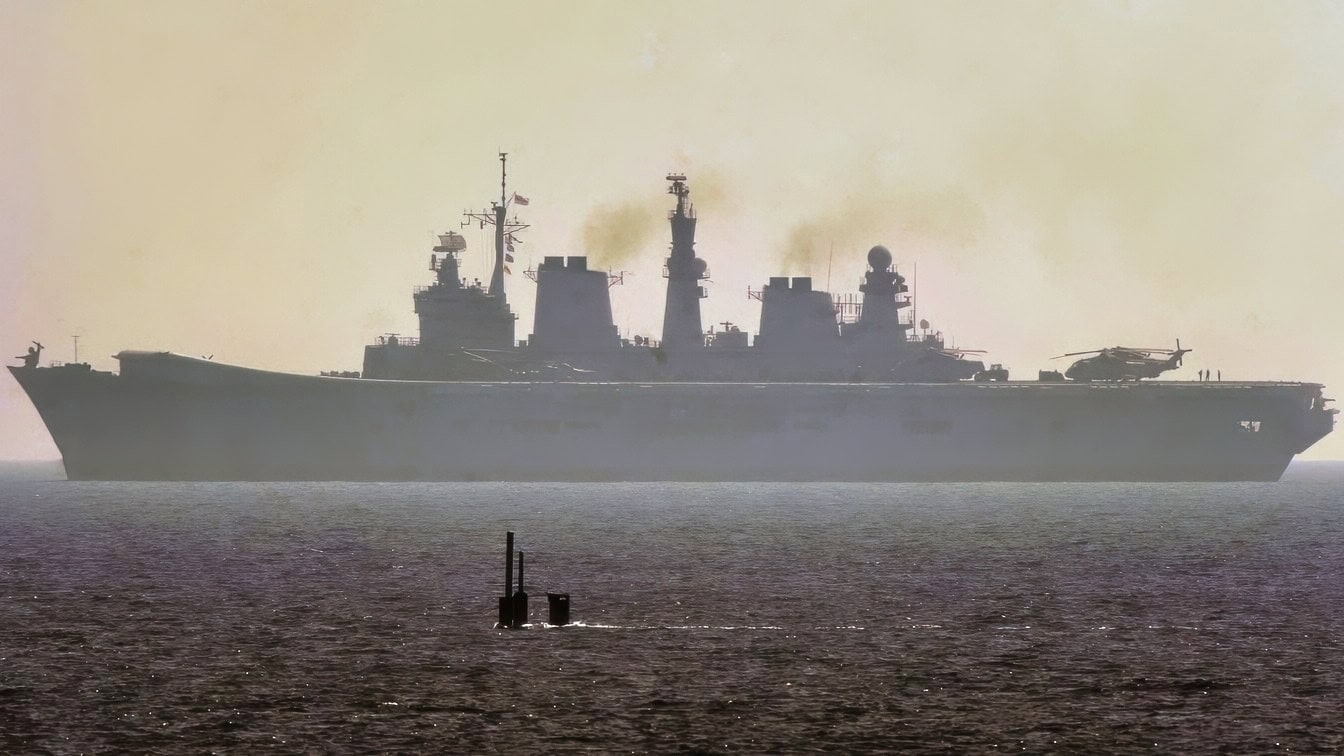
USS Dallas ‘Sank’ Aircraft Carrier HMS Illustrious in a 2013 Drill. The Official Record Stops Short of a Kill – The widely repeated version of a 2013 Gulf of Oman exercise says USS Dallas penetrated the screen around HMS Illustrious and “sank” the British carrier. The surviving Crown record confirms that the Los Angeles-class submarine launched simulated torpedo attacks against Illustrious. It does not publish an umpire ruling declaring the carrier destroyed.
What We Know

PACIFIC OCEAN (Dec. 17, 2025) – Los Angeles-class fast-attack submarine USS Annapolis (SSN 760) steams forward off the coast of Guam during a photo exercise, Dec. 17, 2025. Assigned to Commander, Submarine Squadron 15 at Polaris Point, Naval Base Guam, Annapolis is one of five fast-attack submarines forward-deployed in the Pacific. Renowned for their unparalleled speed, endurance, stealth, and mobility, fast-attack submarines serve as the backbone of the Navy’s submarine force, ensuring readiness and agility in safeguarding maritime interests around the world. (U.S. Navy photo by Lt. James Caliva)
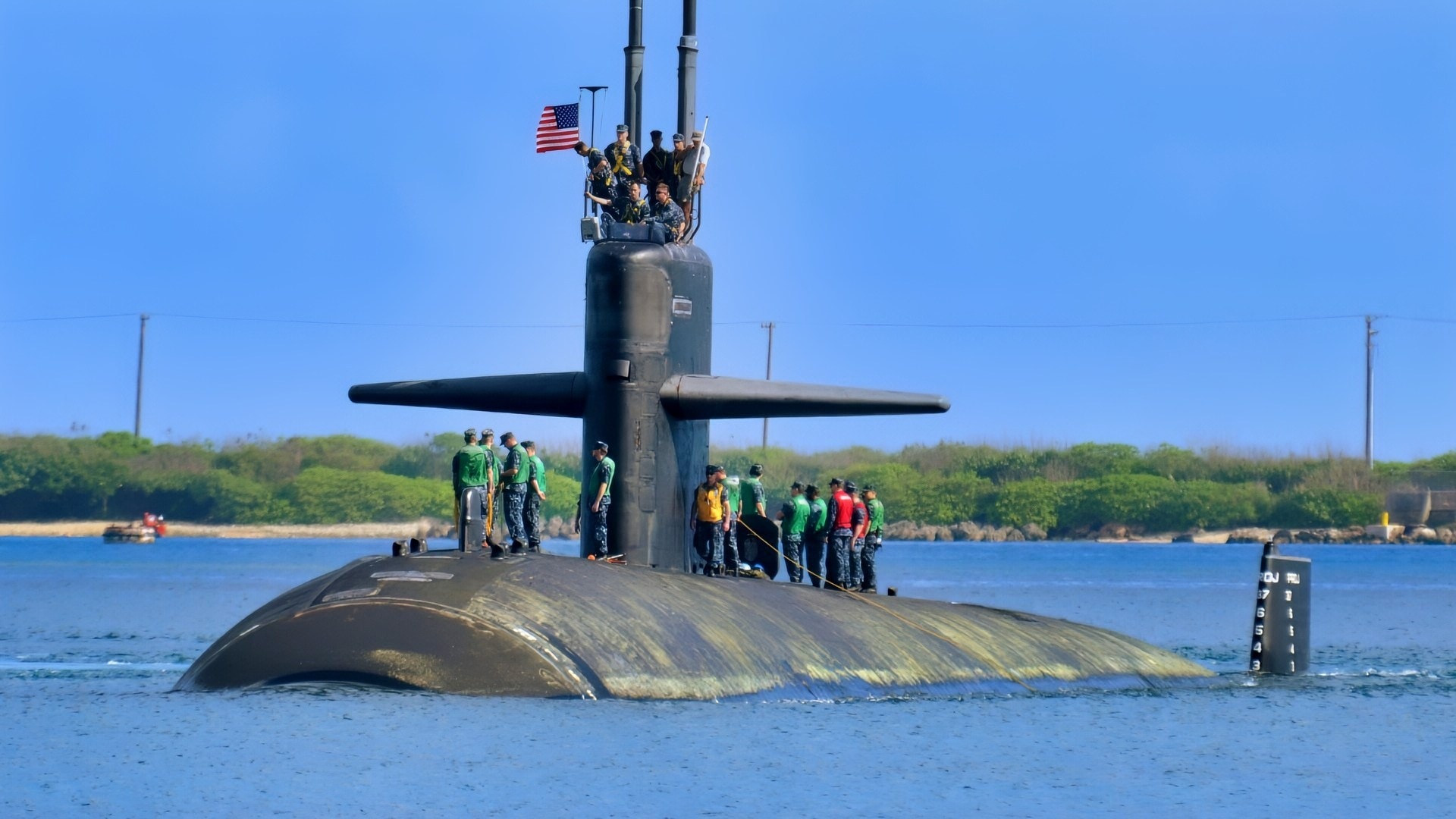
POLARIS POINT, Guam (May 7, 2013) The Los Angeles-class attack submarine USS Albuquerque (SSN 706) arrives in Apra Harbor, Guam, to conduct maintenance and liberty. Albuquerque is conducting operations in the U.S. 7th Fleet area of responsibility. (U.S. Navy photo by Mass Communication Specialist 1st Class Jeffrey Jay Price/Released)
The force was substantial. Illustrious, then, the United Kingdom’s 22,000-ton helicopter and commando carrier, operated with the Type 23 frigate HMS Westminster, the American destroyer USS Bulkeley, RFA Fort Victoria and RFA Fort Austin. Merlin helicopters from Illustrious used dipping sonar, Bulkeley supplied a Seahawk, and Westminster’s Lynx searched the surface and carried weapons.
Dallas was a first-flight Los Angeles-class attack submarine, roughly 360 feet long and 6,900 tons submerged. The class used one nuclear reactor, exceeded 25 knots, and carried Mk 48 torpedoes through four tubes. A current Mk 48 weighs 3,744 pounds and carries a 650-pound high-explosive warhead, although no live torpedo was fired during the drill.
The Gulf of Oman Exercise Had Three Distinct Phases
The first phase placed the ships and submarine in known positions so crews could compare acoustic and non-acoustic sensor performance. That calibration produced regional data before either side began hiding and hunting. It also separated equipment limitations from mistakes made under tactical pressure.
The second phase made aircraft carrier Illustrious the Mission Essential Unit. Escorts had to move the carrier through a passage while Dallas tried to avoid detection and conduct simulated attacks. In the final phase, Fort Austin became the protected unit inside a box representing an anchorage, giving Dallas a less mobile target while British and American forces organized the defense.
The structure matters more than the later mythology surrounding the Dallas encounter.
Crews first learned how their sensors behaved, then tested a moving screen, and finally defended a constrained location. Those are three different anti-submarine problems.
Warm, Shallow Water Reduced the Defenders’ Margin
The Royal Navy identified the Gulf’s warm, shallow water as a difficult sonar environment. Sound reflects from the surface and seabed; commercial traffic adds background noise, and changing water conditions affect how far a contact remains detectable. A submarine moving slowly may blend into that clutter long enough to change position.
GAO work on littoral warfare described shallow-water submarine detection as a persistent weakness and stressed the need for training, organization, and modernized systems. The 2013 exercise supplied the type of local data sonar teams need because performance measured in deep open water does not transfer perfectly to coastal seas.
Dallas also held the initiative. The submarine selected its depth, speed, and approach while the surface force had to protect the carrier continuously. The boat needed one credible firing position. The escorts had to prevent every approach, a basic asymmetry also visible in the better-known Gotland exercises.
The Aircraft Carrier Screen Was a Network, Not a Wall
No single frigate, helicopter, or sonar created an impenetrable boundary around Illustrious. The defense depended on several platforms sharing contacts, classifying uncertain returns, and moving sensors ahead of the carrier. A helicopter could lower sonar where a ship could not be, but its time on station, fuel, and sonobuoys remained finite.
The famous photograph of Dallas near Illustrious, as shown above, does not prove that the submarine reached that point undetected during an attack run. Navies routinely arrange close passes after exercises for photography. The stronger evidence is the official description of simulated torpedo attacks, not the distance visible in one image.
This distinction protects the real lesson from being overshadowed by an exaggerated story. A training “kill” does not reproduce torpedo reliability, evasive action, countermeasures, damage control, or an escort’s counterattack. It shows that a submarine reached conditions the exercise rules considered dangerous enough to test, part of a recurring carrier-defense problem.
Missiles and Drones Do Not Replace the Undersea Threat
Modern carrier debates focus on ballistic missiles, hypersonic weapons, and massed drones because those threats are visible and measurable. Submarines create a different burden. The carrier group may know that a boat is nearby without knowing its exact position, forcing aircraft, escorts, and friendly submarines to search continuously.
Today’s layered defense includes P-8A patrol aircraft, MH-60R helicopters, shipboard sonar, sonobuoys, and attack submarines. The network is stronger than any individual sensor, yet every search area expands with time. A suspected submarine also changes routes, complicates flight operations, and pulls escorts away from other missions.
The Dallas episode belongs beside later coverage of the Illustrious drill, Sweden’s Gotland training, the Canadian Oberon account, and France’s Saphir exercise. None establishes that carriers are obsolete. Together, they explain why undersea defense consumes so much of a carrier group’s attention.
Aircraft Carrier Down?: The Public Release Did Not Publish the Umpire Score
The surviving Royal Navy release gives the exercise phases, participants, and broad objectives. It does not include a detection timeline, firing solution, rules of engagement, after-action report, or formal kill adjudication.
The public evidence therefore supports simulated attacks by Dallas, but not the precise moment or standard by which Illustrious was declared “sunk.”
About the Author: Harry J. Kazianis
Harry J. Kazianis (@Grecianformula) was the former Senior Director of National Security Affairs at the Center for the National Interest (CFTNI), a foreign policy think tank founded by Richard Nixon based in Washington, DC. Harry has over a decade of experience in think tanks and national security publishing. His ideas have been published in the NY Times, The Washington Post, The Wall Street Journal, CNN, and many other outlets worldwide. He has held positions at CSIS, the Heritage Foundation, the University of Nottingham, and several other institutions related to national security research and studies. He is the former Executive Editor of the National Interest and the Diplomat. He holds a Master’s degree focusing on international affairs from Harvard University.

